
It is also not what most people say who have tried to keep bees and suffered my same fate. Nor is it what most commercial beekeepers are saying as they struggle to stay in the beekeeping business with all of the ups and downs the poor honeybee has experienced over the past four decades.
That is because in an effort to improve production and find ways to create a profit from nature, industrialization and reductionist science have in actuality complicated the process of keeping bees and, in so doing, have endangered the honeybee to near extinction.
So, let’s step back a moment and talk about beekeeping as it was before the advent of the industrial age and see if there is a better way to keep bees and keep our sanity at the same time.
First, we have to acknowledge that keeping bees in warm climates like Arizona or Texas or South Carolina is a very different thing than keeping bees in cold climates (defined as elevations over 5,000 feet or latitudes above 36°). This includes the northern part of the Southwest and virtually all of the Northwest and Midwest regions.
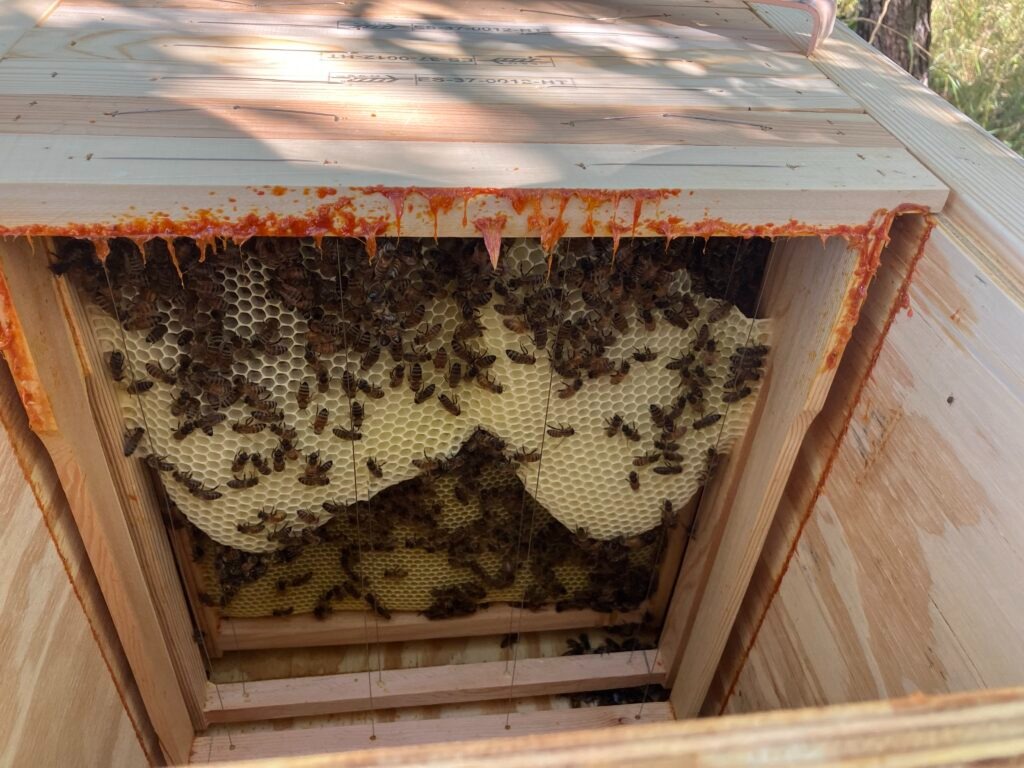
On our college campus, we have the double hardship of keeping bees at a latitude of exactly 37° 52’ 02” and at an elevation of 7,500 feet above sea level. We generally get about 3 to 4 feet of snow (2022 saw 10 feet of snowfall) when we are not in the depths of a drought, and we see temperatures down as low as 10°F to 0°F (-12°C to -18°C). With these kinds of challenges, we often find the best answers to keeping bees by stopping and looking back rather than forging blindly ahead.
A Little Beekeeping History
Keeping bees on a farm in the 1700s and 1800s in the United States and in Europe was very different from what it is now. Even without the benefits of modern movable frame technology, honey bees thrived in the eastern United States and, to a lesser degree, in the western United States for hundreds of years.
Few records remain concerning honey bees in early America, but what we have indicates that colonies of honey bees were shipped from England and landed in the Colony of Virginia as early as 1622. Other records indicate that honey bees were present and thriving up and down the Eastern Seaboard as early as 1644 and inland from 1698 through 1788.
By 1800, honey bees were widely distributed from the Atlantic Ocean to the Mississippi River. Western honey bees were also brought from Russia by Ukrainian settlers around the 1850s.
Records indicate that the first 17th century Virginia apiary was owned by George Pelton. He must have impressed the locals, for one wrote to England about his apiary in March 1648:
For bees there is in the country which thrive and prosper very well there; one Mr. George Pelton . . . an ancient planter of twenty-five years’ standing that had store of them, he made thirty pounds a year profit of them [$11,515 in today’s dollars]; but by misfortune his house was burnt down, and many of his hives perished, he makes excellent good metheglin (honey mead), a pleasant and strong drink, and it serves him and his family for good liquor: If men would endeavor to increase this kind of creature, there would be here in a short time abundance of wax and honey, for there is all the country over delicate food for bees, and there is also bees naturally in the land.
In Europe, Russian author Nikolay Vitvitsky, who kept bees somewhere above the 40th parallel, wrote the following in his 1835 beekeeping manual Practical Beekeeping:
Peasant families commonly have 1,000 hives. Tending these takes little effort, so the owner can work his fields and attend to other matters.
Georges de Layens, the French inventor of the horizontal hive in 1864, made a similarly profound statement:
We cannot improve beekeeping by going farther and farther away from the bee’s natural tendencies. Instead, pick the hive model that is best matched to your locale, populate it with local bees, and the results will speak for themselves.
There are many more pre-industrial age beekeeping authorities who echo these sentiments. Suffice it to say that there is a natural way to keep bees today that harkens back to proven methods, is less expensive and more resilient, and allows us to build strong and vibrant apiaries while producing plenty of the highest quality honey in the country.
8 Reasons Why You Should Consider Natural Beekeeping
There are many reasons why you should consider a natural approach to beekeeping. In this article, we will focus on the most obvious. Most of what we will cover was common sense to past beekeepers but has been lost in our industrial age.
1. The Common Use of Chemicals
There are two very important reasons to stop the use of chemicals: They don’t work, and they contaminate the honey.
Chemical Don’t Work Long Term
The use of chemicals in the hive when dealing with pests and disease is the accepted and standard approach to beekeeping today. To suggest going cold turkey on all chemicals is considered heresy. But heresy or not, that is exactly what natural beekeeping is recommending. Even with the use of these chemicals, commercial beekeepers are losing the fight to maintain healthy bee colonies.
Thomas Seeley, author of The Lives of Bees: The Untold Story of the Honey Bee in the Wild, has done extensive experiments and studies of non-chemical approaches with both managed and wild colonies over decades to prove this concept. The results are stunning. By exercising proper natural beekeeping practices to counteract pests or disease, apiaries will survive and thrive. A new pest or disease will initially decrease colony size and operation, even killing some colonies. But, if left alone in a good habitat, within a few years, the apiary will bounce back.
Honey Contamination
When these chemicals are administered to the hive, your bees, honeycomb, honey, and beebread become contaminated. More than that, your bees harvest pollen from crops laced with pesticides, fungicides, and insecticides – up to 21 different harmful chemicals. Science is now confirming that these compounds, once thought harmless, are actually sub-lethal or lethal to honey bees (not to mention what these chemicals are doing to the humans who consume this honey).
Several studies show that at least 75% of the global honey supply is contaminated with measurable amounts of bee-harming neonicotinoid insecticides. North America has the highest contamination rate at 86%.
2. The Harm of Feeding Sugar Water to Honey Bees
In the same way that sugar is not the same as honey, sugar water is not the same as honey water or nectar. Our bees are what they eat. Sugar water is not the main ingredient of honey; nectar is. Studies show that sugar has a higher pH than honey and negatively affects bee health.
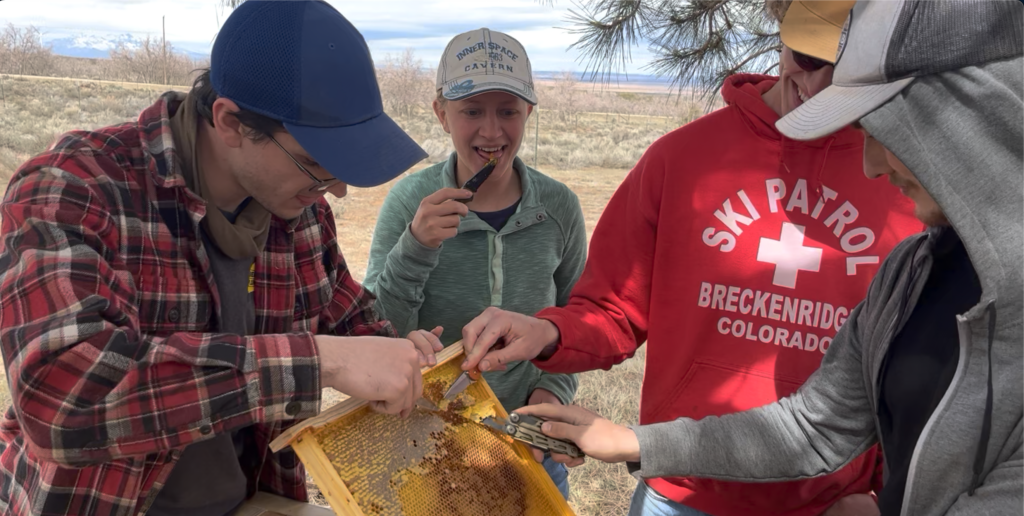
If you have a reason to feed your bees (it happens), use what they would choose and what nature has developed for their optimal health: Feed them honey! I am backing this up with a 2010 Mother Earth News article entitled “Feeding Refined Sugar to Honey Bees.”
3. The Lost Art of Using Feral Bees
I could write an entire paper on this one. Local or feral/wild honey bees are proving to be more resilient to disease and pests than the ones we purchase from suppliers. They are literally living proof that they are healthier and more resilient. Rather than purchasing bees (with questionable genetics, conditions, and hygiene,) use local bees by trapping feral swarms.
4. Using The Wrong Hive
All of the natural beekeeping leaders teach the principle of “the right hive for your locale.” The vast majority of beekeepers use Langstroth hives. These hives are fine if you live in warm climates but disastrous if you routinely have harsh winters.
For areas with long and cold winters, we need insulated hives with deep frames. Layens horizontal hives provide these features and also allow the beekeeper to perform maintenance, add/ reduce frames, harvest honey, and move the brood chamber without molesting the bees at all. Over the last few years, we have switched to Layens hives and use them exclusively on our college campus.
5. Disturbed Bees Are Unhappy Bees
If you’re keeping bees naturally, you actually don’t need to disturb them very often. Done correctly, a hive should remain uninterrupted by human contact for the vast majority of the year, with you opening the hive no more than 2-3 times per year. A spring check and a fall harvest are generally all that is needed.
6. Harvesting Too Much Honey
The natural approach to beekeeping will likely yield smaller honey harvests per hive as you leave plenty of honey for the colony to overwinter so you don’t have to feed them through the winter. Makes sense, right?
However, chemical-free honey sells at a premium, and there are virtually no inputs to the process. So when all is said and done, even though you may have less product to sell per hive, you have a higher quality product, less production costs, and less time invested.
And for those who really aren’t sure if smaller harvests will work, simply add a few more hives! It all works out in your favor and in the favor of the bees.
7. Meddling With Nature
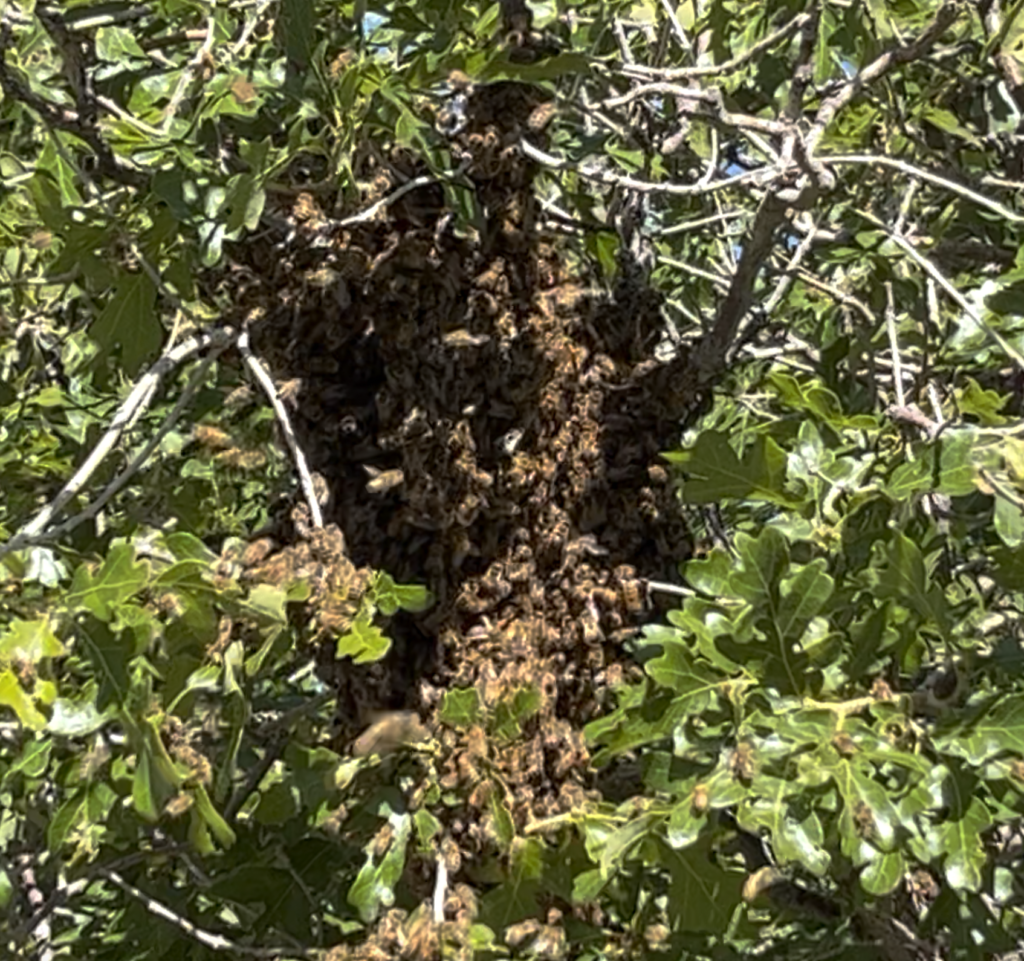
The principle of landrace beekeeping (a landrace is a domesticated, locally adapted variety of a species of animal or plant that has developed over time through adaptation to its natural environment) is simply this: The more you use locally acclimated bees (feral honey bees), the stronger and more productive your apiary. Instead of spending lots of money on new colonies or requeening (especially purchasing artificially inseminated queens), shift to trapping swarms and introducing proven genetic diversity specific to your locale.
8. Aggressive Beekeeping Practices Are Disruptive
Aggressive interventions, like frequent inspections or aggressive honey harvesting, can disrupt your bees’ natural rhythm, and this will cause stress and potential harm to your bees. Stress can weaken your bees’ immune systems and make them more susceptible to diseases and pests.
These non-aggressive practices are pretty self explanatory:
- Cooperation, not manipulation – Work to understand what the bees are doing, then adjust your involvement to complement their activities.
- Pay attention to bee stress levels – A little observation goes a long way. Honestly, if the hive is in the right place to begin with, there is a source of water, and you are seldom in the hive, you just never have fussy bees.
- Stay away from the brood chamber as much as possible – A horizontal hive allows you to inspect and harvest without disturbing the queen or her brood.
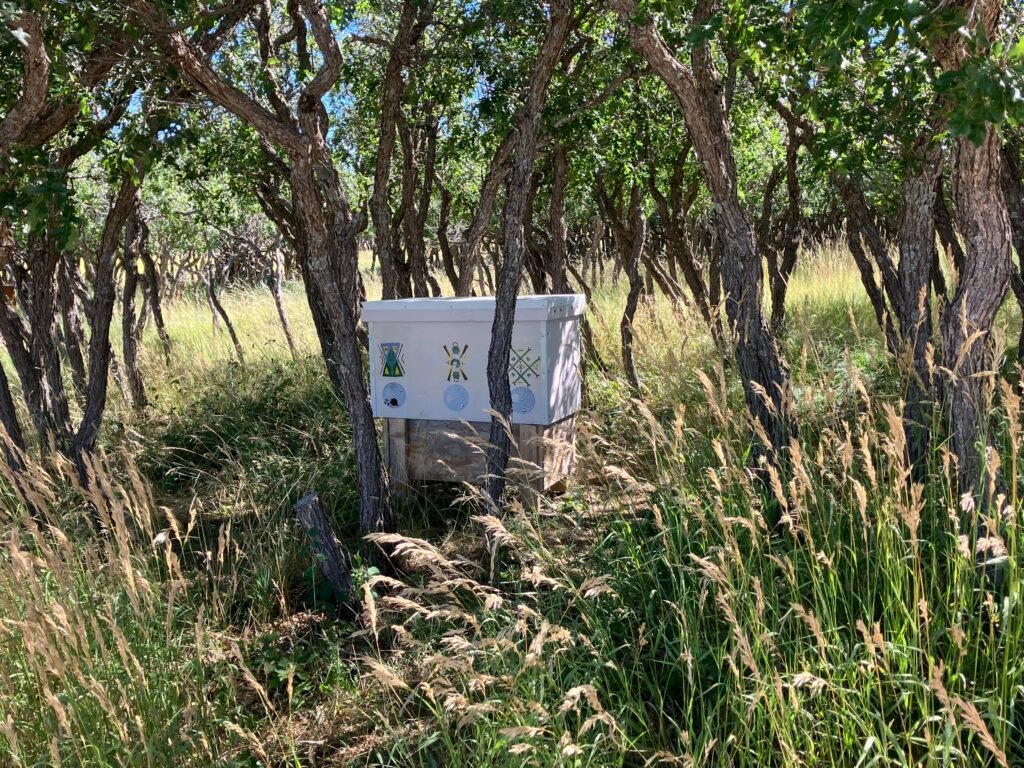
- Hive spacing – This is subjective, but studies show that hives that are spaced more than 30 feet away from other hives suffer less hive drift and other issues.
- Hive appearance – Studies show bees can recognize shapes and colors. Decorating your hives will also help with hive drift and allow you to personalize your apiary.
- Swarming – Swarm traps are a great way to increase apiary genetic diversity at virtually no cost. A few swarm traps strategically placed in the spring can capture multiple colonies to bolster apiary health and increase your honey production.
- Enter hive at midday – This may not be obvious to all, so let me just mention this quickly. Every colony has bees that fly and bees that have not yet begun to fly. If the beekeeper waits until midday, in most cases the majority of foragers (flying bees) will be out doing their job, which means there will be less bees to get stressed in the hive and less bees to fly around your head.
Natural beekeeping is easy, rewarding, and harmonious. It requires basically no inputs from you, and you end up with a healthy, resilient apiary. As I sit and watch my girls being busy bees, I find myself relaxing and becoming one with nature. It really is that simple.





Leave a Reply