
Wildcrafting, also known more commonly as foraging, simply means harvesting wild plants in their natural habitats. While harvesting wild plants for food and medicine has transpired since there have been people on earth, it fell out of favor during the mid-20th century as common health practices gave way to relatively inexpensive modern medical conveniences of over-the-counter pharmaceuticals and easily accessible doctor visits.
In the 1970s, the back-to-the-land movement presented a culture of folks who brought back the older, healthier ways. However, this was not mainstream. For decades, the foraging movement has been counterculture and practiced mainly in areas where there are populations of less advantage, such as in the Appalachians.
But in the advent of today’s social media and its far reach, foraging for plants in the wild has once again become popular. With this rising popularity, there has been a resurgence of folks foraging plants for home use, small herbal businesses, and commercial trades.
To harvest sustainably and with clarity of purpose, it’s important to know some valuable rules before you begin your wildcrafting journey. The central requirement is to locate clean land that is free of garbage, herbicides, and biosolids use. The result is healthy plants with strong medicinal and nutritional value.
Personally, I prefer to forage as far away from the masses and their footprints as possible. Finding new harvesting places is always so much fun for me; I call it herbal reconnaissance. The land where one forages is held very dear as the wealth of food and herbal medicine, exquisite views, fresh air, sun, and clean water all combine to create incredible harvesting experiences without worrying whether others will come behind to harvest in the same stands. Wildcrafting locations are sacred and a privilege to the person who took the time to find them.
Why forage?
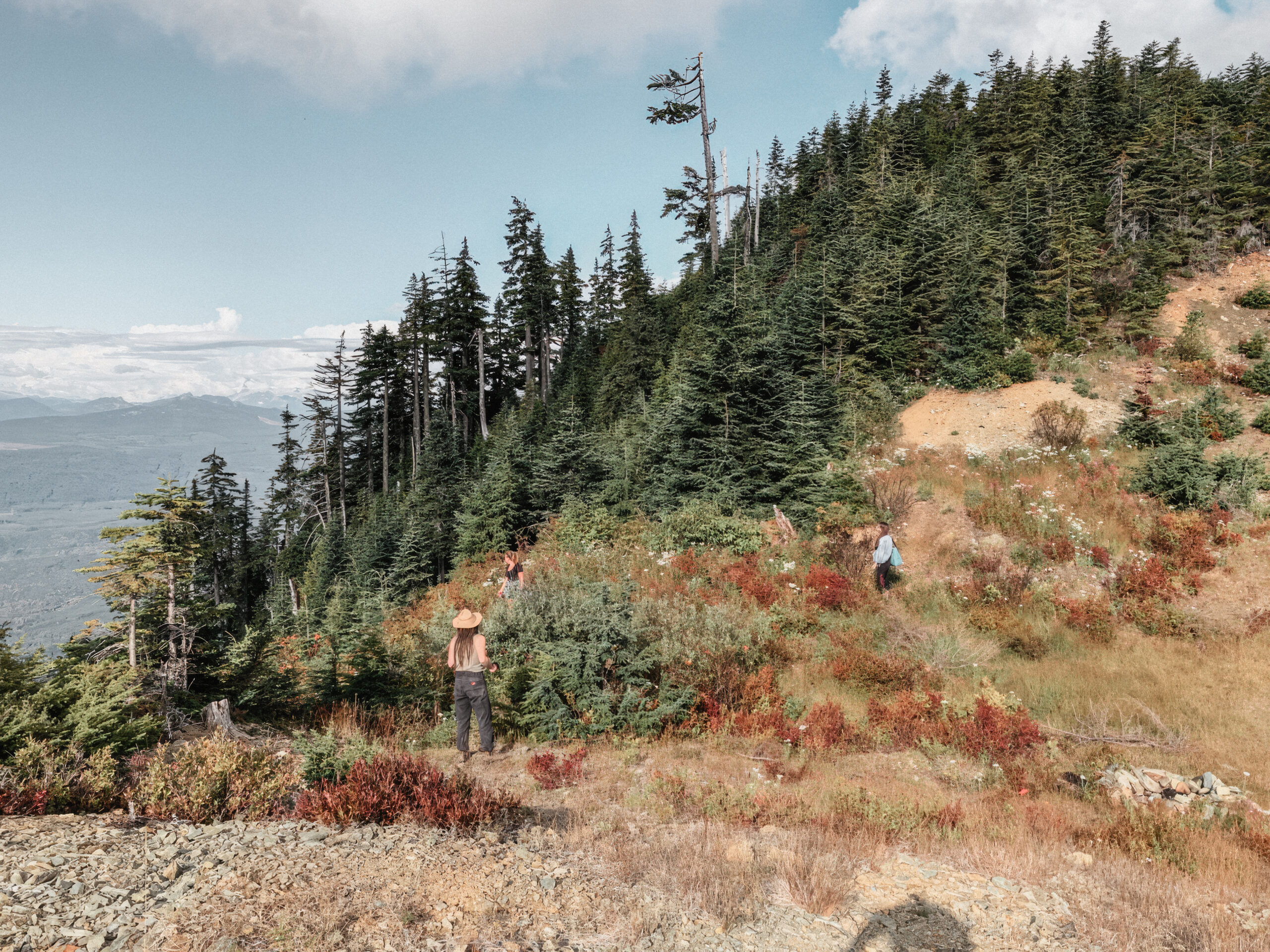
Before we pick our first plant, we are brought into the exquisite beauty of nature. It’s the peace and quiet that first draws attention, the utter calm that is so different from the jarring electricity of the urban or suburban areas where many of us live. After appreciating the freedom from disturbance for a few moments, we begin to notice the sounds of the area: birds calling, insects buzzing, whispers of larger animals moving just out of sight, sounds of water from waves on the beach, creeks and waterfalls up in the mountains, wind rustling leaves and branches.
Foraging gives a sense of food security and self-reliance; There is so much food to harvest in the wild, each and every season. Find a good field guide that shows the wild foods in your area. It will provide information about the plants that you can glean from the land that are healthful and plentiful.
Before you get started, some simple rules apply to make foraging a rewarding adventure.
When harvesting any plant in the wild, follow these simple rules:
- Keep in mind that it is of utmost importance to be 100% certain of plant identification before doing ANY harvesting. Pictures or artists’ renderings of plants in field guides and identification apps don’t always provide enough information to correctly identify a plant in the wild. There are look-alike plants, which can be confusing to both the novice and experienced alike. If you are unsure of the identification of a plant, don’t harvest it! Take classes from reputable wildcrafters or bring one with you on your harvesting searches until you become adept at identifying plants on your own.
- Take time to get to know the plants. Ask yourself why you wish to harvest a particular plant. It is the gatherer’s responsibility to research the intended plants before harvesting, examine the habitats in which they live, the relationship the plants have with the neighboring wildlife, and her/his impact on the plant stands and surrounding environment. Find out what part of the plant is used, when the best time of year is to harvest, and any cautions and concerns about harvesting or using the plant.
- Harvest only enough for your needs. If you are uncertain about how much you’ll require in a year, start small and gain experience. If you plan to preserve your harvest, make sure to know which method is best before gathering. Make sure to process the harvest as soon as possible. Plants that are left on the porch awaiting processing are plants that are swiftly losing their medicinal and nutritional value.
Where to Go Foraging
Check with your local Forest Service for topographical maps and locations where plant harvesting is allowed. Cultivate a friendly relationship with them, and they’ll often show you on the maps where to safely go and discuss harvesting limits and what to expect while on the land.
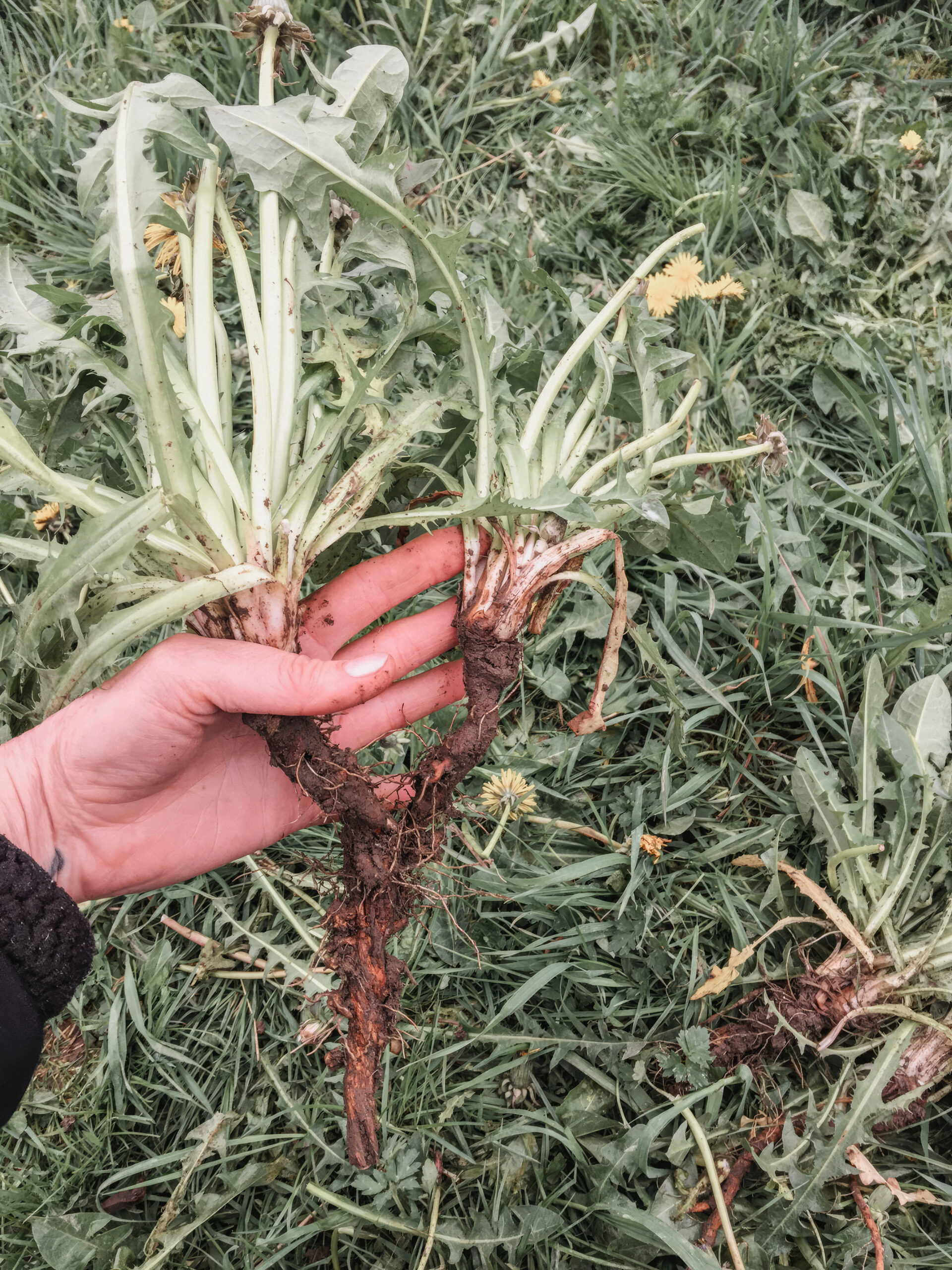
Private land. Always check with the owners before entering private spaces to harvest. My students and I enjoyed harvesting dandelions on an organic farm for many seasons because I knocked on the owner’s door one spring day and asked permission. After they got over their initial shock that we wanted to “weed” for them, they heartily agreed to allow us access to 40 acres of prime riverbed soil. Digging dandelions there was so easy and fun! We were happy to know that the dandelions we gathered were free of herbicides, pesticides, and synthetic fertilizers, and they received the benefit of free labor. The vibe was great all the way around!
State Parks. Look up the regulations for harvesting in parks in your state. Rules can vary from state to state and park to park, so it’s best to know for certain what is allowed. In some states, harvesting up to a gallon of plant materials at a time is permissible at some parks and at certain times of the year. This usually means nuts, berries, and mushrooms. Make sure to ask whether chemicals of any kind have been sprayed in the park where you wish to harvest. If so, do not harvest there. Plants take up and hold on to harmful chemicals.
Tree farms. For many years before I moved to North Idaho, I had a key to the gates of 100,000 acres of land that had been a timber farm for over a century. The pioneer plants that sprout and thrive where trees have been cut are abundant. The trees on parts of the land that have not been harvested in decades provide fertility, as the deciduous plants and conifers drop their leaves in the fall to decompose and add to the richness of the soil. The plants at the tree farm are happy and robust. I’ve fostered a very good relationship with the owners by respecting their rules and taking care of the land like it was my own.
What to avoid when choosing harvest sites
Avoid harvesting in places where there are posted signs of chemical spraying and/or biosolids, where there is presence of garbage, or where there is evidence that people have dumped vehicle liquids such as motor oil and antifreeze coolant on the ground. The plants growing near will be poisoned and rendered unusable for medicine or food.
Do not harvest where harvesting has already been done. You do not want to be the person who tips the balance of the plant community’s ability to thrive into the negative. Same with high-trafficked trails. There may be many people who want to be out in nature, but don’t know how to respect the land.
What to harvest
I’m always on the lookout for foraging opportunities in the spring. Dandelions, nettles, mushrooms, early berries, and edible leaves beckon. Two of my favorite plants to harvest in the spring are dandelions and nettles. These plants in particular are normally plentiful and are thought of as invasive weeds. To me, they’re tasty food packed with nutrients!
Dandelion, Taraxacum officinale. All parts are edible. Dandelions include a wealth of nutrients that are fuel for all of our body’s functions. My dad remembered his grandma sending him out to pick dandelion leaves every spring. She sautéed them up with onions and garlic in bacon fat; she understood that food is medicine. The acidic nature of the bacon fat aided the calcium and iron to be better assimilated in the body. She didn’t know the science, but she knew her plants.
My favorite way to use dandelion roots is to roast them. The roots are dug, cleaned well, and chopped as small as possible by hand or food processor. The chopped roots are placed about 1/2 inch thick on a cookie sheet and roasted in a 250°F (121°C) oven for 3 – 4 hours until they are completely dry and dark brown. Roasted dandelion root decoction is tasty with your favorite dairy or nut milk.
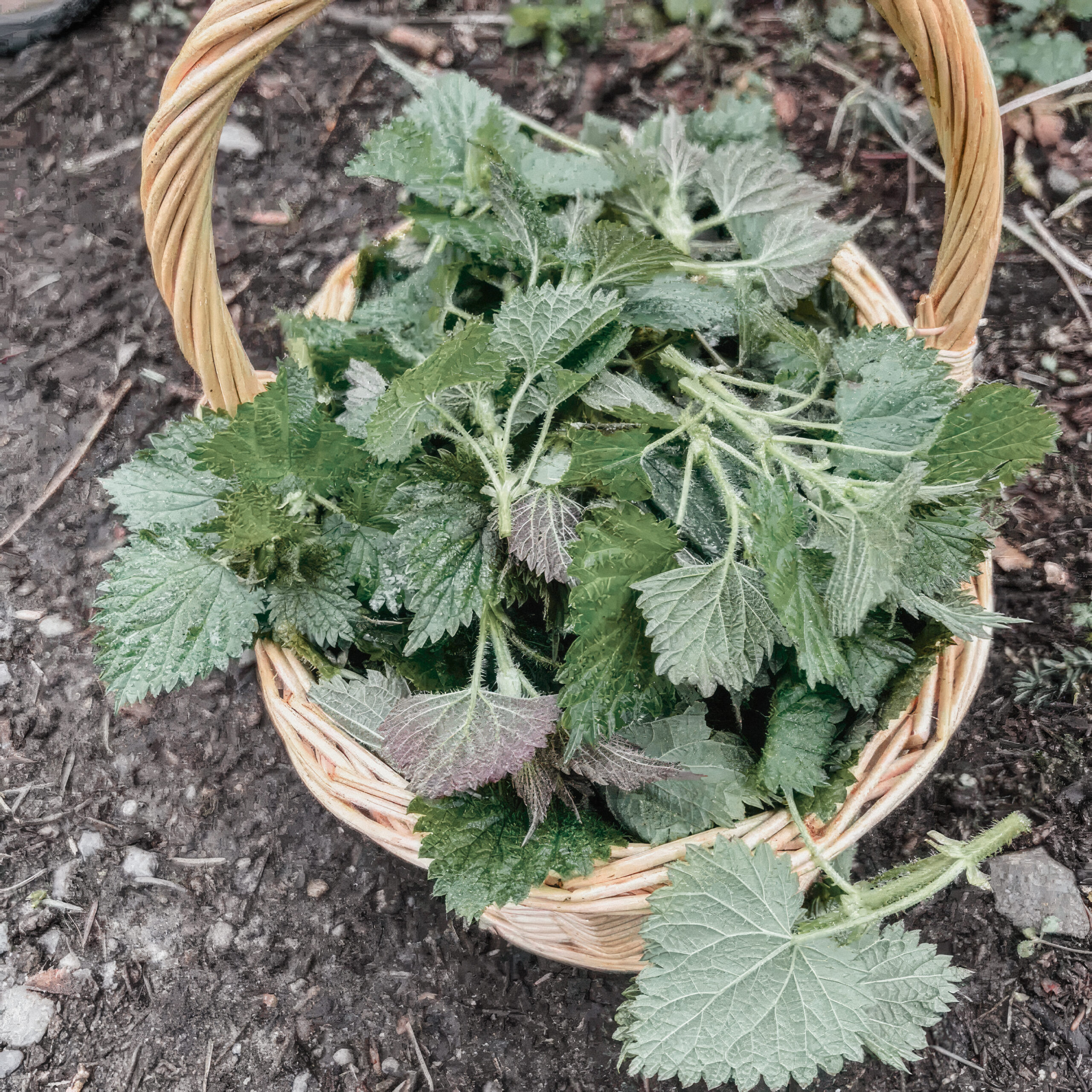
Stinging Nettles, Urtica dioica. In the spring, nettles are early to arrive, heralding the return of longer, warmer days. I tell my students that if they see nettles in the early spring, they’ve made it through winter and it’s a time to rejoice. Nettle tops can be pinched about a third of the way down the plant, allowing the plant to recover and enabling it to continue its life cycle to produce flowers and then seeds, ensuring the continuation of the species.
It’s important to harvest nettles before they flower, as once the flowers emerge, calcium carbonate pebbles called cystoliths develop, which may irritate the urinary and digestive systems. And of course, wear gloves! They’re called stinging nettles for a reason, and gloves, long sleeves, pants and close-toed shoes are a must.
Gathered within a month of their emergence, nettles provide a wealth of iron, calcium, zinc, and antioxidants to name but a few of its nutrients. Nettle leaves can be dried for teas, or added to soups, stews, and sauces. The stinging hairs on nettles are neutralized when cooked or dried.
Nettles can even be made into a tasty pesto! Since nettles also contain natural lactones which neutralize the acidic sting, pesto made with fresh nettles will not sting as the food processor will break down the plant to release those lactones. This is especially beneficial as fresh nettles have more nutrients than a pesto made with blanched nettles as blanching destroys some of the key nutrients.
Ingredients
- 4 cups fresh spring nettle tops
- 2/3 cup extra virgin olive oil
- 2 to 6 cloves garlic to taste
- 1/2 cup nutritional yeast
Instructions
- Place all the ingredients in a food processor and process on high until nettles are completely incorporated and the mixture reaches a creamy consistency. The pesto can be eaten fresh or frozen for later consumption.
Foraging for your food is such a fun and rewarding adventure in self-reliance and food security. Just remember to respect the rules and the earth will give you its bounty. Bon appetit!

Leave a Reply