
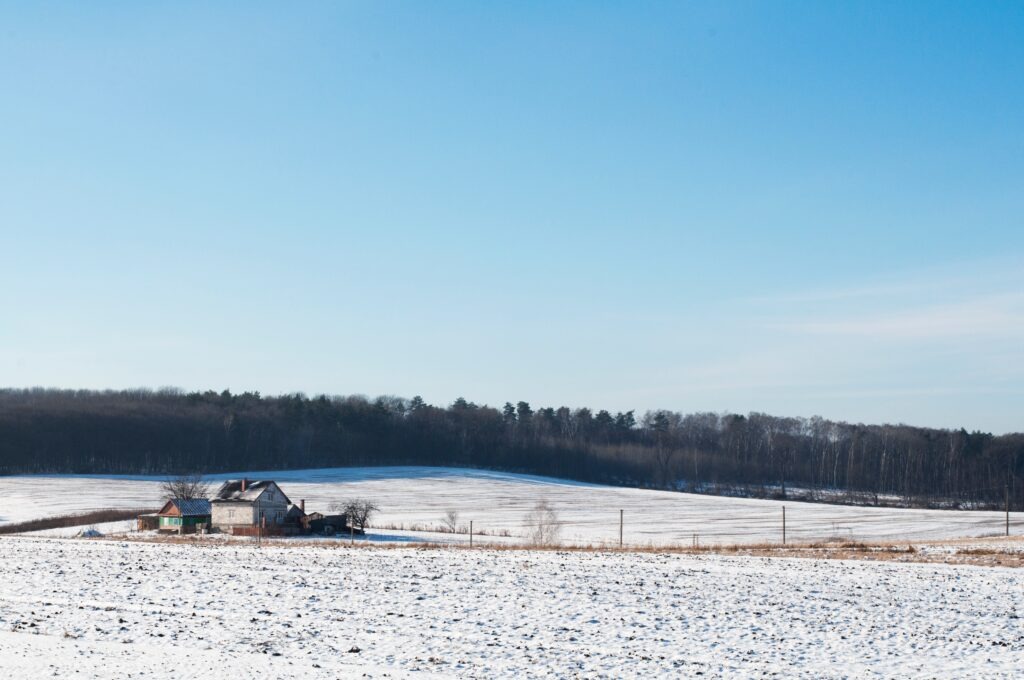
We stay busy on purpose with projects in the winter months here in North Carolina. Realistically, we’re looking at maybe two weeks of winter each year. And it is true: our chores are less in the winter months so that makes it easier for us to hire a farm sitter if we travel.
You want a cure for spring fever? Keep busy! Use the winter to establish new electric lines or perimeter fences, clear forests, harvest firewood, and learn whatever you can learn for the next season.
Now, I don’t think you should be a workaholic. But, it’s important to keep some routine in the offseason. You can’t just sit around and wait for spring. It’s really helpful to keep a steady, consistent structure to your life. I keep a very similar daily routine year round, even when there aren’t as many chores to do. It helps keep me focused and, honestly, it’s what keeps me from burning out.
Before you think we are maniacs who never take a break to catch our breath, let me tell you a secret: It’s not just consistency that helps us keep going. We are disciplined with our routines; that is true. But, we are also disciplined about rest.
Rest Takes Intentional Effort
You have to work to rest. Some people tend to think that rest is the same as laziness. That’s not true. You have to be disciplined in order to make rest a priority. Regular rest and consistent routines help prevent burnout.
At 9:30 at night, once the kids are in bed and you’re worn out, you probably want to goof off on the internet. I get that. Maybe you just want to get some productive work done without the usual distractions at the office. Or, you just want to chit-chat with your wife. These are all reasonable things. But, it’s time to go to bed. If you want to keep waking up early, you need to be disciplined enough to go to sleep at a reasonable, consistent time. You can be disciplined enough to find time for those other things elsewhere in your day.
We take rest seriously. We take a vacation once a year in the winter when the chores aren’t so busy. We’ll go get some vitamin D and get some sunshine. That’s a big rest once a year, but we’re also very good at resting once a week. We call it a zero day.
Sure, the animals need their food and water and they need to be moved, but we don’t do any big projects on that day. We have this rest day built into our plans, and we do the opposite of homesteading on zero days. We get our basic chores done, take care of the animals, and then we rest. We might binge-watch something and sit around for an hour watching TV. Maybe we’ll sunbathe or go for a walk or read a book. But we are intentionally taking time away from work.
In addition to our yearly vacation and our weekly zero day, I schedule time for self-care every day. Every day after dinner, I take an hour, and sometimes an hour and a half, to rest and recharge. Most days, that includes a nice bath or some time in the sauna. And then, I’m in bed by 9:30 pm. You want the secret to getting up at 5:30 in the morning? Go to bed at 9:30 every night.
Now, let me say, getting up at 5:30 am is not my favorite thing. You want the honest truth? I hate it. Trying to get up and be going strong by first light (which is usually about 6:30 a.m.) is awful; I cannot stand it. I’m depressed for the first 30 minutes of the day. Sometimes I feel so depressed that I want to give it all up, and I worry that the business is failing. I am so tempted to crawl back in bed and try to forget all my troubles. I lose my mind for about 30 minutes every morning, even now.
But guess what? I’ve pushed and made it through that 30 minutes hundreds of times. I know I’m going to hate it for 30 minutes. But, I’ve built some resilience. If I make it through that 30 minutes, I’m golden. I’m happy that I got up early for the rest of the day. I’ve never looked back and said, “Boy, I wish I would have slept in this morning.” Once I’m through my morning madness, I’m all set. But I can tell you from experience, it does help to go to bed at 9:30 p.m. every single day.
So, now we’re back to routine and consistency. It’s so helpful to be consistent, to go to bed and get up at the same time every single day. That also gives you one less thing to think about.
I don’t need to decide when to go to bed. I’ve got a plan. I’ve got a routine that works.
We plan meals this way as well. We eat at the same time almost every day. We also plan the same meals on certain days of the week. Friday is Fishy Friday. I never think about what we’re having for dinner on Friday; it’s fish. And we’re gonna make enough so that we can have leftovers for lunch tomorrow and only have to make one big meal a day.
Take Stock of Your Life and Make a Plan
It took me a while to accept that there are only so many hours in the day and that we are limited people with finite resources. You only have so much time, money, and energy. So, you take what you have and build a plan. Let’s use a block of time for example.
Let’s say you have two hours blocked to do your chores. You’ve got to have a clear and straightforward plan to tackle these chores — or else you better have the best, lowest maintenance farm animals and gardens around!
If you have two hours to dedicate every day, you should have meat chickens, gardens, egg laying chickens, and some sort of rotationally grazed animal. You should be able to cover that work in two hours. Those are the basics. If you’re finding out that you’ve got way too much to do and you have too little time, you’ve got to find a way to scale back.
But if you only have one hour per day and maybe half a day on the weekend, well, that’s only 10 hours a week. You probably can’t have a rotationally grazed animal with that limited amount of time. You can probably still have meat chickens, egg laying chickens, and a garden, but it could be tight, especially if your goal is to grow much of your own food. You’re gonna get that done.
Write Everything Down
Maybe this is obvious at this point, but here goes: You can’t keep all this stuff in your head. You need systems for everything. When are you going to bed at night? Write it down. What’s your plan for the garden? Write it down. What are your goals for this next year? You know what to do!

I carry my little moleskine notebook everywhere. I use it to jot down ideas so I don’t forget them and to plan out my goals. You’d be amazed how many ideas start popping into your head once you start writing down goals. When I was just getting started, I was reading books and listening to podcasts and asking people for advice, and sometimes, an idea popped into my head when I was grabbing eggs from the chickens. I’d write it down so I wouldn’t lose it. I wouldn’t use every single idea I had, but so many times these ideas would evolve into something that I could use on the farm.
Be Specific
An important note on goals: Your goals need to be specific. If your goal is to raise 50% of your food, what do you need to do to get there? How much are you currently spending on growing food?
If you want better goals, set specific goals and attach a timeline. Now, you write down, “I want to grow 50% of my own food by the end of 2024.”
The next question is, how much time do you have each day to accomplish this goal?
Well, let’s say you only have an hour a day and then maybe a full day on the weekend. Examine all the things you wrote down to help you get to your goal, then prioritize. What’s the most important thing on your list? What is the easiest? What’s the most productive thing you can do? What do you need help with? What are you already familiar with?
For example, if you’ve grown meat chickens, it’s not that hard to jump to growing meat turkeys. Turkeys are a little different, but not that much. Adding meat turkeys is way easier than jumping to getting honeybees and buying all sorts of gear for bees. It’s totally different. Look for things that harmonize and complement each other before expanding to something totally different. Don’t try to tackle everything at once.
Once you have your list and you’ve prioritized, you get to work. You decide, “I’ll go at these things first, and then, if I have time left, I’ll do the rest.” But chances are, if you do two or three of the most important things on your list, you’re gonna get 80% of the result you were aiming for. That’s why it’s so important to prioritize.
Tips on How to Optimize and Improve
Okay. Let me get specific for you and practice what I preach. You’re in the offseason, or you’re starting to plan next year’s garden or projects. You’ve got some extra time. Here are five tips that I want you to think about in the offseason.
1. Write everything down. You have probably already gathered that I find this to be quite important. Get a journal or notebook and write everything down. You’ll probably end up with different notebooks for different purposes.
At the end of the season, review everything. Write down what you learned. Write down what you still have questions about. What went well? What didn’t? Work worked? What failed? What could you do to make it better? Where do you need help? Make a list of tools or equipment or gear that you need. Write it all down.
Get into the habit of doing this at the end of seasons or projects. For somebody who’s just starting out with gardening, after the season is over, write everything down while it’s still fresh on your mind. Believe me, if you don’t capture it when it’s fresh in your mind, it will slip away.
2. Figure out how to smoothify your existing situation. Isn’t that a nice word? You get what I mean, though. Ask yourself: How can I use this downtime to make my growing time go more smoothly? How can I simplify this process and make it more efficient? Do you need some knowledge or new skills? Do you know anyone who’s got a smoother system than you? What can you learn from that for your situation?
Take what you have and look to optimize everything. Do you need a more convenient access point for water? Maybe you need a hydrant right between the chickens and the raised beds. Would that be easier than lugging a hose or buckets around? Maybe you could get a four-way spigot on your hoses, or maybe you don’t have a frost-proof hydrant that doesn’t freeze. Figure out what would make things easier and more efficient and start making lists. Prioritize and make a plan.
3. Upgrade and improve! Now that you’ve written everything down and started making lists and plans, you know what you need to do to get better. Maybe you need some new gear. Maybe your chickens were on a moonscape and not on deep bedding. Maybe they were sitting in one spot and it’s nasty. Well, let’s make that better. Let’s put them on deep bedding instead. Or let’s begin to plan a system where we’re moving them around on pasture so they don’t stay in one place.
When do you begin to prepare for next year? If you have downtime or a quiet winter, that’s when you prepare. Get started right now.
One of the best things we’ve ever done is order more poultry bags at the end of the season. One year, we ran out of poultry bags for harvesting and freezing our poultry, and then we had to scramble. But now, even though we know we’re not going to need them for another year, we go ahead and order at the end of the season. It’s less frantic when we’re getting ready to butcher in summertime because we know where the bags are, and we know we have enough. That’s one less thing we have to worry about, and being prepared feels so good.
One year, our box trailer needed shelves. So we hired our handyman to put shelves in long before we needed them. When it came time to use them, to me it was just so refreshing to have them already right where they needed to be.
Review this season and give yourself tips. Every day you want to change and improve a little bit. See if you can get 1% better. Every year, you can do the same thing.
4. Forget all this and let’s just extend the season. Don’t really forget everything. 😉 But so many people just pack up in August and September, and that’s when you can start strong. That’s your second chance! That’s when you can plant a winter harvest garden. Even if you’re in cold climates, you can extend your growing season. It’s not that hard.
Planning ahead to take advantage of extending next year’s season can help you rest later next winter because you’ll have all sorts of extra food. Planning for an extended growing season is a great use of your downtime that sets you up for future success.
To extend your season, start your seeds in July and plant in August or maybe early September, if August is still too hot. You want to plant quick-growing hearty greens, lettuce, kale, cabbages, and turnips. The trick is to get everything to grow up before your first possible frost date. For us, that’s October 10th. You’ll need to learn what that is in your neck of the woods.
Once things are grown, cover them with a low tunnel that you can build out of PVC pipes and plastic sheets. You could buy one of these if you don’t want to build it.
5. Learn. I touched on this earlier when I mentioned the skills or knowledge you may not have. There are so many resources out there. Go to your local library. There are so many great books you could borrow or buy. You can learn a ton from this magazine you’re reading right now. Abundance Plus can teach you a ton. The School of Traditional Skills is amazing.
Once you learn, you’ve got some valuable skills you can pass on to others. Become a continual learner and work hard to find some community to plug into. Finding community is so crucial, and that’s a key that will help you stay strong when you may be tempted to give up the dream.
You Can Do This
I tell people all the time: If I can learn how to do this, anyone can. I didn’t grow up in this life or come into this with all the knowledge and skills I needed – not even close. You can do this! There’s lots of work to be done, and at first you may not be able to find time to rest and relax. You’ll learn. It means being intentional, being disciplined, and taking things seriously.
The life you want to live is available, and it doesn’t entail nonstop work. You can — and should — prioritize rhythms of rest and recovery. You can’t get there in one big step. Just take the first step, and then the next step. And I promise you, you’ll look back a year later and be amazed at how far you’ve come.

Leave a Reply