
Our hyper-industrialized society has accelerated life to a frenetic pace, prioritizing instant gratification and efficiency over short-term sacrifices in pursuit of long-term gains. The very devices designed to save time often end up fragmenting our focus and, I think most of us would agree, have diminished the quality of our personal interactions.
Fast, cheap, easy-to-prepare, but poorly grown food has damaged our health, ravaged the planet, and further disconnected us from our roots in every sense of the word.
The skills once essential for survival and community engagement have been forgotten in pursuit of “higher education” and career advancement, leaving us disconnected from the tangible rewards and intrinsic value once derived from everyday tasks and communal bonds.
Today, despite being constantly connected through our digital devices, we feel lonelier and more detached, distracted, directionless, and hopeless than ever before.
As a society, we’ve grown impatient, sick, exhausted, and isolated, and have lost the skills, stamina, willpower, and patience to find our way back to the best things life has to offer—things that are slow, intentional, and often difficult.
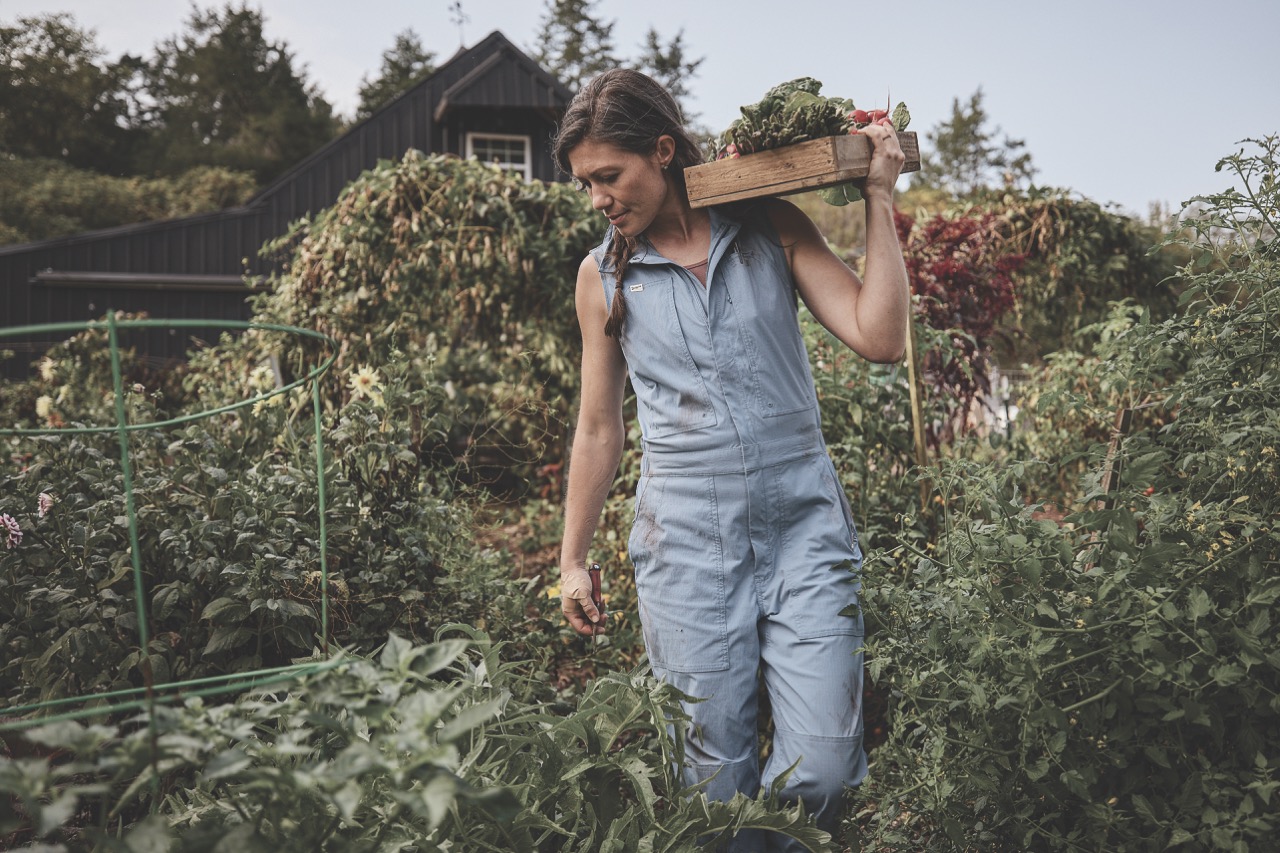
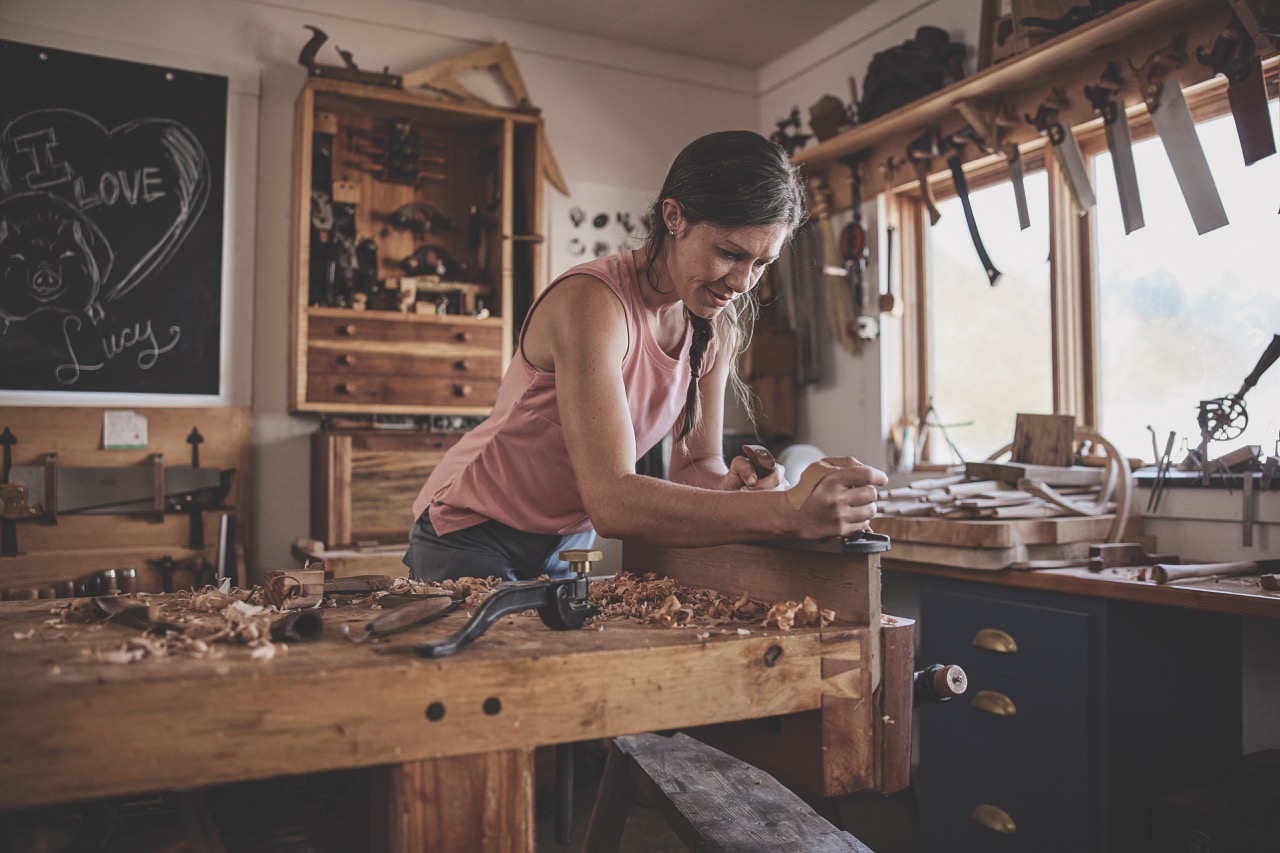
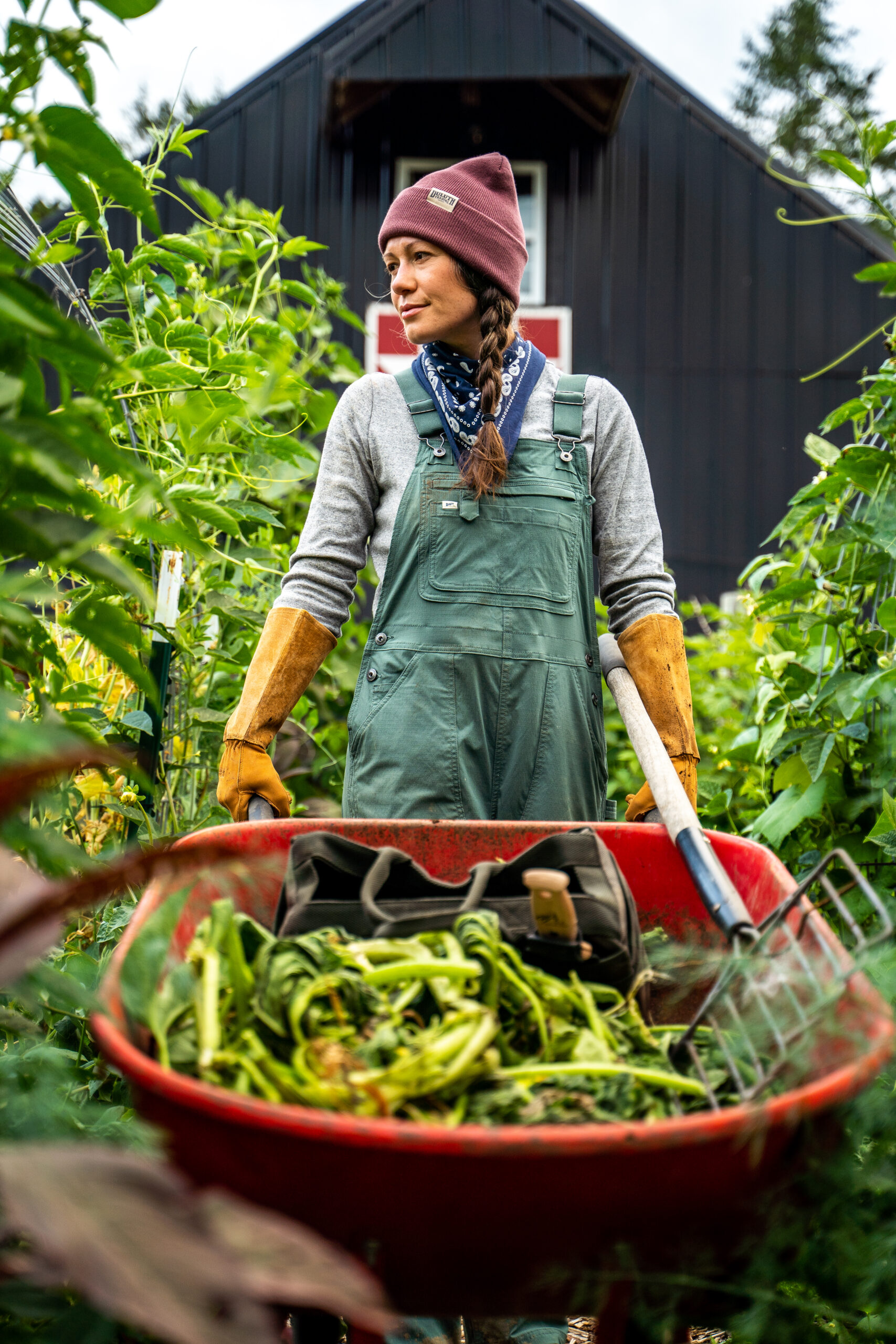
Most people who know me say I was born 200 years too late. Twelve years ago, I planted my first seed, got my first chicken, and picked up my first tool. Back then, I lived in the city and romanticized farm life. I’ve since left my corporate job, bought 30 acres, and made it my life’s mission to never stop learning, to practice stewardship, and to bring people together.
“I don’t do things because they’re easy,” as my husband likes to tease me. “I do things because I thought they were going to be easy, and I’m just too stubborn to quit” (though I’m pretty sure he’d be overjoyed if I did actually quit a few things).
The Nostalgia—and the Reality—of a Simpler Life
It’s easy to romanticize what it must have been like before screens, fast food, school shootings, and corporate layoffs; to feel a longing to go back in time, cut the cord, and buy a farm.
But farming—especially for those of us who didn’t grow up with the generational knowledge, skills, and experience our ancestors inherited simply by living it—can be really, really hard.
Hear me out. I love a hot shower and my electric washing machine just as much as the next guy. I love that I can call my mom in Montana and hear her precious voice from 1,500 miles away.
And it’s not lost on me that I work remotely thanks to the internet and that most of you will read this article that I wrote on my iPad and submitted via Wi-Fi on your own phones or computer screens.
Before I was a farmer, I lived in the city and worked in tech, and I’ve learned a whole lot of what I know about farming on the internet. I met most of the people I’ve had the privilege of learning from in-person online too. I’ve even developed friendships with people who have become like family to me, all thanks to the internet.
So I’m not going to pretend I’m sending you some wise message, written with gall ink on handmade paper with a feather harvested from a goose I raised, and delivered by a carrier pigeon I trained on my off-grid mountaintop of enlightenment (though that actually sounds like a real banger of a YouTube video I should probably make).
I’m just saying, “Look, here are a few lessons I’ve learned by making my own life harder by accident, in hopes you might make your own life better, on purpose.”
Lessons Learned from a Difficult Year
This has been, without a doubt, the hardest year of my life. After 12 years of infertility, my husband and I buried our miracle baby girl after I miscarried this past spring. Then, right before I was meant to teach a woodworking class, I sliced my hand open while making nachos.
What was initially assumed to be an injury that a few stitches and three weeks of rest would heal turned out to be far more serious: I had severed a nerve and lost feeling and function in the thumb and forefinger of my dominant hand.
Surgery, physical and occupational therapy, and a miracle or two finally restored partial feeling and function to my hand nine months later. However, as the sole farmer and manual laborer in our household, with a huge portion of our family’s income riding on my ability to use both hands, neither having my dominant hand in a cast, nor spending four of those months glued to the couch due to extreme morning sickness, bedrest, or recovery from a miscarriage was part of our plan for the year.
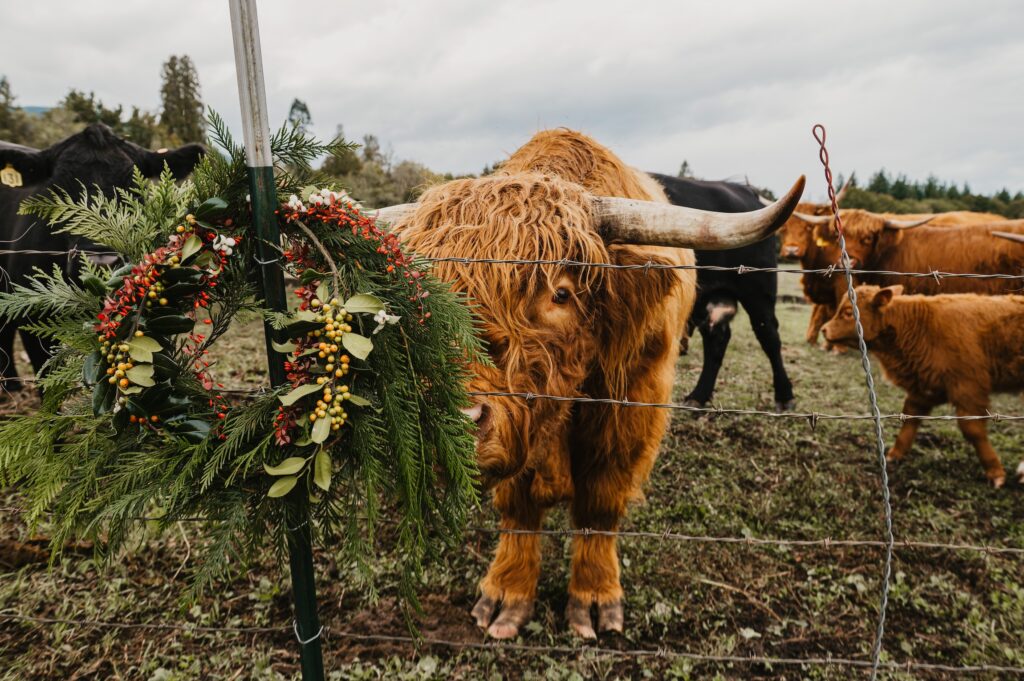
On top of that, I ended up blowing an entire year’s worth of our farm budget on grass seeds and spent countless hours building my own seed drill and replanting my cow pastures, only to watch my beautiful grass die thanks to an unheard-of drought followed by an unbearably hot summer. My cows got way too skinny, and I had to start feeding them hay in July—hay that I had to buy, with money I’d already spent on grass seed—and that was just the start of it.
In the midst of that heat, after having to bury a Jersey cow who’d just given birth and died of a stroke during labor, I lost weeks’ worth of work and a whole lot more money on vets and medications while trying to save sick cows and calves who came down with summer pneumonia—something I’d never even heard of until I moved here.
The pond I’d dug dried out, and a few brown fungal spots appeared on the strawberry leaves, then on the raspberry leaves, and within a week, I was sure we were going to lose the whole garden, too.
A series of thunderstorms in June triggered some sort of latent trauma in one of our livestock guardian dogs, which began when a tornado blew the roof off our barn while she was inside in 2021. All of a sudden, she could not, under any circumstances, be contained. She started barking incessantly, climbing fences, digging tunnels, and powering through electric wire at the faintest hint of foul weather or the feeling of being “trapped.” An encounter with a feral cat during one of her walkabouts kicked off a cat-killing spree, which, as you can imagine, didn’t make us very popular with our neighbors.
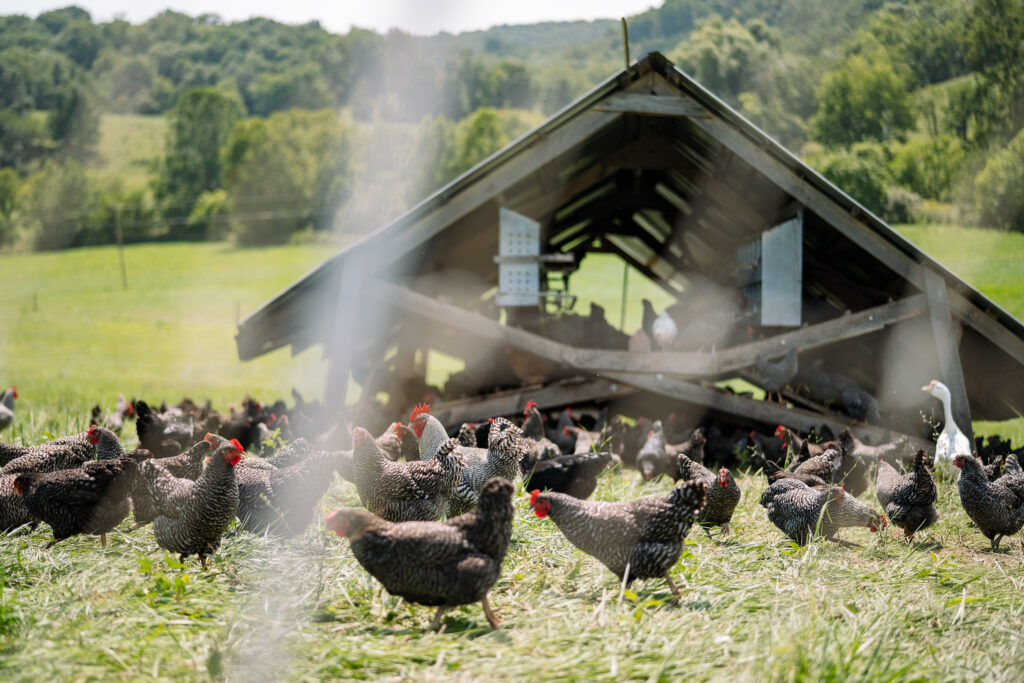
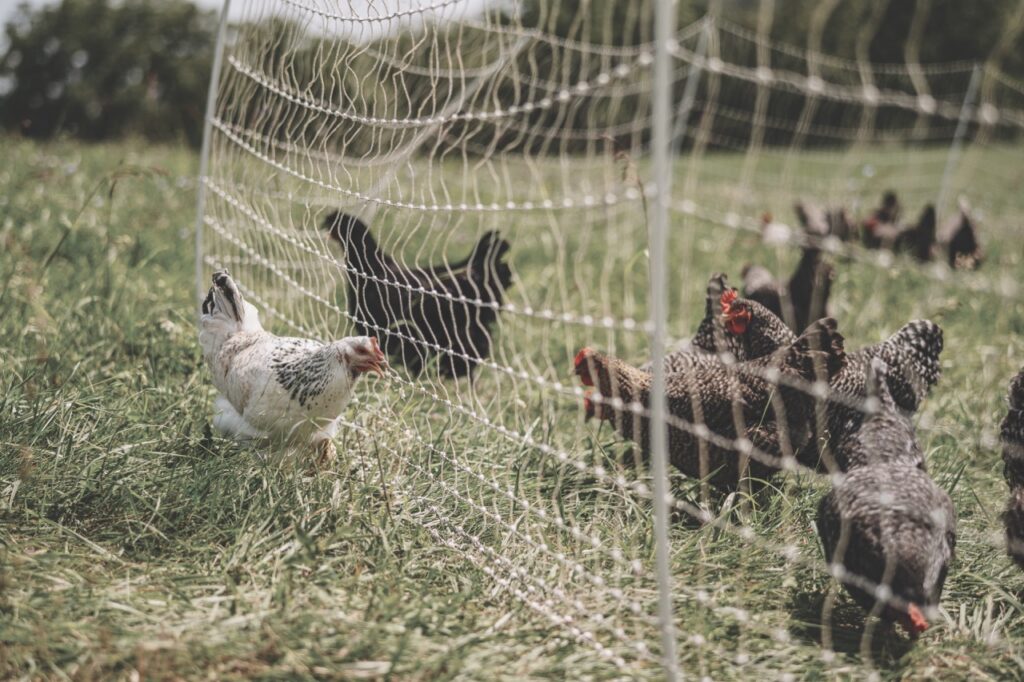
While working on retraining our dog, a series of predators started picking off our chickens, geese, and ducks one by one. And then, in the midst of all that chaos, I had to leave the farm to go to the funeral of a very dear friend and mentor who’d died at just 38 years old. We knew it was coming, but it still rocked all of us to our core.
As I made the trip to his funeral, I thought about this year—the weight of the grief I was carrying, the hours, energy, and effort spent worrying about so many things outside my control, the poor timing and unfortunate circumstances, and the frustration with myself for being less prepared than I thought I’d be. Then,
I started to reflect on the best moments of the year: the things I was grateful for and the lessons, painful as they may have been to learn, that I’d nonetheless learned. To my surprise, as I continued to add to it, the list of good far outweighed the bad. The grief is real, the financial losses are real, the time/energy/capacity “lost” cannot be rewound, but this was just a season.
A Shift in Perspective
Farmers understand better than most the importance of pivoting in hard seasons, finding the good worth celebrating even in difficult times, letting things take the time they need, and knowing that this, too, shall pass.
Though gut-wrenching, our pregnancy and miscarriage brought my husband and me closer together and solidified our shared desire to become parents, regardless of what that ultimately looks like. It also inspired us to redouble our efforts to prioritize nurturing, investing in, and teaching the next generation, using what we’ve got, where we are, right now.
The fungal issues in the garden turned out to be far less problematic on our farm than in much of the surrounding areas. We found creative ways to trade with our neighbors for the things we lost, and with some effort, were able to salvage and harvest a sizable amount of food for our family and community from it.
All the time and effort spent putting out fans, misters, and carrying buckets of water to dump on our hot cows during the heatwave paid off. Everyone made it through the season, and we just welcomed four healthy, adorable calves this week—mercifully, just as the heat finally broke.
The drought has ended, the rains have returned, and I’ve decided to replant what I can before the frost, and try growing my grass farm again next year. I even learned something valuable about my homemade seed drill that should ensure I have an entire field interplanted with white clover next year, rather than just one super thick line of it. (Oops!)
I installed some new electric lines on our fences, rigged up some gate improvements, spent a week with my livestock guardian dog on a leash at my side, and got her a bark collar. She’s back to work and the neighbors are happy again—an invite to wood-fired pizza night and some help cutting their fall firewood helped smooth things over.
My hand has made a somewhat miraculous recovery over the past year too, and although I can no longer give two thumbs up, I can milk cows, use tools, and play music again, and that makes my heart really happy. Yesterday, when I was sinking a few nails into a new gate I was building, I missed the nail and found myself pretty thankful I can no longer feel my thumb.
Upon my arrival at the funeral, I hugged my dear friend’s precious wife and thought about his daughter having to grow up without him. Everything I was facing that, in the moment, seemed so heavy and impossible was brought back into stark perspective: what they wouldn’t give, in that moment, to trade my problems for theirs, and what I wouldn’t gladly endure on their behalf to give them even one more day together.
Farming with Purpose
In the most difficult moments of my life, I try to remember why I chose to make my life harder, on purpose, and become a farmer:
Not because I thought it would be easy (though, admittedly, I did initially think a lot of the things I do would be a lot easier than they’ve turned out to be).
Not because I was trying to save money (though when I started all this, with most of our food coming from the food bank, food security certainly was a motivation).
Not because I was trying to be self-sufficient. Self-sufficiency is a farce—a quick ticket to extreme loneliness, isolation, and total burnout. Trust me: I tried it for the five loneliest, most miserable, and least-fulfilling years of my life so you don’t have to.
I farm with the goal of being a living example of the things I believe about the importance of family, community, and craft. I derive a deep sense of meaning, purpose, and fulfillment from the things I do on the farm. It has gradually helped me overcome my compulsion for instant gratification and the temptation to take the easy way out.
Milking my cow every morning has taught me consistency, reliability, and discipline—qualities I’ve struggled with my entire life but desperately wanted to develop so I could show up better for the people in my life.
Partnering with another farmer to sell raw dairy, raise sturdy family milk cows, and produce grass-fed beef for our neighbors, while also teaching other homesteaders about cow husbandry, milk, butter, and cheese-making has opened many doors and created deeper, lifelong relationships with the people we will grow old with in this community.
In short, I don’t just farm on purpose, I farm with purpose.
Embracing Imperfection and Growing Through Challenges
Farming done right is not about doing everything yourself and doing it perfectly; it’s about trying lots of things, failing, learning, and choosing what’s right for you. It’s about pursuing endeavors that will help you become the kind of person you want to be and that will make you a valuable resource to your community.
You’ll know you’ve found the right pursuits when they give you a sense of meaning, purpose, and fulfillment. That’s the fuel you need to stay motivated and keep moving forward when things get really tough.
You’ll know you need to quit when something you’re doing steals your joy or costs too much time, energy, or money, when it isn’t serving you or your family’s goals, or when it isn’t helping you build the kind of legacy you want to leave on this earth. Quitting, in that context, is always okay.
Our fast-paced, off-farm lives have fostered a false sense of urgency about many things that aren’t truly urgent, along with the misconception that we must somehow control what we cannot. This impatience has led to unrealistic expectations regarding how quickly we should learn new skills and how long tasks should take, contributing to the narrative that if we don’t succeed right away, we are failures. I reject that notion with every fiber of my being.
Life, for most of human history, unfolded at a natural, deliberate pace, deeply intertwined with the rhythms of the seasons and the community around us. Until 200 years ago, 90 percent of humans were involved in agriculture or agrarian societies.
The act of growing, harvesting, and preparing food; creating and storing provisions; building homes and barns; and practicing all manner of handicraft was not merely a necessity for personal survival but also a means of connecting with and working alongside one’s community. This slower, more deliberate way of life allowed for a sense of intrinsic meaning and satisfaction, as well as a sense of purpose and belonging.
The sacrifices were felt through sore muscles, growling bellies, broken hearts, and sweat on brows. The rewards were not instant, but the fruits of one’s labor were tangible, visible, and shared with the community. Those are the real, the good, the legacy-worthy things to strive for—whether we ditch the city, cut our digital cords entirely, become cattle farmers for life, for just a season, or never at all. I believe that, within the context of our unique circumstances, we could all stand to make our lives a little harder, with purpose.
Leave a Reply