
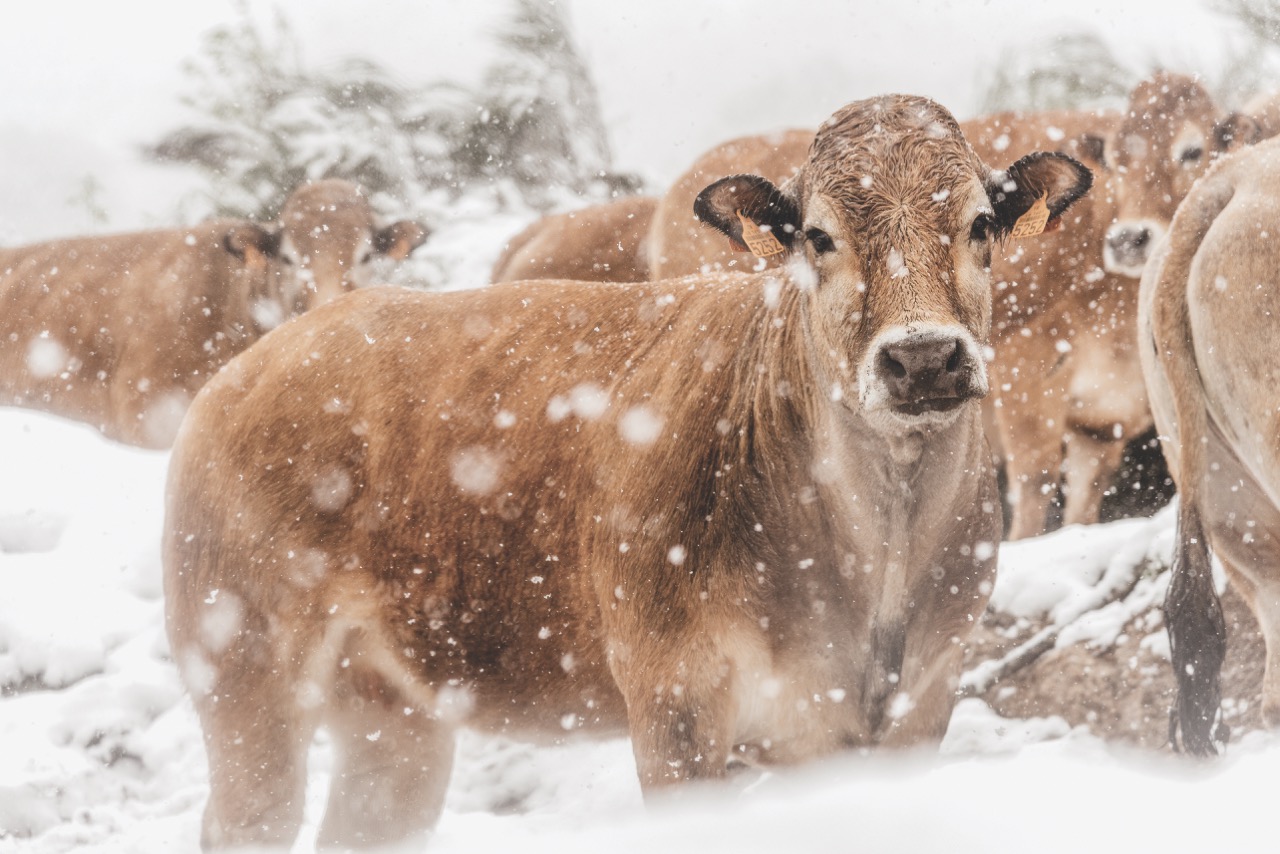
Every species of livestock has a different tolerance for cold and the many nuances winter brings for good care. In general, herbivores can handle the cold easier than omnivores. In all cases, wind (drafts) and dampness compound cold’s difficulties.
Access to Water
When delving into cold-weather animal care, the one aspect too many people overlook is water. Low temperatures do reduce water consumption, but animals still need water, even on the coldest days. Ice won’t do.
If you have electric power to a water trough, you can use a thermal gadget to maintain open water. Moving water freezes slower than motionless water. Well water comes out of the ground at about 50°F (10ºC) versus pond water with a foot of ice on top that starts down a pipe at about 33°F (0.5ºC).
The chances of moving water freezing changes dramatically depending on how long the pipe is exposed to cold air and at what temperature the water entered the pipe. On our farm, we use pond water but bury the water lines. Even though a pond may have a foot of ice on top, as soon as the water enters the buried pipe it begins to warm.
Overflows work extremely well if you have plenty of water. Fortunately, most of the time, water is far more plentiful (ponds, wells, springs) in the winter than in the summer. Winter wastage is usually not a problem like it is in the summer when droughts can deplete sources.
We’ve been successful keeping troughs open down to 0°F (-18ºC) by creating a flow-through system. This can be a siphon or a simple bulkhead fitting in the side of the trough that drains water off. In either case, be sure to run your overflow hose away from the animals so they don’t muddy up the area. With a full-flow valve plumbed into the bottom of a 100-gallon tank (or smaller) it doesn’t take much flow (1-2 gallons per minute) to keep things ice-free as long as the water is coming in at ground temperature.
Balancing Convenience and Practicality
Figuring out how much flow you need and at what temperature for a certain size tank is a bit of an art, but with a little experience you’ll get the hang of it quickly. While some folks may think wasting this much water is a terrible thing, other alternatives may be more costly in time and/or materials. Running an electric line out to a thermal unit has its own limitations, especially in far-away fields or rented ground. Sometimes we have our livestock on rented land that has no power drop.
Some folks want to develop infrastructure that’s bullet-proof to the most ultra-imaginable apocalypse. That’s never cost effective. By the time you do that, you’ll be bankrupt. Capitalizing on infrastructure designed to handle 95 percent of your weather anomalies means that a handful of days each year you have to do some babysitting. A few days of babysitting (checking a tank or finagling a siphon drain) beats stationary frost-free field drinkers. I want everything portable in order to keep the animals on clean ground and move the impaction around for greatest benefit. Every cow path indicates a lack of proper management.
Another cold alternative is to drain the feeder hose or pipe in the evening and let the animals drink the tank dry overnight. In the morning, hook the water back up for the day. Nothing keeps a tank open like bright sunshine, so whatever you can do to encourage that is good. We have pigs in sheds with plastic pig waterers. A buried pipe feeds a frost-free hydrant nearby. In the morning, we fill the 85-gallon waterer. The pigs drink all day, and at night it may freeze solid, but as soon as we put 50°F (10ºC) water in it, enough thaws to get everything working.
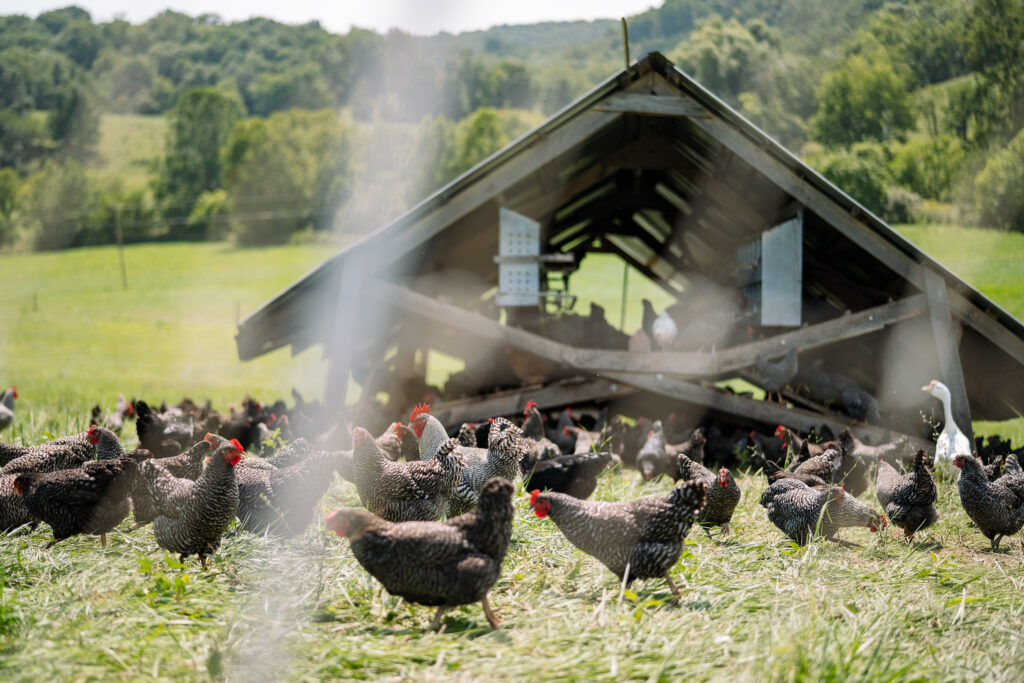
For chickens and rabbits, nothing works as well as housing them in a hoop house. No matter how cold it gets, we can always get the temperature to 70°F (21ºC) in the daytime. Even if water lines and waterers freeze at night, within an hour or two of sunrise everything thaws enough to run again. We simply disconnect the feed lines from the frost-free hydrants overnight so the hydrant can drain and not freeze.
Yes, extremely expensive frost-free livestock watering systems exist, but as long as your main feed lines are buried enough to not freeze, you can get by with a little babysitting. Of course, historically folks gave their animals access to streams (and spring-fed flows) in the winter. In that case, always create a tight V access so they can’t completely enter the water and pee in it. You want a tight enough V that they can stand at the edge and drink, but not go completely into the pond or stream and turn around.
As a side note, what I’ve described would not satisfy animal welfare certification programs which demand that all animals have access to drinking water at all times of day and night. Anyone who keeps livestock knows animals are highly adaptive to routine and do not require water every moment of the day. Herdsmen and shepherds taking animals to water a couple of times a day predates modern urbanites writing ridiculous rules. As long as you develop a dependable routine, animals don’t stress. If you give them plenty of water a couple of times a day, they’ll be quite happy.
But not chickens. Their metabolism and ability to hold water is different from larger animals. They need water throughout the day, but they sleep the most soundly at night. Cows will wander around some at night, but not chickens. That’s the positive side of the chicken, which needs no water at night.
Keeping Animals Dry and Protected
Now let’s move to shelter. Draft and dampness kill chickens even at moderate temperatures. All animals have the capacity to insulate themselves with hair, wool, hide, and feathers. Or, in the case of pigs, they naturally make nests and snuggle together to keep warm. But no animal likes it windy and wet. Cows can handle snow much better than a cold, freezing rain. It’s all about preserving their natural insulation.
Think about what happens to you when your coat gets wet on a cold day. As long as it stays dry, you’re warm. As soon as it’s soaked through, you start to shiver. That’s similar to animals and why they all seek shelter in cold rains and blizzards. Since our animals can’t always find natural shelter, we ought to provide it for them.
Here at our farm, we like pole sheds. The poles offer lots of configuration options by providing sturdy anchors for gates and temporary divisions. The key is a roof to keep off cold rains and a soft, carbonaceous bedding to provide a dry, warm place to lounge. Wood chips, sawdust, leaves, straw—any kind of carbon will work, but it should go in dry in order to absorb all the urine it possibly can.
Deep Bedding for Warmth and Comfort
We store mountains of wood chips in a carbon shed next to the livestock barn—pole shed—and bed the animals every few days by loading the carbon in a manure spreader and backing gently through the shed. We add 80 pounds of corn per cubic yard and it ferments in the anaerobic, compacted bedding. When spring arrives and grass grows, the cows and sheep go back out to pasture and we put in pigs, who seek the fermented, buried corn and aerate the deep bedding (up to 4 feet deep), turning it into beautiful compost.
That fermented bedding never gets below about 50°F (10ºC) during the winter, which means the cows and sheep do not need as much caloric intake to maintain body temperature. That reduces hay consumption. We feed in vertically-movable hay gates or even round bale feeders (square bales work just fine) that we move around when the bedding starts building up around them.
All animals thrive on deep bedding, or what we call a “carbonaceous diaper.” Chickens, rabbits, and pigs in tall tunnels stay warm during the day. At night, they snuggle together and stay warm. Imagine a cold bedroom where you snuggle under blankets—and if you’re fortunate, next to a warm spouse. The point is, you can take about any temperature at night as long as you can warm up during the day.
If pigs can create a nest of carbon, they can handle just about anything. We had two blizzards back-to-back one early December before we’d gotten our last group of pigs in from their forest acorn glen. I couldn’t get to them for a couple of days. When I finally broke through the snow drifts and arrived on the tractor, they erupted out of a big nest they’d built in the leaves next to a deadfall. Steam rose like a maple sugaring evaporation tray. They were happy to see me, but mainly, they were comfortable and healthy. They followed the tractor tracks home to the shed and were glad to be home for the rest of the winter.
Animals’ Resilience in Cold Weather
Animals are far more resilient than most people think. As long as they can stay dry, both above with a roof and below with bedding, and stay out of the wind, they can handle just about anything. You don’t need an L.L. Bean plug-in heated pillow for every chicken. With these minimal requirements, your livestock will thrive through the winter and be ready, like you, to greet spring.







Leave a Reply