
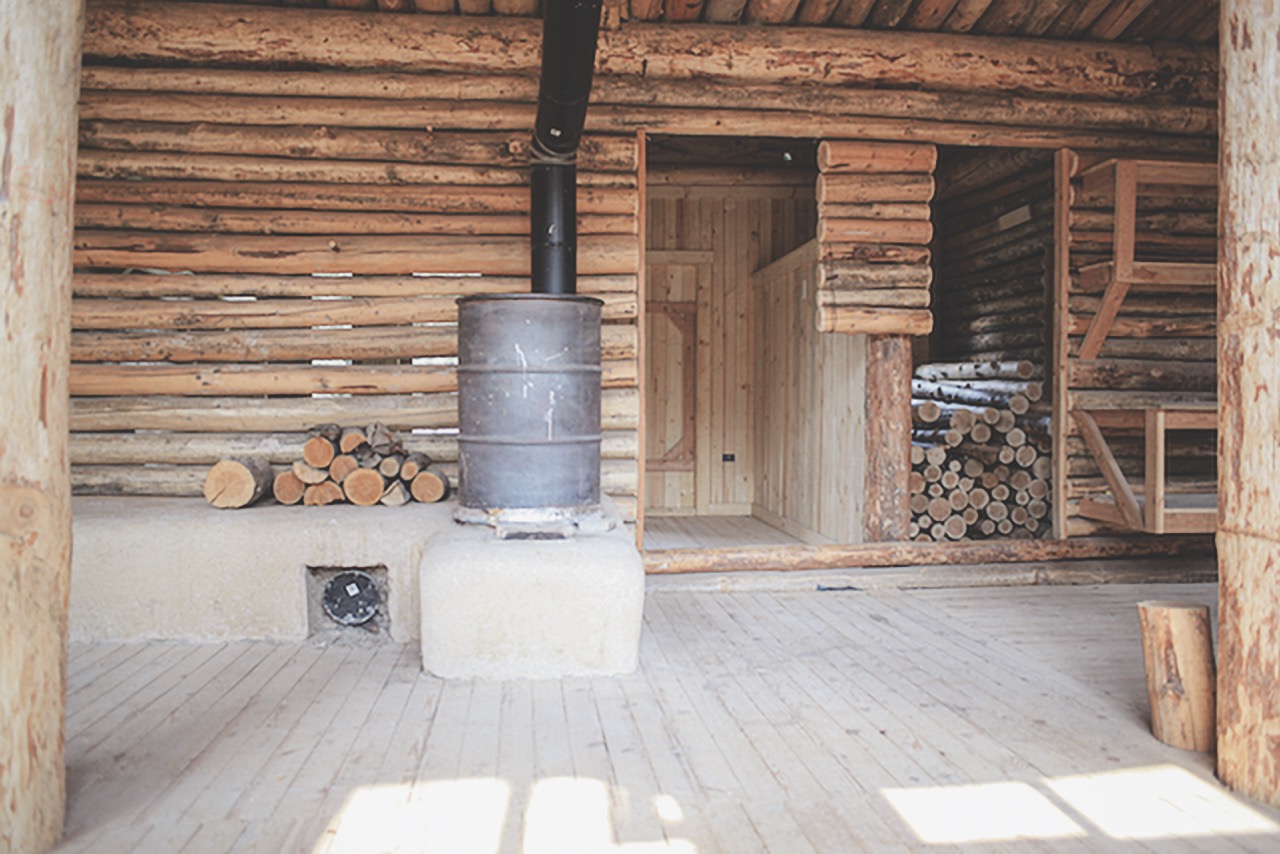
Like most homesteaders, it warms my soul to heat my home with wood. I harvested it, dried it, split it, started the fire, and checked on it. Beautiful fire. And since I nurture my trees, I like to think that I gardened and grew my heat too.
In 2008, I had been heating my home with only wood for many years. A friend sat in my kitchen telling me about a weird wood-burning contraption he saw that defied my understanding of what wood heat can do. I told him that it had to be a fluke. I was adamant that he was wrong, and he was adamant that he was right. I trusted him, so it shook me that we would have such a disagreement. To prove my point, I traveled a few hours to see just what he was talking about. As it turned out, he was right.
A Game-Changing Discovery
A tiny fire burned for about an hour—sideways. Peering into the hole, I watched as the flames got sucked away from me. I had to stare for a mighty long time to make sure it wasn’t some sort of trick. The fire burned fast and hot, and when it went out, the bench beside it was too hot to touch. I had to put cushions on the bench to keep from burning myself! Within 15 minutes I had to get up because I felt like I was in a sauna.
The next morning, with the world outside still tucked in a blanket of snow, the bench was still very warm. The whole house was still warm—23 hours later—but there had been no new fire. What is this wizardry? I thought to myself. At home I would have had a big fire running as I went to bed, then I would have had to start a new fire first thing in the morning.
I asked my friend, “Why don’t more people know about this?”
“I dunno. I tell anybody that comes by,” he replied.
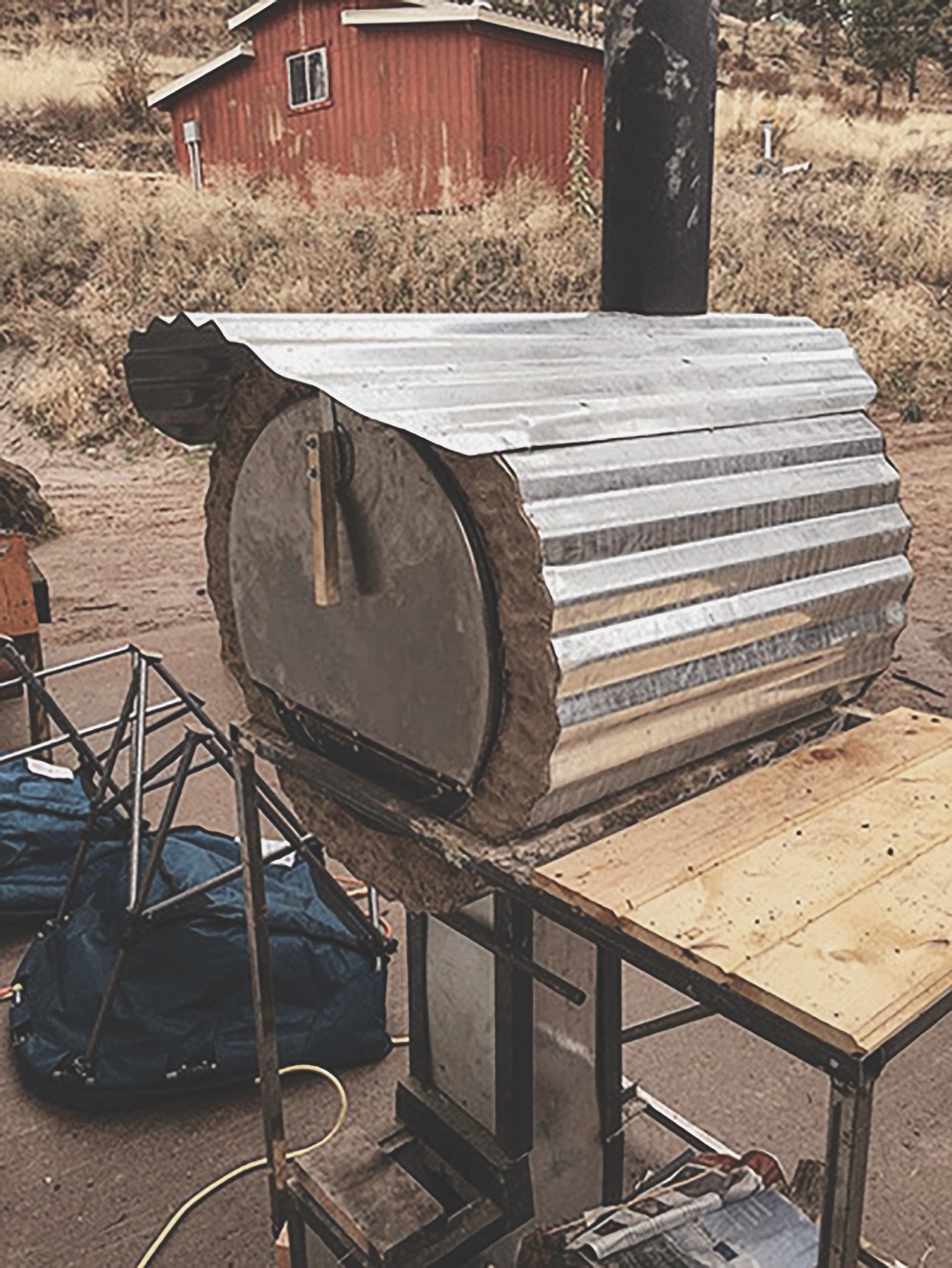
I had so many questions. I stayed for two days and helped them build another one—whatever it was. The new one was different; simple. We went from nothing to running a fire in about a day. There was a metal barrel, some ductwork, and we mixed a lot of sand and clay.
Before I left, I started a fire and put my hand in the exhaust at the point where it exits the system. My hand got wet from a bit of cool steam, but it felt about room temperature—70°F, maybe 80°F (21-27ºC).
The contraption in question is called a “rocket mass heater.” It steals a lot of ideas from masonry stoves and then adds a few more things.
How a Rocket Mass Heater Works
Smoke and creosote burn at 1,300°F (704ºC), while your regular wood stoves struggle to get hotter than 1,000°F (538ºC). Rather than putting the fire in a metal box, the fire is in an insulated space; this pushes for temperatures around 982°F (528ºC) to make the smoke and creosote become bonus fuels, with the added bonus of an incredibly clean burn, far less likely to cause a chimney fire.
Wood stoves have a chimney temperature of 350-600°F (177-316ºC). At night I would put a big log in the stove and turn the dampers down in the hopes of being able to wake up in the morning to a house that wasn’t too brutally cold. I didn’t realize that this would force my 75 percent efficient wood stove to operate at three percent efficiency. And when the fire would go out around midnight, the warm air continued to move from my house into the stove and up the chimney. The way I was running my wood stove was actually at a heat loss due to the introduction of outside air. You had to be right next to the running stove to feel any warmth.
Now I heat my home with a rocket mass heater. I use about one-tenth of the wood that I used to use with my regular wood stove. I light one small fire per day and my house is warm in the morning when I wake up.
It used to be that my woodshed would be packed, with a few dead-standing trees in reserve to supplement my heating needs once the shed was empty. I often thought about building another shed just to make it through the winter. Now, my shed is half-empty, and yet what I have is enough to last me three winters.
All the soul-warming benefits of heating with wood—and it’s easier too.
Different Styles of Rocket Mass Heaters
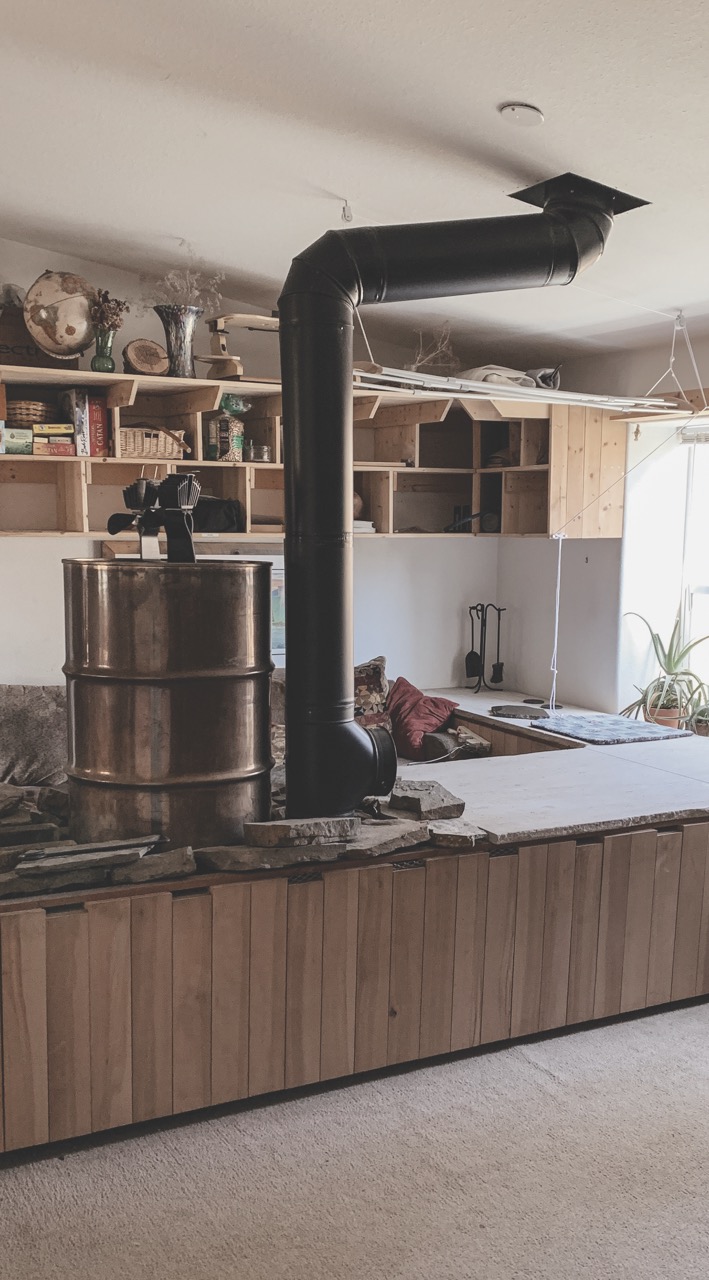
I live outside Missoula, Montana (Zone 5). I’ve been heating my home exclusively with a rocket mass heater for over a decade now. We built it in 2013 with a design I sketched. It has a beautiful wood box surrounding the bench, granite slabs on top, and a stainless steel barrel that has developed a lovely patina over the years.
I am a bit partial to mine, but I must acknowledge there are several other options for materials, design, layout, and ultimate appearance, all while still providing excellent performance, safety, and low-maintenance for decades to come.
Mine is what we call an “eight-inch pebble-style rocket mass heater,” meaning that most of the duct is eight inches in diameter, and the mass is filled with small pebbles—a great option for folks who might need to remove it someday.
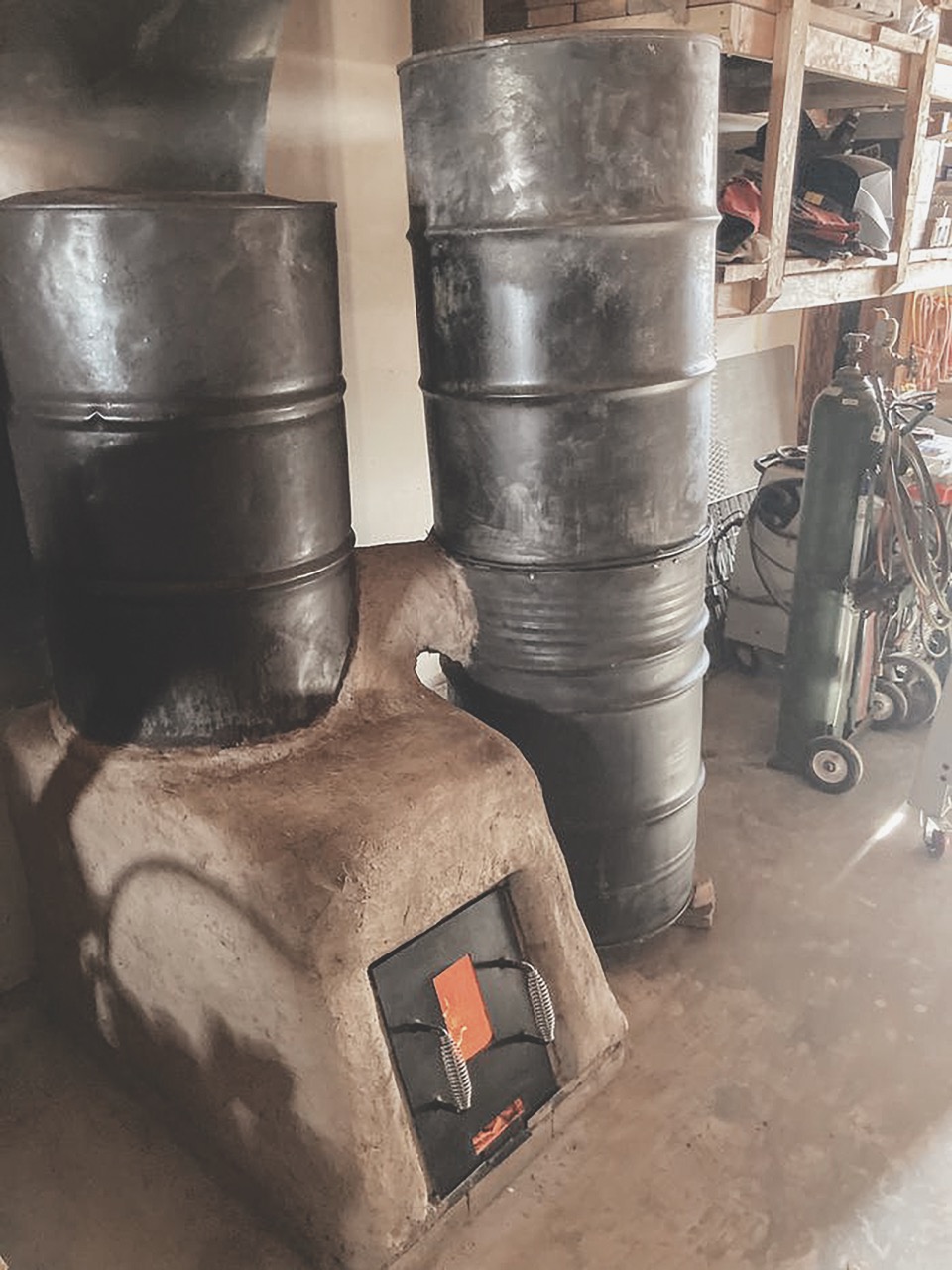
A lot of people build their rocket mass heaters using cob—a mixture of clay, sand, and straw. Cob can be finished with an organic, sculpted look or a sleek, polished, modern finish that resembles marble. While I like my stainless steel barrel, standard metal drums work just as well. Some people even forgo the barrel entirely, opting instead for a brick or stone “bell.”
Some builders integrate the mass into the floor rather than a bench, creating luxuriant, radiant floor heating. In summer, the mass remains delightfully cool thanks to thermal inertia. Some folks have worked with their inspectors to make this “modified masonry stove” 100% code-compliant. Others, wanting a rocket mass heater without the DIY effort, have purchased a UL-certified Liberator Rocket Stove and run the exhaust through a mass. And then there are those who simply built one to stay warm, never worrying about all that stuff. Since it doesn’t produce smoke after the first couple of minutes of operation, nobody likely even notices it. From the outside, it just looks like cool steam venting from the roof.
It’s hard to describe the beauty, ease, and luxuriance of heating your home with a rocket mass heater—to undo everything we think we know about heating houses with wood. This is truly one of those things better experienced first-hand. There are likely tens of thousands of these heaters running across the U.S., mostly built by regular people with a little help. Many owners are more than happy to show them off and share their experiences.
We love showing off all our rocket contraptions: 14 rocket mass heaters, three rocket stoves, two rocket cooktops, two rocket water heaters, a rocket sauna, a rocket hot tub, two rocket kilns, and a rocket forge.
Learning Resources
We’ve put together a variety of resources for you at permies.com, including a detailed FAQ, videos, a list of credentialed RMH experts and building contractors, and even leads on places where you can experience a beautiful Rocket Mass Heater firsthand—my place included!
If this kind of thing excites you, join the conversation in our forums at permies.com, where we regularly discuss rocket mass heaters, homesteading, and permaculture. Don’t forget to grab your free Rocket Mass Heater 3D Plans at permies.com/3dp.
Quick facts about rocket mass heaters:
- You can heat your home with 80-90 percent less wood than a typical wood stove.
- Exhaust is nearly pure steam and CO2, with a little smoke at the beginning.
- The heat from one fire can last for days.
- It can take as little as a day or two to
build one. - Cost is anywhere from $50 to $3,000
to DIY. - Produces less CO2 than natural gas or electric heat.
- If you buy the wood, it costs less to operate than natural gas. If you have the wood, it can be virtually free to operate indefinitely.





Leave a Reply