



If you’ve ever wondered whether you’re allowed to keep chickens, sell eggs from your backyard, build a shed, or start a small homestead business … this episode is essential listening.
In Episode #20 of The Coop, Anna sits down with Jacob Lauser (lawyer, homesteader, and founder of Homesteaders.Legal) for a practical, no-nonsense conversation about the legal realities every homesteader should be aware of.
Jacob shares his unique perspective as someone who has both practiced law and lived the homesteading life. He explains how to research zoning and land-use rules before (and after) buying property, what to watch for with livestock regulations, cottage food laws, water rights, HOA restrictions, and the realities of selling produce, eggs, or value-added products.
Rather than acting as a roadblock, Jacob encourages homesteaders to become informed so they can work within the system when possible … finding legal pathways instead of constantly fighting it. He stresses the importance of doing your due diligence: checking official sources, talking to locals, understanding your county’s specific rules, and knowing when to consult a knowledgeable attorney.
Whether you’re dreaming of buying land, already raising animals, or thinking about turning your homestead into a small business, this episode will help you avoid common legal pitfalls and make smarter, more informed decisions.
In this episode, Anna and Jacob discuss:
- Key things to research before buying land (zoning, restrictions, water rights, and more)
- Rules around livestock (chickens, goats, cows, and other animals)
- Cottage food laws, selling produce/eggs/meat, and starting a small homestead business
- How to work with the system instead of constantly fighting it
- Practical advice for staying compliant while still enjoying the freedom of homesteading
About Jacob Lauser
Jacob is an attorney, former law professor, and passionate homesteader. With over 15 years of legal experience across multiple states, he specializes in helping homesteaders navigate land use, zoning, livestock regulations, cottage food laws, and small business compliance. Jacob left the system to focus on empowering everyday homesteaders through education and practical legal guidance. He founded Homesteaders.Legal to share the knowledge that allows families to build resilient, self-sufficient lives while staying on the right side of the law. Jacob lives in North Idaho with his wife and family, where he continues to practice traditional homesteading skills.
The show notes …
00:00 — Introduction
05:55 — Disclaimer: Education vs. Advice
12:36 — Facilitating vs. Resisting
18:21 — Most Common Legal Issues
23:00 — Legal Considerations for Buying Land
36:15 — How to Research Local Laws
44:35 — Zoning 101
52:01 — Livestock Liability
1:00:43 — Food Growing Ordinances
1:12:50 — Water Rights
1:22:27 — Starting a Homestead Business
1:33:08 — Food Processing
1:41:11 — LLCs and Sole Proprietorships
1:48:23 — Reader Q&A
1:55:29 — Follow Jacob
Jacob Lauser:
Well, this is actually shocking. A lot of people don’t realize this. Technically, gardening is illegal in the United States. I try to act as a facilitator. So somebody comes to me with a challenge, I’m not just saying, no, no, no. I’m saying, here’s how you can get there legally. Here’s what you need to think about as you do this so you can protect yourself or improve your benefits, make sure you’re in compliance with the law. The rules usually exist because somebody did something stupid and somebody got hurt. Or there was a big loss of money. I want to tell people, a big benefit for complying with all these rules, even if you don’t agree with them, is that it opens doors.
Anna Sakawsky:
This episode is brought to you by Azure Standard. Family owned since the 1970s, Azure Standard is on a mission to make real food more accessible by delivering it straight to your doorstep or to a convenient local drop point near you. Everything they offer is completely organic, non- GMO, and free from junk additives you don’t want in your home or in your body. With more than 13,000 carefully vetted products, Azure Standard makes it easy to stock up on what really matters from bulk grains, nuts, and healthy oils to fruits and vegetables, frozen meats, pantry staples, and even clean household goods. And the best part is you skip the grocery store markup. You can order exactly what your family actually needs, save big on high quality food, and pick it up alongside neighbors who care about the same things you do. Health, sustainability, and supporting ethical producers.
You can head to azurestandard.com right now to get started. Again, that’s azurestandard.com. Well, hello everyone and welcome to episode number 20 of The Coop. I’m your host, Anna Sokowski, editor-in-chief of Homestead Living Magazine. And just before we begin today, I have to just put out a little disclaimer. I have been a little bit sick this week, so if you’re listening and thinking she sounds a little bit different, or if you’re watching me on YouTube and saying, “Something looks a little off. She doesn’t look so hot.” We’re just actually getting ready. We’re going away on Saturday. My family is all going on a trip to Mexico, which is a big deal. My dad is retiring after 50 years of work in the trucking industry this week, and we are going on a celebratory trip to Mexico, which sounds fantastic, but you know if you are a homesteader, even if you’re not a homesteader, if you got kids, if you got a job, all the things and in modern life, it can be hard to get away even for just a week.
You got to get ahead on work and you got to make sure everything is buttoned up before you go. But if you homestead, it can be even harder to get away. And we’re lucky that it is at the time of recording late March. So we don’t have gardens that need to be taken care of. We do have some seedlings, but we’ve gone a little … We scaled that back a bit this year. But between that and we’ve got a sick chicken that we’ve been dealing with and there’s all these extra things that factor into the equation when you’re homestaying too. So all that to say that it’s always a little bit of a pressure cooker the week before we try to go away anywhere. And so this is just kind of a natural symptom of that. My kids got sick too. It’s spring break. It happens.
But so just so you know, if you’re thinking, “Oh, she sounds a little under the weather, it’s because I am.” But all that aside, that is not what we’re actually talking about today. Today, we are talking about something that every homesteader think needs to know. And that is the legal side of this lifestyle. And that maybe sounds like boring at first, but actually I think it’s really interesting when you start getting into it. And it’s really important that I think everybody who wants to homestead in any capacity at least has a general idea of the types of legal issues that they may face at some point or considerations that they should make because it’s better to be informed, make an informed decision that ignorance is no excuse kind of thing. So we need to at least have that knowledge of what we should know, what kind of legal issues may present themselves in different situations as a homesteader, whether it’s buying raw land or building or trying to sell goods that we produce or whatever it is.
There are legal regulations around certain things that we just need to be aware of. And so our guest today is Jacob Lauser. So he’s a lawyer turned homesteader and a regular contributor to Homestead Living Magazine and the founder of homesteaders.legal. So Jacob specializes in helping homesteaders navigate everything from land and water rights, zoning, livestock regulations, cottage food laws, bartering and business considerations. And I’m probably a lot more that I’m forgetting right now or that I can’t think of off the top of my head, but he lives in North Idaho with his wife Wendy and their five kids and brings a unique perspective on combining legal expertise with real life homesteading experience. So today we’re going to cover some of the legal issues you may come up against throughout your homesteading journey, what you need to consider before buying land, keeping animals, growing food, building infrastructure, or selling goods from your property.
So whether you’re just getting started or looking to expand your homestead, Jacob’s insights, I think will really help you to stay on the right side of the law, hopefully, while enjoying the freedom of homesteading. So I’ve already learned a ton from Jacob’s articles that he’s written. I’m excited to finally have him on the show today because it’s very rare actually that you find someone who is equally well versed in both homesteading and the law. So I am excited to pick his brain a bit for my own sake too, because my husband and I have definitely come up against some legal issues already in our journey, mostly with building codes and zoning laws, nothing major, but I know what a pain they can be when they present themselves. And we want to hopefully save you that headache and that heartache by answering some of your legal questions today.
So with that, I am pleased to welcome Jacob Lauser to the show.
Jacob Lauser:
Good morning, Anna. How are you today?
Anna Sakawsky:
I am. I’m good. I’ve explained to our listeners, I’m going to kind of rally through this, but I’m excited for this conversation. So I’m feeling a little pumped right now. So before we get into it, I know you have something really important that you like to include in every article and that you probably want to include at the beginning of this conversation. So before we start diving into all of the topics we’re going to cover, can you share with us what that is?
Jacob Lauser:
Absolutely. I mean, I think anybody that ever watches an attorney commercial, here’s the fast speech at the end with the legal disclaimers. And unfortunately, that’s the reality of our world today. I have to tell everybody that the information that I’m giving today is for education and entertainment purposes only. I’m happy to answer questions and point people in the right direction, but believe it or not, the legal profession is one of the most heavily regulated industries out there. So there are literally rules of ethics and practice that I have to follow, and they actually detail things like giving out free advice and all that sort of stuff. So not to be the wet blanket, but I have to say that education and entertainment purposes only, nothing that I say today should be relied on without consulting with an experienced attorney in your particular state or country, as the case may be, and that answering your questions does not create an attorney-client relationship with us.
So I just have to say that. But if you have any follow-up questions about anything that we talk with today, speak with a knowledgeable attorney in your area. But the information that I provide and the articles that I’ve written and the questions and answers I’m going to provide today are really for education purposes to teach people how to think about legal challenges and questions because you said it earlier, ignorance of the law is no excuse, but if you don’t even know things are out there, you don’t even know where to look, you might step in bear traps as I call them. So this is intended to have that conversation to get people thinking that there’s probably some legal implications here you got to think about, and that’s just the first step. But now that we’ve gotten that out of the way, happy to talk more.
Awesome.
Anna Sakawsky:
Well, I appreciate the disclaimer. It’s funny because I remember the first time you sent one in with one of your articles and I was like, oh, we don’t usually add these. Sometimes we do if it’s like an herbal thing or somebody recommending something for medicinal purposes or whatever, we tend to include some disclaimers here and there when needed. But we don’t typically do that, but I thought, well, this is very fitting, just the fact that you’re a lawyer to include that. But I really do appreciate the, not advice, but the free information that you share with everybody because it is hard to find, like you say, if you don’t even know it exists, you don’t even know where to start looking. You don’t even know that you are in breach of something, right? And it can be really hard, especially for homesteaders because it’s such a niche topic as well, right?
And there’s so many different areas of home setting that could have legal ramifications if we’re not careful. So having just kind of, like I say, a broad view of what those areas are and just trying to avoid those bear traps. I had mentioned before we hopped on to record that there’s all of the issues that we’re going to talk about today, we could go into a lot deeper. And I would love to have you back to talk about those things in more depth, but for our listeners too, if you’re thinking, “Oh, I wish you would have asked that or it would have been…” We’re going to kind of give a broad overview of all these areas today and touch on all of them. And then hopefully if you have questions actually after listening, leave a comment right below the video and let us know and then maybe we’ll have Jacob back on to talk about some of the issues in more depth.
But we’ll start off. I just want to start off by getting your background a little bit. So tell us a little bit about your legal background and how it has influenced you as a homesteader.
Jacob Lauser:
I like to tell people I’ve been homesteading for 40 years. I’m not that old, but well, I’m over 40, but I’m not a born farmer, but I grew up spending a lot of time on my grandmother’s farm in Southwest Virginia and really seeing how people were working the land and how things were changing over time. And later on, when I became an adult, I went to law school, I always had these things bumming around in the back of my mind. I just kind of assumed, “Well, doesn’t everybody garden? Doesn’t everybody can their own food? Doesn’t everybody know about these things?” And I realized very quickly that many people had no idea. I mean, it makes sense. After World War II, people gravitated towards cities and jobs and work and a lot of the rural lifestyle that our country had been marked by for centuries kind of went further and further by the wayside.
And I found out that I was unusual because I had picked up some of those things from my grandparents and great grandparents and retained them and was still doing them. And so fast forward after law school, I went to law school in Southwest Virginia, Appalachian School of Law, and it’s very rural and a lot of the people who go to that school are from the Appalachian region and they’re very like- minded, very self-sufficient, independently minded folks. And so they too had a lot of this background that I did. But when I got out into the world and I started practicing law, people would come to me and ask me questions every now and then because they knew I had interests in agriculture or business, small business cottage industry type stuff. And I realized I have something unique here and maybe I could benefit people with that, but it really wasn’t until COVID came and everybody started saying, “We have to control our supply chains and we need eggs and toilet paper and all the things that you can get.
” And it really started to shift where the homesteading movement, which had been sort of simmering in the background, really came to the forefront and people started asking me questions and it was like, “Hey, what do I do about this? And what do I do about that? ” And I thought, “I really should share more of this information with people because again, if you don’t know what you don’t know, as they say, and just wanted to start sharing it because I think I commented about this in one of my articles, everybody wishes we could turn back the clock and pretend like it was 1890 or 1930 or whatever and live a more simpler life.” But the reality is that government regulation has steadily continued all that time and there’s usually something out there that you have to think about. But I don’t see myself as a roadblock or someone holding up a stop sign about what you can and can’t do.
I try to act as a facilitator. So somebody comes to me with a challenge, I’m not just saying, “No, no, no.” I’m saying, “Here’s how you can get there legally. Here’s what you need to think about as you do this so you can protect yourself or improve your benefits, make sure you’re in compliance with the law.” I know Joel Salatin famously champions and his family champion this sort of resistance and unlike Star Trek, resistance of the government is not futile, but at the same time, I like to provide a little bit of a counterbalance to that to say that there are ways to work in the system if you understand it well, and to change it if you need to, changing the system. And I’ve been very encouraged to see the food sovereignty movement, homesteading movements, and really people stepping up and saying, “We want more control, we want more oversight, we want more say in our food systems and how we live.” And that’s very encouraging to me.
So when I picked up some of these skills, I started saying, “I’m going to share this as far as I can so people can hear it, so they know what’s going on and they can be empowered.” There’s the old adage in cliche, knowledge is power. Well, this is just one more example of that.
Anna Sakawsky:
Yeah, absolutely. It’s so funny that you mentioned Joel Salatin because I was thinking that as I was writing up my questions for you. You kind of counterbalance him sometimes, I think, because you’re right, Joel. I find Joel is one that tends to advocate for better to beg forgiveness than ask permission, whereas I feel like maybe you’re a little bit more on the other side of that, is to try to at least do things the right way, the legal way and everything first so that you don’t have to deal with the ramifications of that afterward, right? Because not everybody has the tenacity that Joel has too to fight some of these things.
Jacob Lauser:
Yeah. Joel, well, I know what Joel’s dealing with. I mean, I think he’s there in Virginia and I was educated in Virginia and I spent a lot of time there because family was there. I know what he’s dealing with and I don’t fault Joel at all. I mean, sometimes in certain environments, especially as they change like Virginia is recently, whatever your politics are, there’s a lot of bureaucracy in some of these places that are entrenched. And in the case of Virginia, they’ve been doing it for 500 years. There’s a mechanism there that sometimes needs to be pushed back against very hard, and he’s done that well. I think half the time, just knowing that you’ve got fight in you and you’re not someone who’s going to roll over is very important to dealing with these situations, but so is being as educated as you can about the process beforehand, so you know which fights to pick.
So again, I don’t fault Joel at all. I think he’s great. I’ve met him a couple of times at conferences and obviously read books and listened to his lectures and he’s a real kick in the pants and he’s very knowledgeable and he’s done a lot. And again, I wouldn’t say I’m a counterpoint as much, but more like additional information and
Anna Sakawsky:
Background. A balancing perspective maybe, but even like you say, knowledge is power and understanding the law does help you to fight it too, right? Because then you know what rights you have. And so that’s I think why Joel has been really successful is he is very well versed in his legal rights and how the bureaucracy works, even though he hates it. He actually just wrote, he’s going to be our cover feature story for the … I can’t remember when exactly this podcast will be coming out. I think it might be the beginning of May, so the issue will have already come out, but he’s our cover feature for the May, June issue, and he has written a story called If I Were a Bureaucrat, where he takes an honest look, like not satire, but an honest look, knowing what he does, that if he were in a position of authority, how would he act?
What would his MO be for dealing with the types of issues that he comes up against, against other bureaucrats and that sort of thing. But he definitely knows his stuff and I really, yeah, I respect him a lot. But I do appreciate your kind of little bit more balanced perspective too, but like, “Hey, you know what?
” Because I think everybody for the most part wants to do things the legal way, right? But sometimes they make it hard for us, right? Whoever they are, whoever that bureaucracy … And again, I know just from things that we’ve built and stuff that we’ve done that sometimes you come up against legal issues or red tape that is just really ridiculous, right? But we have wanted … I think if you make it easy enough for people, they want to do things the right way. And so understanding that. But then we’ve also learned things throughout the process that’s like, well, we know what doing it that way is like now and maybe there’s a loophole. So not that we’re then doing anything illegal, but it’s like, and we’ll get into this, but we turned our garage into a rental suite a few years back, which had a whole bunch of issues where we did all the legal way.
It took a lot longer. It cost a lot more money to do it. There was a lot of ridiculous red tape involved. Then when my husband went to build a workshop, he’s like, “I don’t want to do that again.” It’s going to cost like an extra $20,000. This workshop that cost him five grand to build out of scrap materials, but he found out that if we just build it up on skids, so it’s technically a movable structure and everything, then that’s okay because it’s not a permanent structure and all these different things. So we’ve found the legal loophole that’s now saved us a lot of money. But anyway, so all of that to say, I’m interested to know, I mean, you’ve written pretty extensively for homestead living and you’ve obviously dealt with some of these issues in real life and with other people who have.
What legal issues or mistakes do you see most homesteaders running into or making most often?
Jacob Lauser:
All of them? Well, again, the first assumption everybody should have is that it’s regulated. You should just assume that something’s regulated. And the real challenge there is I’ve commented on some of my articles. The rules usually exist because somebody did something stupid and somebody got hurt or there was a big loss of money. I mean, for instance, the molasses flood of New England fame years ago resulted in regulations on how you store liquids in large quantities and urban environments or when you’re dealing with homesteading stuff, a lot of homesteaders want to sell eggs or sell farm products and their grandparents may have done that successfully for 50 years, but usually it’s somebody got poisoned from salmonella or something and then the state had to deal with three deaths and they came up with a quick new regulation to make it look like they’re doing something about it.
And when you go long enough, you get a mishmash of these things piling up and there’s all these regulations that cover literally everything. You give people enough time to think about a problem or their job as a bureaucrat is to create fixes for non-problems and you’re going to get a bunch of stuff out there. So I guess what I tell people is first assume that there’s a regulation about something that you want to do and then the question is finding out what do you do about it? But some of the big ones that I see are homesteaders starting out and they start thinking business, this hobby costs a lot of money. How can I defray some of my costs? How can I turn my passion into a business is actually contributing to my bottom line instead of just being money out the door. And they jump right into selling bread or selling eggs or growing seedlings.
Now that’s a big one. We’ve all got a bunch of seedlings at the end of our season in Red Solo Cups sitting there and we think, “Hey, I could sell these on Facebook Marketplace for five bucks a piece and yeah, that’s fine.” And so those are some of the areas. Others have to do with property rights. Again, we could have hours long conversations on all this, but the top ones I see are business related and tax related having to do with selling things from your farm or doing some sort of business or service. And then the other has to do with land use and zoning.That’s a really big one. You say, “Hey, I want to put a chicken coop in my backyard.” Well, chicken coops are hugely regulated in most environments ostensibly way back from the 60s and forward for quote unquote health and safety reasons.
So most chicken coops, for instance, are banned according to the zoning and the land use or accessory structures. That’s a big one that I see. People want to put in little tool shed or a goat barn or something in their backyard and they don’t realize that those are regulated as well, where they’re located, where they’re situated, how far they are from the house or how far away from the neighbors, whether or not there’s going to be sounds and smells. I mean, there’s all sorts of regulations. So zoning laws and how you’re allowed to use your land, what you’re allowed to put on your land and what that might look like, size, shape, location. And then going down even further, you get into disputes with neighbors. People, we call it NIMBY, not in my backyard. People have these attitudes of, “Well, I want to do whatever I want on my property, but I don’t want that neighbor to be able to have their chickens or have a donkey or that cow is in a fenced dairy and it looks too small.
I’m going to call the animal cruelty people on them.” So there’s all sorts of challenges and anybody who’s homesteaded long enough will have run into something, whether it’s a nasty gram from your neighbor saying they don’t like the noise of your rooster or a letter of enforcement from the county saying, “You don’t have the zoning to do what you want to do there.” And people get surprised and pretty soon they got to spend some money to fix the problem or go talk to a lawyer if it’s bad enough. And so those are sort of the highlights.
Anna Sakawsky:
Okay. Well, let’s start at the beginning then. So if somebody is just starting out, maybe they’re looking at buying some land, what are a few of the key legal considerations they should know before even purchasing land?
Jacob Lauser:
Oh, we could talk for hours just about that. Yeah. I don’t want people to be overwhelmed with what I’m sharing. I equate this sometimes of trying to get people to drink from a fire hose. There’s a lot of information. There’s a lot of considerations. I think most people who first start out, they think, “Oh, I’m going to buy a few acres and start a homestead.” They’ll take a look at some of the books and talk about looking at the land in all different seasons, seeing what the exposure is for growing stuff, what the local micro climate might be to see if that’s acceptable. But some of the other things you need to think about are, what am I allowed to do with this land? One of the first things that I tell people is try to get a hold and see if there’s any limitations or restrictions on the property.
Most people know those as CC&Rs, covenants and restrictions on the property. That could be from a homeowner’s association. And a homeowners association doesn’t have to exist in an urban type of neighborhood. I’ve seen restrictions and HOAs existing for 10 acre ranchettes that have been developed a long time ago that tell you, you can’t have mobile homes on the property or if you build a house that has to go through the architectural committee. So that’s the first thing I do. Personally, when I look at land, first thing I ask the realtor is, “Let me see if there’s any restrictions on this property. And if there are, I want CC&Rs, I want covenants, I want to even see easements.” So CC&Rs are agreements between property owners in the same neighborhood where you can influence what you’re allowed to do by contract law, what you’re allowed to do on your land.
Easements are actually the right of other people to use your land or whatever land it is for whatever purpose it could be. Easements often take the form of access, so they’re allowed to drive across your land to get to theirs. Other people are allowed to access waterways or resources. Sometimes they see shared well agreements or shared road agreements. So you want to take a look at all the easements to make sure you know exactly who’s allowed to use portions of your land and for what. And then before we get down to zoning, I’ll get to that next. Then you’re going to want to see what’s physically happening on the property. A lot of people don’t realize that most properties are bought and sold site unseen, or there’s been a big gap since the owner may have gone out to the property and taken a look at it.
So it’s really important for you to go out and look at these parcels and see does it look like the neighbor is driving across this property? Does it look like somebody has put a fence up that might trespass on the land? Or in some cases, as I’ve seen rural land, some neighbor literally just put a fence up around the property and is trying to claim it for themselves. And you have to know those things because there are many concepts of the law, prescriptive use, adverse possession.
To put it plainly, there are ways that people can steal land. I don’t advocate for that, but there’s ways people can steal land. It goes back to the old days when the government was trying to encourage people to actually physically occupy and settle land. And you had all these developers back yeast, the railroads and things that were buying up all this land on paper and then holding onto it and not allowing people to actually go and settle it and develop it. So the government came up with these ideas of adverse possession that whoever’s willing to go out and physically occupy the land for enough time, pay the taxes on it and actually start it being productive, will get title of the land. Now, that gets abused and people literally try to steal the land. So you got to get out there and see for yourself, how are people actually using this land?
Are there any trespassers or people that are trying to stake a claim for themselves? And then you got to start thinking about, let’s assume everything’s good and clear. It’s a good property. Nobody’s trying to steal it or there’s no problems, there’s no easements over it I have to worry about. Now you have to think about government regulation. What am I actually allowed to do with this land? So the next thing I do when I’m helping anyone to search for a property is I take a look at the title, make sure the title is clear. All the legal procedures have been followed over the years. There’s no errors or problems that have to be fixed. And then I look at the zoning and the government literally zones every single piece of property.
Think of zoning as a regulatory designation that tells you what you’re allowed to do on the property. The further out from urban areas, the further out from cities and towns, the less restrictive property is generally. You might have a designation that is rural residential or unzoned. Unzoned is still technically zoned. It’s just called unzoned. And you look at that and each zoning designation has a section of the code, the ordinance, that lists all the acceptable uses out there that you are allowed to do without special permission from the government. So I work my way down, make sure it’s a clean, good property, make sure that there’s nobody interfering with the potential rights there, and then see what the government lets you do. And let’s say it says rural residential one, and then you go into the ordinance and it says you’re allowed to have one house, one septic, and it will be specific.
It’ll say agricultural activities to include five cows per acre or 40 chickens per acre. Or the best case scenario is, it won’t say anything. It’ll say unrestricted, do whatever you want.
Anna Sakawsky:
So
Jacob Lauser:
As you’re building this picture, obviously this takes hours and days to do some research sometimes unless you can find the information on the internet and most places you can, but you do this research and you start building a picture and then you see, “Okay, here’s the property, here’s the restrictions, if any, here’s what the government will let me do. ” And then you could go down even further and say, “Okay, what’s it say about chicken coops?” If it says anything about chicken coops, it could say something like, “A chicken coop of less than 50 square feet, situated at least 50 feet from dwellings and 10 feet from all surrounding property lines.” So you start drilling down, you get a final picture of what you’re allowed to do and that helps inform your plans and your ideas. You say, “I know what I can do without triggering the government coming and looking and investigating this more.” And as long as I stay within those boundaries, then if they come knocking, I’ll say, “Hey, I looked at this and this and this and look here Sure.
My chicken coop is 50 feet from the house and my property line is over here and my fence is such and such height. It really depends on your location. Every county in the United States is different. Every jurisdiction, Canada has their own rules. So it’s just a matter of investigating them and see how detailed they are and then learning what those are based on what you want to do.
Anna Sakawsky:
Right. And so I mean, outside of, say you’re buying land and you’re asking the realtor to look into some certain things for you, where do you find this information? I know every area is different. What levels of government are regulating these things? Is it a mixture? Is some of it federally regulated? Is some of it state, county? Where are we even starting to find that information?
Jacob Lauser:
Everyone.
Anna Sakawsky:
So every level really kind of has their fingers in this pie.
Jacob Lauser:
It does. It does. There’s another old saying, government will expand to the limits that it can. It will get as big as it’s allowed to get. And in many areas, especially affecting land and land use, the government has stuck its nose where it doesn’t belong, quite honestly. Until a couple of years ago, for instance, we saw a continual expansion of government interference with private property water rights all across the United States, because what was happening consistently for the last 30 years, but especially during the Obama administration, was they changed the definition of something called waters of the United States. And the EPA and some other regulatory agencies basically got together and colluded to this idea that if we can’t directly go after property, what we can do is we can change the definitions, as they often do, change the definition of something that would naturally expand our power.
And they changed the definitions of a statutory term called the waters of the United States, which gave them power and control from what it originally was, which was the main waterways in the United States, Mississippi River, Columbia River, all those quote unquote navigable waterways. Anywhere that you could drive a boat was considered a public conveyance or a highway in the old days. And so they belonged to the United States. But what was happening under these environmental regulations by expanding what qualified as the waters of the United States, they were able to reach in and control with government regulations intended for large waterways, mud puddles on private property. And it actually, the seminal case, I forget the case number, but it involved a homeowner up here in North Idaho on, I think it was Priest Lake, was trying to build a lakeside home. And they went in and the EPA and the federal government actually told them, “We have control of the water, the swampy water on your property so you’re not allowed to build there.” So I guess what I’m saying, thankfully they won that after a 10 year court battle or something, and the definition was slapped back to navigable waterways where you could actually do a boat.
But that’s an example of, well, I would say government overreach, but government expansion into every area that can affect even things like a mud puddle that shows up on your property for three months a year in the summer. So you have to be aware of those things and those trends. Now, on the day-to-day basis, let’s assume you don’t have something like that that’s affecting your land. On a day-to-day basis, you should assume that your state has some sort of regulations, your county has some sort of regulations and your locality or your city or your town may have regulations, may or may not, depends on how big you are. But those are the places to look because assuming there’s no big federal thing that has to do with water, usually water, water and environmental rules at the federal level. And then state, the state may also have water and environmental rules like California’s infamous for this.
They find farmers millions of dollars for tilling too deeply on their wheat fields. So you have to think about that. Are there any state level environmental regulations and things that could interfere with my use of the land? And then you get down to the county level. County is going to be more concerned about building codes, zoning, because they make money off it. I mean, most counties regulate those things because they get fees for development and that funds their budget. So there’s going to be something in the way of zoning, planning and zoning ordinances and construction standards. And then your local municipality may be divided on that as well. So sometimes you have counties that are the main drivers of all this. Others are large cities, so they kind of take the place of the county, but those are the big factors, at least in the United States, federal, state, county, local.
And then depending on what you’re doing, there might be a state agency that handles these things like the Department of Agriculture or the Department of Water. In Idaho, we have the Idaho Department of Water Resources, for instance. You have to think about them. So those are sort of the multi-tiered levels of government interference.
Anna Sakawsky:
Right. Okay. And so if somebody is wanting to find out what their local regulations are and who controls what, do you just recommend just start with a Google search, just start asking around, should you get a lawyer? How do you start down this road to find out exactly what- Who controls what on your land and what you can do? Yeah.
Jacob Lauser:
I hope people never have to hire an attorney for these things. That sounds sort of self-defeating. I hate how legalistic and difficult managing these things and navigating these things has become for normal people because you shouldn’t have to hire a lawyer to navigate all these things. Sometimes you have to because of how complicated it is and what you’re doing. Most of the time I would tell people … I used to tell people go to Google. The problem with Google is, if you go to Google, first thing you have to do is you have to know what to ask. So it’s easy for me to go to Google and say, “Show me the planning ordinance for Kootenai County, and that’ll give me a quick link to their website, or I might have it bookmarked, and then I know how to dig through and look for what I need to look for.
” But if people don’t know what to ask Google, and what’s happening these days is it’s kicking in its AI features to try to fill in what it thinks you want,
And it may point you in the wrong direction because there’s an AI element of that now, which is filling in things, and it might point you in the wrong direction than if you, in the old days when you knew the exact questions to get, and Google would only give you whatever results it had. So I would say this, first things first, sit down, write down what you’re trying to do, what you want to do, and then sort of brainstorm on what you think it might involve. Is it going to involve water rights? Is it going to involve land rights? Is it going to involve business regulations? Is it going to involve property disputes, contracts? Think about that level and try to separate it into categories and then break down what you’re trying to do. So if you think it’s going to be related to business and taxation, a question you might ask Google is, are there any business and tax regulations for Smith County or whatever?
And the goal of that is just to see what pops up because the first thing you should find in the results is a link to Smith County Planning and Zoning Ordinances. And then you can follow that and know that that information is correct because it’s coming right from the municipality or the county. So don’t go off on these rabbit trails or get into ChatGPT and put a bunch of stuff and expect it to point you right in the right direction. What you need to do is look for information directly from the sources. If you find an advisory circular from the Department of Agriculture on Cottage Foods, that’s going to be something you can rely on, not an answer from ChatGPT. If you have a planning and zoning question about Smith County, you’re going to get that from Smith County. And what it should eventually lead you to is people to talk to.
So you’re not going to be able to do all this online. You’re eventually going to hit a wall. Even I have to pick up the phone and call the planning and zoning officer and say, “Hey, we got this situation, here’s the zoning on it. I want to know what we can do with X, Y, and Z. Can you give me some information?” I know some people say don’t talk to officials like that because it can put you on their radar. I have found that you don’t have to always disclose specific information as long as you have things like zoning or size of your property or something. You say, “Hey, I’ve got a hypothetical for you. I own a
Anna Sakawsky:
Five-” I was asking for a friend.
Jacob Lauser:
Yeah. I have a hypothetical question. I have a five acre parcel in this zoning and I want to put in 50 chickens. Is that something I’m allowed to do? And if not, what are the regulations? And they’ll send you an email with the ordinance numbers and you can go read those yourself. So there’s a lot of resources. Most of the available material is linked online directly to the regulators, the state agencies, the regulators, the municipalities, the cities, and you can read all this stuff yourself because that’s part of our open society. Everybody has to be allowed to know what the rules say. And if you ask, they’re supposed to send you to the rules so that you can read them yourself. So it can start with a Google search. Of course, talking with other people in your area, that’s a great thing. If I’m going to look at some area, I’ll get on Facebook and see if there’s a Facebook homesteaders group or something for that area and, “Hey, what do you guys know about this?
” And that’s a good resource too, but does that answer your question?
Anna Sakawsky:
Yeah, for sure. I’m one of those people that I’m like, “I don’t even know where to start.” I’m so lucky that I have a husband that has navigated a lot of that type of stuff for me. I am like, man, it’s like paperwork and anything to do with any legalese is just like I tucktail and run the other way. It’s just not my forte. And I don’t want to generalize, but I feel like there’s a lot of people that are maybe in the homestead or camp that are like that. We want to just kind of be free to just do what we want to do. We don’t want to have to sit down and go through all the research and the paperwork. And a lot of times though it is just knowing like, I don’t even know where to start. Where do I start even looking for that?
So just kind of knowing how you would maybe search or how you would narrow it down that like, “Hey, these are the different areas that I think I might come up against, legal challenges or issues or whatever.” And then you can start looking up specifics and then hopefully that leads you to the right person where you can actually ask some questions then, right?
Jacob Lauser:
Yeah. And I want to clarify too, I mean, let’s be absolutely realistic. This information is for people who want to be absolutely legal from the very beginning so that they never have a problem. And that’s my preference because I’m a lawyer and I know how messy things can get, but in reality, it’s almost like speeding on the highway. I do not advocate speeding. I think everybody should follow the rules, but the reality in function is that most people speed all the time, but because they do it in such a way that’s not necessarily terribly risky, like if you’re driving down the freeway in California, everybody’s going 85 miles an hour and the rules being applied are really going to go after those people that are driving 120 miles an hour. They’re going to pull those people over. But if you’re running in the pack and everybody’s going the same speed, you kind of blend in.
And there’s this old saying, unless you’re speeding more than … Well, most people know this, unless you’re speeding more than 10 miles an hour over the speed limit, chances are the police aren’t going to pull you over unless they’re looking to fill a quota or something. So you know that there’s certain things that if you’re doing are probably going to fly under the radar and you’re not going to get an enforcement. So if you have chickens in your backyard and they’re not specifically banned and you don’t have a rooster, they may violate some sort of rule out there, but 15 other people in your area are doing it. Chances of you getting an enforcement action are probably much lower. And again, I’m not advocating this, but when you do that sort of low level activity, you’re probably going to blend in and not have issues.
And many people do that. It’s when they expand or try to do more than what they’re trying to go faster than everyone else around them, that they get the regulators attention and they come after them. So I don’t want people to be ignorant. I’m not advocating that you break the law intentionally and pursue this better to ask forgiveness method, but at the same time, be aware of these things and go looking for the rules. Assume that there are rules and go looking for them. That’s really what I’m advocating.
Anna Sakawsky:
And again, you got to know the rules before you break them, right? Yeah. It must be an intentional decision.
Jacob Lauser:
Could be pretty bad. So looking for those sort of things, Google’s a good start, reading books, talking to other people that are in the space, and assuming that there’s something out there you have to be aware of, and there’s lots of stuff online that you can access to research these things,
Anna Sakawsky:
And
Jacob Lauser:
A good place is the agencies that regulate. There’s also, for homesteaders specifically, there’s a lot of information from universities that like safe canning approaches or cottage food things. Universities have a lot of students that have to do projects and they do research for professors and they put together these circulars and advisory opinions and great little PDF guides on this stuff all the time and they answer a lot of these questions, how to start a small business, how to start a small agricultural business or farm business.
Anna Sakawsky:
Those are the extension offices and stuff like that, right?
Jacob Lauser:
Yeah. So just go looking on the internet, reading, talking with people, making sure you’re not sucked down an AI rabbit hole that doesn’t have the right information and do your research.
Anna Sakawsky:
So high level, because I do want to get into a few specific topics, but just high level, you did mention zoning and it’s always going to differ, like you mentioned like rural, residential and agricultural, no restrictions versus restrictions on there. It’s going to be different for everybody, but high level, agricultural, recreational, and residential zoning. And I don’t know if there’s other ones that I’m missing that are like the kind of the higher level ones, but what’s the difference between those three in terms of just general usage of that type of land and what you can do on those?
Jacob Lauser:
So agricultural, residential and which?
Anna Sakawsky:
And recreational. This is actually a question that we had from, we had asked some of our readers ahead of time if they had questions and that was actually one that came in was, can you explain the difference between those three types of zoning?
Jacob Lauser:
Well, I’d have to look at the specific state and the specific county to tell exactly what the differences are. Generally though, when you’re dealing with recreational land, a lot of land, a lot of very rural land, very rural land out in the sticks two hours from any town is zoned recreational because it denotes sort of undevelopable wildland sort of use. There is a distinction, again, I’d have to look at the specific rules, but most land that I see being sold as recreational is being sold very, very cheaply. And the reason is there isn’t a lot of infrastructure available and there may be restrictions on the ability to develop anything substantial. Now, conversely, there may be absolutely no restrictions on that land and it’s just called recreational because it’s a marketing ploy. It’s unrestricted rural land with absolutely no services and you’re on your own, upper peninsula of Michigan or something like that.
So that’s what I often see. Recreational is more of a marketing designation than a zoning designation, but if there is a designation for recreational, it’s probably because the jurisdiction doesn’t want people developing it. They just want them to use it as temporary occasional use for hunting or wintertime fishing or something like that.
Agricultural land usually has some sort of history or connection or suitability for, as you guess, agriculture. This is a sort of land that is often less restricted, but may have some limited uses. For instance, I lived for several years in Lancaster, Pennsylvania, and there’s a lot of land out there that has specific protective zoning for agriculture that prevents it from being developed or used in some other way, because there’s a lot of development pressure on those properties. So they put them into trusts or protective designations to keep housing developments from being put in and enables them to be continued used for agriculture. As a general designation, agriculture is sort of the catchall, rural agricultural is sort of the catchall for rural land. And quite honestly, if I’m looking at land and I see an agricultural designation of any type, I think, “Oh, that’s great. That’s going to be the least restrictive.
That’s going to allow me to do the most of what I want with my land, tilling, plowing, planting, moving dirt around, building agricultural sheds and greenhouses and chicken coops and chicken buildings.” I mean, that’s sort of the best approach is if I can get a rural piece that’s agriculturally zoned, that’s probably going to be what allows me to do the absolute most with my property in the United States at least.
Anna Sakawsky:
Right. Okay.
Jacob Lauser:
And then what was the third?
Anna Sakawsky:
And then just residential. I mean, that’s pretty self explanatory, but I guess that varies a lot too. You could be in a residential zone area where you can have a chicken coop or in a garden or you could be in an HOA where you can’t or, right? Again,
Jacob Lauser:
It depends on how far away from a city it is. And I don’t mean a city city. I mean, like if you have a town with a town core, you’re going to have commercial and maybe business and maybe industrial, and then your residential is going to start showing up further out from the center. And the further you get from the main center of the city, the lesser restrictions. So you’re going to have high density residential. I don’t know anybody else who played Sim City when they were growing up, but you have these high density residential, like two or three story places or duplexes or triplexes or apartment buildings, and then you go further out and you have a less dense. So it could be like residential one, residential two, residential three, but residential designations can actually have different land uses as well. But what you’re going to look for, I think rural residential is probably the best sort of designation because it’s still residential and it may restrict you from doing certain business or agricultural things, but it’s going to be geared toward the least restrictive residential use.
It might allow you to have two or three houses on the same property depending on the acreage or the size. It may allow limited agricultural activities like I see in some rural residential designations. But yeah, those are the main differences
Anna Sakawsky:
Is
Jacob Lauser:
What kind of density and development do they allow and is there some sort of mix of business and agriculture allowed with agricultural zoning being the least restrictive usually? Right.
Anna Sakawsky:
Well, and I don’t know how it is in the states, but like because I’m in Canada for anybody who’s listening doesn’t know that. And so we’re zoned rural residential. We are actually like three properties away from the city limits and we’re in a really weird kind of quagmire of an area where we’re at the end of a no through road and onto a cul-de-sac and we’re kind of suburban in the front and then we back onto a green belt and we’re on pretty four residentially zoned land. We are pretty unrestricted because the city doesn’t come past that property line and the regional district where we live doesn’t come down the city road to ever get to us. We get pretty much left alone down here, which is nice. Now, if we get snowed in or something like that, nobody comes to our rescue either, but I’d rather have it this way.
That being said, we’ve looked at, there are benefits to getting in Canada we call it, we have ALR land, so the agricultural land reserve, but because you can get all sorts of tax breaks and all that. So our property taxes are less than if we were in the city proper, for example. So that’s nice, but we’re still residentially zoned, but if we were on ALR land, there’s a lot more tax breaks, but there are certain stipulations that come with that here where you actually have to produce a certain amount of food to sell. There’s certain agriculture activities that you need to be maintaining on that property in order to basically to be on that property. So we’ve thought about that before too for the benefits, but then I’m like, is that what we want to do? Are we doing this to sell to the public?
If you’re just homesetting for yourself and you’re not planning on doing any of that, then that might be something that you need to consider as well, is are there stipulations where you’re actually having to produce a certain amount on agricultural land, that sort of thing? Yeah. Interesting. So again, but it comes down to like, again, just really looking at getting really granular and you have to look at your specific area and zoning. And so another thing, aside from kind of the land and that sort of thing is livestock, which we’ve brought up before. So what are, again, this is going to vary depending on your zoning and where you are and I get all that, but what are some of the basics of livestock liability and keeping farm animals on property? Like what should people just be aware of from a legal standpoint? I know you’ve written about this before.
Jacob Lauser:
Yeah. I was going to say, that was my last article. I think we changed the title, but excuse me, ma’am, is this your goat? Yeah. Again, these are things that I can talk about for hours and I’ve written extensively on. The 60,000 foot view is people should know that there is potential liability. Anything you own, anything, whether it’s your car or your goat or your cow or your kids, anything that’s associated with you that leaves your property and does something to somebody else’s property could carry liability. It’s why we have liability insurance for vehicles. We’re out and about driving around, accidents happen, and you have to have coverage for that, at least by law in the United States, but it’s the same thing for things on our properties, whether it’s a water tank that you have on your property that could break and flood the neighbor’s yard or an animal, a large animal or cattle.
Cattle are infamous for breaking down their fences and wandering onto other people’s yards. There’s that famous scene in of Green Gables where the cow gets out and goes next door and eats all the neighbor’s flowers. In today’s environment, people are especially lawsuit happy and even if they don’t sue you, they’re going to make a lot of legal demands that’s going to cause problems. So when you’re talking about animals, I think people need to understand, again, first there is potential liability. Your animals do any sort of damage anywhere, you could be held legally liable for it. Now, we don’t have escaped cow insurance. I mean, there actually is escaped cow insurance, but it’s obscure on a commercial level. I won’t even go into it, but normal people aren’t going to go looking for escaped cow insurance to protect against damage that their cattle caused. But if they break down a fence, for instance, and they get out on the road and somebody crashes into the cow in the middle of the night and it causes medical injuries, those people could come back after you as the owner of the cow and sue you for their medical injuries.
So when you’re making the decision to have animals, whether it’s a chicken or a thousand pound cow or bigger, you have to understand you have an obligation to keep your animals under control in a safe environment where they’re not going to get out and damage other people’s property or potentially hurt them. And you need to follow all those procedures so that God forbid something does happen, you can say, “All right, well, the cow got out, but I built a fence in accordance with the legal standards for fence building.” And I ensured that the cow was behind two different levels of fence and we check the cow once a day and make sure that it’s in the pasture and we have liability insurance for our property that may cover this. So as long as you’re following those sort of best practices and making sure that you’re trying to be responsible, you recognize that you may have liability when you start getting these animals, before you start getting these animals, you’re building the proper containment structures and fences and pens and everything that you need and you’re being responsible.
There’s a standard in the law called the reasonably prudent person and RPP, but the reasonably prudent person is just a fancy word for common sense.
Are you thinking through what problems could arise before you act? And as long as you’re using common sense and saying, “Hey, I got an animal that is stubborn and wants to get out all the time, I’m going to make sure that it’s not going to get out if it doesn’t have to. ” And that applies to animals that can really hurt people, like even dogs, there’s a lot of vicious dog laws out there. So those rules change from place to place. But yeah, there’s a lot of things to consider, but the main one is if it’s yours, you could be responsible for what happens. So use your common sense when you think about what you’re doing.
Anna Sakawsky:
Yeah. It reminds me of there was a case in BC where I live a few years back and there was a farm that was adjacent to a golf course and they had had repeated reports of their pigs getting out and they had not taken it seriously and had not done enough to kind of keep their pigs in. And they got out and they like tore up the whole golf course, right? So caused hundreds of thousands of dollars worth of damage and they were on the hook for that, right? Especially because they had had these issues before and had not taken the proper steps to actually contain the pigs. So really important. And like you say, even chickens, so it’s funny because you bring up the roosters. So we have backyard lag hens. We’re only on a quarter acre, we’re rural residential, but even if we were in the township here, they have changed the laws over the past few years where you can have, I can’t remember how many it is, but you can have some backyard laying hens.
No roosters, of course. No roosters if you’re on, but even rural, if you’re on under an acre, you’re not supposed to have roosters because you’re technically too close to your neighbors and obviously roosters are noisy. Well, we hatched some chicks last year. Of course, when you had your own chicks, you can’t control the outcome there. So we ended up with two roosters, two roosters. And it’s funny because we talk to all our neighbors and we have a really good relationship and not that this will always save you, but I think there’s something to be said about making sure that you do have a good relationship with your neighbors or people who live nearby as best as you can because then sometimes you can get maybe away with things or they’re not going to necessarily go and report you if you have a good relationship with them.
So when these roosters started growing, we gave everybody some eggs. We’re like, sorry and thanks for putting up with them. And we got rid of a rooster before and they were like, all the neighbors were like, “Oh no, we really enjoyed him, so don’t worry about it. ” And so when we ended up with these ones, we’re like, “Okay.” So one of them though turned out to be quite aggressive and he was kind of coming at the kids first and then he was coming at me and I’m like, obviously we have to deal with this chicken, with this rooster, but we hadn’t yet. And I said to my husband even like, “We have to deal with this because if this rooster gets out and goes after…” We got a couple neighbors with like little wiener dogs. If he attacks one of these little dogs, we could be on the hook for that too.
So even animals that you might not think of as being an issue, you still need to consider what-
Jacob Lauser:
Well, think about this. You get an aggressive rooster with some spurs on it, it can kill a wiener dog
Anna Sakawsky:
And
Jacob Lauser:
People don’t realize this. We used to breed dachshunds, but the average pure bread dychen is a $3,500 dog. So right there, that’s a big chunk. Your rooster gets out, kills the neighbor’s dog and you’re on the hook for $3,500 plus fees. And yeah,
Anna Sakawsky:
People
Jacob Lauser:
Don’t think about these things and it’s unfortunate that you have to, in the old days, dozen eggs and some jars of jam, we give jam away to the neighbors to keep them happy. All right.
Anna Sakawsky:
Well, we’re going to talk about that in just a second, sharing food and selling food. I do want to touch on gardening though too. So livestock is almost a little bit more cut and dry usually, I think, but as far as like gardening and growing food, especially if you’re dealing with something like an HOA, they can be quite restrictive. What kind of ordinances in general are there about like say growing food on a residential property? We have ours, our garden is all in our front yard because that’s where the sun hits and we can do that. We don’t have any restrictions about that sort of thing, but what should people maybe be aware of before just going and planting out a food forest or a garden or whatever or what kind of legal issues could they come up against?
Jacob Lauser:
Well, this is actually shocking. A lot of people don’t realize this.
Anna Sakawsky:
If you’ve ever dreamed of waking up to your own fresh eggs every morning, today’s sponsor is the place that’s been making that dream real since 1917. The Murray-McMurray Hatchery has been family-owned for over a century, handpacking the highest quality day old chicks, ducks, geese, turkeys, and rare heritage breeds, and then shipping them straight to your door with their famous live arrival and 48-hour livability guarantee. Low minimums, 90% sexing accuracy and everything you need to get started. Murray McMurray is the one-stop shop for your flock. Go to mcmurrayhatchery.com and tell them the coop sent you. Again, that’s mcmurrayhatchery.com.
Jacob Lauser:
Technically, and I say technically, this is one of the videos I have on my YouTube channel, but technically gardening is illegal in the United States. People don’t realize that. There was actually a US Supreme Court case, Wickered v. Filburn, it was decided in 1942, but the incident happened years before. And it was a wheat farmer who was just growing wheat for his own family use. And the US Supreme Court ruled that when people grow food for themselves, instead of purchasing it from farmers, it can actually have an impact on the stream. We call it the stream of commerce. It can have an impact on the economy. When people are making things for themselves, they’re not participating in the economy, therefore they’re impacting the economy and the government has the right to regulate that. And in the case of that farmer in 1942, the government said, “We can’t allow wheat farmers to just … We can’t allow everybody to just start growing their own food or they won’t be participating in the markets and the stock market will crash and the price of food will fluctuate.” So this ruling came out in 1942, which obviously was right in the middle of World War II.
And the government said, “Okay, now that we’ve got that settled and we have the power to do whatever we want and you guys aren’t even allowed to grow your own food, go grow your own food because we need food for the war.” And so they started the victory garden program. And what happened was there were so many shortages, even in England for like 20 years after World War II, there were so many food shortages while Europe was crawling out of the damage that the US government said, “We’re going to encourage people to grow their own food and gardens, but remember we could take it away at any time. So go grow your own food, but remember, we’re still the ones that have the power.” So this home gardening movement has been going strong since 1940s. People were growing a lot of their own food prior to that, but especially since the 1940s.
And the gardening industry sprouted up with seeds and everything that we buy for our gardens these days, even just go look at the displays at Lowe’s and Home Depot. So technically gardening’s illegal in the United States. So
People need to remember that. Technically gardening is illegal. Now, they haven’t enforced it in a long time and they probably never will because there simply aren’t enough people out there doing this consistently that it really does impact global trade anymore. So they’ll probably never show up and take your food away, but they could. So that’s one thing. As far as the local considerations, you want to go out, like you said, and start a food forest in your front yard. If you own your property and you’re not dealing with a landlord, most places will say, do whatever you want. But again, going and looking at the ordinances for your town and your county and seeing what am I allowed to put and where. I have seen regulations that say you’re not allowed to put food gardens in the front yard, that they have to be in the backyard or out of sight.
There’s a lot of HOAs that have CC&Rs and bylaws that say you can’t do anything in the front or you can’t grow food and sell it in a roadside stand or that sort of thing. So for most people, if you’re just growing vegetables and things in your backyard, out of sight, out of mind, you’re probably fine. But there could be rules, local rules that talk about that and then CC&Rs that tell you you’re not allowed to do it in your front yard where everybody can see it. However, I’m a big proponent for food sovereignty.That’s a passionate issue. I think everybody should be able to grow as much food as they want and that these restrictions I contend violate some fundamental rights. Now, we’re still dealing with Wicker v. Filburn and that reality, but my challenge is if you don’t have CC&Rs and bylaws, most of the rules that may restrict your ability to grow food might conflict with state laws that talk about the right to grow food or agriculture.
It’s sometimes in the state constitutions. It’s sometimes a new food sovereignty rule, like you saw, I think in Maine last year, a couple of years ago. We hold the right to grow food in your backyard as being paramount so everyone’s allowed to do it. They may overrule those statutes or those local rules. So that’s one area I encourage people to push the boundaries, planting some squash in your front yard and seeing what happens because you have a good legal basis to go and say, “Your rules violate the food sovereignty rule that came into the state constitution last year so I don’t have to listen to you. ” So again, there’s areas where the government might be trying to regulate and as long as you’re aware of what’s going on and you push back knowing what the rules say, that’s going to be most important. But I think what’s this guy, James Prigioni over in New Jersey has a tomato growing food forest that he puts on all the time.
And I think he’s just on a small little lot and there’s a couple other growers I’ve seen that have these front yard food forests and I think it’s great. I think it’s far better to have a food forest in your front yard than a nice lawn.
Anna Sakawsky:
Absolutely. Absolutely. Well, and this is my other question is like, do you have tips for homesteaders that are navigating HOAs, especially when they conflict with local or state laws? So we had a reader question actually saying HOAs usually prohibit farm animals, but I’ve heard that some states are overriding those HOA rules and allow homesetters or homeowners to have chickens in their backyard. How can we find out what our rights are and respectfully prove it to the HOA and neighbors?
Jacob Lauser:
HOAs are a nightmare.
Anna Sakawsky:
But if you are in one and you’re dealing with one and there are state rules, for example, that say you’re allowed to grow food or you’re allowed to keep chickens or whatever it is, how could you possibly have a leg to stand on or prove that to the HOA or do they overrule that in that case or like who has the authority there?
Jacob Lauser:
HOAs suck and the reality is there are many HOAs that don’t have a legal leg to stand on, but they’re still on a power trip and they can make your life absolutely miserable. So I would say this, if you’re dealing with an HOA that is being unreasonable and outrageous and threatening you with fines and liens and all sorts of stuff, it might be beneficial to talk with an attorney about it because they’re going to be able to take a look at the CC&Rs and rules and an attorney is going to be the best person to be able to, an experienced attorney, a skilled one and knows the rules, is going to be able to take a look at those and give you a specific answer to push back to the HOA with. Because what I often see is it’s this bully mentality. People on a power trip, I hate to say stuff like this, but it’s the truth.
They’re on a power trip, they’re micromanaging their neighbors, they’ve gotten themselves elected to these boards specifically because they enjoy holding power over people and telling them what to do. And I see those sort of folks cropping up in HOA environments more than probably anywhere else in society. It’s just people that have nothing better to do and they like pushing people around and bullying them.
And it’s a psychological control thing. That’s not everyone, but what I’m saying is in the HOA environment, that is more conducive for people interfering with and manipulating other people. And I don’t like them. I really don’t like them. I’ve represented many HOAs, but my voice to them is always the same. Be reasonable in what you’re enforcing and so long as it’s not something specific that you guys have decided to prioritize, try to work with everyone. That being said, somebody comes to me and says, “I got an HOA, they’re bothering me. ” Idaho, for instance, has a chicken’s rule. I think it came down two years ago. And in my neighborhood, for instance, I currently rent, but we have the statewide chicken rule and there are multiple people in my neighborhood who have chickens. And I get out on the porch, I can hear them all day long.
No roosters, but I can hear the chickens clucking. And I know there’s probably 10 or 15, within three blocks of me, 10 or 15 people that have chickens. Now, it’s illegal under HOA rules. Our HOA doesn’t enforce it, but if they were squawking about it, no pun intended. If they were complaining about it, somebody could go and say, “All right, look, Idaho passed this rule. We’re allowed to have it. ” That might be enough to get the HOA to back down. It might not. I tell my clients all the time, “Look, you have a very strong case for whatever you’re dealing with, but I can’t stop anyone from suing you. If somebody wants to sue you, they’re going to be allowed to sue you and you’ll probably win, but I can’t stop you from having to deal with people who are on a power trip or just want to do something.” So consulting with an attorney to get a specific pushback for HOAs is important for a couple of reasons.
HOAs have a contractual right of enforcement of even unreasonable things, as long as they’re not unconstitutional. So if your state doesn’t have a chicken rule that allows everybody to have chickens and gardens, they may be able to enforce a no chicken rule against you and they have the power to lien and foreclose your property.That’s really the shocking thing. You see these horror stories all the time on the news. Somebody doesn’t pay their homeowner’s association dues or their fines and as long as they follow the procedures in the Statewide Homeowners Association Act or the Condominium Act, they can fine you. And if you don’t pay those fines within a certain amount of time, they can actually foreclose on your property just like a bank to pay their $3,000 in fines. I mean, that’s absolutely outrageous. Now, thankfully, there are some changes across the US at least to bring those things in a check so that people can’t literally foreclose your house because you get into a dispute and don’t want to pay the fines, but it has happened.
So you have to understand that homeowners association fights are probably one where you should a little more seriously consider some professional advice on if it’s over the top, because they could do some nasty things toward you that could literally lose you your house.
And then you might want to think of selling your house and going somewhere without an HOA.
Anna Sakawsky:
Yeah, no kidding. Before we moved out of the city and ended up over on Vancouver Island where we are now, we were in an apartment. We were in a condo in a suburb of Vancouver, just renting, but my family owned it. So it was technically owned, right? But yeah, we had what we up here anyway called Strata Council, which is the same deal, right? And it’s people who tend to be on a power trip who decide that there’s all these silly rules a lot of the time. We were fine for years and then it was things like we were getting notes on our car that you can’t back your car in anymore. You got to pull in one way and not the other way. And we had these nice retan blinds over our balcony to block the sun in the summer. No, we can’t have those anymore, but other people have sheets in their window and all these different things, right?
And so it was whatever. It was an interim point in our life when we knew we were moving on, but after just the experience we had there, I’m like, “I will never live again. I’d rather have our own place where we’re responsible for 100% of it. And yes, we’re on the line for all the costs associated with that and all the work that goes into it and all that sort of thing.” But man, the restrictions that we face just living there and not even really trying to do anything outside of just live our daily lives was too much for me. So yeah, from my experience, I would, especially as a homesteader, recommend against if you’re looking for land anyway, probably HOA is the last place you want to look, anything that’s highly regulated like that. Let’s bring it back to water use because you did mention that in the beginning.
So what should you consider before, say, digging a well or diverting water from a pond or a stream on your property? Just in general, again, high level, what’s kind of generally allowed, what’s not, and what do you need kind of a permit for?
Jacob Lauser:
Well, again, you should assume there are regulations when it comes to water, and that makes sense when you think about what water is. Water is life. I mean, if you don’t have water on a property, you can’t do much. And this distinction sort of arose … Water was never really an issue for a long time because our nation was restricted to the east where it was very wet, a lot of rain. But as people moved westward, they discovered things get a lot drier and you end up with these pockets of places with a lot of water like the Pacific Northwest and some parts of California. And then you have Oregon, of course, and then you have other places which are practically and literally deserts. And so water management became very important. And with the environmental shift that we’ve seen in our lifetimes, especially, I don’t want to say climate change because I don’t want to touch that third rail.
Again, we’re not trying to talk politics, but here’s the reality. Many, many places have changing climactic conditions, and whether they’re part of a cycle or not, the reality is there’s less water. And whether there’s less of a resource, people tend to fight over it. I’m actually from Tucson, Arizona originally. I grew up in the desert and I didn’t even see a flowing river until I was 17 years old and I visited Colorado. I think it was Denver and the Cherry Creek was just flowing through town and I was like … I mean, I’d seen a river, but nowhere that I’d actually paused and said, “Oh wow, that’s a river.” So in Arizona, the rivers flow for three hours after a big rainstorm in the summer and then the rest of the time is just that dry sandy place that people puts around in sometimes. So it really depends on your perspective, but the long and the short of it is, as things have gotten drier all over the place, people are fighting more about water and the government has stepped in to regulate that because the government actually wants to preserve water for its own uses.
Believe it or not, the government wants to control the water for power generation, agricultural things, agricultural regulation, and they actually make money off of brokering water and mediating water disputes. You’ve got the whole Colorado river adjudications and disputes with Native American tribes and all sorts of things. So out west, you should assume you probably don’t have any water rights. I mean, there’s even places where you’re not even allowed to drill a private well.
That’s usually regulated at the state level. I would encourage people to talk with your state level and see if there’s any well drilling regulations for private wells. You may find restrictions like we have an Idaho where you have to get a license to drill and they allow you to take so much water and so much of an allocation and then you have to get that formalized through the Idaho Department of Water Resources. A lot of states are the same way. You have to get some sort of license to drill. Those are mainly handled by well drillers. So if you call a well driller and you say, “I want to put a well in, ” they handle the whole process as part of their service for you. They’ll quote you 35,000 to drill a well. It’s going to be such and such deep and so many gallons a minute, and they do all the licensing and registration for you.
Others, you have to … Go ahead.
Anna Sakawsky:
Oh, I was just going to say, is this also kind of where this issue of collecting rainwater comes in too? Because I know there’s some, that’s been in the news a few times of people who have been fined or faced legal consequences for collecting rainwater. And I think from my recollection, it does tend to be people out west in maybe drier areas where there are more restrictions on that. How do you find out if that’s something that you’re able to do in your area or what kind of legal consequences could you face just for doing something like that?
Jacob Lauser:
Well, that’s a quick Google search. Am I allowed to collect rainwater in Oregon, for instance? In Oregon, you’re not allowed to collect rainwater. A big part of the state is just a giant desert plateau. And the theory is that every drop of rain that falls has to trickle down through the aquifers and go out where it’s supposed to do, or it could impact the negative or the balance of the environment. So there are states that do not even allow you to collect rainwater, or they require you to get a permit to collect the rainwater because they say it could affect the needs of the vegetation and the environment. Other places don’t care, but that’s a quick Google search. Am I allowed to collect rainwater in Tennessee? You ask that question, people are going to be like, “Of course. Why wouldn’t you? It falls all the time.
Who cares?” But when you go out somewhere like Nevada, I don’t know about Nevada, but you-
Anna Sakawsky:
No rainwater to collect. Yeah, there’s no
Jacob Lauser:
Rainwater to collect or it might be radioactive. Who knows? So anyway, that’s a sort of search you can look up, am I allowed to collect rainwater? And then it’ll say yes or no, and then you can go look at the state regulations for your area, but a lot of people don’t even think about that. Is it legal for me to collect rainwater? Is it legal for me to divert water that’s … The big one that I see is the water flowing across my land. Somebody is fortunate enough to buy a piece of property and they have a nice stream going through their property and they’re like, “I’m just going to stick a pipe in there and I’m going to spray it on my garden. That’s free water. Yay.” Well, you might not realize that you may not be allowed to do that without a license or a permit.
Now, Georgia, for instance, I’ve been looking at some property in Georgia recently and I got a hit back and I said, “Oh, surface water use is restricted.
You need a permit.” And I said, “Well, how many gallons am I allowed to use?” And the guy says, “Oh, anything over 100,000 gallons a day.” It was like 100,000 gallons a day. I mean, I’m never going to use that much water unless I were just spraying cornfields the entire time. And so sometimes the restrictions aren’t even worth considering, but you got to know what the limits are. So assume that there’s some sort of well drilling restriction or license required for groundwater. Assume that there’s some sort of restriction for surface water, even though you may be allowed to use a ton of it. There might be some local permitting or state permitting that you need, and then there could even be rainwater collection restrictions. But here’s something else I want to point out. People don’t think about this. Our world is incredibly contaminated and even things like firefighting foam that falls on the ground at airports that washes down the river from airports can contaminate all sorts of land with this stuff miles and miles away.
So when you’re talking about water use, partly it’s, am I allowed to use this or get access to it? But the second thing you should be thinking about it, is it safe to use? Are there potential contaminants? And those contaminants can be underground. Test your wells to see if there’s contaminants, forever chemicals, lead, all sorts of things. You can get water tests for that, but also think about what’s coming on the surface of the ground because water may wash miles and miles downstream and bring those things right to your property. It might not be safe to use. So legality and safety, that’s a big thing with water.
Anna Sakawsky:
Yeah. Well, and if you’re farming or homesteading too, about any runoff. And like most of us in the homesteading world, I think are doing things pretty organically and that sort of thing too, not necessarily using like synthetic fertilizers and that sort of thing where we’ve seen problems with massive runoff that’s causing algae blooms in the oceans and all sorts of things. But it’s just another factor to consider too, of like making sure that you don’t have runoff that’s ending up in the public waterways and that sort of thing because I’m sure that that could have some consequences, right?
Jacob Lauser:
That’s a big legal liability. A lot of people don’t realize this, but any state that borders the Chesapeake Bay in Maryland, Virginia, Pennsylvania, all those places actually have additional environmental regulations, especially farmers, but you’re actually not even allowed to store compost in bags in the parking lot of big box stores back east because the rain falls on the bags and leaches out nitrogen and then that goes down into the bay and it ruins oysters and fish habitats and stuff. So you can get big fines locally in the Chesapeake Bay area for that sort of thing and farmers have also been hit with fertilizer runoff for their property. So this is ending up turning into like, oh, all these things you never knew of, you’re going to have nightmares about. Again, I’m not trying to be the guy that holds up the stop sign and the sky is falling, but yeah, almost everything, even something like that, is there potential liability for fertilizer runoff or something?
Anna Sakawsky:
Okay. I want to move on and talk about business stuff before we kind of wrap up, because I know again, we could talk all day about all these different things, but you mentioned this is something that comes up a lot. People want to maybe earn an income off their property, sell some of the goods they’re producing, that sort of thing. So let’s just start with like the basics, which is typically when somebody starts growing food, raising chickens, for example, gardening, selling eggs, selling flowers, some of those kind of basic things that you think there’s not really, there can’t be too much restrictions around that sort of thing, right? They’re not being processed. So what are those things, first of all, pretty safe items to sell if you wanted to set up a farm stand or sell at the farmer’s market or that sort of thing?
Because they’re unaltered and they’re generally considered not dangerous or do you still need a permit or to meet certain regulatory standards? Where does that fall?
Jacob Lauser:
Well, I hate to be a broken record, but everything is regulated and
I am just as frustrated by these things as everyone else. I don’t want you thinking I’m championing the law and I’m thinking, oh yeah, this is what I’m supposed to champion the law, but I’m not advocating for illegal activities, but everything is regulated. That’s the reality. That’s the reality. So when people are getting into business and they’re thinking small, for instance, I gave the example earlier, tomato seedlings in a red solo cup. You got some extras at the end of the year and you want, you think, “I could sell these and get my money back from the 30 bucks I spent on Baker Creek heirloom seeds or something and that’ll pay for my seedlings.” And that’s legal, right? That’s easy. I can just sell that on Facebook Marketplace. No big deal. Wrong. Sadly, sadly, everything’s regulated. In many states, for instance, if you’re going to sell seedlings, even if it’s just a few, you are required to have a nursery permit.
Some places actually require inspection. I did this when I lived in California. I sold fruit trees and seedlings and a few other things, and I actually had to get a nursery license to do that. And I ended up stopping that when they changed the rules to start taxing certain percentage, not just sales tax, but a per plant requirement that they came up with, because they’re always trying to get some money or something. So many states require nursery licenses. I know Texas is a big one.
Not only do they have big requirements, they have big fines if they catch you doing it. And they actually have investigators that scrounge around on Facebook looking for people selling stuff and calling them up, “Do you have a nursery license for this? ” Yeah, so it’s just kind of ridiculous. So to answer a question like, what is safe to sell or what can we easily get started in? Well, again, you have to do it legally if you don’t want problems. Now, thankfully, there are some things that have popped up, especially in some of my favorite homesteading states back East, Tennessee, Georgia, North Carolina, a couple others. There are exemptions. So you look at cottage food laws. They’re called cottage food laws. There are exemptions where the state has said, because we want to encourage people to get into these businesses and we don’t want to limit them unnecessarily, we’re going to allow them to sell a certain type of food and a certain amount every year before we really kick in the regulations.
And as long as they qualify under these exemptions or they get a cottage food license, then they can do … I’m just spitballing here, but $5,000 worth of business every year. And some states have exemptions for nursery licenses, as long as you’re selling less than $800 of plants in a year. Often they’re very narrow and they’re very small, so they’re almost not worth it. But if you’re just selling a little bit here and there and you could keep it under the limit, then you may be able to sell cookies or breads or certain storable foods that aren’t prone to easy spoilage, things like jams or sourdough. A lot of people are making sourdough. So I encourage people to look at their cottage food regulations to see cottage foods are a big one, that there are specific laws that allow you to work within a limit to do something safely and generally legally, but you got to make sure you’re complying with the cottage food regulations.
So I’m
Anna Sakawsky:
Just curious to know too, like you mentioned with the seedlings, that I find really crazy because I mean, unless there’s some justification that like, oh, you could be selling some invasive species or something like … What is the legal justification outside of just, well, we want to make sure that you’re paying taxes on it because we want our cut. Is there one?
Jacob Lauser:
There used to be. Today, I think it’s all about the money. They want to get as much money as they can from any tax source that they can, and it’s greed. I hate to say it. I hate to say a lot of things, but that’s the reality. It’s greed and government overreach and they’re trying to get in our pockets. I mean, you can’t even sell anything on eBay. I mean, eBay is way out of date, but you can’t sell anything on the internet anymore, more than what, $600 before it gets reported to the IRS. So it’s about taxation. It’s about income and taxation. It used to be for phytosanitary reasons, basically making sure that you weren’t spreading plant diseases all over the place.
Sometimes it had to do with invasive species. So they wanted to make sure that you weren’t growing something invasive and selling it to all your neighbors and it was going to cause a problem. And there are legitimate places. For instance, Southern California is under a citrus quarantine has been for a long time because if you end up with the Asian citrus salad like they did in Florida, I mean, 95% of the Florida citrus industry has been destroyed in the last 10 years because of citrus greening disease. And that was brought in from China, but that would have been something to be a little more careful of because it can destroy multi-billion dollar industries if you have backyard people bringing in diseases and plants into places that could harm the economy. That’s common sense. Any more these days though, it’s just about money. They’re just looking for tax revenue.
And I have talked with people in these agencies who say it’s an annoyance to have to regulate small people selling seedlings in their backyard, but that it’s part of a push to either exercise regulatory control so that people can’t do things without their permission or to get more tax money or certificate money or fee money out of it. But it’s really the big producers and the big importers that they’re focusing on for health and safety reasons.
Anna Sakawsky:
Right, right.
Jacob Lauser:
Yeah. So there’s a mix of reasons and they’re all legitimate in a way, but when you actually get down to what you’re actually enforcing every day, why are they annoying people selling seedlings out of their backyard?
Anna Sakawsky:
Well, yeah. I think it’s interesting because it’s come up several times during this conversation. Well, then they want their cut, right? Somebody wants their cut. Everybody wants to get in on it. Okay. So produce, eggs like, yes, there’s regulations, but maybe a little bit safer or more standardized than, for example, value added products. Like you mentioned, breads, jams, still fairly safe, but again, now you’re processing food, right? You’re processing it probably in your kitchen Right? If you’re doing this at home, especially if maybe you want to can some soup and you’re going to do it safe and you’re going to pressure can it or whatever, but obviously there’s some legitimate health and safety concerns with something like that. What should somebody be aware of if they’re actually … Or maybe Joel Salatin always brings up the example of the chicken pot pie. It shouldn’t be regulated to be able to sell a chicken pot pie to my neighbor.
But it obviously is for a reason, A, because somebody wants their cut, but B, because there’s probably some health and safety concern with it. Somebody probably died from a chicken pot pie at some point in history or whatever, as you say. So what should people be aware of before they just go ahead and start cooking up a storm in their kitchen and selling what they’re cooking?
Jacob Lauser:
Well, again, I would direct everyone to look at their state cottage food regulations first because cottage foods are usually limited to shelf stable items that aren’t going to spoil, don’t need refrigeration and don’t carry a specific risk of disease with them. So you’re talking about some breads and some cookies and candies and things that are cooked at an extremely high temperature and aren’t going to spoil very quickly without refrigeration. So most cottage foods will cover things like jam. You got to deal with the issue of low acid foods, stuff like that. So what I tell people is generally cottage foods are going to entail anything that can be water bath canned. When you start talking about pressure canning, the reason you pressure can things is you have to have a higher temperature to kill the potential diseases and organisms to make them shelf stable. And if you’re not able to do that with the right equipment, whatever comes out of your canner could still potentially make people sick with botulism or something like that.
I don’t want to say those risks are overblown, but again, regulators want to be absolutely safe. So if they’re going to put the green light on something, they’re going to make sure that it has a low risk for poisoning people.
Anna Sakawsky:
Okay. Well, because all it takes is one, right?
Jacob Lauser:
All it takes is one. And botullism, believe it or not, before the canning industry really got its act together, even back in like the 1910s, 1930s, there was a lot of botulism. I remember my grandmother used to check all of her cans, even into the 90s and 2000s. She checked all of her cans for botulism because she had known people that had been poisoned by botulism way, way back in the day. And people should be smart about what they open to a can. Don’t eat it if it smells bad.
Anna Sakawsky:
Botulism is one of those you can’t smell or anything too. I’m always weary if somebody, even if I fairly trust the person, if somebody gives me something that’s like meat that’s been canned or something that I know is a low acid food. And even if they say like, “Oh, yeah, I did it the right way,” because I just don’t know and I’m not willing to take that risk. And I think that in a perfect world, like Joel often says, that responsibility should fall on us to make that informed decision. And if that’s a risk we’re willing to take, then great. But again, not everybody is informed about that. They might eat something and then all of a sudden there’s an issue. And so it makes sense. What about like having, because I’ve heard that, and maybe this is just in some places or maybe it’s across the board, but if you’re processing food to sell, that you need to have some sort of commercial kitchen or it needs to be inspected.
There’s some rules around just being able to do this in your kitchen.
Jacob Lauser:
Yeah. So again, that varies from state to state and from county to county. We have pretty strict county restrictions in Kootenai County where I currently live in Idaho compared to Bonner County or Boundary County, just two counties north of here, which have practically none. So if it’s not regulated at the state level, your local county may have health and safety regulations that are tied to commercial food production or restaurant type stuff that they lump home producers into. So you may have to get a commercial kitchen which is inspected and subject to all the rules for restaurants, safety, health certificates, all of that sort of stuff. And we actually know one producer here in North Idaho who had to do that. She wanted to start a syrup, apple syrup production off of her orchard, and she was forced to actually construct an expensive commercial kitchen and have it inspected.
But because she had to do that, she’s now able to sell to all the grocery stores in the region. We see her products on the shelves. So there’s some trade offs here. I want to tell people, a big benefit for complying with all these rules, even if you don’t agree with them, is that it opens doors. It’s like, okay, you’ve played the game, you’ve done what we told you to do and we gave you a stamp of approval. Well, you’re now allowed to do all sorts of cool stuff like selling to all the grocery stores in the state or expanding to regional distribution and ending up with a multimillion dollar business. So there are benefits to approaching these things and attacking them head on and just saying, “I’m going to do this the full legal way from the very beginning because guess what? I can then go to the farmer’s market and say that I’m fully certified and I can charge you 10% more or whatever and I have a legitimate business.” Now, there’s tax things that go with all of that, but there’s some benefits to complying from the beginning, but it really depends on what you’re looking to do, how much you’re looking to expand.
But for cottage foods type stuff, again, there are cottage food rules in most states now and it’s getting better everywhere where there’s certain types of shelf stable things that aren’t likely to poison people that have a low risk. But even when you sell those, you should be aware of low risk does not mean no risk. So you got to think about liability and potentially insurance whenever you make any of these decisions, but that’s a longer conversation.
Anna Sakawsky:
All right. Well, last one I’m going to ask you before, I’m going to wrap up with a few reader questions that came in, but the last kind of question on this topic is about meat and dairy. And I know, again, you’re going to say, of course there’s regulations. And with this one, I mean, it definitely makes sense. And obviously there’s areas where raw dairy is legal, there’s places where it isn’t. I mean, I’m in Canada, it is illegal across the board up here to sell raw milk. So I know there are loopholes in some areas where you can sell it as pet food or that sort of thing. But in general, like we did have a reader question just asking, I live in Texas or wherever they live, can I sell my Jersey cow milk and can I sell meat from my meatbirds or whatever?
As a general overview question, what would you say to that? What sort of things should you consider there or where do you even begin?
Jacob Lauser:
Probably not.
Anna Sakawsky:
Probably not.
Jacob Lauser:
That’s a good safe answer. Probably not. Look, all of the regulations in place are usually, unless you have small producer rules, all of the regulations in place are geared toward large scale producers. So when you’re talking about butchering meat, packaging meat, aging meat, distributing meat, they are often set up for large producers, which is usually structured through a politically motivated, organized structure that arose 50 or 100 years ago for meat packers groups or ranchers or all these things. So you’re dealing with big, big rules, with big regulations. And they’re usually geared toward constituencies that advocated senators or something like that, and they’ve been existing for a long, long time. So you get a small producer coming along, you literally cannot comply with the terms of the statutes because you can’t do it on the scale or using the meat packers, organizations, or whoever it is.
So when you’re coming in as a small producer, you have to understand that’s what you’re dealing with. You’re dealing with multi-billion or multi-trillion dollar industries that have politically influenced and shaped the rules for their own gain over a long, long time. So when you’re coming in and you want to do that, you have to understand that’s what exists. So when you start trying to get carve outs, if you don’t have these rules in your state, you may find yourself having to advocate for yourself on the small scale or advocate for others from a food sovereignty point of view, just like Joel Salatin’s done. And to change those rules, and that can take time and that could take energy and that could take a real investment over a lifetime. So if you’re not ready for that, don’t be shocked when you hit a wall and that’s what you’re dealing with.
Thankfully though, there have been a lot of people that have come before you, even starting in the 1960s and 70s. There’s a lot of hippies, quote unquote, hippies are the punchline to a lot of jokes, but in many ways in the ’60s and ’70s, these now baby boomers were the ones who are pioneering alternative energy, alternative lifestyles, alternative food productions, living off the grid and Mother Earth news. So we have a good history and a good heritage to base on a lot of the work that they’ve done in most states. So again, what you’re probably going to find is small scale rules that have cropped up in various places, which will allow you to pack meat, sell dairy products, and do all that on a smaller scale. My wife’s family actually had a small dairy for 50 years or so until the 1980s, and one of her uncles continues that work on a small scale.
So I know there’s rules and places that allow that, but if you’re just a homesteader starting out and you’ve got some extra meat, you’ve got some extra milk, unless it falls under specific cottage food exemptions, you’re probably dealing with large scale rules that you may or may not be able to comply with, but you got to go look at them. And talking with your extension offices, your agricultural extension offices, that’s a huge resource. Go to your county or your state agricultural extension offices and say, “I want to start a business and I want to run 30 head of cattle a year and we’re going to sell less than 20,000 pounds of meat every year. Is there a category available for me and how do I go about doing that? ” And they can be a huge resource because they’re there to help people start businesses.
Remember, bigger businesses mean bigger taxes. So most states want to encourage this, but you got to know what the rules are and see if there’s an exemption to play in. And you see things like these herd shares and there’s all sorts of creative workarounds. I don’t like calling them loopholes because loopholes tend to get closed if enough people jump onto them, but there are workarounds and there are exemptions and ways that people can start these businesses. You just got to go out and look and see if it’s something that you can pursue and comply with.
Anna Sakawsky:
Yeah. Okay. Well, on that note, I do have a few more reader questions that I wanted to ask before we wrap up. One of them is kind of related to this, the idea of starting a business, selling some goods from your property. So Ruth Ann had asked about non-food items like soaps, candles, other handmade items. She said, “Am I allowed to sell altered products like goat milk soap,” for example, without having an LLC or an official farm title. So I guess, can you just start selling this stuff or what kind of business permits or titles do you need?
Jacob Lauser:
Yeah, so that’s a different issue entirely. So LLCs are a type of corporate structure. It’s in the name, limited liability company, that’s an LLC. So an LLC is a type of company. Another type of company is a company, Co or Incorporated.That’s a larger sort of company. It too has some limited liability, but it’s a different structure. And then you have what are called sole proprietorships. So if you’re just selling something without getting a license or without getting a company, you’re a sole proprietorship or you’re a small partnership. And those are basically just tax distinctions and whether or not your liability is limited to your investment in the company or whether it’s all falling on you as a person and an individual. I recommend that if you live in a state that has favorable LLCs that don’t cost you a ton of money, like California, it only costs a couple hundred bucks I think to start an LLC and to pay for the registration every year, but they also have a minimum tax that you have to pay of 700 bucks a year with the franchise tax board.
So that ends up being a thousand dollars minimum to start an LLC every year in California.That’s not usually attainable, but most states have pretty affordable LLC rules. I encourage people to start an LLC and wherever they’re at and because that is going to limit their liability to the amount of investment that they have in the company. So if you only have $5,000 in supplies and $5,000 in whatever else associated with your business, your liability to anybody outside of that is $10,000. So they’re great for limiting your exposure from doing business and protecting your personal assets from corporate assets.
Anna Sakawsky:
Right. Because as a sole proprietor, as I understand it, because we actually don’t have LLCs in Canada, and this has been an issue for my husband and I with businesses that we’ve had, is there’s really only sole proprietorship or you’re incorporated and both of those things have their pros and cons, but as I understand it, as a sole proprietor, if somebody were to sue you for something, they can come after you and your personal property and your home, right? So that’s where the LLC, just for anybody who doesn’t understand what that is, that’s where it can come into play where you don’t necessarily need to go to the level of incorporating if you’re just selling, you have a small business or selling some things for your homestead or whatever, but it can protect you so that they can’t go after all of your personal assets only, as you said, what’s invested in the company.
Is that correct?
Jacob Lauser:
Yes. And that’s a unique business structure to the US. They want to encourage small businesses without having to go the formal requirements of a full incorporated company. So it’s sort of an in between. Now, that’s just business structure. To really answer your question is, can people start selling stuff? You can start selling stuff. Let’s say you’re okay with the exposure of a sole proprietorship. You’re just going to be selling soap. You don’t think it’s going to be an issue and you’re going to do it for a hobby for a couple years and then get out. Okay. You don’t want to go into all the structures and the paperwork that’s required for an LLC. Just understand that you’re potentially liable even if it’s low. And then what you have to understand is when you’re selling things, what’s the first thing that always comes up when you think about business and selling things?
Sales tax.
Sales tax. So you are selling a product. Whether or not you make it or you’re reselling it, the government wants a cut. So everywhere, everywhere in the United States, I don’t know of a single place. Personally, I don’t know of a single place. There might be, but I don’t know of a single place that doesn’t have sales tax regulations. So usually what that requires, even if you are sole proprietorship, although again, I recommend an LLC, you’re going to go to your state taxing authority and you’re going to tell them, “I want a sales tax license because I’m going to be selling soap.” And they’ll usually have an application. They ask you what you’re going to be doing. I had to do one recently for something else and we had to get a taxpayer ID number, a separate taxpayer ID number from the federal government, and then we had to give the taxpayer ID number to the state tax board, and then they issued a tax ID number and gave us access to the system where we have to submit quarterly returns, and we had to give them an estimate of how much we’re going to be selling and when, so that they could try to match up our anticipated revenue for taxes.
And you’re going to have to file a quarterly tax return that says, “I sold thousand soaps and here’s your $59 or whatever it is in tax sales.” And it’s a lot of paperwork. It is a lot of paperwork. Thankfully though, there are programs out there now you can buy pretty cheaply that track your finances and your sales tax and prepare all the tax filings for you. And there’s some good services out there for that, but it’s easier than it used to be, but you’re going to have to do that. And if you get caught selling products, and let’s say you’re successful, you sell $10,000 of products in a year and you owe the government $400 in tax or whatever it is, you could literally get busted for tax evasion. So yeah, we’re talking, whenever you talk about not remitting taxes to the government, if you got to obey any law first, as long as it’s not like don’t murder people, but any other law that the government has, learn the lesson that Al Capone faced, do your taxes.
There’s actually people out there, I won’t comment more on this, but there’s actually people out there who do illegal businesses, like marijuana growers in California. They’ll file their taxes to keep the feds off their backs, even though what they’re doing is technically illegal because it takes away any potential tax evasion charges. So it’s pretty funny. But yeah, I recommend people, remember there’s sales taxes and those sales taxes might be state, they may be local. So you’re going to need a business license from your local area, you’re going to have a business license. You may also need a business license or a professions license from the state, depending on whether that area like a nursery license for plants or something like that. And then you’re going to have to deal with sales tax. And that can be pretty complicated, but that’s what the law says. So that’s what you need to do if you can do sole proprietorship selling off your farm, those are the three main considerations for that.
Anna Sakawsky:
All right. Well, that makes sense. And yes, living in Canada, I know all about the taxes. It was funny when you said $10,000 and you owe $400 in taxes, I was thinking, that sounds pretty low for up here. Yeah.
Jacob Lauser:
Could be more.
Anna Sakawsky:
Oh, man. Okay. So next question. Allison asked, this is a bit more of a specific one. She says, “My husband and I have 20 acres in North Idaho, so at least area you’re familiar with, from which we have selectively logged enough over the past 30 years to pay for the buying price a few times over. It’s a recognized tree farm, but is now going to need to regenerate for 15 to 20 years before it’s logged in. We are officially able to retain the tree farm status with the state during that 20 years. In the meantime, we have been upgrading the barn on the 20 acres to include electricity and running mountain well water and we’ll be refinishing half of it to be a small living space/office.” Okay, so that’s with that land. So she says, “We have an abundance of medicinal herbs available there and hope to start an orchard garden, possibly apiary as well.” Meanwhile, we actually live 20 miles away from the tree farm where we have an extensive garden, orchard, and a flock of chickens.
Is it legal? She said unadvisable, but we know you can’t advise, but is it legal to your knowledge to continue to treat the improvements of the tree farm together with those at our homestead as tax deductible, if we are selling produce from both properties over the next several years while we wait for another crop of trees to grow to maturity?
Jacob Lauser:
Well, unfortunately, that is the sort of question that I would say, speak with a local attorney in your area for specific advice on your particular situation. I can tell you this, there are sometimes exemptions which allow you to swap off benefits and tax advantages for different types of property and apply them to other parcels that you own. In this particular situation, I would have to look at the particular status of the properties to look at what the agreement under the agency states, because there are different sort of preservation easements or preservation agreements that you get a preferential tax status and a discount for certain properties for a specific amount of time, and the fine print of those agreement will tell you whether you’re able to swap that out to a different property and continue treating it in a different way to take maximum advantage of that.
And that’s sort of a case by case determination that would require an attorney sitting down looking at all that for an hour or two and then talking with you about it. I get that a lot. People come to me and they say, “I want to do this. I want to do that. ” First thing I’m going to say is, “Well, let me see the documents that relate to all this so that I can tell you for sure what they say.” And then I go back and I look at the statute and I say, “Here’s what the statute allows and here’s the exemptions and here’s how you could swap it around.” So they may be there. I don’t know without doing that sort of research and deep dive into the specifics of that property, but they do exist. And if they were consulting with me legally, sitting down in my office, that’s exactly the process I would go through is, “All right, well let me see all your documents.
Let me see what deeds you have. Let me see what’s recorded on the property. Let me see the last correspondence that you had with the agency and what the document or the agreement was that was recorded here between you and the agency to set this up or whether you’ve been doing it informally.”
Anna Sakawsky:
And
Jacob Lauser:
Then I’d sit down and say, “Here’s what I found.” So yeah, that’s a very, very specific question that would need a deep dive on that, but they do exist.
And those are the sort of things I tell people. There are opportunities where you can spend two or $300 consulting with an attorney for an hour or two with a specific problem and you say, “Here’s what I need to know. How can I do this? ” And then you give it to them and they give you the answer and you’re able to go from there, go back to the agency and say, “I talked with an attorney, here’s what I said, here’s the letter they gave me that outlines our rights, here’s what we want to do. ” And then the agency says, “Okay, you’ve done your homework. Okay, we’ll do that. ” Or, “We won’t do that. Or the attorney can negotiate on your behalf.” So that’s how that usually works.
Anna Sakawsky:
Okay, that makes sense. Okay. We got one more reader question before we wrap up here. So this is one that I left till the end because this pertains to me too. Nick asked, “Do you have any land and property laws, livestock, liability, water rights, cottage food regulations, or bartering information for homesteaders who live in Canada? What do you know about us poor Canadians up
Jacob Lauser:
Here?” Canada is a beautiful place. I’ve visited only a handful of times in my life. One of our favorite things to do during the pandemic was to show up at the Canadian border north of Bonners Ferry and try to get into the country so we could go up and have lunch in Creston or something, but stopped by the, I think was it Tim Horton’s or something?
Anna Sakawsky:
Yeah.
Jacob Lauser:
Yeah. But as far as the rules go, I know a lot of general things about Canadian law. I’m not a licensed attorney in Canada. I have studied some things that mainly have to do with taxation in Canada. And I’ll tell you, the only thing I can say about taxation and homesteading stuff in Canada is I’m so sorry. I’m so sorry. Every country has the right to set its own rules and laws, but I do recognize that you are under a significantly broader, it seems to me, a significantly broader regulatory, just a regulatory scheme and taxation set up up there that, I mean, what’s VAT? Value added tax, we don’t even deal with that. And some of the stuff out of Europe is even worse. So the short answers, I don’t have a lot. I know some general things and I have some friends that are up there and they tell me the stories and the horror stories and some of the benefits.
I really love that you have some pretty cool access to hydroelectric power abilities on properties that we don’t have down here that’s really cool. So there’s trade offs there. But for those sort of questions, I have the ability to do research from an academic perspective and kind of comment just from an intellectual philosophical position, but for specific questions, we really do need a Canadian attorney, sort of a counterpart of mine in Canada who can get together and talk about some of these things because there’s a lot of homesteaders who reach out to me and say exactly that. “What can you tell me about Canada? “And I’m still looking. So if we find a good homesteading person up in Canada who wants to get together and team up for the sort of universal response on these things, I’d love to talk with them, but I don’t have too much.
All
Anna Sakawsky:
Right. Well, I’ll keep my eye open for that because maybe we can have somebody else contributing from the Canadian perspective and that sort of
Jacob Lauser:
Thing. We can write a book together.
Anna Sakawsky:
That being said, you had mentioned that if somebody were to work with you, that you can kind of look more deeply into different situations, that sort of thing. So where can people find you and maybe contact you to work with you if they would like? And also you’re based out of North Idaho. So what areas do you service? Is it all across the US or is it just in your local area? What sort of legal services do you actually offer people at this point in your
Jacob Lauser:
Career? Well, it’s interesting that you should catch me at this particular time because we’re in the middle of a transition. I just resigned from my current office so that we could pursue some other opportunities, including growing the homesteaders legal brand and creating more education, speaking at conferences and a few other things. So right now, I’m not taking clients just now, but we’re going to be settling probably later in the summer and we actually might be relocating. We’ll see what happens there. We’re looking back at Georgia and a couple other places that we’ve really enjoyed and we’re looking to get that farm that we’ve always wanted. So we’re in a bit of a transition, but I do do work through Homesteaders Legal. I think I have a good contact page set up there with links to emails and some other stuff. My YouTube channel has been a little dormant recently because we’ve been preparing for all of this and doing some things, but I’m happy to just speak with people.
If you go through the homesteaders.legal website, I have an email there and I can talk with people. I will just give that same caveat because I’ll tell them the same thing. I’m not currently accepting clients clients. I’m happy to share educational information to help point you in the right direction, but as far as like hiring me as an attorney, that’s a transition thing. So we’ll see where that settles soon. But I do envision that I’m going to be doing a lot more speaking, a lot more writing, and being more directly involved on an advocacy level and an education level. And I’m really, really looking forward to meeting some folks at the upcoming conferences across the country in this next year, year or two, and sharing more. So that’s kind of where we’re at the moment. But yeah, you caught us. If you’d asked me three months ago, this all came up very suddenly and it was like, oh, well, we can actually try to move forward and make a life’s change here or continue what we’re doing.
And we’re making some decisions that as we speak, we’ve got things in the works. Well,
Anna Sakawsky:
That’s exciting. Well, that’s very exciting and exciting to hear that you’re doing some speaking events. And obviously we love having you as a contributor. You’re kind of contributing on around a quarterly basis or so right now, but I mean, I have so many ideas that I’ve got just from this conversation, right? I mean, again, we kind of broadly covered the different areas where you might come up against legal challenges as a homesteader, but we can get really granular into each of those topics. So I’m really looking forward to having you write some more for us and hopefully have you back on the podcast to go a little deeper. I think this is the longest we’ve ever recorded for, just because there is just so much to talk about, right? And I find it fascinating. And I am somebody who, my eyes glaze over at legal stuff, but I find it really interesting, especially hearing some of these things like technically it’s illegal to grow food in the States and you need a nursery, all these things.
I’m like, “What?” Mind blown, right? So thank you anyway so much for coming on today and for sharing your expertise with us. I know against just the tip of the iceberg, so much more we could cover, but a really good general overview. So for our listeners, if you want to follow Jacob’s work, obviously check out his articles in Homestead Living and visit homesetters.legal. We’ll leave links to anything we mentioned to your website and to your YouTube channel and all that in the show notes for people to learn more or to get in contact with you if they so choose. And again, if you have any legal questions of your own that you thought of today during this conversation that you would like us to maybe explore in a future episode or an article, please leave them in the comments below and we’ll try to work them in at some point.
And of course, as always, yeah, anything we mentioned, we’ll make sure we link below. And if you enjoyed the conversation, be sure to subscribe so you don’t miss for future episodes. And if you know someone who could benefit from this information, please share this episode with them as well. So we always appreciate it so that we can reach a wider audience and help more people. Thank you so much for being with us here today, Jacob.
Jacob Lauser:
Thank you. It was a pleasure. I look forward to talking more soon.
Anna Sakawsky:
Awesome. Well, thanks everybody. And I’ll see you back here next time on The Coop. Before we wrap up today, I just want to thank you, our listeners, for being a part of this community. If you’ve been listening for a while and haven’t yet joined us as a subscriber, this is your sign to start your subscription to Homestead Living Magazine. A Homestead Living subscription includes six beautifully printed issues each year, and they’re designed to be kept, dog eared, bookmarked, pulled off your shelf and referred back to you again and again. Every issue is filled with practical skills, seasonal guidance, and trusted voices who’ve put in the hours and learned the hard way so that you don’t have to. Right now, a full year, all six issues is just $49 and it is one of the best ways to support the work that we do here while building a home library that you’ll return to again and again.
As the editor, I may be a little bit biased, but if you value thoughtful, authentic, grounded guidance from people who don’t just talk the homesteading talk, but actually walk the homesteading walk, then this magazine was made for you. So you can start your subscription now by heading to homesteadliving.com/subscribe or click the link in the show notes.
Resources/Links
Brought to you by
Murray McMurray
Trusted since 1917, this Iowa family operation hatches premium poultry for homesteaders and enthusiasts, delivering healthy, hand-packed birds and all the supplies you need to start your flock right …
Azure Standard
Family-owned since the ‘70s, Azure delivers real food to your doorstep or a local drop point.
Completely organic, non-GMO, no junk additives …
Homestead Living Magazine
Homestead Living magazine sets the standard for inspiring wisdom-filled homesteading content: actionable tips for organic growing, food preservation, delicious recipes, and uplifting true stories that feed body and soul.
Learn more:
https://homesteadliving.com/homestead-living-magazine
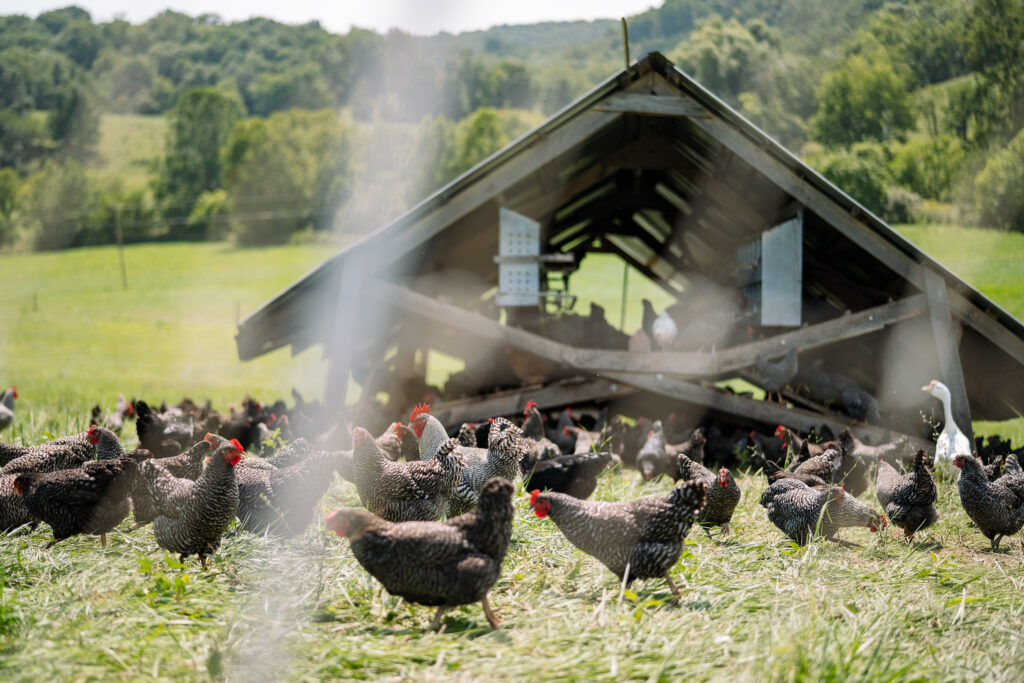
Leave a Reply