
Have you ever had a dream that was so strong that it seemed almost impossible that it wasn’t real? I did. When I was a kid I loved to surf, and in the surf world, Hawaii was the place to be. Warm water, good surf, mellow island vibes… I would dream about living and surfing Hawaii all the time.
My best friend in high school was Hawaiian, and when he graduated, his family packed up and moved back to the islands, so I decided to tag along with them. I threw some surfboards in their shipping container and the rest was history. When I landed in Hawaii, I knew I was home, it just felt right. My friend’s family had a beautiful house up in the hills overlooking the ocean. There was a floral smell from the warm tropical breeze everywhere you went, and the waves were stunningly beautiful.
I stayed with them for a few weeks, but I wanted to be closer to the beach. Ten miles inland was too far for me. Lucky for me, there was a farm on the other side of the island located within walking distance to some surf. They hosted “WWOOFers” or “Willing Workers on Organic Farms,” which was a new concept for me at the time. In exchange for one or two hours of work each day, I could have a place to pitch a tent, some basic food staples, and the beach just down the road. This was what I was looking for; a place where I could live simply and surf. Little did I know, farm life would soon become a bigger draw for me than surfing.
Life as a WWOOFer on a Tropical Farm
The first sunrise I ever experienced on the farm was glorious. You could see the silhouette of coconut trees in the distance with a bright orange sky behind them. You could smell the grass and the dirt. You could even hear the waves off in the distance as the roosters crowed in the foreground.
I quickly fell into a routine of getting my farm chores done early, before it got too hot, then I’d head on down to the beach and surf until it got too windy. I’d get back to the farm, hang out with the other WWOOFers, maybe do some tinkering in the garden in the afternoons, and if the waves were good enough, I’d surf again. Life was a dream.
As the months wore on, I really began to fall in love with the farm work. I watched bananas that I planted grow into full size, fruit bearing stalks. I watched little seeds turn into delicious post-surf meals. I began to see the changes they underwent day-by-day as a beautiful experience of life unfolding. It was at this farm that I also learned about other off-grid systems such as greywater, alternative energy, composting, and humanure.
This way of living just made sense to me. My whole life I had been defecating into fresh water and then surfing in it after every rainstorm; I got my food at the store like everyone else; I had utility bills. But here at this farm, we composted our waste and used it as fertilizer. We grew a lot of the food that we consumed—I don’t even think I saw the inside of a grocery store for 2 years! We produced our own power and collected our own water. It was a wonderful life; one that I wanted to create for myself.
My Own Slice of Paradise
If you have ever WWOOFed, you’ll know that it’s a wonderful, rewarding experience, but it can also be filled with drama. The farm that I was at was no exception. There was a lot of drama, and eventually the call to find a place of my own grew louder. I had a little money saved up from a valet job I’d had before moving to Hawaii, and I used it to buy half an acre of jungle rock about five miles from the ocean. It wasn’t walking distance to the beach, but it was something I could afford without going into debt.
The first thing I did was hire a dozer to clear a portion of the jungle that was on the property so I could access it. He made me a driveway and cleared out a homesite. It wasn’t easy in the early days: I was alone, living in my van, working hard every day to get the homestead up and going. I almost gave up a few times.
I couldn’t build a house the traditional way because I had spent all of my money on the land, but I did build a shed where I made surfboards, which in turn helped fund the home that I eventually built myself with plans I got off of the internet. I had never built anything before this, and all I had were three pieces of paper with pictures on them showing how to frame a house and build a one-room cabin. This was pre-YouTube! Somehow it worked though. My house is still here 20 years later and it only cost me $10k to build. It may look a little funky, but I built it, and that part feels really good.
The Growth of a Food Forest
With the house complete, it was time to focus on the garden. I envisioned a beautiful, productive garden that required minimal maintenance, allowing me more time for surfing. Having learned from my WWOOFing experience, I decided to focus on perennial edible plants instead of annuals, which are challenging to grow in Hawaii. Annuals like tomatoes, cucumbers, and kale require significant effort. Instead, I chose plants that thrive with little care.
Another challenge was the lack of soil on my property. It was mostly rock, so I had to bring in soil. For over a year, after every surf session, I filled my truck with soil and manure and transported it back home. Using a systematic approach, I smothered weeds with cardboard, piled on soil and manure, planted a tree, and then added crops like collards, daikon, or sweet potato beneath the tree. As the tree grew, I gradually filled the space with a diverse array of edible plants, creating a thriving food forest.
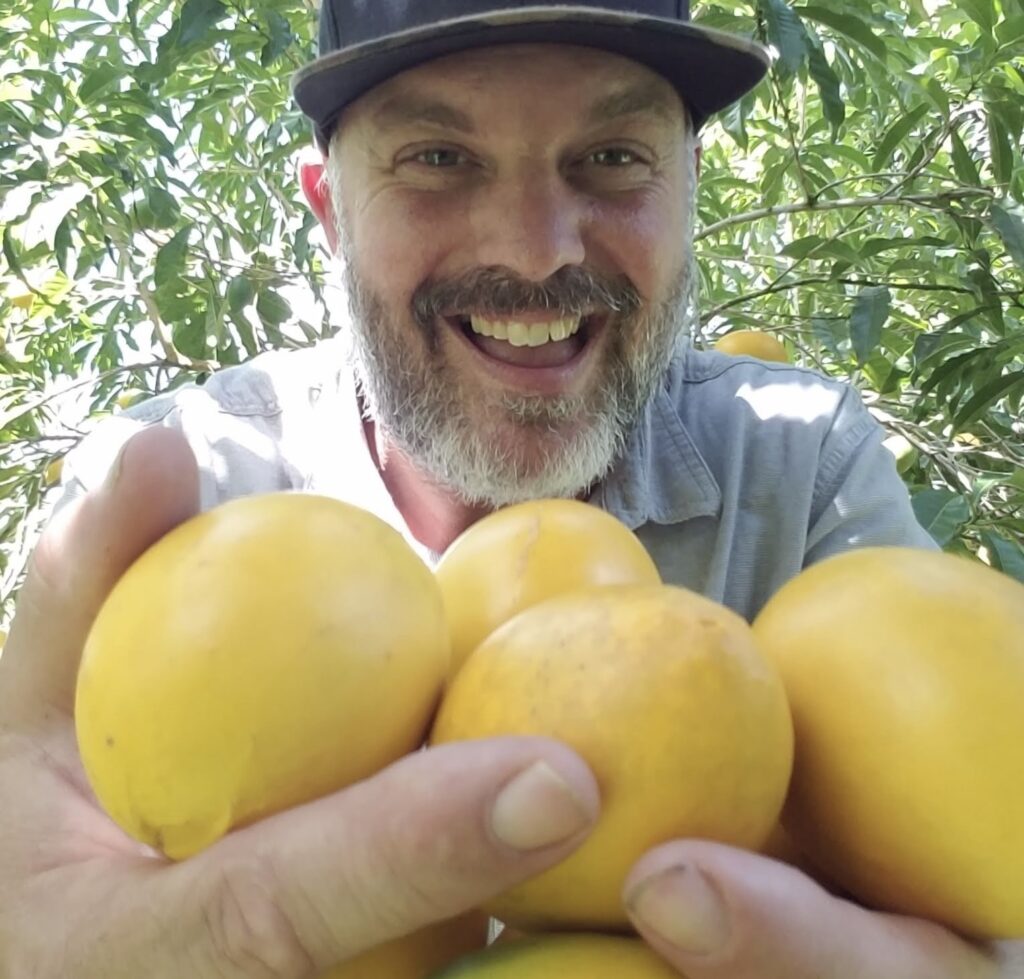
Today, my food forest comprises various fruit trees, including avocado, breadfruit, mango, abiu, rollinia, lychee, longan, moringa, mountain apple, bamboo, ackee, banana, and citrus trees. The understory consists of miracle berry, peanut butter fruit, citrus, tropical herbs, comfrey, kalo, sweet potato, and pineapple. There are also a few vines including lilikoi, vanilla, winged bean, and others. But the best part is, it only takes four hours a month to maintain! It was a lot of work in the beginning, but it has more than paid off now that it’s more established.
Life on a 20-Year-Old Off-Grid Homestead
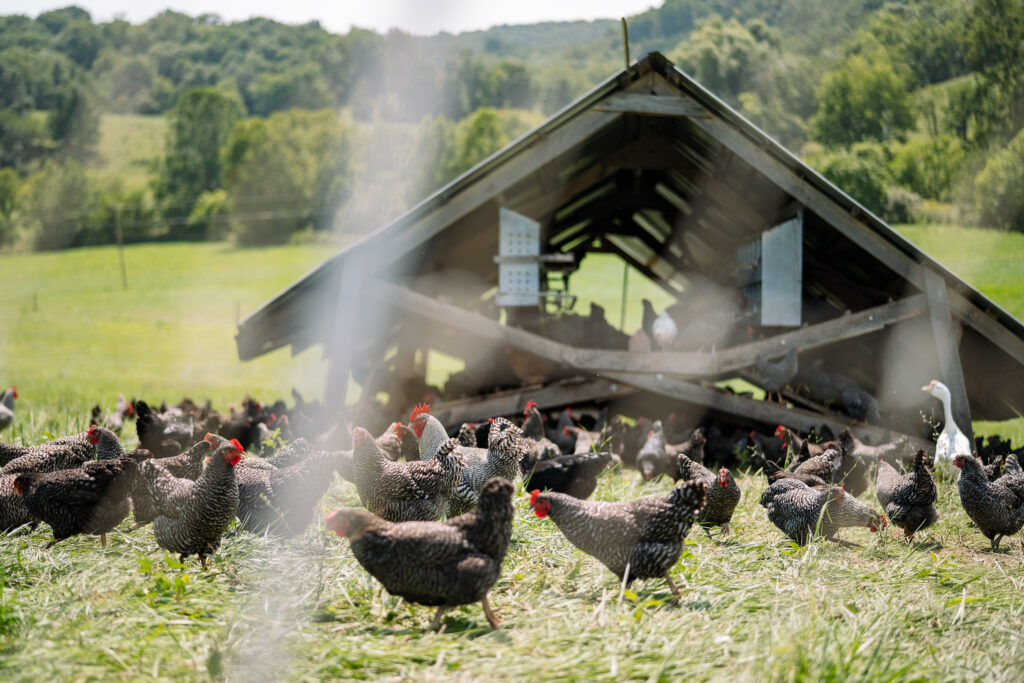
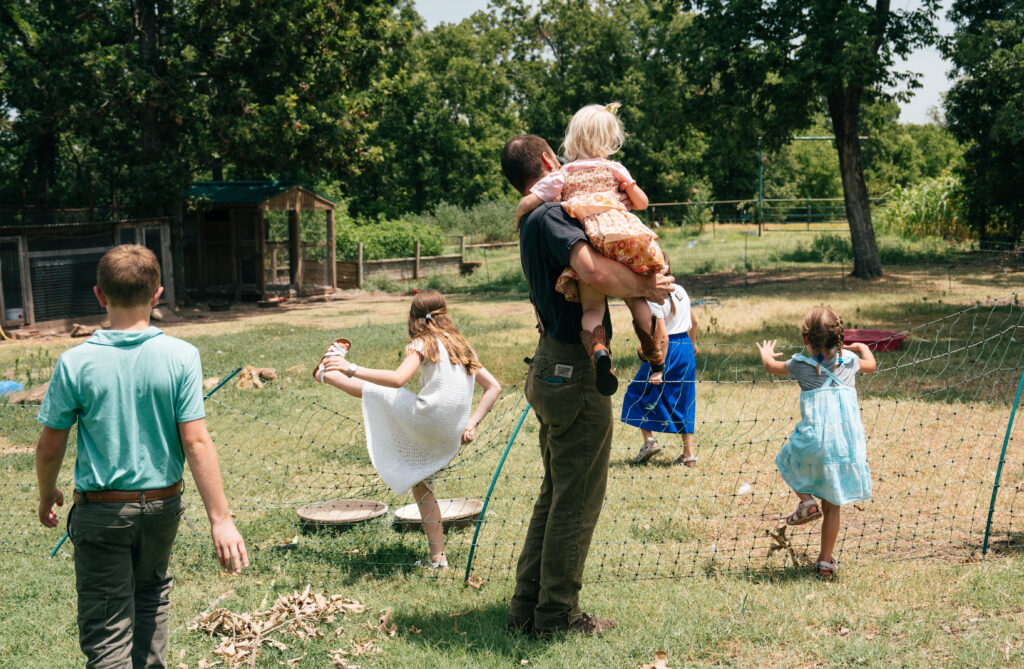
Having a fully paid-off homestead provides the freedom to choose how I spend my time, rather than being dictated by external factors. Life is simple: I enjoy fresh eggs from my chickens for breakfast, I watch my children grow, I surf when the waves are good, and I pursue income-generating activities that align with my interests.
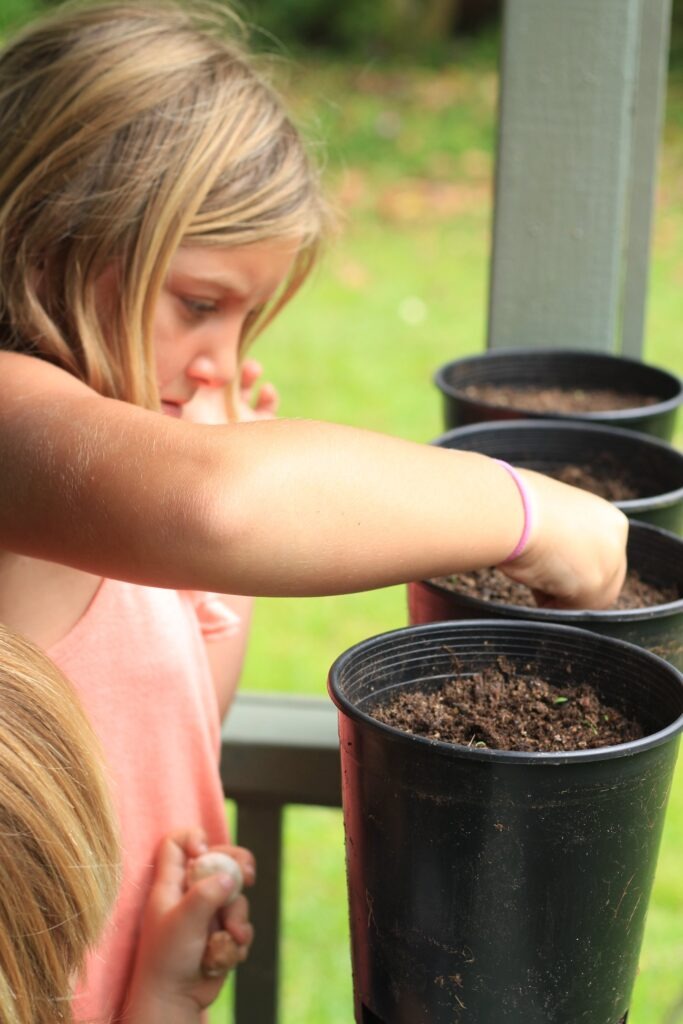
My journey to a sustainable lifestyle has involved various ventures, including CSAs, landscape installations, maintenance services, honey operations, and an egg business. However, my most successful endeavor has been my seed business, run in collaboration with my 13-year-old daughter. We sell tropical fruit tree seeds to customers in the southern United States, where many experience success in growing tropical varieties. (If your state touches the southern border or the gulf of Mexico, you probably have more in common with tropical growers than perhaps temperate growers!)
Breaking Free from the System
As I enter the later stage of my homesteading adventure, my goal is to inspire and empower others to embrace a homesteading lifestyle and thrive in the process. Having encountered challenges and made mistakes along the way, I now share my knowledge and experiences to help others navigate their homesteading journeys more effectively.
A central theme of my homesteading philosophy is the belief that corporate America often prioritizes profit over the well-being of individuals. The system that has been constructed for humans is akin to an industrial feedlot, in my opinion. In contrast, homesteading offers a liberating alternative, allowing us to live in harmony with nature and take control of our lives.
Do you want to be raised like cattle or live free like a buffalo?
Let’s break free together.
Till next time. A Hui Hou.
Leave a Reply