



Most of us have been trained to meet our needs by buying.
If we want something, we purchase it. If we need something, we pay someone else to do it. Over time, that habit can leave us less capable, less satisfied, and more dependent on systems outside our control.
In Episode #33 of The Coop, Homestead Living Editor-in-Chief Anna Sakawsky produces (see what she did there?) a solo episode on one of the most practical mindset shifts in homesteading: moving from consumer to producer.
She explains that this isn’t about 100% self-sufficiency (a myth she addresses directly) or producing everything yourself. It’s about changing the first question you ask when a need comes up. Instead of “What can I buy?”, a producer asks, “Is there a way I can create, grow, make, or repair?”
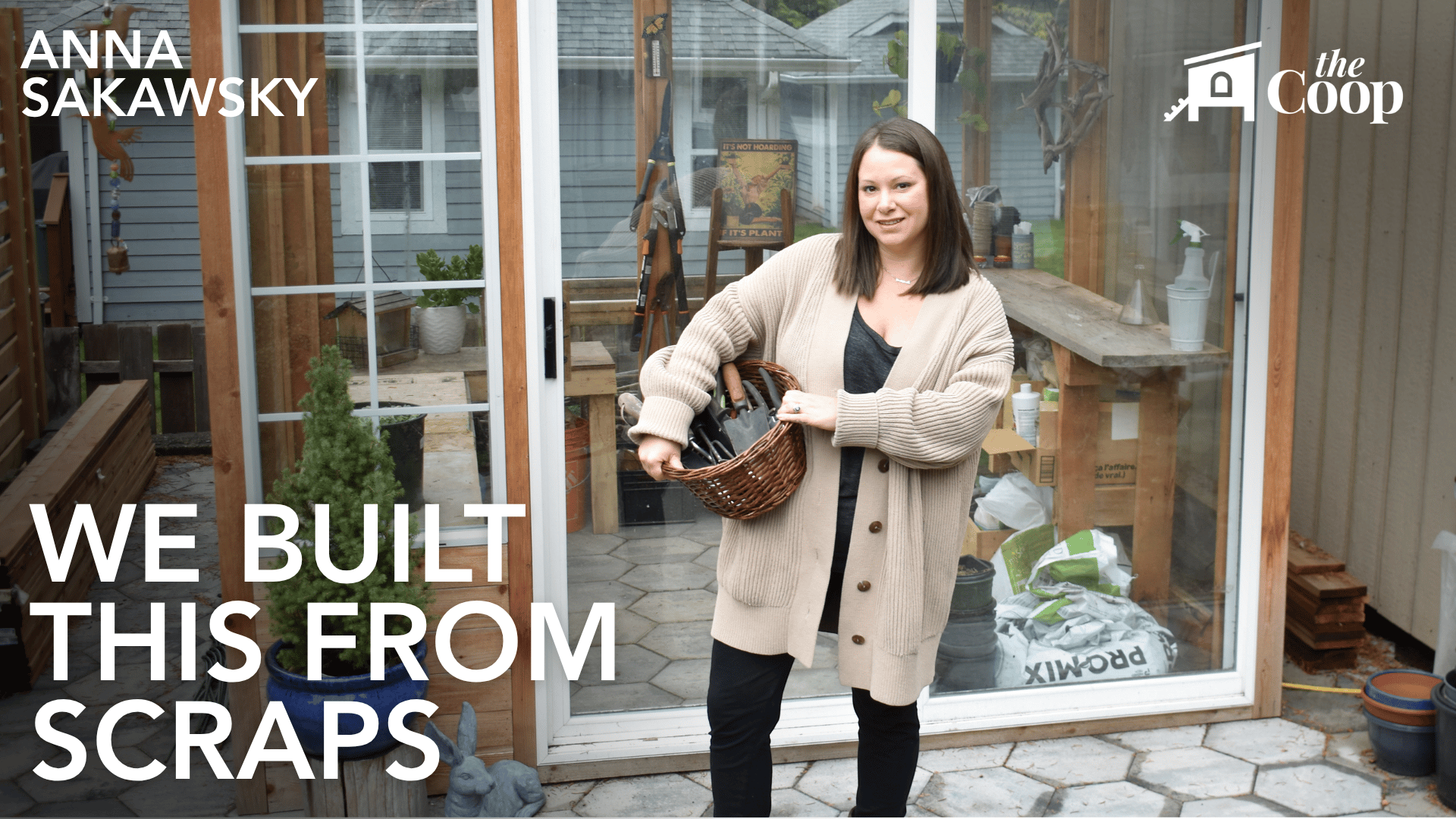
Anna walks through real examples from her own life, including small shifts like making a copycat pumpkin spice latte at home with homegrown pumpkin, and her husband Ryan building a greenhouse from old windows and scrap lumber rather than purchasing a prefab kit.
She also talks about why this shift is available even if you live in an apartment or have limited land and experience, and how producing even a few things yourself can bring more satisfaction, financial margin, and a sense of purpose that isn’t tied only to a job.
In this episode, Anna discusses:
- What it actually means to become more of a producer (and why it isn’t about doing everything yourself)
- The difference between “What can I buy?” and “Is there a way I can create, grow, make, repair, or contribute?”
- Real examples from her homestead, including homemade pumpkin spice lattes and structures built from salvaged materials
- The difference between investing vs. spending
- Why this mindset is available no matter how much land or experience you have
- How producing even a few things yourself can create more satisfaction, margin, and purpose
- A simple challenge to start with just one thing
If you’ve been looking for a realistic way to produce a little more and consume a little less, this episode offers a clear, grounded place to start … right where you are.
Listen or watch the full episode right here:
The show notes …
0:00 – Introduction
2:23 – The Rise of Rampant Consumerism
8:35 – What it Actually Means to Be a Producer
19:55 – Investing vs. Spending on the Homestead
30:08 – How to Shift Your Mindset
33:21 – Finding Purpose & Security in the Age of AI
36:40 – Final Thoughts
Anna Sakawsky (00:00):
In large part in society, we’ve kind of fallen into this trap of thinking that whatever we need or want, we need to buy. Whereas our ancestors for the longest time, we’re more producer-minded than consumer-minded because you couldn’t just go buy everything. You had to learn how to produce or do what you needed for yourself. Homesteading really is about producing more of what we need rather than simply consuming. But we’re going to kind of dive into this topic a little bit deeper and talk about why it’s important. Hi guys, it’s Anna encouraging you to skip the generic gifts this year and opt for something designed for your lifestyle as a homesteader instead. Our 2026 holiday gift guide is full of practical things from companies we love and trust, and many come with special discounts just for you. You can check out this year’s Homestead Living Holiday Gift Guide and find the perfect gift for you or the homesteader in your life from amazing partners like Azure Standard and Rustic Strength.
(01:07):
Visit homesteadliving.com to check out the gift guide now. Hey everyone, and welcome to episode number 33 of The Coop. My name is Anna Sakoski, editor in chief of Homestead Living Magazine. And today I am bringing you a little solo episode, a little solo soad, where we are going to talk about becoming a producer rather than merely a consumer. And so if you’re listening to this and you’re already homesteading in any capacity, then this is probably something you’re already doing because at its core, homesteading really is about producing more of what we need rather than simply consuming. But we’re going to kind of dive into this topic a little bit deeper, talk about why it’s important, especially in the times that we’re living in and how you can shift your mindset or continue to shift your mindset from being a consumer to being a producer and what type of things you can do at any level, no matter where you live, how much land you have or how much experience you’re starting with to start to actually make that shift.
(02:17):
So let’s just start at the beginning. Where are we at right now? So I think for a long time, most of us in the Western world have defaulted to consumerism to meet our wants and needs. If you need something, just buy it. If you want something, buy it. And I say a long time, really this has been a couple generations specifically since around the mid-century, but it really goes back to, I’d say probably really back to industrialization and then it really kind of picked up steam post World War II when we really entered the age of convenience. We shifted from people cooking from scratch to eating TV dinners. And over the past few decades, people are eating out more. We’ve kind of seen this rise of rampant consumerism where we are constantly being marketed to, we’re constantly being sold the things that we don’t need or even things that we do need, but that maybe we could produce ourselves, but we’ve become so accustomed to just buying it or paying somebody else to do it.
(03:21):
I think that in large part in society, we’ve kind of fallen into this trap of thinking that whatever we need or want, we need to buy. Whereas our ancestors for the longest time, we’re more producer minded than consumer minded because you couldn’t just go buy everything. You had to learn how to produce or do what you needed for yourself or rely on other community members. And we’ll get into that too because no man is an island. This is not about saying that you need to learn how to produce everything for yourself or become a hundred percent self-reliant. That is a myth. We’ve talked about this before. Ad nauseum with the importance of community and everything else. Nobody has ever done everything for themselves. So that’s not what I’m talking about here, but it’s just more about shifting from this idea that we need to constantly be purchasing, buying and earning money in order to keep purchasing and buying rather than looking at what can I actually produce myself?
(04:24):
So part of this is I think we’ve lost something in this process outside of just the money that it costs. Research suggests that materialistic values obviously don’t necessarily make us happier. We all kind of know that by now. And there’s a particular kind of satisfaction that can actually come from creating something ourselves rather than simply purchasing it. So this goes beyond, again, just having to work to earn the money to buy the things, but what are we actually losing in that process? The kind of satisfaction that comes from producing something with our own two hands. So when we spend most of our lives consuming rather than creating, we may be missing out on some of the sense of accomplishment and purpose and fulfillment that comes from producing something of value. And then of course there is also the practical side of things. As consumers, we rely on earning money to pay for the things we consume.
(05:18):
And in many ways that makes us producers at work because we have to go to the job to earn the money to then go buy those things. But then we’re consumers in nearly every other area of our lives. And with all of the uncertainty, especially right now around the future of work, including the potential for AI to change or eliminate certain jobs, I think it’s worth considering how we can become a little less dependent on earning money to meet every single need. So learning to produce more of what we need ourselves can give us another way to meet those needs. Obviously, if circumstances change, having meaningful productive work outside of our careers can also give us a sense of purpose that isn’t entirely tied to our jobs. And then of course, back to the financial side of things, we’ve become so accustomed to a level of consumption that can make it easy to overspend and accumulate debt and spend money on things that we might be perfectly capable of making or doing ourselves.
(06:18):
And when the cost of living is already putting pressure on household budgets, learning to produce more and rely less on buying everything we need can have real financial benefits. So obviously there’s this kind of dual, the purpose that comes from it and the financial side. So we’re going to be kind of oscillating between those two topics today. So I do want to start off by just reiterating that there is nothing inherently wrong with buying things. As I said, throughout all of history, nobody has been able to produce everything for themselves. Even the pioneers couldn’t produce everything they need. Ma Ingalls herself had to go to town to buy supplies, buy flour and sugar and things that she couldn’t produce herself, but then she was actually able to bring that home and then produce something out of it rather than purchasing the finished product, if that makes sense.
(07:08):
But trade and specialization and reliance on community have always been a part of how people meet their needs. But I do think we’ve taken consumption to a whole new level. I don’t think there’s many people that would argue with that. And I think of it, it’s kind of like the amount of sugar we consume today compared with generations past. People in the past did consume a little bit of sugar, but now we consume way more than we should be having. So I think the message is that a little isn’t necessarily a problem, but when something becomes such a large part of our lives, it’s worth considering the consequences. And in fact, I think it’s interesting that we are so often referred to as consumers in the first place, not people, not human beings, consumers. You can start to feel as though our primary role is to keep buying things to sustain an economic system that depends heavily on consumption, spending, and debt.
(08:07):
And while you could argue that some of these problems are more about how we spend and manage our money than consumption itself, I think there’s a bigger question worth asking and that’s what happens when we’re so accustomed to buying whatever we need that we lose the skills, confidence or inclination to produce any of it for ourselves. So I think that’s an important question, especially at a time when many of us are realizing just how valuable those skills can be. So today I want to talk about how we can become more of a producer in our everyday lives. The goal is to rely a little less on purchasing everything we want and need while experiencing some of that satisfaction, independence, and security and purpose that can come from creating things with our own two hands. So let’s dive into this a bit more. What does it actually mean to be a producer?
(08:51):
So again, I want to be clear, I’m not asking anyone to give up buying things altogether. I’m simply encouraging you to be more intentional about your purchases and to look for opportunities to produce more of what you want and need when it makes sense for you to do so. So it’s really about finding a balance and staying out of the ditches on either side because on one end, consumerism can leave us overspending and accumulating things that don’t necessarily add much value to our lives and can trap us into becoming so dependent on purchasing what we need that we lose or never even bother to learn the skills and ability to produce and provide for ourselves. However, on the other hand, trying to produce absolutely everything ourselves can create unrealistic expectations, unnecessary stress, and sometimes even cost more in time and materials than just to simply buy the thing that we’re trying to make.
(09:50):
So first and foremost, I encourage you to be thoughtful about your purchases, think about what you’re buying, why you’re buying it, and whether there’s another way to meet that need. And if you’re interested in becoming a little more producer minded and a little less consumer minded, I think the first step is to change the way you think about things you need. A consumer asks, “What can I buy to meet this need?” Whereas a producer asks, “Is there a way I can create, grow, make, repair, or contribute something myself to create this thing?” So being a producer doesn’t mean that you have to be entirely self-sufficient. It just means participating in the process of meeting your own needs and contributing value to others. So production can look like growing tomatoes or cooking a meal or mending clothes, fixing something that’s broken, learning a practical skill, building something, starting a business, or even bartering with a neighbor.
(10:51):
It is kind of like how can we meet our needs without just simply going and throwing money at it, right? There are so many ways to produce value without always having to buy something or pay someone else to do it for you. And being a producer doesn’t mean, again, rejecting consumption altogether. It’s not about letting consumption… It’s more about letting consumption not be the only way you know how to meet your needs. So you can, again, like with the Mott Ingalls example, you can buy flour and still be a producer when you turn it into bread. You can buy lumber and still be a producer when you build a chicken coop. You can buy meat from a local farmer and still be a producer when you cook that meat and put it on the table. Or you can grow vegetables in your own garden or you can purchase them at the farmer’s market and then take them home and actually produce something with them.
(11:43):
So it’s not about holding yourself to impossible standards or worrying about where every single thing comes from. It’s about looking for opportunities to participate in creating the things that sustain your life rather than always relying on someone else to do it for you. So for me, homesteading has been one of the biggest ways that I’ve learned to make that shift. I’m constantly evaluating things and asking myself how I might be able to make them myself instead of buying them. So for example, on the rare occasion we go out to eat, I often find myself thinking about how I could recreate that meal at home. Sometimes that’s about saving money. Sometimes it’s about being able to enjoy something at home without having to go out for it. And sometimes it’s about just having more control over the ingredients and making something a little healthier. And one kind of trivial but good example is pumpkin spice lattes.
(12:35):
I’m recording this right now in October. I think it’ll be November when this comes out, but the Starbucks pumpkin spice lattes are all over the place right now. And I admit I am a sucker for the old PSL, but I rarely buy them because a few years ago I learned how to make a copycat version at home using homegrown pumpkin and ingredients that I already had in my pantry and I can make it for a fraction of the cost and I get to enjoy it at home whenever I want and it’s healthier than the coffee shop versions. So I think it’s a good example of what I’m talking about even though it’s something so minor, I still get to enjoy something I love, but instead of automatically reaching for my wallet and just going and buying that thing, I have found a way to produce it for myself.
(13:17):
Another example is my husband, Ryan, approaches this in a lightly different way because he is more into the kind of building and construction side of things. So for him, it’s about looking at something that we need and asking, can I build that? He’ll look at what materials we already have on hand or what we could source cheaply and figure out how to build something rather than buying it ready-made or hiring someone else to do the job. More often than not, he finds a way to use materials we already have, whether they’re leftovers from previous projects or salvage materials from somewhere or things we picked up for cheap or free. And as a result, we have all sorts of structures around our property from garden beds and chicken coops to a greenhouse and a workshop that have been built by hand using materials that cost us little or nothing.
(14:02):
And now of course, not everyone has the time or skills to build their own structures and that’s okay. The point isn’t that you should be doing exactly what Ryan does or what I do or what anybody else does, it’s that we’ve learned to look at a need and ask whether we can meet that need ourselves before automatically assuming we have to buy a finished product or pay someone else to do it for us, to create it for us. And sometimes the answer will be yes, sometimes it’ll be no, but simply asking that question can open up possibilities that we might otherwise overlook. And sometimes making something yourself can give you a result that’s even better than what you could afford to buy. So case in point, our greenhouse, we built a greenhouse this year or my husband built a greenhouse. No prefabricated greenhouse could match the character of the one that he built out of old windows and scrap lumber.
(14:59):
We even found a cute little chandelier off Facebook marketplace for 20 bucks that adds a ton of charm. And sure, we could have bought a greenhouse for that space, but it wouldn’t have been nearly as unique or for what we could afford certainly wouldn’t have been as nice as the one that we built ourselves. And again, there’s nothing wrong with buying a greenhouse, but I love knowing that ours is one of a kind and that adds to its value for me in a way that goes beyond even just what it costs to build. So the same can be true of all sorts of things. Same can be true of home cooked food. Not only can it be satisfying to make a meal with your own two hands, but you can tailor it to your family’s tastes and preferences. And there’s something special about sitting down to enjoy something that you’ve made yourself, especially when you’re sharing with others, including the cost savings and stuff right now.
(15:49):
That’s obviously a big part of it too. But again, I think anybody who’s done any level of homesetting knows that sense of satisfaction when you’ve produced something yourself, whether it’s a loaf of bread or a home-cooked meal or you’ve grown some veggies in the garden or you’ve got chickens and they laid eggs. Technically those chickens are the ones being producers, but still it gives us a feeling of satisfaction that we are producing this on our own property with our own two hands rather than having to go to the grocery store and buy it. So those are just a few examples of ways that you can become a bit more of a producer in your own life. There are countless others, but I think homesteading really highlights the opportunities to produce more of what you need rather than simply buying it.
(16:35):
Learning to produce even some of your own food is a huge step in that direction. So that could mean growing vegetables, raising livestock, or simply learning to make foods from scratch that many of us are accustomed to buying at the store. So again, think bread, pasta, pickles, jams, spice mixes, pantry staples. You don’t necessarily need a garden or a flock of chickens to start producing more of what you eat. And I think that’s really an important point too, because I know so many of our listeners, because I hear from you guys, listeners and readers of the magazine, are starting off in… They don’t have a lot of land. Maybe you live in the suburbs, maybe you live in an apartment and you’re thinking, I can’t really grow much, but you probably have a kitchen, you can probably start producing something there. So again, it’s just about this mindset shift of what can I do where I’m at?
(17:25):
Because I mean at its core, homesetting is about participating in the production of the things that sustain you. And this is why I think that this mindset shift is really the first step on the road to becoming a homesteader and it’s one that you can choose to adopt no matter where you live or how much land or experience you have. But even those of us who are already homesteading, I think can fall into the consumer trap. We’re constantly being marketed to just like everyone else, and we can easily fall into the habit of thinking that we need all sorts of gadgets and tools and products to make our lives and homesteads better. And honestly, sometimes it’s absolutely worth investing in the right tools or equipment. And I’m going to talk a little bit more about that in a moment about investing versus spending, but it’s worth asking whether we actually need everything we’re being told we need or whether we can get creative with what we already have.
(18:20):
Sometimes that means compromising a little. Maybe our garden beds won’t look quite as polished or the structure we build won’t be exactly what we had envisioned, but if it gets the job done and meets our needs, does it really matter? I think there’s a tendency to get so caught up in the things that we want to buy for our homesteads or this dream vision that we have that we forget that one of the main reasons most of us started homesetting in the first place is to become more capable and resourceful and self-reliant. And this is why I think the producer mindset is such a great starting point for people who are interested in homesetting but aren’t sure how to begin or feel constrained by their circumstances because again, you don’t need a lot of land or livestock or a garden even to get started. You can start right where you are simply by shifting your mindset from consumer to producer.
(19:14):
Rather than asking what you need to buy to get started, ask what you can do with what you already have. What skills could you learn? What could you make instead of buy? What could you repair, reuse, or repurpose? You might be surprised by how much you can do without spending a lot of money or completely changing your lifestyle. And the more you practice thinking this way, the more opportunities you’ll start to notice. So instead of seeing every need as a reason to buy something, you’ll begin to see it as an opportunity to learn, to create, or to find a resourceful solution. So I want to talk about this idea of investing versus spending because it’s been a big guiding factor in many of my purchasing decisions over the years. I like to think about whether a purchase is going to provide value over time, a return over time or whether it’s something that offers a more immediate benefit but doesn’t necessarily give me much of a return beyond that.
(20:18):
So of course there’s nothing wrong with spending money on things we enjoy. Not every purchase needs to pay for itself financially either, but I think it’s useful to consider what we’re getting in return for the money that we spend, especially when we’re trying to be more intentional about our consumerism. So for example, there are things that I’ve deliberately invested in over the years because they actually help me produce more and become more capable or support the kind of life that I want to build. So some of those investments include things like preserving tools and equipment is a big one, like my pressure canner and dehydrator and freeze dryer and all my jars and other supplies that allow me to preserve food and make better use of what I grow. These items literally help me to become more of a producer so they’re worth the investment to me.
(21:08):
Maybe they’re kind of an initial up cost investment, but they provide a return over time because they allow me to then become more of a producer at home. Other things are like good soil. We don’t produce enough compost on our little quarter acre right now to provide for all of our needs in the garden. So we do bring in compost and soil most seasons. But again, that’s an investment to me because I’m thinking about building our soil over time and then that allows us to produce more, produce a more abundant garden. And I’ve invested in things like books and courses that teach me skills I want to learn. And we’ve invested in other types of tools, both garden tools and hand tools and power tools. My husband, as I said, Bill does a lot of the building around here, but he couldn’t do that without the tools that he relies on and he can’t make those tools.
(22:06):
So again, it’s kind of discerning where is there a need that you actually do have to purchase that thing and then where can you actually maybe make something yourself? We’re not ever going to be able to make absolutely everything again. What are some other things? We also invest in good quality meat for a freezer. We don’t have a lot of land either. We’re only on a quarter acre, so we don’t produce our own meat at the moment, but we purchase it from a local farm. And for us, that’s about having a supply of quality protein on hand and knowing more about where our food comes from. So that’s why we choose to get it from a local farmer instead of just going to the grocery store when we need it. But then we also then have that meat on hand so that we can prepare meals from scratch rather than resort to eating out.
(22:50):
So again, it’s this kind of producing over consuming. So yes, we have purchased that meat, but then that allows us to produce meals out of that meat. And then I mean, not every investment has to be related to homesteading either or even to producing things for ourselves. I also like to invest in family experiences. So whether that’s a camping trip or a family vacation or an occasional date night with my husband, those things help us build memories and strengthen our relationships. And I think that kind of return is really valuable too. On the other hand, there are purchases that may not provide much lasting value, particularly when we’re making them out of habit or convenience rather than because they genuinely serve us or because we’re getting roped into being marketed to and kind of impulse buying and that sort of thing. But eating out always comes up for me as one of these examples.
(23:47):
I know a lot of people talk about this in financial circles too, that’s one of those things that’s not an investment usually because you’re only getting that one meal. Usually it’s not even as healthy as what you can produce at home. And it’s way more expensive than it would be if you just bought those ingredients or grew them or whatever and then produced it yourself and then you’re not getting any long-term return out of it. Now, that doesn’t mean you should never eat out. There’s absolutely a place for enjoying a meal at a restaurant, and I don’t think we need to justify every little purchase and pleasure in terms of productivity or financial return or whatnot. But if you’re eating out frequently because it’s become the default rather than because you really want to or because you’re being intentional about it, then those costs can add up quickly.
(24:38):
So learning to cook more meals at home can save money and give you another skill in the process. Subscriptions are another area worth looking at. I am the first to admit that I probably should not be paying for a gym membership I rarely use. It can provide real value when I actually go, but if I am not using it often enough to justify the cost, I have to ask whether that money would be better spent elsewhere. And so it’s worth taking a look at the subscriptions that you’re currently paying for and asking yourself what you’re actually getting out of them. Are you using them? Do you enjoy them? Are they helping you learn something or making your life better in some meaningful way? Or are you paying for things you’ve simply forgotten to cancel? And yes, I know that can include magazines and other educational resources too.
(25:25):
As the editor of Homestead Living Magazine, I hope that if you’re subscribed that you stay subscribed and that if you’re not yet subscribed, that you do. And we really try to offer real value. I look at the magazine as an investment because you’re learning real skills that can, again, help you to become more of a producer in your own life. But if you are not using it, if something isn’t useful to you, there’s no shame in letting it go. And that’s just the honest truth.
(25:57):
Another area to consider is buying things primarily for status or because we’ve been conditioned to believe we need them. So again, this kind of marketing trap, luxury items, the latest gadgets or products that promise to make our lives better can all be tempting. It’s funny because I’m sitting here right now and I have all these workout equipment here and I’ve got these, I don’t know, this back stretcher thing that I bought off Instagram because I was having some back pain and it was like your algorithm’s listening to you. And so this thing came up. I’m like, “Oh, I’m going to get that.” Well, I never use it.That’s one of those things that I fell into the trap of being marketed to, but it was more of an impulse buy. And so I try to avoid those whenever possible. We’re all going to have those moments where we give into that, but I try to pause and really think about is this something I truly need or is this something that I’m getting caught up in the trap of thinking I need or want?
(26:57):
And things like the newest cell phone, for example, I couldn’t even tell you what generation my iPhone is. It’s actually an older generation because it’s smaller because I like that it fits in the palm of my hand. I find the newer versions are so big that I need to use two hands of them. And it’s funny because I have people that kind of make fun of me now like, oh, this old iPhone and it’s so small and whatever. I’m like, but for me it works, so why would I get something new just because it’s the newest thing? So many of us fall into that trap of I got to have the newest, got to have the best, got to have what everybody else has. So again, taking a step back, it’s like when you’re shopping online or whatever, make a habit out of putting things in the cart and then walking away and sleeping on it and then thinking about do you really want that thing?
(27:41):
Do you really need that thing? And then finally, I think the smaller costs too can really kind of eat into your budget over time. So things like service fees, convenience charges, and interest on debt is a big one. And I know that’s something that so many people are struggling with these days. So I think sometimes paying for the convenience is worthwhile, particularly when time, energy or other circumstances just happen to make it the better option. But I think it’s worth knowing what those conveniences are actually costing you and deciding whether they’re worth it. And when it comes to debt, I know many people are carrying it. This is not shaming anyone for their circumstances, but the reality is interest payments alone can take money away from the things we’d rather be putting that money towards, whether that’s learning a new skill or investing in useful tools or building our savings or working toward greater financial freedom.
(28:36):
So I mean, ultimately, I don’t think the goal is to scrutinize every purchase or feel guilty when we spend money. It’s about being more conscious of where our money is actually going and what we want it to do for us. So do those things align? Is it actually going to things that serve us that we want to be putting it towards or is it being eaten up by all sorts of other things? So sometimes the best investment is a tool that can help you produce more. Sometimes it is a course that can teach you new skills. Sometimes it’s an experience with your family, and sometimes the right choice is simply to buy something because it meets a need and makes your life easier. The point is just to make those decisions intentionally rather than spending out of habit and assuming that buying something is always the best or the only way to meet a need.
(29:25):
If you’ve ever felt like regular planners just don’t quite fit your real life as a homesteader, the 2027 old-fashioned On Purpose Planner was designed just for you. Jill Winger, creator of the Prairie Homestead Blog and the Old Fashioned On Purpose Podcast, created this planner for those of us who are growing gardens, raising animals, preserving the harvest, all alongside balancing the demands of modern life. The 2027 planner comes with bigger pages, stronger materials, and all new layouts that match how we actually live. It’s open for pre-order right now at Homestead Living Give yourself the gift that keeps on giving and treat yourself to your most organized year yet. Again, that’s homesteadliving.com. So where do we start? I think the takeaway here is that becoming more of a producer doesn’t have to mean making some big sweeping lifestyle change. You don’t have to grow all of your own food or make everything from scratch or learn how to build a house from the ground up.
(30:24):
It’s really just about changing the way you approach the things you need and want in your life. So instead of automatically asking, what do I need to buy? Start asking, is there another way I could meet this need? Is this something I could learn to do myself? Could I make this thing, grow it, repair it or repurpose something that I already have?
(30:50):
I mean, you don’t have to do this with everything. In fact, I would encourage you not to try, just like with homesteading, I think people fall into the trap at first that you have to be doing everything, get the big property, get the animals, get the garden, bake the sourdough bread all at once. And then we get overwhelmed. Same thing with this. I would encourage you to just start with one thing because we all have limited time, energy, resources, and capacity. And part of being intentional is about recognizing where it makes sense to produce something ourselves and where it makes more sense to just purchase it from someone else. And sometimes this is just about the season of life that we’re in. If you’re going through a particularly busy season, maybe just because you can produce something yourself, maybe you can bake bread at home, but you don’t have the time right now.
(31:35):
And so it’s not worth killing yourself to try to make it happen. Sometimes as long as those decisions are intentional and that you’re hopefully trying to learn some of those skills along the way that, “Hey, at least I have the skill. I can do this for myself if I need to.” I don’t think there’s anything wrong with going, “You know what? Right now it just makes better sense to purchase it.” That’s totally fine too. But again, I do think there’s real value in finding a few areas of your life where you can become more capable and less dependent on buying your way through every need. So here’s my challenge to you. Think of one thing you regularly buy that you might be able to produce yourself or one skill that you’d like to learn that would help you become a little more self-reliant. It doesn’t have to be anything major.
(32:24):
Again, maybe it’s learning to bake your own bread, growing a few herbs on your windowsill, mending a hole in a pair of jeans or figuring out how to fix something around the house. Just one thing and then give it a try. See what you learn. What do you enjoy? Because that’s another thing too. If we’re not enjoying certain things, like I love to garden, but building stuff is not my forte. And luckily I have a husband that can do that, but I think there has to be some joy in it as well.
(32:55):
But start with one thing and then see where that takes you. And remember, again, the goal isn’t to do everything yourself. It’s to recognize that you have more options than simply buying something or paying someone else to do it for you. So I think this conversation is especially pertinent right now as we are staring down the barrel of AI and the potential job losses that it might bring, because not only could losing your job mean you no longer have the funds to purchase or pay for everything you need. But one of the big conversations that I’m hearing a lot of people having right now is that for so many people, losing their job can leave them feeling like they no longer have any purpose. I’m hearing that conversation a lot right now that the money is secondary. That’s an issue unto itself, but that the bigger issue is really that people are going to be left feeling like they have no purpose in life because so many people have tied their sense of purpose to their jobs or careers.
(33:57):
And I think that’s a dangerous thing even without AI, to tie so much of our purpose and self-worth to our jobs or vocations. Honestly, I think it’s why we already see so many people who retire only to go back to work somewhere, not even because they need the money, but because they no longer feel they have a reason to get up in the morning without a job to go to. And this is where I think homesteading actually has a lot to offer. Not only does learning how to produce more of what you need help to offer some security in the event of a job loss. But I know that for me anyway, homesteading gives me a ton of purpose. Even if I never worked a paid job again, I would have plenty to keep me busy and keep me feeling purposeful because I’m still producing something of value every day.
(34:41):
I’m still responsible for the wellbeing of my family and my animals, and I’m still responsible for stewarding our land and putting home cooked meals on the table. And I think that as humans, we are uniquely designed in the image of our creator to be creators ourselves. And creator is really just another way of saying producer. When you’re creating something, you’re producing something. And homesetting offers ample opportunities to create and produce something of value every day. And of course, homesetting isn’t the only thing that can offer us this type of value outside of our jobs and careers. Really like any hobby where we can create or produce something can give us a sense of purpose and meaning in our lives. But I do think homesetting is unique in that the things that we are creating and producing are literally the life-giving things that we need to survive and thrive.
(35:31):
So healthy food, necessities, whether maybe you make your own soap or cleaning products, things that you use in your home and on your body, firewood to heat our homes, clothing and warmth if you sew or knit clothes or blankets, that sort of thing, making medicine from the herbs that you’re growing in your garden or from the herbs and spices in your pantry. There are so many things that fall under this umbrella of homesteading. And most of them come down to this idea of producing what you need versus simply consuming what you need or at least participating in the process of producing it. Maybe we’re not doing all of those above things. Maybe we’re not, again, milling lumber from our own property. Maybe we’re purchasing it from elsewhere and building with it or we’re purchasing firewood, but then we’re heating our homes with it. We’re chopping that firewood, heating our homes with it.
(36:26):
But again, it’s like how can we get more involved in participating in that process rather than purchasing it kind of ready-made on a platter for us or hiring somebody to do all that for us? So where does all of this leave us? Well, as I said at the beginning, I think that we become just as a society, maybe not you and me, maybe this, I know I’m preaching to the choir here, so I’m sure a lot of people who are listening are like, “Yeah, I already know all this stuff.” Totally on board. But I just think it’s worth revisiting that as a society, I think we have become so accustomed to being consumers that we just sometimes forget that we’re capable of being producers too. We’ve lost some of the skills along the way and many of us have come to rely on systems and services that make our lives convenient, but that can also leave us feeling less capable of meeting our own needs.
(37:20):
And I definitely think that we’ve seen this over the past few years, especially is why so many people have joined the homesteading movement over the past few years because we saw what happened during COVID, for example, where systems began to fail and these things that we automatically assumed we could just depend on, that we could just go purchase, maybe weren’t available or we had limits on what we could buy or whatever the case was. I think it woke a lot of people up to the fact that, hey, we can’t just hand over all of our autonomy to other entities, just become completely dependent because we never know when we might not be able to depend on those things. And again, that doesn’t mean that we have to become completely self-reliant overnight or ever, but it does mean that we should probably think about taking a little bit more responsibility for learning how to produce what we need in case we can’t rely on those things.
(38:15):
And every one of us has the power to start to change that, to shift into that producer mindset, just one skill, one project and one small decision at a time. And again, I think back to the sourdough craze of COVID, that really sums up a lot of what I’m talking about here. Not only were people producing something because they couldn’t purchase something at the store. In a lot of cases, yeast was sold out at the store, like active yeast. And so people couldn’t purchase that to make bread or bread was sold out at the store. And so a lot of people started learning how to make bread from scratch with a sourdoughstarter they made from scratch. But also with that came this sense of satisfaction of purpose. All these people that were sitting at home, a lot of them suddenly feeling like, “What am I doing?
(39:06):
Why am I even getting up in the morning?” Just something as simple as having a sourdough starter to feed and to learn a new skill to bake bread with was giving people some meaning in their days. And for me, that’s one of the things that I love most about this lifestyle. I love growing food and raising animals and having a little more control over what goes into the things that my family eats and uses. But mostly I love the way that homesteading challenges me to think creatively, to learn new skills, to solve problems and find more ways to do more with what we have. And I love the sense of purpose and accomplishment it gives me at the end of the day. And I think that that, again, is something that we can all benefit from. Whether you live on a big rural property or in a suburban neighborhood or in a small apartment in the city, you don’t have to do it all or produce everything you need.
(40:02):
You just need to start by shifting your mindset and asking yourself how you can produce just a little bit more and consume a little bit less. So next time you find yourself reaching for your wallet to meet a need, take a moment to consider whether there’s another way. You might decide that buying something is absolutely the right choice and that is completely fine, but you might also discover an opportunity to create something, learn something new, save a little money or become a little more capable in the process. And those small shifts can really add up over time. The same way that consumerism can, and purchasing things all the time and adding to our debt and everything can add up over time. All those little things, we can do the same thing in the other direction. Small shifts where we’re not buying something and we’re saving a little money here and we’re becoming a little more capable here.
(40:57):
And eventually that can really help us to build lives that are not only more resourceful and resilient, but also more meaningful and fulfilling. So that’s all I have for you today, friends. I hope that, I know it’s a little bit rambly, but it’s been something that’s been on my mind talking about this kind of idea of being a producer rather than simply a consumer because I really do think that’s really what’s at the core of homesteading and we get so many comments from people being like, “I want to do this, but I am on a small property or I don’t have the resources or so many of the things that I’m seeing or reading or whatever feel like they’re only applicable to people with more money, more land, whatever.” And I think that this is something that you can start wherever you’re at. This is what we did when we started out in an apartment.
(41:47):
It was simply looking at how can we produce a little bit more and consume a little bit less. So I hope that if nothing else, this conversation has inspired you to look at the world through kind of fresh eyes, but more importantly, that it empowers you to know that you aren’t a slave to consumerism and to the system that thrives on you being a consumer. You can opt out and start producing more for yourself no matter where you’re starting from. As with everything, all you need to do is just start, take that first step and then keep putting one foot in front of the other. So I would love to hear from you as well because I know that, as I said, I’m probably preaching to the choir. You’re probably doing and producing a lot for yourself already, or at least maybe you’ve started that journey.
(42:36):
And so I would love to hear what sort of things are you currently producing for yourself that you used to just buy or that most people just buy?
(42:46):
What’s a skill that you have acquired that has allowed you to become more of a producer and less dependent on having to purchase everything? What’s the next skill that you’d like to learn that would help you to become more of a producer and less dependent on consuming? And of course, if you have ideas for things that you would like to learn more about here on the podcast, I love getting feedback so that I can continue providing you with real value here and in each issue of Homestead Living magazine as well. So as always, if you did enjoy this episode, please be sure to like and subscribe if you haven’t done so yet and share this episode with someone else you think could maybe benefit from this information. Until next time, thank you so much for joining me here on The Coop. I’ll see you back here again soon.
(43:30):
Before we wrap up today, I just want to thank you, our listeners, for being a part of this community. If you’ve been listening for a while and haven’t yet joined us as a subscriber, this is your sign to start your subscription to Homestead Living Magazine. A Homestead Living subscription includes six beautifully printed issues each year and they’re designed to be kept, dog eared, bookmarked, pulled off your shelf and referred back to you again and again. Every issue is filled with practical skills, seasonal guidance, and trusted voices who’ve put in the hours and learned the hard way so that you don’t have to. Right now, a full year, all six issues is just $49 and it is one of the best ways to support the work that we do here while building a home library that you’ll return to again and again. As the editor, I may be a little bit biased, but if you value thoughtful, authentic, grounded guidance from people who don’t just talk the homesteading talk, but actually walk the homesteading walk, then this magazine was made for you.
(44:32):
So you can start your subscription now by heading to homesteadliving.com/subscribe or click the link in the show notes.
Resources/Links
- Download Episode Audio File
- Subscribe to Homestead Living Magazine
Brought to you by
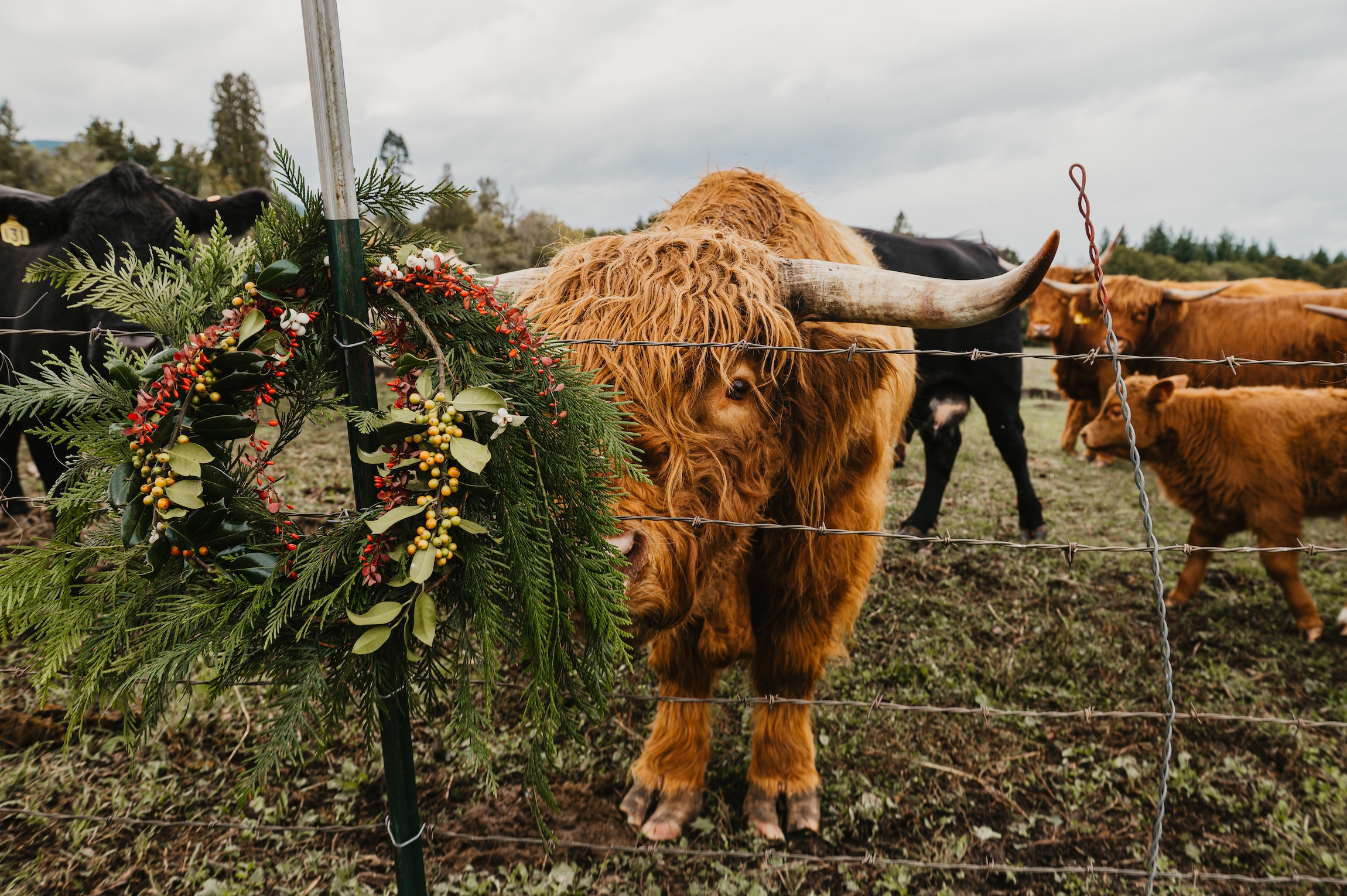
This Episode of The Coop is brought to you by the 2026 Homestead Living Holiday Gift Guide
Looking for gifts that actually fit the life you’re building? The 2026 Homestead Living Holiday Gift Guide is filled with practical, thoughtful ideas for homesteaders … from tools and books to things that support real skills and everyday work. Check out the custom offers from our partners Azure Standard and Rustic Strength in our 2026 Gift Guide. Merry Christmas!
Find it at: https://homesteadliving.com/holiday-gift-guide/
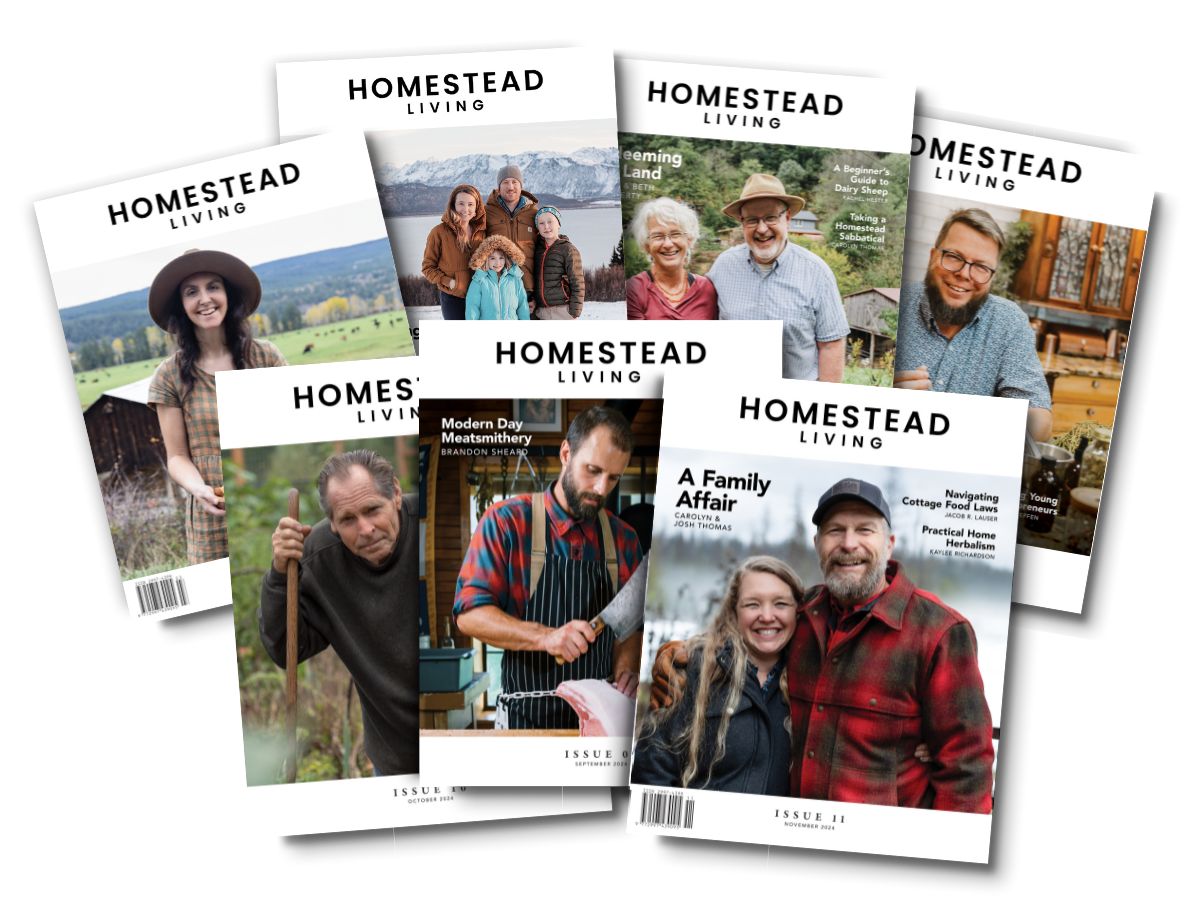
This Episode of The Coop is brought to you by Homestead Living Magazine
Homestead Living magazine sets the standard for inspiring wisdom-filled homesteading content: actionable tips for organic growing, food preservation, delicious recipes, and uplifting true stories that feed body and soul.
Learn more: https://homesteadliving.com/homestead-living-magazine
Leave a Reply