
For weeks we have watched the sun set earlier and earlier as we slowly shift our bedtime to match the day’s early departure. These could be sad times, as we bid farewell to the long summer days.
Instead, the closer we get to the longest night of the year, the more festivity enters our house. There are celebrations for the first fire and the first snow. There are more tea parties and afternoon hot cocoa, complete with cozy blankets and books. Bedtime stories get read by candlelight, and the house is full of scheming about crafts and gifts.
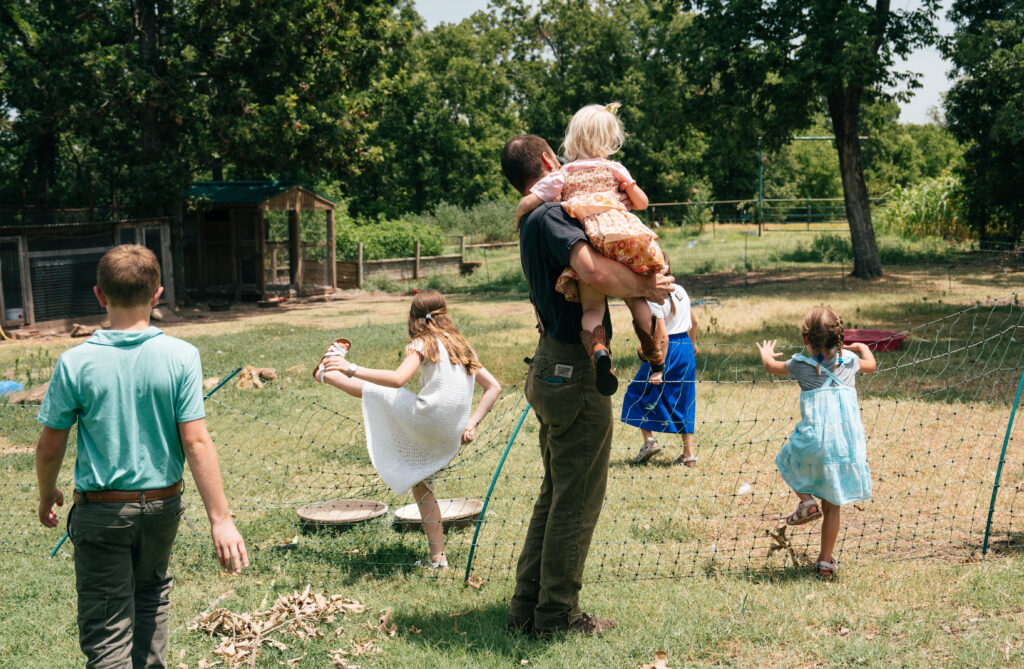
This culminates in our yearly “midwinter’s-eve feast,” an evening when we celebrate the joyful movement of the seasons. It is a day to remember that when the dark feels most overwhelming, the tide has already turned and the light is on its way back. It is also a time for us, as busy farmers, to settle into rest.
We also celebrate Christmas with each of our families in the usual way: food, gifts, lights, carols, and the liturgies of Advent. But our midwinter feast is our own special celebration—a time when we, as a family, can focus on the things we value so deeply: the movement of the seasons, hope in overwhelming times, our relationships with this land, and entering into seasonal rest—all of which remind us that, in the end, all we have comes to us as a gift.
Leading up to our feast, we prepare the food and make decorations, with the kids often initiating new elements to add to our celebration. Last year, my son wrote a book of blessings for the season. One of my favorite blessings is:
“May God be as good to you as he is to the holly.” Amen.
A Special Family Tradition
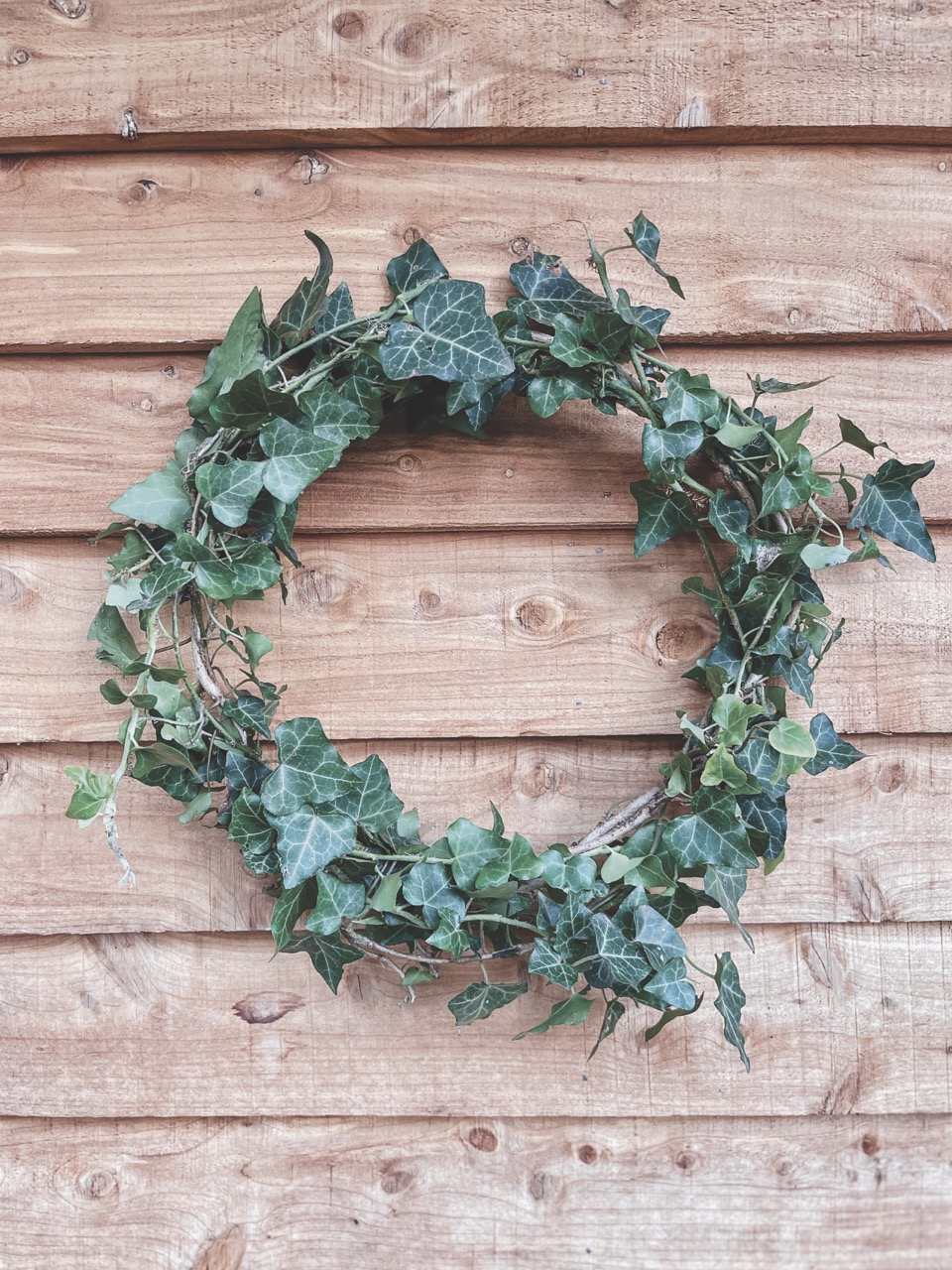
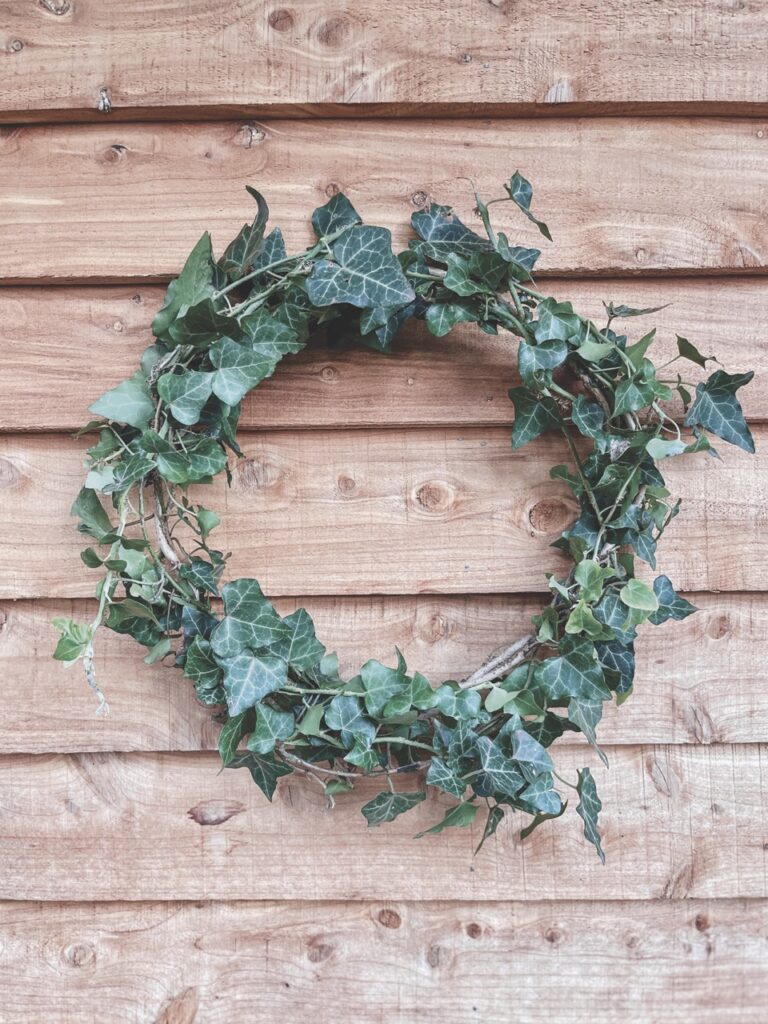
As part of our tradition, we go out during the day to gather English ivy from the trees. Ivy has traditionally been associated with midwinter because of its beautiful evergreen qualities—a small reminder that green will return.
The circle of the wreath symbolizes new life, the movement of the seasons, and renewal. We place a wreath on our front door and another in the middle of our table, with a candle in the center that we light when the sun sets for its longest night.
This feast is only the first of many to come. In this season of long nights and cold days it is so easy to slip into gloom. When the darkness begins to feel heavy we actively engage these rhythms of feast, celebration, rest, and reflection.
These practices have made all the difference for our family as we intentionally lean into this time of year. My hope for you is that you also lean into the rich practice of feast and celebration at this time of year, and find hope that confounds all darkness.
Preparing the Feast
When it comes to preparing a midwinter feast, you can get as creative as you like with the menu. However, I do recommend centering the meal as much as possible on local, seasonal ingredients. The following recipes are what we traditionally make for our midwinter feast here in South Central Kansas.
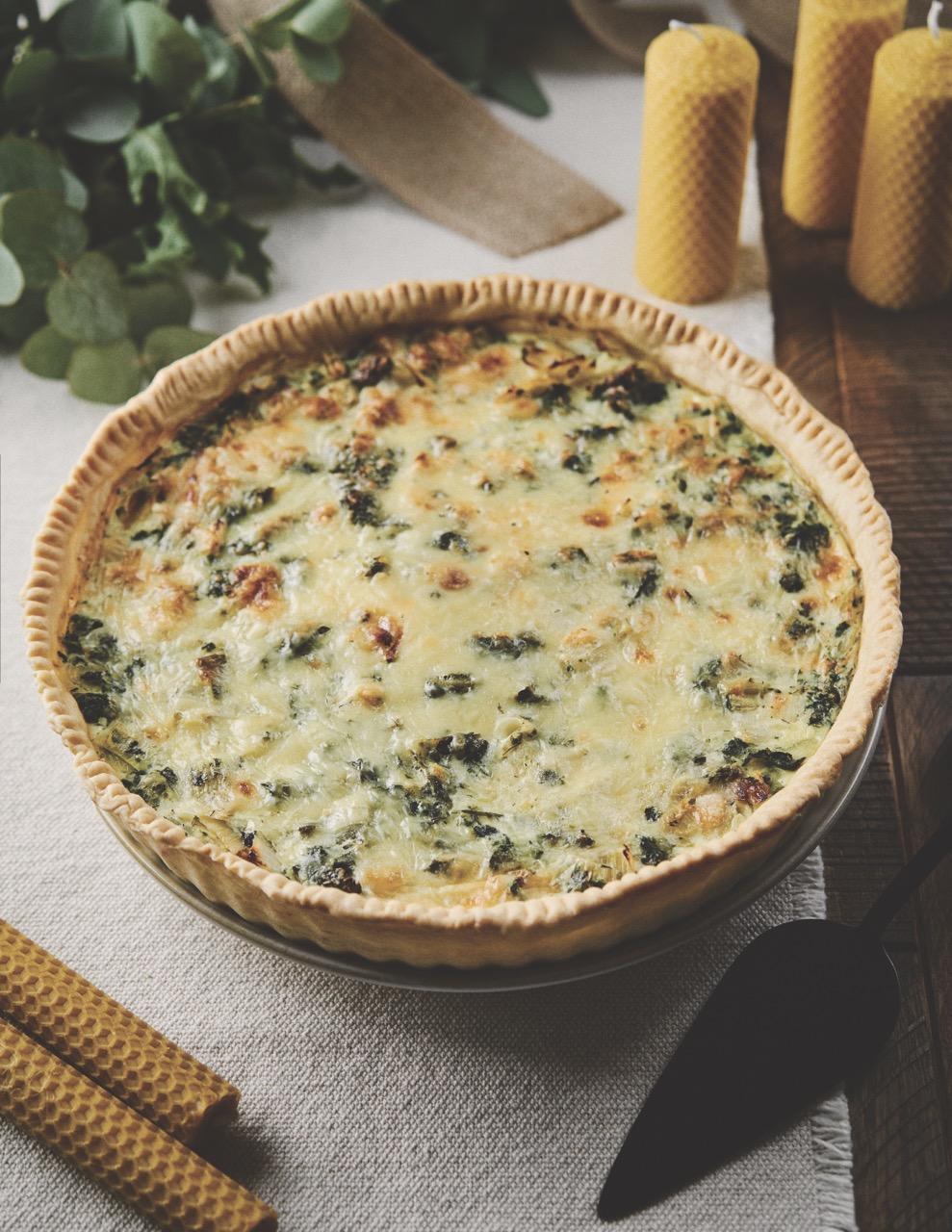
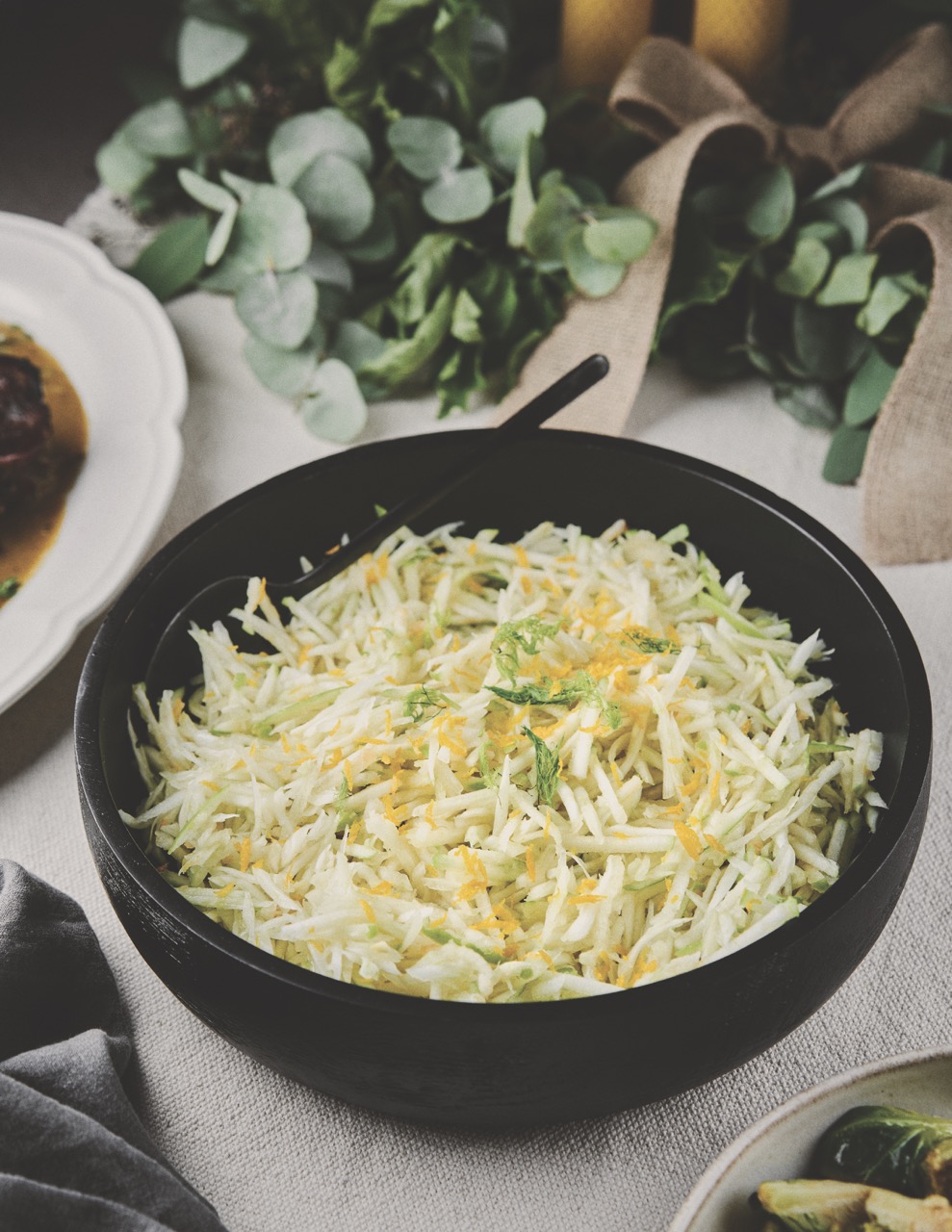
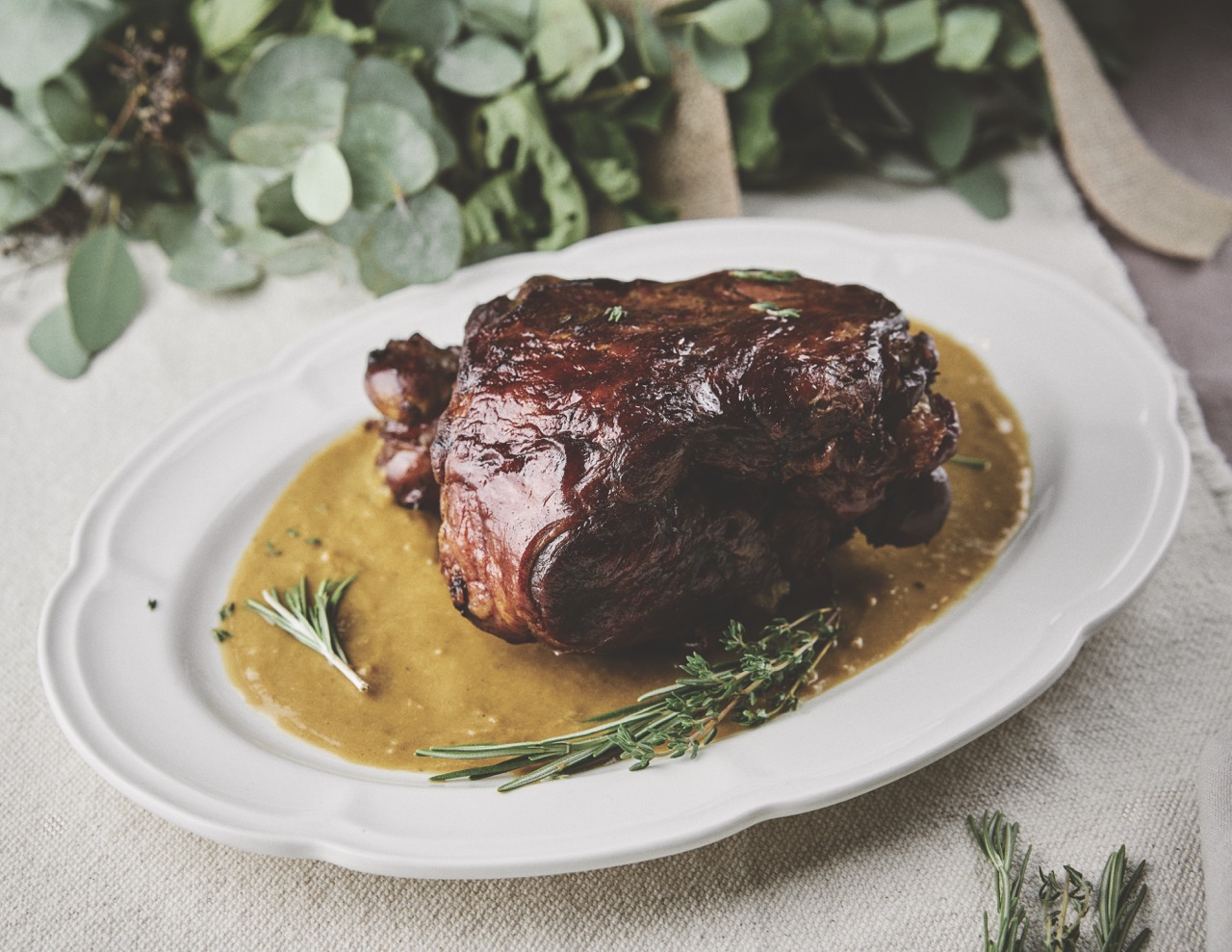
What I love about these recipes is how well they play together. The leek and greens tart served with apple fennel slaw makes for a perfect starter. The lamb, with its luscious gravy, marries perfectly with the sweet, starchy rutabaga (swede), and the brightness of pomegranate-studded Brussels sprouts.
The spiced apple almond cake—served straight from the skillet—is a delectable and cozy ending to the evening, especially when served with a drizzle of cream and paired with a pot of rooibos tea.
Notes on timing:
While you can execute the entire meal from start to finish on the same day, I love to be fully present on celebration days, so I begin preparations a day or two ahead of time so that the day of the feast is free to be celebrated.
Here are some things you can prepare ahead of time to make the big day run smoother:
- Make the tart shell and freeze
- Cook the leeks
- Wilt the greens
- Chop vegetables for the lamb
- Dice the rutabaga
- Trim and quarter the Brussels sprouts
- De-seed the pomegranate
How To Make An Ivy Wreath
Gathering ivy and making a wreath isn’t just a lovely way to celebrate the season; it’s also beneficial to the local flora, as you free up trees from ivy’s invasive grip.
- Cut any vines off at the tree’s base to free up the trees and help them get the nutrients they need.
- Gather the small, beautiful hanging vines, which may be found either up in the tree or straggling along the ground. Try to get at least 18-24” lengths.
- Gather a few of the long lengths of thicker-stemmed ivy clinging to the tree. Make sure they are at least 2-3 feet in length. (Detach the vine carefully so you do not damage the tree.)
- Shape the larger vines into circles of your desired size and twist any excess vine around itself. Then, return with the smaller, prettier leaves and continue adding to the circle.
- Hang your wreath on the door or use it as table decor for your meal.
Ingredients
- Ingredients for the tart shell
- 2 cups all-purpose flour
- 1/2 teaspoon salt
- 1 stick of butter 1/2 cup
- 1/4 cup leaf lard or substitute with additional butter
- 1/2 cup ice cold water
- Ingredients for the Filling
- 1 large leek
- 2 tablespoons butter
- 3/4 cup cooked greens of choice moisture drained
- 4 large eggs
- 1 cup heavy cream
- 1/4 teaspoon freshly-grated nutmeg
- 1 teaspoon dried tarragon
- 1/2 teaspoon salt
- 1/4 cup freshly-grated parmesan
- 1/4 cup grated gruyère or swiss cheese
Instructions
- In a large mixing bowl, combine the flour and the salt. Measure the water and set aside. Cut the butter and the leaf lard into 1/4-inch cubes and set aside. Now chill all of your ingredients in the freezer for 30 minutes, including the flour.
- After 30 minutes, put the flour, salt, butter, and lard into the food processor and pulse 10-12 times until nice and crumbly. Add half of the chilled water and pulse a few more times. Add the rest of the water and pulse until the dough begins to come together. You want your dough to be on the slightly crumbly side rather than the sticky side. If it still seems too crumbly to gather into a ball, add water a tablespoon at a time until just right. (I have never had to add more than a couple of extra tablespoons—don’t let it get too sticky!)
- Dump the dough onto a large square of parchment paper and gather it into a lump. Press the dough into a disk and fold in half, then fold in half again, into a wedge shape. Shape the dough into a rough 8-inch disk. Wrap the parchment paper around the disk. If you are baking your tart shell immediately, chill in the freezer for 30 minutes. If you are making your tart shell ahead of time, put it in a plastic bag and store it in the freezer until ready to use.
- When you are ready to par-bake your crust, take the dough out of the freezer and defrost for about 10-15 minutes. If you are baking the same day and have just done the chilling step, only defrost for 5 minutes. Using a rolling pin, begin pounding the dough out until it is approximately a 10-inch round, then roll it out to roughly 13 inches in diameter. Place the dough in a 9-inch deep dish pie pan or cast iron skillet. Flute the edges of the crust and place in the freezer to chill for another 15 minutes.
- Heat oven to 400ºF (204ºC). After 15 minutes, remove the pie crust from the freezer and par-bake it in the preheated oven. To par-bake, cut a round of parchment paper the same size as your tart pan. Set the parchment paper on top of the pie crust and place pie weights or dried beans on top to weigh the crust down and help it maintain its shape. Cook your pie crust for 10-15 minutes until it just starts to brown, then remove from the oven and let cool. Reduce oven temperature to 350ºF (177ºC).
- Cut the leek into quarters lengthwise, then chop the lengths into 1/2-inch strips and soak them in a large bowl of water for 5 minutes. Swish the leek slices in the water to dislodge any remaining dirt and then let drain.
- In a medium saucepan, melt 2 tablespoons of butter. Add the drained leeks to the saucepan. Stir well to coat the leeks with butter and salt lightly. Place the lid on and lower the temperature to medium heat to sweat the leeks. Let cook with the lid on for 5 minutes. Take the lid off of the pan and stir, reduce heat to low, and repeat. When leeks are nice and tender, set them aside to cool.
- If you are using fresh greens, add more butter or oil to your saucepan and add as many greens as you can fit. Stir until wilted. Continue adding greens until you have cooked them all down. You should have about 3/4 cup of cooked greens when you’re finished. Be sure to drain or squeeze out any excess water. If you are using frozen greens, defrost, chop, and drain any excess water before using.
- Mix the eggs, cream, nutmeg, tarragon, and salt in a bowl. Spread the leeks and greens over the bottom of the par-baked tart shell. Sprinkle the mixture with half the Parmesan. Pour the egg mixture over the greens, careful not to pour so much that the tart shell overflows. Sprinkle with the remaining cheese and bake in the oven at 350ºF (177ºC) for 30 minutes. The tart can be served immediately, but it also keeps well at room temperature for a couple hours.
Notes
Ingredients
- One large fennel bulb
- One crisp apple
- One orange zested and juiced
- One clove garlic crushed
- 1 tablespoon olive oil
- 2 teaspoons balsamic vinegar
- 1/4 teaspoon salt
Instructions
- Quarter the large bulb of fennel and cut out the core. Finely shave with a mandoline, including the green stalks and some of the beautiful green fronds.
- Cut an apple into quarters and remove the core, then slice each quarter into thin slices with the mandoline.
- In a small mixing bowl, whisk together the orange juice and zest, garlic, olive oil, balsamic vinegar, and salt.
- Toss the fennel and apple slices with the vinaigrette and transfer to a serving bowl. Top with a little more orange zest and a few chopped fennel fronds.
Ingredients
- One 6-pound lamb shoulder* you can use boneless, but I love the additional flavor of bone-in
- 1 large onion peeled and roughly chopped
- 2 carrots peeled and roughly chopped
- 1 small fennel bulb roughly chopped
- 6 cloves garlic peeled and lightly crushed
- 1 sprig fresh rosemary or 2 teaspoons dried
- 4 sprigs fresh thyme or 2 teaspoons dried
- 4 black peppercorns
- 3 allspice berries
- 2 cups chicken broth
- 1 cup red wine** I choose a fruity red like a grenache or syrah over a cabernet.
Instructions
- Pull the shoulder roast out of the fridge 3 hours before cooking to bring it to room temperature. Pat the roast dry and season generously with salt and pepper.
- Heat oven to 350ºF (177ºC).
- In a Dutch oven or roasting pan, combine the onion, carrots, fennel bulb, garlic, rosemary, thyme, peppercorns, allspice berries, chicken broth, and red wine.
- Set the roast, fat side up, in the Dutch oven or roasting pan over the vegetables and cooking liquid when it is at room temperature. Cook in the oven uncovered for 2 hours. Turn the shoulder and cook for another 30 minutes. Turn again and cook for another 30 minutes. Continue to turn the lamb every 20 minutes or so until you can easily pull the meat apart. If you are using two small roasts, your cooking time will be shorter than if you are working with one large roast.
- Ensure there is always at least 3/4 of an inch of liquid in the bottom of the pan. Add more broth or water if it seems low. Once the lamb is tender, tent it with foil and let it rest for 15 minutes before carving.
- Add all of the pan juices and vegetables to a bowl and strain off the fat. If you can, remove the peppercorns and allspice berries; if not, you can strain them out at the end. Using an immersion blender, purée the vegetables in the pan juice (or use a regular blender) and pour the mixture through a strainer for a silky smooth gravy. If the gravy seems too thick, simply add hot water a little at a time until it reaches a good consistency.
- Depending on your roast, you should have a good collection of slices as well as fall-apart meat. Serve on a rimmed cutting board or platter, with the boat of gravy on the side.
Notes
** As an alternative to wine, you can substitute one cup of petite diced tomatoes and one tablespoon of tomato paste
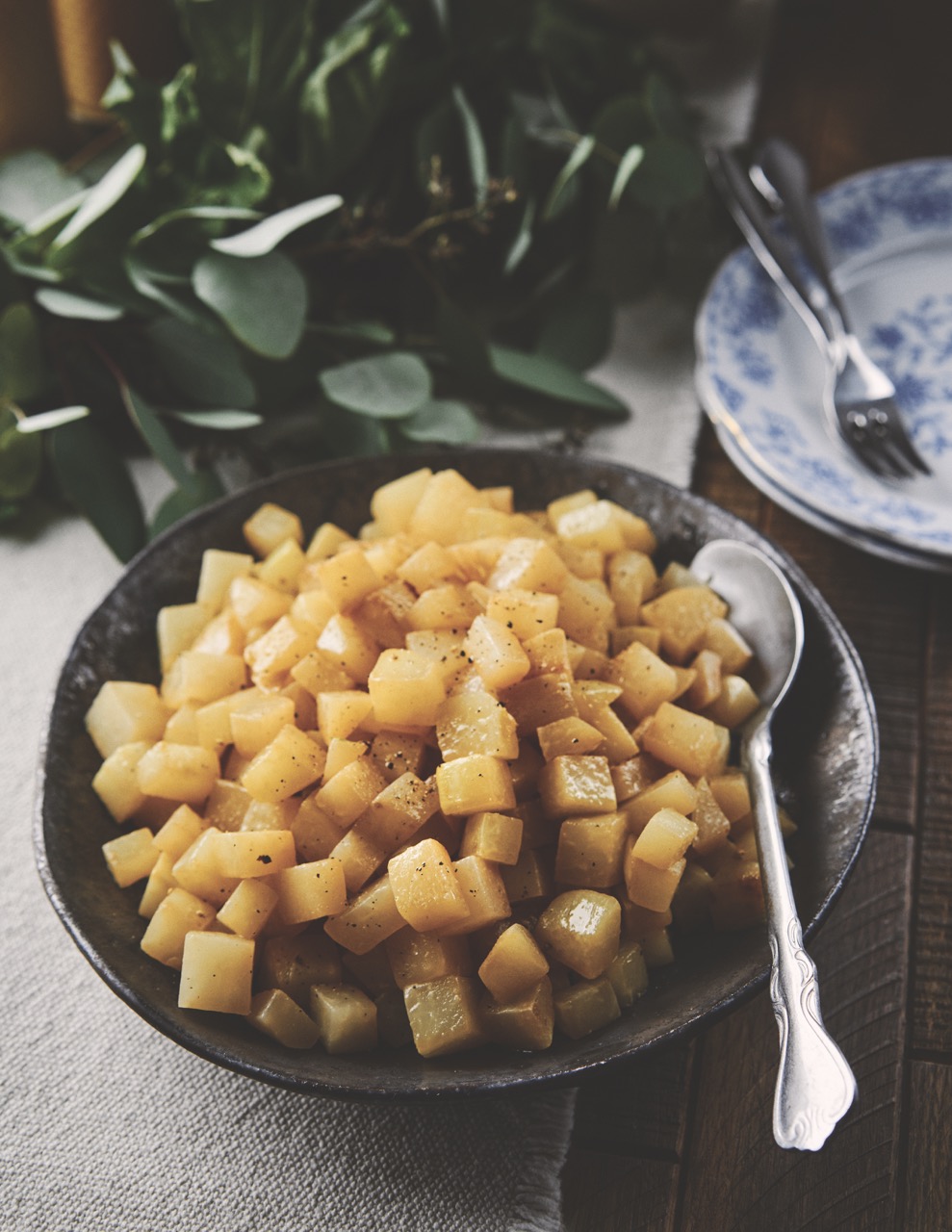
Ingredients
- 2 pounds rutabaga*
- 3 tablespoons butter
- 1/2 teaspoon salt
Instructions
- Peel the rutabaga and cut it into 1/2-inch chunks. Add the chunks to a heavy-bottomed pan with the butter and salt. Cover and cook on medium heat for about 5 minutes. Stir the rutabaga pieces, then cover and cook for another 5 to 8 minutes. If the liquid is getting low and the rutabaga is not yet tender, add a couple tablespoons of water and continue to cook until fork-tender.
- Place the mixture in a covered heat-proof oven dish and keep warm until ready to serve. This can also be made the day before and simply reheated with a splash of water for 15 minutes at 350ºF (177ºC). To serve, transfer it to a serving bowl and garnish with a sprig of rosemary or thyme.
Notes
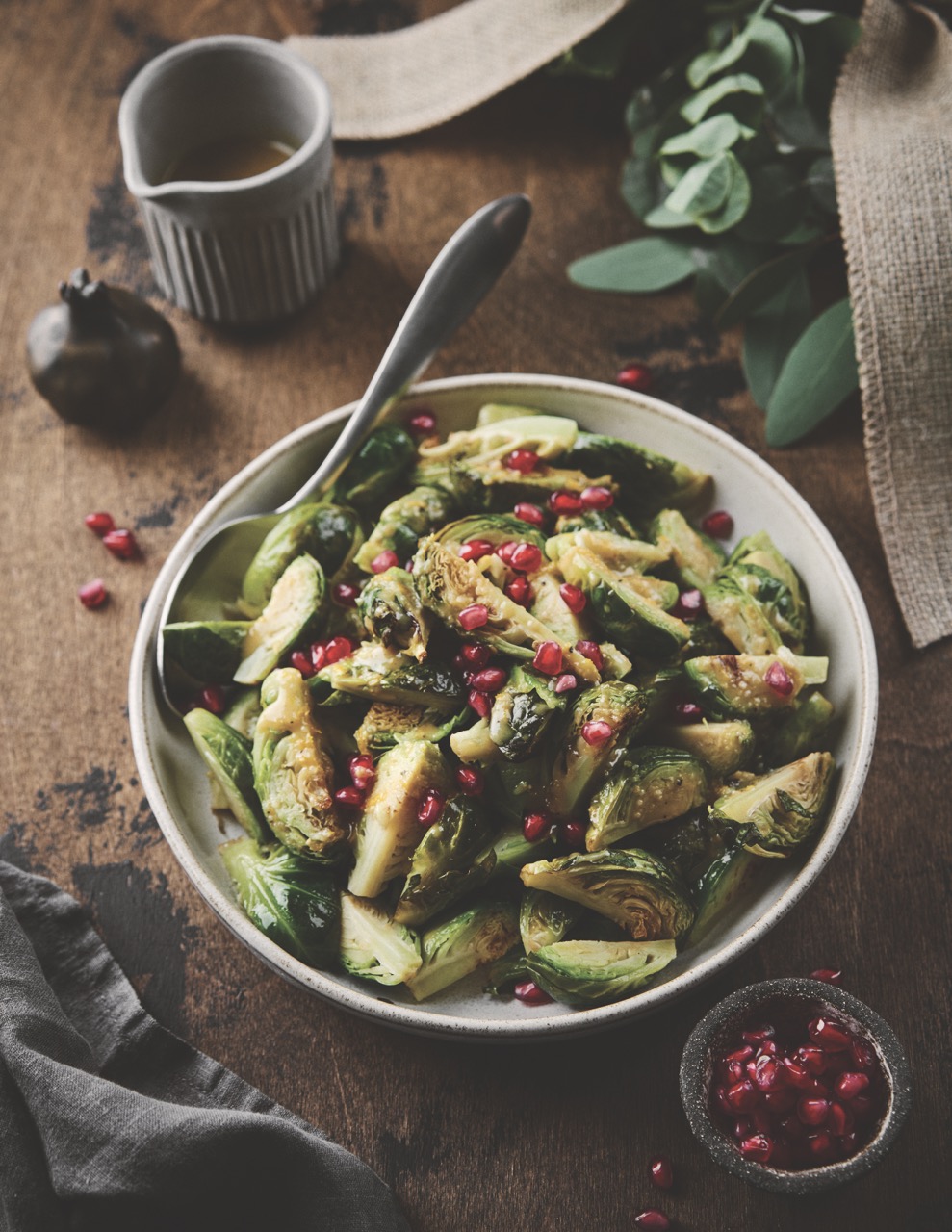
Ingredients
- 2 pounds Brussels sprouts
- 1/2 cup pomegranate seeds
- Drizzle of olive oil
- Salt to taste
- Ingredients for the vinaigrette
- 2 teaspoons Dijon mustard
- 2 teaspoons maple syrup
- 3 teaspoons balsamic vinegar
- 2 teaspoons orange zest
- 3 teaspoons orange juice
- 1 clove garlic crushed
- 1/2 teaspoon of salt
Instructions
- Heat the oven to 425ºF (218ºC). Trim the ends off the Brussels sprouts and cut them into quarters. On a large sheet pan, toss the sprouts with olive oil and lightly sprinkle them with salt. Roast for 10 minutes.
- While the sprouts are roasting, prepare the vinaigrette. In a bowl, combine all the vinaigrette ingredients and whisk together until well combined.
- At the 10-minute mark, stir the Brussels sprouts and cook for another 5 to 8 minutes until they begin to crisp. Remove them from the oven and toss lightly with the vinaigrette and pomegranate seeds. Transfer to a serving bowl and sprinkle fresh orange zest over the entire dish.
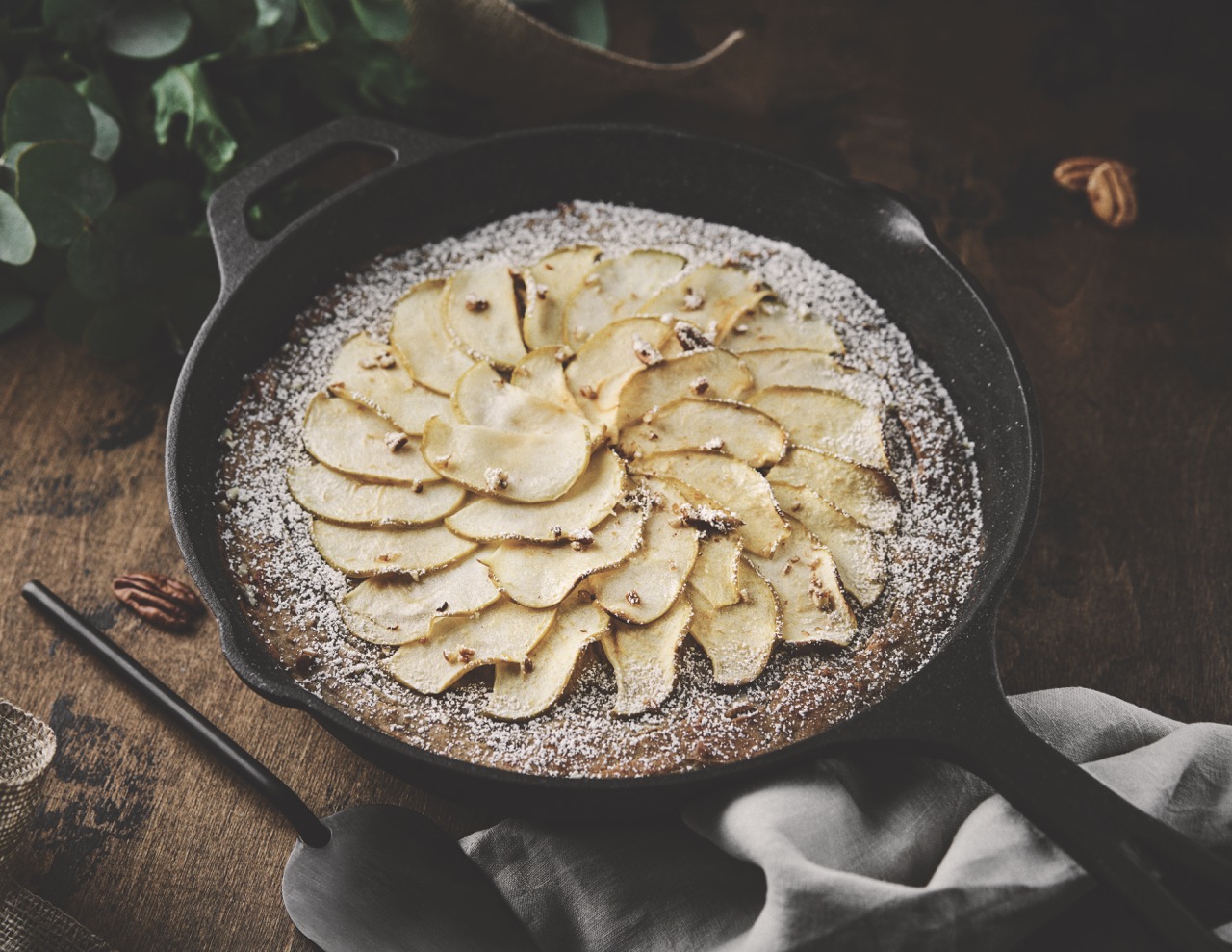
Ingredients
- 2 cups almond flour
- 1 teaspoon baking powder
- 1/2 teaspoon baking soda
- 1/2 teaspoon salt
- 1 teaspoon cinnamon
- 1/8 teaspoon freshly-grated nutmeg
- 1/2 teaspoon ground ginger
- 1/2 cup roasted chopped pecans
- 3 eggs
- 1/2 cup maple syrup
- 2 tablespoons date honey*
- 1/4 cup melted butter or mild olive oil
- Zest of one large orange
- 2 tablespoons orange juice
- 1 teaspoon vanilla extract
- 1 large apple core removed and thinly sliced (I use a mandoline)
- Powdered sugar for dusting optional
- Heavy cream for serving
Instructions
- Preheat the oven to 325ºF (163ºC). Grease a 9-inch cast iron skillet with butter or oil.
- In a large bowl, mix all of the dry ingredients, including the pecans. In a separate bowl, whisk together the eggs, maple syrup, date honey, butter or oil, orange juice, zest, and vanilla extract. Gently stir the wet ingredients into the dry ingredients until well combined, then pour the batter into the skillet. Arrange the thinly sliced apples on top of the batter in a spiral pattern.
- Bake the cake for 30 to 35 minutes, or until a toothpick inserted into the center comes out clean. Let it cool for 15 to 20 minutes, then add a light dusting of powdered sugar or orange zest over the top. Serve warm with a hot cup of coffee or tea, and a drizzle of fresh cream if desired.
Leave a Reply