
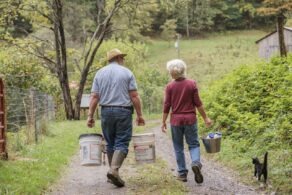
How do a college theatre professor and his serially pregnant wife become homesteaders who grow just about everything their family of 10 eats—and everything their livestock eat as well—simply by grazing a few dairy cows on a steep, rocky hillside officially designated by the state of Ohio as “not suitable for agriculture”? Answer: mostly by accident.
Our first glimpse of the Sow’s Ear was in January of 1996, on a day pretty much like today: gray, overcast, with a wet, sloppy coating of old snow. The encounter was not promising. Our beat-up station wagon bounced and jolted over the uneven drive, naked blackberry canes scraping spiny fingers down its sides. The land was 17 acres, abandoned and overgrown, clinging to the sides of a steep, narrow draw. Whatever wasn’t weedy, second-growth maple, oak, and locust woods was steep wasteland, bristling with brambles higher than your head. The house was derelict: windows broken, siding discolored, front door hanging from one hinge. Inside, it looked as though its last use had been as a kennel for dogs.
At that moment, nothing was farther from our minds than what the future actually held: that, decades later, this land would be a tiny, thriving jewel of a farm, nestled into the hills, feeding our large family and larger assortment of livestock—dairy and beef cows, dairy goats, and sheep; pigs, hens, ducks, turkeys; a farm dog and three barn cats. Who could have pictured green pasture carpeting the steep, eroding hillsides with gardens tucked into every corner?
Certainly not us. As we picked our way over a yard littered with old auto parts, and crunched through rooms whose soiled carpets were strewn with broken glass, our only thought was that we would never in a million years buy this place. Out in the car, our three young sons—who, after one glimpse of the devastated zone, had prudently declined to join us inside—were fervently agreeing.
Our problem was a common one, and it’s one of the first obstacles for beginning homesteaders. Homesteading has many challenges, and one of the biggest is that while we are in love with the idea of a homestead, most of us have, at best, a very fuzzy notion of what a working homestead should actually be like. Conventional large-scale grain or livestock operations, with their commercial goals and expensive equipment, don’t give us much to go on. Homesteading at its core is about raising the best, nutrient-dense, health-giving food, primarily or exclusively for consumption by the family who lives there. Most Americans today have never seen such a thing in action, although, as we say, the idea of it is firmly fixed in our dreams.
On that day in 1996, we were no exception. Even though both of us grew up on small farms with cows and big gardens, when we began shopping for a place of our own, what it turns out we were actually seeking was a look. We imagined a homestead that was flat, green, and open, with fences, barns, established pastures, garden plots, and maybe a pretty white house with a deep porch and maple trees in the front yard. Nothing was farther from our minds than buying something like this cross between a dump and a dying jungle.
Our inspection didn’t take long; in five minutes, we had seen enough. We fought our way back through the mounds of garbage and broken furniture to the front door. Brambles snatched at our ankles as we crossed the weed-choked lawn. Back in the station wagon, our children breathed a sigh of relief on hearing that this place, at least, was off the list of possible future homesteads.
So, naturally, when we got home, we called the owner and said we’d take it.
Starting From (Less Than) Scratch
Looking back, it still seems like the logical choice to have made. Land is expensive, often ruinously expensive. Mortgages take a lot of paying down. If we could buy land cheap—and this land, with its derelict dwelling, was very, very cheap—we could concentrate our future labor and money on improvements rather than mortgage payments. Of course, we reminded ourselves, the place wasn’t a farm; but we figured that while we continued our search for appropriate land, we’d fix up this junk-heap and flip it.
What we didn’t know was that this forlorn piece of real estate was going to teach us how God’s earth is marvelously diverse, adaptable, and self-healing, and how just about any piece of it can become a fruitful home for a family. We were going to learn that God designed His creation with built-in patterns that produce the health, diversity, and abundance we see in nature, and we can use those same patterns to build thriving, abundant homesteads.
In retrospect, we can see that buying this place was a watershed point for our family. As Shawn sometimes says, who we are—the kind of people, the kind of family we are—is a direct function of our decision to buy and stay on one cheap, damaged, rejected piece of Appalachia and tend it according to the promptings of nature. Since that day in 1996, our lives, our work, our food, and our education have grown up out of these slate hills, until we have become people of this place, bone of its bone. We’ve become farmers.
Not that we had any sense of this on that day in March when, with butterflies in our stomachs, we paid cash for our dubious new purchase. By April 1st, we were tearing out walls, putting lally columns in the basement, and scything blackberry canes around the back door. We had to pause for a couple days to have a baby—another boy—but early in May we moved in.
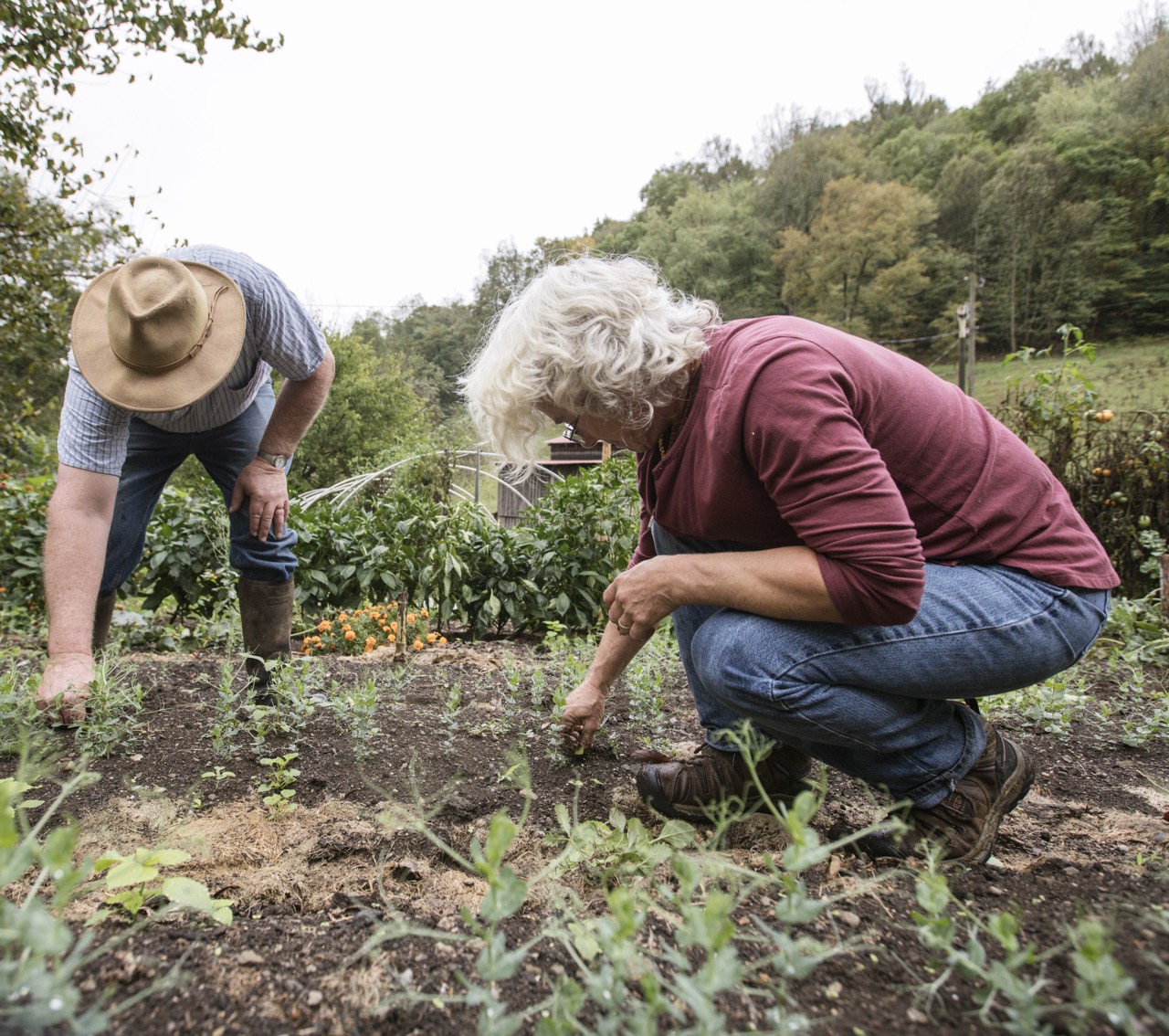
The house was far from ready—no drywall, only one functioning faucet—but we knew we needed to be there. With spring already advancing, we had no time to waste, so even before getting running water in the house, we got to work making gardens. In places, rocks were only inches below the surface; in other spots, soil that looked promising turned out to be mostly silt and gravel. We sought out organic matter wherever we could find it. We hauled in loads of cow manure to make raised beds; elsewhere, we tilled rotted sawdust into the stony soil. Soon the weedy lawn was sprouting crooked tomato stakes and tips of pole beans.
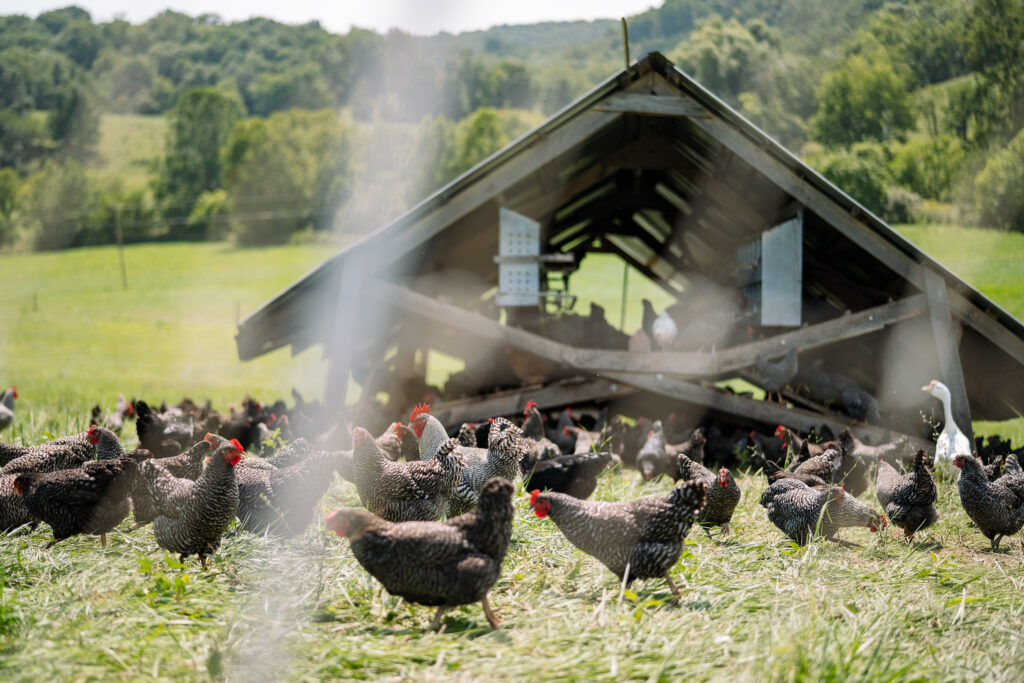
Livestock weren’t neglected: two dozen brown leghorns took up residence in a shed behind the house, and right away there were eggs for breakfast. It was an exciting day when we first picketed our new Nubian does, Nutmeg and Clove, in a thick brake of berry canes. That night we had some of their milk—our mouths screwed up with the new experience—to go with our dinners. It was the beginning of something big.
It isn’t as though we had a plan. We just wanted to raise our family in the country, work together, and grow our own food. But maybe nature had a plan for us. As we scan back over the years, certain twists in our homestead saga stand out as the drivers of change, the things that really signaled what direction we would be going. Three, in particular, were decisive.
Adding Dairy Animals
The first, biggest, and most important choice we made was the decision to keep dairy animals. Like everyone else, we had always heard how much trouble dairying was—what a ball and chain it would quickly become. And yet, it was something that felt right. We were fascinated by the idea of fresh nutrition every day, nearly, or actually, for free. Those dairy goats ate briars, bushes, honeysuckle, and poison ivy, and they’d have been worth their weight and then some if that’s all they had done. But this daily influx of milk, for drinking and cooking and cheese-making, was like a wish granted in a fairytale. We were hooked.
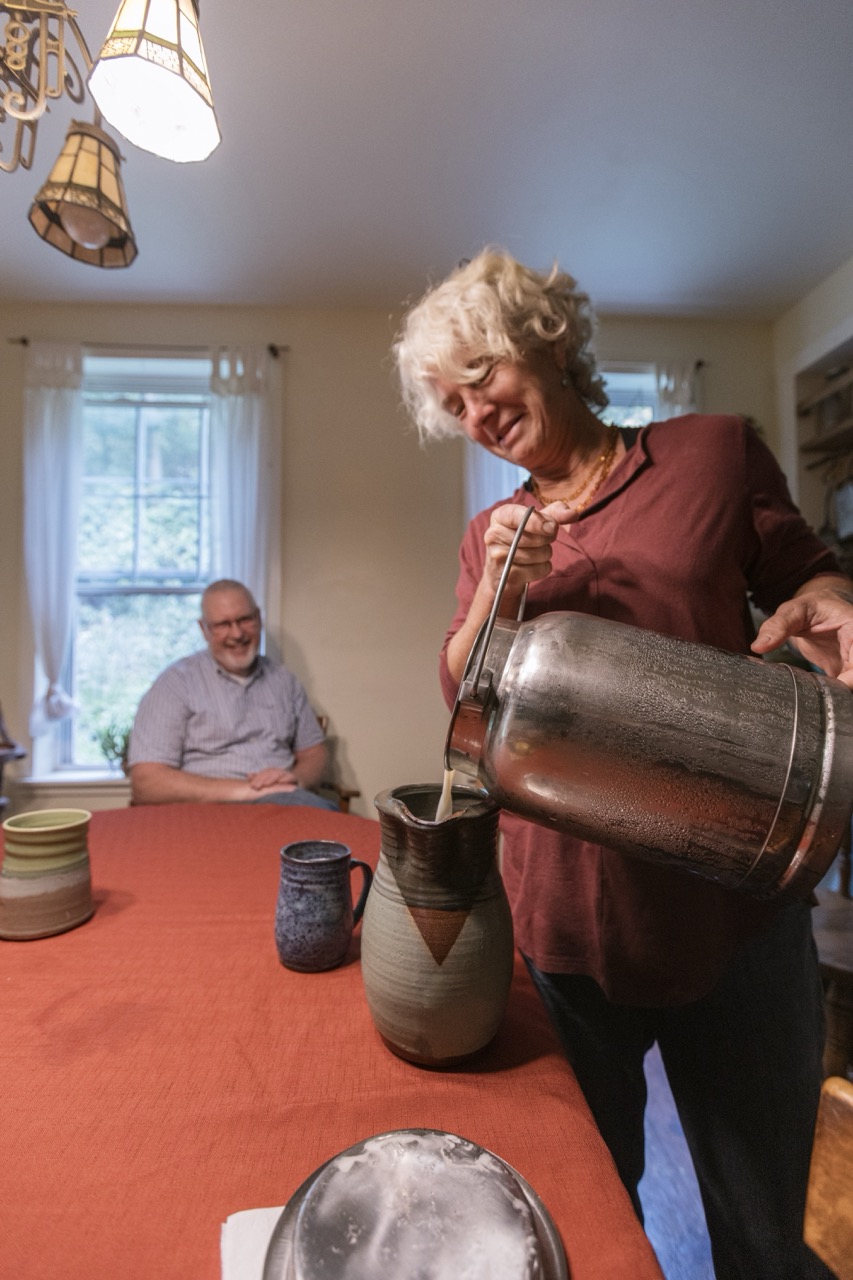
Goat’s milk, appropriately enough, tastes like goat’s milk. We loved it in strong, sour cheeses, rich with butterfat; it worked well in cooking, too. But for drinking, our palates had been formed on cow’s milk, so by the time the briars had begun to recede and grass was growing in, there was a young Jersey cow, Isabel, to graze it. And all of a sudden, there was a whole, whole lot of milk.
Sometimes when blessings arrive, they seem like problems. Isabel started out giving five gallons of milk a day, and by day three there was no room in the refrigerator. We made butter and yogurt and cheese—in fact, we seemed to be doing little else. But even with some herd shares to take the pressure off, we had more milk than we knew what to do with. We knew it was time to do a
little research.
And guess what we learned? Farmers have had the “too much milk” problem since the beginning of time… only they called it a blessing and used it to fatten pigs. According to standard procedure, fresh milk is strained and set so the cream can rise—cream for butter-making and coffee. Butter-making leaves skim milk and buttermilk, which go to the pigs. Milk is a pipeline for the solar energy the farm runs on, sunlight captured in grass and converted by the cow.
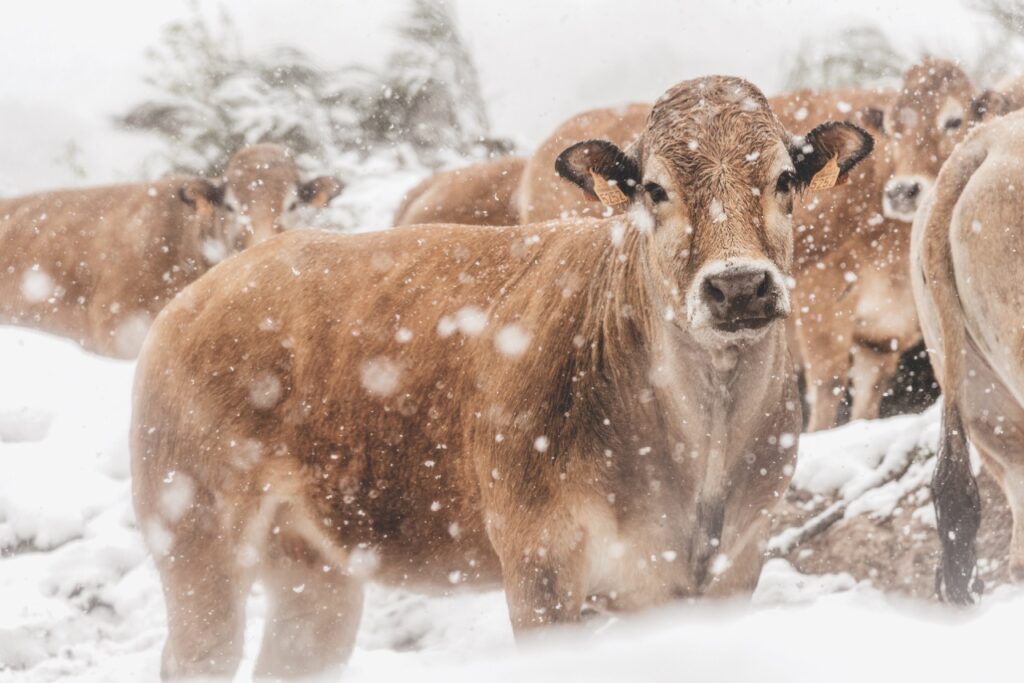
Since ruminants can digest cellulose—which is 90 percent of the energy in grass—and other animals can’t, using cows to convert our sunlight into proteins and fats doesn’t just feed people, it feeds the whole farm. There were the pigs, of course. Chickens, it turns out, love milk too, which provides them with protein and calcium for egg-making. The additional protein meant we had to buy less commercial feed. Dogs and cats who get milk love their home and stick around to catch pests and predators, so we weren’t buying pet food, either. Grass was feeding the farm.
And holistically-grazed pasture makes a whole lot of grass. Our pasture management (read: holistic grazing) was growing more and better grass every season. With daily or twice-daily paddock moves, our cows were healthy and parasite-free, too. Healthy pasture, healthy cows, healthy milk—it all goes together. The discovery that grass could feed the farm was titanic. There was only one way to make it better, and that discovery—our second big lesson—was just around the corner.
Investing in Borrowed Land
We used to balk at the idea of putting our hard work into someone else’s property. Not that we mind doing work for friendship or charity, but we disliked the thought of improving someone else’s land instead of our own. If we were going to build soil somewhere, we wanted to own that somewhere, and that’s all there was to it.
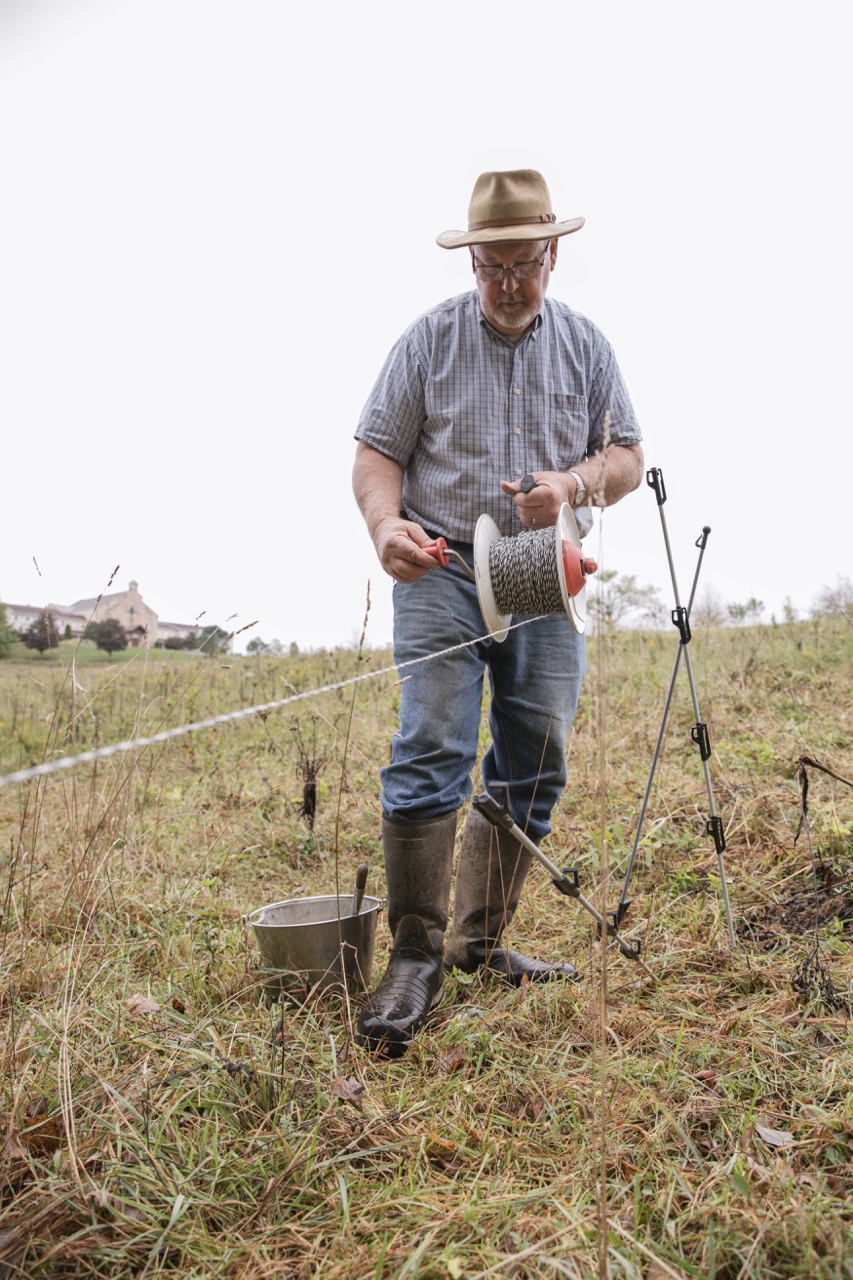
Only, there was no getting around the fact that most of our own land was too steep, and too densely forested, for grazing a cow, while just next door the neighbors had a—we’ll call it a field, but it was more of a bramble patch—that, while it was steep, weedy, and rocky, was also unused.
Getting over our determination to own whatever land we used was a huge leap forward. Land costs money, and money was just the thing we were short of. If we were determined to solve problems with more money, Shawn was going to have to spend more time working off-farm, and that was something we really didn’t want. Meanwhile, land sat idle next door because we were stubborn. Isabel was looking longingly over the fence, and we decided we needed to get over it—our prejudices, not the fence.
Getting comfortable with improving land we didn’t own opened up a whole range of possibilities. We got permission to graze that field and eventually we did buy it. As our little herd grew, we extended our reach a mile up the road to another vacant field, this one belonging to a convent. Our notion that we should be a self-sufficient island gave place to the certainty that our work, our land, and our neighbors were all part of a much bigger plan—God’s plan—and we needed to be more open to His purposes.
Growing Food Year-Round
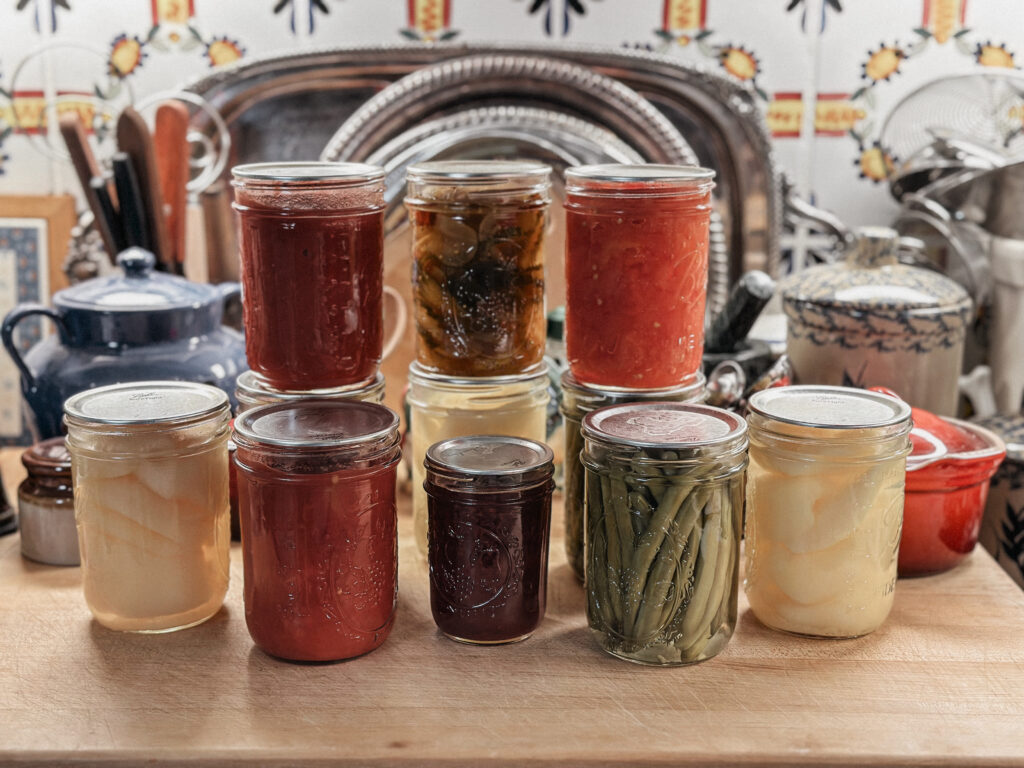
Our gardens thrived with all the composted pig bedding and chicken manure our animals made. We were producing all of our own meat and dairy, our staple carbohydrates (potatoes), and in-season fresh vegetables. We canned, dehydrated, fermented, and stored extra produce in our root cellar, and our table was covered with homegrown food year-round. But there was a gap: winter produce. We love our fresh salads, and we didn’t want to give them up. But winter vegetables require infrastructure that was beyond our frugal budget… or so we thought.
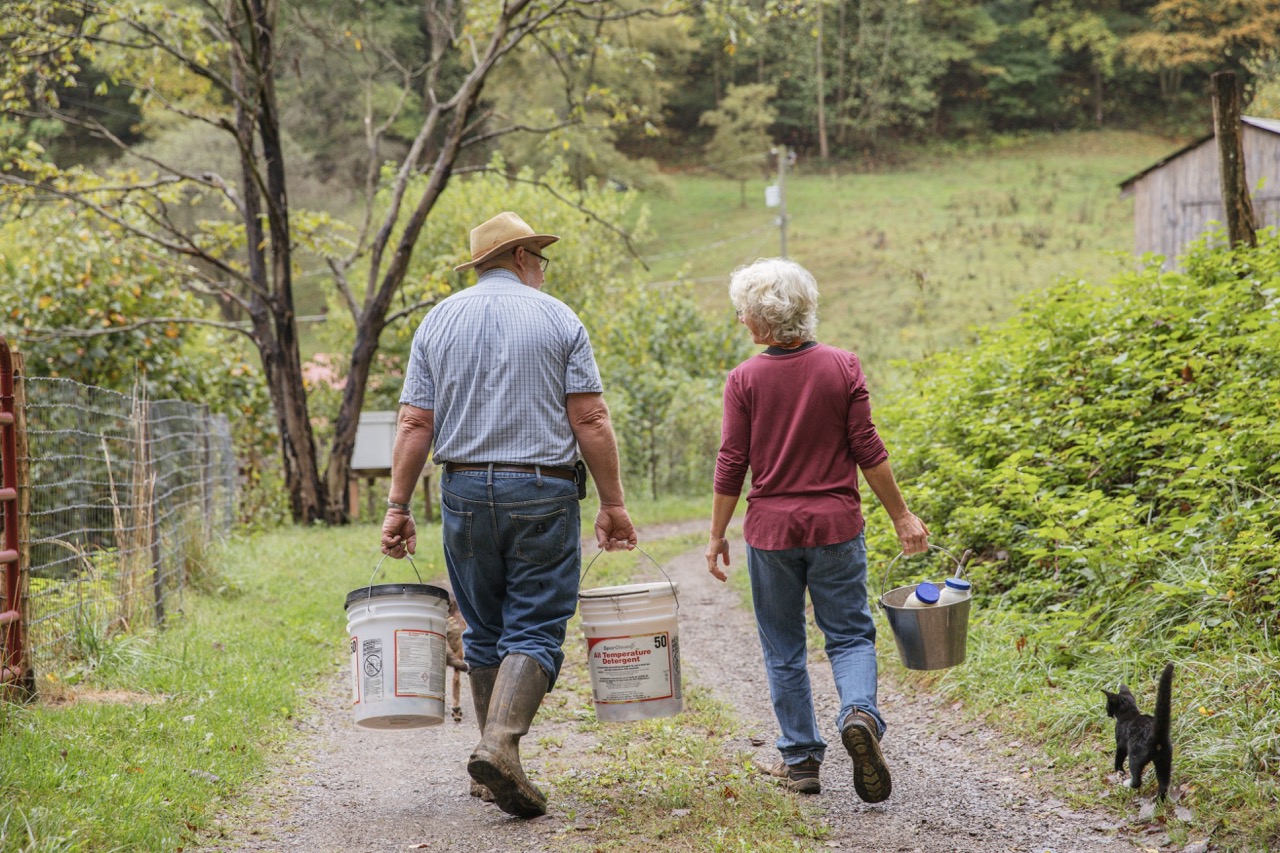
Until we stumbled upon Eliot Coleman’s landmark book, The Winter Harvest Handbook. Our first, simple low-tunnel was cheap PVC hoops over a bed of lettuce, but it didn’t stop there; we began growing winter carrots under cover, then beets, spinach, and other cold-hardy greens. The last piece of our diet.
A Family Legacy
Our family continued to grow, adding two more boys, and two girls. When we needed an addition on the house, we built it ourselves. We all loved to eat, so growing and raising our food came naturally to the children, especially when we worked as a family. Homeschooling meant we could customize our schedule and curriculum to our individual needs, talents, and opportunities—something we felt strongly that God was calling us to do.
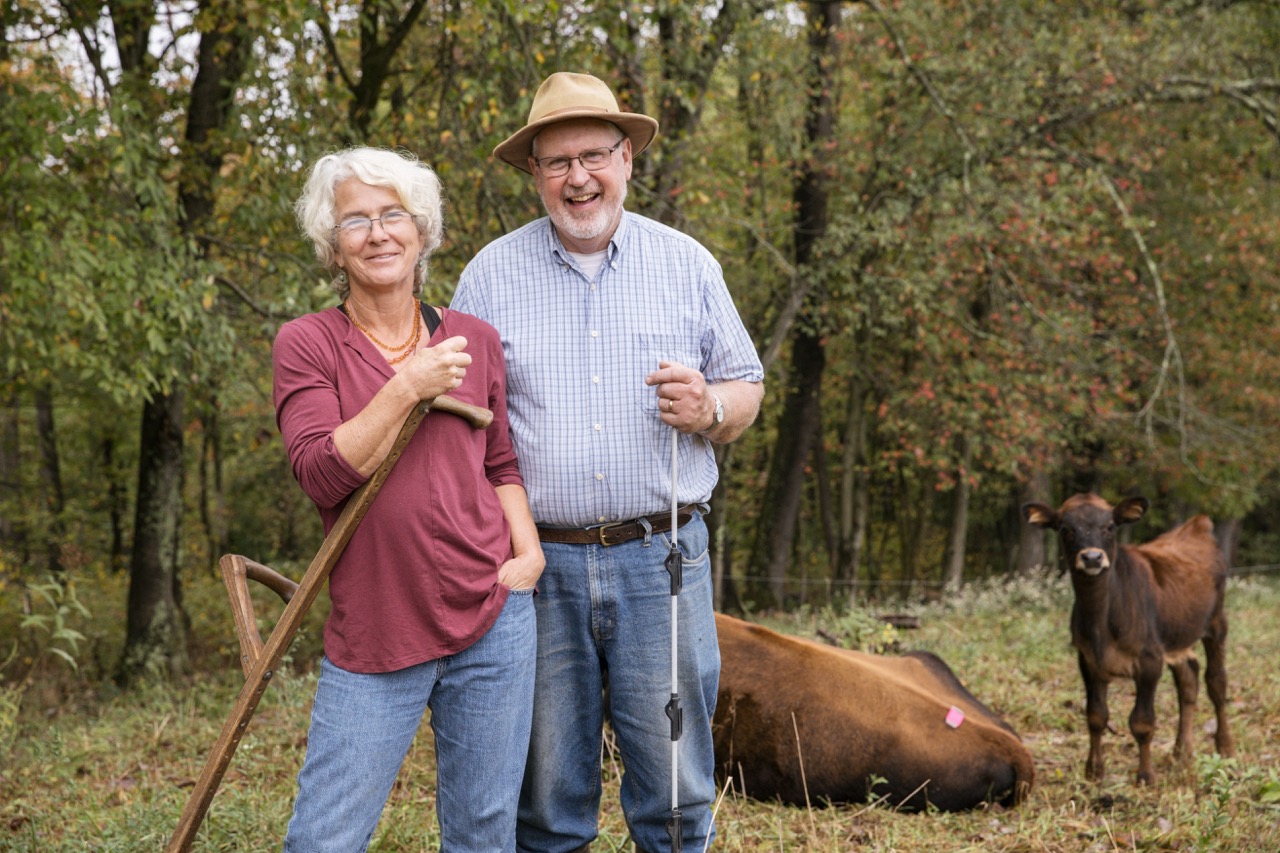
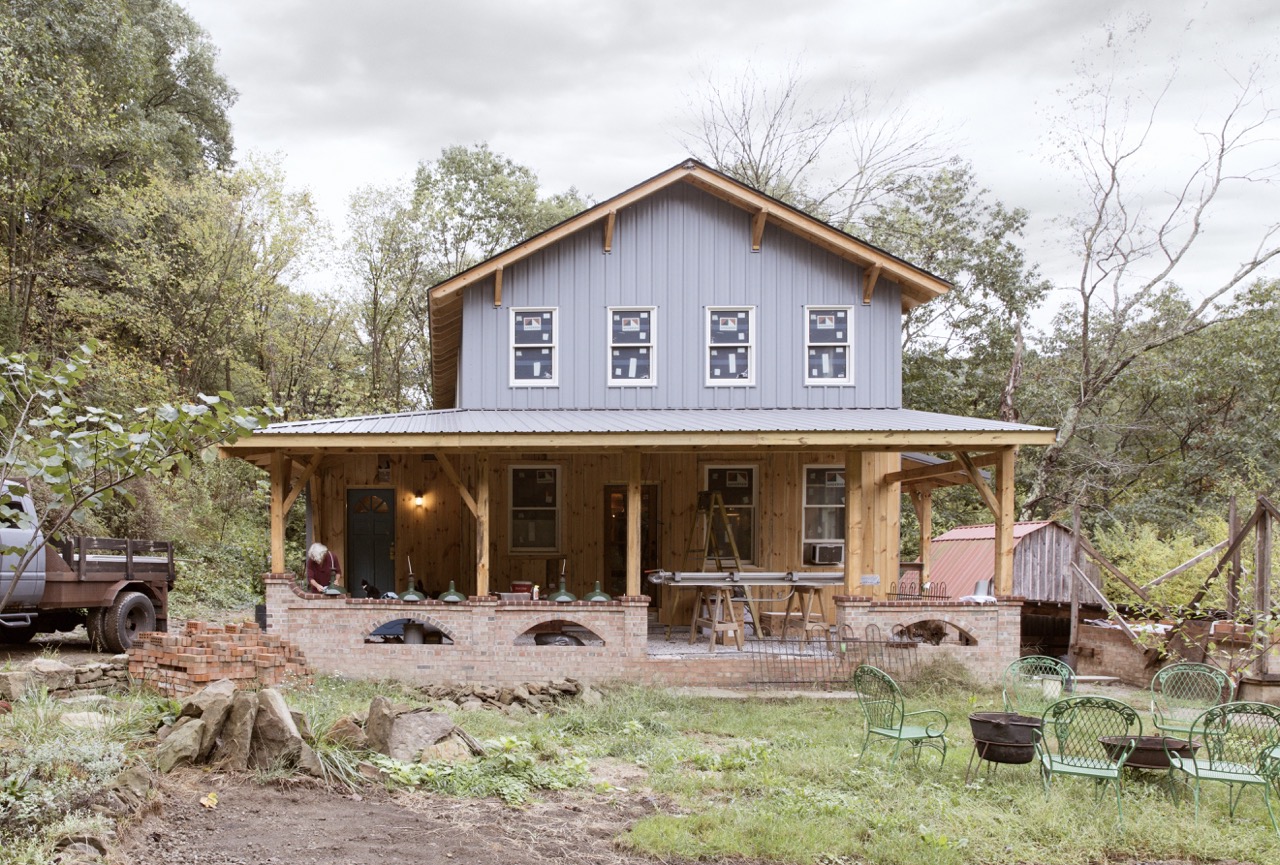
In 2023, that paid off unexpectedly when our beloved, ramshackle farmhouse was destroyed by fire. Our children, now aged 36 to 16, plus five daughters-in-law and a dozen grandchildren, took on the task of rebuilding. Skilled in the arts of construction, along with timber framing, masonry, and design (one son is an architect), they collaborated on the creation of a legacy home, built entirely by ourselves, and uniquely suited to our lifestyle and aesthetic. Our family food ways—dairying, butchering, food preservation, and storage—have shaped the house, as they shaped the farm, as they shaped us.
Life continues to unfold for us as we go on growing where we are planted, building from the simple, even damaged pieces God has placed in our paths. Being together has been our most important priority; working together, providing for one another, has driven our choices. A thorny, trash-covered piece of hillside has become a tiny jewel of a farm, a burgeoning source of sustenance, and a family way that binds us to one another and to our land.
A resurrection out of ashes.
Leave a Reply