
One of the most overlooked old-time skills is growing herbs for your family and your homestead. Centuries ago, herbalism was common practice. Our great-grandparents could walk into the woods or the fields and know exactly what each plant could accomplish if necessary. Plants were a necessary part of the everyday homesteader’s lifestyle — and not just those that came from the garden. Now, in the 21st century, we’ve lost much of that old fashioned wisdom. It’s not just about making tinctures and syrups to treat the flu and the common cold, either. We can make non-toxic toiletries and more (like soaps and lotions) out of herbs right from our own gardens and properties.
The first question I’m often asked is — where do I begin?
Growing herbs and starting an apothecary can seem overwhelming, and rightfully so. With hundreds of thousands of plants in the world, how do you know which ones to get started with?
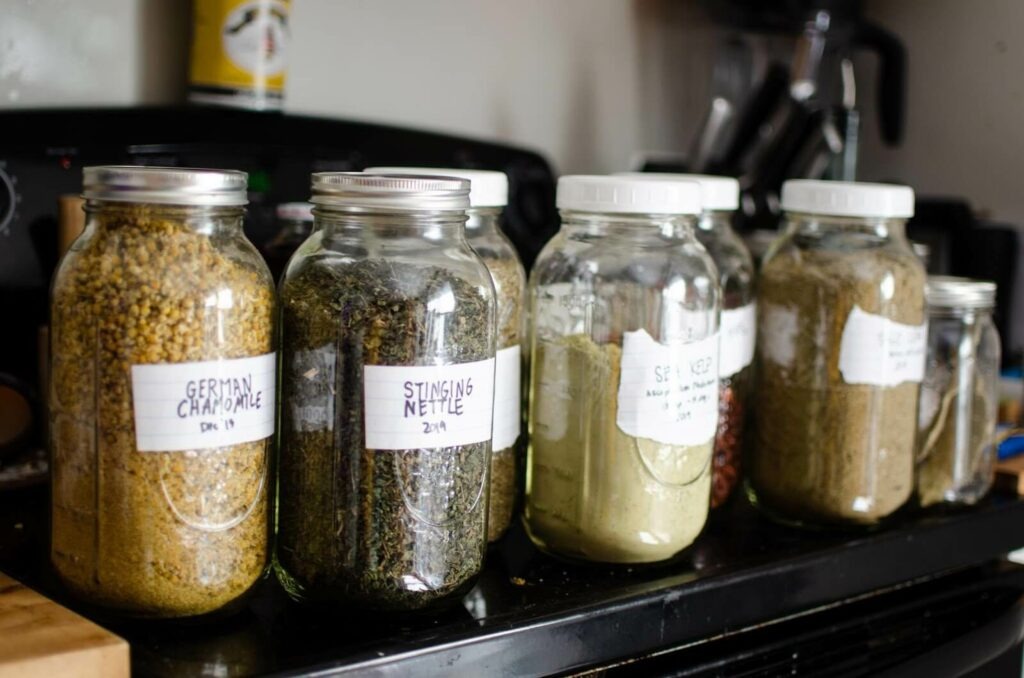
I can remember when I first got started, I thought I needed 200 dried herbs in my apothecary cabinet. But, in reality you can do a great deal with only 15 to 20 herbs. You’ll never use 200 herbs!
Start by writing down five reasons you’d like to get started with herbs on your homestead. When I first started, my reasons (or symptoms) looked a lot like this — headache, seasonal allergies, cold/flu, fever, traumatic bleeding, and asthma. Then, for each symptom, I researched five herbs that could help. I focused on 5 herbs at a time, learning how they worked and how they would affect my body. This simplified process took the “overwhelm” out of learning. Once I felt comfortable with those five herbs, I’d move on to the next five herbs, and then the next.
My very first list was modest, to say the least. We started our homesteading journey when our one-year-old son was diagnosed with childhood asthma. Having him on two inhalers and multiple medications every day wasn’t something I was comfortable with — so I turned to herbalism and natural remedies.
Even though I was learning, it became more and more apparent that I wasn’t going to fully grasp the power of herbal medicine until I understood how the human body worked. For example, I didn’t know that childhood asthma could be genetic, but it could also be related to food allergies or a leaky gut. Sometimes I wondered, were my herbal preparations even helping my son?
Learning herbalism and basic human anatomy truly go hand in hand, otherwise we’re just walking in circles. Advanced cultures like the ancient Egyptians had a deep understanding of herbalism and the human body. They were performing successful surgeries on people in their communities with the help of plant medicine. Now, I’m not suggesting you try to do that, but I doubt anyone in the community asked to see their doctorate papers.
All of this to say, I always tell my students to also study the chemical side of herbs, as well as the basics of how the body works. You can treat symptoms all day long, just like the pharmaceutical companies do. But until you truly get to the root cause of the issue, herbs won’t work either.
Discovering that my son’s asthma could be related to food allergies or a leaky gut was truly liberating, and took my herbal protocols in a totally different direction.
Some of My Favorite Herbs
Let’s get started with some of the basic herbs I keep in my apothecary at all times. As you dive deeper into these herbs, you’ll see just how easy it is to keep a few plants on hand that have multiple different uses. We’ll also walk through some basic preparations that you can create for your own family, which are generally safe to use.
Meadowsweet (Filipendula ulmaria)
Meadowsweet is a very efficient herb most notably known for its ability to help break fevers. It is also used for the digestive tract for things such as diarrhea, ulcers, stomach aches, and gout. Meadowsweet is also an efficient pain reliever. It is a natural anti-inflammatory.
Stinging Nettle (Utica dioica L.)
Stinging nettle is often used as an overall body tonic. This is one herb that can be eaten, infused into tea, or used as a medicinal herb every day. It can be used for nosebleeds, excessive menstruation, and to treat internal bleeding. It’s also an exceptional herb to help ease seasonal allergies, sinusitis, and other respiratory issues.
Chamomile (Matricaria recutita)
Chamomile is a natural anti-inflammatory, antipeptic, antiphlogistic, antispasmodic, antibacterial, and has sedative actions. It is an incredible herb for the respiratory tract and nervous system.
Elderberry (Sambucus nigra)
A natural antiviral, elderberry became extremely popular after the H1N1 outbreak in the United States when a study revealed that elderberry had the ability to inhibit viral replication and effectively inhibited the H1N1 virus. Elderberry and flowers are well known to help lessen the duration of influenza, on average, by 4 days. It is also known to help prevent the influenza virus from attaching to cells.
Astragalus (Astragalus membranaceus)
Astragalus has major immunity stimulating properties, and is a fabulous adaptogen (meaning, it helps the body adapt to stress and other issues). It reduces the common cold and flu, increases white blood cell count, protects the cardiovascular system, and is a natural anti-inflammatory.
Yarrow (Achillea millefolium)
Yarrow has traditionally been used as a tonic, anti-inflammatory, antispasmodic, diaphoretic, diuretic, and emmenagogic agent (stimulating blood flow in the pelvic area and uterus). It has been used for the treatment of hemorrhage, pneumonia, rheumatic pain, and wound-healing in traditional Persian literature. The modern medicinal uses for yarrow have even included treatments for malaria, hepatitis, jaundice, liver disorders, and it is known as a hepatoprotective herb (meaning, it protects the liver).
Lemon Balm (Melissa officinalis)
In Germany, lemon balm is licensed as a standard medicinal tea for sleep disorders and gastrointestinal tract disorders. It has successfully been used for viral, fungal, and bacterial infections. In a 2015 study, the herb was used to reduce heart palpitations and anxiety. Lemon balm is most effective as a mild sedative an to help relieve tension, stress, headache, and body aches.
Creating Basic Herbal Protocols
You now have seven herbs to get started with. What do you think you’ll make with them?
There are many different options. To preserve herbs the longest, creating a tincture or glycerite is a fabulous first option. You would make a tincture or glycerite in exactly the same way, just with a different liquid for each protocol. A tincture often uses alcohol, like an 80-proof or higher vodka. A glycerite uses vegetable glycerin, which is a much more palatable option, especially for children. In general, you should expect tinctures to last much longer than glycerites (think 10 to 15 years, if not longer). They’re both great options and you should choose whatever option is more feasible for you and your family.
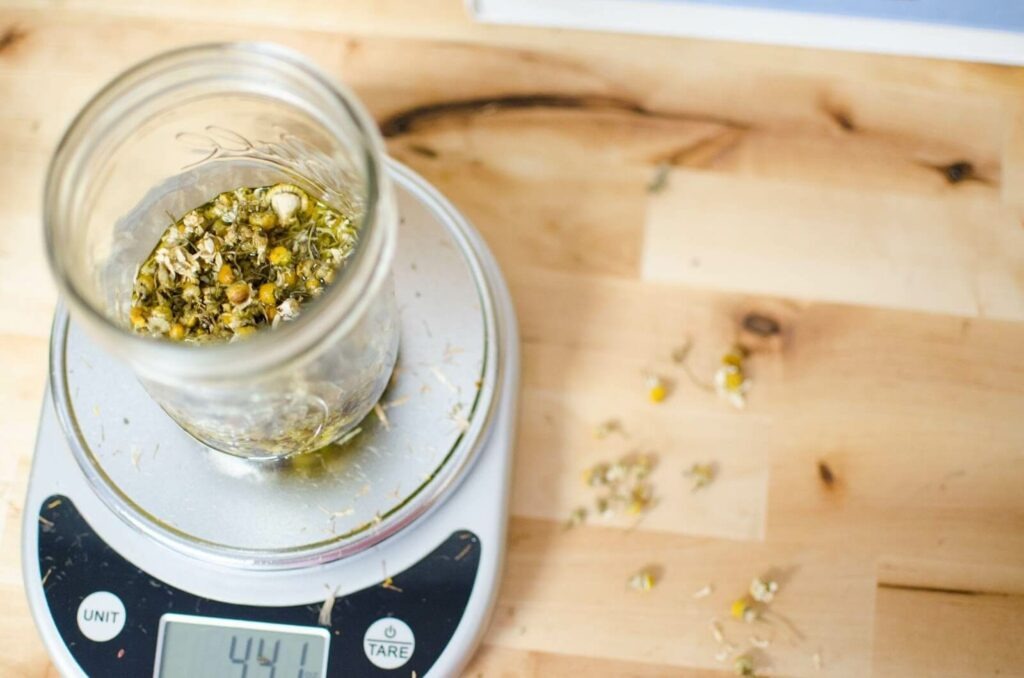
Just remember, whenever you make an herbal protocol, you should always weigh your herbs and other ingredients. This allows you to get the same results each and every time, and to know the proper dosage for your protocol. While the folk method of making these protocols can be efficient, it’s much less efficient than weighing everything.
Here’s how to make a basic tincture. Use the same measurements for a glycerite, but instead of vodka, use glycerin. Tinctures and glycerites use a 1:5 ratio (herb: liquid).




Leave a Reply