
The Working Partnership: Training Beyond Instincts
For a homesteader or farmer, a working partnership is not foreign. The synergy between humanity and nature synchronized with the rhythms of seasons forms the crux of agricultural triumph. Similarly, training an LGD involves nurturing a working partnership that optimally harnesses their natural instincts.
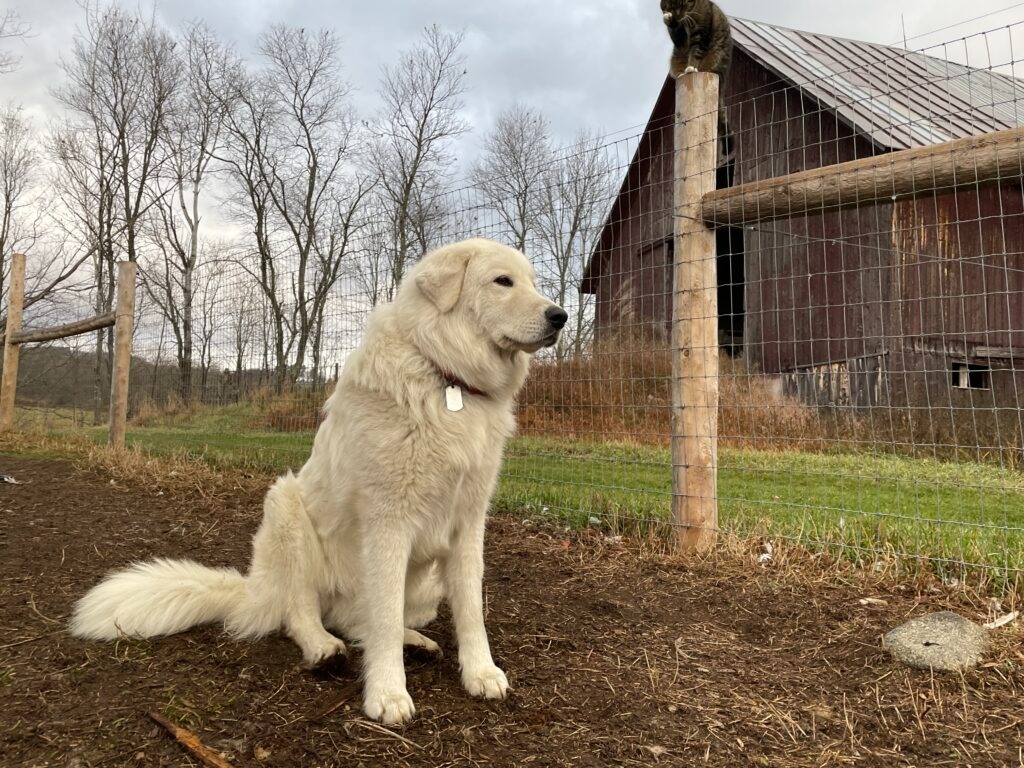
Consider the case of Toby Dog, a young maremma LGD welcomed onto our farm. Toby seemingly epitomized the ideal guardian dog. He swiftly absorbed basic commands, exhibited respect, and integrated seamlessly with the livestock. It’s easy to be lured into the belief that all LGDs will follow Toby’s trajectory.
Adapting to Individuality: The Tale of Abby Dog
Then enters Abby Dog, an entirely different narrative. She unveiled the distinctiveness inherent in every canine. Similar to humans, dogs possess distinct personalities, learning curves, and preferences. What worked effectively with Toby turned into a formidable challenge with Abby.
Abby’s self-assured demeanor defied conventional training techniques. Despite showcasing keen instincts, her responses often defied norms. Here lies the pivotal insight: LGD training is far from a one-size-fits-all affair.
The Blanche Incident: A Cautionary Saga of Unsupervised Access
A cautionary anecdote surfaces in the form of the Blanche Incident. Abby demonstrated a promising bond with the chickens, yet an episode of unsupervised access culminated in a catastrophe. This stark reminder of the fine line between coexistence and calamity underscores the indispensable significance of vigilant oversight and gradual training.
The Blanche Incident doesn’t highlight Abby’s shortcoming as an LGD, but rather underscores the critical step of comprehending individual dog personalities and adapting training approaches accordingly. As a discerning handler, it’s paramount to tread cautiously and avert the impulse to hasten the process.
Positive Reinforcement: Nurturing Trust and Bonds
Fostering a thriving partnership with your LGD rests on positive reinforcement. Just as you would reward a child for commendable behavior, incentivizing your LGD for desirable actions reinforces their comprehension of their role. Treats, toys, and affection emerge as potent tools to mold behavior.
Remember: aggression and violence never nurture a productive partnership. Techniques like binding deceased birds to a dog’s neck or deploying intense electric shocks are not just inhumane but also counterproductive. Trust corrodes when brutality replaces understanding.
The Vibrations of Connectivity: E-collar Training with Abby Dog
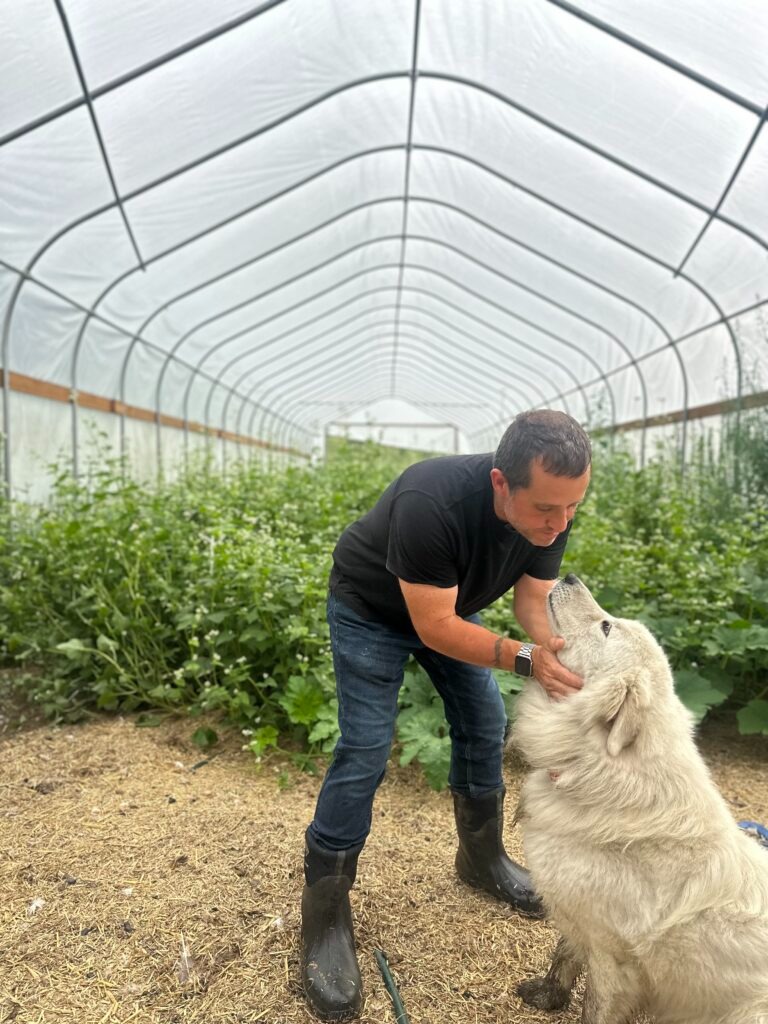
In Abby Dog’s case, innovation was imperative. The introduction of an e-collar, endowed with a vibration feature, redefined her training trajectory. The subtle buzz metamorphosed into a potent tool to redirect her focus, schooling her that certain behaviors were undesirable. Yet, it wasn’t a shortcut; endurance remained the cornerstone of her training program.
Harnessing Instincts: Specific LGD Training Methods
LGDs possess innate instincts for guarding, but these instincts need to be honed and directed. Here are specific training methods that reinforce their natural abilities:
- Supervised Access: Just like you wouldn’t hand a chainsaw to an inexperienced person, don’t give your LGD unsupervised access to your livestock too soon. Initially, train your dog while leashed and closely supervise their interactions with the animals. This prevents unwanted behaviors and allows you to correct any undesirable actions promptly.
- Positive Reinforcement: Reward-based training is effective in fostering positive behaviors. When your LGD behaves appropriately around livestock, offer treats, praise, or play to reinforce the behavior. Positive reinforcement builds a strong bond and encourages the dog to repeat desirable actions.
- Adaptability: Each LGD is unique. Toby Dog’s success story might involve quick learning, but Abby Dog’s journey was different. While one method works well for one dog, it may not be as effective for another. Adapt your training approach to suit your dog’s temperament and learning style.
- Learning from Mistakes: Sometimes, things don’t go as planned. Abby Dog’s accidental killing of Blanche the chicken serves as a cautionary tale. Mistakes happen, but they offer opportunities for growth. Analyze the situation, adjust your training strategy, and be patient as your dog learns.
- E-Collar Usage: Some situations require more than positive reinforcement. For dogs like Abby who struggle with certain behaviors, using an e-collar’s vibrate function can redirect their attention. However, it’s crucial to use it ethically and with guidance from professionals. An e-collar should never be used to inflict harm or pain.
The Investment of Time and Patience: The Ultimate Key
As a custodian of a livestock guardian dog, you metamorphose into both a mentor and a scholar. The bond forged with your LGD is an ever-evolving entity that craves time and patience. Just as you unravel the intricacies of your terrain and livestock, you must delve into the complexities of your dog. Your LGD isn’t a static tool; they’re living beings endowed with sentiments, instincts, and unrealized potential.
In Conclusion: Guardianship through a Collaborative Effort
Training your LGD for peak performance is a pragmatic journey devoid of poetic metaphors. The hypothetical box cannot be simply opened, nor can a manual be meticulously perused to yield immediate results. Your dog isn’t a mechanical instrument, but a sentient companion with emotions, instincts, and latent aptitude.
The stories of Toby Dog and Abby Dog underscore that while the path might be arduous, the destination is attainable with the right approach. Flexibility, positive reinforcement, and perseverance are pillars of your training voyage. It’s a voyage that solidifies your role as a guardian, collaborator, and steward of an exceedingly effective working partnership.



Leave a Reply