
The winters in Alaska are long and dark so when the days start to lengthen, and a hint of warmth returns to the air, we start dreaming of lush, green meadows and forests. We hunt protein and we grow, gather, and preserve as much produce from the garden as we can during the summer and fall, but inevitably, we must buy some greens, fruit, and other various items from the store. At the end of the road in Alaska, most of the lettuce we buy is half-rotten and has had a long hard journey to land on our shelves. So, by the time the earth is surfacing from its long winter slumber and the days are getting longer, we are desperate for something fresh, green, and nutrient-packed. For us, spring is the best time of year for wild edible foraging, and are we ever thankful for the moment those first nettles appear under all the dead plant debris.
Wild plants often have a higher concentration of vitamins and minerals than domestic vegetables because they haven’t been cultivated for their size and hardiness. There is simply more dietary diversity in wild plants versus cultivated foods. My husband and I always remark how invigorated we feel after a meal of foraged spring plants; they’re just what the doctor ordered at the end of a long winter.
Some of our favorite wild edibles in the spring are nettles, dandelions, watermelon berry shoots, devil’s club shoots, fireweed, and succulent beach greens like an oyster leaf and sea chickweed. We are also lucky to have the high tunnel where most of the weeds are edible and sprout early because of the warm, snowless environment. Our first meal of wild edibles in the spring is usually steamed nettles with butter drizzled on top. Even the kids devour them ravenously. Our bodies crave them and can’t get enough of these nutrient-dense plants.
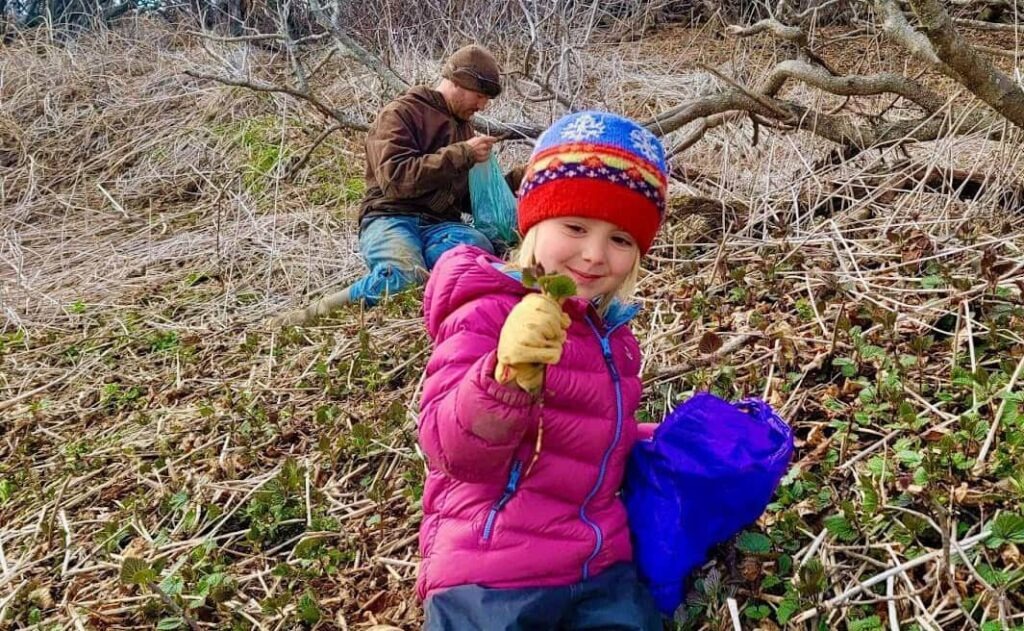
Nettle Foraging Tips
When picking nettles or processing nettles, you will want gloves because they have tiny hairs that will sting you and make your hands quite uncomfortable. However, once you cook or dehydrate nettles these little stinging hairs are destroyed.
The only time you want to harvest stinging nettles is in the spring when they are no taller than 6 inches. As nettles age, they lose much of their healthful benefits and become slightly toxic. Every spring I try to gather large quantities of nettles so that I can dry them and put them in bread, soups, and tea all winter long for an added boost of iron, calcium, and other minerals.
Dandelion Foraging Tips
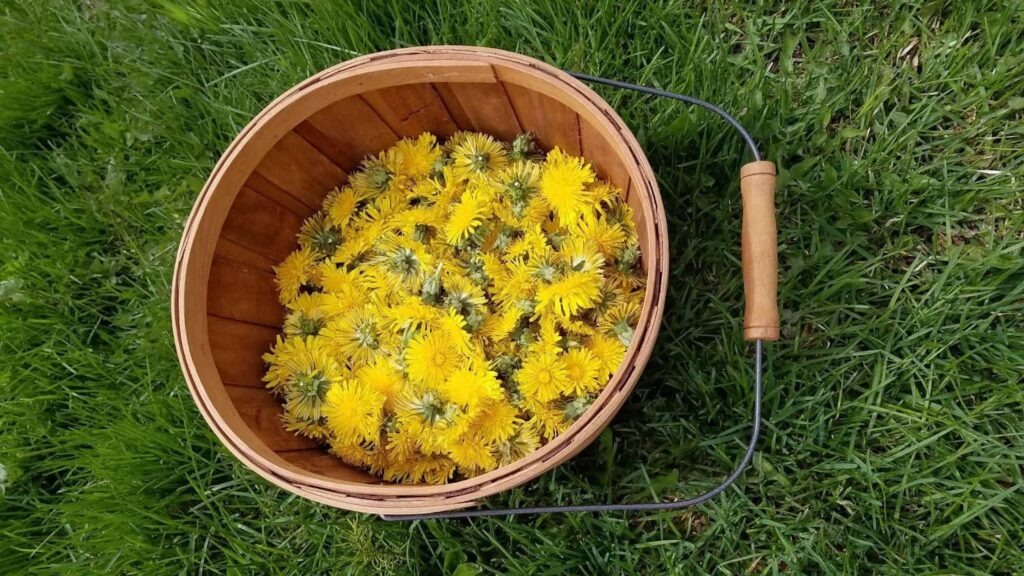
Dandelions are another nutritious wild edible that is best harvested in the spring. They contain iron, calcium, magnesium, zinc, potassium, and vitamin B and C. I would say this is one of the holy grails of nutritious plants to eat, so think twice before eradicating these healthful beauties from your lawn. Every part of this wonderful plant is edible. Dandelion roots must be harvested early in the spring and can be sautéed in butter or made into tea.
The roots of the plant are the most nutrient-dense, but also somewhat bitter. The leaves have a milder flavor and are a great addition to most any salad. The dandelion petals are the kid’s absolute favorite because they are naturally quite sweet and floral. As soon as they see the first yellow buds appear in the spring, they are begging for Dandy Cakes every morning. The great part of this is that they must run around outside gathering the petals and I get a few minutes of peace in the morning to drink my coffee.
I was raised by two biologists, so knowing the plants and animals around me is natural. Of course, I realize this knowledge and our lifestyle is not common, but foraging is something most anyone can learn. You can become a little less dependent on the local supermarket and also gain a better understanding of the environment around you. Foraging also helps cultivate a natural desire to steward the land with respect and forethought. Because we have learned where the first nettles of the season come up under the big rock in the lower meadow, we are motivated to treat this place with reverence. This is where the land will first feed us in the spring, so it must be cared for.
I want to teach my kids how to respect the natural world and recognize the effect we have on the world around us. If you pick too many watermelon berry shoots there won’t be any berries come summer or shoots next spring. Foraging builds a conservation mindset: yes, take some, but leave some too so this place can provide more for next year.
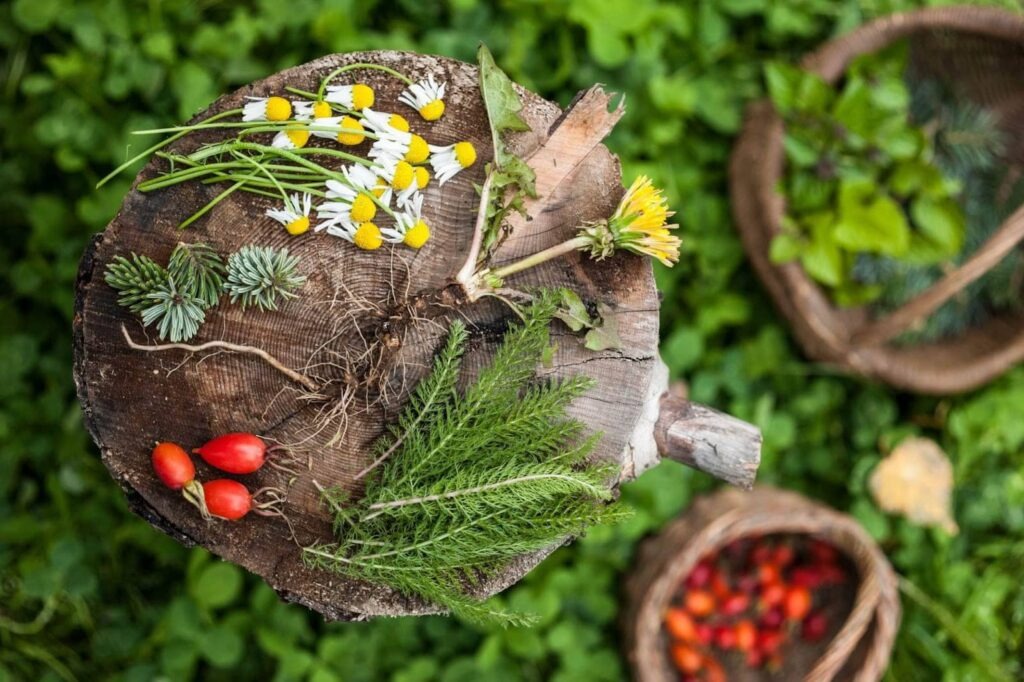
When cooking with wild edibles, it can feel overwhelming or baffling as to how to use them. They all have a distinctive flavor, but most can be compared to other vegetables we use regularly. It takes some experimentation. I think foraging for and cooking with wild edibles requires us to tap into our adventurous spirit (by definition: a willingness to take risks or try new methods, ideas or experiences).
Something I enjoy doing with any wild edible is to think about what it most closely resembles in taste and texture and then trying to integrate it into my favorite recipes. If I’m feeling adventurous, I will write a new recipe (my family can tell you some of these have been a terrible flop!) but eventually, I figure it out and create something wondrously unique. I am in love with creative food, and I always feel so much gratification if I can create something new and delicious.
Do I always have time for this?
Absolutely not; many times I just steam some greens, put butter and salt on them, and call it good. In my cookbook, Homestead Kitchen, I have a few recipes that we have developed utilizing some of Alaska’s wild edibles. One of the kids’ favorites is Dandy cakes.
I want to make sure that people take the utmost care when foraging for any wild edibles. There are many plants that are harmful to humans. There are few look-alike plants and fungi in Alaska that I simply stay away from because the consequences of eating the wrong plant are severe.
A good plant identification book will point these out to you, so it is imperative to do your homework before foraging. Another thing to keep in mind is to make sure you are gathering from places with unpolluted soil. But don’t let any of these things discourage you! Most plant identification is very straightforward and easy.
This type of gathering is so beneficial for your health and is more sustainable for the planet if done with care. Not to mention it is like going on a treasure hunt and kids are so quick and eager to learn these skills because they are instantly gratifying. You will be surprised what kids will eat if they are involved in the process of foraging for it. I hope this will provide a little inspiration to adventure out into your backyard — or perhaps beyond — to see what plant treasures are waiting to be discovered.
More recipes can be found on in our full-color cookbook Homestead Kitchen.
Also read Dandy Cakes recipe.



Leave a Reply