
Teresa and I had married on August 9, 1980, living in the farmhouse attic and half of the upstairs. Mom and Dad lived downstairs. We had separate kitchens and bathrooms but shared the house entrance.
For us, the shared housing arrangement was ideal because it enabled Teresa and I to live beyond frugally. Combined with a cheap car, nearly all our food, and a massive wood stove, we lived on less per year than any of our peers lived on per month.
We had saved enough to survive for one year without an off-farm paycheck, and that’s when I returned to the farm full time on September 24, 1982. The big surprise was that by being home, we lived even more cheaply than we had imagined when we had planned our budget. That nest egg stretched into two years. By the end of year three, we could breathe.
“We’re going to make it,” I said by the end of 1985. Dad had his diagnosis and was beginning to fail. He’d never made a living from the farm and was ecstatic that it looked like Teresa and I would actually be able to pull it off. Sometimes it takes a couple of generations to claw back what’s been lost.
Then, in 1986, Dad called me into his bedroom, adding “Bring a paper and pen.” I went in, and from his sick bed, he explained what he was thinking: “Let’s make a list of all the salaries that could be generated from this place.”
Note that Teresa and I were just starting our fourth year, and finally beginning to believe we would survive. We’d barely jumped the hurdle of one family’s full time employment. Rather than celebrate and bask in accomplishment, Dad was already thinking about next steps. We’d scarcely allowed ourselves to believe we could make it, and now he wanted to look into the future, to write down tomorrow’s possibilities.
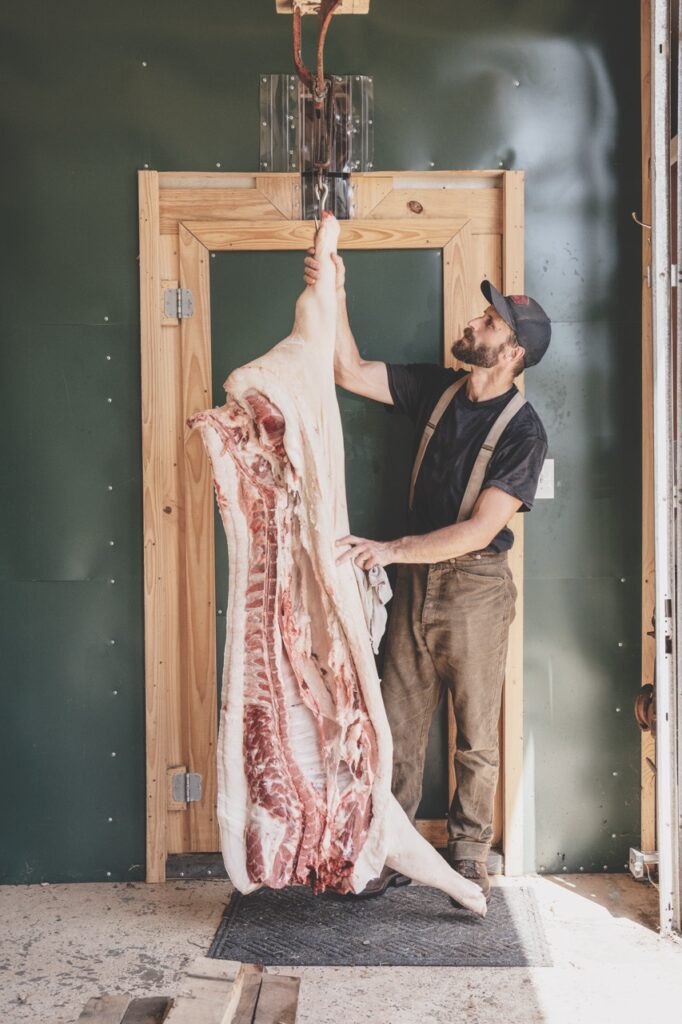
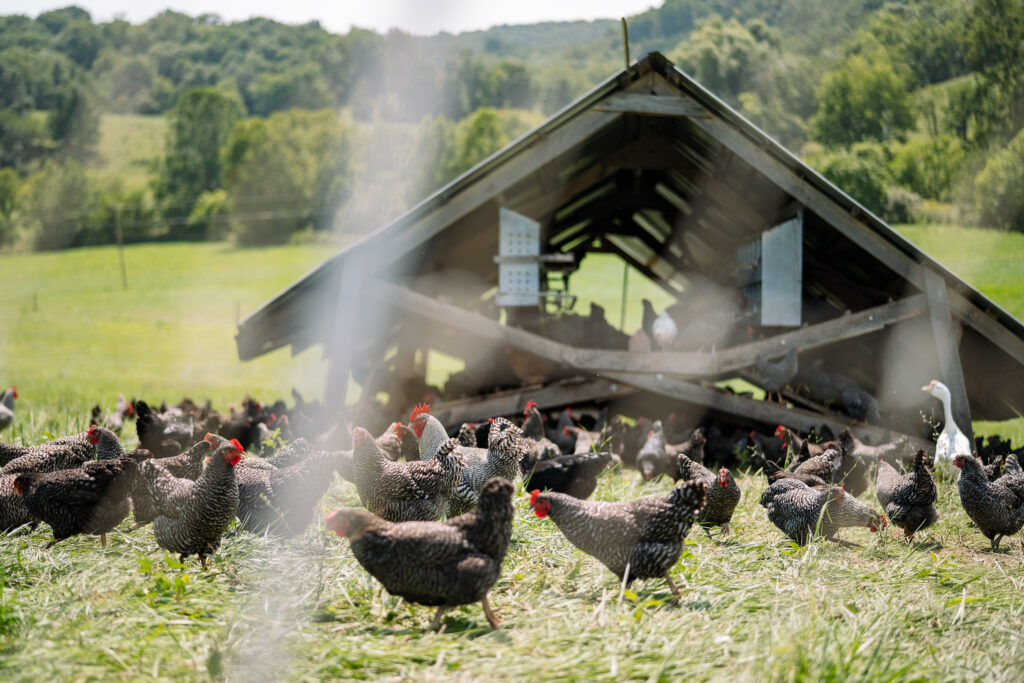
In that session, Dad recorded 22 full time salaries that our little place could offer. It included orchards, babysitting, mechanics, sales, fish, produce, lumber, flowers, crafts, and other things in addition to the beef and chicken we were already producing. Pigs came a few years later. Looking back on that session now makes me realize one of my dad’s greatest legacies to me: hope and opportunity.
Optimism is too broad, although that’s certainly included. You can be optimistic but not have a viable plan. Dad envisioned an entire community of families contributing and collaborating under an ever-expanding compensation umbrella. At the time, nobody thought we could make a living on this little place. Imagining 22 more livings was absurd. But today, 40 years later, that’s where we are. And if I were to repeat the process, it would probably be nearly 100.
A legacy of opportunity and abundance isn’t a bad inheritance. That piece of yellowed paper is precious because it represents a can-do mindset. A few years later, when our son, Daniel, turned 8, some friends needed to move from the country to the city and they had three rabbits they couldn’t take with them. Looking for an enterprise of his own, Daniel took the rabbits on as an entrepreneurial endeavor.
I was dubious. Who eats rabbit? But I was enthusiastic about his desire, so rather than throwing any cold water, I encouraged him. Our farm’s next spring newsletter to our small customer base explained the project and had a new line on the order form for rabbits. The orders came back and, to our utter amazement, our customers ordered 150 rabbits. Who knew? He was up and running with an enterprise Dad and I hadn’t even written down a couple years earlier on that idea list.\
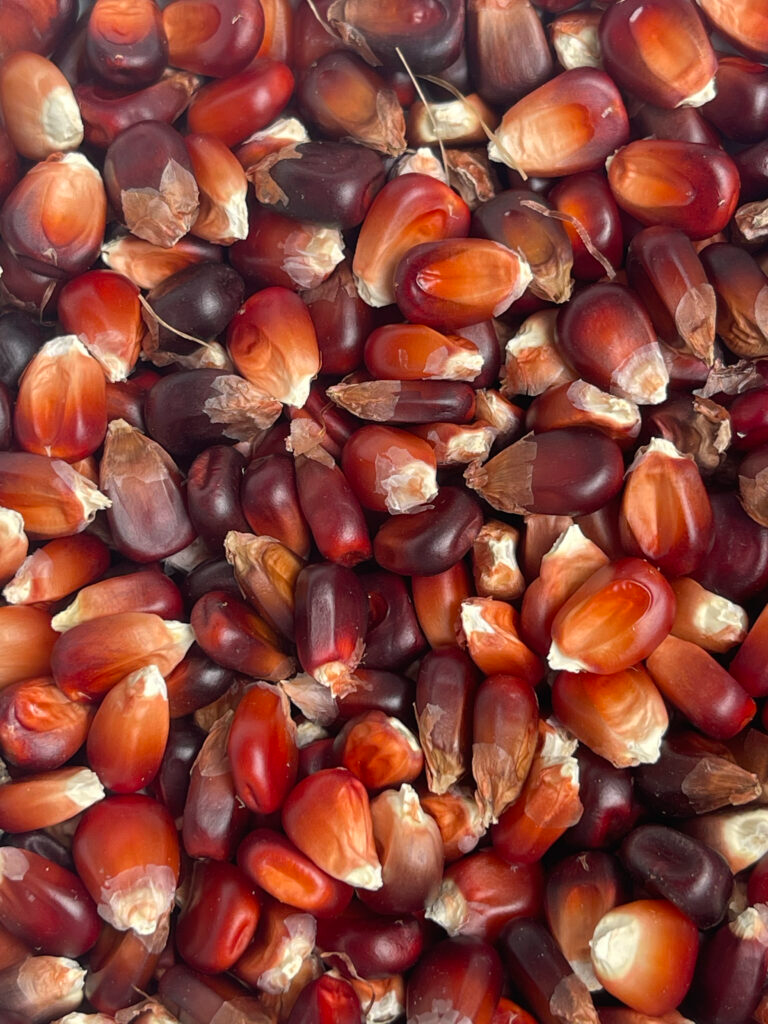
You can always add something. If you grow corn, you can make compost to feed the corn, save the seed, pick it, grind it, and make cornbread. If you cut a tree, you can sell it for firewood or mill it into lumber, chip the branches for compost, or turn the lumber into children’s toys. You could host play days for children to come and pay with your homemade toys. If children are there, mom and dad might be too, and they might want something to eat. Then you add concessions from your garden produce and burgers from your steer. The possibilities are endless.
A philosophy toward imaginative opportunity keeps spinning and spinning toward abundance. On our farm today, we use the refrain “fill it up.” That means whatever you have and wherever you are, fill it up. People routinely ask me how much acreage they need to make a living on their homestead. Every time I answered with a certain acreage number, I met someone who was doing it on less. I don’t give numbers these days. All I ask is, “Have you filled it up?” I don’t know a property on the planet that is fully filled, including ours. That’s a mindset of hope.
Another of my dad’s greatest attributes was the power of observation without premonitions. One of the hardest things for humans to do, it seems, is to observe without prejudice. A close relative to that idea is not being peer-dependent. Thinking about what others may think if we think differently colors our thinking when we contemplate something.
Dad honestly didn’t care what anyone else thought. That doesn’t mean he was obnoxious or socially obtuse; it means he was open to any and all possibilities. Nobody had to endorse his ideas in order to proceed. Convinced he was on the right track, he’d pursue it whether others agreed it was right or not.
Sometimes this kind of Lone Ranger mentality does not yield the perfect solution. The best example of that was his dump trailer for hay. We called it “the ship” because it was a 4-wheeled trailer. Unlike a bouncy hay wagon, this 20-foot trailer floated over rough spots in the field. At the time, we used an old-fashioned hay loader to put up loose hay. Yes, we made loose hay with a hay loader when neighbors had round balers. But Dad conceived of this dump trailer to dump off loads of loose hay, imagining bread loaves stacked on end.
It didn’t work. The hay came off in a 10-foot pyramid rather than a 20-foot-tall bread loaf. Rather than try to make it work after all that time and energy, we converted to a square baler decades after everyone else had abandoned the hay loader. He observed and made a change literally in minutes.
That failure was rare, though. Business circles bandy about “out-of-the-box” thinking, and that’s good. But in most organizations, a peer-dependent box still creates imagination boundaries. Dad didn’t care when others teased, laughed, or scoffed. He constantly tried to figure out low-cost solutions. For example: Why do you need a pickup truck? Dad bought a 1957 Plymouth sedan from a neighbor for $100. He took off the doors and pulled out the seats and had a vessel the size of a pickup truck that served as both car and truck. In those days without vehicle inspection, he sat on a bucket for the seat, donned his accountant’s suit, and headed out to clients and back home with calves, chickens, and baler twine.
Cut from the same cloth, today I don’t have the farmer’s requisite $20,000 side-by-side. I have a 1987 Ford Bronco with the side windows knocked out. I can reach in from either side and take four passengers in a $1,700 git-er-done vehicle. I appreciate that self-respecting farmers are supposed to have side-by-sides, but I’m not a self-respecting farmer. I’m free to do other things.
Today, this legacy shows up in Daniel’s enthusiasm over earthworms in the field. Nobody can get as excited about finding earthworms. While others stand around him worried about weeds, he’s on his hands and knees digging through the thick sod and showing off earthworm castings and quarter-inch diameter worm holes. Discarding unimportant things is key to focusing on what is most important. Apparently, growing up listening to me say, “My real goal is dancing earthworms because if that’s happening, everything else falls into place” stuck in his mind.
What’s best for the earthworms? Ultimately, that’s more important than cattle genetics, weeds, seeds, and equipment. Singular focus and independent seeking tends to yield authentic answers. That doesn’t mean we don’t seek counsel. But seeking counsel is different than seeking approval. Perhaps the greatest blessing in my life was growing up in a home that embraced being mavericks. Ultimately, that liberates us to truly think outside the proverbial box.
As our farm business continues to morph, we’re privileged to have this wonderful legacy of abundance and creativity. Because farming is such a small fraternity these days, group-think might be stronger in this profession than in any other. Who wants to rock the boat when it’s small? But that smallness can also be insular and incestuous. For sure, too many farmers live in a mindset of scarcity and “it won’t work”-ism. I am so grateful to be liberated from both of those constraints and live instead in a mindset of opportunity and imagination.
Leave a Reply