



What if “balance” isn’t the goal at all?
In this episode of The Coop, homesteader, author, and creator of The Prairie Homestead, Jill Winger, makes a compelling case that real productivity comes from seasons … not perfectly portioned days. She shares why modern homesteaders shouldn’t expect tidy time blocks, why guilt-free reprioritizing is essential, and how to accomplish big goals in a busy world.
Jill also opens up about the deeper “why” behind homesteading today: staying human in a culture pushing us toward constant distraction and artificial living. From adrenaline-filled business seasons to quiet evenings in the garden, she explains why embracing contrast (not chasing balance) is the key to a grounded, meaningful life.
Get your copy of Jill’s 2026 Old-Fashioned On Purpose Planner right here!
In this episode, Anna and Jill discussed:
- Why true balance is a myth
- How homesteading keeps us human
- Seasonal productivity vs. daily perfection
- Managing big goals with real-life constraints
- Brain-dumping, prioritizing, and building momentum
- Using a planner that reflects actual homestead life
- And much more …
About Jill Winger
Jill Winger is the founder of The Prairie Homestead, a long-running online hub that helps modern families grow their own food, think independently, and step outside the rat race … whether they live on acreage or in town. A pioneer in the homesteading space since 2010, she’s the author of the bestselling Prairie Homestead Cookbook and Old-Fashioned on Purpose, and host of the Old-Fashioned on Purpose podcast, with millions of downloads.gh simple food, flowers, home, and everyday rituals … whether she’s in her farmhouse kitchen or cooking in a borrowed kitchen in Italy.
The show notes …
00:00:37 Homestead Living Gift Guide
00:03:44 Intro
00:08:52 The habit of writing things down
00:09:46 The goal is a well-used planner
00:10:30 Defining homesteading, in a modern context
00:12:35 What does that look like for Jill today?
00:19:01 Lean into what lights you up
00:21:48 A day in the life of Jill Winger
00:23:42 Managing multiple priorities
00:29:17 Crossing off everything on the list
00:32:16 Brain dumping to create actual checklists
00:40:10 Granular Tasks vs Bigger Priorities
00:44:35 Building out your days strategically
00:47:10 Shifting priorities seasonally
00:50:19 Using a paper planner vs a digital one
00:55:38 What problems does this planner solve?
00:58:34 Do I need to plan in advance to use the planner?
01:00:50 Jill’s word of the year for 2026
01:04:02 Coming back to the planner if you get out of the habit
01:07:03 Jill’s favorite pens for planning
01:10:06 Final advice on project and time management
Jill Winger:
I would say to me, homesteading is a way we can stay human in a world that’s trying to get us to be less and less human. I’m an adrenaline junkie and I like the stress and I like the pressure, and I know not everyone’s like that. I think that the biggest thing I’ve just been thinking about a lot right now is just that idea of really balanced being a myth and it’s not going to look balanced all the time. And I think we have this perception that our days have to have perfect little blocks and chunks of everything equal. And it just, in my experience, I get a lot done. I consider myself a pretty productive person. It’s never looked like that.
Anna Sakawsky:
Are you looking for the perfect gifts for the homesteaders in your life? If so, we have curated something special for you. The 2025 Homestead Living Holiday gift guide features dozens of our trusted partners with exclusive discounts for our audience as seen in the November December issue of Homestead Living Magazine. You can check out the full collection online by heading to homestead living.com/holiday-gift guide. But first, lemme take a moment to highlight three of our premier partners. First up, brunt work wear, whether you’re splitting wood, checking on the chickens, or tending to the garden in a downpour, you need gear that won’t quit on you. That’s where Brent Workwear comes in. Their rugged waterproof boots, stretch canvas pants with reinforced knees, weather resistant jackets, hoodies and outdoor ready gear is designed to stand up to farms, workshops, or job sites with all day comfort and durability. Brent makes work wear you can trust for even the toughest jobs.
And right now they’re offering $10 off your first order with code Homestead 10. So you can check them out@bruntworkwear.com and gear up for whatever the day brings. Next up is Irish Eyes, a family owned and operated organic farm specializing in high quality non GMO seeds with a focus on potatoes and garlic, as well as a wide selection of vegetable flour and herb seeds. This holiday season, start your seed shopping early or give the gift of an Irish Eyes gift card. Plus you can save 15% off your first purchase when you join their newsletter. So you can head to Irish eyes garden seeds.com to sign up and get your discount. And last but not least, our friends at Rustic Strength believe that the safest level of carcinogens in your home is zero. They make non-toxic refillable cleaning and body care products like detergent, dish, soap, candles, shampoos, and more with no added dyes, sulfates, parabens, phthalates, pi, FFAs, and more than 600 other carcinogens commonly found in conventional home and body products so you can feel good about what you’re bringing into your home and putting on your body.
And right now they’re offering listeners of the coop 25% off your order with the code Homestead 25. So check out their full product line and stock up for 25% off at rustic strength.com/homestead. So these are just of the incredible brands that we have partnered with for this year’s Homestead Living Holiday gift guide From books and Kitchen tools to Farm and Garden Gear to Home Goods, you’ll find everything you need to hit the ground running on your homestead in 2026. So you can check out the show notes for the link or visit homestead living.com/holiday-gift-guide to shop all the offers and support the companies that support us. Now back to the show. Hello friends, and welcome to episode 12 of the Coop, where we host practical and inspiring conversations with the homesteaders we feature in Homestead Living Magazine, the trailblazers who are redefining what modern home setting looks like and leading the way for the rest of us.
My name is Anna Sikowski and I am the editor in chief of Homestead Living Magazine. I am here with yet another guest who has been a personal inspiration and mentor of mine over the years. Someone I have looked up to since I began my own the homesteading journey nearly a decade ago. And who has set the bar high, not just when it comes to managing a homestead, but also with managing the many moving parts of modern life while also running a homestead and pursuing the many projects and passions that so many of us hold dear to our hearts and doing it all without burning out. So our guest today is someone you probably already know well as she’s been at the forefront of the modern home setting movement for around 15 years now, and her blog books and online programs have been a reliable resource for millions of people over the years.
Jill Winger is a home setter, rancher, author, multiple business owner and creator of the Prairie Homestead Blog and the Old Fashioned on Purpose Podcast where she teaches old fashioned skills for a modern life. She’s also the creator of the Old Fashioned on Purpose Planner, a good old fashioned paper planner that was created with homesteaders in mind add with space for planning out not only your months, weeks and days, but also space to plan your garden, keep track of your pantry and food production, and integrate it all in as seamless away as possible because Jill knows better than anyone that home setting doesn’t happen in a vacuum. We are no longer living in Laura Ingalls time when home setting was the main. And in many ways, the only focus of our days in today’s world we’re juggling busy schedules outside the home, work extracurriculars, side hustles constant connectivity through technology and social media, and of course never ending distractions that can easily pull us off course if we’re not careful.
And then we’re trying to homestead on top of that, which can easily lead to overwhelm and burnout, which of course we all want to avoid. So Jill has so graciously agreed to come on the show today to talk about the ever elusive concept of time management and productivity and organization both on and off the homestead, and to share some insights into how she plans and organizes her days, weeks, months, and even years in order to accomplish big goals and keep all of the balls in the air. As someone with a DHD tendencies myself, who has struggled with time management my whole life, this is a topic that I’m always interested in learning more about from others who have found strategies that actually work. So I’m so excited for this conversation today. I’m sure you’ll get so much of it out of it as well. So without further ado, welcome Jill Winger to the show.
Jill Winger:
Thanks for having me. That was a lovely introduction. Thank you.
Anna Sakawsky:
Oh, awesome. Well, you and I go way back. We do in many ways farther back than you probably know because like I said, I’ve been following. You were one of the first homesteaders, I feel like, who was doing this online and sharing everything that you were doing. I believe you launched your blog back in 2010, so 15 years ago now, and that was really when modern home setting was coming onto the scene through the online space, blogs, that sort of thing. You’ve been somebody that I’ve looked to since the very beginning, and I know that a lot of our listeners, it’s probably the same case for them. I have read your books, your book, old Fashioned on Purpose. I love that one. Your first cookbook, the Prairie Homestead Cookbook is hands down the most used cookbook in my kitchen, most cooked through. I love it.
But I was also part of, you did a couple courses and membership programs a few years ago. One of them was more focused, a little bit on business, and one of them was really on home setting. And I remember talking so much with you at that point about time management strategies, productivity, how to grow and evolve in both those spaces. And you really have helped me on a personal level. So I’m really excited to bring you here today to share some of those insights with other people because again, this concept of time management, trying to keep all the balls in the air and get everything done, especially when we are living a busy modern life with a busy schedule and trying to home set on top of it, can definitely leave us feeling like it’s just too overwhelming and how are we all going to get it all done?
And one of the things we’re going to talk about today too is your planner, because since I was part of one of those programs, that was the same year back in 2020 when you first released the first version of the Old Fashioned Purpose Planner. And I was just showing you before the show, I have the very first, you have the one iteration of that, it was the BA’s, it’s come so far, do you have Dogeared and Post-It notes and everything. And then I’m so excited for any Canadian listeners because the past few years, just logistically you haven’t been able to shift to Canada. So I have the first version, but I wasn’t able to get any of the other versions because I am located up in bc. But this year we released a brand new version of the planner through Homestead Living. So this is the brand new old fashioned on purpose planner, which is absolutely gorgeous. So I’m so excited to have my hands on this. So we’ll talk more about this as we go. I got to ask though, did you use your planner to schedule this in today or do you do what I do and have the best intentions and then keep it in your head?
Jill Winger:
No, I did, and I’m going to confess, I’ve had a weird year. It’s just been a transitory year. And so there was a couple months where I didn’t use the planner as heavy. I feel like I had a lot going on, but it wasn’t scheduled stuff. It was just a weird season. And so I got out of the habit, which I haven’t done in five years or more. I got out of the habit of writing things down and I totally missed appointments, I missed calls, and I was like, whoa, whoa, whoa, we got to get back on track. So no, I had this in the planner, which is why I didn’t forget it. And yeah, I use it. I was taking pictures, I was writing a blog post about the planner right before we got on and I was taking pictures of the pages and it’s like dogeared, there’s cat footprints on it, it’s dirty. I don’t have, my planner is not Instagramable. It’s not like one of those pretty planner girls with the stickers and the drawings, which is fine. I love to watch those online, but I don’t do it, but it’s like my brain. It’s literally my external hard drive.
Anna Sakawsky:
Well, I was re-listening to a couple podcast episodes that you’ve done over the years on using your planner and how you use it the other day. And you said something about that by the end of the year, it looks like your planner has been through World War ii,
But that means that it’s been used well. Right. And I think that that’s important to remember because I have tried those planners with the fancy stickers and the really, I’ve tried to do it really pretty and it just takes more time. It actually has the opposite effect of productivity trying to get, and then if you scratch something out and then you ruin it and you feel like I got to get a whole new planner and start over, I love that your approach is just like if it’s dogeared, if it’s messy, if there’s popin on it, that is a sign of a well-used planner and that you’ve put it to good use.
Jill Winger:
Yep, absolutely.
Anna Sakawsky:
Okay. Well, I’m super excited to dive into this topic because like I said, this is something that I have struggled with my whole life. I’m sure many of our listeners feel the same. It’s something that seems to be something that we’re all chasing, but that just seems to be elusive for many of us. And I have found that as somebody who struggles, again, I would say A DHD tendencies, once I have too many balls in the air, that’s when things get overwhelming and I forget things and I really need the planner. But that’s also when I don’t use it because I’m like, oh, I just have to do the things right. So I’m excited to get into more strategies on how you actually make this a part of your daily life. But before we really get into it, I want to ask you a question that I ask every guest, and that is how do you define home setting in the modern context and what does that look like for you over the years? So maybe where did your journey start and what does life look like for you today?
Jill Winger:
Yeah, that’s a great question. And it has changed a lot over the years. Like you said, I first started 2010 back then home sitting was barely a term in the public vernacular. It just wasn’t well known. And if I tried to explain to people what I was doing, I was making yogurt, I was getting my chickens, I was trying to build a compost pile, they looked at me like I was crazy. And then I learned over time that it was just easier to call it home setting. They still didn’t really understand. And they’d be like, are you getting free land? Is the government giving you 60 acres? But I could at least try to put it in this package. And so I think a lot of people are in that same boat. We started calling it home studying, and it has a lot of different weight and connotations and maybe even baggage now, but to me, if I have to define it now 15 years in, I would say to me homestead is a way we can stay human in a world that’s trying to get us to be less and less human. It’s a world that’s putting us into artificial and industrial boxes and categories, and I think homesteading is a way we can meaningfully opt out of that. So there’s other ways to do it too, but this is just a nice neat way we could say, I’m doing this to help me stay grounded, to help me stay real, to help me stay human. And that’s how I kind of think of it these days.
Anna Sakawsky:
Yeah, that’s a really good answer, especially very timely answer for sure. Right. And how has that looked for you over the years? Let’s compare and contrast when the first year you really got into home setting and started doing this, and your motivations then and what life looked like for you versus today and how home setting fits into your life with your schedule today.
Jill Winger:
Yeah, so I think a lot of people come into home sitting as a young families, young mothers, young fathers. That was definitely my experience. We bought this property. I didn’t buy it with even the word homestead in mind. I bought it for horses. A lot of people know I’m a horse person. And so I wanted horse property. And then almost immediately it was almost supernatural. I just was hit with this wave of I need to be productive. I want this land to mean something. I want to have a connection to the land beyond just horses in the corrals. And so that’s what really prompted the journey of food production and getting back to nature, which I hadn’t cared about at all up to that point. And of course, I started having the babies a year or two later, which when you have your first children or child come into your life, it makes you rethink your motivations and what you’re doing.
And so it went hand in hand and we built this baby homestead as we were raising the babies. And I think that’s a lot of people’s experience. Everything is fresh, you’re really getting your start in life. It’s new. There’s that honeymoon period, and it was really my primary focus for a good number of years, especially as you’re learning the skills. There’s such a stretch from what we’re used to as modern people. So it takes a lot of energy and brain power. It’s a lot of challenge, and it was awesome. And then we all, I think shift, if you do it for a while, if you stick with it, you shift into this idea where it just becomes a little more steady, a little more in the background. And so we went through that period and that allowed me to build my businesses, which were still homestead related and build out our property.
And then now I find myself in this new stage of life. My kids are older. I have a 15, 13, and 10-year-old. We’re more forward facing into the community. I found I needed more in my life, more connection than just being at home alone all day with the kids. I just really needed people. And I’d never would’ve thought that prior because I was like, I don’t like people. And then I’m like, actually, I think I do like people and I need them. I don’t want to be a hermit forever. So now our life more forward facing the homestead runs in the background, but it’s not our primary focus, which is an interesting place to be to see that shift. Sometimes the homestead is less of a priority than it used to be. And so I’m kind of in that stage of life where I’m navigating what that looks like and what that feels like.
Anna Sakawsky:
Yeah, I’ve heard you actually say this before multiple times about there are a lot of people who come into this lifestyle because they have dreams of spending all day in the kitchen, in the garden and really leaning into the perceived simplicity, maybe the domestic aspects of it. And there’s nothing wrong with that. I think that that is a part, at least of why most of us want this, at least at some point, like you did at the beginning of your journey. But you have said kind of what you said just now that you are kind of wired to want more. You love big audacious projects and challenges. You seem to thrive on a busy schedule with what some, and I know I can speak for some, I look at you sometimes and I think, wow, that looks like a lot of extra stress and pressure, and I look up to you with that.
But then I also think for myself, I’m like, is that for me? I don’t know. I think you are wired a little bit differently. So tell me a little bit about that. What lights you up and what is, I guess your motivation to homestead now or to continue having that as a piece of your life as you have evolved beyond that, if you’re not just leaning into that kind of domesticity and simplicity like many others are, what is your motivation to continue homesteading now and what are the things that are really lighting you up in your life now?
Jill Winger:
Yeah, absolutely. So I think this is a question I really struggled to answer or I think I always knew the answer, but it was hard to say it out loud. Sometimes there’s those societal expectations of what you should feel or what you should love. And so I’d say now I can admit it to the whole world, including myself. I love hard things. I love a challenge, and if I don’t have challenge in my life, I will create it. And for many, many years I made excuses for that and I made it look like I was just like a, I don’t want to use the word victim, but kind of like a victim of it just happened. This challenge just found me and here I am. And now I’m like, no, I went and sought it. I wanted it. I found it. I will create it if I don’t have it.
So our restaurant’s a good example. I have the restaurant to a point now where it’s pretty manageable. I have a good manager, we have a good team. I have the recipes down to a science. My processes are in place, my food costs are in place. It could run on its own. We created these crazy fancy high-end supper nights once or twice a month because that got boring to me. And we needed a challenge. And could I say, oh, I need more revenue? Sure, could I say that I wanted to expand my culinary skills, but when it all comes down to it, I’m an adrenaline junkie and I like the stress and I like the pressure, and I know not everyone’s like that. But now I can finally admit, yeah, I will purposely put myself in those situations and I love it. And that’s what lights me up, and that’s what keeps me motivated.
Now, to answer the second part of your question about the motivation around homesteading, especially in this stage of life, I also need the contrast. We all contain multitudes. We’re all multidimensional. And so for as much as I love adrenaline, and I love the nights where we have 70 covers and I’m doing five courses in two hours and we’re like, go, go after that, I am still an introvert. I need to decompress. And that’s where the homestead comes in. And so I will have those days, late nights, high stress, high adrenaline, and then for two days after that, I will light a candle and I will sit by the fire and I will read a book and I will bake bread and I will be in the garden and I don’t want to talk to anyone. And so I need that contrast and I love that contrast. And I think if it was all one of either kind or all one or the other, I would feel like something was missing. And so I think that’s really the role of the homestead for me now. I still love the days where I’m just piddling in the kitchen all day, or I have a quiet winter day where it’s snowing and I’m baking and I’m experimenting and I’m cleaning and it feels so good. But if I have two weeks worth of that, I start to get antsy. So I love the contrast.
Anna Sakawsky:
I feel that a hundred percent. And while I might not personally take on as big or as many, I think you have so many irons in the fire at a time that that’s where I look at you. I’m like, that’s amazing. I don’t know if I could do that because I know myself too and know that I love the big projects, the big things, but I like to be, I’m very narrow focused. Let’s do this one thing, then when that’s done, get that out of the way, then the next thing and so on. But I love that you just give permission to people to lean into whatever does light them up. I think sometimes, like you say, it took you a while to feel like you could admit that, which is such a silly thing to say, okay, this is who I am. I love challenge.
That’s a great thing. But you’re right, I think there’s maybe societal expectations or what you should want to do or what home setting should look like or whatnot. And on the other end too, I think that looking to you as an influence isn’t just about saying, well, Jill’s doing all these things, so I need to be doing all these things. It’s like, wow, Jill’s leaning into who she is and what really lights her up and finding that balance that works for her. And so that gives permission to the rest of us to do the same, which is really cool. And I would even argue that the home setting part, I’m the same after a busy work week. I love a Saturday or Sunday just in the kitchen where I just have jazz on in the background and it’s just calm. And I love to putter. Puttering is my favorite thing in the world, but it’s also about productivity. I love seeing the finished product at the end. I love being like, I could go buy that stuff with this. Why do I have to do it because I did it. There’s something about that, and I think most home setters, even if we want to lean into the slower, simpler life, there’s something about that productivity and that creating something that lights most of us up. And that’s probably why a lot of us do this. Oh, yeah,
Jill Winger:
Absolutely. I think it’s a very human thing is to find that satisfaction in the work of our hands. Also, I think some of us, I’m guessing you’re wired like this. I think most homesteaders are, I know I certainly am. I relax by gentle movement more than I relax by sitting. So there was a period of our life we were with a company and we would always go on these really cool trips and everyone always wanted to sit on the beach for all the trips. So we’d go three weeks out of the year, we’d sit on beaches all over the world, and I got, this sounds such like a spoiled brat, but I’m like, I got so tired of it. I don’t really relax by sitting on the beach maybe for a day. And then I’m like, I start to get antsy and for deep relaxation, for me, I just need gentle movement. Not like running a marathon, not even a supper night, supper night’s not relaxing. That’s fun in a different way, but just like you said, puttering around needing some bread, playing with a new recipe, maybe lightly weeding. That’s truly how I get my body into that deep state of relaxation, which is hard to explain to the average modern person, but I think as homesteaders we get that.
Anna Sakawsky:
Yeah, a hundred percent. Okay. So what does an average day in the life look like for you these days?
Jill Winger:
I have no average days. They’re all different. And it’s funny, people are always do a day in the life video. I’m like, they’re all different. I don’t know.
I’d say right now, well, my kids are in school. We have a charter school. We helped to start in our town. I’ve told that story a little bit online. So I went from homeschooling mom to my three kids are in school, so that definitely changed my days a lot. So now I spend a little more time at the restaurant. Then honestly, I wouldn’t have to spend that much time there, but I have the time available, so I’ve been investing creative energy there. So I might get the kids off to school, and then I’ve been spending more time at the restaurant. There’s days I ride, there’s days I garden depending on the season. Now that I just finished another cookbook, it’s not out yet, but I’ve finished the manuscript. And so I was really focused on that for a while. And now that it’s kind of turned in, I’m able to focus on some content creation. I’m starting my podcast backup after a long break. So I just think that’s a really, a big piece of this balance conversation is that balance to me is not a day that’s balanced. If you look at my day today, it’s imbalanced, but my seasons end up balancing themselves out, and I think that’s really how I look at productivity now in my calendar and just life in general.
Anna Sakawsky:
Yeah, I think that’s something, I mean, it’s really at the heart of home setting because it is so seasonal, but it’s something that I feel like in general, we’ve gotten away from, and maybe it started all the way back in the start of the industrial age with the eight hour workday and more structured days rather than leaning into seasons. Because even now I feel like, okay, we’re going into winter and I need that rest. I used to hate January for example. It was dark and depressing and boring and whatever.
I need that now. Like you said, the contrast of the busy spring, summer, fall. I need that rest time in January and February, but it’s at odds almost with the modern day because life doesn’t stop, work doesn’t stop. There’s always things going on. And so I mean, I’m still trying to find ways to actually lean into that seasonality. How do you do that with so many things? And they’re like, how do you, I guess, schedule or make sure that you are finding that balance and taking those intentional breaks and leaning into seasonality when you could just keep going and going, going.
Jill Winger:
Yeah, absolutely. And that is something people joke around, oh, you must not sleep or you burn the candle at both ends. I really don’t. I mean, there are times I’m pretty much a stickler. I’m in bed by 10, I don’t care how big the project is. I don’t burn the midnight oil. I just can’t.
But as my life has gotten more complicated, especially we’re talking seasons like the winter, like you, I used to hate winter. I’d have anxiety over it. I dreaded it. It was so long and so depressing and so boring, and now I love it. It’s probably my favorite season. I kind of like that the garden is dead for a while. I like that it’s dark. I like that I tuck in. I find my body and my mind really, really need that. And I find here’s actually my current struggle and I don’t have a great answer for it because I’m still trying to figure it out. I’m really good at making my projects fit that what I’m struggling with, this is my kids’ activities right now because
My husband and I have been talking about how much we need winter this year. We need the fire, we need candles, we need those quiet nights. And basketball just started up, so there’s practice every night and I’m like, it feels wrong to me to be getting in the car at five 30 in the dark and driving to town. I don’t want to do that. So we’ve been trying to figure out how we can split it or we can balance it or we can still build those intentional evenings in because we’re like, we both need winter. And if we go through those whole winter and don’t have those down evenings where spring’s going to be bad, we’re going to start in a deficit. So I guess it’s for my own projects, I’m able to slow down in the winter, I slow down around the holidays, I take breaks. I don’t plan as much. It’s a little trickier when you have those outlying schedules. So I guess I’m still TBD on that one.
Anna Sakawsky:
Yeah, I think a lot of us are. I know I’m certainly in that stage too. I have a 9-year-old daughter and she’s busy with cheer and dance and all the things, and we’ve been having none of those same conversations where we don’t want to restrict her and her passions, but we also have to think about the family as a whole and what’s good for everybody. And and this kind of leans into a bigger question of priorities, but how do you decide what to lean into and what to maybe let go of in a particular season?
Jill Winger:
Yeah, so I know for myself, I’ve learned to really stop operating as much out of obligation. And it’s tricky because it’s easy to go. I don’t do that. But then if you start to look at your schedule, you realize a lot of the things you say yes to, or at least I know I did. I was doing it to save face or to make other people happy or to just keep people placated with what I should do or what they want me to do. And I’ve realized I had to get really honest of like, is this lighting me up? Is this fitting my goals? And you disappoint people? I say no, a lot disappoints people. It frustrates people. But I just listened to my body and go, if when I said yes, was it like a full body? Yes, or it was like a, oh, sure, I guess I’ll help you out.
And just really paying attention to what feels forced and what feels organically good. And so right now I have my goals, which I’ve even shortened down my personal goals over the years. I used to just be so many things and we’ve purged and pruned, and now if something is not in direct alignment with that, I say no. And I even will say no. I focus on different projects in different seasons, and so this past season has been a restaurant soda fountain season where I’ve really wanted to grow that and focus on that. And so I didn’t do my podcast during that time. I didn’t write much on the blog and social media when I was really focused on the cookbook. And so I’m even saying no to myself within those projects. I think the trickiest part is, we just mentioned a minute ago the kids, because we still, like you say, you don’t want to hamper their passions and their interests, but also you have to think about the family.
And so it’s definitely a season of selfless of me going, I really don’t want to leave at night, but you love basketball and you have potential to do big things with basketball, so we’re going to sacrifice some family dinners, but then also maybe let’s say no to this other thing that you’re not as into to leave space for family dinners and basketball. So it’s like that constant conversation with the kids. Do you really love this? Are you just doing it? Your friends are doing it? Are you doing it because you think you have to? So just, I don’t know. I don’t have a great solution. It’s just a lot of talking and a lot of conversations right now about that.
Anna Sakawsky:
Well, it’s just reassuring to hear for me too because yeah, we’re definitely in that same season. I was speaking of basketball. My daughter came home the other day and had the basketball forum from school and it’s like 7:00 AM Friday practices, and I just said, I would love to support you in this, but let’s be real. You’ve got between cheer and dance like three or four nights a week already in competitions and you want to go competitive with dance. And we have to. And I think that those are good lessons for kids to learn though too, is that you have to sometimes priorities and you can’t do all the things, but okay, so one thing I have struggled with when trying to plan out whether it’s my weekly schedule or projects, tasks, some things like what we’re talking about, if it’s an extracurricular activity or an appointment, it’s a little bit easier to schedule.
Like, okay, this time we have this, you can block that off and you kind of know how long it’s going to take. But with a lot of the things in life, whether you’re home setting or not, we have, some of ’em are smaller tasks, daily things that we just need to knock off the list or some of them are bigger projects that we’re needing to break down and know I personally have a bad habit of chronically underestimating the amount of time something is going to take. Is this something that you’ve ever struggled with? Do you often find that you get to the end of your day and maybe you have things scheduled in your planner and you’ve only checked off half of them? Or have you gotten pretty good at being able to prioritize and only put down the things that you know can get done in a day? Because that is one of the things that I find disheartening about using the planner is it’s really exciting to plan it, but when you go back and in the end I always find long-term, I go back and I look, I’m like, oh yeah, I checked most of these things off. But in a day it feels disheartening sometimes to be like, oh, I had all these things on my list and I only got to two. How do you manage that?
Jill Winger:
That’s a great question, and I think that’s a really important one that maybe we don’t give enough credence to because I’ve totally been there and I’m really particular now almost psycho about, I only put things on my day that I know I can get done even if I’m slightly undercutting because I found something happens in my brain. I think it does with most of us. Like you said, you get to the end of the day and you cross some of it off and for whatever reason didn’t get the rest. Sometimes there’s extenuating circumstances, emergencies, whatever, that’s fine. But you kind of know when you put stuff on a list if you’re really going to do it or not, we all have that little conversation like, oh, I’m going to put this on here. It’s going to look good. I’m probably not going to do this one, but whatever. I’m going to put it on there. It hurts me internally to do that. It’s like breaking a promise to myself, which sounds silly, but it is disheartening and it almost teaches your brain you can’t trust yourself or we don’t really believe what we say. And so I’m a stickler now that if I put it on that day, barring an act of God or some sort of catastrophe, it gets done.
But that means I don’t put an insane amount of things on that day unless I think I can actually do them. So what will happen is I get those whatever things that are reasonable, I get them done. If I’m still feeling good, and I usually am because pumped up, I got everything done, I might add a few extra things on and get ahead for the next day or the next week, but I find I have to keep that commitment to myself. It’s really, really important. And maybe to some people that will sound too restricting or too strict, but there’s something about keeping those things we speak over ourselves and those things we promise to ourselves. It changes something in our psyche. I’ve even taught that to my employees at the soda fountain. There was a time where they would, we all make a tunnel lists at the soda fountain all the time, and they would put these massive to-do lists, and I was like, whoa, whoa, whoa, whoa. There’s no way we’re going to do all that on Tuesday. Well, we could try. I’m like, but we know we’re not, so we’re not going to say it out loud unless we actually intend to do it. It just shifts. It just totally shifts.
Anna Sakawsky:
So were you somebody then who will do a brain dump of a bunch of things and then choose from there? I think where I get tripped up is I do my brain dump, but I do it on the day. So it’s like I’ll start with the prayer and then I’m like, oh, but ideally, oh, I should get this on paper. And then it all becomes this running list rather than how do you separate that? Or do you have somewhere else? And I actually love, I’m just looking, flipping through the planner right now that there are, the way you have it designed and formatted, if you can see it on screen, but that there’s space, just open space at the bottom rather than feeling like you have to slot everything in, but what’s your approach to what goes on a brain dump, and then how do you actually then schedule that stuff in?
Jill Winger:
I’m a huge brain dumper. I have to brain dump, and I actually have two spots in the planner for it. So we have monthly brain dumps after each tab. So you can do, and people ask me how to use this page. I just wrote a blog post explaining it. They asked me all the time how to use it. So on those monthly pages, and you could do this without the planner, but if you have the planner, it’s even easier. I write down everything I want to do that month. Business personal.
Anna Sakawsky:
Yep. This space, just the wide open space. I love that. Love a blank. And then
Jill Winger:
Well, is that the one that says brain dump at the
Anna Sakawsky:
Top? Oh, it might. Oh no, this one’s just a wide open space. We do
Jill Winger:
Have wide open spaces in there too.
Anna Sakawsky:
Yeah, there’s a few. And I do like that. Oh yeah, brain dump and then you cans a
Jill Winger:
Space for, yeah,
Anna Sakawsky:
That’s cool.
Jill Winger:
So I put all the month stuff there. You kind of have an idea of what needs to happen. Then I just brain dump it. It might be a little big, it might be silly. It might be super crucial. I just get it all out of my brain because when it’s swirling around in there, that is when you lay awake at night stress, or at least I do. That’s when I wake up at 3:00 AM going, oh my gosh, there’s this and this and this and this. So I get it out of my brain, I put it on the paper and then I prioritize because the stuff you think about at 3:00 AM a lot of it isn’t actually really that priority. It’s just floating around. So then I pick the things that have to happen, and then I pick usually two, sometimes up to four, but I wouldn’t.
Four is pushing it. And then on that page next to what has those four boxes, that’s where I take, let’s say it’s a soda fountain supper night. I’ll put the project is plan soda fountain supper night. But that’s a huge hairy thing. What does that even mean? How do I start that? If I just sit there at 3:00 AM and think about that? I don’t have a way out of that. It just feels like a lot. So then I take those four boxes and I’ll write pick one, and I’ll then say, what does that look like? What does it mean to plan a soda fountain supper night? Well, I need to figure out the menu. I need to test it. I need to make the graphic in Canva. I need to market it. And you talk to my staff, I need to count the dishes. And so then I start getting those baby steps. That’s where you get the big projects turning into getting it done, actionable stuff. And that’s when I go into the brain dumps on those weekly spreads, which you pointed out, those little columns at the bottom. Those are my most used section of the whole freaking planner I take, there’s four of ’em on the week,
And one column for me is work, one is homestead, one is soda fountain, and then one’s just random. So I’ll open up the planner on Sunday or Monday and I’ll go, well, this needs to happen on my homestead this week in no particular order, and this needs to happen in my business and this needs to happen at the soda fountain. I had to brain dump there. And that’s when I go and start to assign those tasks into the individual days. And that’s how I can turn it from brain swirling into actual checklist without having to use each day is like, oh my gosh, it’s this weird brain dump, but I don’t know what goes where and if I can actually get it done. Does that make sense? Right.
Anna Sakawsky:
Yeah. So with those sections, and I don’t think they’re not actually labeled homestead, you do that yourself.
Jill Winger:
You can do that yourself,
Anna Sakawsky:
Which I kind of like because that means, I mean, this is why this is great for, you don’t have to be homesteader to use this planner or whatever categories work for your life. I know we’ve talked obviously about you leaning into certain seasons and that there’s not necessarily a balance to every single day where you’re doing a little bit of this, a little bit of that. But do you generally keep those sections as the same homesteading business, personal, whatever, is that kind of every week and then you’re more or less balancing what needs to be done in each of those categories per week? Or are there weeks where you’re like, I don’t have anything home setting related this week, and I’m not even going to include that as a category? How do you try to balance out those different areas?
Jill Winger:
So I’ve pretty much used those categories and you could put ’em in any spot, but I always do home work, soda fountain. I’ve used those same categories in that order for years and years and years. There are definitely weeks where I have way more in the home column than the work column, or maybe the soda fountain has nothing or home has nothing, and it’s all in the work. But I usually keep those, it’s usually the same categories, I suppose, but it could depend on your season and your workload. Maybe sometimes those would switch around, but for me, they’ve always been the same. It’s kind of always stayed that continuity.
Anna Sakawsky:
Okay. So you did kind of mention about the big goals and breaking them down a little bit more. What is usually your strategy for that? How do you I always find when I’ve got something big to do, it almost is the mental aspect that has me feeling blocked, and then that’s when I tend to procrastinate. I said, it’s actually the most productive time for me in all the other things I don’t want to do because I will find anything else. I’ll be cleaning my bathroom, anything to not have to sit down. But then once I get into it, then it’s usually not that bad because again, it’s just baby steps, one step at a time. What’s your kind of approach or how do you just start that process? Do you just go, okay, I’m just going to sit down and just make that list? How do you figure out this is the first thing I got to do? What’s your strategy around that?
Jill Winger:
Yeah, it’s definitely the brain dumping
And there’s always, I totally relate with you. There’s that resistance, internal resistance of, it’s still so big in hair. You’re like, I don’t even know where to start and I don’t really want to do this, and I’d rather go clean, right? Cleaning is like, I love cleaning. I turn my brain off. It’s like easy or making a graphic. That’s what I’ll do when I want to get, I’m going to go make a graphic. I’m like, Jill, come on. That’s not important right now. What are you doing? Come on. So brain dump is big for me, and I’ve taught this when we started the charter school. We use this with a team. I use it with the soda fountain. We have whiteboards everywhere. I’m obsessed with whiteboards. So if you’re doing this with other people, whiteboards are magic. But you can also, if it’s just for you, use your brain dump section in the planner.
But when we started the charter school, I don’t know, some people know the story, but it was the biggest, most giant project we’ve ever undertaken. And so overwhelming and so stressful, and we all cried a lot, and it was just so much. But we whiteboarded insane amounts. The team would get together and we would just write, and everyone would just shout out, we need to do this, we need to do this. And oh my gosh, we need to do this and this and this. And so we just write it down. And then we’d all take a deep breath and then we’re like, okay, what is actually priority? What’s do or die? And then we start, I grab a different color and we’ll write number one, and we’ll write stars. And then we pull all of those into another column and we like, okay, now which ones are number one?
And we do that. And then we go, okay, so we got to call this committee and get this red tape on this government application. Okay, who’s going to do it? We assign it, okay, you’re going to do it. What’s your first step? Do you have the phone number? You Google it, okay, here’s the phone number. And then it starts like, oh, I can do this. And then you start, there’s something in our brains, we get that little bit of dopamine, the dopamine snowball, and you Google it. You Google and get the phone number that was harder than you think that first step, but you did it. And then you start to get that motivation to do the next one and the next one. And then before you know it, you’re mid project. And it’s not self-fulfilling, but it’s keeping you motivated, getting the dopamine, and then it starts to get easy and exciting. But it all starts with the brain dump. If you can just get yourself to sit down and brain dump it, reward yourself with coffee or a walk or a good book or something afterwards, that to me is the magic.
Anna Sakawsky:
So how granular do you get when you’re actually putting things in your planner? If it is something like a big project and you’re breaking it down to smaller goals, and some of those goals could be as little as get the phone number, does that go in your planner and check? It does. Hey,
Jill Winger:
Yep. Absolutely. And not everyone’s like this, but I am addicted to checking things off. I have a dopamine addiction, so if I can just check off today, I have to get the phone number. The other week I needed to make a phone call. I didn’t want to make the phone call. I was dreading it. It was stupid. It was like scheduling a dentist appointment. I just didn’t want to. I put it off and put it off. I’m like, stop. So I, I wrote it in there with a little checkbox, call the freaking dentist. And then once I did it, I felt so good and I got to check the box. And it is stupid, but it gave me a boost to go do the rest of the things that day. So I don’t know, it’s just a weird, I think it’s a lot of times just figuring out our brain’s quirks and almost playing little games with our brain. That’s been a lot of it for me.
Anna Sakawsky:
Yeah. Yeah. I’m the same. And I think the dopamine addiction is real for so many of us. And it might seem like a nothing task, but if we can actually check it off, it feels like you’ve accomplished something. And if you can accomplish phoning the dentist, then God, you can accomplish anything, do any.
Jill Winger:
I also don’t think we give enough credit to those little cobwebs in our mind and how much they weigh us down. Have you ever, I do this all the time. Have you ever seen something laying on the floor like a sock? My kids have socks everywhere all the time, and it’s not big enough to really address, but you walk by it and it bothers you, but you don’t pick it up and then you walk by it again and it bothers you. And then you walk by it again and pretty soon it’s like three days in and it’s barely crossed your mind, but just enough. It makes you feel a little agitated every time you walk by it and then you finally clean it up. You’re like, why didn’t I do that? It was weighing on me. I didn’t realize it. Totally. And I think those little tasks do the same in our mind. So I’m like, if I can clean up those mental cobwebs, everything feels better.
Anna Sakawsky:
Yeah. Do you ever feel like those kind of things maybe not hold you back? I know what you’re saying, that they can get mentally overwhelming. I get, for example, really, really overwhelmed with all the little things. I feel like I can’t focus on the big projects. If I have, I got to email that person back and I have this little administrative task to do, and my desk is a mess. And for example, I’m one, my husband can cook dinner in the kitchen, even if the sink is full of dishes. He’s like, just cook it. I’m like, no, you can’t. You have to clean the kitchen first. I can’t. And that works for me. But I also struggle finding the balance sometimes of just tackling the project that really needs to be done instead of getting caught up in all those little things. But I know I operate so much better if I can get all those things off my mind. So what’s kind of your approach to that, or how does that affect you? If you’ve got something big that this is the priority, but there’s a sock on the floor and of dishes and the desk is a mess or whatever, do you take the time and just tackle those little things to clear up that mental space? Or are you like, no, that is not the priority today, and that sock is just going to be there until it’s going to be there? No. Does that personally affect you?
Jill Winger:
Great question. And so I really let, honestly, the time of day and how heavy, not heavy in a bad way, but how important my projects are really lead the way. And so today, for example, I woke up and I knew I had a lot of creative work today, and I love creative work, but it also takes a lot of mental lifting. So I really have to be in the zone. And I know morning is my best time for that. Way better than any other time of day. So I knew I had to prioritize writing my blog post. I recorded another podcast before this one, and then talking to you, those were my three big things this morning. My house is a mess right now. It’s not great. And it bothered me when I woke up and it bothered me last night, and I’m like, I really want to clean the house, but if I use all of my Good morning energy for that,
The blog post is going to weigh on me. The podcasts are going to weigh on me. I’m not going to enjoy the cleaning, and I’m not going to be as good doing the newsletter in the podcast later in the afternoon. So I literally walked by, shredded the dog, shredded some toilet paper. I can’t remember. I walked by the toilet, it’s still in my room right now as I speak. I walked by the toilet paper so I could get this newsletter done. I was kind of trying to put off the newsletter, and I knew my tenancy. So I got the newsletter done. I got the podcast recorded while I’m fresh. And then this afternoon, maybe this sounds really sad, but I’m going to put in a podcast and light a candle, and I’m going to probably really enjoy cleaning. It’s going to feel like simple and good, and I know I got the hard things done first. And so that’s kind of how I balance it. But I’m like you. I don’t love cleaning in a mess, but sometimes you just got to triage it to get the big stuff done.
Anna Sakawsky:
Yeah, that’s a really good way to put it. Triaging. And yeah, I operate very similarly and same thing. My creative juices flow in the morning, so there’s like, I am not writing anything worth writing or doing anything like that after 3:00 PM It just does. I can’t, will it to happen. There’s just no way. So I am very similar like that. So on that note then, how do you typically structure your days if you’ve got some creative work, some other maybe more administrative business work, some home stuff, that sort of thing, things that, obviously I would imagine that if you have certain things that are scheduled at a certain time, you probably start there and then build around that. And then how do you approach where you slot things in your day? If you could put them anywhere?
Jill Winger:
Yes. Yes. So I’ve learned, and sometimes it doesn’t work, but I’ve learned over the years, I used to schedule my podcasts and stuff first thing in the morning when I wasn’t doing school. In the summertime, I would do homeschool. When I was doing homeschool. We do homeschool first, and then I would schedule podcasts. And then I realized by the time I got homeschool and podcast done, it was like one o’clock. And like you said, I had nothing left. And I’m like, I have to write a blog post. I don’t want to, don’t have anything. So now that the homeschooling is off the table in a charter school, I’ve learned to not schedule my podcast interviews until later in the morning so I can give my personal writings and things the most brainpower. So I am careful with that. Sometimes it’s unavoidable, but for the most part, but I find that hour or two right after eat breakfast, the house is quiet.
I have my coffee, man, I can hammer stuff out. So I get the big stuff done for the week, the newsletter, the blog post. And I’m just talking as a content creator, people listening might have other businesses or tasks, so adjust accordingly, but I’m going to get that thing first. It’s like that Eat the Frog approach. Have you heard of that book where you just do the thing you really don’t want to do? It’s like takes the most energy and I just like, we’re going to get this done today no matter what. Maybe if I don’t get anything else done, I guess it’ll be okay, but this has to get done and I know if I get this done, it’s going to feel good. And once I get that done, generally I have time and I’ll do the other little, the tasks that are easier for my brain, but I make sure I always am blocking it into my schedule. The big important harder thing first. Then I roll into maybe graphics or maybe answering emails. I don’t love answering emails, but I know if I sit down for 10 minutes I can just hammer out answering a bunch of emails and I’ll feel good. So I do those filler tasks in the afternoons or once the big stuff is done and I feel like I have a little more mental space. Does that answer your question?
Anna Sakawsky:
Yeah. And as far as home setting is concerned, that aspect of it, and I know that you’ve maybe scaled that back a little bit in recent years because you’ve got all these other things on the go to and I think that’s great. Again, I think it gives us permission that I think it was Justin Rhodes who at one point told me, you shouldn’t work for your homestead home, saying should work for you. If it’s causing more stress than it’s really worth, then maybe scale it back. So I like that you’ve been able to do that, but it is still a part of your life. It has been a big part of your life over the years and it is very seasonal in that we literally have to make hay. Well the sun shines. And so I have struggled with that, especially this year. We had some really big projects we were tackling and it was like they’re really weather dependent and we knew we had a limited time and I had to balance that with, I still have work that needs to be done and other things. And how have you balanced that aspect of life with all the other stuff that you have going on over time when it is things that are like, this is a project that needs my attention and it is weather dependent or seasonal, the tomatoes are going to rotten the garden, whatever it is if I don’t get on it. But I also have these other big things. Where do the priorities lay then for you? How do you balance that in that season?
Jill Winger:
You’re right, it’s very seasonal. And so this summer was tricky. I had the soda fountain and the book deadline and the garden right now it’s easier because the garden’s dead, but there were days I literally would schedule in. I made sure the soda fountain wouldn’t implode and I made sure my book deadline was monitored and managed ish and then I’m like, I am doing garden all day today. I’m literally just in the garden and I would just try to knock out as much as I could. Or there’s days where today is a canning day, I have to get these pears dealt with. I have to get these tomatoes dealt with and I’ll just try to knock that out. I find the day to day homestead stuff to me is more the bookends of my day, especially in the evenings. In the summertime, I find, again, I’m not going to do creative stuff in the evenings.
I’m not going to do big projects, but my favorite time to be outside in the summer is dusk. So that’s when I’d be like, I’m going to spend 30 minutes in the garden. And that felt restorative to me. That felt not super stressful and I found I’m not perfect at this. But my best trick for gardening in a busy life, I look at the gardening accounts on Instagram and I admire them so much, but I cannot be in my garden all day. They’re in their gardens all day. That is their number one thing. It is not my number one thing. I mean, I’m just not able to do that. So if I can just spend 15 minutes a day, usually in the evenings, in the garden and I break it up into little zones, like seven zones for one for each day of the week, and I focus on one zone each day, like a zone can be a row or a box or an aisle in your garden and I can just do that pretty consistently. It doesn’t take me an entire Saturday or a whole weekend to keep up on the garden within reason. It really doesn’t. So that’s my best strategy there. And I find it’s also just good for my mental health. So while there are the days where I’m like today is planting day, planting day and harvesting days are usually long, but the maintenance and the upkeep is just a little bit every day and that keeps it manageable.
Anna Sakawsky:
I love that you said that your favorite time to be in the garden is at dusk because there’s so many people that are mornings in the garden and it looks lovely and I actually, I love a early morning in the garden when the sun’s just coming up, but I have had to admit to myself that that is not the time I should be in the garden because again, that’s when my creative juices are flowing for other things. I just feel like I’m mentally not there anyway. I have all these other things I need to do. Totally. I love getting out in the evening when I’m done the rest of my day and I can just let my mind just go blank. And it’s funny, we even installed, we finally installed some of those lights, strings of lights this year because I always sound, it’s like 9:00 PM in the summer and it’s getting dark and here we are outside in the garden again, so now we can garden at midnight if we want.
And I’m like, I tried to resist that I guess, or fight that for many years. And that is one of those aspects that I’m like, Nope, I’m going to lean into it. That’s the time. And so again, I think this comes back to getting to know yourself. What works for one person isn’t necessarily going to work for another. There’s no one right way to schedule things. Figure out what times of day you shine at different things and then plan them accordingly. Speaking of that, actually, so your planner is a good old fashioned paper planner. As I said, I would imagine that you prefer a paper planner and that’s probably why you created it. Do you think that it is inherently better than say a digital planner or another way of approaching planning or is that something else that you think is really
Jill Winger:
Individual? I think it’s really individual. For me, paper is 100% the way to go and I’ve tried Google Calendar and I’ve tried the different apps and I just physically can’t stick. I just don’t stick with it. Also, I think most people, as soon as I open my phone, I’m drawn by an outside force into the internet or social media and I start scrolling and then you wake up in 10 minutes, you’re like, what did I open my phone for? So I’m very easily distracted by my phone and I’m on my phone a lot with just the nature of what I do. Some days I’m like, I just need one less reason to be on my phone. There’s something that feels good about pen and paper, but I think it is dependent on you. And I know people who they have beautiful, they have an iPad that you write on or a paper, a fake, what do they call the fake paper?
IPad thingies. And they have planners there and I’ve seen them use like that’s really cool. They look awesome. I don’t think I’d stick with that, but that’s good. Or I know so many people just have, they’re in a groove with Google Calendar or something like that and they have all the reminders and schedules and that’s awesome. I cannot, I just tried 20 different times over the years and I just do not use it. So for me it’s paper, but I think it just depends on you and what works and if you find something that works, then do that. Stick with it.
Anna Sakawsky:
Okay. We’re going to talk a little bit more about the planner specifically in just a sec, but I do want to just quickly come back to, you mentioned distractions. This is a huge one. We’re living in the age of distraction. What are some strategies, I guess, for managing some distractions and what some of the biggest distractions or temptations for distraction in your life?
Jill Winger:
Yeah, I think, well the phone of course, I think that’s our biggest, most people’s biggest distraction. And so I’m not saying I have that figured out by any means. I think the best method I’ve found is just to keep the phone separate for me when I’m trying to focus. So sometimes when I’m in this office doing stuff or I’m writing a book, I’ll literally put my phone in the other room or in the house and I believe my kids will be like, mom, you left your phone in the house. I’m like, no, no, get it away. Get it away. So I think it’s just the phone is an ongoing struggle and I’ve debated going into the different phones that are less appealing, the light phones or the different, there’s so many different tricks and you can put your phone in a box or lock it down.
I dunno. I just find that just some self-control with that. So just keeping the phone away from me when I’m trying to focus is key. Even if it’s like I plug it in and it’s on its charger in the other room while I’m doing something, it helps because when you see it, it just like, we want to pick it up, we want to check it. And I don’t have any sounds on it. It makes no sounds. My husband is the only one who can get through on it because the dings, as soon as I hear a ding, I’m like, Pavlov’s dog, I have to check it. I cannot stop thinking about it. So it’s always on silent. Other distractions, I don’t know. The kids are definitely a distraction. I think they’re older now, they talk so much. I’m like, you all talk a lot. So I don’t know how to, I feel like at that point I’m in a project and they’re like, mom, mom, mom, mom. I just like, this is a season of life I’m going to enjoy and I’m going to try to just lean into this. Although there are times I’m like, I need to focus guys, so off you go. So I dunno. But the phone’s definitely my biggest struggle
Anna Sakawsky:
For sure. And I think that is with so many of us and math, I think we’re also trying to figure out how to manage it and that means I know some people will get rid of apps, like social media apps off their phone and that sort of thing, but I am sure it is harder as a creator and somebody who uses those things too or using a dumb phone or whatever. Okay. So back to the planner and using a paper planner, you created this back in 2020. So first off, why did you create it when there was already, there’s already market saturated with different planners, and what problem were you trying to solve specifically when you created this planner?
Jill Winger:
Yeah, so I’d used a bunch of different paper planners and I just couldn’t find one that fit my hybrid life just because like we’ve been talking about, I have this weird old fashioned and modern life mixed together. And so at that point there were no homestead planners on the market. It was the first one, often imitated but never duplicated. And it was just something I was like, I think there could be a way to take the best parts of the planners. I was using some planners. I loved how they helped me stay productive on my weeks and my business, but it was missing the other parts and I’m like, I’d love to bring it together. So that was really the impetus for it and it’s gotten better over the years. We’ve listened to a lot of feedback, hearing what folks liked or disliked, so it’s really kind of taken on a mind of its own and it’s really
Anna Sakawsky:
Fun. How has it evolved over the years? What have you realized through multiple iterations of it now that like, oh, we changed this or added this or took this away or what were some of the kind of key things that have changed with it over the years?
Jill Winger:
Yeah, so I’d say we added more goal setting, especially recently, the tabs were a big one. We’ve learned how to have the right paper and the right cover materials. We had a lot of learning curves on those. I think the weekly spreads have really stayed the same just because it’s works. I love the hourly and I know everyone’s a little different. I love having hourly slots and I love the columns at the bottom. And every year we go in and we were like, do we redesign? And I’m like, no, it works. So we changed some of the stuff in the back because we have a farm, a kitchen and a garden section, and anyone listening, if you don’t have animals or you don’t have a garden, you don’t have to use those sections. You’ll still get a ton of value out of the planter, just even leaving those blank. But we’ve just tweaked those and made them a little more useful in just how we have the inventories set up or what we’re tracking, things like that. But people seem to really resonate with it.
Anna Sakawsky:
Yeah, I do. I really like, because I am one that I have so many different planners. I’ve always been searching for the right one that does integrate all these different things. And even on the other end I’ve had garden planners, but it’s just for the garden and it’s like just to journal your garden, I’m like, I don’t have time for this. I just want one place where everything can live. So I think specifically, obviously for homesteaders, this is great because it does take into account all the different areas of life, but you also have things like your book list of books you want to read in the air and habit trackers and so much beyond just the home setting aspect, which I think is cool. I mean, this is a great time of year to be talking about planners because we’re about to head into a new year and that’s when most people get really excited about a fresh new planner with blank pages and the promise of a productive year ahead. So how do you set up your planner at the beginning of the year? I know I’ve heard you talk on a podcast too about that magic week between Christmas and new. Isn’t it the best week? I love it. Love it so much. I do too. So what does that look like for you? How much time do you take? What does it look like actually setting up the planner and how far ahead are you typically planning when you’re looking at big picture planning for the year ahead, and how granular do you get with that?
Jill Winger:
Yeah, so honestly, you could open the planner and just go. You wouldn’t have to make an ordeal of setting it up. I do that just because I love it. It feels good and I get new markers and highlighters and it just is fun. But I’ll spend a couple hours before the new year, I do my word of the year, which last year we added finally a word of the year page. And then I’ll go in the back on some of the blank pages and write out my big goals for my business and my big goals for the homestead and my big goals for the restaurant and kind of break those down. It’s the funny part is sometimes I forget to even look at them throughout the year and then I’ll go back at the end of the following year and be like, wow, a lot of these came true and I totally forgot I wrote them down. I’ll go in maybe and add my seed inventory. Sometimes I just leave that from year to year and just kind of keep a running tally as I go. But yeah, you don’t have to take a lot of time. It’s really up to you on how fancy you want to get or just jump in and start using it. But I dunno, like you said, that week between Christmas and New Year’s is very magical, I think.
Anna Sakawsky:
Yeah. But I like that idea of the big picture. What are your big goals for the year? And even if you write them down, I, it’s kind like that idea of using a vision board. I have found that when I’ve done that before, I think it’s just making it something tangible and I don’t even have to look at it for the rest. I’ve kept old and I’m still, I like to cut out the catalogs, paste it. I don’t do it on Pinterest or anything still, if I’m going to do a vision board, I actually find photos and do a collage. But I’ve looked at past ones and I’m like, oh my God, a good portion of those things happen this year. Or maybe it’s over the course of a couple years. I think there’s something to be said about just getting it down, whether it’s writing it on paper or putting it visually into something tangible that you’re just more likely to achieve that even if you’re not following it daily. Right. Do you feel that? I
Jill Winger:
Totally agree. Something
Anna Sakawsky:
About putting it down.
Jill Winger:
I remember when I used to do vision boards a lot, and I still do sometimes, but they would be like, you have to look at it every day and study it. And I think that’s fine. It keeps it at the forefront. But like you said, just having that moment where you put it down, you cut out pictures or you write it down, it just puts it in your brain. And it’s funny how I’ll even, I’m like, I forgot I wrote that down, but I still somehow did it. It still somehow happens. So that’s not always how it works. Sometimes we have to really hit it with intention, but yeah, there’s something about just saying it out loud or writing it that just cements it for us.
Anna Sakawsky:
Yeah, I think it is something about that intentionality and being really purposeful with what we’re doing. Okay. Have you decided on your word of the year for 2026?
Jill Winger:
I have. And usually, I don’t know, but I think it’s becoming, that’s my word of the year becoming, because I feel a lot of, I just recorded another podcast on this, so i’s fresh in my mind, but turned 40 this year. I, I’m just feeling lots of things and shifts and I’m like, I feel like I’m just unraveling in a good way. Or maybe shedding is a good better word of pieces of me that weren’t really me and really letting myself step into who I actually am. So becoming, I think is the word.
Anna Sakawsky:
How do you choose your word of the year? Is it kind of something that you just intuitively feel and lean into or do you strategize it?
Jill Winger:
It’s definitely intuitive. It just comes and sometimes it doesn’t come to the last minute or a couple weeks into the new year, but it just comes.
Anna Sakawsky:
I love that. Okay. Let’s just quickly hit on meal planning because I know this is something that you talk a lot about too. You have a program called Meal Craft where you help non meal planners learn how to meal plan. You have mentioned many times that you’re not a meal planner in, you’re not writing out 30 days of meals for the month, but this is something a, that you have space for in the planner, which I love because we all have to eat homesteaders or not. But especially as homesteaders, most of us are doing quite a bit of cooking from scratch and that does take forethought and everything. What is your approach to meal planning? And again, how granular do you get with how much you plan out when you write it
Jill Winger:
Down? Not much, but I do love that is my other part of the planner I absolutely love is having the breakfast, lunch, dinner spots right at the top of each day and everyone’s different. Some people find so much security in having it 30 days at a time. I cannot do that. My life does not allow it. I have tried so hard, so hard and it’s too fluid. I’m way too fluid. Even tonight I have an idea of what I’m making, but I don’t know for sure who’s going to be home. I think my daughter might have a sleepover. I think my husband might take her to basketball or I might take her to basketball. So I’m just like, I have no idea. I can’t plan out a fancy meal tonight. And most nights are like that. So what I do do, however that does save my bacon is I just do quick sketches.
And so I use those spots in the planner, especially the supper slot. I don’t plan out my lunches like ever are leftovers and breakfast is usually the same three options, recycled oatmeal, yogurt, eggs, oatmeal, yogurt, eggs, but supper. I’ll take a few days at a time and go, okay, this could be roast, this could be a skillet meal, this could be stir fry. And I just write that out and it’s like, that’s it. I don’t go elaborate. I don’t get fancy. I don’t do dedicated shopping trips. Usually the three or four days I plan out ahead of time, take 30 seconds and it’s judged on what I have in the freezer, what is needing to be used up or what’s in the garden. But just those little bits of forethought, it really makes a huge difference, especially if you are cooking from scratch. You are trying to use food, you’ve grown yourself. You’re not trying to do takeout all the time. So it’s not a robust meal plan by any means, but it’s just, I love having those spaces on the days where I can just jot that down. It makes all the difference.
Anna Sakawsky:
Yeah, for sure. Yeah, I think that’s kind of how I approach it as well. And I like that it’s because for us, again, it is different than maybe someone who’s not growing things or doesn’t have a freezer full of meat or whatever, where they’re looking at specific recipes, then I have to go get this and that. For us, it is a lot more like, well, what I have to base things off of what I have. So as we head into the year, so of course that week heading in is when everybody likes to do the planning. Everybody’s excited about it. We got the fresh planner, we’re starting with a blank slate. How do you keep up with the planner throughout the year as things get busy? Do you have time set aside each week to actually plan out your weeks? How far ahead are you planning? What do you do if you fall off? How do you get in the mindset to pick it back up? It seems so silly, but I know it’s been a huge mental hurdle for me that if I fall off for say a month, then I dunno what it is about just the concept of years, but it feels like I have to almost wait till, oh, next year, next year I’ll use my planner. And it’s July. Right? So how do you stay on track with it throughout the year and hop back on if you fall off?
Jill Winger:
Yeah, no, I think a lot of people fall off and I think a lot of are in the same boat as you where they’re like, I’m done. I can’t finish or can’t restart until January 1st of the next year. I think that’s a huge mental hurdle. I know for me, I keep mine open and out on the counter, the kitchen island, the kitchen table or my desk, which is kind of in a central living space all the time. It is always open. I am a checklist person we talked about, so I put my checklist in the planner. I found if I put my checklist for, I don’t know, for a weird time this summer, I was putting my checklist on a yellow legal pad and then I wasn’t using my planner as much and then I got really discombobulated. Nothing wrong with legal pads, it’s just I needed the checklist in the planner to stay on track.
So I found I keep those, and I’ll even use the days as a checklist. I write little boxes in front of things. I dunno if anyone else does that. It’s kind of crazy. But I write little boxes and then I check ’em off and I go back to the planner all day to get the little dopamine from checking out the boxes. And that just, I don’t know, I just have found, I kind of created that habit. So it’s out, I see it, it triggers me to use it, and I’m using it as my checklist and that’s what keeps me in the planner. But if you fall off, I mean, just start it again. And like I said, for the first time in five years, there was a couple months this year where I didn’t use it as much, and there are weeks where they’re blank and I was the same as you.
I opened it up, I’m like, oh, I feel so bad. I’ve made a planner and I don’t even use it. And I’m like, oh my gosh. I was like, all the guilt and the shame and I’m like, this is silly. So I opened up the next week and I started writing stuff down and got back in that routine. So I think maybe we’ve absorbed too much of the planner culture on social media where there’s nothing wrong with a beautiful planner or art planner where you’ve drawn in it, but I’m more of like, your planner is still a success for the year. If it kept you on track, if it’s dirty, if it has grime and grit and it’s half used or half not used, it’s okay. It’s still serving a purpose.
Anna Sakawsky:
Totally progress over perfection, rightly. It doesn’t need to look perfect if it’s helping you to keep progressing. That being said, we all love a beautiful planner. Tell us about your pens. I have heard you talk about the pens that you used before and I need to know more about these. You said that you use pens, not pencil, right, but it’s an erasable pen, which I find really intriguing because I am the same as you in that I don’t, and probably most people don’t really want to have scribbled out things and use white out and that sort of thing. But there’s something about a pen rather than a pencil on your paper. So what pens do you use? Tell us about this.
Jill Winger:
Yes, I love them and I’m not affiliated with them, but, and a lot of the erase pins are not good, but these are called friction pins and it’s F-R-I-X-I-O-N, I think something like that. You can get ’em on Amazon or of your normal everyday stores will have them in the office supplies, but they come in different colors. I like the darker colors the best and they are so smooth and so erasable. They just are beautiful. And so like you said, I don’t know why I don’t like crossing it off. I don’t like scribbles. It just hurts my heart to have scribbles in my planner. And actually this morning, confession, I was using a normal pin. I messed up and I had to use white out and it was lumpy and it was fine, but it was lumpy and crusty and so no, they’re really good. And I don’t know, I really enjoy them. So friction pins, they weren’t good. My only caveat is they erase by the heat, hence the friction name.
Anna Sakawsky:
Okay. Yeah.
Jill Winger:
So if you leave your planter in a super hot car for a long period of time, it’s like disappearing ink.
Anna Sakawsky:
Oh, weird. Okay. We learned
Jill Winger:
That the hard way. My husband, he was keeping track of all of our cattle numbers in these tiny books that ranchers use. Tons of numbers, tons of details. And he had stolen one of my friction pins to write in it and he left it in the dashboard and it erased all of his numbers. So we learned that the hard way
Anna Sakawsky:
Learned not to steal your pins, I guess. Don’t steal my pins.
Jill Winger:
Karma.
Anna Sakawsky:
Oh my goodness. It is funny though. I had to ask because it is true. A good pen makes all the difference whether it’s relatable or not. I have my favorite pens and I get so angry when my kids take them. I have the one that I’ve got right now, it’s all chewed on. I fiddle with it and everything and it’s just from, it’s a free pen, but my brother-in-law gets them from this little club that he’s part of and that’s what I want for Christmas every year. I’m like, get me more of those club guests because they make a way it feels, makes a difference. It the weight in your hand. Yeah, totally. Okay, before we wrap up, another question that I like to ask everybody at the end is just, do you have any final words of wisdom or advice you’d like to leave listeners with on the topic of time management productivity? Maybe it’s something that you’ve learned over the years that has been a real game changer for you. Maybe it’s a favorite quote, maybe it’s something like an Eat the Frog, that type of thing. What’s one of your top pieces of advice for how people should go about tackling their days, being productive, staying on track?
Jill Winger:
Yeah, I think the biggest thing I’ve just been thinking about a lot right now is just that idea of really balance being a myth and it’s not going to look balanced all the time. And I think we have this perception that our days have to have perfect little blocks and chunks of everything equal. And it just, in my experience of I get a lot done. I consider myself a pretty productive person. It’s never looked like that and not all of the things in my life happen simultaneously, which I think is another thing. We assume that maybe people think I’m milking the cow and canning and baking the bread and writing the blogs and the cookbooks and running the restaurant all equally all the time. And it, there’s seasons that are heavy on each one. And I think giving ourselves permission sometimes to let balls drop while we’re focusing on other things is okay. And that’s been really my only way to survive. And for a while I used to think that was just a mistake or it was just the only way I was getting it done. And now I’m like, I think that’s okay. I think that’s actually normal and natural and I’m not going to be skittish or squeamish about that anymore. So I think it’s just kind of owning that fact, that balance doesn’t actually look like balance all the time.
Anna Sakawsky:
I love that. I’ve heard it said that it’s not, the way we should look at it is maybe not so much as trying to achieve balance, but harmony. How do we have the different parts of our life work together in harmony? Right.
Jill Winger:
Absolutely.
Anna Sakawsky:
Well, thank you so much for taking the time out of what I’m sure is another very busy day for you and joining us here, sharing your wisdom, practical strategies for time management, organization, productivity. All the rest, every time I talk with you or listen to you, I walk away feeling like I can tackle the big things. Like nothing is too big, and I’m sure our listeners are feeling the same way and friends who are listening. If today’s conversation lit a fire under you to get organized, stay focused, and bring some attention back to your days, then of course I can’t recommend Jill’s Old Fashioned on Purpose Planner enough. Again, it’s the perfect time of year to get your copy before we head into 2026. So if you want to grab a copy and start the new year with a tool that will actually help you to stay on track and head to homestead living.com/planner to get your copy. Again, that’s homestead living.com/planner. Alright, well thank you so much, Jill for being here. And thank you to all of our listeners for tuning in to episode 12 of the coop. If you enjoyed today’s conversation, then please follow the show, leave a review, share this episode with a fellow homesteader who could maybe use some encouragement heading into the new year. And I will see you all back here on the next episode of the Coop. Bye for now.
Resources/Links
- Download Episode Audio File
- Visit The Prairie Homestead
- Follow Jill on YouTube
- Subscribe to Homestead Living Magazine
Brought to you by
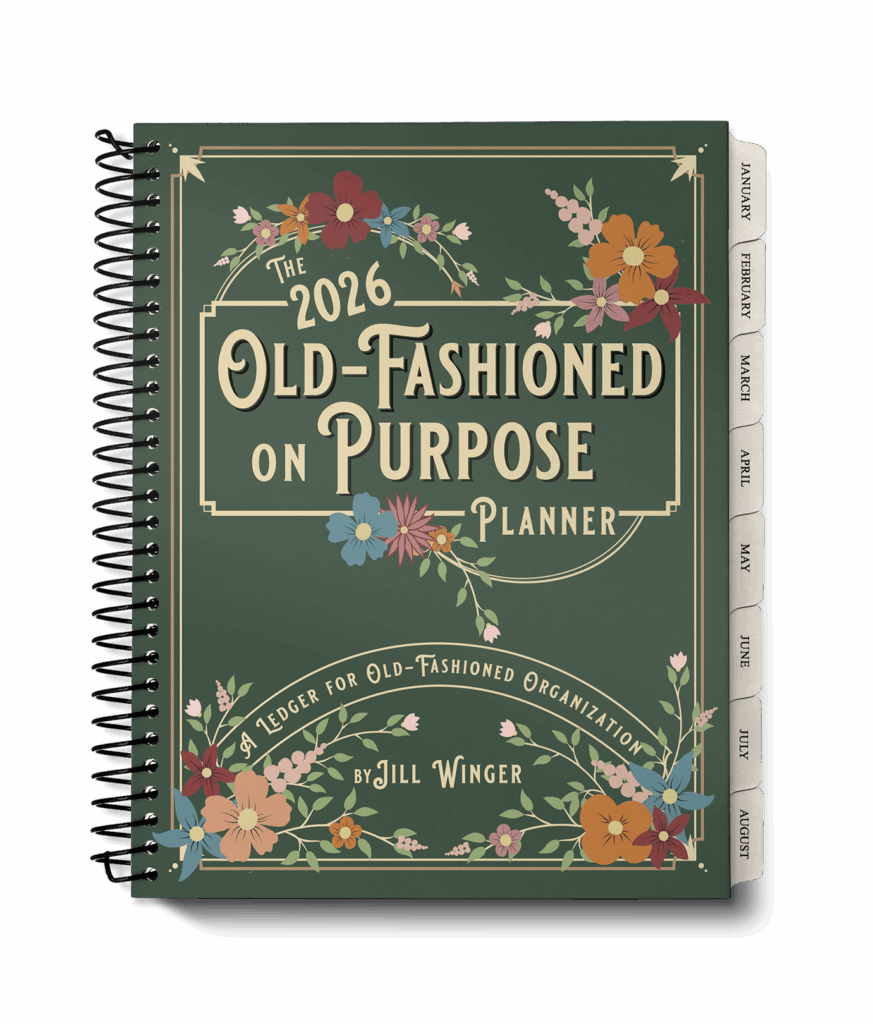
THE OLD-FASHIONED ON PURPOSE PLANNER by JILL WINGER
The 2026 Old-Fashioned on Purpose Planner is here to help you juggle the beautiful chaos of your old-fashioned life. Designed by a homesteader (our great friend Jill Winger) for homesteaders, this isn’t just a planner … it’s your partner in turning big dreams into reality, one checked-off task at a time.
HOMESTEAD LIVING MAGAZINE
This beautiful monthly print + digital magazine delivers the best insights from the modern homesteading movement. Written by homesteaders for homesteaders, it offers practical advice, inspiring stories, and expert wisdom from contributors like Joel Salatin and Melissa K. Norris to help you create a healthy homesteading lifestyle.
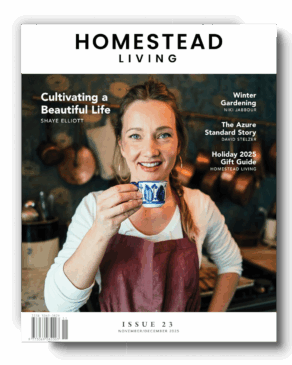
Leave a Reply