
Thirty years ago, Sally Fallon Morell dared to challenge the low-fat gospel. Her book Nourishing Traditions wasn’t born from theory.
It came from a mother’s quiet rebellion against the “virtuous” diet being sold to families.
She discovered Dr. Weston A. Price’s photographs of indigenous peoples with broad jaws, straight teeth, and robust health, then watched modern guidelines push the opposite of the whole foods diet they were eating: margarine in place of butter, skim milk instead of whole milk, and seed oils over saturated fats.
Sally pushed back against the “diet dictocrats,” and recommended an ancestral diet where red meat, raw milk, and healthy fats reign supreme.
The message is disarmingly simple: nutrient-dense, traditional foods (properly prepared) built the healthiest humans for centuries.
Butter for vitamin A and contentment. Soaked grains to unlock minerals. Bone broth for glycine. Liver once or twice a week for the sacred nutrients that guide new life.
Today the tide is turning. Butter sales climb. Raw milk finds new fans. The food pyramid has (rightfully) been flipped on its head. One family at a time, people are remembering what real food and health actually looks and feels like.
If optimizing your family’s health and nutrition matters to you, you won’t want to miss this conversation.
In this episode, Anna and Sally discussed:
- The story behind Nourishing Traditions and discovering Dr. Weston A. Price’s work
- Why traditional, nutrient-dense foods beat modern “healthy” guidelines
- The dangers of industrial seed oils and the supremacy of butter & animal fats
- The importance of vitamin A (from liver, butter, and cod liver oil) for fertility & healthy babies
- Raw milk’s superiority, finding sources, and why pasteurization creates problems
- Proper preparation of grains (soaking, fermenting) to unlock nutrition
- Sacred foods: liver, shellfish, bone broth, fermented vegetables
- Building health before pregnancy—and redemption even if you “missed the boat”
- Saturated fats vs. carbs for satisfaction, mood, and avoiding addiction
- The quiet revolution: rising butter sales, raw milk popularity, and why wise families won’t just survive, but THRIVE
- And yes, plenty more
About Sally Forrell Morrell
Sally Fallon Morell, author of the groundbreaking *Nourishing Traditions*, champions nutrient-dense traditional foods inspired by Dr. Weston A. Price. As founding president of the Weston A. Price Foundation, she advocates for animal fats, raw milk, and properly prepared whole foods to restore real health. With degrees from Stanford and UCLA, she lives on a Maryland farmstead producing artisan raw cheese and pastured meats.
The show notes …
00:00:00 – Intro
00:03:37 – Anna’s Story Finding Nourishing Traditions
00:06:05 – Sally’s Background
00:08:03 – The Origin Story of the Book Nourishing Traditions
00:13:18 – Who Was Dr. Weston A. Price?
00:17:54 – The Controversy Over Vitamin A & Liver
00:21:17 – Is It Too Late to Heal Your Genetics?
00:28:32 – Why You Should Switch to Butter
00:32:00 – The Dangers of Seed Oils
00:40:06 – The Raw Milk Debate & Pasteurization
00:44:33 – Animal Protein vs. Plant Protein
00:45:54 – Is Red Meat Bad for You?
00:49:44 – Bone Broth: Homemade vs. Store-Bought
00:53:21 – Getting Adequate Calcium (Dairy vs. Plants)
00:58:06 – How to Eat Grains: Soaking and Fermenting
01:00:53 – Thoughts on Keto & Low Carb Diets
01:02:27 – Fermented Vegetables & Kombucha
01:07:16 – The #1 Change to Make First
01:09:23 – Future of the Weston A. Price Foundation
Sally Fallon Morell:
The beauty of this is that what Dr. Price called physical degeneration that can be reversed in the next generation. And that’s what I did in my own family. My kids didn’t need braces. I had four kids with straight teeth.
Anna Sakawsky:
If you were to recommend just one change to make for someone who’s eating the standard American diet right now, just one thing to start with,
Sally Fallon Morell:
It’s butter, switch to butter.
Anna Sakawsky:
Let’s talk about this. This is another hot button issue, especially raw dairy, right? There’s a lot of opposing opinions on this. Hey everyone. Before we get into today’s episode, I want to tell you about something that we created in partner with Jill Winger of the Prairie Homestead that I genuinely believe makes Homestead life more doable. And that is the Old Fashioned On Purpose Planner. This is not a disposable planner that you toss at the end of the year. Oh no. It is built to live on your counter or desk season after season to refer back to, because inside there are dedicated sections for your kitchen, garden and home where you can track pantry inventory, meal planning projects, livestock production, and the rhythms of daily life that are with you throughout the year. And here is the important part. This planner will not be reprinted. What is available now is the final run.
So when they’re gone, they’re gone. And even though we are a little bit into 2026 already, you can pick this up whenever there is no rule that says you need to start on January 1st. So if you’re craving a little more clarity, a little more intention and a tool that supports the life that you are living, this was made for you. I can genuinely say I love my Old Fashioned on Purpose Planner. As you can see, I’ve already got tons of use out of it, and we’re only a few weeks in to 2026. So you can grab your copy of the Old Fashioned on Purpose Planner right now by visiting homestead living.com, or you can head to the link in the show notes. Alright, well, hello everybody and welcome to episode number 13 of the Coop. This is a Homestead Living podcast where we host educational and inspirational conversations with the homesteaders and writers who we feature in Homestead Living Magazine.
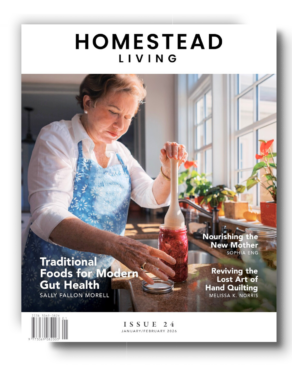
These are the ones who are at the forefront of the modern home setting movement that we are all a part of. My name is Anna Sikowski and I am the editor in chief of Homestead Living Magazine. And today’s episode is one I have been looking forward to for a long time now. I am joined today by Sally Fallon Morell, author of the groundbreaking book, nourishing Traditions and Founder and President of the Western A Price Foundation. So long before Real Food became a buzzword, Sally was challenging conventional dietary wisdom and advocating for traditional nutrient dense foods, rooted in ancient wisdom and the diets of healthy cultures around the world. Her work has influenced generations of families, homesteaders and health seekers, and continues to shape how many of us think about food nourishment and what it truly means to be healthy in today’s world. I was so honored that Sally agreed to write an article for the latest issue of Homestead Living Magazine and Grace, the cover of our January February, 2026 issue. And I am ever more honored to get to sit down with her today and share what is sure to be a thoughtful and illuminating conversation about what real nutrition looks like in a world where contradictory health advice abounds. So without further ado, Sally, welcome to the show.
Sally Fallon Morell:
Thank you. Thanks for having me.
Anna Sakawsky:
Well, thanks for taking the time with me today. I probably have more questions written down for you than I have had for any other guest, so we’ll see how far we get, but I could ask questions all day. I first got a copy of Nourishing Traditions, which I have here beside me. Usually it’s behind me on my shelf, but I was reviewing some of it before our little interview here today because I got this a few years ago and read through it when I was pregnant actually with what is now our second child. But my journey with why I dove into it originally, and I know a lot of people have a similar experience. I know a lot, I hear a lot of moms that read through nursing traditions and are looking for a healthier way to feed their children. And for me, it started on an infertility journey, I guess you would call it infertility.
I had had a healthy pregnancy and then had gone on to have multiple pregnancy losses and miscarriages, and so was looking to really try to create the healthiest environment possible during pregnancy for a child. And in the end I ended up with a very healthy baby boy and there were many factors involved, but I do believe that a lot of the advice in that book, if nothing else, just really helped me rethink about what it actually means to be healthy. Because we get a lot of advice nowadays that then you hear something completely contradictory or this is said to be healthy or this is the new trend or fat or whatever, but it isn’t necessarily in line with how cultures have lived and eaten and stayed healthy for centuries in millennia even. And that’s really what Nourishing Traditions is all about. It’s not some new fad or diet or trend.
It’s about getting back to our roots and getting back to what has allowed us to be healthy and continue to flourish for centuries now. So first of all, before we get into some of the actual dietary advice and nutritional advice that you share in your book, I want to talk a little bit about your background first and what actually led you to write the book in the first place. I actually recently listened to your podcast episode on the Wise Traditions podcast about podcast. What originally led you to want to write the book and how you got introduced to Dr. We Price in the first place. So can you, for our audience, and for anyone who may not know the story, can you share the story behind Nourishing Traditions and what ultimately made you decide to write this book?
Sally Fallon Morell:
Well, so I would say that a very important factor in my life was that I grew up in a family that loved food. I would say my parents were the original foodies. My father was very appreciative of my mother’s cooking, and we always had family dinner, and my mother was an absolutely wonderful cook and my parents traveled a lot and when they got home they would cook up the things they’d eaten, like Cale or filet of so manier or whatever it was that they so enjoyed on their trips. So we got a real food, a lot of variety in the diet, and one tribute I will give to my mother is that she always used butter. She never used margarine or a substitute. She thought they were disgusting and good for her. Now, some things we weren’t doing. We were not doing raw milk, we were not doing cod liver oil.
We never got liver, which were foods that my two parents had grown up with, but I think my mother didn’t want to, well, she couldn’t find raw milk, she didn’t want to hassle with cod liver oil and liver I guess. But anyway, it was a pretty good diet, pretty good diet. So I was eating this way. I then spent a year in France where I discovered things like pate and Raja and all these wonderful foods which I just loved. And so I did start eating liver at that time, and my first child, a daughter, was very cute, very healthy, absolutely no problems with her. And when she was about a year old, I discovered Dr. Price’s book, nutrition and Physical Degeneration. And it was just about the same time that the message was coming out that we should be eating a virtuous, puritanical, low fat, high fiber, low salt diet using vegetable oils, not butter, and avoiding eggs and wonderful foods like this.
And because I read Dr. Price’s book, I realized that this was complete nonsense. In fact, it was very dangerous advice, especially for growing children. So I soldiered on, I actually increased my consumption of nutrient dense foods and went on to have three healthy boys. And then when my youngest was in kindergarten, I got the idea to write, it was a friend of mine who kind of planted the seed here to write a book, a cookbook that would put Dr price’s findings in practical form for the modern people because Dr. Price’s book is kind of a slog text. So I kind of launched in, I had no idea what I was doing, my kids and my husband, there were a lot of eye rolls, mom’s writing this book, but I persevered, and finally I had someone come along who helped pay for publishing it and all the things I needed just kind of appeared.
Mary Ann, I found out about her and her wonderful work, and she was an advisor to me and became the co-author. So everything I needed for this book kind of appeared when it was needed, and so the book came out, the first edition in 1996, it was a vanity press. In other words, I had to pay for the publishing costs and didn’t really know what I was doing, didn’t know about marketing, but it started to sell just first a few copies per month, and then it was 20 copies and suddenly it was selling at several thousand copies per month. Then my vanity publisher actually kind of cheated me and didn’t pay me my royalties, so I actually decided to self-publish, and that’s how I set up new trends publishing. I came out with a second edition in 1999. I felt there were things that needed correcting, and the rest is history. Marianna and I set up the Western a price foundation, and that kind of keeps everybody up to date on the research and the goings on and so forth.
Anna Sakawsky:
Wow. Okay. Well, there’s a lot to unpack there. First of all, I just want to say it is funny because we do call this a cookbook. It even says, I love that it’s called the Cookbook that challenges politically correct nutrition and the diet crats, but in many ways this is way more than a cookbook, right? Yes, you do have recipes. There’s lots of fantastic recipes in it, but it’s very, very information heavy and very well researched. That’s I think probably the most difficult part of the book. Maybe it’s just the amount of information you have managed to pack in here and the stats and everything. What did that researching process look like for you? How did you gather all of this information? Did you have help with that? You have a background in nutrition to be able to do this?
Sally Fallon Morell:
No, my background is English. I’m a writer. I was doing some writing anyway, well, I give full credit to Mary Enig, who was a PhD in nutrition, and especially with a lipid researcher. So she very much helped me with the introduction. There were a couple of people who really helped along the way. One was Jacque DeLong who had the Celtic Sea Salt Company, and I called him to talk to him about salt, and I explained what I was trying to do in the book, and he said, well, you need to have fermented foods in there. And I hardly knew what he was talking about. And he said, you need to be careful how you prepare your grains. So he pointed me to two books that were in French. There was nothing in English at this time, and I speak French. So I was able to translate those books, and a lot of those translations are in the sidebars, but that’s what started me on the grains and the fermented condiments. Then Francis Pottinger work on bone broth gelatinous broth. That was also very helpful. So I think those were the two greatest inputs. And then there was a book on enzyme, it was called Enzyme Nutrition, and that was very helpful too. So it wasn’t just me, I was just kind of the coordinator of all this.
Anna Sakawsky:
And so obviously you had some different inputs and different experts helping you along the way, but of course this all comes back to wanting to highlight Dr. Weston A Price’s work. What was it about his work and his book specifically that sort of captured your attention or enamored you or thought this is the way, because there is so much advice, there’s so many, even nowadays, there’s so many gurus and people we can follow in different advice. What was it about his work specifically selling
Sally Fallon Morell:
Things too? Well, I think it’s the photographs in the book. You can’t look at those photographs and not be changed because it shows what the human face is supposed to look like. It’s supposed to be broad and round, and we’re supposed to have naturally straight teeth. And my father used to say at the dinner table, he used to say, I don’t understand it. Your mom and I have naturally straight teeth and perfect eyesight, and all you kids need braces and glasses. And I was able to answer, he said, why? And it was because we were not getting as nutrient dense a diet that my parents had gotten. And we were still getting good diet, but it wasn’t enough. And I will say we were not getting raw milk either. We were getting pasteurized milk, right?
Anna Sakawsky:
So because Dr. Price, for anybody who doesn’t know, he was a dentist who traveled and interacted with indigenous populations around the world who were still eating a very traditional diet. And that was one of the things, because obviously that was his focus that he noticed was that their jaws broader. They didn’t have any crooked teeth, very little to no instances of tooth decay, that sort of thing.
Sally Fallon Morell:
Very robust physical structure,
Anna Sakawsky:
Right? Bone
Sally Fallon Morell:
Structure, ease of childbirth, ease of reproduction, and no chronic disease. They were just healthy. And so all these diets were different. I mean, the diet of the South Sea is not going to be the same as the diet of Alaska, but they were in complete contradistinction to the dietary guidelines, which are basically genocidal advice. And these dietary guidelines, low fat, low animal foods, high fiber, no salt, low salt. First of all, nobody can eat this way, horrible dry diet, and you never feel satisfied after eating that way. So I often say this is like a puritanical diet that makes you crave the pornographic foods and people go out and eat junk food.
Anna Sakawsky:
It’s
Sally Fallon Morell:
Not a satisfying diet, and it’s not a nutrient dense diet. It doesn’t have the nutrient dense foods like butter, eggs, liver meat is a nutrient dense food, seafood, fish, eggs, shellfish, all of these nutrient dense foods that the people that Dr. Price studied valued above all other foods, and especially for having healthy babies.
Anna Sakawsky:
Right? So, okay, good point. Because you talk a lot about the importance of healthy, healthy whole foods diet during pregnancy and throughout childhood, as children are developing, they’re developing, their brains are developing their bone structure, organ development, all that is happening, and it happens for a certain amount of time. And then certain things are set like your bone structure, that sort of thing.
Sally Fallon Morell:
I’ll say this diet has to start before pregnancy. You have to build up your nutritional stores, especially vitamin A, because vitamin A is what directs the development of the embryo and the fetus. It’s what tells the undifferentiated stem cells what to become, what kind of cells to become. And you build up your vitamin A from things like liver butter. For us, it’s cod liver oil. So that vitamin A is there ready to go the moment that you become pregnant, if the vitamin A is not there, you probably will miscarry.
Anna Sakawsky:
Interesting. Okay. So actually a couple of questions about that before I get into my full question here. On the topic of vitamin A, I have heard some contradicting things that you need to be careful not to get too much. I actually bought liver while I was pregnant with my son, and then I was too afraid to eat it because I had read that it can cause problems if you eat too much of it or if you, right. And so I was so nervous after having miscarriages that I didn’t want to do anything that made compromise that. So what is the controversy? Well, to me,
Sally Fallon Morell:
It’s very interesting that the diet crats have picked out the vitamin that is most important for fertility and healthy babies and demonized it. And this is no accident.
This has been done very deliberately. They either tell you, you can get your vitamin A from plants, which is not true. They tell you that it’s toxic for pregnant women, which is not true. Not if it comes from food. Yes, if it’s added to junk food. Yeah, sure. And also, this is the other thing. They push vitamin D, everybody’s taking all these huge amounts of vitamin D, and that will deplete you of vitamin A. You need to take the A and D together. This is why we recommend cod liver oil and not the isolated supplements, because yes, the isolated supplements, whether it’s A or D, vitamin D three is rat poison. It’s the number one ingredient in raft poison. Wow. So they skirt around the edges and don’t really tell you the facts. And I’m sure that this is deliberate
Anna Sakawsky:
Interesting.
Sally Fallon Morell:
There is a group of humanity that does not want us to be healthy, does not want us to have healthy children, and just wants general misery in the world. And one of the ways they do it is warn you that vitamin A and things like liver, really important foods is not good for you, and this is not true.
Anna Sakawsky:
Interesting. Very interesting. Well, and that comes back to the whole food pyramid and that sort of thing, and the foods that they, well, what was it a couple of years ago now, they were saying that lucky charms was healthier
Sally Fallon Morell:
Than eggs
Anna Sakawsky:
And meat.
Sally Fallon Morell:
Yes, yes. And this artificial limit on saturated fat, 10% calories, a saturated fat is another really bad thing because we actually need saturated fats. We need a lot of saturated fats in the diet. And if you don’t get the saturated fats in your diet that you need, your body has a backup plan and it makes them out of carbohydrates. So you will crave carbohydrates if you’re not getting enough saturated fat. And that’s exactly what they want. They want you to crave the high carb junk food. And I can promise you, if you’re eating our kind of diet with lots of good fats, you won’t want those foods.
Anna Sakawsky:
Right. Meats and healthy fat. It’s so funny because I’m actually reading an old edition of Oliver Twists right now. I started reading it, and one of the things that I noticed in one of the chapters, they were talking about how he kind of fought back a little bit and they said, well, it’s because you’ve been feeding him meat. You got to keep him on gruel so that he’s weak. Right. I thought, isn’t that interesting that even back then book, it was Oliver Twist. Oh, Oliver Twist Dick. Yeah, the Dickens book. Right. But they had said, oh, you can’t feed him meat because that’s giving him the strength essentially, to fight back. If you want to keep him weak, you need to just keep him on board. Isn’t that interesting?
Sally Fallon Morell:
Would you send me the page number?
Anna Sakawsky:
Yeah,
Sally Fallon Morell:
I’ll have to do that for sure. That’ll make a great sidebar for my next,
Anna Sakawsky:
No kidding. Okay. So back to this issue though of starting before pregnancy even certainly during pregnancy and throughout childhood, that’s ideal. But for many of us, we might feel like we missed the boat. Either we were not raised that way, or maybe we didn’t know then what we know now with our first children or whatever. Maybe we feel like we’ve missed the boat a bit. Is there any chance that redemption later in life, or is it kind of a lost cause
Sally Fallon Morell:
After a certain point? I’m a perfect example. I needed braces and glasses, but I was able to, and I had a lot of allergies, and I was able to conquer the allergies and have a lot more energy by going back to this diet. And especially getting on things like cod liver oil and eating liver. Raw milk is something I consume every day, but once your body is formed, once you become an adult, you can’t change your structure the way you look. That has to happen while you’re growing, but you can always improve your health with a healthy diet. And the beauty of this is that what Dr. Price called physical degeneration, that can be reversed in the next generation. And that’s what I did in my own family. My kids didn’t need braces. I had four kids with straight teeth.
Anna Sakawsky:
Right? Yeah. Yeah. It’s actually interesting. I was thinking about that as I was rereading the book and I was thinking the whole narrow jaw thing. My husband actually has quite a narrow jaw and has always struggled with crooked tooth issues and that sort of thing, and sinus issues and allergies and everything. But I haven’t seen that in our children so far. So I’m like, well, good. Well, I always thought, well, maybe that’s just genetic. But his brother doesn’t seem to have that as much. And he had shared with me at one point that his brother was breastfed, but his mom was not able to breastfed feed with him. And so he was formula fed. And I mean, it is hard to say for sure, but is that something that’s part of this? Oh,
Sally Fallon Morell:
Yes. And was the brother older?
Anna Sakawsky:
Yes.
Sally Fallon Morell:
Yeah. So usually the first child has the straight teeth.
Anna Sakawsky:
Interesting.
Sally Fallon Morell:
And then all these subsequent children have more narrow jaw because the mother has become depleted. And this was the other thing that Dr. Price discovered was they always put at least three years between children so the mother could recover her nutritional stores.
Anna Sakawsky:
Oh, interesting.
Sally Fallon Morell:
And we’re not teaching our girls to do this. Usually they have two, one after the other, and the second child suffers because of this.
Anna Sakawsky:
We’re not taught any of that. I mean, we’re not even taught about how our cycles work or timing of anything, any of that anymore. Or don’t get me started on hormonal birth control and all that, and not being informed, but how that works and the other effects that the has on the body. But
Sally Fallon Morell:
Oh yeah. So my little company, nutrients, I published a book called Honoring Our Cycles, which talks about spacing children and has charts in the back to show you how to do it.
Anna Sakawsky:
Right. Yeah. Well, super important information. I think more people are coming to understand that. Back to the actual diet and nutrition part of this, let’s talk about some of the specific foods that you do recommend as part of a healthy diet. So what foods form the foundation of a healthy diet according to the Western a price principles and the nourishing tradition principles on nutrition?
Sally Fallon Morell:
Well, number one is butter. I say if you can’t make any other change in your diet, switch to butter. It’s the healthiest fat on the planet. It’s an excellent source of vitamin A. Also vitamin D and vitamin K, especially if it’s grass fed butter and most supermarkets carry gold or New Zealand butter. I mean, that’s just absolutely number one. And at the same time, you’re going to not do any industrial seed oils, make your own salad dressing with olive oil and use butter for cooking. You can cook in butter or you can cook in lard or bacon grease. So everything tastes delicious, but you just want to get away from the seed oils and use only the animal fat. So that would be number one, switch to raw dairy, which is hundreds of times more nutritious and not allergenic.
And it’s easy to find these days. We have a website, real milk.com, you put your zip code in and it’ll tell you where the raw milk is near you. And we’ve made tremendous progress. When we set up that website in 1999, there were about 20 sources of raw milk in the whole country. And now we have about 3000 listed and many others that are not listed. So that would be number two. And I think number three would be to put an emphasis on what we call the sacred foods. The first one is liver. And I think it’s very important to eat liver once or twice a week in whatever form that you can manage. For me, this is chicken liver or a goose liver or duck liver pate, and it’s, which is just delicious. It’s a delicious spread on your bread.
Some people like liver and onions, and if you can’t stomach any kind of liver, I would take a desiccated liver. It is our most nutrient dense food. It is the food for pregnancy in so many cultures. And I mean, I always feel happy after I eat liver. So it’s very good food for your mood as well. If you like shellfish, like oysters, muscles and clams, eat those as often as you can. They’re really healthy foods. And then I think the next thing would be to pay attention to your grains. What’s happened since 2005? In 2005, they allowed the grain growers to spray roundup glyphosate on the grains about two days before harvest as a desiccant. So that means that when you eat an non-organic grain, you’re getting the full brunt of the glyphosate, which is a really insidious poison. And I’m convinced that it is the cause of Lyme disease and fibromyalgia and all of these problems that people have with their joints because the glyphosate substitutes for glycine and glycine is the amino acid we need for healthy joints. We also need glycine for dopamine production to feel happy. And I think the roundup is making people very depressed and angry. So usually only organic grains. And then we have a lot of recipes in the book for how to prepare them,
Soak your oatmeal, make or buy only genuine sourdough bread.
Anna Sakawsky:
Okay. Alright. Let’s unpack a couple of these things. So let’s
Sally Fallon Morell:
Start just one more thing. Last thing, yeah, for sure is the fermented foods like sauerkraut, right?
Anna Sakawsky:
Yes. Perfect. Okay, so let’s start where you started. So let’s start with butter. So I know that you talk a lot about this. You say everybody should eat amples of butter every day. You’ve mentioned that it’s best if you can find grass fed butter. Does it matter at the end of the day? Is some butter better than no butter? Yes.
Sally Fallon Morell:
Even if it’s the grocery store butter, it’s
Anna Sakawsky:
Conventionally. Okay. And what is it about butter specifically? Is it just better than seed oils or is it something that genuinely we need to be having in our diet?
Sally Fallon Morell:
We genuinely need to be having in our diet healthiest fat. It has a perfect balance of fatty acids. It is our best source of vitamin A, true vitamin A, and it’s easily absorbed from butter. And then there’s a few things in butter that we can’t get anywhere else. One is called, well, it’s hard to get in other places. One is a arachidonic acid, which we get only from animal fats. So what is ar arachidonic acid? Well, it’s kind of shaped like a hairpin, and it creates tight cell to cell junctures in your intestinal tract, which is what you want in your skin. So you have nice smooth skin. But also, and to me, this is just fascinating out of ar arachidonic acid, we make endocannabinoids, we make our own marijuana. We’re supposed to be making this marijuana in our bodies all the time, and we have receptors for it, and we clear it in a orderly fashion. And these endocannabinoids make us content, but also relaxed, but also motivated and
Anna Sakawsky:
Motivated. That’s like the opposite.
Sally Fallon Morell:
But no, when it’s your natural endocannabinoids, they motivate you in a nice way, not in a manic way, but let’s do this today. I’m going to get this done today. And people who are not getting animal fats, especially butter, they don’t feel right, they don’t feel happy. And they’re very much predisposed to become addicted to something. If it’s not marijuana, it’s smoking or alcohol or sugar or whatever.
Anna Sakawsky:
So something else to fill that void essentially, to
Sally Fallon Morell:
Fill that void to make themselves feel normal. Another thing that’s in butter that we actually, butter is the only source of this is butyric acid, which is a very short chain fatty acid. Our bodies make it in the colon, sometimes we do, but to get it ready made from butter, we don’t have to make it. And it’s very important for digestion. Then you’ve got omega sixes, omega threes, you’ve got DHA in butter. It’s very small amounts, but we only need it in small amounts. I mean, it is an amazing fat and cannot be imitated in any way.
Anna Sakawsky:
And so speaking of imitation, there are many other products that they’ve tried to flood the market with to try to imitate butter. I was rereading about seed oils and hydrogenated oils and that sort of thing in your book last night. And I was just horrified. I mean, I know some of these things, and I think a lot of our listeners probably know about some of the dangers of seed oils and maybe how they’re produced. But for anybody who maybe doesn’t know or doesn’t understand the extent of how they’re actually produced and what they do to our bodies, can you share some of that with us?
Sally Fallon Morell:
Okay, so these seed oils that are pressed out of the seed with stainless steel presses, they have not been in the diet until 1890. And the first seed oils were cotton seed oil. We got oil out of oily fruits like olives, coconut and palm fruit, or out of very oily seeds using a stone grinder such as sesame seeds. Flaxseed is another one that we could get oil out of with a stone grinder. So anyway, with the invention of the stainless steel roller press, they could now get oils out of seeds that we never got oils out of before. So canola, corn, sunflower, saf, what’s the one I’ve missed here? Anyway, bean soybean oil. Soybean oil. See, there you go. So this is done at very high temperatures, and if you saw what came out of that seed, you’d never eat it. It’s this very thick, sticky, black smelly gunk. It smells so bad that it’s repulsive.
Anna Sakawsky:
Yeah, they have to put bleach in it just to get rid.
Sally Fallon Morell:
Yes. Well, then it goes through this long process of refining, which deodorizes it, debunks it strips it of color, bleaches it, and it’s about four different heatings to this. And it’s heated very high, especially the deodorizing bruss. And these are polyunsaturated oils. That means those are oils that are liquid at room temperature and they’re fragile. See the saturated fats, the beauty of the saturated fats is that they’re stable and safe and they don’t break down. But these are, the polyunsaturates are very fragile. They’re already rancid when they come to you in the bottle, and then you cook with them and heat them one more time, and they start to break down in the body into these very small molecules called aldehydes. And there’s one aldehyde that we are familiar with, it’s called formaldehyde. What’s interesting to me is the undertakers are saying these days they don’t need as much formaldehyde to cure the bodies. Oh my God, these bodies are already pickled.
Anna Sakawsky:
That’s probably why those McDonald’s french fries look the same after
Sally Fallon Morell:
30 years. Eat them. They’re
Anna Sakawsky:
Cooked in these oils.
Sally Fallon Morell:
And the McDonald’s french fries used to be fried and tallow, and that’s the appropriate fat for deep frying because it’s very, very stable. And they were delicious. But the industry tallow is expensive, and they wanted to find something cheaper. So they dreamed up this we’re going to have heart healthy fries and not use animal fats with cholesterol in them. And of course, the incidence of heart disease has gone up lockstep with our use of seed oils. So they’re the ones that are bad for the heart.
Anna Sakawsky:
I know. It’s so hard. My mom still thinks like, well, canola oil is heart healthy, what the marketing has said. Or I remember going to a restaurant one time, it said right on the menu, we only use heart healthy canola oil or seed oils or whatever. They genuinely thought that they were doing the right thing, trying to be healthy. And I just said, oh God,
Sally Fallon Morell:
Once my husband and I went to a restaurant and asked if they served butter, we always do. And they said no. And we said, well, why not? And they said, well, because if you got a heart attack, we’d be liable. Oh my goodness. Oh my goodness. But the thing about canola oil, it’s high in Omega-3, which is the most fragile type of fat. And so it’s completely damaged and broken down and oxidizes when it’s processed.
Anna Sakawsky:
Oh, right.
Sally Fallon Morell:
And they’re using it for frying. They use it for fries now.
Anna Sakawsky:
Yeah. So it really shouldn’t be processed like that. It’s similar to even, I know with olive oil, for example, considered a healthy fat but is not so stable at high temperatures. So better finishing oil rather than a cooking oil.
Sally Fallon Morell:
The other thing is that when we gain weight, the type of fat that we gain in our fat cells is monounsaturated the type that’s in olive oil. And if you have too much olive oil, you’re going to be predisposed to weight gain.
Anna Sakawsky:
So just minimal. And so the saturated fats, and I was trying to, I find the science in your book really fascinating. It actually explains how these molecules are formed and how they look and why they’re solid at room temperature, for example. So my understanding is the saturated fats are solid at room temperature because of their molecular structure, right? That’s right.
Sally Fallon Morell:
They pack together
Anna Sakawsky:
Coconut oil, butter, things like that.
Sally Fallon Morell:
The reason we have saturated fats in our bodies, the most prevalent type of fat in our bodies is because we’re warm blooded. And the hotter the animal’s body, the more saturated the fat needs to be. So like a cow, the fat and the cow is really hard, but the cow’s body temperature is 103 degrees and we are at 98, so they need harder fat. This is just basic biochemistry. And again, if we don’t eat these fats, we have to make them out of carbs or we will not live. We just have to have saturated fats in our body.
Anna Sakawsky:
Right, okay. And I mean, not just our bodies, but our brains as well. I don’t know enough people realize how much fat are brains.
Sally Fallon Morell:
It’s more saturated fat in the brain and the lungs. So the lungs surfactants, which is what makes the lungs work, it provides for the passage of gases to and from the lungs. They’re composed of two saturated fat molecules. So if you’re not eating saturated fat or you’re not getting them somehow in your diet, you can’t breathe.
Anna Sakawsky:
Right, right. Yeah. Interesting. Okay, so healthy fats, saturated fats obviously really important for us. Stay away from seed oils, dairy, let’s talk about this. This is another hot button issue, especially raw dairy. If you’re looking to invest in quality tools, gear and supplies that actually support your life at home, I want to highlight a few of our trusted partners at Homestead Living Companies. We genuinely stand behind. So first up is brunt workwear. Whether you’re splitting wood, working in the garden, or just putting in long days outside, brunt makes durable, comfortable workwear that holds up their waterproof boots and reinforced pants are built for real work, not just looking the part. You can get $10 off your first order with code Homestead10. Next is Irish Eyes Garden Seeds. They’re a family owned organic seed company known especially for their potatoes and garlic, along with a wide range of non GMO vegetable and herb seeds.
It’s a great time to plan ahead for the growing season, and you can save 15% off your first purchase when you join their newsletter. And finally, is Rustic Strength. They make non-toxic refillable home and body care products like detergent, dish, soap, shampoo, candles, and more, all without the junk you don’t want in your home or on your body. And right now, listeners can get 25% off with Code Homestead25, so you can find details and links to all of these partners in the show notes or browse the full collection at homestead living.com/holiday-gift-guide. Now, back to the show. I think a lot of people in the home setting community are kind of on board with the raw dairy. They at least understand the benefits of it. So we won’t go down that rabbit hole. But the reality is that not everybody does have access to raw dairy.
And I think it’s fantastic that you have a directory now that people can check out. But depending on where you’re located, it might be hard to access. For example, I’m actually in Canada where it is outright legal everywhere. So unless it’s funny, I always tell the story, but I went to the Modern Homestead conference last year in Idaho. And in Idaho it’s totally legal. And so I bought raw milk from the store, no big deal. And I brought some back with me, and I felt like a criminal just taking it over the border, even though it was just for myself and my kids. But I had posted something online about it, and I had somebody that I know get really upset with me that I was giving this to my kids and that I was putting them in danger and all these sorts of things. So Carrie still carries a stigma, like it or not, and there are still places where it is hard to access. So that being said, first of all, I know you say raw dairy is best because the pasteurization process can destroy a lot of
Sally Fallon Morell:
Yeah, and it’s ultra pasteurized today. It’s all ultra pasteurized. It’s 248 degrees.
Anna Sakawsky:
It’s
Sally Fallon Morell:
Really hot, and the proteins in milk are very fragile, and they get warped and distorted and become allergenic. One thing they don’t tell you is that there’s 20 or 30 deaths. This isn’t just illness, this is deaths from anaphylactic shock to pasteurized milk Every year
Anna Sakawsky:
Is very
Sally Fallon Morell:
Dangerous. Yeah, very
Anna Sakawsky:
Dangerous. Now, somebody that has an anaphylactic reaction though, do you think that that is something to do with the pasteurization process, or is that actually something to do with the milk source itself?
Sally Fallon Morell:
You never hear of that with raw milk. Raw milk is nature’s perfect food. It’s the food for the calf to grow and prosper. It has fat in it, which is important also. And you can just talk to people who brought their kids up on raw milk. Their kids are so healthy, and Dr. Price found that the healthiest people were the ones who had access, who had dairy cows or camels or goats or sheep or reindeer, and had the raw milk in the diet.
Anna Sakawsky:
Okay. Alright. So if you’re not able to access the raw dairy for any reason, kind of like with the butter, grass fed is best, but if not, conventional butter will do. Is it the same case with milk and dairy products will conventional dew or is it like you may as well not have it at that point or?
Sally Fallon Morell:
Well, what I would suggest is raw cheese, which is available everywhere. You might have to order it, but it’s not illegal anywhere. You do need calcium. And in traditional cultures that did not have dairy, they crushed up the bones of small animals or they fermented the bones of the fish and the bone powder was added to their food. They just found a cauldron in an archeological dig in China, and inside the cauldron, they found the residue of bone meal. So they were adding crushed bones to the food in China. People understood this. If you wanted strong bones, you had to eat bones. And so it’s either dairy or bones if you want your children to have good, strong bones and grow tall. And I think it’s a lot easier to do it with dairy. By the way, I have a jar in my cupboard that I bought at a Korean market that’s powdered bone.
Anna Sakawsky:
Oh, wow. Okay.
Sally Fallon Morell:
Everybody knew to do this.
Anna Sakawsky:
Interesting. Okay. Okay. Let’s talk a little bit about protein too, because that’s another important factor in this. Our fats are really important and everything else. But what about protein? Same thing. Are all animal based proteins created equal or, well,
Sally Fallon Morell:
They’re not all the same, but all animal-based proteins are complete proteins. Some animals have more of one amino acid than another, but you cannot get complete protein from a vegetarian or vegan diet. At the same time, we are not advocating a very high protein diet. We’re advocating adequate animal protein in the diet. We’re more concerned about getting all the important fats. And the traditional people have a lot to tell us about eating animal protein, about eating meats. First of all, they never ate meat without the fat. They never ate lean meat. And of course, that’s what we’re told to do, right? Lean
Anna Sakawsky:
Meat. Lean meat. And why is that? Is that about absorption and bioavailability?
Sally Fallon Morell:
Well, because when you eat meat, your liver releases vitamin A because you need vitamin A to process the protein. And if you’re not eating the fat with it, which provides the vitamin A, then you become depleted in vitamin A. They called that rabbit hunger, and you could die very quickly from just eating lean meat. Instead, they didn’t eat the meat if it was lean.
Anna Sakawsky:
Interesting. Okay. So
Sally Fallon Morell:
We want fatty meat. You want to eat the bacon and you want to eat the eggs, the yolks of the eggs and whole milk, and you want to eat the beef with the fat on it. That’s the beauty of beef. It has a lot of fat, and if the meat is lean, then you make a sauce with cream or butter or fat in it of some kind.
Anna Sakawsky:
Okay. And I’ve heard you talk a lot about red meat and how nutritious that is another contentious issue these days. And I think, again, a lot of us in the homestead community understand the nutritional benefits of red meat, but there’s still a large portion of conventional health wisdom, whatever you want to call it, that’s saying that red meat is bad for you, that you should
Sally Fallon Morell:
Limit your red meat is a great source of zinc. It’s our best source of zinc. And zinc is very important for the brain. It’s important for fertility, it’s important for intelligence, it’s important for your immune system to keep you from getting sick. I mean, zinc is a really important mineral. And if you’re not eating beef, you’re going to have you probably be deficient in zinc.
Anna Sakawsky:
So do you think, in your opinion, when it comes to protein, is red meat the ideal source of protein?
Sally Fallon Morell:
Does
Anna Sakawsky:
It matter
Sally Fallon Morell:
The top of the list?
Anna Sakawsky:
Okay. And are there any that you recommend maybe against, aside from say, maybe processed meats like sausage meats or that sort of thing?
Sally Fallon Morell:
Well just hold your horses cured. Pork and pork is actually not good for you unless it is cured and it’s marbled with lots of fat. It’s a wonderful food. Get the artisan products without all the additives. Great products for children’s lunches, snacks. And it’s nourished people all over the world really. But especially in the Mediterranean. I know, I have to laugh when they talk about the Mediterranean diet and they never talk about salami. I mean, give me a break. The Mediterranean diet is all about cured pork, probably the number one source of calories in the Mediterranean diet. And yet when they describe this diet, there’s no pork in it.
Anna Sakawsky:
Okay, well this is really good to know because I love cured meats. So we always hear you limited, I guess, like you say, make sure that you’re getting the high quality artisan made stuff and not just the cheap.
Sally Fallon Morell:
But the other thing I wanted to say is there’s a big emphasis in my book on broth, bone broth. And the bone broth is basically melted collagen and traditional cultures always ate the muscle meats with some collagen. Either they chewed on a joint, a bone, not a marijuana joint, or they cooked these gelatinous parts of the animal in a pot and had the broth. I have a dear friend who grew up in a very poor family in Argentina, and she had really a perfect diet. She said, we had a big cast iron pot and everything went in the pot, the bones, the knuckles, organ meats and the meat, some vegetables. We put some grains in there, and that’s what we ate every day. This stew that had organ meats and broth and everything in it. And she said the other thing we ate was raw milk. And she came from a family of 10 children, all healthy, all grew to adulthood. They were never sick. And that was, to me, that’s the perfect meal. The American Native Americans, especially where I live in Maryland, along the sea coast, that’s what they did. They made, what’s it called? I’m trying to think of where, but it’s like a stew with meat and grains and the bones and everything.
Anna Sakawsky:
Right.
Sally Fallon Morell:
And they ate shellfish, lots of
Anna Sakawsky:
Shellfish. So bone broth. That was another one I wanted to touch on because I know that’s one that you recommend, something you recommend consuming a lot of. I love bone broth. I make a lot of my own. But if somebody is maybe not making their own and is purchasing it, what should they look for or look out for if they’re buying broth?
Sally Fallon Morell:
So I was just in Austin with my son and I said, just order the food. And he ordered it from Whole Foods, and he had, it was this bone broth in pouches. They were plastic, and that’s not good, but it was called, the brand was called a Bode Well or something like that. But anyway, it was the most gelatinous beautiful bone broth. So what I recommend, most upscale markets will carry bone broth, but get the frozen, not the shelf stable. The shelf stable will not be good product. Get the frozen
Anna Sakawsky:
Now is
Sally Fallon Morell:
The shelf. We have a shopping guide that lists brand names in it too. So
Anna Sakawsky:
Okay. Can people find that out on the west? A price site?
Sally Fallon Morell:
You become a member, you get a free shopping guide.
Anna Sakawsky:
Okay, perfect. So just a question on that. So if it’s shelf stable, you say that tends to not be as healthy. Now, is that just because that tends to be the Campbell’s type stuff that’s got a whole bunch of added ingredients in it? Or is the actual, because I always think I can a lot of my broth to make it easily, I’ll do big batches and then whatever I don’t use fresh, can it instead of freeze it just to save space in the freezer and so that it’s ready to go in liquid form? Am I harming it by doing that? Because I
Sally Fallon Morell:
Don’t think so. I think broth is pretty resistant to high temperatures. It’s the most stable and most the strongest protein in nature. But the test is get it out, melt it, and then let it cool and see if it gels.
Anna Sakawsky:
If
Sally Fallon Morell:
It’s still jelling. Yeah.
Anna Sakawsky:
Yes, I do notice that. What if I put it in the fridge? It still does gel. So yeah, that’s what you want. So now I obviously have noticed too, drink beef broth versus chicken broth. There’s a lot more, I guess gelatin, right in the beef broth.
Sally Fallon Morell:
Yes.
Anna Sakawsky:
Does that mean, or in your opinion, is beef broth healthier than chicken broth if we were to choose between
Sally Fallon Morell:
The two? Yeah. Well, you don’t have as much gelatin in there. That’s because you probably need some feet and heads.
Anna Sakawsky:
Yeah, I do. I try to get chicken feet in there
Sally Fallon Morell:
Whenever
Anna Sakawsky:
Possible.
Sally Fallon Morell:
So on our farm we do chicken and we sell the feet and head separately, make more money that way. But that’s why you get the gelatin.
Anna Sakawsky:
Right. And then back to the calcium and everything too, you had talked about eating bone meal. Are we getting calcium from the bones when we make bone broth?
Sally Fallon Morell:
No.
Anna Sakawsky:
Okay.
Sally Fallon Morell:
Interesting. That was a big surprise. We had the broth analyzed and there were minerals in the broth, but a trace amount of calcium, it wasn’t like a substitute for milk that really surprised us.
Anna Sakawsky:
So
Sally Fallon Morell:
It’s not a source of calcium, but what it is a source of is glycine and the other amino acids that you need for collagen and cartilage. And so it gives you healthy joints. And it also is important for your bones because the calcium attaches to this collagen framework. So you need collagen for your strong bones too.
Anna Sakawsky:
And then on that topic, I had forgot, this is what is a question we wanted to ask you, but you talked about needing either dairy or bone meal basically to get adequate source of calcium. Now what about calcium from plants? Because we do hear certain broccoli, certain things have a lot high amount.
Sally Fallon Morell:
You want to eat. Listen, if you want to eat six cups of broccoli every day, you might guess, okay, and you’re going to get some calcium from that broccoli. But the thing is, if the plant foods, it’s not as available, it’s bound up. It’s chelated with other substances. So your body has to work hard to get them. And a lot of vegetables have oxalates and other compounds that block the availability of minerals, like phytic acid is one of them.
Anna Sakawsky:
Right, okay. Yeah, I’ve heard about this and about, and this is another thing now. So on one hand we kind of have what you would call the diet crats, which are the kind of traditional, conventional organizations bodies that put forth our kind of widely accepted conventional health advice of the times. On the other hand, and especially nowadays, especially in the whatever, I guess 30 some odd years, it’s been, I guess about 30 years now since you originally wrote Nourishing Traditions. We have seen all these alternative approaches to health and nutrition come about nowadays. We have influencers and wellness gurus and all, and some of them kind of go really hard the other way where that’s like carnivore diets and I hear a lot like don’t eat any vegetables because they’re trying to kill you. Sometimes them they’re trying to kill you and only eat meat and in so many or
Sally Fallon Morell:
Only raw meat. That’s the other one.
Anna Sakawsky:
Yeah. So what are your
Sally Fallon Morell:
Thoughts on that? If you haven’t cooked for children and raised a healthy family where the children turned out and healthy? I don’t think you should be talking about what people should be eating.
Anna Sakawsky:
You’re so funny. That’s so funny. I think that a lot about some of the people that, and I follow them and I listen to their advice, but I think easy for you to say, and you’re only worried about feeding yourself. You
Sally Fallon Morell:
Have a child but doesn’t want to your children dry broccoli and dry bread. I mean, it’s not going to work. They won’t eat it and then they’ll go out and eat junk food. I always say the first requirement of a healthy diet is that your children will actually eat it. And so it needs to be healthy. Excuse me. It needs to be delicious. It needs to be satisfying. And you know what that plate looks like? It looks like meat, carbs, and veg, but the meat has a gravy on it or a sauce or it has fat in it. If you’ve made meatloaf or whatever, the carbs and the vegetables have lots of butter on them and salt, and then they’ll eat those things.
Anna Sakawsky:
Right. Okay. So I mean, you do recommend healthy carbs as part of a healthy Wilson diet.
Sally Fallon Morell:
Dr. Price actually never talked about macronutrients because there was such a variety in Alaska, they were mostly eating fat and they weren’t eating vegetables at all. And then in the South seas you had a lot of carbs. That wasn’t the point. The point is the nutrient density, and these diets were four times higher in minerals and 10 times higher in the fat-soluble vitamins than the American diet of this day. And the fat-soluble vitamins are A, D and K. And we get those. It’s hard to get them. We get them from animal foods, animal fats and organ meats.
Anna Sakawsky:
They’re
Sally Fallon Morell:
Really not even in meat very much. They’re in liver, eggs, shellfish,
Anna Sakawsky:
Dairy,
Sally Fallon Morell:
Dairy. Yeah.
Anna Sakawsky:
So with the carbs, I mean, you do talk about there are some refined sugars and highly processed grains and that sort of thing that we should be staying away from. And for the most part, I think that’s pretty widely accepted. Now there’s still pushback on that with certain health advice and nutritional advice, but I think for the most part, people understand that that’s not the healthiest thing. You
Sally Fallon Morell:
Don’t want a lot of white flour, for example.
Anna Sakawsky:
Yeah, white flour, white sugar.
Sally Fallon Morell:
On the other hand, what we did, this is back in the early two thousands, late nineties, we kind of went the other way and we had these books like Diet for a Small Planet, which were all of these rough grains and not properly prepared. And that’s a recipe for digestive disorders.
Anna Sakawsky:
So this is part of what you talk about when it comes to grains is A choose whole grains, and B, that it’s about proper preparation. And so part of that is soaking and fermenting these grains. What does that actually mean? If I’m going to go, okay, I want to eat some grains, whether it’s some bread or some rice or whatever, pancakes. Okay, okay, sure.
Sally Fallon Morell:
Pancake recipe is probably the most popular and famous grain recipe in the book.
You either buy freshly ground whole grain flour or you grind it yourself. And I’m not trying to make it seem too complicated. You can buy corn flour, organic corn flour, keep it in the freezer, that’s fine. You use soak it in yogurt overnight, get it really stirred, and then you soak it on the kitchen counter in a warm place, top on it overnight. And the next day you add your beet eggs and some melted butter salt, baking soda and a little maple syrup. That’s your pancake batter. And because you’ve soaked it overnight, they taste light and fluffy like white flour.
Anna Sakawsky:
And what does the soaking do? Why is that?
Sally Fallon Morell:
Well, it breaks down all the antinutrients. It breaks down the brand. It liberates the minerals and just makes them digestible. And people are always amazed at these pancakes because they taste so good. They’re so light and fluffy, and you can’t believe that they’re a hundred percent whole grain.
Anna Sakawsky:
Wow. Okay.
Sally Fallon Morell:
So that’s where I’d start. There’s a few basic grain recipes. One is the pancakes, one is brown rice, one is oatmeal, which we soak overnight, and then your sourdough breads.
Anna Sakawsky:
And so with oatmeal, for example, it gets that soaking. It’s better to give it that long overnight rather than just quickly cooking it.
Sally Fallon Morell:
Yes, right. In fact, I actually can’t eat oatmeal unless it’s been soaked. I actually have toxic shock to it. And then the other thing people are doing is eating muley, which is uncooked oats, which is a disaster for your
Anna Sakawsky:
Right. Granola and that sort of thing. Okay.
Sally Fallon Morell:
And granola is too, yes.
Anna Sakawsky:
Yeah. Okay. That makes more sense. Now, when it comes to carbs though, again, is it more of a, if you’re going to have carbs eat these ones? Or do you believe that things like whole grains are an integral part of a healthy
Sally Fallon Morell:
Diet? I think they’re an important essential part. A carbs are definitely an important part because we need carbohydrates for thyroid function. So Chris, master John has written about this, you need at least 50 grams of carbs per day. That’s a small potato or a couple slices of whole grain bread or something.
Anna Sakawsky:
So I would imagine that you’re not a huge proponent of the keto diet.
Sally Fallon Morell:
No, no. Not particularly. One of these extreme diets. I actually tried it once and I almost passed out, so I think it was actually causing low blood sugar for me. I don’t know why. So no, these are not the way people normally ate. And the people who didn’t have plant foods in their diet, they ate about 80% of their calories was fat, so they didn’t get too much protein.
Anna Sakawsky:
And you’re right, I mean, for some people they could be hypoglycemic, they could be susceptible to different things. Every body is different as well. So do you think that your kind of approach to nutrition, the nourishing traditions approach to diet and nutrition, is more or less kind of a one size fits all? Or is this something that you
Sally Fallon Morell:
No. Well, it’s got these principles,
Anna Sakawsky:
Right?
Sally Fallon Morell:
When you make adjustments, if you can’t find raw milk or if you can’t tolerate raw milk and some people there are people like that, then you don’t use it if you tend to gain weight, you would want to cut back on the carbs. You still need some. So yes, there’s a lot of room for variation and variety in our diet with no hard and set rules except to do what you can to increase the nutrient density. And by the way, the proper preparation of really does increase the nutrient density of the grains because it releases the minerals and makes them available.
Anna Sakawsky:
Okay. So last point I want to touch on before we start to wrap up is on that note of proper preparation of things, there is also, you’d mentioned fermentation, so lacto, fermentation of vegetables and that sort of thing. And again, I think most of us nowadays have a pretty good understanding of why those type of foods are important, that they help us to have a really healthy microbiome, help our digestion and gut flora and all that sort of thing. But how much should we actually be eating for optimal health? Is there such a thing as too much of those foods?
Sally Fallon Morell:
Yeah, there’s always too much and there’s always not enough. So the main lacto fermented food is sauerkraut, which is fermented cabbage. And there’s actually more probiotics and a spoonful of fermented cabbage than there is in a whole bottle of probiotic pills. You want the raw cabbage and it is available, it’s now even available in Whole Foods and places like that. We have sources in our shopping guide that you can order or you can make it, and it’s easy to make. And what I did when I was writing Nourishing Traditions, the only way to make sauerkraut was in these big pots, and the only place to get them was Europe. We got to do something else. So I figured out a method that used mason jars, and you can do small quantities, it’s easy to do,
Anna Sakawsky:
But should we be eating these more or less, at least some every day? I think
Sally Fallon Morell:
We should eat a little bit of sauerkraut every day.
Anna Sakawsky:
Right. Okay.
Sally Fallon Morell:
Another recipe in the book is Beet CVAs, which is a fermented beet drink. And that’s another good one to have a little bit every day maybe for breakfast.
Anna Sakawsky:
Okay. So that’s the other thing I was going to ask you about is there’s also fermented drinks. So there’s things like kombucha and water kefi, for example, there’s milk kefi as well, which is very good, right? Fermented milk. But with say, the water kefi or the kombucha, it uses sugar as a base. So even though it’s fermented, there are trace amounts of sugar in it, depending on how long you let the fermentation process go, all that. So are those things that we should limit more, or would you say, Hey, they’re still fermented,
Sally Fallon Morell:
Enjoy
Anna Sakawsky:
The liberally.
Sally Fallon Morell:
You want them to get sour to show that the sugar is all gone. Now when you buy kombucha in the market, they tend to be sweeter. All those summer are pretty sour. But listen, it’s so much better than soft drinks.
Anna Sakawsky:
Yes, for sure.
Sally Fallon Morell:
And we’ve really made a lot of progress. So the closest door to me is a food lion, and I live out in the country. This is kind of redneck country here, and not a big food culture. Nevertheless, at this little country, food lion, I can get pastured butter, pastured eggs, grass fed meat, some organic foods, and I can get kombucha that, that’s amazing to me. How much has changed? None of that was available 20 years ago.
Anna Sakawsky:
Yeah, I was going to say, since you’ve written the book, what’s your take on the way the world has gone in terms of nutrition, at least here in North America? Do you think that we have overall a better understanding about what’s truly healthy for us? And are we actually acting on that? Is our health reflecting that or our choice to
Sally Fallon Morell:
Yeah, things are improving. One person at a time, one family at a time, butter consumption is up. It’s up about 50%. The production of true pastured eggs is up. Oh, raw milk consumption has just exploded. Absolutely exploded. And it’s gotten very popular among teenagers. We had a mom come into our store who came in because her daughter had been listening to one of these influencers and wanted to try raw milk. And now they’re loyal customers.
Anna Sakawsky:
Right? Yeah. Well, that is the one good thing about the rise of social media and everything is there are more voices that are able to be heard. And we’re not so much under the thumb of the so-called diet crats. There’s other information out
Sally Fallon Morell:
There. I mean, they’re still out there and you still have to be aware and there’s still pushing back, but it’s just little by little. And what’s happening is what I call the natural selection of the wise. The people who are wise enough to change their diet and loving enough to support their children with a healthy diet, they will survive. They will have children in the next generation. And I’ll tell you, people who are on their third generation of processed foods, very unlikely to have children.
Anna Sakawsky:
And I think that we’re seeing a lot of the ramifications of that today with all the infertility issues and everything else. So if you were to recommend just one change to make for someone who’s eating the standard American diet right now, just one thing to start with. A, what would be the biggest needle mover towards better health? If they could do one thing, what would really make the biggest change? And B, what would be the easiest thing to change that might be something different.
Sally Fallon Morell:
No, it’s the same. It’s butter. Switch to butter. Butter.
Anna Sakawsky:
Okay.
Sally Fallon Morell:
So those butter, eat lots of butter. Don’t be afraid of butter.
Anna Sakawsky:
Now what if, just quickly on that, because I have heard butter’s great, for example, but if you’re eating it with say, refined sugars or something like that, then that can be a recipe for disaster.
Sally Fallon Morell:
Well,
Anna Sakawsky:
I mean obviously we should don’t do that, but would that be another one that’s up there for you, eliminate?
Sally Fallon Morell:
Well, we definitely want, we really didn’t talk about this, but we definitely need to reduce sugar. I am not saying don’t ever eat sweet things because we have a sweet taste in our mouth. And I think children should receive desserts after they’ve eaten their dinner from their parents that have been made by their mom or dad. And there’s a lot of wonderful natural sweeteners. My favorite is maple sugar. We’ve got maple syrup, we’ve got honey, we’ve got coconut sugar, date sugar. There’s sweet things in almost all diets.
Anna Sakawsky:
And
Sally Fallon Morell:
As long as you are getting plenty of good fats and nutrient dense diet, it’s fine to have a little bit of sweet things in your diet.
Anna Sakawsky:
Yeah, that’s probably the true meaning of a balanced diet, right?
Sally Fallon Morell:
Yes. Yes. Right.
Anna Sakawsky:
All right. So Nourishing Traditions, that’s just one of many books that you’ve written, but probably the best place to begin for anyone who’s just getting started. You’ve also got the Weston A Price Foundation and the website where people can go to learn more. So you’ve done a lot of work already bringing this information, bringing it to light, making it accessible for people, highlighting the work of Dr. Weston A Price. What does the future hold both for you personally and for the foundation? Do you think you’re going to write any more books, do you think
Sally Fallon Morell:
Information? I’m working on other books. I’m working on other books, yes. But there’s a series, a Nourishing Tradition series. There’s Baby and Childcare, and there’s a cookbook for children. And all these are available in bookstores or from online sellers. The Westin A Price Foundation is W-E-S-T-O-N-A-P-R-I-C e.org, weston a price.org. And it’s a huge, huge website. Everything we’ve ever published is on that website and it’s free. But what we do like is for people who’ve become interested in our work to become members, membership is only $40. You get four issues of our wonderful magazine every year, and all of our flyers and shopping guide and materials, and that supports the work we do and keeps you up to date, keeps you abreast of what we’re doing. Okay. And then if you’re looking for Raw Milk, it’s real milk.com. All you need to do is put in your zip code and you can find the raw milk.
Anna Sakawsky:
Perfect. Okay, well, we will make sure to link any of those websites, anything like that, that we’ve talked about on the show today beneath the show, in the show notes. So Sally, thank you so much for You’re welcome. Taking time out of your day to join me here today. And just for all of the decades of work that you have devoted to preserving and sharing this knowledge, it’s really hard to overstate the impact that Nourishing Traditions and your work with the West a Price Foundation has had on the way people think about food and health and nourishment. So for anyone listening who feels inspired or maybe even challenged little bit by today’s conversation, nourishing Traditions, like I mentioned, that’s an excellent place to begin. That’s where I got started. And where a lot of people first you or
Sally Fallon Morell:
Even, yeah, if you go to Western a price.org on the right hand, NAFA is a tour of the website where to start,
Anna Sakawsky:
So right. Yeah, yeah, yeah, exactly. So you can head on right now and just check out the website again. We’ll include links to everything mentioned in today’s episode in the show notes. So thank you so much. And to our listeners as well, thank you so much for spending your time with us here at the Coop. If you enjoyed this episode, please do consider subscribing, leaving a review or sharing it with someone else who’s navigating their own journey toward better health and more intentional living. And of course, if you’re not yet subscribed to Homestead Living Magazine, you can head to homestead living.com/subscribe to start your subscription. And again, if you are subscribed, then make sure that you check out the latest issue, the January February, 2026 issue. You’ll see Sally’s lovely face on our cover, and she’s got a fantastic article in there. And so yeah, make sure that you’re subscribed, homestead living.com/subscribe, and hopefully we will have Sally back on the podcast and maybe contributing to the magazine again in the future. So we will see you back here again soon. Thanks so
Sally Fallon Morell:
Much. Thank you.
Anna Sakawsky:
Before we wrap up today, I just want to thank you, our listeners for being a part of this community. If you’ve been listening for a while and haven’t yet joined us as a subscriber, this is your sign to start your subscription to Homestead Living Magazine. A Homestead Living subscription includes six beautifully printed issues each year, and they’re designed to be kept dogeared bookmarked, pulled off your shelf, and referred back to you again and again, every issue is filled with practical skills, seasonal guidance, and trusted voices who’ve put in the hours and learned the hard way so that you don’t have to right now, a full year, all six issues is just $49. And it is one of the best ways to support the work that we do here while building a home library that you’ll return to again and again as the editor, I may be a little bit biased, but if you value thoughtful, authentic, grounded guidance from people who don’t just talk the home setting talk, but actually walk the home setting walk, then this magazine was made for you. So you can start your subscription now by heading to homestead living.com/subscribe, or click the link in the show notes.
Resources/Links
Brought to you by
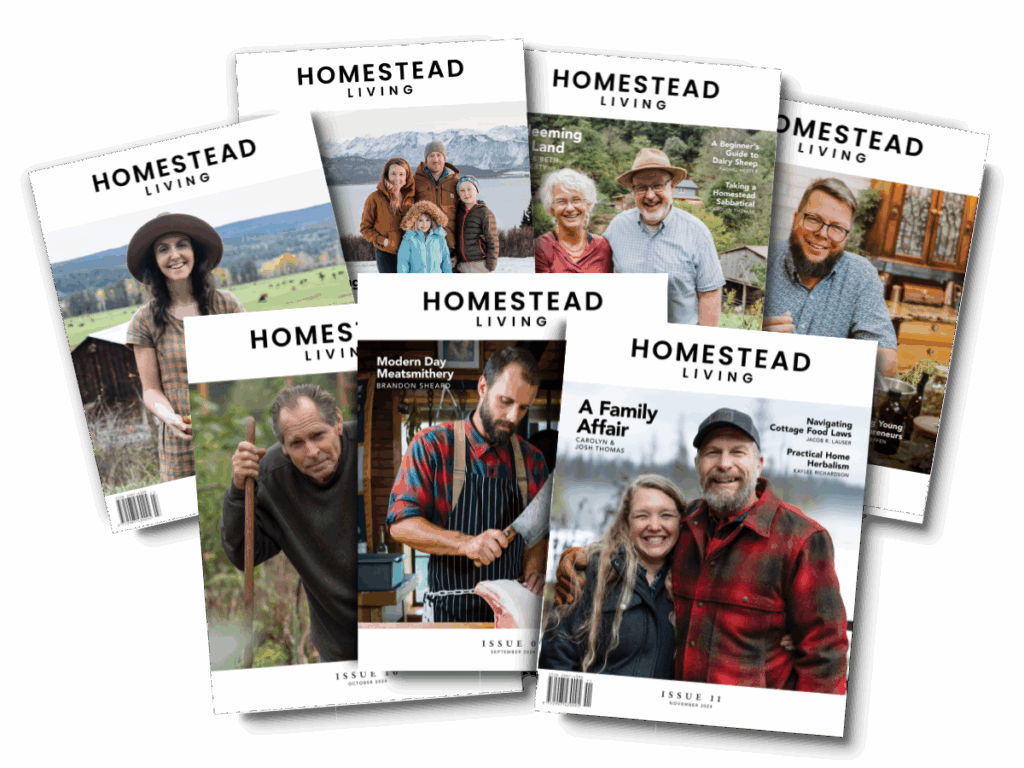
If you liked this episode of The Coop, you’ll love Homestead Living magazine. It’s so much more than just a gorgeous bi-monthly homesteading magazine … it’s your always-available homesteading mentor in print.
Written by homesteaders for homesteaders, Homestead Living is FILLED with the advice, wisdom, and inspiration you need to make your dreams a reality.
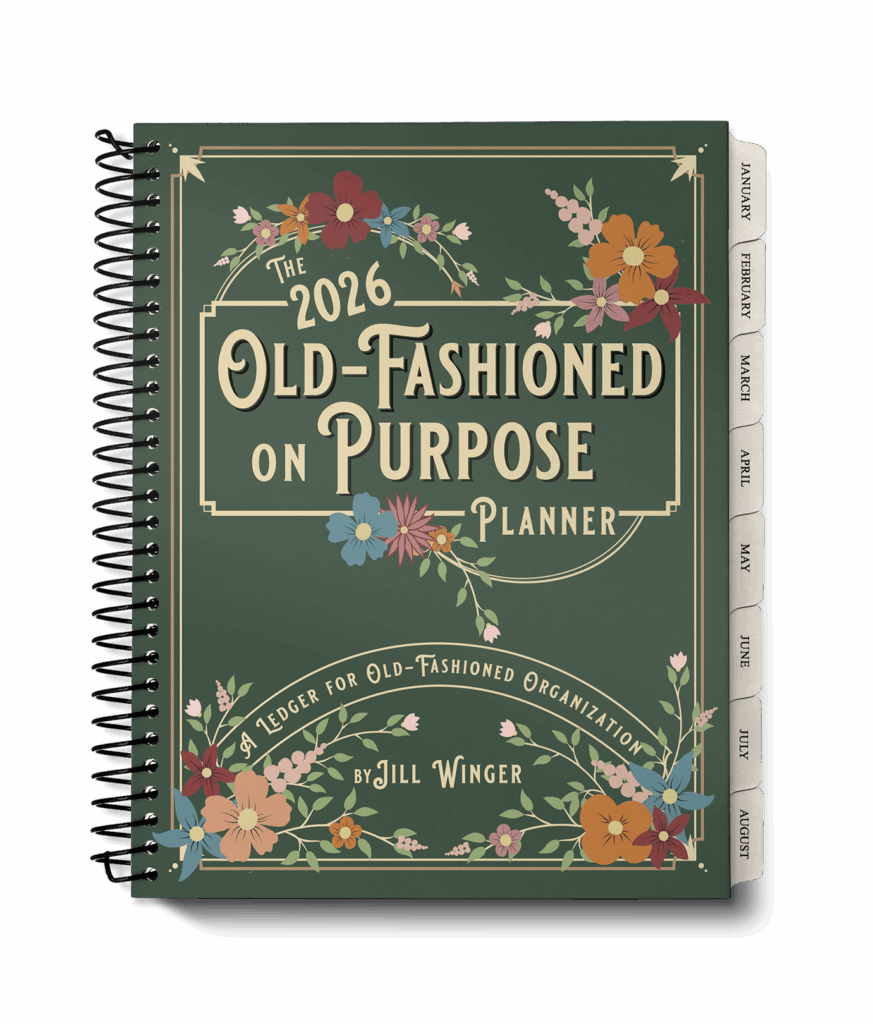
THE OLD-FASHIONED ON PURPOSE PLANNER by JILL WINGER
The 2026 Old-Fashioned on Purpose Planner is here to help you juggle the beautiful chaos of your old-fashioned life. Designed by a homesteader (our great friend Jill Winger) for homesteaders, this isn’t just a planner … it’s your partner in turning big dreams into reality, one checked-off task at a time.
Trusted Partners at Homestead Living

You can view all offers from our trusted partners – including Brunt Workwear, Rustic Strength, and Irish Eyes Garden Seeds – on our 2025 Gift Guide here.
Azure Standard — Abundance, health, and community.
This episode is brought to you by Azure Standard.
Family-owned since the ‘70s, Azure delivers real food to your doorstep or a local drop point.
Completely organic, non-GMO, no junk additives. Over 13,000 vetted items: from bulk grains, nuts, and oils, to frozen meats, and clean household goods.
Skip the grocery markup. Order what your family actually needs, save big on quality, and pick up with neighbors who care about the same things you do.
Leave a Reply