
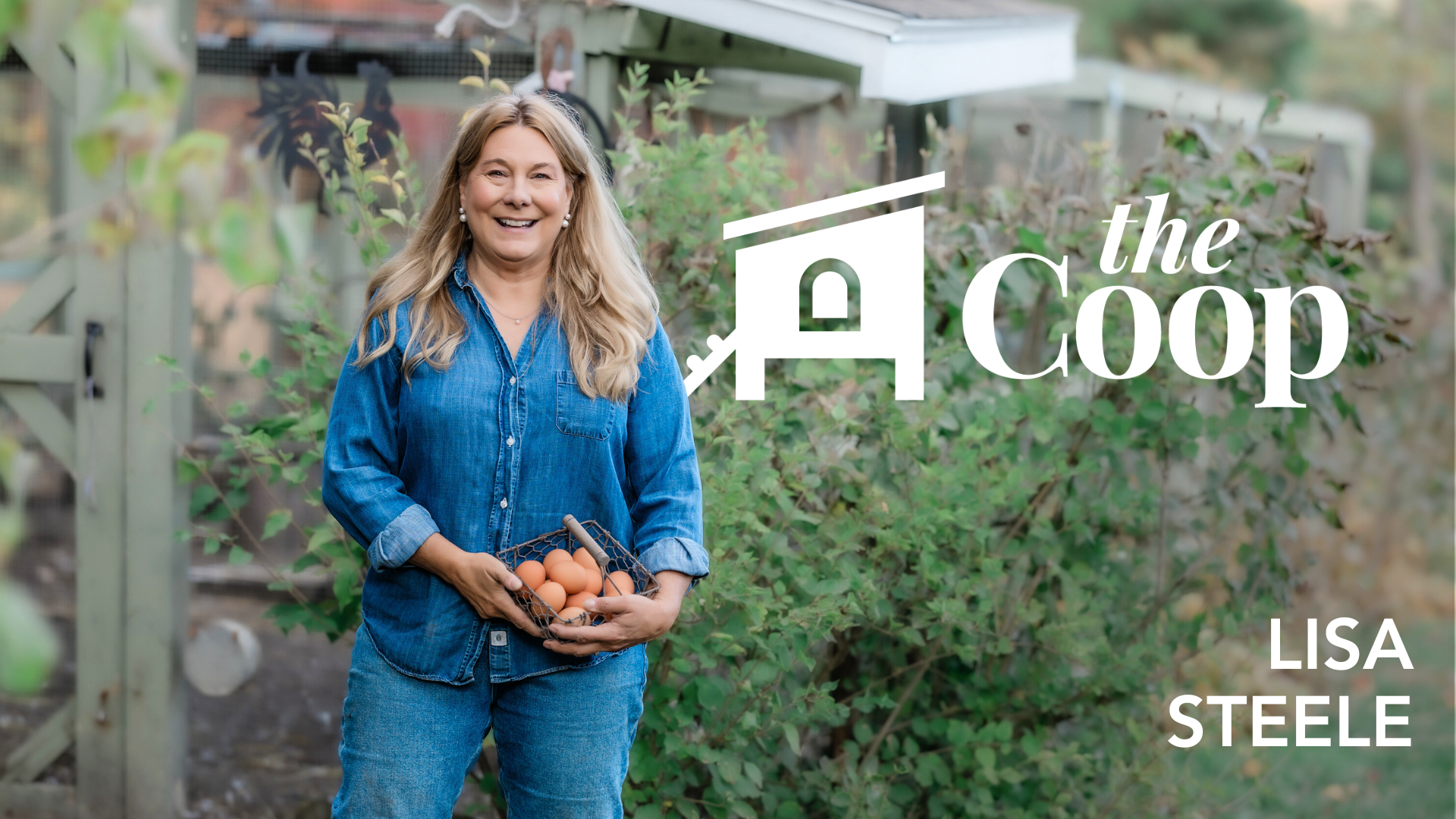



Lisa Steele didn’t set out to become the “queen of the coop.”
She’s a fifth-generation chicken keeper who left her rural roots for a career on Wall Street, only to return back to pick up where she left off. She’s been raising backyard chickens, ducks, and geese the natural way since 2009 when she launched her popular blog and brand, Fresh Eggs Daily.
Today, Lisa has an audience of nearly a million followers and has become a trusted voice in the backyard chicken keeping world. Her book Gardening with Chickens (first released 2016) showed how flocks and gardens can support each other instead of fight.
Ten years later, the updated anniversary edition refines those systems with lessons from a decade more of real life:
- Better timing for free-ranging
- Smarter herb use
- Practical problem-solving for small spaces
- Experience and advice that works for all gardening zones
And more!
The core truth remains disarmingly simple: chickens scratch, fertilize, debug; gardens provide greens, bugs, scraps.
Done right, you cut feed costs, build soil, raise healthier birds … all while keeping things beautiful and fun.
If you want nutrient-dense eggs with deep yellow yolks, organic veggies that grow abundantly, and a setup that feels like a partnership instead of a battle, this conversation delivers.
In this episode, Anna and Lisa cover:
- Lisa’s journey from Wall Street back to her rural roots
- Why she chooses natural herbs over chemicals for keeping her flock healthy
- Safe plants vs. toxic ones for chickens
- How chickens can help manage compost, weeds, and garden pests
- Timing free-range access to optimize your garden while protecting your main-season crops
- Chicken tractors, tunnels, and wing clipping: real-world pros and cons
- Decorating the coop for joy (curtains, herbs, and aesthetics for form and function)
- Lessons learned from more than a decade of gardening with chickens
- A sneak peek into Lisa’s updated 10th anniversary edition of her book Gardening with Chickens
About Lisa Steele
Lisa Steele is a fifth-generation chicken keeper, Maine Master Gardener, cookbook author, and founder of Fresh Eggs Daily. For over 15 years she’s shared practical, natural advice on raising poultry, using herbs, and integrating flocks with gardens. Her global audience trusts her experience-based, no-nonsense approach. She lives and farms in Maine.
The show notes …
0:00 – Intro
4:54 – From Wall Street to 5th Gen Chicken Keeper
8:30 – The Natural Approach: Herbs & Holistic Health
15:03 – Feeding the Flock
18:15 – Which Herbs are Safe for Chickens?
24:39 – Lisa’s Iconic Coop
28:20 – Feeding Scraps
35:43 – The Compost Strategy & Closed Loop Systems
41:26 – Protecting the Garden During Growing Season
46:41 – Chicken Tractors vs. Chicken Tunnels
50:37 – “Gardening with Chickens” 10th Anniversary Edition
58:02 – The Rise of Homesteading
1:02:17 – Defining Modern Homesteading
1:05:11 – You Don’t Have to Do It All
1:05:39 – Find More of Lisa’s Content
Lisa Steele:
Funny enough, because people always call chickens the gateway animal now, and it really is true. It’s kind of easy just to slide into the chickens because they’re small and they’re easy and whatever. A lot of people
Anna Sakawsky:
Think of you first when they think of who would know, who would have the answer to this chicken keeping problem, or especially if you’re what we want to go the natural route. A lot of what you talk about is creating these closed loop systems where your chickens are working together with your garden.
Lisa Steele:
So letting the chickens in before the planting season is wonderful because they get in there, they kind of do what they did in the compost pile, they spread a little manure, they scratch up the dirt, so they’re kind of like rota tilling it for you. They’re loosening the dirt. They’re looking for not only weed seeds that might sprout in your garden, they’ll eat those, they’ll eat bugs that have overwintered bug larva, so they’re really prepping your garden for the planting season.
Anna Sakawsky:
Obviously there is a growing interest in chicken keeping, gardening home setting. As the world gets crazier, more and more people seem to be coming to this lifestyle.
Lisa Steele:
No matter what’s going on in the world, being able to feed your family is never a bad thing and not have to worry. And I mean if you have eggs, eggs are so versatile. They’re such a great protein source that if you don’t have to worry about eggs and you have a small garden, you really can feed your family.
Anna Sakawsky:
Hey everyone. Before we get into today’s episode, I want to tell you about something that we created in partner with Jill Winger of the Prairie Homestead that I genuinely believe makes Homestead life more doable, and that is the Old Fashioned On Purpose Planner. This is not a disposable planner that you toss at the end of the year. Oh no. It is built to live on your counter or desk season after season to refer back to, because inside there are dedicated sections for your kitchen, garden and home where you can track pantry inventory, meal planning projects, livestock production, and the rhythms of daily life that are with you throughout the year. And here is the important part. This planner will not be reprinted. What is available now is the final run. So when they’re gone, they’re gone. And even though we are a little bit into 2026 already, you can pick this up whenever there is no rule that says you need to start on January 1st.
So if you’re craving a little more clarity, a little more intention and a tool that supports the life that you are living, this was made for you. I can genuinely say I love my Old Fashioned on Purpose Planner. As you can see, I’ve already got tons of use out of it, and we’re only a few weeks in to 2026. So you can grab your copy of the Old Fashioned on Purpose Planner right now by visiting homestead living.com, or you can head to the link in the show notes. Hello everyone and welcome back to the Coop. I’m your host, Anna Sikowski, editor in chief of Homestead Living Magazine, and joining me today is someone many of you already know and trust. She is featured on the cover of our upcoming March April issue. She’s the voice behind the wildly popular Fresh Eggs daily platform, and she is one of the people who helped bring Backyard Chicken keeping into the mainstream before it was really trendy, dubbed the Queen of the Coop by the media.
Lisa Steele is a fifth generation chicken keeper, Maine master Gardener cookbook author and the founder of Fresh Eggs Daily, one of the most trusted and recognizable voices in backyard poultry keeping. She’s been sharing time tested practical advice on raising chickens, ducks and geese along with recipes using eggs fresh from the coop and produce fresh from the garden for more than 15 years. Lisa’s journey into home setting is especially compelling because after leaving a successful career on Wall Street, she returned to her roots raising backyard poultry the old timer way, using natural methods, herbs, and a holistic approach that prioritizes healthy flocks and sustainable closed loop systems. Since launching Fresh Eggs Daily in 2009, she has been the sole voice behind the brand building a global audience of nearly a million followers who trust her grounded experience, experience-based approach. Today we’re talking about what she’s learned over the years, not just about chickens, but about gardening, home setting and designing systems where everything works together. We’ll also dig into her newly updated 10th anniversary edition of Gardening With Chickens and why this book matters now more than ever. Lisa, welcome back to the Coop.
Lisa Steele:
Hi, thanks for having me. Great introduction.
Anna Sakawsky:
Oh, awesome. Well, thank you. And for our listeners, I say welcome back to the coop because we actually tried to do this last week and had some tech issues as homesteaders do. Living rurally internet connectivity is sometimes a bit of an issue, so hopefully today everything will go smoothly, but thanks so much for taking time to be with me here again today.
Lisa Steele:
Absolutely.
Anna Sakawsky:
Well, let’s get into it. Let’s start back at the beginning and talk about how you kind of came to be known for chicken keeping and how you started the Fresh Eggs Daily blog and where that all came from. Because as I mentioned, you have a bit of an interesting trajectory. First, you are a fifth generation chicken keeper, so you started off growing up around chickens. This is not new to you, but then you moved away from that. You ended up working on Wall Street, and then you decided to kind of come back to your roots and get back into chicken keeping. So walk me through your journey from first of all, growing up in a chicken keeping family to then working on Wall Street, what you did there, how long you did that for, and then coming back in 2009 and then eventually starting Fresh Eggs Daily.
Lisa Steele:
Yeah, I firmly believe that you end up in life where you belong, and I don’t think that I could have avoided this. I think it was just in my DNA. I did grow up a small town in Massachusetts across the street from my grandparents’, chicken farm. They were legit chicken farmers, two story, two wing chicken barn. They supplied eggs and meat to local restaurants. They sold it locally, whatever. And I had chickens as a kid, small flock. I was in four H and we had a bunny at one point and I go whatever, small, not a farm, just we lived out in the country. And then I decided that there was a big world out there. So I went to college in Rhode Island and I got a degree in accounting and then got a job on Wall Street. So I moved to New York about a year after I graduated, and I worked on Wall Street for probably six or seven years, I guess.
Fun. I mean, I was in my early twenties. It was a lot of young people and it was the eighties, so things were rock and rolling. I mean, there was a lot going on, but I realized it wasn’t what I wanted to do for the rest of my life. It was a lot. It was a rat race and I couldn’t imagine being older and doing that, just the hours and the stress and all that. So long story short, well actually quit that, opened a bookstore, did that for a few years, and then I met my husband. He was in the Navy and stationed in Pensacola, Florida. So I ended up in Florida and then he retired. We moved to Virginia and he was still working for the Navy. I was kind of home not doing a whole lot, and it was 2009 and homesteading goats, everybody was making soap and everybody was making sourdough kind of what everybody did during COVID, but in 2009, and we ended up getting some chickens just kind of stumbling into it.
We had a small barn, small farm, we had two horses and I wasn’t super excited. I had chickens as a kid and they were just chores. We loved them when they were baby chicks and we would name them, and then as soon as they went outside, we lost interest. So I wasn’t a huge fan of chickens, and I remember having brewsters that weren’t friendly at all, but I love animals. And I said, well, we’ll start with the chickens. And then, I mean, funny enough, because people always call chickens the gateway animal now, and it really is true. It’s kind of easy just to slide into the chickens small and they’re easy and whatever. So started raising chickens and just randomly, because I had grown up around them, my grandmother at that point was still alive. She lived to me 99 years old. So I would go home and visit my mom and my grandmother and talk to her about her chickens.
And so I started posting on social media. Facebook was kind of brand new I guess then at the time, and people would ask me questions and I realized that I knew because I had grown up around it. So I started answering questions and started a blog, which was also pretty new at that time. There wasn’t really a ton of information out there for backyard people because I did have to take a crash course. When you’re a kid and you’re just collecting eggs, it’s a lot different than keeping chickens alive. So I did a lot of research. I read a lot of books. There wasn’t really a ton of information for the casual backyard chicken keeper that wanted them as pets with benefits, collect the eggs, but wasn’t hardcore raising them or processing them or whatever. And a lot of the information, all the information out there was if they get sick or injured, they’re probably just going to die and just get another one.
And that wasn’t really my philosophy or what I wanted to do. And since I had always kind of believed in natural herbs and we take echinacea and vitamin C and zinc when we’re sick, I knew that there had to be the same principles with chickens. I didn’t want to start giving them antibiotics and medication. So I started really researching using herbs and natural supplements with the chickens. There wasn’t a ton of information like that out there at the time. There’s a lot more now, but I found it so fascinating and it seemed like it worked. My chickens never got sick. They lived a long time. So I started sharing that information and I think it was very much the right message at the right time for the right group of people because you raise chickens because you want to know what you’re eating and that it’s clean and what your animals are eating, so you don’t want to be giving them medications and antibiotics and things like that.
Anna Sakawsky:
I’m curious to know what your, your grandparents, for example, thought of your approach to chicken keeping at this point because it is very different than if you think about a conventional chicken farm and that’s what you were raised around and that’s how they kept chickens. And then to see you using herbs and going the all natural route and that sort of thing. What were their thoughts? Did they think you were crazy or were they encouraging?
Lisa Steele:
Yeah, I mean, my grandmother said to my mom at one point she said, Lisa names all her chickens. And my mom said, well, I know they’re pets to her. I mean, they had hundreds of chickens. So obviously my grandmother was not raising all, naming all their chickens. And then she said, Lisa puts curtains in her chicken coop. And my mom said, I know she’s enjoying it, let her do her thing. But honestly, I did try to bring back some of the old timers methods. Farmers did hang burlap bags or old feed bags over the front of their nesting boxes, helps to keep the eggs from freezing. It helps to keep a curious chicken from walking by and eating the egg, and it gives broody a more private area. So maybe they weren’t actually sewing curtains and putting tiebacks, but they were using the same principle.
And I do the deep litter method, which is a very old timers method of basically composting inside your coop during the winter instead of constantly cleaning the litter out, you let it build up, you turn it, you introduce oxygen, you add new litter, and you’re creating natural heat as well as microbes that are super beneficial for the chickens. And you save yourself a ton of work in the winter. So a lot of the things that the old timers did made so much sense because they didn’t have a lot of money. Everything had to be economical and efficient. So I have taken some of those ideas and kind of incorporated them into what I’m doing,
Anna Sakawsky:
Kind of a modern version of that. So I mean obviously you became a foundational voice, I guess certainly in the backyard chicken keeping movement, even to this day. There’s other people that are doing this out there that that’s where their area of expertise is. But I think a lot of people think of you first when they think of who would know who would have the answer to this chicken keeping problem or especially if we want to go the natural route. But as you mentioned at the time, and that’s part of why you started sharing this, right? Because people were asking you questions, there wasn’t this information out there. So how did you learn all of this, right? Yes, you grew up in a chicken keeping family, but they were raising chickens in a different way.
Lisa Steele:
Where
Anna Sakawsky:
Did you learn these old timer methods from?
Lisa Steele:
I actually found some great books that were written in the 1960s. There’s an herbal, I forget what it’s called, it’s like the Herbal Guide to Farm and Stable or something like that. And there’s some really great tidbits in there. That’s where I learned about adding garlic to their water, apple cider vinegar to their water. So it took some searching, but I did find some of that. And then early on I was really lucky because I started working with some big brands like Manda Pro and Meyer Hatchery and some of the brands that had AV n vets and poultry scientists on staff. So I had access to those people and could ask them questions, which was super helpful, a microbiologist and just all kinds of people that worked for those brands that were doing a lot of the research into the different things that worked. Funny story, I live in Maine, so I was at the airport one time, I think it was LaGuardia, and it was right when the Purdue ads came out.
Purdue was saying, we feed our chickens parsley in time or whatever it is. They’re standing there with the chickens. Well, there was a guy with a Purdue jacket waiting for the same flight that I was. So I walked over to him and I said, you probably did a lot of studies into whether these herbs really have benefits for the chickens. And he said, oh, absolutely. I mean, obviously we wouldn’t spend the money feeding the chicken’s herbs and making all these commercials if we hadn’t done the studies. And I said, you’re probably not willing to share them, are you? And he said, no,
Anna Sakawsky:
And
Lisa Steele:
I tried, but for me that was big to have a big brand like that, putting the money into something that obviously isn’t inexpensive. They believed that these herbs were keeping their chickens healthier, which I think is huge. And that was years ago. But over the years, I’ve read a lot of studies. There’s a lot of scientific studies especially that come out of India, the Middle East, they do a lot of work with herbs. They don’t have access to a lot of the commercial products that we do, so they are forced to use what they have growing locally, and there’s a lot of really fascinating studies and I just like that kind of stuff.
Anna Sakawsky:
Okay. So I mean obviously that’s a big part of what you do is using herbs, doing things kind of the natural way, trying to create these closed loop systems where your garden is growing. A lot of the things that your chickens need. What does that actually look like on a daily basis? How much are you actually bringing in external inputs, feed, that sort of thing? How much are you feeding them from your land and what does that look like as far as using herbs and incorporating them into their diet or into their coop? What are you doing on a kind of practical level to incorporate these natural methods?
Lisa Steele:
So the first seven years I think that we had chickens. We lived in Virginia, so that was kind of year round. I had a really big herb garden and we had a vegetable garden. We had a compost pile that I could dig worms out of for them. So that was kind of year round that I could grow and really feed them and let them out to free range eating the grass and the weeds and stuff. Here in Maine, obviously there’s snow on the ground for much of the year, so it’s really mostly during the growing season, although I do dry extra herbs, but the chickens have their own herb garden. I planted right next to the coop, kind of a raised bed. And when they’re out free ranging, they have access to it, they can hop in, they can nibble on what they want, they can take their dust baths, whatever.
I have a kitchen garden on our deck for the herbs that we use for cooking because I don’t really want to be cooking with the herbs that the chickens have been rolling around in. But I spend a lot of time watching them and realize that if they go into your vegetable garden, they’re going to eat the entire cucumber plant. They’re going to eat all your lettuce, all your spinach, whatever. But in the herb garden, they pick and choose and they’ll nibble a little bit of this and a little bit of that. Herbs are so jam packed with nutrients and animals I believe, know what they need when they need it, how much, and they realize they don’t have to eat the whole basil plant to get what they need from that plant. So you’d be surprised at how long your garden actually stays. They don’t take it right down to the dirt.
They would a vegetable garden or whatever, which is really fascinating. And I started watching what they were eating, what they were taking their dust baths in. So the things that they take their dust baths in, like the lavender, the rosemary, things like that, mint, those are the things that I tend to cut and put in their nesting boxes and enter their dust bath area in the run. And then the things they were eating, like the basil, cilantro, parsley, those are the things that I tend to dry and either add to their feed or give it to ’em fresh when we have it. And when you start researching the benefits, you realize certain herbs help repel parasites. Certain herbs are calming. Certain herbs do have tons of health benefits internally, so they really do know what they’re doing. If you just watch what they’re doing and what they’re eating, it starts to make a lot of sense.
Anna Sakawsky:
Right. Okay. And so when you mentioned, so I’m trying to go over some of the herbs wondering first of all, from your research, like you say, obviously some have certain medicinal properties. Are they kind of the same properties or do they have the same effects on chickens as they would have on us? Would you use the same herbs for similar? Okay. And first of all, are there any herbs or plants specifically that maybe are bad for chickens or that they shouldn’t have that you maybe should be careful of if you’re going to plant a little herb garden or toss them a handful of something?
Lisa Steele:
Yeah, there are actually a poultry scientist I was talking to once we were talking about exactly that because I was asking him how much of the research that I was reading about human use could be applied to chickens. And he said something very interesting. He said that whether it’s humans or monkeys or birds or whatever, we are like 98% the same as far as our DNA and how our bodies work. And there’s like 2% that makes you a chicken or a monkey or a bird or a human. So yes, generally it’s going to work the same. There are exceptions like dogs can’t have raisins or chocolate. There are certain things that you shouldn’t feed chickens as far as the herbs go, any of the culinary herbs are fine. So anything that you’re going to be cooking with or using in your cooking, those are fine.
Penny Royal is one that you should stay away from. I think that’s in the Mint family, and that’s obviously not a culinary herb anyway. Free is controversial. A lot of people say that they do feed it and it’s okay, but I’ve seen where too much free can be a problem as well as tanzi wormwood. And again, none of those are culinary herbs, so people probably aren’t growing them through own use anyway. It’s something that you probably shouldn’t be feeding to your chickens, but your parsleys and your oregano and cilantro and rosemary, thyme, all that stuff is great for them.
Anna Sakawsky:
Perfect. Yeah, it is funny you saying that we’re only 2% different biologically or whatever. I reminded of, I interviewed Kaylee Richardson of the Honey Stu last year, and she talked about doing the same thing with her bees, that she uses the herbs in the same way where she’ll put some time where they’re going to get it on themselves. So because that helps to protect them from different diseases and that sort of thing. Right. So yeah, I just think it’s funny whether we’re talking about chickens or bees or monkeys, like you said, we can all kind of benefit from the same things. Right. That’s fascinating. And what are some practical ways, so you talk about feeding them herbs, obviously having a little garden for them, they’re going to kind of pack it at whatever’s in there. Are you just tossing them handfuls of herbs as well? Are you mixing it into their feed? How are you actually getting them to eat some of these
Lisa Steele:
Things? Yes, to all the above. Yeah. I mean obviously if they’re out free ranging, which we do limited, we have a lot of predators, but if they go out, they can eat on their own. If I have extra herbs or if I’m cooking with herbs and I cut off the stems or the stalks or there’s something that’s a little wilty or whatever, I just throw that in for them into the run and they can nibble at it, drying herbs and then feeding them through the winter. You can mix ’em into their feed. You can mix ’em into some scrambled eggs, just some oatmeal or whatever. You could just give ’em a bowl of dried herbs that probably pick at it. And you can also make herbal tea where you just basically pea water up and then steep some either fresh or dried herbs in that water, let it cool, give them that. So really any which way that you can figure out to add those herbs to their diet is going to be great.
Anna Sakawsky:
Yeah. You mentioned putting garlic in their water, so getting them to kind of get the medicinal properties of that garlic by drinking the water, are they ever turned off by that? Especially garlic, you hear that that actually repels a lot of things because of the strong scent and flavor and everything. Have you ever had any chickens that are like, no, I don’t want to drink this. This seems gross.
Lisa Steele:
No, and I mean, well, for my baby chicks, I like to give them fresh herbs to get them used to eating them and nibbling ’em at them, and it gives ’em something to do. But same with the garlic, I’ll just put a little garlic, a little apple cider vinegar in the chick’s water, so they get used to it. If you’re starting out with it, I would always put out plain water also, but I’ve also read studies that the chickens actually prefer the water with the apple cider vinegar and or garlic, you can put it at the same time, they don’t have a great sense of taste, so it’s probably not going to turn them off. And our ducks will actually fish the pieces of garlic right out of the water and eat them. So no, I don’t think that that harms them. And I do believe that. Same with people. If you eat a lot of garlic, then people say that ticks or mosquitoes are not going to bother you as much because they don’t like that taste that gets into your body. And I think same with the chickens, I think that having the garlic in their diet helps repel a lot of the parasites that might otherwise bother them.
Anna Sakawsky:
Yeah, that makes sense. Yeah, that’s really interesting. Okay. And another thing that you do is you add herbs to their nesting boxes into the coop itself, right? I do. So what is the reasoning behind that and what specific herbs are you adding in into the nesting boxes?
Lisa Steele:
Yeah, that’s something else that I had read about early on is that scientists have observed wild birds picking flowers and leaves and herbs and things and lining their nests with them. And the thought was that the aromatics will keep bugs like mites and things can get into wild birds nests and be harmful for the baby birds. So they observed the wild birds doing this, and so it kind of just makes sense. So I will put things in like marigolds, marigold petals. A lot of people plant marigolds on the outside of their garden. It’ll keep a lot of the pests away. I put lavender, I put mint, rosemary, pretty much anything that just smells really, really strong. Chickens have almost zero sense of smell, so nothing is going to turn them off. They don’t care. But in addition to hopefully keeping bugs and things out of your nest, it can help keep mice out. Mice don’t love strong smells. They do have a very good sense of smell and they use their noses to detect a predator. So if you put things in your coop that have a strong scent, they cannot detect a predator coming and it makes them a little bit uneasy and they’re not going to want to make a home in your coop because they can’t accurately detect a predator’s presence. This stuff is so fascinating. I just find it all so interesting.
Anna Sakawsky:
It really is fascinating, and yeah, when you think about it, it makes so much sense. Okay, I do want to talk about your coop for a minute because between the herbs and the curtains and the little decor that you have in there, your coop has kind of become a little bit iconic. For anybody who is listening or watching and has not seen photos of Lisa’s coop, you got to go check ’em out. If you have the November, December issue of Homestead Living Magazine, we featured some photos of your cup coupon there. Lisa wrote an article all about decorating your chicken coop for Christmas. It was just kind of a fun article, but it was just, I think it’s inspiring because that’s a lot of the reason why people get into this. Yes, there’s the practical aspect of we want eggs, we want meat, whatever the practical reasons are for chicken keeping, but we want to have fun with it too, right?
As homesteaders, we want to make things fun, and if you can make things beautiful as well, and you’ve really leaned into this, and so Lisa’s coop, you’ve got, like I say, you’ve got the curtains up, you’ve got a little chair in there that they can hop up on. It’s really quite nice, honestly, in your opinion, as somebody who I guess does this online as a bit of an influencer, I’m sure a lot of people probably look at that and go, well, yeah, but that’s just for photos. Do you genuinely keep your coop that way? And how do you keep it looking So cute because chicken started. I do. I
Lisa Steele:
Was heavily influenced by Joanna Gaines years ago. I watched way too much mixer upper, and I thought, wouldn’t it be fun to shiplap the inside of the coop? And I went to Home Depot got all the, they sell shiplap. You just have to nail it up, cut it aside. It’s really easy. So I’m doing it. And then I was thinking, is this crazy to have the entire inside of my coop white? I really loved it though. It brightened everything up. I can’t think it kept the coop warmer. I loved the double wall because it kind of held air in between, so it was kind of like a little insulation. And realistically, I mean, I did that years ago, and sure it needs to be dusted. There’s some cobwebs and things, but it has stayed much cleaner than I expected. The one thing I did though, around the wall behind and to the side of the roosts, which honestly is where most of the poop goes, I put up contact paper.
You can get contact paper that looks like wallpaper. It’s really beautiful and it’s so easy just to sponge off. So I did that because there’s no way you’re getting poop off a shiplap, I can tell you that much. But yeah, it stayed nice. I have curtains. Originally I was sewing the curtains, whatever, throwing them, making tiebacks. Then I realized I could get a curtain rod that has little rings with clips. So all you need to do is cut a piece of material and clip it onto the rings so it’s easy to take off to wash or just throw away when it needs to be. So keeping it clean really is not difficult at all. And it does look really cute. I like the curtains over the windows because when it’s cold in the winter, I can shut them. So I think it keeps in the body heat a little bit. And then of course in the summer I can shut ’em to keep the sun out. So again, okay, I get a lot of flack for doing things that maybe seem a little like whatever, but realistically, most of them do have a very functional and practical purpose bottom line.
Anna Sakawsky:
Yeah, absolutely. I mean, you think about it, we have curtains for reasons other than aesthetics and that sort of thing in our home. It’s kind of after the conversation about herbs and stuff that what’s good for us is good for our animals as well. I mean, maybe not everything or to the nth degree kind of thing, but if it makes sense on a practical level, why not? And if you’re having fun with it, absolutely. Why not? I think it’s awesome. Yeah. So I mean, obviously if I were a chicken, I would want to live in your coop. It is gorgeous. You take very good care of your animals. You’ve got herbs in there, everything smells nice. You talked also about mixing herbs into eggs and that sort of thing. I’m curious what other types of things you feed them. I mean, most backyard chicken keepers, I would say homesteaders, that sort of thing.
We kind of all know or have the chicken bucket or we always have a bowl of scraps that’s going out to the coop, that sort of thing. And they’re obviously great because they can make use of all that stuff. But is there anything else specifically that you try to make sure that your chickens get, again, feeding them back some of their eggs? Do you feed them? I know people will feed them crushed egg shells, that sort of thing. What other types of foods that are maybe kind of naturally byproducts from your property, the things that you’re growing or things that are coming out of your kitchen? Are you making sure that the chickens are
Lisa Steele:
Getting Yeah, definitely to the eggshells. I mean, anybody who’s not feeding the eggshells back to their chickens, it’s a free, very available source of calcium. And my grandmother was not going out and buying crushed oyster shell. She was crushing those eggshells and feeding ’em back. And people overcomplicate that they do not need to be baked. They do not need to be pulverized. In fact, they shouldn’t be pulverized. They absorb a battery if they’re in a little bit bigger pieces. So I’ll just take my fingers and crush ’em up after I’ve cracked the egg. If I have too many and I’m not going to give ’em right away, I will pull the membrane out because they just dry a lot better without the membrane, but they can just air dry and then you can just crush ’em with your hands or with a rolling pin. So people overcomplicate that. I see so many people on social media saying that you have to bake ’em and then pul them. And honestly, if I break an egg in the coop or if I go down in once cracked, I just throw the eggshell halves into the run and the ducks eat ’em like potato chips. They don’t care. They love ’em. So that’s eggshells.
Anna Sakawsky:
I was just going to say, I’ve noticed too, if an egg gets broken in the coop, one knocks one on the ground or something while I’m collecting them or whatever, they love the eggs. And again, you talk a lot about how chickens, animals in general seem to be really intuitive and know what they need. I remember being freaked out about it at first when I first got chickens. I’m like, oh my God, they’re eating their own eggs. That can’t be good. But again, they seem to really enjoy it. I figure it’s got to be good protein and calcium from the egg shell and everything like that. And so every once in a while too, I’ll just smash one in there and let them have it. Do you do that kind of thing too? Will you just kind of feed some back to ’em? Every once in a while?
Lisa Steele:
I do. And if you want to get rage bait on social media, just smash an egg on the ground and let your chickens have at it. I do believe that. I think that most of the people who have problems with their chickens eating eggs, grabbing them themselves is because they’re not getting enough calcium or they’re not getting what they need. And I think if you give the chickens the eggs, whether they’re cooked or raw, it’s going to give ’em what they need. They’re not going to go looking for something else. I have never had a problem with my chickens just going and finding eggs and eating them, and I same as you. If an egg cracks or I just don’t feel like carrying it back to the house, I just smash it on the ground. They eat it, they’re fine. But if you are worried about that, you can always cook ’em, scramble ’em up or whatever. But eggs, before a chick hatches, it absorbs the yolk of the egg that it’s in, and that’s the nutrition that it has for the first 48 hours or so. An egg has every nutrient that you need, whether us or chickens need for life, except for vitamin C, it’s almost like the most complete food that there is. So feeding your chicken’s eggs is great.
Anna Sakawsky:
Okay, good. That’s really good to know. Yeah, I have wondered about that. But I’ve also noticed same thing, like you said, they don’t go and just eat their eggs. If one kind of smashes and yolk is out and whatever, then they’ll peck at it. But they’re not looking at eggs as a food source, right?
Lisa Steele:
As long as you regularly, as long as they have a good diet, a balanced diet, maybe if they’re bored, it can happen. But yeah,
Anna Sakawsky:
This episode is brought to you by Azure Standard Family owned since the 1970s. Azure Standard is on a mission to make real food more accessible by delivering it straight to your doorstep or to a convenient local drop point near you. Everything they offer is completely organic non GMO and free from junk additives you don’t want in your home or in your body. With more than 13,000 carefully vetted products, Azure Standard makes it easy to stock up on what really matters from bulk grains, nuts, and healthy oils to fruits and vegetables, frozen meats, pantry staples, and even clean household goods. And the best part is you skip the grocery store markup. You can order exactly what your family actually needs, save big on high quality food and pick it up alongside neighbors who care about the same things you do, health, sustainability and supporting ethical producers.
And head to azure standard.com right now to get started. Again, that’s azure standard.com. Okay, so we’re going to get into this a little bit more in just a sec too, but creating these closed loop systems producing things on your land that you’re actually feeding back to your chickens, especially from the garden. But just on this topic, I have another quick question for you. What about meat and specifically chicken meat? I have heard mixed things about this that you should not feed your chickens chicken meat, they could develop blood lust or whatever. If you’re cooking chicken in the kitchen or something and you’ve got a little bit of scraps leftover, or I have a toddler that maybe doesn’t finish all his food, do you toss that kind of stuff to them or do you not give them that?
Lisa Steele:
The chickens get, I mean, you should see chickens go out of Turkey carcass from Thanksgiving. They will pick that clean.
Realistically, chickens are cannibals. I mean, they would eat each other if they could. I mean, I’m convinced, but yeah, there’s no such thing as like mad cow disease or there’s no problem with feeding chickens. We don’t eat a ton of chicken, honestly, but I give them meat scraps. I give them, like I said, the Turkey carcass. I give them salmon skin, shrimp shells, lobster shells, all that kind of protein and meat is so great for them. There’s very little. I do have the little bucket next to the stove that my mom had, that my grandmother had, that all chicken keepers have pretty much everything goes into that, except for obviously tea bags of coffee grounds. I don’t go out of my way to put onions in there, but if I have leftover salad or soup or something that has onions in it, I’m not going to pick them out.
I’ll give them the leftovers, but I don’t go out of my way. Avocados, I do steer clear of avocados are toxic to most birds, so you kind of don’t want to give ’em avocado. They don’t love citrus, so I don’t bother to give them orange slices or lemon slices or whatever. Those go in the compost as far as what I cook with. I mean almost everything else. And the healthier you are eating, if you’re a frying chicken every night and eating bagfuls of cookies and giving them the stale cookies and all that, they’re not going to be super healthy. But if you’re eating whole grains and lean meats and a lot of fruits and vegetables and all that, then all of you are trimmings and ends and scraps and stuff should be fine for them.
Anna Sakawsky:
Well, and for anybody listening too who’s like, oh, okay, good. Don’t feed them avocados. They don’t like citrus. No onion peels in there. We talked about this last time when I had you on last week, and it didn’t record right, but I was just saying that we actually, after many years or a number of years now, having chickens and our garden and everything else and kind of having to remap where we should have everything you kind of learn after a while with your property, where things should be. I was mentioning we used to have our compost in the front yard, which is where our main garden is. That’s where we get full sun south facing. But we had a big bindweed problem. And so the bindweed was always growing through the compost bin, but we had this kind of space beside our chicken run that we finally went, well, why don’t we just move the compost back here and there’s a throughway to the garden.
And so we clued in. We moved our compost bin back there. So now everything that we compost goes back there, and then the chickens get let out there and they dig through it. And so our feed bucket is also just the compost bucket, and it all goes into one place. And honestly, we don’t worry. I throw avocado peels in there, I throw citrus peels, I throw onion peels, whatever, it all goes in there. But like you said, I feel like they kind of know what to eat and not eat. I’ve never had an issue with them. And so then therefore, they pick through what they, they eat it out of there, and then the rest just gets composted naturally. But then they’re also in there digging the compost scratching, adding their manure to it, pecking through for bugs. I’ll go in there and turn it every once in a while, and there’s tons of earthworms, which they love and gives them protein.
So just so that people aren’t like, oh, because I remember, especially as a new chicken keeper, new at anything you hear, don’t do something. And it’s like a golden rule. It’s like you think, oh my God, if I do that, the whole world’s going to end. But I think, yeah, don’t worry too much about it. And also, I think it’s, that’s a good example of how you can start to create some of these closed loop systems where these elements are working together. You got the chickens working, the compost, adding to the compost, compost is working for the chickens. They’re packing stuff out of
Lisa Steele:
There. You’re giving them such a variety of things that they can pick and choose. I wouldn’t throw them only onions for a month, but as long as you’re giving them this whole buffet of things, then that’s perfectly fine. And I should also mention that toxic does not mean immediately fatal. So some things have toxins in them, but it doesn’t mean if your chicken eats it, it’s going to kill them. It just means there are toxic substances that might cause anemia or might be harmful if a chicken is already sick or older or whatever. So that’s just to keep in mind, right?
Anna Sakawsky:
Yeah, yeah, for sure. Okay, so let’s talk about more of this idea of creating closed loop systems. This is something that you talk a lot about. I know it’s something that you have talked about a lot in your new book, or actually it’s not a new book, but this is a book that you wrote actually 10 years ago now. 2016, you released a book called Gardening with Chickens, and we’ve just now this year are re-releasing a 10th anniversary edition of Gardening with Chickens. And a lot of what you talk about is creating these closed loop systems where your chickens are working together with your garden. So first of all, what are some of the different ways that is working on your property? How are your chickens supporting your garden and your garden supporting your chickens?
Lisa Steele:
Yeah, I think a lot of people get discouraged because they get chickens, and we talked about this last time. They get chickens and they see these idyllic videos on social media where the chickens are just kind of roaming through the lawn or roaming through the garden, and then they get chickens and the chickens destroy their lawn, destroy all their landscaping, all their mulch, eat their whole garden, and they just get discouraged and pen up the chickens. And that really is not using them to their best advantage. So absolutely, if you have chickens, you’re going to have to fence your garden in if you’re going to let them out at all. I mean, that’s just the reality of it because you turn your back and all your vegetables will be gone. But the key is timing. So letting the chickens in before the planting season is wonderful because they get in there, they kind of do what they did in the compost pile.
They spread a little manure, they scratch up the dirt. So they’re kind of like rota tilling it for you. They’re loosening the dirt. They’re looking for not only weed seeds that might sprout in your garden, they’ll eat those. They’ll eat bugs that have overwintered bug larvae. So they’re really prepping your garden for the planting season. So then once you’re ready to plant, get them out of there. Make sure they don’t have access when they’re small seedlings in that they will just destroy them. And then during the growing season, I generally don’t let them in the garden either. Unless you’re going to really closely supervise and you only have a few chickens, they’re just going to destroy everything. But then once you’ve harvested all your vegetables in the fall, let them back in because again, they’ll turn the soil over any stalks or stems or plants that are left, maybe there’s a couple tomatoes that were bug eaten, some things that are a little past their prime.
They’ll eat all of those. They will eat bugs that we’re going to hang around for the winter. So they really do a great job of prepping the soil and then after the season, kind of getting it ready for the off season. And of course, all winter if you’re not planting anything, you can let them roam around as much as they want, but it really is just about the timing and then putting them to work. And then of course, even during the growing season when they’re not allowed in the garden, you have to thin your seedlings because you plant and then everything’s too close together. So you thin those seedlings, well give them to the chickens. They’re like, I mean, they’re super nutritious and they’re going to love ’em. So they can still help you out during the growing season. Or you find the zucchini that was under the leaf and now it’s like three feet long. It’s just going to be too dry and not good to eat. Slice it up and give it to the chickens. Of course, you should always share whatever you’re growing contributed the manure and stuff. So they deserve to share in the harvest as well.
Anna Sakawsky:
Yeah, for sure. And bugs too. You pick off a tomato horn worm or something like that, throw that to the chickens first of all. Then you actually make sure you eliminate that problem or that particular bug anyway. You’re not tossing it somewhere, whatever. But that’s great extra protein for them too, right? Yeah. And I like that you obviously bring up the fact that they can support each other. So the chickens are digging and scratching, turning your soil, debugging everything, eating stuff that needs to be eaten, but then that you’re also keeping them away from your main season garden. Because the reality is that they will, yeah, they’ll eat the weeds, they’ll eat the bugs, but they’ll also eat plants and that sort of thing too, and they’ll totally dig up your beds. And I just think that it’s something that gets romanticized a bit. I think people see it again online or wherever they get the idea that like, oh, I’m just going to have my chickens free range everywhere, and they’re just going to be wandering through the gardens and it’s going to look like a little, I don’t know, Beatrix Potter story.
But then they get them and they try to do this, and they realize that like, oh my God, this isn’t actually as easy as I thought it would be, and they just ruined everything. And I ate something that I spent four months growing or destroyed my garden bed or pooped all over my deck, whatever it is. And then like you say, then sometimes they go to the extreme and they’re like, okay, I just can’t let them out, which isn’t good for them either, and kind of ruins any romanticism that is left. So I think it’s nice that there’s a bit of a happy medium, and it’s all about a timing, so letting them in at a certain time, then keeping them out of the main season garden. But what about during that main season? So you said fence your garden. Do you keep your chickens in their run or do you still let them free range and then just protect the garden area? How do you kind of balance that during the summer season?
Lisa Steele:
Yeah, that’s the easiest thing to do. And then I also, I use chicken wire CLOs. You can either buy them or I make ’em out of tomato cages upside down and just put chicken wire around it. And I plop those over my other plants, not just your vegetable garden. I mean, they’re going to ruin your flower beds and all your landscaping and whatever. So when some of the other plants and bushes and stuff are small, I just plop. I mean, we have cages all over everything because I just don’t want them destroying the plants while they’re small. And then once they’re a foot or two tall, even if they eat some of the lower branches and stuff, they’ll be fine. But I do protect individual plants that way in the landscaping around the house and everything. But the easiest thing is to get a fence around your garden.
And it doesn’t have to be super tall like we were talking, but if it’s a post fence where the chickens can flatter and flap up and then perch and then hop over, they’re going to get over a much higher fence than if you just have a flimsy, like that plastic, the bird netting or whatever that’s called is really good to use. Take metal spikes and use them at the corners or stakes or whatever, and just put that flimsy fencing around because chickens have a harder time getting over that because there’s nothing for them to go up perch and over. They kind of have to clear it all in one movement, and that’s going to be really tough for them. So I find that that actually works better than a more well fence, probably going to have to, like you said, you’ve had chickens get over a five foot fence?
Anna Sakawsky:
Yeah, yeah. Oh, it’s funny. Yeah, we were talking about this last time I had you on here. And yeah, my chickens will get up. We have basically a five or six foot fence, but it’s got posts on top that they can get up and roosts there, get up on top and then hop over. Whereas we have a shorter four foot fence that kind of keeps them in their run, but it doesn’t have that top to it. And so they have a much harder time. They don’t get out of that one as much.
Lisa Steele:
And
Anna Sakawsky:
Then I wanted to talk to you, we did mention this last time, but what is your philosophy on clipping wings? Because we have done a bit of both. We’ve had some sneaky chickens that we just because we are on a pretty small property where we have neighbors next door, we’ve had a couple chickens that just won’t stay in the yard, and our neighbors are so good about it, but rather than having to be going and getting them all the time or building Fort Knox, we did decide to clip a few of the wings from the research we’ve done. It’s kind of like clipping nails. It doesn’t necessarily hurt them, but there are always pros and cons. What’s your take on clipping wings?
Lisa Steele:
I don’t love it. I don’t like the way it looks. First of all, you are kind of clipping the ends of the wing off. You’re only supposed to, do you do one wing or both?
Anna Sakawsky:
We’ve done both when we’ve done it.
Lisa Steele:
Okay. Because actually I’ve never actually done it, but from what I understand is you’re supposed to do one because it really throws off the balance. The balance. I personally don’t do it because chickens are super vulnerable when they’re out free ranging and really their only defense is to get up into a tree or onto something or the roof of the coop or whatever. And so you’re kind of taking away their only defense. So you have to weigh, like you said, I mean if they hop over your fence and get hit by a car, that’s not good either. So you got to decide what’s the best for you. But yeah, for us, I’ve never done it. I do want to leave them that one little glimmer of hope if they happen to see a fox or coyote or something like that and they need to get away fast.
Anna Sakawsky:
Yeah, that makes sense too. And that’s the thing is we’re always kind of weighing out, if we do this, then we’re creating this problem on this end, but if we leave it this way, then we’ve got this problem. So what’s kind of better and worse now? What are your thoughts on chicken tractors? Because I know that people will use chicken tractors as a way to let their hands or their chickens free range as in get around their property, pack it and scratch at different areas, that sort of thing, get out of the main coop and run, but still be protected. Do you use anything like that?
Lisa Steele:
I mean, we have a pretty large property, and I mean, our grass is never going to win any awards anyway, so I don’t really care if they are all over the place, whatever. Personally, I don’t love the tractors, but I do believe that you can be talking about a couple different things. If you’re talking about a tractor that’s about the size of one of those little starter coops, I don’t love them because they’re still not giving the chickens much room to exercise. They can’t run, they can’t chase butterflies. They’re still in a pretty small confined space. But I have seen tractors that people actually pull with a tractor that are pretty large and that do give the chickens a lot of room and they can move it around to different spots, give the run a break. So yeah, it depends on what you’re talking about. In general, I’m not a huge fan. They’re also not super predator proof because something can dig under them pretty easily. So if you’re planning on keeping your chickens in an overnight, probably not a great idea. But you said you’ve used them pretty successfully.
Anna Sakawsky:
Well, we built one a few years ago and we used it successfully, but the problem for us is we are only on a quarter acre, so there’s only so many places to move it to, so it didn’t make a lot of sense. So we ended up just selling it. And then now what we’ve done, again, after many years of observation on our property, and so we moved the compost bin back to where the chickens are, and there’s kind of a throughway there, but we didn’t want them just being able to get out into the garden whenever, because like you said, if it’s during the main growing season, they can destroy things. And so we wanted to control access a bit, but we’ve had this bindweed issue as well that we’ve been trying to deal with. And especially along the fence line, it’s a big problem because it’s like coming over from the neighbor’s yard and it’s really hard to totally eradicate it there.
So my husband actually came up with the idea of building a chicken tunnel, so it’s kind of like a chicken wire tunnel that we built along the fence. So they have their coop and their main, they actually run, they’re going to just take over the whole property soon because first they had their coop and their little main outdoor run. Then that outdoor run expanded to include the area with the compost and the whole one side of the backyard. And now they also have this chicken tunnel that they can access anytime that goes all the way down the front yard. And then like you say, in the spring and fall and in the off season, they’re allowed just in the garden in general, which is fenced off because we also have deer. So they’re protected at least somewhat in there. They’re not going to just wander away.
But that has worked actually pretty well so far. The chicken tunnel, we have no sign. I mean, it’s the off season, we’ll see in the summer, but it gives them a lot more room to roam and no bind. Wheat has come back yet. So they’re kind of, again, a way of having them. They’re getting some extra space, they’re getting some extra food by being able to forge along the fence line. And then we’re also taking care of an issue that would take a lot of manpower to deal with too. So I think it just hearkens back to this idea of the closed loop system, that there’s many different ways to have your chickens or your animals working with your garden or your property and vice versa, right?
Lisa Steele:
Yeah. And I love the idea about a tunnel around the perimeter of your garden, because if your chickens are running around in that all day, grasshoppers and other bugs that are trying to get into your garden, they’re hopefully going to intercept them. So it’s great protein for the chickens. And then you’ll see fewer bugs in the garden, which is always the idea. You don’t want to be spraying your garden with pesticides, and that’s not why we grow our own food. So yeah, chickens, they can be super helpful, but they just have to be supervised really carefully.
Anna Sakawsky:
Yeah. Well, and again, you talk a lot about that in your book, which you have re-released, it’s actually coming out with Homestead Living next month, it’ll be next month once this podcast airs March, 2026. So talk to me a little bit about what people can expect from this book. First of all, you wrote it initially back in 2016, so what problem were you trying to solve for people back then? What information did you share in the original release? And then what new perspectives or lessons have you learned over the past 10 years that made you feel like it was time to revisit and expand the book and re-release it this year?
Lisa Steele:
Yeah, it was my third book, I believe, and I had written kind of a basic chicken keeping book, a basic duck keeping book, and I really was working a lot with the herbs. We had a garden, we lived in Virginia, and I just thought it was a really interesting topic and there was a lot to say about it. And I was going to gardening conferences at the time because I am interested in gardening. And it was amazing. I many gardeners seemed interested in raising chickens, but didn’t really know what that would look like. So I thought it was something that there was a lot to talk about. There was a lot that I had learned just from trying to save our garden from our chickens. But then ironically, as the book was kind of coming out, we were doing the photography before it, we moved to Maine.
So the original book was just from the perspective of living in Virginia. So now 10 years later, I’ve written a bunch more books and I thought it would be really fun for the 10 year anniversary to put out a reissue and started looking at the content and what was in there. And then I realized now I have 10 years of experience living in a cold climate, which brings its own challenges and lessons and all that. So we really took the book down to the bare bones. I mean, at first we were kind of thinking, we’ll just reissue it, clean it up a little, whatever. It really is a completely different book because now I’ve got the perspective of a warm climate and a cold climate. I’ve now got 10 more years of experience, things that I’ve tried, things that work, things that don’t work. So we did pull some things out of the book that maybe weren’t as relevant or I feel like I covered in another book, written a bunch of books since then and we added a lot of things that I had learned different ways.
We added a whole section on keeping your chickens safe from predators, because once you start letting them out, that’s something you really have to focus on. And I think the book didn’t really talk about that as much. Again, it’s the idyllic, you watch a couple reels and you think your chickens are going to be fine, and then you let your chickens out and a hawk grabs one of ’em. So I thought it was important to talk about not only protecting your garden, but protecting your chickens while they’re out helping with your garden. So we did that and it’s more refined, I think, and I think it’s going to be a lot more helpful to people who really want to do this. And yeah, I don’t know. I mean, it is almost like a completely different book. I feel like people who bought the original book, if it was titled something different, wouldn’t even realize that it was the same book because the angle was different.
In the original book, we had a lot of illustrations of garden plots. If you want orange egg yolks, well here are the herbs that you should feed for that. And we did keep that information, but we reworked it in a different way. So I think the biggest thing though is 10 additional years of experience and also different climates. Now I think you can grow the same things because grown watermelon, I’ve grown sweet potatoes up here, grow corn. I feel like you could grow the same things, but the timing is very different. And then of course, because we’re not growing all through the winter, when I clean my coop out, I can take all that chicken manure and straw and feathers and everything and put them right on the garden because by the time we plant in the spring, it’ll have had time to age. You can’t throw fresh manure on the garden because it’s got pathogens in it. It’s probably got weed seeds in it, whatever it’s got in it. And Virginia, we couldn’t really do that because I did grow stuff in the winter, so I didn’t really have a time when the garden was dormant for six or eight months. So yeah, there was just a lot more insight into, but definitely not just for people that live in cold climates because the first seven years I was in hot, humid Virginia.
Anna Sakawsky:
Right. Well, really good to know too because yeah, I think that’s where sometimes homesteaders gardeners, chicken keepers, we can get so wrapped up in our little world and this is how we do it, and this is the month you do this and this is what to grow. And not thinking that will people live in different climates and have access to different things. And so it is kind of nice that it sounds like this will resonate with people no matter where they’re at geographically. I hope so. Yeah. But I would imagine also, no matter what level they’re at, maybe not if you’re at the expert level, but it sounds like it’s good for beginner gardeners and chicken keepers, but also maybe for people that have been doing this for a while and are still just trying to nail down some of these systems or close some of these loops or just manage some of these problems that they’ve had over the years and are just looking for some advice.
Lisa Steele:
Yeah, I mean, I think even an expert gardener who just has gotten chickens is going to find value in it, or someone who’s had chickens for 15 years but really has never thought about integrating them into the garden. So I do it. Or if you’re a beginner in both things, it’s a great time to set up. Like you said, you’ve tried a couple things. We’ve tried a million things. It’s a great time to think about where are you going to put your coop, where are you going to put your garden? So if you’re just starting out with chickens and or gardening, it is a good time to prep and maybe some of these questions that didn’t come up before because you didn’t think about integrating them now, it more important to think about these things. Where’s your water source in relation to where your coop is, where your garden is? There’s just all those considerations.
Anna Sakawsky:
Yeah. Well, I’m sure it can save people a lot of time and hopefully some mistakes. I think it’s important for everybody and everybody is going to make their own mistakes, and that is how you learn. I think those are the biggest opportunities for learning is when we make mistakes ourselves because we go, Ooh, that hurt. I don’t want to do that again. But also if we can learn from somebody else’s experience and mistakes and maybe shave some years off. Like I say, for us, we still haven’t dialed in our property, but we’re getting there. But it’s taken us seven or eight years of really trying different things and observing and trying different things in different areas to really get it. Whereas if somebody’s already done this when you’re reading the book and you’re like, oh yeah, getting these ideas right from the start so that maybe you can put some of these systems in place from the start and save yourself some time and heartache.
So it sounds like there’s some great information in there. I’m really looking forward to getting my copy. And I mean obviously there is a growing interest in chicken keeping, gardening home setting. As the world gets crazier, more and more people seem to be coming to this lifestyle. I’m curious to know, because you have been in the online space for a number of years now, 17 years since you started Fresh Eggs Daily, what have you noticed about the people who have come to home setting and chicken keeping over the years? Has there been a pretty steady interest? And I know I think we talked about this last time, but I think you had mentioned it was really big, and I’ve heard this from a few people. It was really big back in 2009, for example, because of the 2008 financial crisis, same kind of thing as COVID where people took an interest because it’s like, oh, maybe our systems are not as stable as we thought they were. Maybe we should be a little bit more self-sufficient, all that stuff. So people took an interest then what have you seen over the years? Has that fluctuated? Has it remained kind of steady? Has it skyrocketed in the last few years? And has the demographic of people that are coming to backyard chicken keeping and home setting changed or has it remained mostly the same?
Lisa Steele:
I think, well, you’re exactly right. 2009 when I got it in, like I said, right place, right time, I mean it seemed like people were nervous, they were out of work, a lot of uncertainty, and so they turned to what can we do to grow and raise and make ourselves more? And then it really kind of leveled off. I think it plateaued for the next couple of years, a lot of years. And then when COVID came, it was like Groundhog Day. It was right back to a lot of brand new people, a lot of people just getting into it. People worried because they went to the store and there were no eggs or things were getting really expensive, a lot of people out of work or staying home. So they had the time they thought. I don’t think a lot of people who started get out of it.
I think very few people start raising chickens and decide it’s not for them. Of course there are some, but I think for the most part, people stick with it. And I know I have people who have been following me since 2009, and it was a much smaller community back then. So I recognize names and the people that would comment all the time. I think the demographic has changed mostly because more areas are allowing chickens, a lot of suburban areas, even inner cities. Every day I get the Google alerts about backyard chickens and it seems like every day there’s another municipality or city or town somewhere petitioning to have chickens or they’re going to let you have more than five chickens or whatever. So I think that in that respect, the demographic has changed because it’s allowing more people to raise chickens that live in different areas. So it’s not just people that live in rural areas. And I think it is a lot of moms in cul-de-sacs and just families, young families, and I think that’s great because I think that no matter what’s going on in the world, being able to feed your family is never a bad thing and not have to worry. I mean, if you have eggs, eggs are so versatile. They’re such a great protein source that
If you don’t have to worry about eggs and you have a small garden, you really can feed your family pretty well.
Anna Sakawsky:
Yeah, for sure. I’m going to end on a question that I’ve asked many of our guests before because on that note that there’s more people in urban settings or suburban settings, folks that are not necessarily rural that are doing this, right? They’re planting a little garden, even if it’s just small, they’re keeping chickens, even if it’s just a few. During COVID people, everybody was starting a sourdough starter and we’re seeing more people come to this and you don’t necessarily need to have a lot of land. You yourself have even called yourself. I think I heard on a podcast before you said, well, I’m kind of a light version of a homesteader. And I think we get it in our mind sometime that in order to do this, to live this lifestyle you need, I always say the 10 acres and the milk cow kind of thing that you need the Joel salad kind of setup.
You need all this land. I hear people saying like, oh, I’d love to do this. I’d love to keep chickens. I’d love to have a garden. I’d love someday. Someday when I hopefully move out, get the land, whatever it is. But they just think, well, but I’m not going to take any action on it until then because I just can’t do it. Whereas I think we’re seeing that you can do it even if you have a smaller space. So I’m just curious, in your own words, how would you describe homesteading as it pertains to modern life? What does that mean to you?
Lisa Steele:
I’m not sure. Well, I guess I like the term because it just basically is saying that you are doing things in your home. I mean, even when I lived in an apartment in New York, I had herbs growing on the window sill, even if that’s the only thing you do. I love fresh herbs. I love cooking with them, and they’re expensive. So if that’s the only thing you do, you can plant a tomato in a pot on your fire escape. I do hear a lot of people say, oh, I wish I could do that, or I wish I can’t wait until the day. And it’s like, well, why wait five chickens don’t take out much more space than a dog. If you have a small coop like the sides of a dog house and a little run attached, a small suburban backyard can handle a couple of chickens. You don’t need 35 chickens or you don’t even need five, you can have three. I would say just do it. I don’t think that waiting until you have the perfect situation makes sense. And anybody can bake bread. You don’t need a farm to bake bread you don’t need. But I will say sourdough is tricky. I’ve killed more sourdough starter than anything, so I wouldn’t start with sourdough. I just find that kind of hard, but regular bread,
Anna Sakawsky:
Funny you say that because I’m the same way. It’s funny, they always like chickens are the gateway to other animals, and they always say sourdough is the gateway to other things, but I find sourdough one of the hardest. I could do it. I baked lots of sourdough in the past, and actually my sourdough starter is incredibly resilient considering how much neglect it gets. But I always find it’s the hardest thing to keep up with because it takes, you have to stay on a schedule. I’m like, oh, I forgot to feed it again. I got to build it back up again. Whereas the chickens are easy. You feed them, you give ’em water, you keep ’em pretty healthy and happy, and they do the work. And again, if you compare ’em with the garden and set certain systems up strategically, they can do a lot of the work out there. I’m not even having to weed parts of it now. I think that in many ways, chicken keeping has been much easier than keeping a sour easy
Lisa Steele:
Once you have your routine down when it’s cold. I mean, I can go down and let them out and feed them, and I swear like three and a half minutes. It’s not like a huge time commitment. You’ve got to be consistent. You’ll be there every day. But yeah, sourdough, I was shocked when sourdough took off during COVID because if anything sourdough would put me off baking bread ever again in my life. I just think it’s one of the hardest things I’ve ever tried to do. So I mean, go figure.
Anna Sakawsky:
Totally. And there’s people, that is their thing. And I just think that that’s important because again, home setting looks very different for everybody. Priorities look different for everybody. Just because I’m doing something one way or you are doing something one way or somebody else is doing something another way, doesn’t mean that you have to do it that same way. You can choose what works for you, what makes the most sense in your life. And that makes you a homesteader too. You don’t do if you’re doing anything at home, I think. Yeah, exactly.
Lisa Steele:
No, absolutely. You do not have to do everything. I’m also a terrible canner. I’ve tried canning and no, not for me. I mean, there’s a reason we have grocery stores, and you can also just freeze vegetables instead of canning them. So if you try something you don’t like it, don’t feel like you have to keep doing it. Absolutely not
Anna Sakawsky:
For sure. Well, I definitely think that chicken keeping is something that if you haven’t tried it, it should be at least something that you should try if you’re able to, because it really is, I think, and I think you would agree, worth it in the end between the eggs and just entertainment that chickens provide. Yeah, I think that that’s definitely something that everybody should at least have some experience with in their life. Well, Lisa, thank you so much for joining me again today. I’m sure that whether our listeners are long time chicken keepers or maybe still just dreaming about bringing home their first flock, they’re going to walk away feeling more encouraged and confident. And just a reminder for anyone who has ever tried to garden with chickens and maybe felt like they were fighting a losing battle, or just for anybody who wants to raise healthier birds while growing better food with fewer outside inputs, Lisa’s newly updated 10th anniversary edition of Gardening With Chickens is an invaluable resource to keep on yourself.
The book builds on the original release with new insights, refined systems, and lessons learned from more than a decade of additional hands-on experience. It officially releases in March, 2026 and is available for pre-order now at homestead living.com/gardening with dash chickens. We will of course link to that in the show notes, so you can check it out there. And also you can check out Lisa’s feature article, which is coming out in the March April issue of Homestead Living. She’s also on the cover. We got some beautiful photos. Again, just between your coop and your property, everything is just, I think it looks very idyllic, but you’re also showing that it can look very, you can do it in a beautiful way, but also in a very practical way. That makes a lot of sense. So the photos were beautiful. Lisa’s graced our cover of the march April issue, and she has also written a story where she’s also sharing some more of her top strategies for creating this kind of symbiotic relationship between your hens and your plants.
So you can visit homestead living.com/subscribe to start your subscription if you have not yet, and to continue learning from Lisa. Of course, you can find her online@fresheggsdaily.com or across all social media platforms as Fresh Eggs Daily. So Lisa, thank you once again. I always enjoy talking to you. Thanks. Before we wrap up today, I just want to thank you, our listeners for being a part of this community. If you’ve been listening for a while and haven’t yet joined us as a subscriber, this is your sign to start your subscription to Homestead Living Magazine. A Homestead Living subscription includes six beautifully printed issues each year, and they’re to be kept dogeared bookmarked, pulled off your shelf, and referred back to you again and again, every issue is filled with practical skills, seasonal guidance, and trusted voices who’ve put in the hours and learned the hard way so that you don’t have to right now, a full year, all six issues is just $49. And it is one of the best ways to support the work that we do here while building a home library that you’ll return to again and again as the editor, I may be a little bit biased, but if you value thoughtful, authentic, grounded guidance from people who don’t just talk the home setting talk, but actually walk the home setting walk, then this magazine was made for you. So you can start your subscription now by heading to homestead living.com/subscribe, or click the link in the show notes.
Resources/Links
Brought to you by
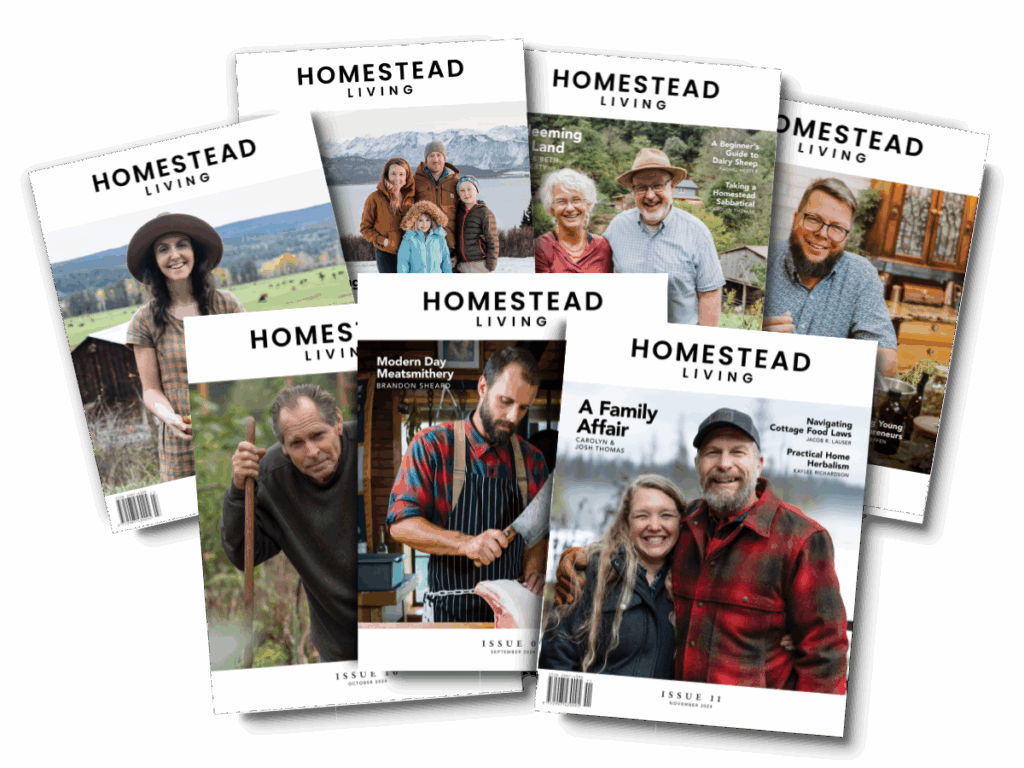
If you liked this episode of The Coop, you’ll love Homestead Living magazine. It’s so much more than just a gorgeous bi-monthly homesteading magazine … it’s your always-available homesteading mentor in print.
Written by homesteaders for homesteaders, Homestead Living is FILLED with the advice, wisdom, and inspiration you need to make your dreams a reality.
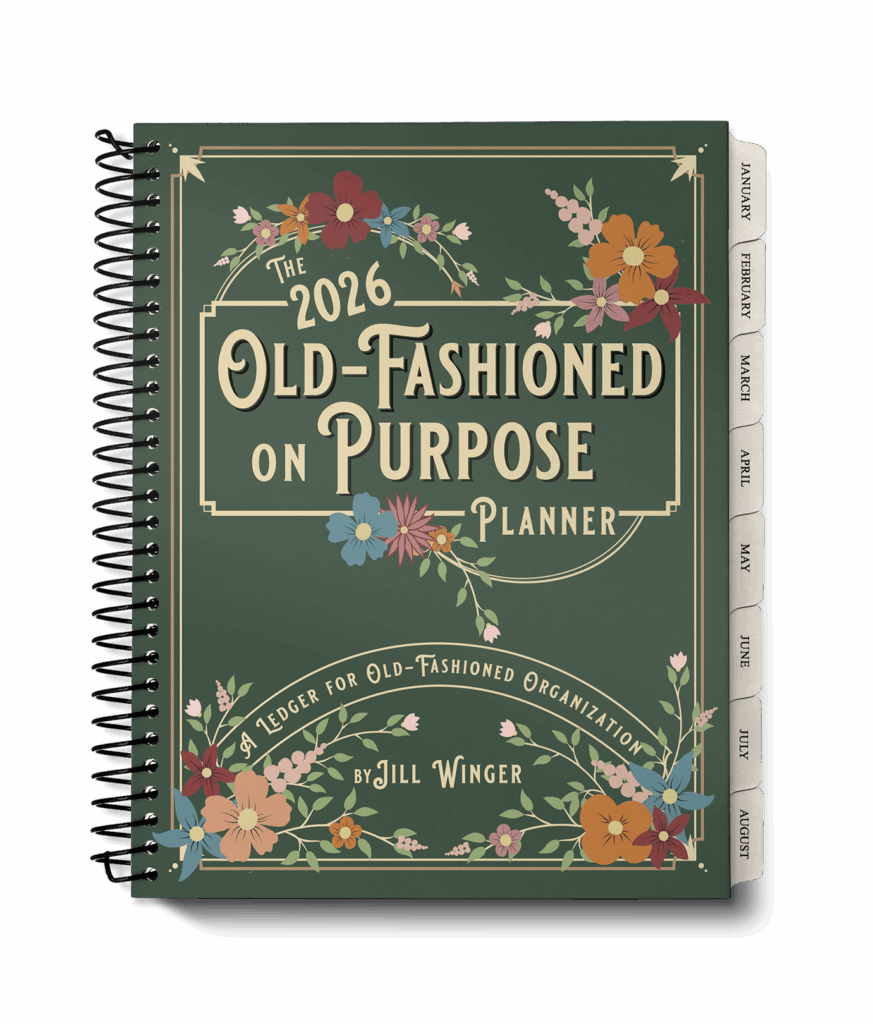
THE OLD-FASHIONED ON PURPOSE PLANNER by JILL WINGER
The 2026 Old-Fashioned on Purpose Planner is here to help you juggle the beautiful chaos of your old-fashioned life. Designed by a homesteader (our great friend Jill Winger) for homesteaders, this isn’t just a planner … it’s your partner in turning big dreams into reality, one checked-off task at a time.
Azure Standard — Abundance, health, and community.

This episode is brought to you by Azure Standard.
Family-owned since the ‘70s, Azure delivers real food to your doorstep or a local drop point.
Completely organic, non-GMO, no junk additives. Over 13,000 vetted items: from bulk grains, nuts, and oils, to frozen meats, and clean household goods.
Skip the grocery markup. Order what your family actually needs, save big on quality, and pick up with neighbors who care about the same things you do.


Leave a Reply