
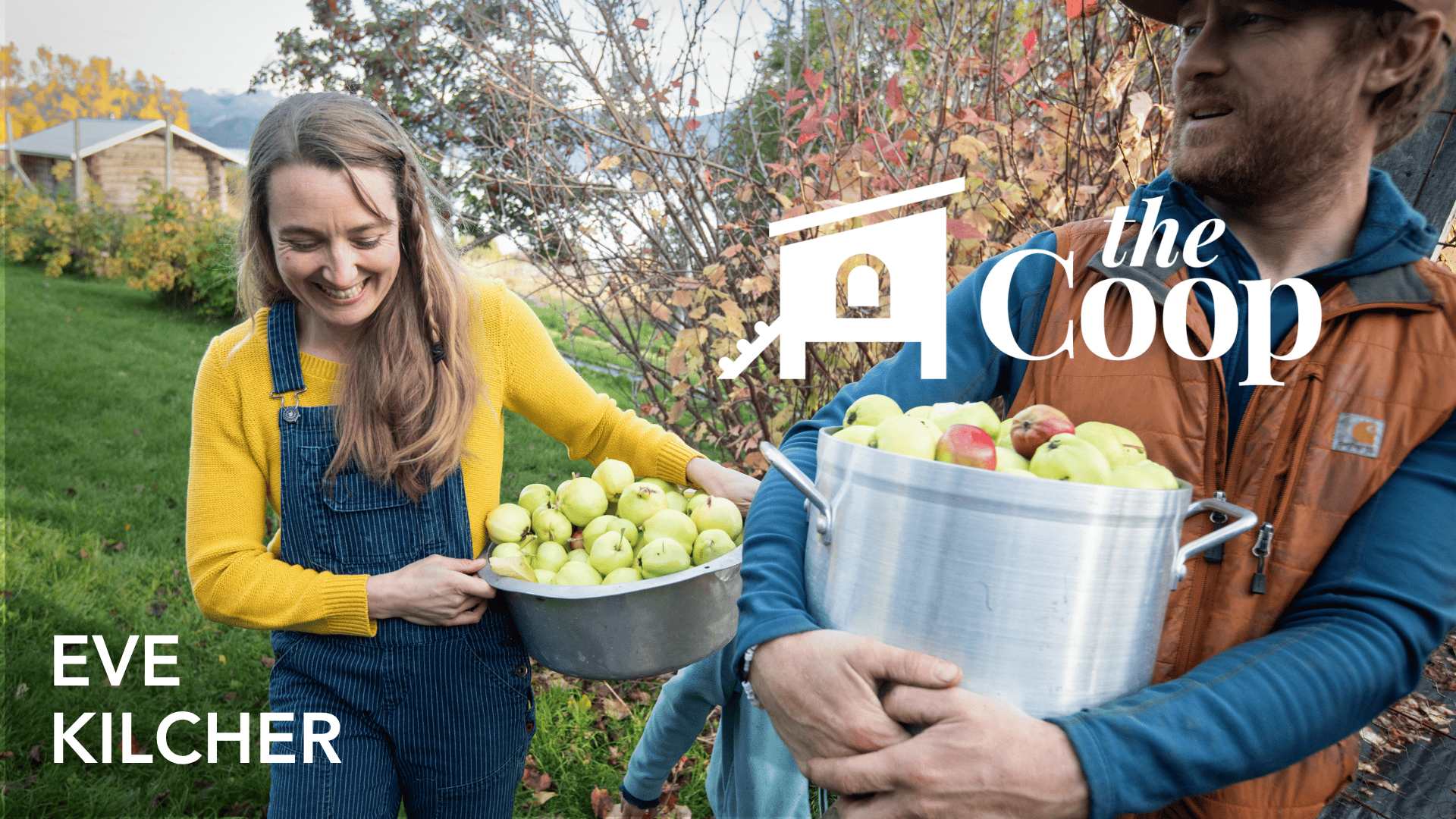



Eve Kilcher is no stranger to homesteading life.
As a former star on Discovery Channel’s Alaska: The Last Frontier and a dedicated homesteader herself, she’s lived the reality of trying to balance it all: growing food, raising animals, and managing a homestead while also juggling the demands of modern life.
In this honest conversation, Eve and host Anna Sakawsky talk about the gap between the romanticized version of homesteading we often see online and what it actually feels like day to day … especially in Alaska, where summer is short and manic and winter is the complete opposite.
This conversation is about the realities of dealing with overwhelm as a modern homesteader, the hard choices we have to make sometimes, and the beauty of learning to let go when something no longer serves you.
Eve shares her decision to get rid of her goats this year, the mental juggle of motherhood and homesteading, how she and her husband, Eivin, have compromised and made tough decisions on what to keep and what to let go of, and why she believes community and working together is more important than trying to do it all alone.
If you’ve ever felt the pressure of trying to keep up with homestead life while dealing with all of the other demands of modern life (especially while watching other people online make it look so easy), this episode is for you.
In this episode, Anna and Eve discuss:
- Why homesteading can feel like it’s at odds with modern life
- The manic pressure of summer in Alaska and vs. the slow, dark winter months
- The emotional decision to let go of animals and projects for mental peace
- The mental juggle of motherhood and homesteading
- Why community and working together is more important than doing it all alone
- Finding peace with imperfection and truly letting go
- The realities of navigating tough decisions with a spouse—especially when you disagree
- What life is like on their 40-acre homestead bordering the larger Kilcher family land
About Eve Kilcher
Eve Kilcher is a homesteader, mother, and former star of the Discovery Channel show Alaska: The Last Frontier. She and her husband Eivin live on 40 acres bordering the larger Kilcher family homestead in Homer, Alaska. Together they raise animals, garden, preserve food, and are now building an online community to help others navigate real homesteading life alongside them.
The show notes …
00:00 – Introduction
07:31 – Family and Homestead Setup
17:38 – Challenges of Alaska’s Seasons: Winter vs. Summer
26:32 – Tension Between Homesteading and Modern Life
37:17 – Paring Back the Garden
44:23 – Losing a Favorite Milk Goat
48:19 – Eve’s Reasons for Wanting to Homestead
51:01 – Navigating a Homestead as a Couple
59:35 – Balancing Motherhood and Homesteading
01:09:06 – Balancing Showing Up Online and Getting Work Done
01:15:32 – How Would You Define Homesteading?
01:24:22 – Upcoming Projects & Where to Find Eve
Eve Kilcher:
I feel like homesteading really needs to be more about community and all working together. It is the being truly being okay when a crop rots in the field because I don’t have time to deal with it and that’s okay.
Anna Sakawsky:
What’s wrong with me? Why can’t I do it? That person’s doing it. But usually again, we’re only being shown one side of it.
Eve Kilcher:
But we had my favorite milk goat dye. We don’t have a vet that can just be there and help us or do a C-section. We didn’t have a lot of options. I know we weren’t at fault, but it just was one of those things where I was like, sorry.
Anna Sakawsky:
Yeah. Oh no, not all. I mean, it is though. It is emotional and this is the real raw part. This episode is brought to you by Azure Standard. Family owned since the 1970s, Azure Standard is on a mission to make real food more accessible by delivering it straight to your doorstep or to a convenient local drop point near you. Everything they offer is completely organic, non- GMO, and free from junk additives you don’t want in your home or in your body. With more than 13,000 carefully vetted products, Azure Standard makes it easy to stock up on what really matters from bulk grains, nuts, and healthy oils to fruits and vegetables, frozen meats, pantry staples, and even clean household goods. And the best part is you skip the grocery store markup. You can order exactly what your family actually needs, save big on high quality food, and pick it up alongside neighbors who care about the same things you do.
Health, sustainability, and supporting ethical producers. You head to azurestandard.com right now to get started. Again, that’s azurestandard.com. Well, hello everyone and a welcome to episode 17 of The Coop. My name is Anna Sokowski and I am the editor-in-chief of Homestead Living Magazine. And today I’m joined by a very special guest for some real talk about what it actually means to homestead in the 21st century and balance homesteading with all of the demands of modern life because so much of what we see nowadays online paints this perfect kind of bucolic picture of homesteading. Too often, we have this image of a woman in a long flowing prairie dress out in her garden with a gaggle of children at her feet, eating carrots out of the ground and tomatoes fresh off the vine. And maybe there’s a loaf of freshly baked bread cooling on the counter of a spotless white kitchen with fresh cut flowers and a vase and baby goats, somehow very clean baby goats, looking very photogenic in an oversized farmhouse sink.
And maybe dad’s a skilled handyman fixing and building things around the homestead while the kids trail along, apprenticing at his side. And in the background, cows are moving and chickens are clocking and everyone lives happily ever after in harmony with the land and the rhythm of the seasons. And honestly, who wouldn’t want a life like this? If only it could be so romantic all the time. But the reality is that homesteading can be and often is messy and frustrating and overwhelming and hard and stressful. It doesn’t exist in a vacuum. It happens alongside all of the other demands and curve balls of modern life, and it can easily become just one more very big thing on an already overflowing to- do list. Kids have school and extracurriculars. Parents may be juggling one or more jobs. Outside the home, emails still need answering, businesses and careers need attention, bills need to be paid.
And all of that exists alongside the planning, planting, building, harvesting, preserving, and everyday attending that a homestead requires. So on this episode of The Coop, I am honored to welcome Eve Kilcher for a conversation about overwhelm and finding that ever-elusive balance as a homesteader and about the heart and often emotional work of deciding what to keep, what to let go of and what enough really looks like. So if Eve’s name sounds familiar, it may be because she was one of the stars of the Discovery Channel show, Alaska, The Last Frontier. This is actually one of the shows that got my husband and I into homesetting in the first place back when we were still living in a city condo. And even though it was reality TV, which kind of comes with its own stigma, like how much is actually reality. But the kilters always felt very genuine to me.
And I know from reading lots of comments online that that is the way they were perceived by much of their audience. They were never overly polished, never pretended that Homestead Life was easy or idyllic all the time. So we also featured Eve and her family, including the story of the Kilcher Family Homestead back in the January 2025 issue of Homestead Living. And we featured that story in our fourth annual collectors edition. So if you missed it, you can go to homesteadliving.com to get your copy. But today I’m excited to have Eve here to talk about the very real issues of managing stress, overwhelm and burnout as a modern homesetter, as well as how to scale back, set realistic expectations and still enjoy the journey even during the busy season. So Eve, welcome to the show.
Eve Kilcher:
Hey, thanks for having me.
Anna Sakawsky:
So I will say, just before we get into all of this, because I could easily kind of just ask you, what’s the answer here? Give us some strategies, give us some tips. And I don’t want to overwhelm you thinking like you have to have all the answers right now because you’re only human too. And I know that these are some things that you’re still trying to figure out for yourself. So I really just want this to be just a real conversation about like, what are some of the actual challenges? Because especially nowadays with so many people sharing their lives online and sharing the homesteading thing, people only want to share the good parts. And sometimes like with reality TV, we’re only curating certain aspects of it and it can set a really unrealistic expectation for other people who want to genuinely live this lifestyle. So I just really want to just be really real about what that looks like for you and all the messy parts of trying to figure it out.
Eve Kilcher:
Well, I think the number one is the answer always changes. If we can count on one thing in this life, it’s things will always change. And I think the more we can find our peace with that and find resilience in change and know that this works right now, but might not work later, I can change my mind, like I can get rid of the goats now, but that doesn’t mean I never get goats again. I think that overarching psychology is the answer. The answer will always change. I’m like …
Anna Sakawsky:
Totally. And you’re right. I think as soon as we embrace that a little bit, like I’ve even been saying that to my husband lately, we’re in a season similar to probably where you are just because of the stage of our lives and we’re building and we’ve got a young family and all these things. And it’s hard sometimes. I’m like, “But this is a season two. This will also not last forever.” And we have to remember that I think so many of us can kind of get caught up in the here and now and think it’s always going to be this way or it always has to be this way and then it can be really hard when.
Eve Kilcher:
Right.
Anna Sakawsky:
Well, before we dive into all this, I do want to just start by having you just paint a picture of your homestead and life because maybe people out there who don’t know you, maybe didn’t watch the show, aren’t familiar with your story. So just kind of give us an idea, where exactly are you located? Who makes up your family there? So your immediate family, but also I know that there’s kind of some extended family in your area and what does your overall setup look like? So how much land do you guys have? What kind of animals do you raise? What does your gardening setup look like and so on?
Eve Kilcher:
Yeah. So we live about 11 miles outside of the city of Homer, or not city at all, the small town of Homer, Alaska. So we have convenience limited because it is a very small town of the whole surrounding area, I believe, including where we live is about 30,000 people, but that’s a very large area. That is not the actual town of Homer. So we have some level of convenience. So our homestead, we live on a piece of 40 acre parcel that is owned by Ivan’s father and who bought it long ago for a great price. And it borders the Kilcher Homestead proper. So that is the homestead that Ivan’s grandfather came to during the whole season when you could come and you could stake your claim on some property and truly homestead, according to the Homestead Act, you better the property than you apply to then own the property.
And that is the piece of property that we adjoin. That is a 600 acre piece and that is in … It’s all quite complicated and I won’t get into it too much, but there are various nonprofits and boards that manage that. And Yule was very smart and put it in the land trust here in Homer so the taxes are not exorbitant on it, but then with that comes limitations of what you can and can’t do with the property and all of that. So we basically border that. That is rolling Haymeadows down to a beach and is with incredible forests and the old Yules old homesteading site on it and various other little buildings. So we kind of have our own little site over here, little homestead of our own, but it, like I said, borders a very much larger homestead where we get our hay from our animals and do the hang and help out as we’re able with all the things that are needed over on the other homestead.
But we also have our own autonomy here.
Anna Sakawsky:
Nice. And I mean, it’s absolutely beautiful. For anybody who hasn’t seen the show, either go back and check out some past episodes or you can check Ivan and Eve out online on their YouTube channel. I’m giving you kind of early plugs. We’ll talk about this at the end too. You guys have a YouTube channel and a website. And of course, there’s some beautiful photos that we got for the magazine as well, but it’s absolutely gorgeous, idyllic looking life for sure, but obviously still works. So on your property, you guys have 40 acres and what kind of animals are you currently raising? How many of them? And yeah, let’s talk about like, you do a lot of the gardening, I know specifically Eve, so how big is your garden? What all are you managing there?
Eve Kilcher:
Yeah. So what I am managing and I end up managing a lot of the homestead lifestyle because as we all know, homesteading is not a big money making endeavor. And when we were no longer being paid to homestead, a. K.a. Discovery paying us to do what we do, we also have to come in and make other money. Somebody has to make more money. And so Ivan has a heavy equipment, construction business, runs heavy equipment. And so a lot of the homesteading falls on me. The gardening, the taking care of the animals, the general, just all that that entails. Of course, he steps in and helps. There are many things that I can’t do on my own, all of that. So what we have here is we have anywhere from two to four horses here. We auto has horses, we have a couple horses, and then we have two goats right now, have had more at different points in time.
We have probably about 20 chickens, that number varies. Three Holland Lop pet lunies. We have two dogs, two cats, and what else do we have? I think that’s it. Two
Anna Sakawsky:
Kids. Two kids is an important
Eve Kilcher:
Part
Anna Sakawsky:
Of managing that homestead, I’m sure.
Eve Kilcher:
Two kids. The most important part to manage the topic priority list. Yeah, two kids. My mom lives here in our basement. We have a daylight basement and has lived here for quite a while now. And she helps out as well with … She’s helped out with kids when they were younger and helps out a lot with the farm now. So we have ebbed and flowed a lot with having ducks or all kinds of animals. We have moved a lot of animals through here and yeah, I’ve gotten rid of things. I’m always dreaming of something else, but that’s kind of currently what we have going on.
Anna Sakawsky:
And then your garden. Let’s talk about your garden in the summer because you do the lion’s share of the gardening, from what I understand.
Eve Kilcher:
Yeah. I do all the gardening. Ivan just helps with any infrastructure that I need or any real heavy lifting. You’ll help with harvesting all the potatoes when there’s a huge project. We all work together on that and do it together. But most of the time I’m doing all of the gardening and general maintenance associated with that. I’d say I probably garden about an acre or an acre and a half worth of land. It’s all very spread out in different places. We have a big orchard, so I’m kind of counting that in there. And then I have a high tunnel that’s 30 by 72 feet. And then I have a big outside garden area that has a lot of my storage crops, cold weather crops. And then I have a big potato patch that’s quite expansive, probably about 30 by 70 feet as well, kind of depending.
And then there are other little plots of things here and there that I plant as well. So that’s the extent of the gardens.
Anna Sakawsky:
And then are you growing all of that for your family or are you … I know for a while anyway, I think you were doing a CSA or the farmer’s market. Are you selling any of that or is it all mainly for you guys?
Eve Kilcher:
It is for me now. I share a lot of it. I’ve gardened with friends of mine that wanted to learn more about gardening from me, like other families. And I’ll donate a lot of excess to our Haven house here, which is like, it’s basically a place for women to go if they’re in a bad situation. Also, I’ll donate to our food pantry when I have extra. So I used to, this all began really and how we ended up being on the show was I took a permaculture course right out of college in Hawaii, got very inspired about growing food, being more self-sufficient and doing it in a more sustainable ecological way. And then I came home and my stepmother has a 40 acre parcel that also borders a different edge of the homestead. And I started a CSA, just a little one for the neighborhood on there.
And so I just had like, I want to say eight families, and that’s where it began. I slowly grew up bigger and bigger as I learned more, as I felt more confident and just basically grew my gardens from there, eventually selling at the farmer’s market in town, always maintaining my CSA to kind of help with the overhead and growing the CSA. And then that was inevitably actually how we, one of the avenues that Discovery found us and then the Kilcher family as a whole.
Anna Sakawsky:
Right. Okay. Okay. And so, but now you’re kind of doing it mostly for your family, which I guess in some ways it takes a little pressure off of having to produce to sell, but at the same time, that probably means that you do a lot of preserving, that you end up with a lot of produce at the end of the season that you feel like you need to do something with less that all go to waste, right?
Eve Kilcher:
Yeah, totally. Totally. And
Anna Sakawsky:
Well, and speaking of the seasons, and I know we talked about this before when we featured you in the magazine, but Alaska’s seasons are so pronounced, right? You guys have these long, dark, very snowy winters and then these short, hot summers, this kind of really short … I think on one of your YouTube videos, which I’ll talk more about in a minute because it’s kind of what led to this interview in the first place, but Ivan had called it, said something about it feeling like it’s manic depressive, right? Yeah, the kind of opposites of summer and winter there, and that in the summer you’re just kind of frantically trying to get everything done. So I imagine that that already sets a lot of the rhythm and pace for the year for all Alaskans and especially as homesteaders, right? Yeah.
Eve Kilcher:
Yeah. Yeah. It is really intense and everyone feels it, not just people that are gardening. It’s also the season to make money. Homer is very much a tourist town, so all … I mean, everyone is under the same pressure, kind of no matter your avenue of making money. Fishermen, same thing. It’s just like we have lots of fishermen here and they have their fishing season and everything hinges on these literally three months. And you need to make the majority of your income within those three months or grow all your vegetables and get it all put up in those three months. So there is a lot of pressure. It’s also like the most beautiful epic time of year when you want to be out recreating, doing all the things, hiking, adventuring, going out on the boat, fishing. And so it’s like all the things need to happen in this extremely tight timeframe.
Anna Sakawsky:
Yeah. No kidding. Well,
Eve Kilcher:
Yeah, the long winter has its whole other set of challenges.
Anna Sakawsky:
Right. Well, I was going to ask that at first when I was kind of writing up my questions, I wanted to ask you what is an average day in the life, but I know that that’s almost impossible to answer because that changes throughout the year. And obviously it changes with the seasons of life too, which we’ll talk about in a sec. But just throughout the year, can you give us an idea of how that contrasts? What does an average kind of winter day look like for you versus a day in the summer when you’re trying to get everything done and put up before the snowfalls?
Eve Kilcher:
Yeah. Yeah. So summer, first and foremost, just the nature of summer here is so manic because it never really gets dark in the peak. So you’re driven, like your body, your whole biology is driven by that. So you can go these long 12, 13, 14 hour days and not stop simply driven by that it doesn’t get dark. There’s nothing that indicates to your body, “Okay, it’s time to be done, go to bed.” So we do pull a lot of really long days in the summer and then winter is the exact opposite. You have like three or four hours to do what you need to do to get outside for your mental health, exercise, fresh air and then … So we do all the outside things and all those things in the summer, like fishing and recreating and gardening and yeah, all that happens in the summer and then all that comes to a screeching halt.
And then you have to like little whiplash and you’re like, okay, now it’s cold, the ground’s frozen, everything’s put away. Now we have to figure out how to slow down and yeah, what do we do in the winter? And I mean, a lot of what I do and what a day looks like, I could say in the winter for us is we’re doing a lot of more like working on the back end of our business, computer work, coming up with other ways to make income in the winter when it’s harder for even to do heavy equipment and all the things that we would normally do in the summer. And so a lot of that’s happening, a lot of like non-glorified computer work and like planning. And then I preserve a lot in the winter. So I do a lot of like just down and dirty, like get the thing processed and like in the freezer or however that looks and then later come back to it and actually like make jam from the frozen berries or can all those frozen tomatoes.
A lot of that does not happen in the summer and doesn’t need to. So like a lot of people imagine and have this visual of like, you’re just preserving and canning and doing all these things in the fall. And I’m like, oh, heck no. I am literally like still in survival mode trying to get everything in before it breezes and like preserved in a capacity that it will last until I have a hot minute to actually have this like luxury to spend the time to make the jam and like do the thing inside.
Anna Sakawsky:
Well, that’s a really good tip just there, right? To just do what you need to do to get it preserved, get it in a form where it’s not going to go bad and then do the more intricate like canning or whatever you’re going to do throughout the winter. We do that with our tomatoes too for similar reasons, just because I don’t have time with everything else, but also because as they come on, I kind of throw them in the freezer and then when I have a big batch, we can do tomato sauce. And that usually happens in like January. So that’s a great tip. But as you said, a couple interesting things you said there, I didn’t think about the light. Yes, I knew because you guys are farther north, it’s darker for longer and lighter, but I didn’t really think about that it’s like most of the day, like in the summer, you’re right, your circadian rhythm probably isn’t even kicking in to say it’s time to go to bed because it’s still light out at nine, 10 o’clock or whatever, right?
And then in the winter it’s the opposite. So that was really interesting. And then what was the other thing? Oh, I can’t remember now. We’ll get into it though too, because I know you mentioned like that it is go time also in the summer, whereas that’s the time to recreate and do all these things as well. And that’s, we’re similar here. Our seasons are not as pronounced again as yours are, but being from Vancouver Island, we’re similar kind of geography and it’s just so beautiful. And we have all these recreational things at our disposal in the summer. And I always feel like we can’t get away. We can’t
Eve Kilcher:
Take
Anna Sakawsky:
Advantage of a lot of them because we’re kind of tied to doing the work here. So yeah, I mean, the other thing too that I thought about is, oh, that was the other thing was that you mentioned that even in the winter, like the work doesn’t necessarily stop. It changes, right? But I think we have, again, this romanticized idea sometimes that homesetting today is just like homesetting in the little house on the prairie days. And even that obviously is way over romanticized. There was a lot of hardships back then and it wasn’t … But we kind of think about, oh, like you say, you do all the hard work and you’re canning and doing this all and it looks so beautiful in the summer and then you have everything stored away for winter and then you just get to sit by the fire and play the fiddle and just have family time and just rest and relax, but especially in the modern day, there’s a lot to continue to keep us busy throughout the winter and a lot of it does include like sitting in front of a computer and doing that kind of work and trying to balance those aspects of your life.
So I know, like I actually love like January and February now because it is a little bit slower here. It is where we don’t have at least the outdoor projects going on, that sort of thing, but we’re just as busy in other ways. And sometimes I feel like even heading into the spring, I’m like, oh, I didn’t even get a rest really. And here we go again back into the really busy season. So do you find that as well, that there’s kind of a constant tension between home setting and the demands of modern life or is it more just that it’s like just the summer when it’s like frantic go time that’s really the problem?
Eve Kilcher:
No, I mean, in all honesty, if we’re being real, I feel like homesteading and modern life are literally like divisive and opposite in so many ways, right? It is so hard to live this homesteading lifestyle with a modern world that is like literally like at war sometimes for me, creating the more challenges and difficulties in doing this homesteading lifestyle, drawing me away from it, whether it be kids going to school and all their activities, and I spend so much time driving around when I really need to be home, like getting that vegetable preserved or getting those weeds out of the garden, there to me feel I’m like, in some ways back then it was simpler. It was definitely simpler because there just wasn’t all these modern expectations, pace of life, like we are expected to do it all and then some and this like grind, we have culturally been trained to just grind and do more and keep up with the, what do you call it?
Keep up with this-
Anna Sakawsky:
Joneses.
Eve Kilcher:
I’m like, what’s that saying? Keep up with the Joneses like, “Oh, well so- and-so seems to be able to do this and all the other things and make sure their kid does like every activity under the sun.” And you’re like, “How the heck are they doing that? Where are the hours in the day?” So it’s like, yes, that old style of living is very romanticized. That was rough. We do have modern conveniences. We do have running water. We do have things that make it easier in the modern day to homestead. There is no doubt there is technology, it is helpful and Ivan is very into that and making systems more efficient, more easy, not going to lie, that makes it easier. But I do sometimes find them quite opposing and like dividing as to like, what is more important because they are so opposite. I have to choose one priority.
I literally can’t balance to opposing things in the same moment.
Anna Sakawsky:
Yeah, that’s so true too. And I agree, there are lots of technologies and conveniences that make even homesteading easier, but if you’re not careful, you can start making life so easy again that you’re moving away from homesetting then and you’re not actually doing it yourself or whatever. So you have to almost find what is your own personal line because I agree everything is about like how efficient can you be. But again, if that’s our number one focus on just being efficient, then we’re probably not homesteading because it’s not the most efficient way to do things anymore. So I think you really have to be intentional about picking and choosing what you want to put your hand to, what is important that you are involved in directly and what you can maybe outsource or have a machine do or whatever, right? That’s only going to get worse with all the AI and technology nowadays, I know that these are questions that everybody’s asking.
How much do humans even need to still be involved in things? But what are we losing then from not being the ones that are putting our hands to some of these things?
Eve Kilcher:
Yeah, exactly. And in the end it is what makes you happy? What do you enjoy? What fills your cup? And what are your priorities? And just always touching back in with that. This is not important to me anymore. I can figure out a different method to get milk. I don’t have to milk twice a day and have milk goats. I really can figure something out. I’m willing to let that go because all these other things are more important or they fill my cup more and get me excited versus drain me and just make everything else so challenging.
Anna Sakawsky:
Well, and that’s the other end of it too, is I think a lot of homesteaders can be kind of a bit of martyrs for the cause. We can get so like, no, I have to do everything. I know I’ve been in seasons like that with the homesteader where I’m like, if I’m not making all the bread and growing all the vegetables and doing everything, and then people sometimes can be judgmental too. And you’re not really a homesteader unless you’re turning your own butter. I think we just need to kind of go easier on ourselves. But I think we are the type of people that are driven. We obviously want to be doing those things. So I think we got to be careful not to fall into maybe a ditch on either side where we’re trying to do too much and we’re killing ourselves trying to do it.
Or we’re just trying to outsource to be more efficient to the point where why are we even doing this all?
Eve Kilcher:
Yeah. And I think just like letting go of things, knowing that you can pick them back up again, it’s like there are seasons of life where I’ve had the capacity, time, capacity in my brain to make all of the bread that we eat. And then there are times where I’m like, I just don’t have the capacity to juggle that one more little thing and we will buy our bread. And then I get to get back into it and get excited about it again, get a break from it, whatever that is. It’s that I think a lot of times we feel like, oh, if I stop doing this or get rid of this or take this off my plate, it’s like a forever thing. And I’m like, not necessarily. As your children change or their interests change or well, they leave the house. I’m like, I will have a lot more capacity to focus on other things.
It’s just in this season, that isn’t what’s making sense.
Anna Sakawsky:
Totally. Well, okay. So let’s talk about this season a bit because you and Ivan actually recently made a YouTube video on your channel called We Need to Talk. So that was a good little draw. That headline right there, I think was the original reason I watched it. And I actually saw that it has like some of the highest views on your channel. And it was just a real conversation about the realities of homesteading and how taxing this life can be and how you guys are navigating it in the season that you’re in with your kids at the age they are and all these different things. And obviously that resonated with a lot of people, resonated with me. I found that it was just very genuine and from the heart, wasn’t trying to be to hide anything. It was just a real glimpse into what life is like and what challenges you’re facing right now.
So can you share more about maybe what you’re grappling with in the current season of life that you’re in and what, if any, changes that you’re making on your homestead right now to allow for more balance, especially as we kind of begin a new busy season again, right?
Eve Kilcher:
Yeah. Yeah. I feel like the greatest juggle is the mental part of it, right? That for me, I did let go of a lot of things last year with my garden and things rotted mice ate all my freaking vegetables and I just didn’t have the time or certain ones to deal with it. I had chosen me and doing something for myself and not being around the homestead as much and supporting my kids in different new endeavors instead of that. But what I found is I was like, okay, I can say I’m letting go of these things, but then when I come back and I’m like very stressed and very anxious and feeling like a failure because my garden did not succeed in all the ways it normally does, I’m like, “Whoa, wait, I didn’t let it go. ” That’s not letting it go. Letting it go is truly like being at peace with what is.
And I think that is the biggest thing I’m working on right now. We can get rid of animals and I am planning on getting rid of my goats this year. I want more freedom and I want to have less animals for caretakers to take care of when we decide to leave. And I want to just have less living things. And so that’s something that I’m physically getting rid of. But really for me, personally, it is the mental juggle. It is the being, truly being okay when a crop rots in the field because I don’t have time to deal with it and that’s okay. And to not like beat myself up, feel like a bad person and like a bad homesteader and I’m not succeeding and I’m a failure and all those nasty little things that go on in our brains, but truly like, okay, take a deep breath.
Are we going to starve this winter because those dang mice ate our carrots? No, we’re not. We’re very lucky. We can go to the store. I will not starve this winter and it’s okay. It is okay. And like finding that peace in your mind and not letting that nasty little voice in our head tell us we’re bad because this one thing didn’t work. I think that is really where I’m at is finding that peace, the peace in myself and my mind so that I can truly let go. So I said I was letting go of things last summer, but I didn’t truly. So my goal this summer is to truly like in mind, body and soul, like be okay when I’m letting that go. Yeah.
Anna Sakawsky:
Are you growing less this year or like because we’re kind of at the beginning of the season right now, what is your plan for how you are going to manage it going in? Are you kind of starting off with like, “Okay, I’m going to hold off on a bunch of things.”
Eve Kilcher:
Rain it back a little bit. Yeah, I tried to do that last year, but I’m so bad at it. So when you have been a commercial gardener, it is so … I have reigned it back a lot. Believe it or not, I mean, I have so much garden space, but I’ve reined it back, but I am really bad at that. If I have a garden space that I’m like- You’ll fill it. I’m going to fill it. Well,
Anna Sakawsky:
And especially at the beginning of the season, I’m really bad too. And I mean, we’re only on a quarter acre. We’re not doing anything near what you guys are doing, but we pretty much converted our entire yard into gardens. So there’s a surprising amount of space to fill if I want to. And when you’re in seed starting mode, the seeds are just so tiny. It’s just so easy to like, “Oh, I could do 20 or I could do a hundred.” It’s really the same at that point, but then later that’s a big difference, right? Yeah. But yeah, this year we’re actually, we’re not doing our … Again, I’ll knock on wood. I want to say we’re not doing a garden, but I don’t want to promise. We will do a garden, but not in our traditional sense because we’re building a greenhouse right now. We usually do all of our seeds starting indoors, under lights, usually behind me.
Now I’m doing this podcast and I’m like, “I can’t have all these seedlings in here this year and the greenhouse won’t be ready for a couple of weeks probably.” And I came to terms the other day and I just said to myself, “You could just not do it this year.” And you know what? Immediately I had this piece come on like, “I could just not do it this year.” Oh my God, I’ve just saved myself hours and hours, but every once in a while this feeling comes up in my throat like I can’t not do it. What do you mean not do it? So I’m like, “Well, I know I have to have a few of these plants and I feel I’ll do a row of this. I know I’ll still have certain things, but I’m like, we’re just sticking to the stable crops and just what we know we’re either going to eat fresh in the summer or stuff that I don’t have to physically preserve.
Our carrots, we still have carrots in the ground from last year that we’re digging out. ” That kind of stuff, fine, but anything that’s going to take any amount of time to deal with
And even the seeds starting. I don’t have room for that, time for that this year. So I will just buy some transplants. It’s not the end of the world. Get up.
Eve Kilcher:
I personally, that’s my least favorite part of gardening. I do not like doing starts. Yes, I do all my own because they’re so expensive, but there are times where I’m just like, “You know what? I’m not going to start these things because first and foremost, mine just never turn out how I want. I’m just going to buy them and it’s okay. I can buy some starts. I can not grow that. “
Anna Sakawsky:
Exactly. Let
Eve Kilcher:
That go. Yeah.
Anna Sakawsky:
If the thought of raising chickens has ever intimidated you, consider this your sign to stop putting it off. Murray McMurray Hatchery has been helping first time chicken keepers succeed for over a hundred years. They offer the widest selection of day old chicks and poultry, super low minimum orders, sometimes as few as one bird, and the best guarantees in the business, live arrival, 48 hour livability, and 90% sexing accuracy. Plus they’ve got everything you need to raise happy, healthy birds right from the start. Brooders, feed, incubators, the works. It’s never been easier or safer to start your own flock, so visit mcmurrayhatchery.com and tell them the coop sent you. Again, that’s mcmurrayhatchery.com. Well, and one of the things for us this year is, it’s not just because the greenhouse isn’t ready, but we have a long list of projects that we want to get done this year.
And when you’re trying to balance that with also doing the garden and also doing all these other things, and again, you have this season to do it in and then it stops, right? We’re trying to get as much done infrastructure wise and everything as possible. I’m like, “You know what? I would rather for the long run have that done and then just be able to focus on the garden next year and instead of trying to balance all of that together.” So that’s our current kind of North Star. But I was curious for you, have you thought about what is your North Star with homesteading in general? What is your kind of reason for wanting to homestead or what are you ultimately trying to accomplish? And does that kind of help guide some of your decision making with it?
Eve Kilcher:
Yeah. I mean, inevitably I love gardening. It really does fill my cup. So for me, the idea of not gardening at all doesn’t feel like something that would … I think it’d make me more sad than less stressed. Scaling it back would be a great place to start. And I did, in all honesty, scale it back a little bit last year, a little bit. I could definitely scale it back more, but I do enjoy it so much. I don’t feel like, for me, I’m like, the things I’d like to take out are not gardening because that one is just a … There’s just the things that … Also, it seriously helps my mental health, like being in the garden, in the dirt, with all of that life and just slowing down and weeding. I thoroughly enjoy that and it grounds me so much. I’m a very high strong, anxious person.
I need all the things to call me and ground me and keep me on the earth and rooted in what is real. So I find gardening has more benefit than drawback for me. I do not think that is for everyone though. I know a lot of friends who are like, “I just don’t really like this. It’s not bringing me joy anymore. I would just rather go to the farmer’s market and buy vegetables from all these lovely farmers.” And I’m like, “Do that. ” If that’s not bringing you joy, then let it go because there are other great options here. We have a very thriving farmer community that grows incredibly high quality organic produce, regenerative, sustainable, go to the farmer’s market and buy it if it’s not bringing you joy. So I think that what I’m trying to get in touch with is like, what isn’t really bringing me enough joy or having enough benefit mental and physical that I can get rid of.
And a lot of that for me is like the … For me, it was the animals and we had a lot of catastrophes with animals last year. We had my favorite milk goat, have a bad birth, baby was stuck. And we’ve had this happen a lot, not this exact scenario, but babies getting stuck, reaching in. It’s very dramatic. It’s very stressful, but we get the baby out, mom’s usually fine. Sometimes babies survive, sometimes they don’t. I’m kind of used to that, don’t love it. But we had my favorite milk go die because we tried to assist and we actually harmed her in trying to assist, which it’s like we don’t have a vet that can just be there and help us or do a C-section. We didn’t have a lot of options. I know we weren’t at fault, but it just was like one of those things where I was like …
Anna Sakawsky:
Yeah. Yeah.
Eve Kilcher:
I mean, it’s just, I was like, “I don’t want to do this anymore. This isn’t working for me. ” Sorry. Yeah.
Anna Sakawsky:
Oh, no, not all. I mean, it is though. It is emotional and this is the real raw part that a lot of people don’t necessarily see, especially people that are just getting into homesteading everything. It’s hard too. And-
Eve Kilcher:
It’s hard when you’re rurally everything, right? And I just had to go, “You know,
I don’t want to be a vet. I don’t want this to fall on me when maybe there was nothing else we could do. ” Maybe that was inevitable, but it’s so hard to grapple with the fact that maybe I, in error, killed my favorite milk coat.That is hard to sit with. And I think that’s when I was like, this animal thing and trying to give an animal its best life and the gravity of that is too heavy. It empties the cup. It weighs me down. It’s not setting me free. It’s the benefits are not outweighing the cons at this point in time. For me and who I am and what I enjoy, no longer serving me.
Anna Sakawsky:
Yeah, totally. Well, and animals are a whole different ballgame too. They are something that you have and then made a commitment to that you have to see that through. You can’t just go, “You know what? I’m going to let them rot in the ground this year.” You have to, no matter what’s going on in your life, right?
Whereas a garden, you can kind of decide, I’m not going to do it this year or whatever. And obviously with animals, you can decide to get rid of them for a season or whatever, but yeah, that brings up this idea of like having to decipher first of all, what are the things that you have to do versus the things that you want to do? Because obviously the have to do is, those are going to be the first things that either need to get done or you need to eliminate them from your plate in some way if they’re not bringing you joy.
And so, and then from there though, like you said, with the garden, it maybe doesn’t have to be done, but it actually brings you joy. And so we don’t necessarily want to eliminate all of the things that are non-necessities just to clear our plate because some of those things might actually be the things that are adding in a positive way to our life, right? So what has been your process for figuring that out? It sounds like you know that with the garden and you kind of figured that with the animals in the garden, but how are you evaluating, I guess everything right now and deciding like, is this something that is worth keeping or something we need to let go of?
Eve Kilcher:
Yeah. Well, yeah. So back to sort of what I didn’t quite answer is, I mean, so the reason I started homesteading and growing my own food is because I deeply believe in knowing where your food comes from and the quality of food that I can produce is much more high quality than what I can buy in the store, especially at the end of the road in Alaska. Everything is about half rotten when it gets here. And so to me, that is a huge core piece of what began everything for me is stewarding the land and the earth and doing it in a regenerative, sustainable way, and at the same time, providing that incredible nutritious food for my family and also raising kids that are in touch with where their food comes from.
That is like the core of all that I started. And so that is really the base. I’m like, I still want to produce good, healthy food for my family. I’m not ready to let that all go, even though at times that feels like a lot. So for me, I feel like the things I want to shed and let go of are the things that aren’t as directly related to that core set of values. And the goats, yes, I milked them and they provided milk, but there’s other farmers that have milk goats and milk cows and I can get milk from them. And I just realized, I’m like, “I don’t need to do it all. ” I can still hold that core value, but it doesn’t have to be me. And so that is kind of the base at which I decide whether I want to do something or not.
So yeah, I guess a lot of what I’m trying to do is get rid of animals. The problem is Ivan and I have very different idea of what should happen with animals. He is very attached to our horses. I would get rid of them yesterday.
And so that is a whole nother level and dynamic, right? It’s not just me. I don’t get to just make executive decisions about what happens on our homestead without his input.
Anna Sakawsky:
Yeah. Well, that was another question I was going to ask you is, what is that like kind of navigating it together as a couple? Are you both more or less on the same page about what you want out of life and out of your homestead? Or has there been some tension or disagreements over what to keep, what to get rid of? And what advice would you give to other couples who are maybe in a similar season and need to have some tough conversations?
Eve Kilcher:
We have had, I mean, probably some of our bigger arguments. We were just told by this editor we were interviewing, he actually edited discovery and might edit our YouTube channel. We’re just in conversation, but something that he brought up is like, “You guys really come across as this perfect couple. Do you guys ever argue? Do you have any issues?” That can be really hard for people to relate to. We were like, “Ha ha.” I feel like Ian and I do get along really well. One thing to keep in mind is Ivan and I have known each other since we were five years old. We grew up on neighboring farms. We really got into this knowing exactly, not exactly, but if we didn’t have a pretty good idea of who each other were and what we were about, I mean, yeah, basically we had a great idea of who we were and we grew up together.
So that really helps, right? But Ivan and I do argue and one of our very big arguments and altercations, and we ended up actually having to see a therapist about it because it was a little bit of like neither of us, we couldn’t find the compromise, right? Marriage, life is compromise, right? It can lean one way or the other a little bit like, “Okay, I’m going to let you have that, but I’m going to have this. ” But this one was like an impasse and this happens and I really wanted to get rid of the horses. We don’t ride them, they don’t serve a purpose, they’re expensive. All the practical reasons, they’re just one more thing to keep alive, but both Ivan and I grew up with horses. We both had baby horses growing up. His horse that he had since he was like 11 was like his best friend.
He trained it. He spent every day of the summer with it. He has a bond and they’re like his mental health thing. Gardening is for me, horses are for him. Even though he doesn’t get to ride them, he loves them when he can spend time with them, they fill his cup, they bring him joy, they relax him, they regulate him. And so, I mean, basically what we came to was that I didn’t want to be responsible for them and he needed to take more responsibility for them.
And so basically just like take that homesteading task off my plate so I don’t have to think about them. And that’s sort of where we came to because it was sort of an impasse, but just like I wouldn’t want the thing that makes me happy taken away from me. I obviously wouldn’t want to do that for Ivan, but it was loaded. We were not in agreement. We do not get along all the time. And I felt really angry about it and bitter about it. I’m not going to lie for a while. But in the end, that’s what we decided. Whether we get rid of the horses eventually that may happen, but it’s just like he wasn’t ready now and that’s fine. We still have little kids, he wants them, not little, they’re big now, 10 and 12, but they love the horses, they want to be around them.
I’m going to let it go. I’m going to get rid of my goats. Right. There’s the
Anna Sakawsky:
Compromise.
Eve Kilcher:
I’ll get rid of my goats. Then those are my responsibilities. I get let go of that responsibility.
Anna Sakawsky:
Have either of you ever thought of giving up homesteading entirely? Has that ever been something that’s on the table or absolutely not?
Eve Kilcher:
As we’re getting older, I’m definitely starting to see how, I mean, it’s not sustainable for the super long run. And I do feel like winters are getting harder for us and everything in the winter is so hard here. It’s just like everything freeze. It’s just like literally everything is hard. And as you get older, that just weighs on you heavier. You don’t have that young, vibrant energy to just want to do the hard thing. And I’m like, “I can do hard things. I don’t mind.” But as we’re getting older, I am starting to be like, “Yeah, living here year round might not be what I want to do forever.” Yeah, so I don’t know.
Anna Sakawsky:
Yeah. I mean, I think it just speaks to that idea of like we can change and evolve and that’s okay. And sometimes it’s for a season and sometimes it is like we have to think about that stuff as well.Like I say, we’re only on a quarter acre. We have dreams of having a larger property, but we’ve also done so much work where we are. And my husband has been the main one building all the infrastructure, doing all of that. And it’s getting harder on him now as he’s getting older, but he’s still able to do it. And so we still talk about this property in the distance and one day and we’ll have this and, “Oh, maybe we’ll build our own house and we’ll do this. ” And I’m like, “We have to be realistic too, but what stage are we going to be at if and when that happens?
And are we going to want to start from scratch again? And are you going to be able to do that work? And am I going to want more land that I have to tender?” Is this enough too? I think, especially as homesteaders, most people have their site set on something more all the time, right? Something bigger or what’s the next thing I’m going to add. And it’s okay to go the other way too and be like, “Maybe I need less. Maybe this is enough.” If that doesn’t make you less of a homesteader, I don’t think to just be doing it on a smaller scale either or just … Yeah.
Eve Kilcher:
Yeah. I think we are both seeing that this … I think especially once our kids aren’t here anymore, like right now, this life I would not want … I mean, the reason I live this life is for my children. This vision was based in providing food and the lifestyle for my children and my family. And so I feel like once they’re not here and if they don’t want to participate in this anymore, then things might look a little different. And I think it’s once again that ability to adapt and change as life and the people around us and ourselves change. I mean, I can’t ever imagine not living here per se, but maybe if our kids move away, we’re not here all the time. And yeah, that would mean letting go of maybe some of the more traditional homesteading lifestyle elements.
Anna Sakawsky:
And then on the other hand, you may have some more time to put into certain things to do a big garden again or whatever. I know because I have kids that … I have a nine year old and a three year old and we’re in that same season of tension between like we do this for them and we want to expose this to them, but also I don’t want it to come across, I guess, to them as it’s always work, right? It’s always like, we got to get this and no, we can’t go do that because we have to do this because then I worry that they’re just going to grow up and go, “I don’t want to do that. I just remember it just being work all the time.” And I know this was something that you mentioned on that YouTube video you had said, there was a couple of things that you said that really struck me.
The first was you said it’s just hard to find a balance between the homestead and working and being a mom and taking care of the kids’ needs and all the things. And I think every mom, including me was just nodding along with you at that point. Homesteader or not, I think moms in general are like, yeah, it’s constantly like, how do you balance doing these … It’s even like I’m doing this coaching program right now, a fitness coaching program and And the woman that I’m working with, she’s like, “The number one thing I hear from women is I’m doing this for my kids, but that’s also where their excuse comes in. ” It’s like, “I can’t because I got this for the kids.” And it’s like, how do you balance all these things that you’re trying to do for your kids and give them the best life?
And how do you draw the line between one thing and another? And then the other thing that you said was that you often find yourself wishing the time away. So you had mentioned, again, the fact that you live in one of the most beautiful places in the world, and it’s especially beautiful in the summer. And yet that’s the time when you typically find yourself so busy that you end up just wishing for it to be over. And again, I think this idea can also apply to kids. We tend to wish time away. It’s like, oh, they just can’t wait to go out of diapers and I’m not doing that anymore. And I can’t wait till they can drive themselves places. And then it’s over. But that was the whole reason we were doing it.
Eve Kilcher:
Wait, I wanted to be a mom.
Anna Sakawsky:
And again, I don’t expect you to have the answers. These are like those age old answers that we all continue to ask ourselves. But for you, what has it been like to wrestle with this and how do you decide how much time and intention to give your homestead versus how much margin to allow to just be a mom and enjoy where you live and take your kids on trips and enjoy the fruits of your labor? How are you trying at least to figure that out?
Eve Kilcher:
Yeah. Well, so I also think another thing is, this is one of those things, once again, it’s like an assessment of who you are. I follow some homestead mamas on social media and they’re like, motherhood is it for me. It is the thing I want to do. I don’t want really anything else. And I’m like, wow, that’s amazing. And I’m like, “That isn’t me. That’s not what’s good for me. ” I’m like, “That is beautiful. I respect that. That is so awesome. You want to have seven kids and being a mother and living the homesteading lifestyle is all you need. That is wonderful. That’s not who I am. I am a person that needs to be engaged intellectually. I need self-care. I need away from my children. I need to have purpose outside of my children. I need to have my own goals and business endeavors.
And I am just not a person that can only be a mother. And I also am not a person that only wants to be a homesteader.
I also want to do something greater than that and engage with the world in a bigger way. And so in that, I’d say it’s a step-by-step everyday assessment. I have been more … So in the past, I volunteered at my kids’ school a lot. That’s taken a lot of my time, especially when they were younger. They’re getting older and I’ve just realized I have to say no to that a lot more because I’m moving into a season where I want to learn more about who I am separate from my children. And so I’m working on a lot of really fun, exciting business endeavors and trying to launch different things that are more about me and a greater community and who I am and what I want to give back. And I’m like, one of the things I want to give to the world is my children and good, healthy humans.
That was my purpose for a really long time. That was the top of the list. Everything else could fall away. And the volunteering at this school and letting the garden go or the things, the kids were there. They are 10 and 12 now. Now I can be like, ” Hey, I need to leave you home for a couple hours while I go do some things that I need to do. I’m going to go on a ski, work on my mental health. I’m going to go do some work, go do a meeting. “And so I’m like, this is really the seasons thing and the day-to-day thing of where are you? You are at three and nine. That is a very different phase. That’s an all- in phase. Like you are all in to the number one is I got these humans that I have to like fall all in.
There is not a lot about me right now. Yeah, I have to work a bit and do your job, but there’s also them. And so for me, I think I am right now doing a lot of trying not to parent as much. That is the phase I’m moving into and that’s been really hard, but this isn’t applicable to everyone in their phase of life. And so I think that is one of the big things I’ve actually been doing and stepping away from is I’m realizing at this age, less parenting is more. They need to fail. They need to fall. I don’t need to solve all their problems. They need to cook their lunch now. I can leave and say,” You need to cook your own lunch today.
“I think we can do this when they’re younger too, but this is where I’m actually really starting to step back and realizing my kids are getting older in a blink of an eye. They are not going to even live here anymore. And who am I when they are gone? What am I doing? At 42, what do I want this next chapter of my life to look like? I have this opportunity to give back to the world now and kind of like reinvent myself. What is this last endeavor that I’m going to do before I’m like getting older and being a grandparent or something? So that I’d say for me personally is what I am stepping away from and letting go of. I am letting go of like animals and practical things and stepping things back on the homestead, letting things be, but I am just stepping back from parenting a lot in that I, over parenting sort of way, I’m realizing like I did a lot of that and now it’s time to let go.
Anna Sakawsky:
Well, okay. And let’s talk about some of your other endeavors as well, because one of the things that you and Ivan have been doing is growing your YouTube channel and your online presence. Obviously Alaska, the last frontier. When did it stop airing? 2017 or something like that. Does that sound right? Something. And then so now you guys are kind of more leaning into … I mean, the beauty of social media and YouTube and the online spaces, it has kind of democratized this ability to share your life with the masses, right? You don’t necessarily need to be on a reality show anymore to do that. So it’s opened a lot of doors for a lot of people. That’s why there’s so many people in the homesteading community now. There’s so much competition online because there’s so many people that are doing this, but it also creates its whole own kind of pressure because it could just never stop.
And I think, and I’d be interested to know how you view doing the online thing and the YouTube thing versus being on TV where it’s a little bit more directed, there’s a little bit more guardrails on it, like this is when we’re filming, this is how we’re going to do it. I would imagine that with YouTube and stuff, it’s like you could technically always have the camera on, right? I’m sure there’s always an opportunity where you’re like, “Oh, we should be making content out of this, ” but also like we need to be doing the thing and that slows us down. How are you guys navigating kind of showing up online and sharing yourselves in the online world with actually balancing getting the work done as well? How are you finding that?
Eve Kilcher:
Yeah, that has always been a challenge, but it’s one we’ve been doing a really long time. I have to say that challenge was the same with Discovery as it is now, right? It is. Even with Discovery, we were not always doing the thing that we wanted to do. I mean, that was a win if we got to, but yeah, it was still a challenge back then to actually manage the homestead and do what we really needed to get done and then give them what they wanted or … So that challenge is the same through and through.
I didn’t love the discovery thing in the beginning just because it was very limiting. They wanted certain things and we didn’t always get the creative freedom to give what or show what we wanted to show. And so it’s been like a rough road, like doing everything ourselves and filming everything, being the producer, the cameraman and the talent, but I am starting to find a lot more joy in it because I can really show what I want to show and what lights me up and give … A lot of times on discovery, I felt like I was asked to do things like more that I wasn’t actually really good at doing or … It just wasn’t easy. I didn’t get to show my light, my talents always. And so yes, it is hard. We could run the camera all the time, for sure. Our business manager and other people that help us with our online business are always like, “Oh my gosh, everything you do is interesting.
That’s what you need to realize.” And I’m like, “Oh yeah, right.” So we’re getting better at that, turning the cameras on more, but it is hard inevitably to balance the two. But I have to say it’s much easier now because we can … Everything that we decide more or less to do on YouTube is something we want to do, need to do. And so that is, or on any social media platform. So that has been really liberating and we are really like hitting our stride, it was like hard creating the team we needed and to make all the things happen and to fill in the gaps where we’re really not good at certain things. And I feel like we’re getting there, right? It’s like up and down road and there’s a lot of competition and that can be really discouraging, right? It’s like we had some really good episodes on YouTube that did really well, and then we’ve had a couple that have just flopped.
And like the mind game of that is not easy, right? Because it’s all on us. It’s a little more personal than like
Anna Sakawsky:
… Yeah. Well, and you’re dealing with algorithms differently than you’re dealing with like a TV slot where they’re all given equal airtime or whatever. I’m sure there sounds like there’s pros and cons to each for sure.
Eve Kilcher:
Yeah.
Anna Sakawsky:
I know for us, like the biggest thing, like we dabbled in YouTube for a little bit, but again, we found it so difficult to be the one setting up the … If we had a camera man here or something great, we’re just doing it. “Oh, we got to set up and take down and we’ve got two hours left of light and we’ve got to just … Or even now doing all these projects, we always forget to just take before pictures. I’m like, how hard is it to just go out and take a picture when there’s still a pile of crap out on the property before we turn it into whatever we’re doing? But we don’t because we’re like, ” We just got to go on it. “I always find that that’s a tough balance between just actually trying to get the work done and also trying to make content out of it, right?
So I applaud you guys, especially knowing how frantic it can be in the summer, but obviously that’s probably when you get a lot of your best content because there’s just so many things that you could be filming,
Eve Kilcher:
Right? Yeah. It’s hard. I have to say we are starting, how old are we now, 42, to plan accordingly with the help of our business manager. It’s amazing when you have someone from the outside going like, ” Hey, let’s try to get ahead on YouTube videos when you guys aren’t so busy and so that there isn’t that extra pressure, right? We have a little bit of a buffer margin.
Yeah, a little margin. Let’s create all this content now and then yes, of course we’re going to film in the summer because so much cool stuff is going on, but there’s just a little less pressure. And so we are working on that. But yeah, it’s really, really hard. It’s been a steep learning curve. Like you said, we are still constantly, I’d say every single episode not getting one thing that we need. It’s just so hard to be the person doing it and producing it and filming it. I mean, your brain is literally trying to be three completely different jobs at the same time. Totally. So it’s fun. Well,
Anna Sakawsky:
You guys are doing a great job. I’ve really been enjoying watching your channel. And like I say, it was that YouTube video that brought me back to you in the first place and reached out and said, Hey, I would love for you to talk more about this and come on the podcast. But you’re also, you’ve written already an article for an upcoming issue of the magazine. So that’s actually going to be coming out in the May, June issue, which is the one we’re working on now. So for anybody listening to who’s maybe not yet subscribed, you can, at the time that this podcast episode first airs, if you’re listening to it, you can still subscribe and your subscription will actually start with that issue. And if you dive a lot more into kind of
Eve Kilcher:
This
Anna Sakawsky:
Season of life that you’re in and share more tips on managing overwhelm and finding balance
As a homesteader. So again, you can go to homesteadliving.com/subscribe now to start your subscription. I’m going to end this with a question that I ask most of our guests. I’m always just interested to know because the answer always differs just a little bit, but there’s some common threads with people’s answers to this. And so it’s just, how would you actually define homesteading in the modern context? Like you mentioned when Yule Kilture first came over, it was like that Alaska was still part of, that land was still under the Homestead Act at that time. And that’s how still people who are not maybe familiar with homesteading just learning, but still think of it like homesetting, oh, that’s getting free land, right? Obviously it’s changed a lot and it totally means something different nowadays, but it means a little bit of something different to everybody. So what does it mean to you to be a homesteader?
Eve Kilcher:
So we’ve actually talked about this a lot. I feel like homesteading is more of a mindset now. Obviously people are not getting free land and it’s that self-sufficiency, resilience and ability to problem solve and in the moment and basically kind of work with what you have and with the land that you are on. And whether that is maybe only a pot on your little apartment patio that has a tomato and some basil in it. To me, that is a mindset. That is you wanting to just connect with what it is to be with the land, be with plants, grow things. I feel like that can also just be connecting to your fellow farmers and homesteaders, going and working on a farm, making sure you’re buying local when you can.
That is homesteading to me. Homesteading now is this big, beautiful, broad term that is really just about being in touch with the land and how we steward it, and also being connected to where your food comes from and supporting each other in that journey. I feel like homesteading really needs to be more about community and all working together and not all doing it all and kind of lifting each other up and just creating those beautiful communities where we all support each other and we all have our different talents and strengths and gifts. And when you come together, all these different people with all these different abilities and knowledge, I mean, we are unstoppable. And I think this like stalwart independence that we think homesteading is, is really not helpful, nor actually what it was about. I’m fairly certain back in the day, you all was connecting with other homesteaders and they were all helping each other out because they’re all they had, right?
They were out in the wilderness and you would totally draw upon your neighbor if something was going awry. That’s all you had. And so I think just that, not forgetting that, that like community aspect. And that’s what I’m really excited about and I’m starting to work on as like kind of my dream is creating a community basically and helping people navigate their homesteads and their communities and how do you not do it all, not get stressed out. How do we do it together?
Anna Sakawsky:
Yeah. I love that. And I think that that is becoming much more integrated into the kind of vernacular of the modern homestead community is this idea of community sufficiency and building community, building relationships and networks within your local community, within the online community, and not trying to do absolutely everything by yourself and be this rugged individualist. And even following along with Alaska the last frontier, I mean, there was a reason we followed the whole family. It wasn’t just one person doing everything, right? It’s like one person had the herd of cattle, right? Otto had the herd of cattle and then somebody else did this part and you did the gardening and like they were showing all these different aspects of, not that you can’t dabble in a little bit of everything, but people have their strengths naturally. I’m not going to lie, I couldn’t do half of what we do on our property without my husband because I can’t build anything, that’s not me.
But he couldn’t do it alone without me either because I do a lot of the things that are not necessarily in his wheelhouse or that he wouldn’t devote the time to. So right there, that’s where it starts. And then you kind of go build out there outward from your family into your community and-
Eve Kilcher:
Exactly. Yeah.
Anna Sakawsky:
Well, thank you so much for being here today and just sharing just such a real honest conversation about the realities of trying to homestead in the modern world.
I feel, and I’m sure I’m not alone in this, that it’s just so refreshing to hear it, especially from somebody like you, to talk about homesteading so candidly and know that you face the same human struggles that we all face, right? Even with the advantage of having family land passed down or having been on a reality show that actually paid for you guys to homestead for a period of time, like just knowing that, because I think oftentimes, I know I even feel like this and I’m in the homesteading community a lot just because I work with a lot of people in this industry, if you want to call it that, right? A lot of the people that are doing things online, YouTube channels, blogs, all that. And still, I look at some of the things they’re doing. I’m like, how are they doing that? I can’t do that.
They have 10 children and everything’s working like clockwork. I’m like, “I have two and I feel like everything’s falling apart some days, right?” Yeah, I think this will resonate probably with a lot of people just because, especially for those people trying to do it all and struggling to find the balance and just thinking like, “Is there something wrong with me? ” I know I have felt that before. “What’s wrong with me? Why can’t I do it? “That person’s doing it. But usually, again, we’re only being shown one side of it. So just hearing about the part that we don’t necessarily get shown all the time is helpful.
Eve Kilcher:
Yeah. Yeah. And you just don’t know what you don’t know, especially when looking in on people’s lives online. I mean, if I can say anything is sometimes it’s really good to take a break from that.
Anna Sakawsky:
Yeah, 100%. Well, that’s the thing, right? We fall into the comparison trap and even just hearing from you, oh, the YouTube channel, but we have a business manager and we have somebody that helps edit it, then at least we’re not going, ” How are you doing all this? And you’re sitting down and editing. “No, and this is what happens with a lot of people that we see online too and obviously on TV and stuff, but there’s a team helping make it happen. No one person can do everything,
Eve Kilcher:
Right? Yeah. And I have to tell you, we haven’t had a team until recently and now we’re curating this beautiful team and yeah, it’s had ups and downs. We’re currently trying to find a new editor and things like that. But I’m also like, this brings me such joy now that we’re not alone, right? We as humans are social creatures. We are meant to do this in community. And even if our business managers in Canada, we have a meeting every week, it gets me excited and I don’t feel overwhelmed. That feeling of like, ” I just can’t do this. There’s no way. When are all the hours in the day? “And I have a meeting with her and she’s like, ” Okay, all you need to do is A, B, C and I’m going to take care of everything else. Don’t even think about that. “And it’s like, ” Oh, okay.
“It’s
Anna Sakawsky:
So much more doable now, right?
Eve Kilcher:
Even someone just being like, ” I need you to do A, B, and C. Can you do that this week? “And I’m like, ” That I can do. “Especially when you want it out like that.
Anna Sakawsky:
Totally. Well, I think a lot of home centers can relate to that too. Sometimes you’re just like, ” Can you just tell me? Just tell me what to do because you can feel so responsible for all of it. It’s like, where do I even start? What should I do? Where should I focus? “And having somebody just be like, ” Here is what you need to do, this, this, and this. Okay, great. I’ll go do that.
Eve Kilcher:
“Awesome. And I’m like, ” Yeah, maybe we’re not making as much money because we’re paying other people to help us, but in the end, we are going to succeed and make more money and be more successful and accomplish these beautiful dreams we have because we have a team and a team that’s into it, having fun, they’re good at this, I’m good at that. “It’s just all that same mindset, right?
Anna Sakawsky:
Well, and again, it comes back to balance, right? What’s your time and your peace of mind worth, right? It’s not always about the actual bottom line, but there’s other things that we need to factor into that too.
Eve Kilcher:
Right, right. Totally.
Anna Sakawsky:
Awesome. Well, okay, before we wrap up, where else can people follow along with you and your family? Learn more about your homestead. Give us all the shameless plugs right now.
Eve Kilcher:
Yeah, shameless plugs. Yeah. Well, I have to say the thing I’m most excited about right now that is launching at the end of March, beginning of April, fingers crossed is we are starting our own online community. It’ll be super affordable and basically the first people that join us are going to get all these fun perks for basically riding along on this awesome ride. And I’ve been filming tons of incredible informational content and writing and have basically created almost a whole online cookbook. And yeah, so we’re doing that and that’s what I’m most excited about right now just because- Where can
Anna Sakawsky:
People learn about that?
Eve Kilcher:
That is on our website, Ivananevekiltcher.com. And basically you can find everything on our website, our social media, Ivan’s YouTube channel is Ivan Kilchour Homestead, and we do a weekly video there. We’re really working on making those videos more both of us. It’s been a lot of Ivan, but we’re homesteading is not in a vacuum. This homestead only runs because of both of us.
Anna Sakawsky:
Yeah. Well, and you guys honestly do have such a nice dynamic on film. Y guys are so unpleasant to watch. And I’m sure that you guys have your arguments and everything behind closed doors, don’t we all, right? But it’s been a pleasure watching and being along for the journey right from the beginning to where you guys are at now. So
Eve Kilcher:
Yeah, just go check us out at IvananeveKilter.com and you can find out all the fun things we’re doing and all that we’re about to launch. And then of course Instagram. I’m on there regularly with stories, Eve Kilchure and that kind of keeps you up to date on all the fun things and just life and the day to day and just like the chaos. I try to show it all. I know I don’t always, but yeah, the ups and the downs, the goods and the bads.
Anna Sakawsky:
Awesome. Well, thank you so much for joining me here today and thanks to everybody listening. I hope that this conversation gave you some encouragement and maybe some practical ideas for navigating your own homestead as we head into the spring and summer months. And if you enjoyed this episode, be sure to like, subscribe and consider leaving a review so we can continue to reach more people who can benefit from these conversations. All right, guys. So until next time, keep building what matters and we’ll see you all back here on the next episode of The Coop. Before we wrap up today, I just want to thank you, our listeners, for being a part of this community. If you’ve been listening for a while and haven’t yet joined us as a subscriber, this is your sign to start your subscription to Homestead Living Magazine. A Homestead Living subscription includes six beautifully printed issues each year, and they’re designed to be kept, dog eared, bookmarked, pulled off your shelf and referred back to you again and again.
Every issue is filled with practical skills, seasonal guidance, and trusted voices who’ve put in the hours and learned the hard way so that you don’t have to. Right now, a full year, all six issues is just $49, and it is one of the best ways to support the work that we do here while building a home library that you’ll return to again and again. As the editor, I may be a little bit biased, but if you value thoughtful, authentic, grounded guidance from people who don’t just talk the homesteading talk, but actually walk the homesteading walk, then this magazine was made for you. So you can start your subscription now by heading to homesteadliving.com/subscribe or click the link in the show notes.
Resources/Links
- Visit eivinandevekilcher.com
- Buy the Homestead Kitchen Cookbook
- Download Episode Audio File
- Subscribe to Homestead Living Magazine
Brought to you by

Azure Standard
Family-owned since the ‘70s, Azure delivers real food to your doorstep or a local drop point.
Completely organic, non-GMO, no junk additives …
Murray McMurray
Trusted since 1917, this Iowa family operation hatches premium poultry for homesteaders and enthusiasts, delivering healthy, hand-packed birds and all the supplies you need to start your flock right …
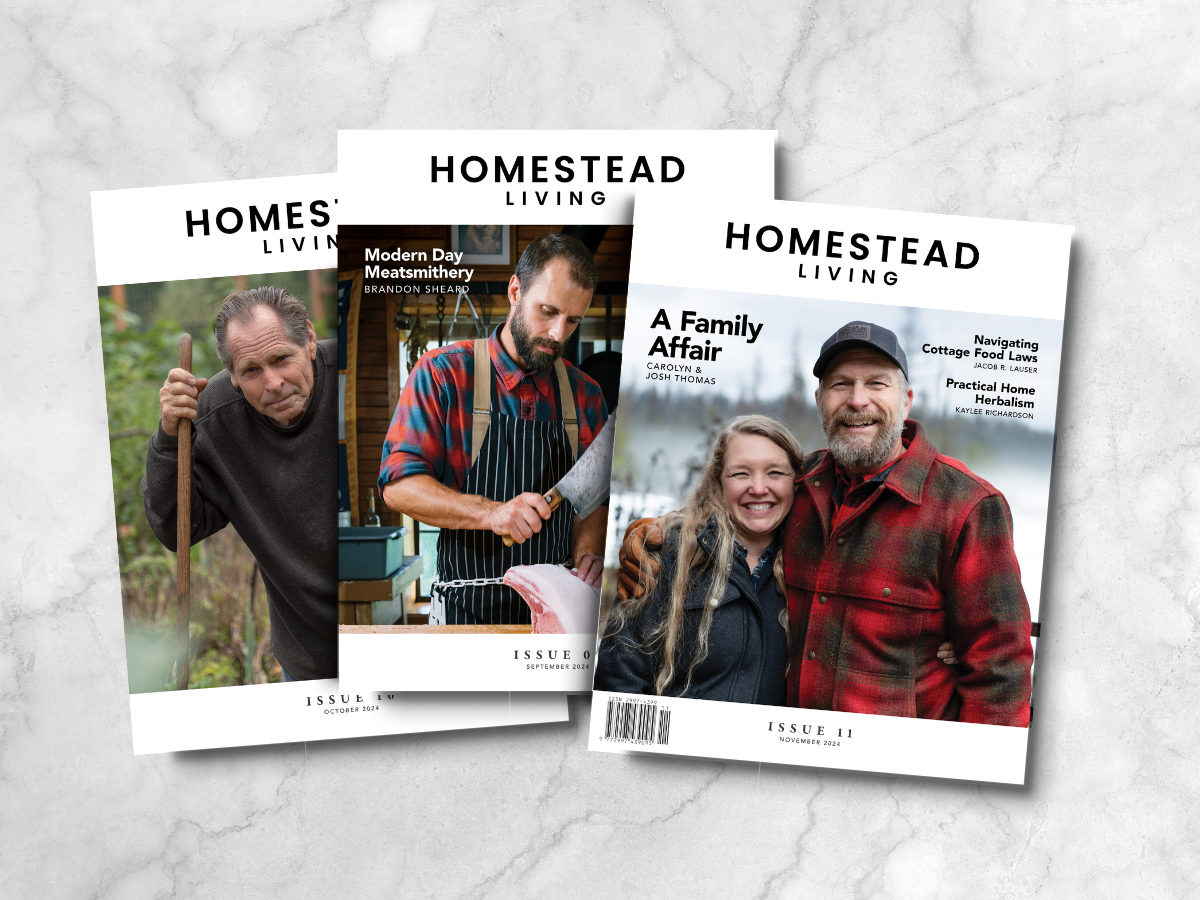
This Episode of The Coop is brought to you by Homestead Living magazine.
More than just a publication, Homestead Living is your go-to homesteading mentor, filled with advice, wisdom, and inspiration for homesteaders by homesteaders.
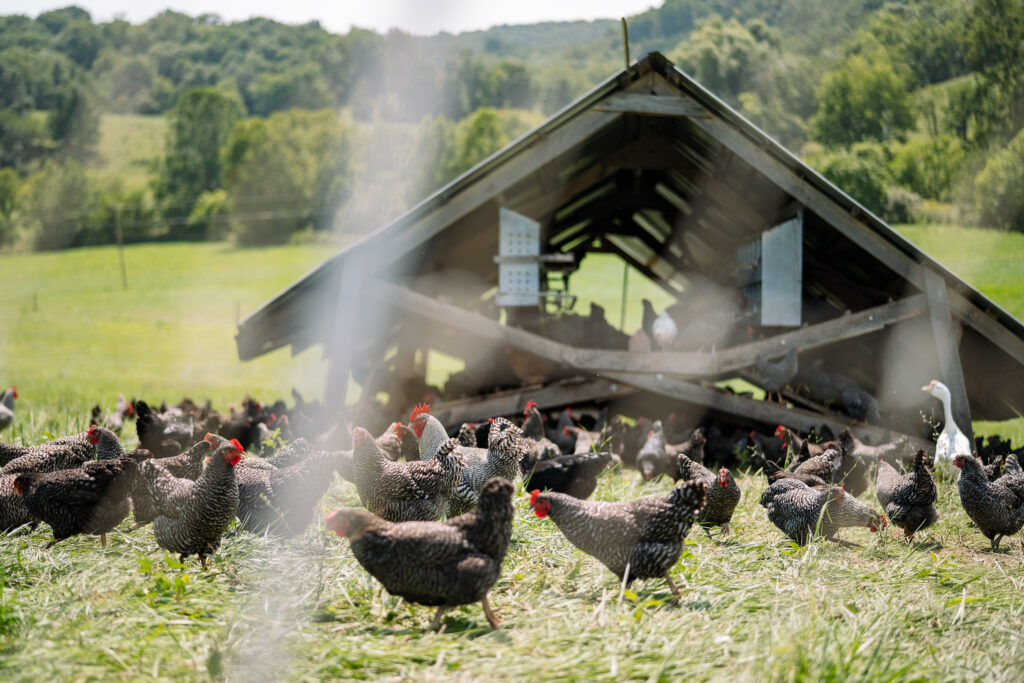
Leave a Reply