
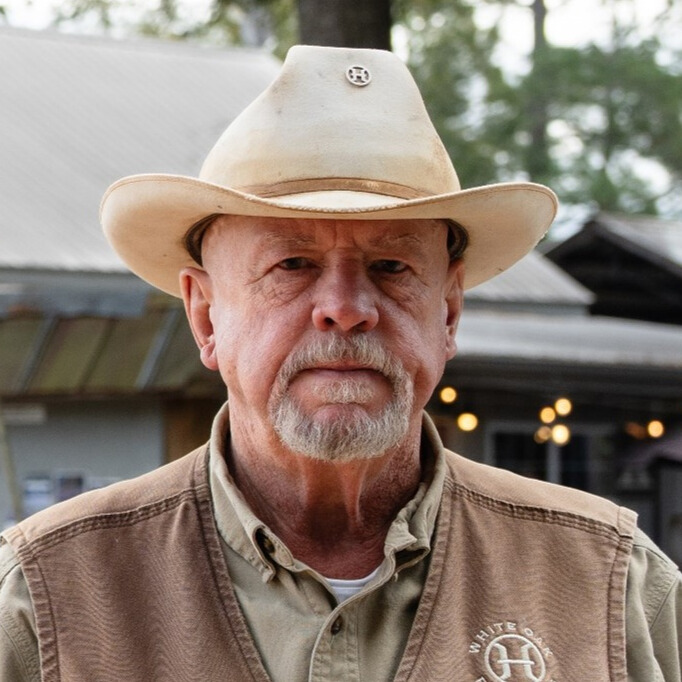
Will is the 4th-generation owner of White Oak Pastures who risked not only a very profitable income using Big Agriculture practices but the legacy of his family by switching to sustainable, regenerative farming decades before it had a name or became a movement.
There is profit in the industrial farming mode. Pesticides, herbicides, hormones for animals, and long rows of monocrops were effective and profitable methods for not only White Oak Pastures but countless other farmers.
“I was one of the worst offenders when it came to the industrialized practices that are so commonly used,” Will says during my visit to White Oak Pastures.
Will inherited this farm with these practices and was taught how to optimize them further during his time at the University of Georgia. He farmed this way very successfully for nearly 20 years.
But when you are in touch with your land and animals, you cannot ignore the outcomes that become evident over time.
This complete one hundred and eighty degree turn fascinates me, making this November visit one of my most anticipated interviews to date.
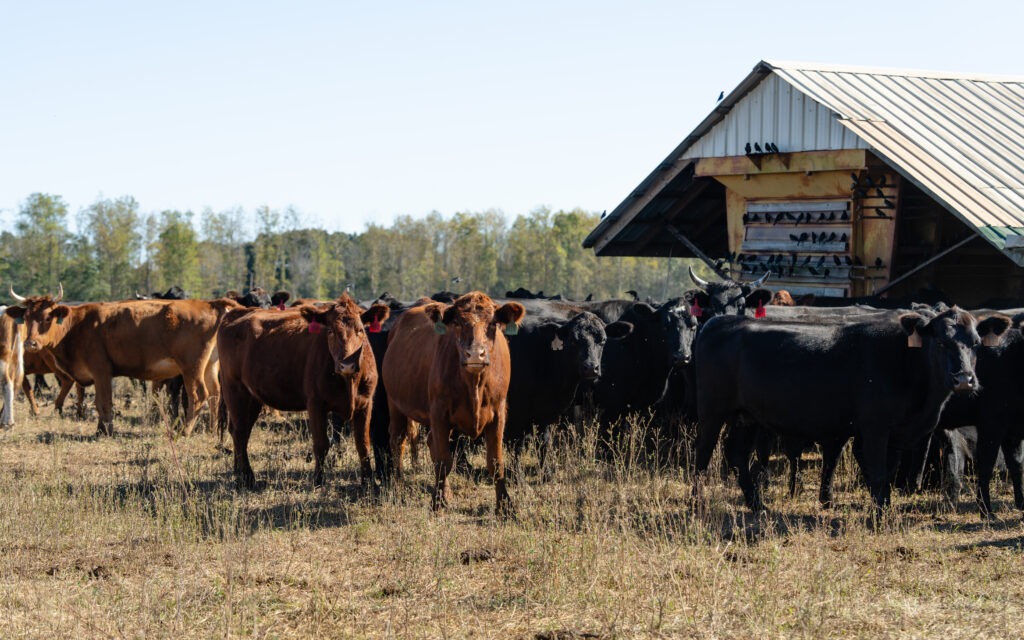
“At first, I wasn’t moving toward something; I was moving away from something.” Will’s slow easy gate matches the cows leisurely chewing the cud in the field before us.
“Everything I learned was about stopping nature — killing nature. But I’ve transitioned to supporting nature. I started learning how to make things live. That’s what we work on now.”
“When did you know things had to change?” I ask.
“It happened for me suddenly,” he says, looking down at the grass. His eyes glisten slightly, and he shakes his head. “I just couldn’t do it anymore.”
There are consequences for what we eat, though we may not see those consequences until later in life. There are consequences for how we care for the land we’re on, but we may not directly see those consequences either. There are short-term beneficial consequences for running a conventional farm: when you pump cows full of hormones, they get bigger fairly quickly and you have more meat to sell (and a bigger profit margin).
For most, it doesn’t make sense to transition to a regenerative farm. It’s more expensive and, as Will will tell you, makes less money. When Will transitioned White Oak Pastures away from industrial practices, he took an income hit and he borrowed money, a move his father likely would have balked at.
Yet Will is comfortable in his decisions. He’s okay with less, even taking on debt, because his vision extends beyond the dollar and today. He couldn’t live with the consequences that came with conventional farming and doing things in the present for a better future, regardless of cost, is worth it.
“All those production tools — pesticides, herbicides, hormone implants — are products of reductionist science. In my neighborhood, the best farmers are the best ones at using these technologies. But there are unintended consequences here. In the short run, you will show a profit. In the long run, they cost society.”
Will makes a point that his friends and neighbors who farm this way are good people who are just doing what they’ve been taught by their fathers or by the university system. These farmers are trying to feed their families, not destroy the earth.
But large systems and social structures are powerful, and it’s hard to move against the cultural current. It’s hard to see the consequences of some choices until they are painfully obvious. In some cases, once you realize there’s a problem, it’s too late.
“There’s a huge dead zone [in the Gulf of Mexico] that used to be a great oystering region. Now we can’t oyster there anymore. There’s a moratorium on it because of the runoff of chemical fertilizers and pesticides and probably other stuff too. But the manufacturer of the pesticide — or the guy who applied the pesticide — he is not paying for that. That’s a cost.”
But regardless of who is most responsible, this is a price that everyone pays.
“You inherited the practices of Big Agriculture. That’s what you were taught and that’s just the way things were done. So what happened that motivated you to change?” Will and I are walking one of the many pastures at White Oaks, and we stop as he considers my question. He takes a breath, looking off into the distance again. He looks back at me.
“It happened suddenly. It’s hard to say what in particular it was,” he says.
He studies the mobile pig shelter with pride. They offer shade for the pigs in the Georgia sun and shelter during rain storms but are easily moved with the pigs who are rotated regularly across pastures. Will’s pigs are allowed to live as pigs were meant to live, with freedom to roam around and root in the ground, not standing on concrete floors with barely room to turn around.
“It became clear that I could not continue as I was.”
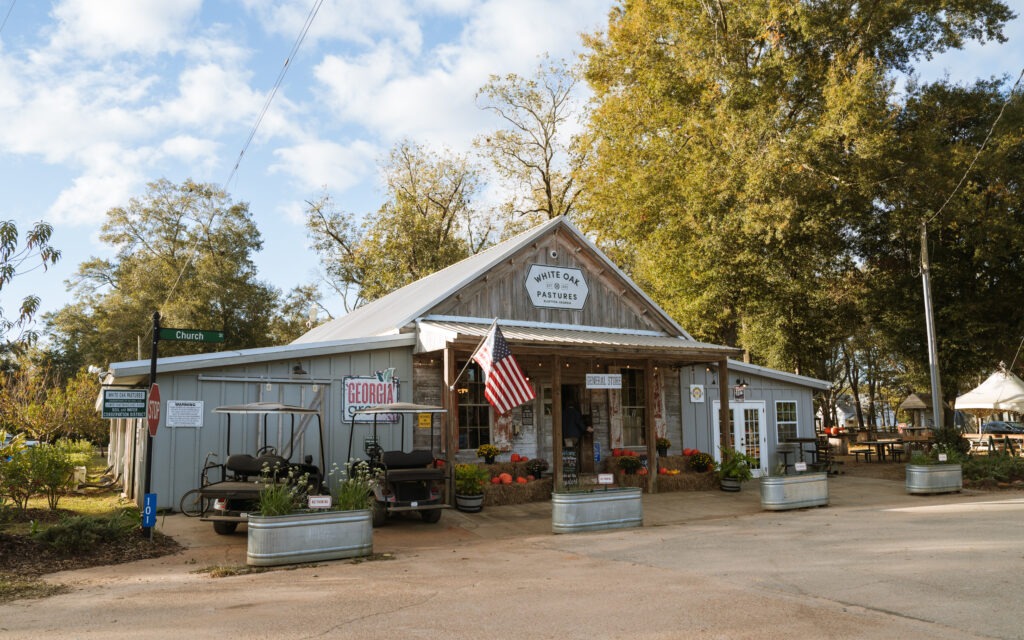
We drive back into town, have lunch, and walk over to Will’s office. It’s maybe a block or two from the restaurant where we ate. Will tells stories of his family, and we settle into chairs by his desk. Eventually, we get to talking about how he used to run the farm.
“I gave cows a lot of therapeutic antibiotics, used a lot of hormone implants. You put it in their ear; did you know that?” He grabs his ear between his forefinger and thumb. “You put it in the skin of their ear and it slowly absorbs in about 90 days. And then you do it again. I mean …” he shakes his head.
“We used a lot of chemical fertilizer and pesticides and weed killer on the land. I stopped that. Just quit using all that stuff.”
He describes how they used to feed the cows corn mixed with chicken manure. As ruminants, cattle can turn non-protein nitrogen, from, say, chicken manure, into a protein. It was cheap and easy to do this. Just another way to save on feed and fatten up the livestock. This was looked at as “good business,” taking a waste material from one animal and turning it into something productive in another animal.
“I learned how to do that at the University of Auburn, a conference there,” Will says. “I looked at it as an art, and I was good at it. I figured it out. If you put enough molasses in corn with the manure, the cows will eat it.”
“And it’s terrible. It’s terrible,” he shakes his head and crossing his arms. “A cow won’t eat manure on their own; a cow will graze around it. But that’s what we did. And it was profitable.”
I’ve been looking for a tipping point, a moment where Will saw or experienced something that meant he couldn’t look back.
“Was it the accumulation of living like this that finally led you to change? Or do you remember a moment when the switch flipped?” I ask.
“Well, I didn’t leave conventional farming because it wasn’t profitable. I left because I didn’t like it anymore.”
“Eventually, you just couldn’t do it anymore?”
He nods his head.
“It was very sudden. I guess I might have been less and less satisfied with industrial cattle farming, but it was what my college degree was in and what my dad and I had done for 40 years. I was good at it. Made money doing it every year.”
The presence of past generations isn’t only in Will’s words, but the pictures of his father, grandfather, and great-grandfather along with those of his daughters that hang on the wall of his office behind him are testaments to how deeply familial roots grow here.
He rubs his chin and takes in a slow breath.
“I remember I was loading out a load of heifers one morning, each about 500 pounds. Moving about a hundred of them, loading them on the truck. There are two layers on the truck, above and below, and the cows on the top were pissing and defecating on the cows on the bottom …” he trails off and shakes his head.
His eyes moisten slightly.
“I had a bad reaction to it. I said to myself, “I won’t do it anymore.””
“And I didn’t.”
Silence fills the office for a beat.
“How quickly did things change after that?” I ask.
“Quickly,” he says, “I think when I cleaned that feedlot out, that was it.”
Most of us have a clear memory of why we turned to homesteading. But like Will, it wasn’t a singular event, but rather a cumulative effect leading to a tipping point of no return.
Will hit a point where he knew, based on what he had experienced, that he couldn’t continue living a certain way.
“It’s hard to make the adjustment from fighting nature to working with nature. When you are an industrial farmer, you are fighting nature all the time, over and over. It’s never-ending. If you’re good, you win in the short run. But you lose in the long run.”
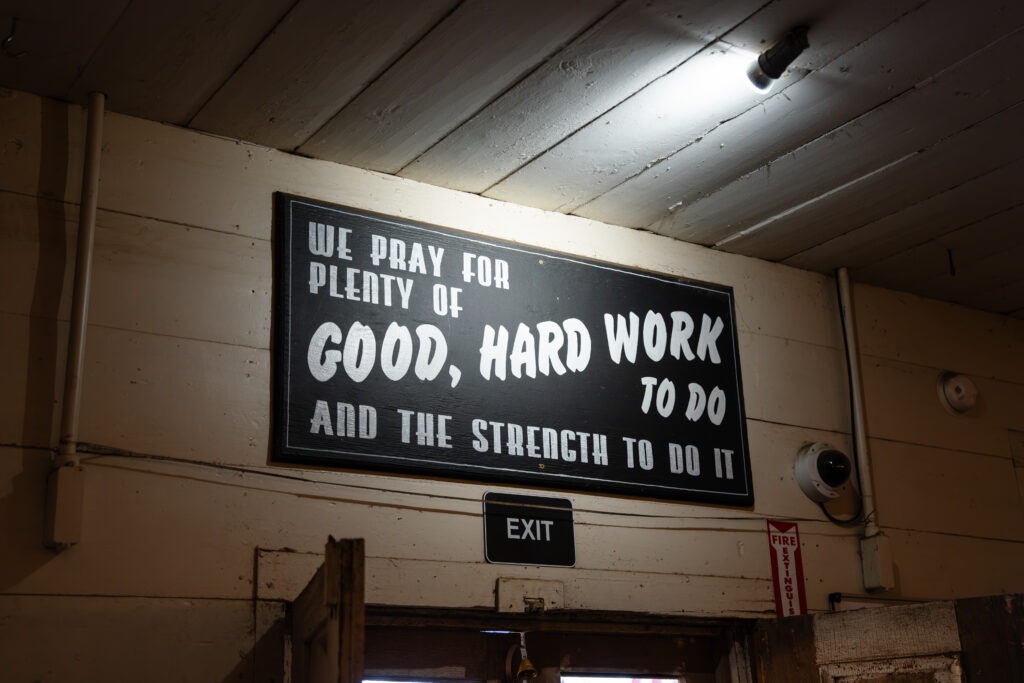
Nature isn’t something to be defeated; it’s something to partner with. Working against nature is exhausting, and probably futile. That isn’t to say that working with nature is easy. Far from it. But it is work worth doing: hard work, but good work. Will has reflected on what he can and cannot control. He’s going to push where he can make an impact. And as a result, he’s going to hand something healthier to his children than what was given to him.
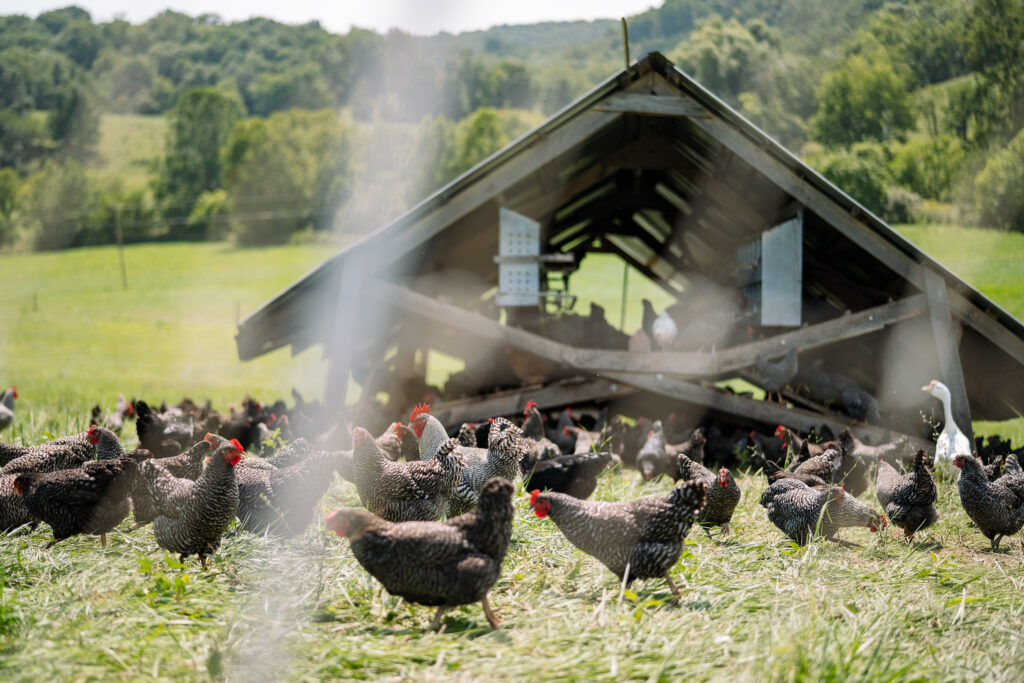
Today, White Oak Pastures is a regenerative farm. They no longer use any pesticides, hormones, or fertilizers. Their specialty is grass-fed, grass-finished beef, born, raised, and harvested on site.
Will knew the answer was to open their own USDA-inspected processing plant on site, where they had complete control from start to finish. It was a gamble, but this plant now allows White Oak Pastures to offer grass-fed, grass-finished beef to customers directly and provides jobs for their previously dying town of Bluffton, Georgia.
White Oak Pastures is not a small-scale operation. They have over 1,000 head of cattle rotated across their 1,000-acre farm, which is proof that ethical practices are sustainable no matter the size. They raise a small number of hogs, all of which are fed and grazed naturally.
They’re certainly not a large-scale, high-production factory farm either. Large factory farms often slaughter up to 400 cows every hour. White Oak Pastures humanely processes 25 cows per day, and they find a use for every portion of the animals they slaughter.
Like many homesteaders, Will and his family believe in good husbandry and using all parts of the animal. The tallow is made into soap which is sold on their website and the local store. The hides are tanned into leather and made into belts as well as natural dog treats. The bones are used to make broth used in their restaurant.
Despite being larger than a homestead farm, Will is a huge advocate of local food. His goal is to help other farms and homesteads produce food in a natural and regenerative way and to educate those who can’t raise their own on how to support and buy from those who do.
I went to Georgia to learn why Will Harris radically re-invented his life and business, particularly when he had already been very successful. Why risk change?
After a few days with Will, it became clear that this decision has not been easy.
The transformation of his farm has meant lots of hard work and long hours. It has cost him lots of money. But this is his life’s work. You can’t make these sorts of choices without having something burning deep inside of you. Will’s motivation comes from a deep place, and he’s extremely generous with his time and resources.
He’s also a strong, forceful presence. As I get ready to leave White Oak Pastures, Will says that he hasn’t set out to change the world. All he can do is change what he does on his farm.
Yet, as I drive away, Will is changing the world. The ripple of his decision to farm according to his beliefs is changing the world and how agriculture is perceived. Each of us, no matter what kind of homesteader we are or aspire to be, can do the same.

Leave a Reply