
The flurry of the holidays has subsided, and hopefully we are all tucked nice and cozy in our respective hobbit holes remembering the glory days of summer via homemade grape jam on toast while reading seed catalogs and dreaming of all the wonderful things we will grow come spring. We may even mood-board herbs, flowers, and vegetables or ogle some new basil variety.
But there is something seemingly far less exciting than seed catalogs that should be niggling in the back of every gardener’s mind:
“What about my garden soil health?”
Winter might seem like a strange time to dive into this subject, but it really is the best time to think about such things. In the midst of spring and summer, we move from task to task like people possessed. But in winter, we have a bit more time to moodle about, to think, muse, discover, wonder, and maybe even make a plan.
Before we go much further, I must acknowledge my roundabout path to fascination with soil health. Years ago, I worked as a nutrition coach for families with children exhibiting learning and behavior challenges. I spent a lot of time reading books on nutrition. I became enamored with the profound connection between the gut microbiome and mood/behavior. I read every book I could find on gut health.
One night, my husband and I were doing our nightly reads and chatting about our discoveries. We found we were reading about the same microbial cast of characters: me in the realm of the digestive system, and he in the soil that grows our food. I was astounded to find, time and again, the same microbes populate each of these seemingly disparate ecosystems.
This was among my early revelations where I began to understand that soil health is not a compartmentalized concept that merely helps you grow vegetables. Rather, it is the foundation of health for the human body. Thus, an investment in soil health is an investment in your well-being and the well-being of your family and community.
Here are a few winter-friendly explorations and practical tasks to engage the wonderful world of garden soil health.
Book Up On Soil Science
A good book on soil science can read like a whodunit mystery or Russian novel where characters have a few different names, a complex family system, and a dynamic and ever-changing social hierarchy.
Imagine scooping up a teaspoon of dirt and magnifying that world until it collides with your own. What drama you would see playing out in front of you! Ancient crustaceans, nematodes, snails, millipedes with passenger mites, and living webs of creeping mold, each with their own niche to occupy in this soil drama playing out under our enlarged and magnified eyes.
Most of all, it is important to remind ourselves of what is going on in our soil so that we can be active participants in stewarding the flourishing of life below ground. A few of my favorite reads on this subject are The Hidden Half of Nature (Biklé, Montgomery) and Teaming with Microbes (Lowenfels, Lewis). Some of my main takeaways from these reads are:
- Good soil is active and bursting with life.
- We feed our soil life first, then it feeds the food that feeds us.
- Keep your soil covered at all times.
- Every gardener should be a microbial shepherd.
There is so much more to say about the minutiae of our soil-bound neighbors. My aim here is merely to whet your appetite for discovery. For now, we will leave that stone barely turned and move on to a few ways to improve your soil health.
Make a Plan For Building Compost
In the same way that we need to grow food to really understand what goes into food production, we should also build some compost to wrap our heads around what it takes to grow soil. This does not mean that you ought to be providing all your own fertility in-house, though it is a worthy goal. That is something we must all grow into.
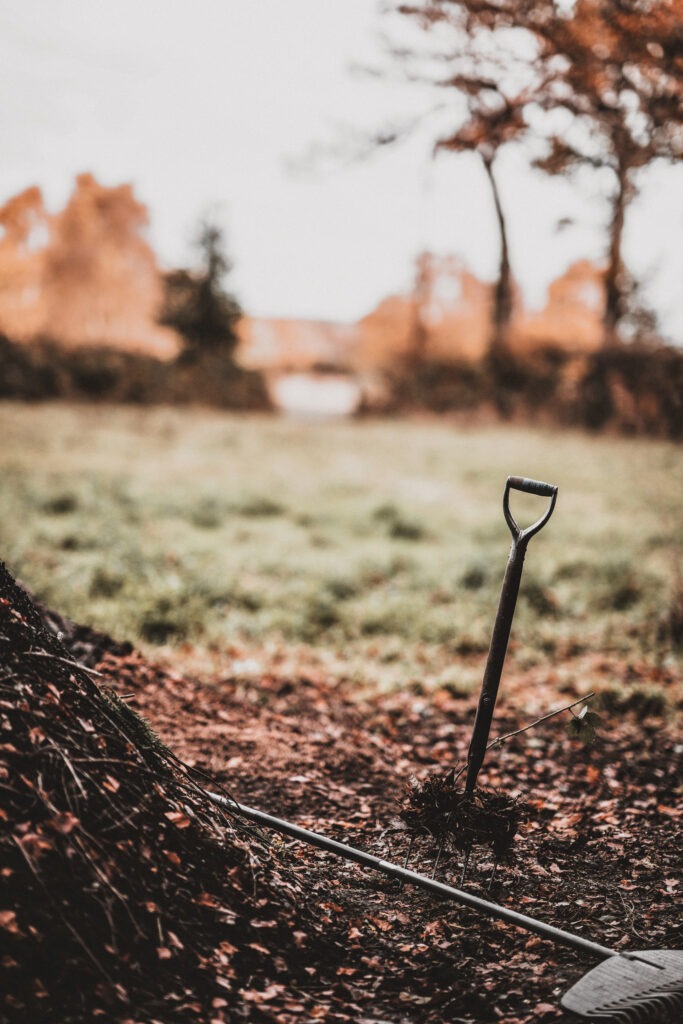
It may sound illogical to ponder hot compost with snow on the ground, but the seasoned composter understands that winter needn’t stand in the way of making a plan, gathering materials, and even building a nice, large pile of future fertility. Dreaming of future compost is often the best way to pull me away from a cozy winter fire. The kids and I will get out on brisk sunny days and gather leftover leaves or do some trimming in the garden. We set all this aside to build a compost pile come spring.
There are a lot of different compost methods. Take some time this season to:
- Research various compost methods. What would work best for you?
- If you are trying hot composting, look up carbon-to-nitrogen charts to help gauge your ratios.
- Not into making compost? Research a healthy source of compost in your area and make sure that it does not contain additives like biosolids, synthetic fertilizers, or wetting agents. Be open to the possibility that the shortest path to great compost may indeed be to make it oneself.
Start A Worm Bin
One of my favorite ways to add fertility to my garden is with worm castings. Worm castings recycle food scraps into nutrient-dense compost all throughout the year. I must say this very explicitly: worms are great. I have a hunch that once you figure out how to use a worm bin, you will want to expand. You can build your own inexpensive bin, or there are a lot of worm bins available online.
My best advice is to find something that matches the space where you want to keep it. My first worm bin was two stacked buckets (one with drainage) that lived under my kitchen sink. Now I keep several large bins in the house through the winter. Once it gets warm enough for the worms to live outside, one of these bins will “seed” a larger worm colony outside. Piqued your interest? Here are some possible next steps:
- Read up on how to care for a worm bin.
- Build or buy your bin.
- Fear not! Give it a shot. Tip: my worm bins tend to be too wet. Make sure you have plenty of good drainage and a supply of brown material to add with every round of food scraps.
Want to find out more about worms? Check out Worms Eat My Garbage (Appelhof, Olszewski).
Worms not your thing? I suspect you may one day change your mind, but in the meantime, look for a local source of worm castings.
Muse on Mulches
This is one of the main ways you follow the golden rule of treating your soil how you want to be treated: keeping your soil covered. But what to use for mulch? Winter is an excellent time to make a plan for mulching your garden. Here are a few of my favorite mulches:
- Living mulch: Cover crops, such as peas or hairy vetch, can double as living mulch. This method works better for transplanting than direct-sowing.
- Seedless hay or straw: I love working with straw when I can source it organically, but that is hard to come by in my neck of the woods.
- Leaf mulch: Get out on a sunny day and collect your leaves for use come warmer weather.
- Wood chips: there are a few caveats to using wood chips in your garden. We have an abundant, free source, so I make use of it by heavily mulching my garden paths. Throughout the growing season, I let it break down, throwing weeds straight on top to decompose. In the fall/winter I take my broken-down chip mulch and mulch my garden beds with it. Then I lay another layer of wood chips on the path and start again.
- Chop and Drop: Stacking functions at its best. As you weed your garden beds, take the plant material and use it as mulch around your plants. It is best to use the weeds this way before they go to seed. If they have gone to seed, I throw it into the compost pile.
Consider Cover Crops
I absolutely love cover crops. They have many benefits: adding nitrogen to the soil, adding biomass, loosening compact soil. Ever popular with farmers and seasoned gardeners, it can be hard to place a cover crop order once your season gets going. I like to anticipate what cover crop needs I might encounter and order ahead of time so I have what I need when I need it. A book I would recommend for a deep dive into cover crops is The Ecological Farm by Helen Atthowe. Also, many seed houses offer cover crop guides that can steer you in the right direction.
Here are some of my favorite cover crops:
- Buckwheat is a catch-all warm season cover crop. If I ever have any open space, I plant buckwheat. It attracts pollinators, conditions soil, and adds biomass. The only downside is that it is not particularly drought-tolerant, so I have moved away from using it where I don’t have irrigation. Your climate may vary.
- Red clover (and clover in general) is an excellent cover crop for frost seeding. You can broadcast your seed directly onto the frozen ground in the winter, and your clover will germinate when the soil warms up. A consideration with red clover is that it works best when it gets to hang around for a while, so this is not the best cover crop for quick plot turnarounds.
- Tillage radish is like a living broad fork that loosens and aerates your soil for future planting. Plant in late summer to early fall, harvest some of your radishes for your kimchi, then let the rest decay in the ground for spring or summer planting. Potential downside: decaying radishes smell like kimchi.
- Hairy vetch can be used for spring or fall plantings. It makes a nice living mulch that can also provide nitrogen. I like seeding in early spring and planting my summer starts into the living mulch.
Go ahead and order some cover crop seeds and figure out how you might use them in the seasons to come.
How are you feeling? Excited? Great. Overwhelmed? Don’t be. Follow your curiosity down any of these paths, and it’s hard to go wrong. Remember, any investment in soil health will, in time, yield good fruit.

Leave a Reply