
Looking at history to learn why protecting these breeds is necessary
Raising Heritage Sheep is one of the surest bets shepherds have to keep a healthy and successful flock if they will take the time to research and find sheep bred to succeed in their area. Heritage sheep often have disease-resistant characteristics and are weather hardy to certain climates. Heritage breeds also share a deep connection to the Revolutionary War as sheep raising and wool manufacturing were two rights England outlawed. Understanding their history will empower you to best select a strong and valuable breed for your farm, as well as, connect you in efforts to preserve our nation’s past.
What are Heritage Sheep?
According to the Livestock Conservancy, “Heritage breeds are traditional livestock breeds that were raised by our forefathers.” The Conservatory lists 24 North American Breeds they are watching. These breeds have been raised since pre-industrial times and are true to type. Each generation retains the traits of its forebears.
“While there are other breeds also known as Heritage Breeds the only true way to define them is by researching when they were brought to the United States. If they were brought in the Pre-Industrial time (before 1850), they are considered by many as Heritage Sheep,” says Cindra Kerscher Program Director at the Livestock Conservancy.
Benefits of raising Heritage Sheep
These breeds were carefully selected and bred over time to develop traits that made them well-adapted to their local environments. Traditional historic breeds retain essential attributes for survival and self-sufficiency – fertility, foraging ability, longevity, maternal instincts, ability to mate naturally, and resistance to diseases and parasites.
Origin of Sheep in the U.S.
In the United States, there are currently about 60 breeds of domesticated sheep. Worldwide, the number is closer to 1,000. There is no record of sheep being in the colonies before they formed. Understanding History will explain why the U.S. has such a limited number of breeds compared to the world.
In the 1400s the wool industry provided funding for Queen Isabella of Spain to send Columbus and other conquistadors to the New World. Beginning in 1519, Cortez took sheep with him that were offsprings of Columbus’s sheep. These became what we call the “Navajo Churro” sheep and are considered the oldest breed of sheep in the U.S., followed closely by the “Gulf Coast” breed native to Florida.
During the 16th and 17th centuries, England tried to discourage the wool industry in the American colonies. Nonetheless, colonists quickly smuggled sheep into the colonies and developed a wool industry. By 1664, there were 10,000 sheep in the colonies and the general court of Massachusetts passed a law requiring youth to learn to spin and weave.
As this industry began to bring success to the colonies, England became outraged and in 1698 they outlawed the wool trade making it punishable by cutting off the offender’s right hand. Spinning and weaving were considered patriotic acts that colonists sought to defend in the Revolutionary War.
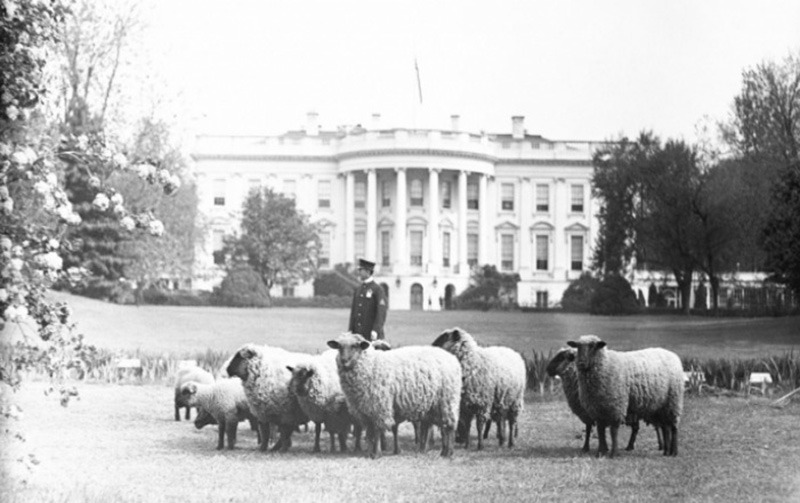
Once these rights were secured, sheep became a staple of the U.S. industry. Many presidents adorned wool coats produced from the sheep they raised. President Woodrow Wilson even grazed sheep on the White House lawn. From the revolution onward, sheep were domesticated and moved throughout the states by early settlers and pioneers.
Categorizing Heritage Sheep
Sheep are prized for their wool and their meat. Wool is a natural, renewable product with a combination of practical and aesthetic characteristics unmatched by synthetic materials. It is strong, durable, elastic, warm, absorbent, and flame resistant. Different sheep breeds produce a variety of wool qualities. Wool is defined by four characteristics; long wool, medium wool, fine wool, and hair sheep — all with different product purposes. Meat sheep tend to grow large and stout fairly quickly. Some breeds do not lose taste as the sheep age, which is a desirable trait for meat farmers. If your intent is to butcher for meat, you will need to look for breeds specifically bred to be best for meat. There is also a category of sheep referred to as “dual” which produces both high-quality wool and meat.
These lists are categorized by The Livestock Conservancy on Heritage Breeds which are known to be true heritage sheep and are on the conservancy’s watch lists.
Heritage Wool Sheep
- Shetland, Black Welsh Mountain, Jacob, Leicester Longwool, Lincoln, Santa Cruz
- Heritage Meat Sheep
- St. Croix, Shropshire, Southdown, Tunis, Wiltshire Horn, Barbados Blackbelly, Florida Cracker, Gulf Coast or Gulf Coast Native, Hog Island, Oxford
- Heritage Dual Sheep
- Teeswater, Clun Forest, Cotswold, Dorset Horn, Navajo-Churro, Romeldale/CVM, Soay, Karakul
Heritage Sheep Based on Climate
Climate must be a factor when selecting sheep for a farm. The Livestock Conservancy also lists ideal species according to weather.
- Hot/Humid: Barbados Blackbelly, Florida Cracker, Gulf Coast or Gulf Coast Native, St. Croix
- Hot/Dry: Romeldale/CVM, Santa Cruz, Willshire Horn
- Cold/Damp: Black Welsh Mountain, Soay, Shetland
- Cold/Dry: Karakul, Navajo-Churro, Soay
- Temperate: Shropshire, Southdown, Teeswater, Tunis, Jacob, Leicester Longwool, Lincoln, Oxford, Clun Forest, Cotswold, Dorset Horn
The Danger Facing Heritage Sheep
Heritage breeds are considered “rare”, which seems surprising considering they have been in the U.S. for the longest amount of time. But these breeds don’t easily fit into today’s modern agricultural model. Newer breeds can be fed and fattened quicker than heritage breeds, which allows the new breeds to get to market faster.
Additionally, in our current industrial society wool is rapidly being replaced by cheap petroleum-based synthetic fibers in many of today’s markets. These faux fibers are winning because they are faster and cheaper to produce in bulk. However, heritage-breed wool is far more sustainable and safer for both the consumer and the earth. Educating people on the importance of wool quality should be a message heritage breeders work to advance.
Several heritage breeds are listed on levels of the endangered list. Choosing a breed based on its level of extinction is a great way to do your part in carrying on the history of heritage breeds.
Spotlighting Southdowns
At Porter Valley Ranch we raise a variety of Southdown Sheep, called Olde English Babydoll Southdowns. Southdowns were believed to be the first sheep of Jamestown in 1640. Meanwhile in England, the breed was improving with goals to bring the sheep into maturity sooner and produce better quality meat. Because of these improvements, Southdowns began to contribute to the foundation stock of other down breeds: Suffolk, Hampshire, Oxford, Dorset Down, and Shropshire.
The new and improved Southdowns were imported to the U.S. between 1824-1829. The Southdowns quickly gained popularity because they were prolific mothers, had the finest quality of wool, and could be brought to market between 12-15 months — which was earlier than most other sheep at the time. Soon the Southdowns were bred intentionally smaller because refrigerators were so small at the time that only one sheep could fit inside, and this saved families from wasting the valuable meat from larger sheep.
By the 1960s Americans were promoting “bigger is better” and Southdown sheep lost popularity. In the 1990s Robert Mock began to seek out the smallest Southdown sheep and breed them as “Olde English Babydoll Southdowns” and formed a registry known today as OEBSSR — Olde English Babydoll Southdown Sheep Registry— which is still owned by the Self Family. In 2003, a national registry began as a publicly-owned, board-governed association and registry known as NABSSAR — the North American Babydoll Southdown Sheep Association and Registry.
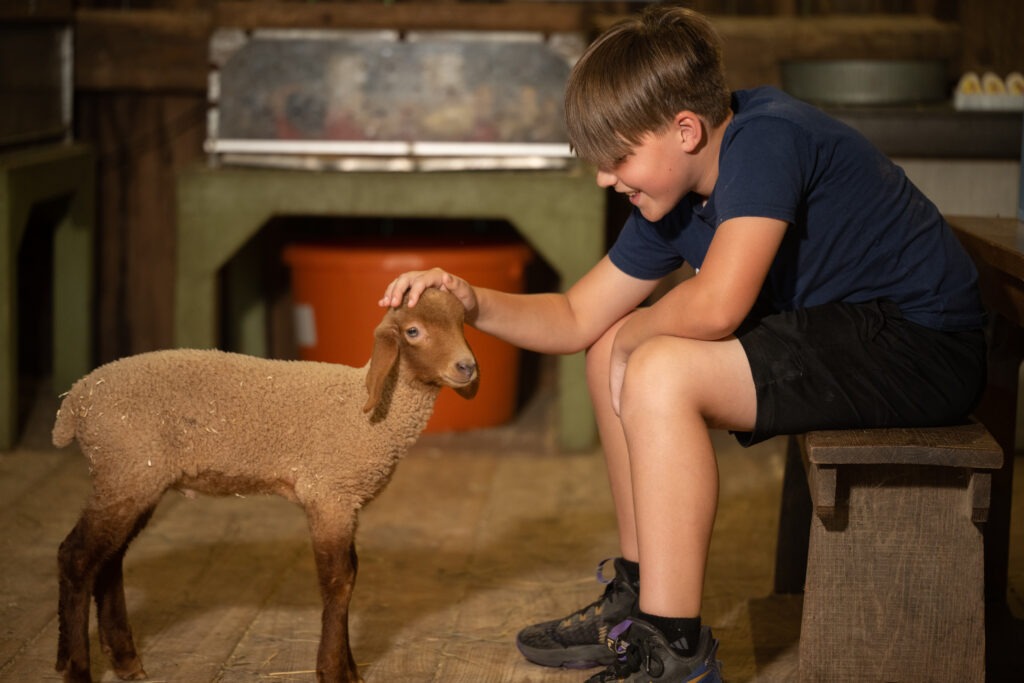
“Babydolls are a rescued version of the Heritage Sheep Southdowns,” says Josh Porter at Porter Valley Ranch. “They have gained recent popularity on social media platforms and on small farms recently because they are a great size and have a teddy bear look everyone is falling in love with. But what we love on our farm is their history. Knowing they were on the homesteads of immigrants, pioneers, settlers and bred for purposes that fit those times so perfectly is a daily reminder of how this country began. We feel connected to those times by doing our part to keep the breed going.” Porter Valley Ranch is a 17-acre farm in Oklahoma raising Babydolls, Harlequin Sheep, Chickens, and Ibex.
Porter Valley Ranch raises babydolls for other reasons, one being that this breed of sheep is a great addition to farms with just a few acres. Five Babydoll Ewes and their lambs can be raised on just one acre of land of grass pasture. Their docile nature is great for families with children who are eager to be involved. The sheep’s small structure and their naturally polled horns make handling the animals much easier than several other breeds. They are very hardy in both the cold and heat and they normally have multiples at birth.
Spotlighting Tunis
Tunis are another one of the oldest breeds of sheep developed in the United States. In the late 1700s, a few Tunis sheep were sent to George Washington as a gift from the Bey of Tunis. John Adams, Thomas Jefferson, Richard Peters, Charles Roundtree, and George Washington Custis recorded letters, journals, and farm records with notes about raising the Tunis breed.
The breed nearly went extinct during the Civil War, however, one flock was saved and hidden in South Carolina along the Congoree river near Columbia by a man named Maynard Spigener. After the war, the great lakes region and New England became strongholds for the breed and eventually the breed repopulated throughout the Southeast.
In Fishers Indiana, Conner Prairie is a Smithsonian affiliate and member of the Livestock Conservancy, offering various experiential learning spaces with an authentic look into history. In Conner Prairie’s Animal Encounters Barn, Tunis sheep are featured.
“We currently have 30 Tunis sheep,” explains Director of Agriculture Initiatives Stephanie Buchanan. “Once a year we host a Heritage Breeds Week, where we have various textiles and wool processing demonstrations with hands-on activities highlighting what makes wool from heritage breed sheep so unique.” Their Annual Heritage Breeds Week features cattle, poultry, sheep and goats. Guests are allowed to interact with animals and learn more about their important role in United States history.
Preserving Heritage Sheep
The Livestock Conservancy prioritizes endangered sheep by numbers known through registries on their Conservation Priority List. They list them as study, recovering, watch, threatened and critical. In an effort to reward breeders and fiber artists for furthering Heritage Breeds by using their wool, they created the program, “Shave ‘Em to Save ‘Em.”
This program recognizes fiber artists who use wool from breeds on their Conservation Priority List while connecting shepherds of heritage breeds with customers. Because of marketing challenges, some shepherds discard or compost the wool after their annual shearing rather than cleaning it and selling it. This program encourages fiber artists to try using rare wools, educates shepherds on how to prepare their wool for sale, and connects the two markets.
Are You Interested in Raising Heritage Breeds?
Heritage Sheep Farming comes with a host of enthusiasts. If you choose to take on a breed there are several organizations and individuals passionate to help you in your journey.
Leave a Reply