
If you’ve never seen a beautiful round loaf of bread etched with a design rivaling the beauty and detail of a van Gogh painting, then I’m guessing you weren’t on Instagram after March 2020. Sourdough has been all the rage for a few years now, but it can be intimidating to incorporate into your own kitchen. Do you need fancy tools, like baskets and razors? And what’s with hydration percentages and using a scale to measure all of the ingredients?
To muddy the waters just a little more, everybody and their brother has their own way of making sourdough. When I started baking with sourdough over 11 years ago, things were a bit simpler. Knead the dough, add water, flour, salt, and starter — then rise and bake. I’m hoping to break it down for you to make it simple so that you can enjoy the taste and health benefits on the regular in your own home. No banneton baskets required.
To learn how to make a sourdough starter and get a collection of my favorite recipes, grab my free ebook.
Sourdough for more than just bread?
Though I like a sourdough boule as much as the next person, bread is not the thing I find myself using my starter for most often. Pancakes, pizza crusts, flatbreads, cinnamon rolls, bagels, and even my one-pot wonder, sourdough skillets, are in the regular rotation around here. I keep a gallon size glass jar at least half full of starter at all times in order to have plenty on hand for no-wait recipes.
What are no-wait recipes?
With bread, bagels, and rolls, you need to get your dough started the day before you actually want to bake. No-wait recipes allow you to pull fermented starter straight from the jar and use it in recipes instantly. Keeping plenty of starter on hand means you are always 30 minutes away from a gut-healthy sourdough meal. The real beauty of these quick and easy staples is that the starter doesn’t need to be freshly fed. In fact, you could actually use a starter that has been sitting in the refrigerator for a week. For busy folks who sometimes fail to plan ahead, this can be a meal plan game changer.
My favorite no-wait recipes
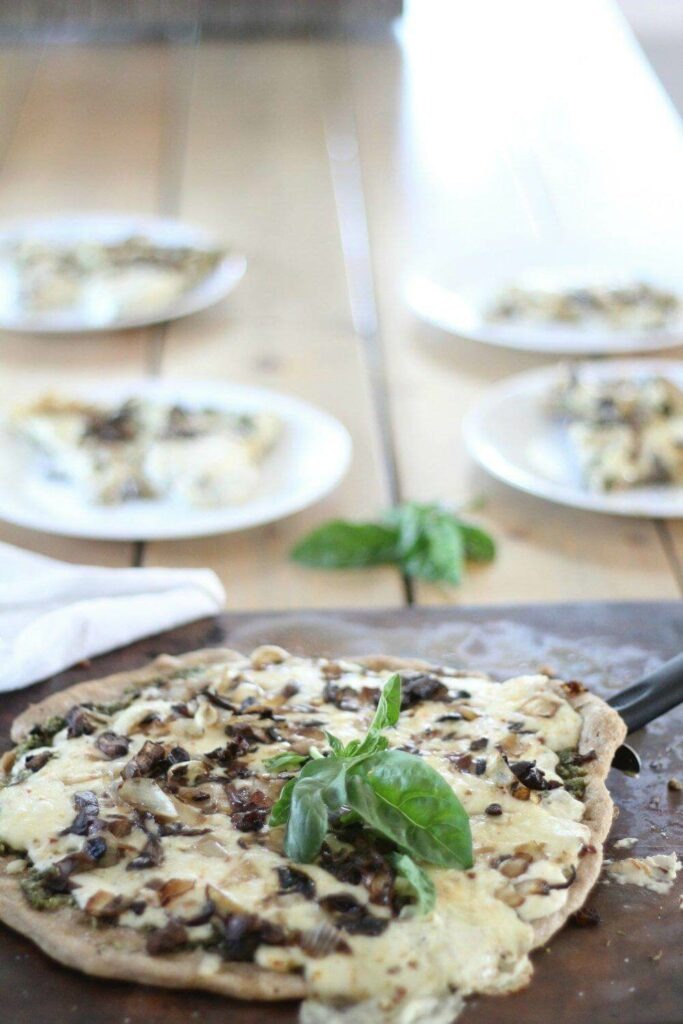
For this recipe, you’ll need 3 basic ingredients: sourdough starter, olive oil, and salt.
This crust requires no rising and no forethought. All you need to do is keep a large jar of starter in stock. We make basic pizza interesting by switching between mozzarella, cheddar, goat cheese, or some combination of the three. We sometimes use tomato sauce or get fancy with fig jam or chili date sauce. Herbs, pastured bacon, and seasonal veggies usually make their way on as well. The variety and lack of prep time keep this on the menu year-round.
Preheat a cast-iron skillet or pizza stone to 450 degrees. Spread sourdough starter on the preheated stone in a thin layer, using the back of a wooden spoon to create a circle. Drizzle with olive oil and sprinkle with salt. Bake for about 10 minutes, or until the crust pulls away from the skillet or stone.
Top with sauce, cheese, and other delicious toppings of your choosing. Bake at 425° for an additional 10 minutes, or until the cheese is good and melted.

Maintaining a sourdough starter
To get an idea of how this actually looks in my kitchen, let me break down my typical feeding and usage practices. This can vary considerably depending on the time of year and what is going on with our family. In busy seasons of life, I may only get the starter out of the refrigerator once or twice a week. The one constant is that I don’t let the jar have any less than four or five cups of starter in it, which is always enough for a quick meal.
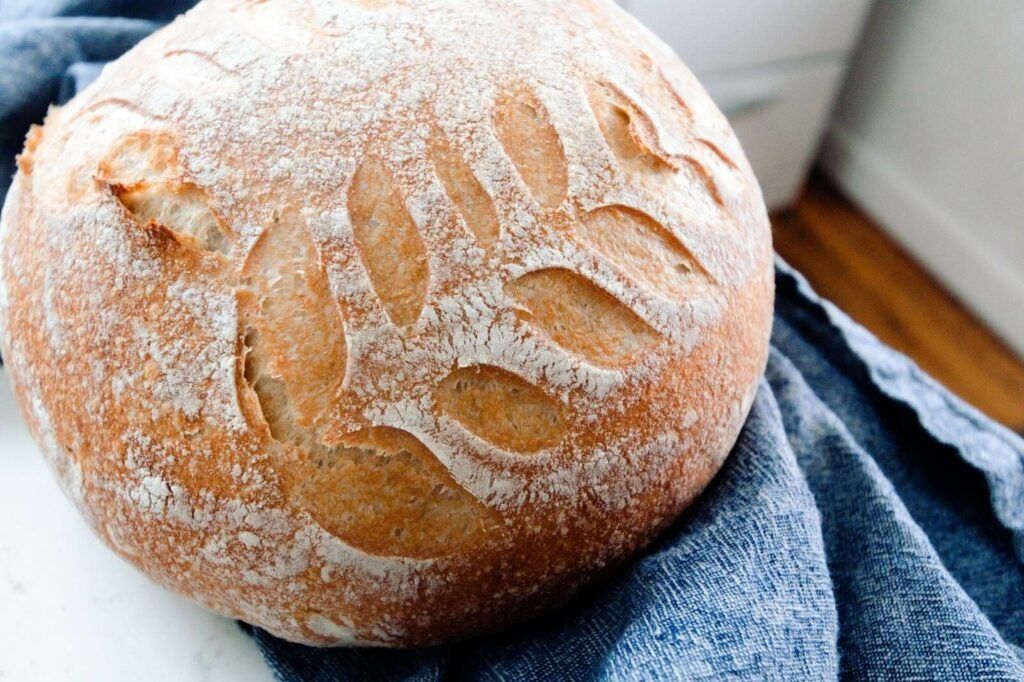
When it is time to feed my starter, I like to start by eyeballing approximately how much sourdough starter is left in the jar. I feed it at least that amount in equal parts of flour and water. For example, if I have about three cups of sourdough starter, I will feed it at least three cups of water and three cups of flour. If I’m running low on starter, I will add more than the minimum requirement of flour and water. It is totally acceptable to feed four cups of flour and water to one cup of starter, as long as it is mature and thriving. The consistency should be similar to pancake batter. After feeding, I allow it to sit at room temperature for 4-12 hours before using it in a recipe.
When a sourdough starter is left on the counter at room temperature, the yeast will become active, and it will become a bubbly sourdough starter. If I have no plans to use it right away, I put it right back in the refrigerator to “pause” the fermentation process. You can put the refrigerated starter straight into no-wait recipes.
For recipes that have no additional leavening agent, like baking powder or baking soda, I like to have a bubbly active starter. With bread, for example, I don’t use the starter straight from the refrigerator. Instead, I feed it flour and water and then wait four hours until the starter is revived and bubbly.
Maintenance is fairly simple. Like anything living, it requires food and water. Leaving it out on the counter, it will need to be fed equal parts water and flour every 12-24 hours. Warmer homes, or frequent baking, will require more frequent feeding (around every 12 hours), while colder homes every 24 hours.
Storing sourdough starter in the fridge will require feeding around once a week. It can, however, be stored for up to two months in the fridge without being fed. When we moved into our farmhouse, we were displaced for close to a month while we waited for our hardwood floors to be refinished. The sourdough starter was buried beneath seven people’s possessions in a horse trailer in the driveway. It came out beaten up but not beyond saving.
Reviving a sourdough starter that has been stored for a longer period of time in the fridge (or a horse trailer) is a good idea. This can be done by discarding the bulk of the starter and then feeding it equal parts flour and water. Allow it to sit at room temperature for 12 hours, and then feed it again. It may need to be fed 2-3 times with 12 hours between each feeding before it becomes active enough to make certain recipes (like bread). For some no-wait recipes, you can use the starter sooner.
Once a rhythm is established, using a sourdough starter becomes second nature. A healthy starter can be passed down for generations. I love thinking about the fact that I started mine when my second daughter was a baby! I look forward to the day when I will be eating bread in her kitchen from the very same starter.





Leave a Reply