
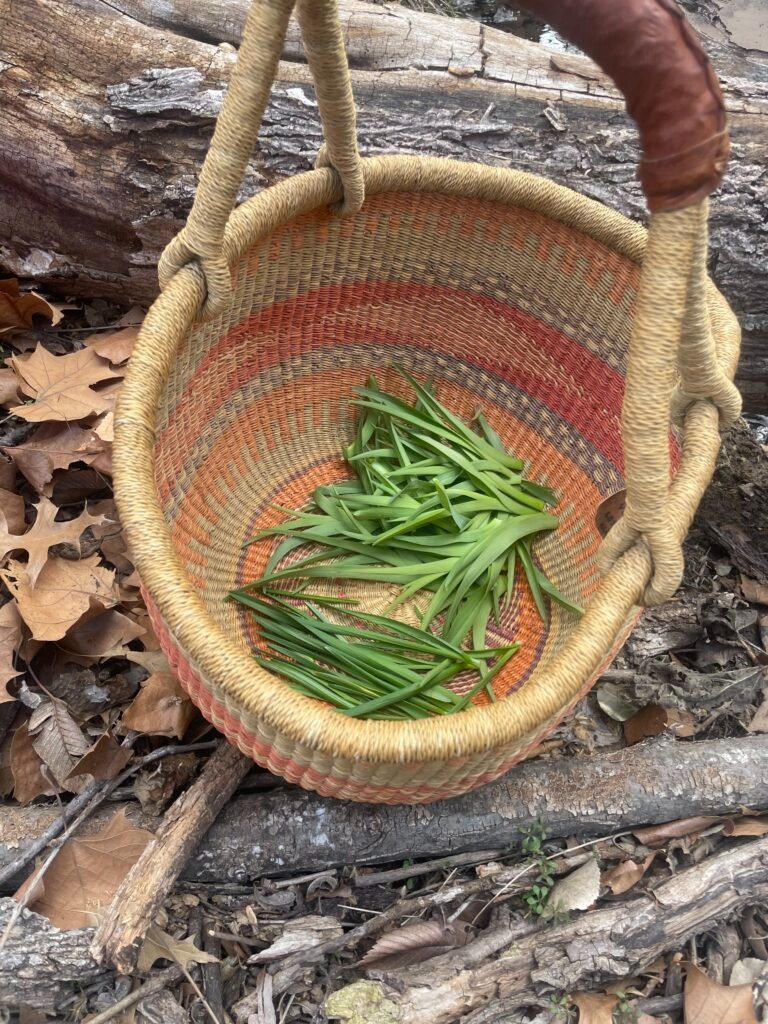
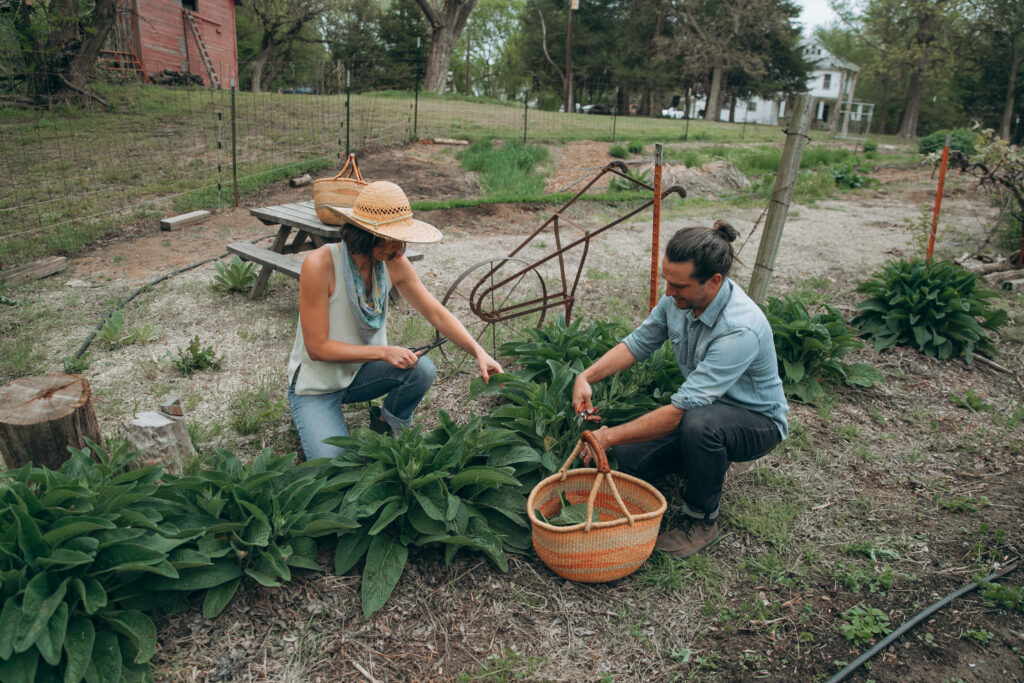
There are day-lily shoots, dandelion roots, greens and blossoms, clumps of catmint, carpets of cleavers and chickweed, stinging nettles and the ultimate spring joy– violets. The spring rains also bring on flushes of oyster mushrooms and, should we be so lucky, we might find a cache of morels.
All of this spring goodness can be simply incorporated into exquisite meals and teas if…
You have a plan.
I cannot tell you how many times my husband and kids would come home from some expedition to plop a basket of amazing foraged goods on the kitchen table. I would be extremely grumpy in the aftermath because–I am the one left holding the basket.
Until I made a connection.
Years ago when I was in culinary school I was part of a competition cooking team and one of the events was called “The Mystery Basket.” You were given a mystery basket of strange and unique food items and asked to make a meal. You were not limited just to what was in your basket. You were given access to what is called a “common kitchen,” which provides all the basic items you might find in a normal kitchen such as oil, cream, eggs, flour, salt, vinegar etc. Part of the way I would prepare for this mystery basket is to have a repertoire of well known “forms” that could be flexibly employed in a variety of situations.
Decades later, I find myself still relying on such forms in the management of our bustling household.
A few of my favorite classic forms are crepes, quiche, toasts, soups, pasta and salad. Within these I find a scaffold for endless creativity. Now that I can only do fermented gluten, I have had to add a few other improvisational forms to my repertoire – The curry, the stir-fry, the board and the grain bowl and, well, taco Tuesday.
One of the keys to utilizing cooking forms is to really give thought to your common kitchen and think through what ingredients work for you. I have my common kitchen broken down into categories. These categories are not rigid and fixed but they can give you a good idea of what to think through.
Dairy
Condiments
Butters
Sweeteners
Grains
Legumes
Nuts and seeds
Dried fruit
Oils
Vinegars
Baking
Frozen
Fruit
Vegetables
pre-made
This method gives me the opportunity to tailor our common kitchen to our own particular needs. For example, we mainly use maple and honey for sweeteners with the occasional cane sugar reserved for use in kombucha. So under my sweeteners section I have honey, maple and cane sugar. The idea is: as long as I have a stocked common kitchen, a freezer of meat and a steady flow of vegetables (garden and foraged) I will have everything I need to make a wide range of meals. As you can imagine this makes shopping so much easier. I just go through my list and stock up on the staples that I need.
Now back to that basket of foraged goods on my kitchen table.
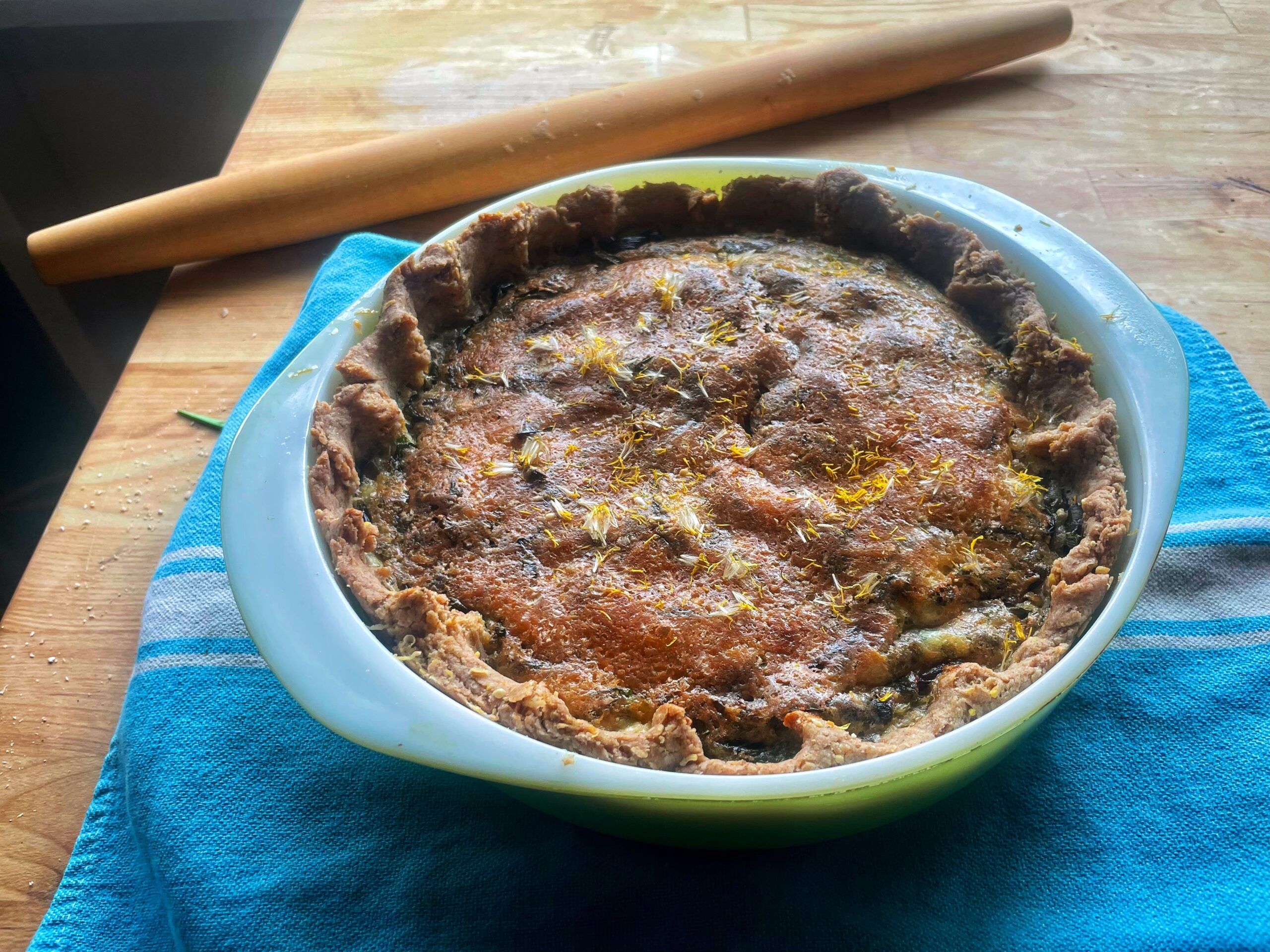
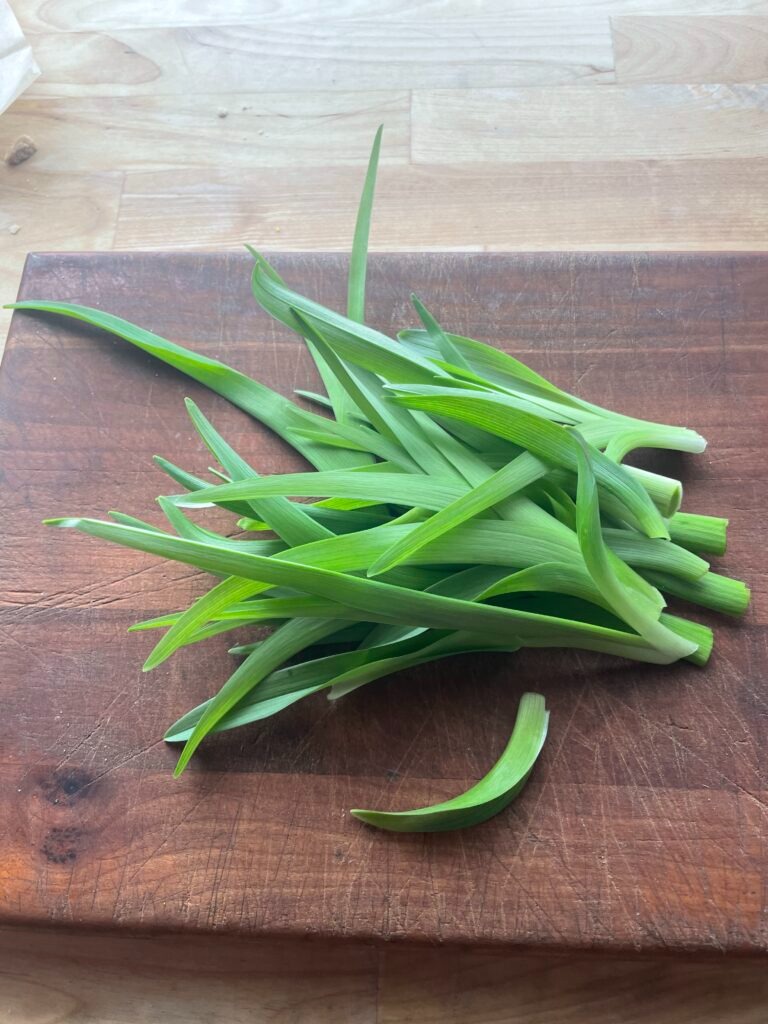
My first step is to figure out what I am working with. Since it is spring let’s imagine that the basket has day-lily shoots, garlic greens, oyster mushrooms, dandelion blossoms and a big handful of cleavers. This could really work in almost all of the forms listed above. But I am trying to move fast, so let’s sauté the oyster mushrooms with the day-lily shoots and garlic greens and serve them over a thick slice of toasted sourdough and a fried egg. Oh no… hubby did not bake sourdough this week. I will make a quick quiche instead. My common kitchen is stocked with the basics and I am ready to make…
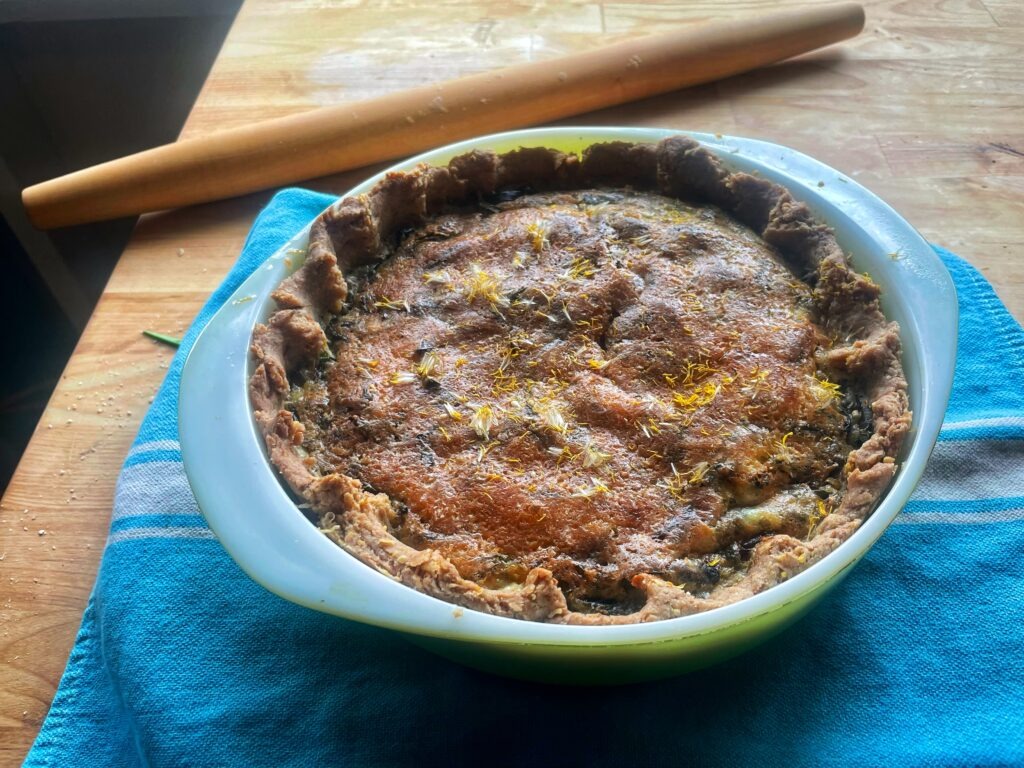
Wild Spring Quiche Or the Wild at Heart Spring Quiche
As you can see this recipe can be endlessly re-worked for new seasonal renditions.
Many of the forms I listed above (such as soup and salad) each have their own forms nested within them. For example, in salads one of my favorite forms is a mediterranean style tabbouleh – typically bulgur wheat, lemon, parsley, tomatoes, onions and cucumbers. But with improvisation this might become quinoa, roasted red peppers and corn, cilantro, lime and queso-fresco. Or my absolute favorite salad form: The panzanella. The panzanella is a classic Italian chopped-style salad traditionally made of stale bread, onions and tomatoes. Okay, I may not be doing a great job selling this one with stale bread, but you have to try it. It is the most satisfying salad.
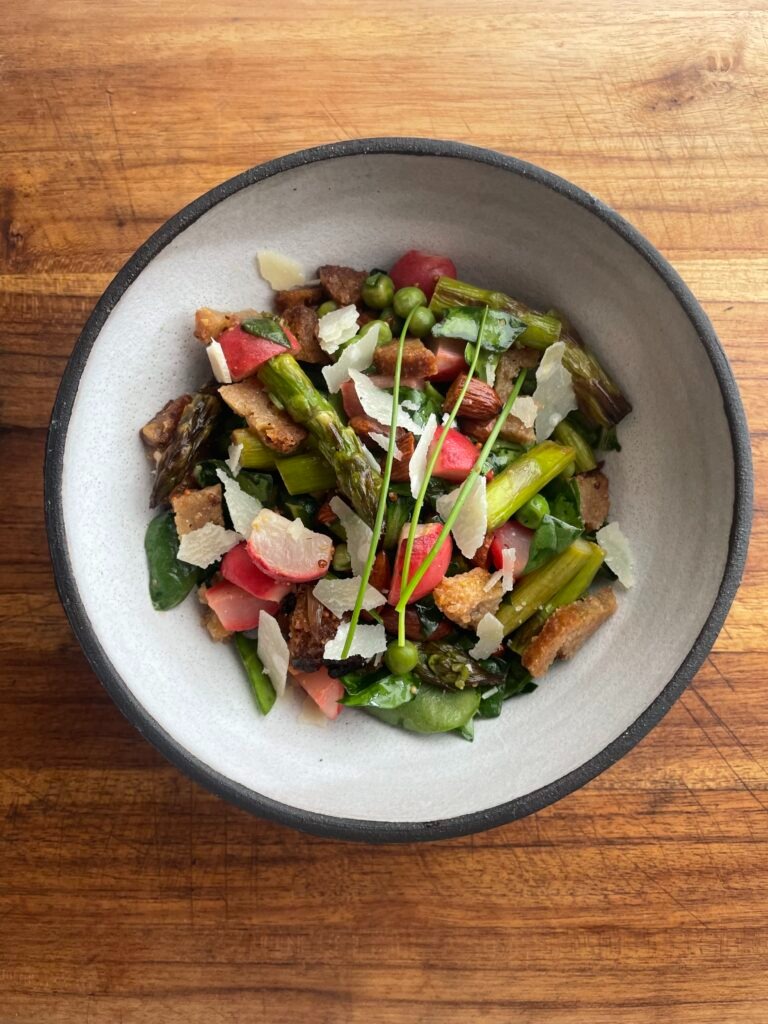
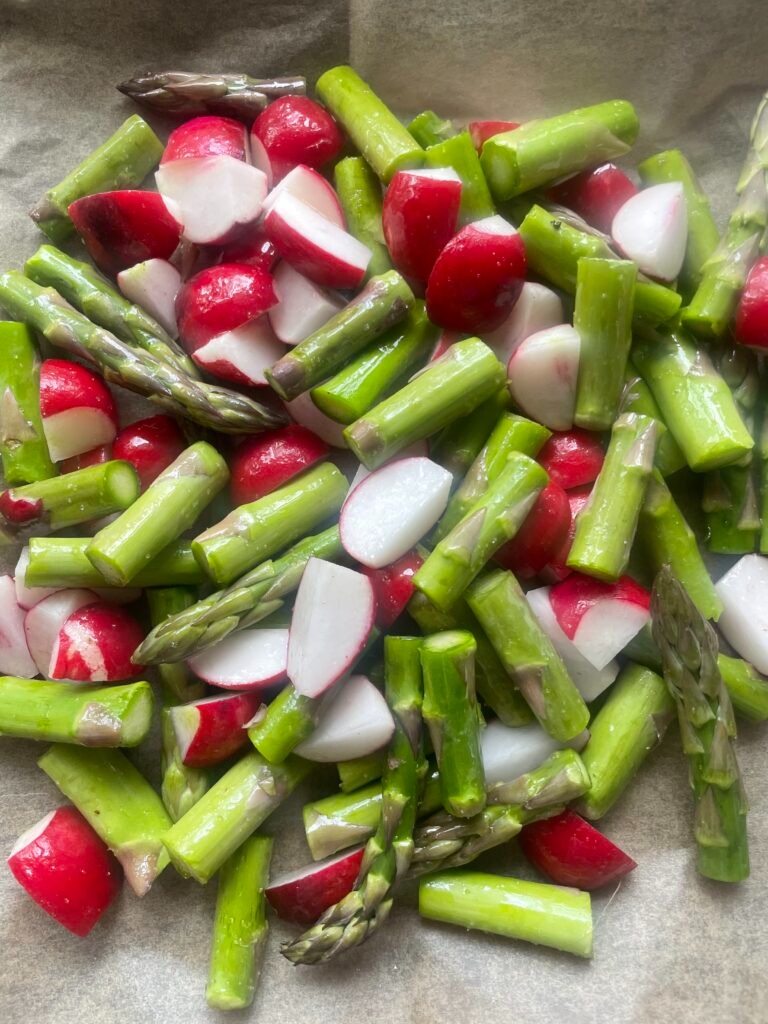
Roasted Spring Vegetable Panzanella
This salad is super hearty on its own, but to bump up the protein sometimes I add sliced, grilled chicken thighs. As you can imagine, this recipe is endlessly flexible, moving seamlessly with each and every season.
One of the main reasons it is important to me to teach people to cook within these forms is because of my value for place-based hyper-seasonality. So often seasonal cookbooks are either written from a different climate or in generalities. I often find springtime recipes calling for fresh basil (which I will not have till June). If we are seasonally adapted in our cooking, we can experiment with appropriate seasonal substitutions.
I think the other beautiful thing about working with forms is simply having limits. In the wide world of the grocery store, the rule is anything, anytime, anywhere. You can buy tomatoes in January, pomegranates in June, and strawberries in December. There is a simple beauty and grace in savoring things at their right time, when they are at their very best, in working with a small but complementary palette. In not having to choose from all the things, but working skillfully and artfully with what you have.

Leave a Reply