
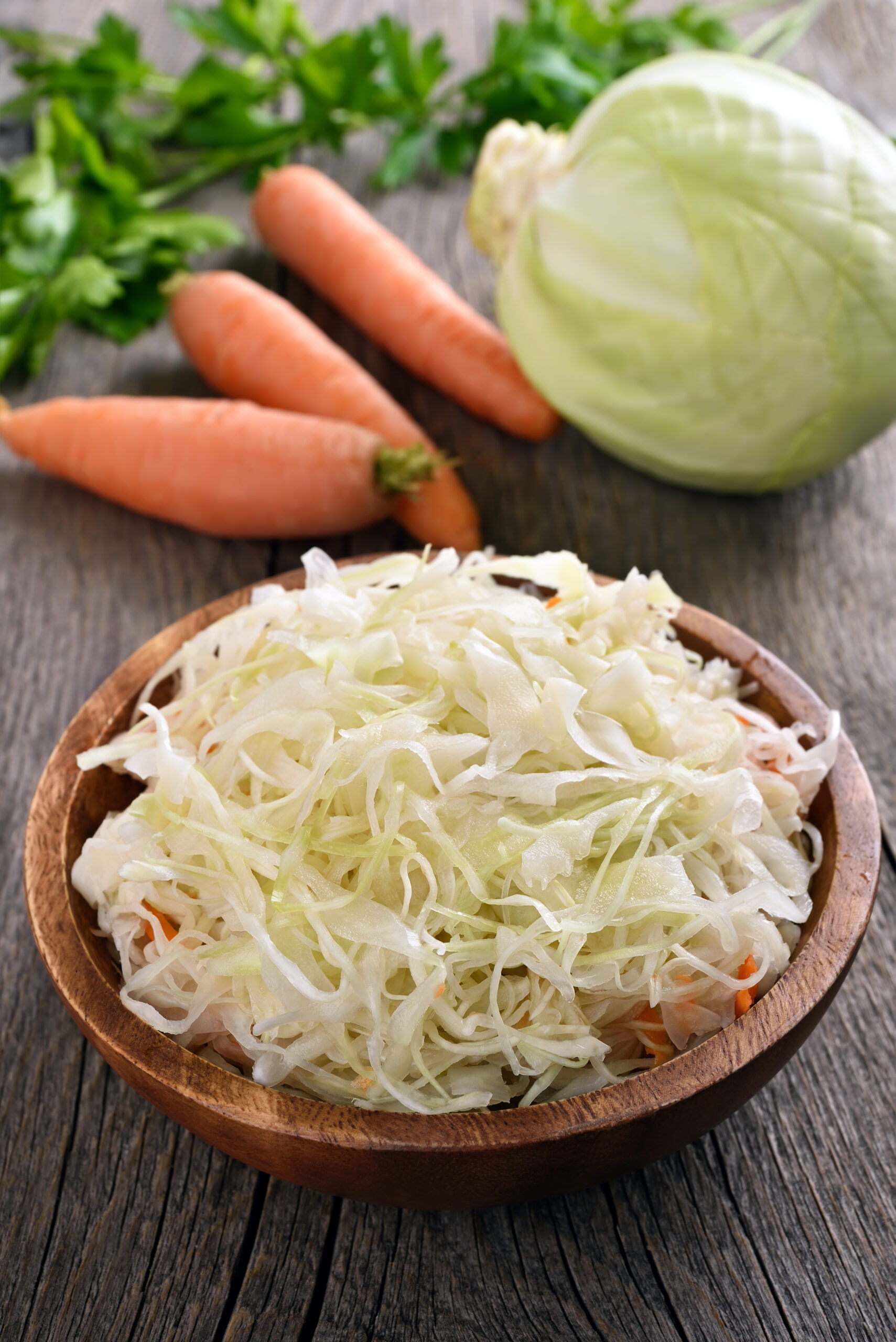
I still remember the first time I cracked open a jar of freshly fermented sauerkraut. The smell hit me like a ton of bricks. I grabbed a huge forkful—having never eaten fermented foods before in my life—and immediately ran to the sink to spit it out.
Probably not how you expected me to start this story, but that’s the truth.
I didn’t grow up eating fermented foods, or, honestly, many vegetables at all. So when people described ferments as having a “slight tang,” that felt like quite the understatement from my newbie perspective. Looking back now, it makes me laugh because today I not only enjoy fermented foods, but I eat them with nearly every meal, and there have been no more mad dashes to the sink.
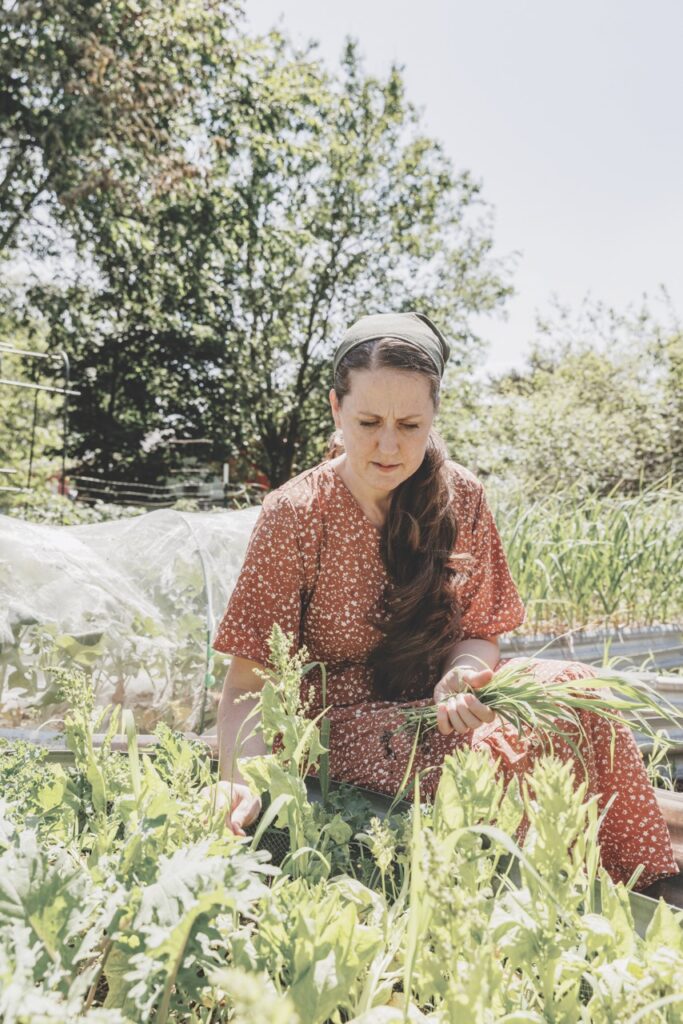
What I discovered over the years of growing my own food is that fermentation isn’t just one of the oldest preservation methods, it’s also one of the most practical. As a busy mom learning to feed her family from the garden, fermentation became one of the simplest ways to preserve what we grew while making those vegetables more enjoyable to eat.
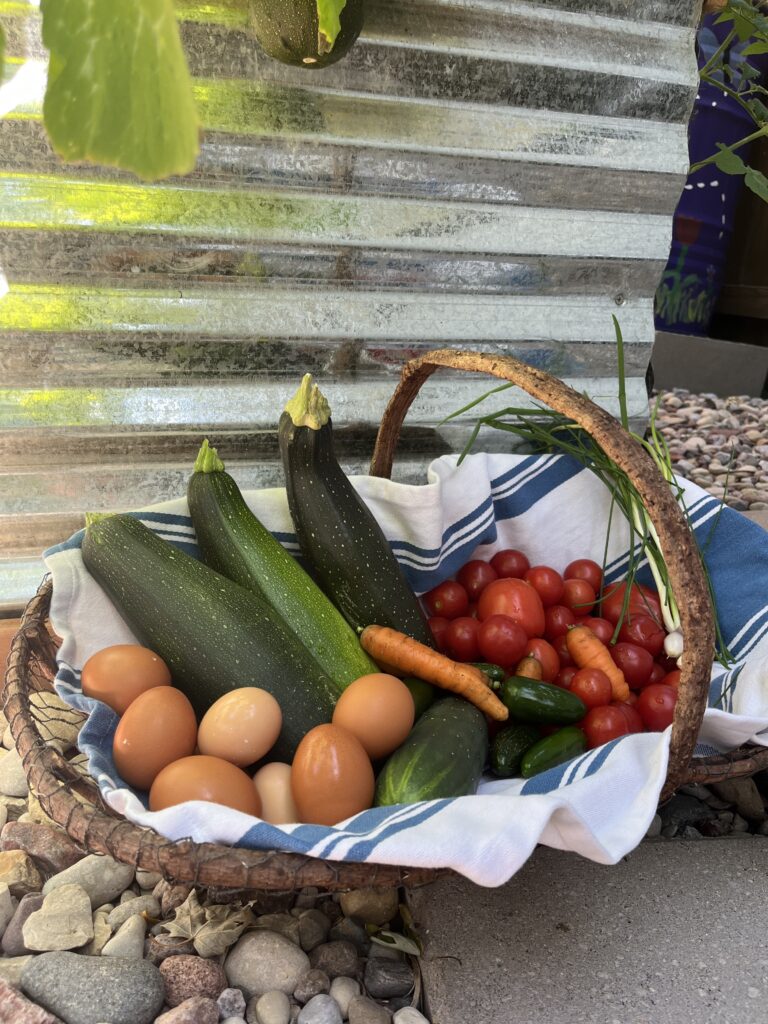
Today, fermentation is one of our primary preservation methods, and because of that, I plan my garden differently. Fall cabbage turns into crocks of sauerkraut and kimchi. Spring root crops like radishes, carrots, and beets become fermented snacks my kids reach for all summer long. When cucumbers start producing in warm weather, jars of crisp pickles fill the fridge, and herbs scattered throughout the garden become sauces and bases that flavor meals for months.
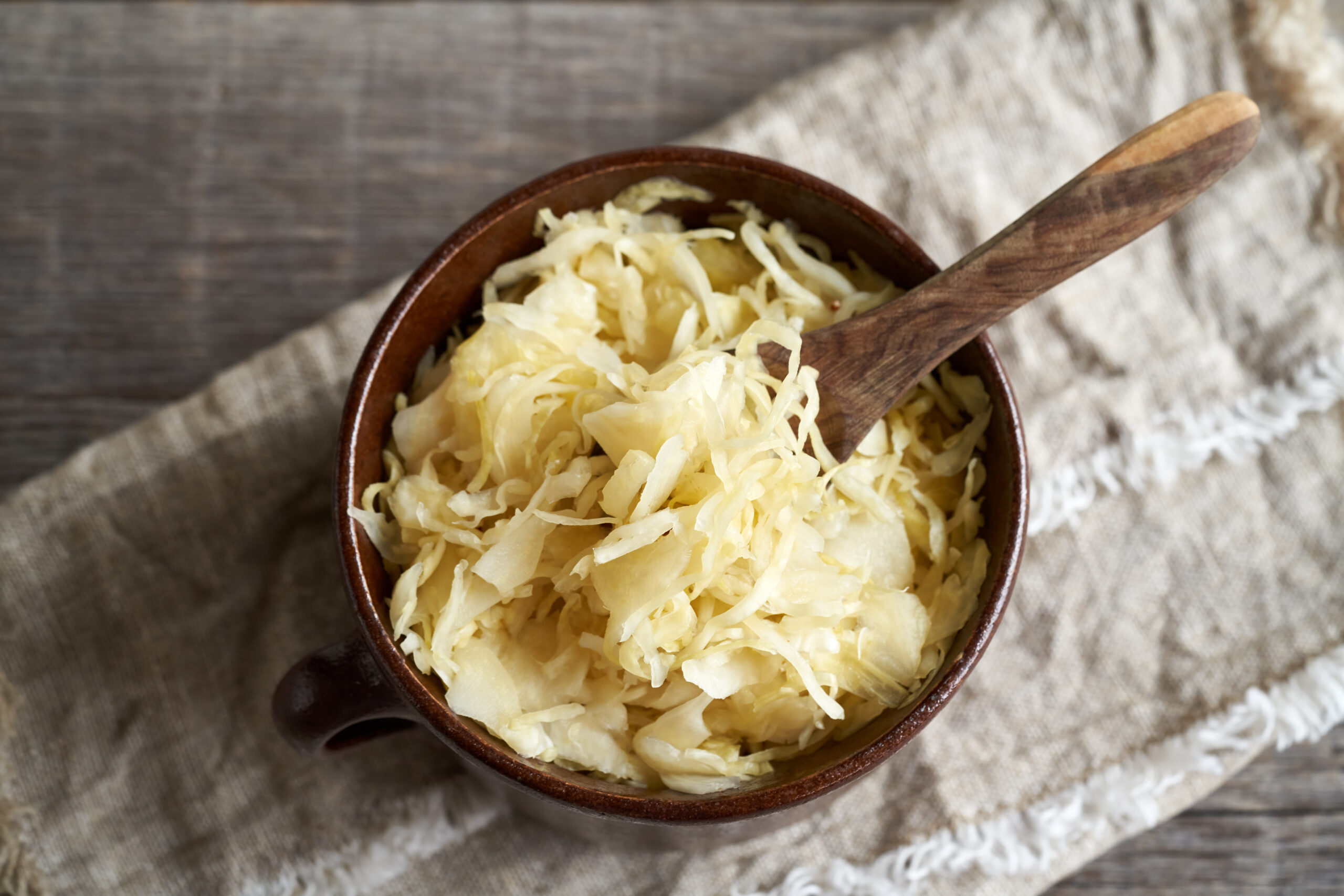
Sauerkraut is one of the simplest and most traditional fermented foods you can make. With just cabbage and salt, you can create a flavorful ferment that stores well for months and pairs beautifully with everyday meals. This basic method is an ideal starting point for beginners and can easily be customized with herbs and spices.
Ingredients
- 2 pounds cabbage about 1 medium head
- 18 grams sea salt 2% salt ratio
Optional Additions
- Caraway seeds
- Juniper berries
- Garlic cloves
- Black peppercorns
- Shredded carrot
- Fresh dill
Instructions
- Remove outer leaves and set one aside. Core the cabbage and shred finely.
- Weigh shredded cabbage and calculate 2% salt by weight (add 9 grams of salt for every pound of cabbage). Sprinkle salt evenly over the cabbage.
- Massage firmly for 3 to 5 minutes until the cabbage softens and releases enough liquid to form its own brine.
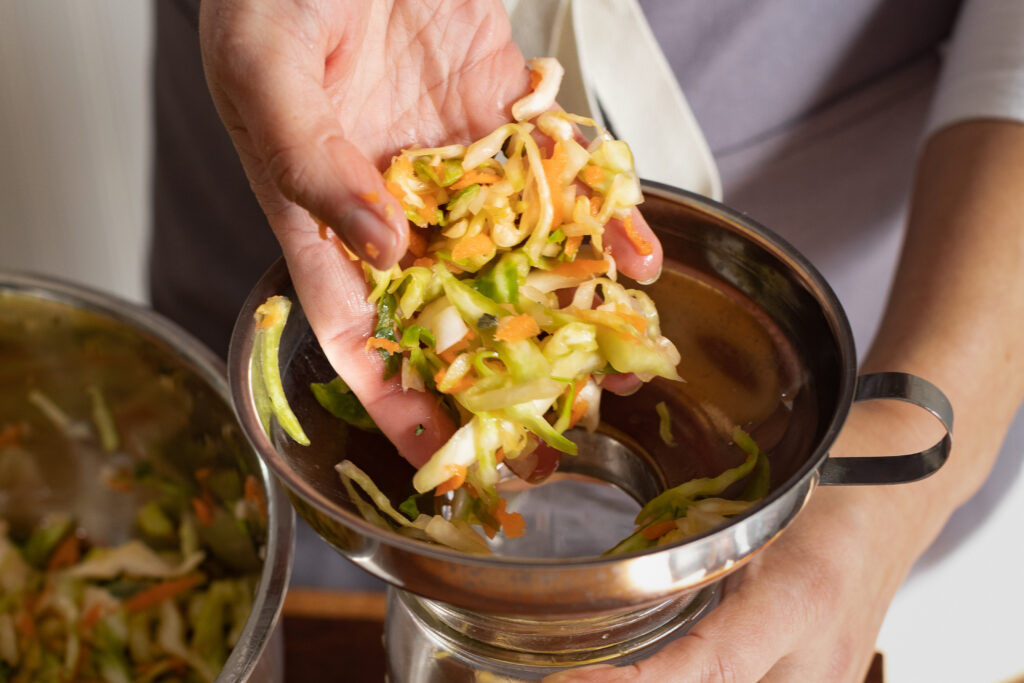
- Pack cabbage tightly into a clean jar, pressing down until brine rises above the cabbage.
- Place the reserved cabbage leaf on top and use a fermentation weight if needed to keep cabbage submerged.
- Allow to ferment at room temperature for 7 to 14 days.
- Taste periodically. When flavor is pleasantly tangy, seal and store in the refrigerator.
Notes
Always keep cabbage submerged beneath brine to prevent spoilage.
Sauerkraut can last up to 6 months or longer in refrigeration.



Leave a Reply