
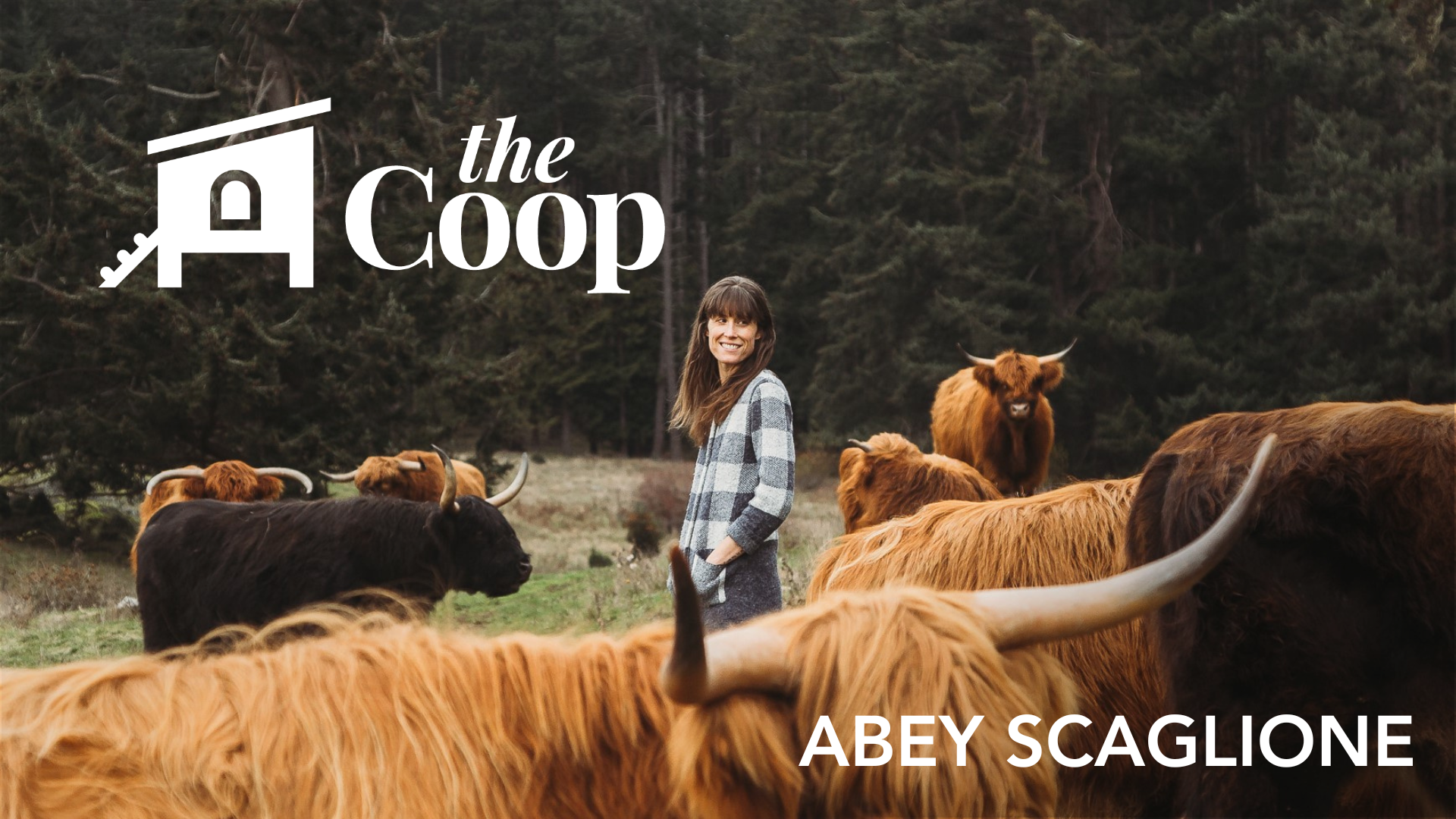



In Episode #25 of The Coop, Anna sits down with Abey Scaglione (a farmer, writer, and the author of Radical Farm: Animals, Food, and Our Future) for a thoughtful conversation about food, farming, and what truly nourishes both people and the land.
Abey shares her own journey from becoming a vegetarian at age 13, through trying out veganism and even raw veganism and “fruitarianism,” to embracing a diet centered around nutrient-dense animal foods … especially when she wanted to start a family.
She describes feeling constantly hungry and preoccupied with food on plant-based diets, and how adding high-quality meat, dairy, and eggs brought satiety, better energy, and a renewed relationship with eating.
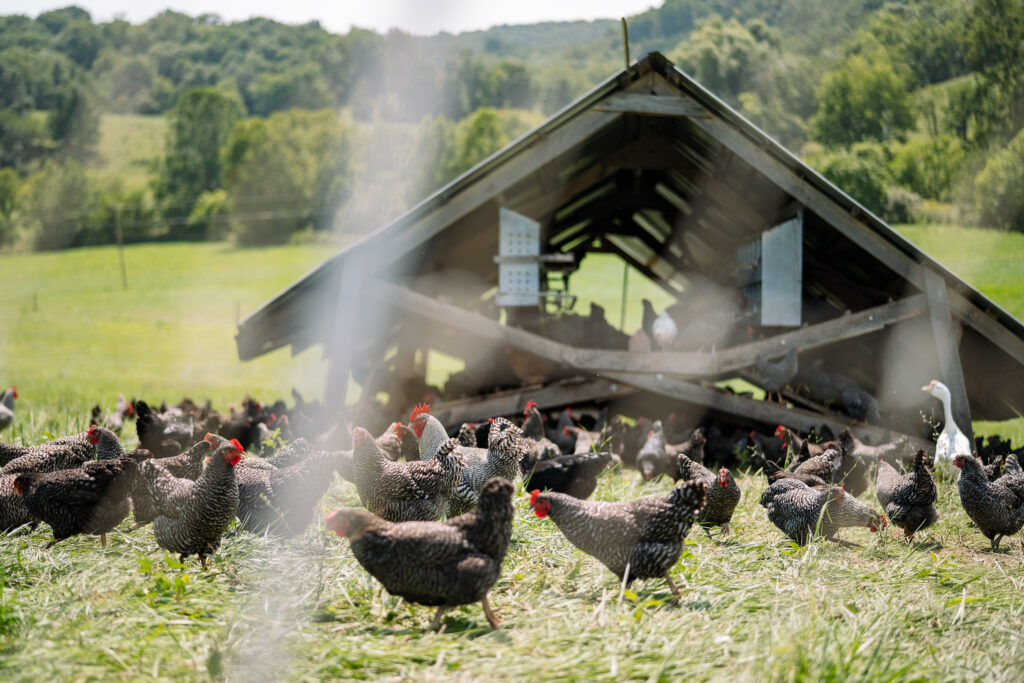
Now living on Salt Spring Island, Abey and her family raise sheep, cattle, turkeys, and chickens while growing vegetables, fruit, and medicinal plants. Through her hands-on experience, she has come to see the vital role animals play in regenerative farming … building soil health, increasing biodiversity, and creating truly sustainable systems.
Abey doesn’t shy away from the bigger questions facing our food system today. She explores why animal agriculture is often demonized, while pointing out the environmental and health costs of large-scale monocrop agriculture and ultra-processed plant-based foods, as well as the environmental benefits of animal-based regenerative agriculture.
Whether you eat meat or not, this episode invites you to look deeper at where your food comes from, challenge popular narratives around animal vs. plant-based eating, and consider what truly nourishes both people and the planet.
Listen or watch the full episode right here:
Learn more about Abey and her work at radicalfarmbook.com.
Learn more about Homestead Living at homesteadliving.com.
The show notes …
00:00 – Introduction
04:22 – Childhood Diet
11:05 – What Did Your Vegetarian Diet Look Like?
15:52 – Transitioning Back to Meat
23:32 – Discovering Weston A. Price & Raw Dairy
27:36 – Sourcing Raw Milk
32:44 – Learning How to Farm & Raise Animals
40:34 – Is Animal Agriculture & the Environment
50:59 – Can Regenerative Agriculture Feed the World?
1:00:32 – When Quality Meat Feels Out of Reach
1:11:13 – Carnivore vs. Omnivore
1:17:45 – Where to Find Abby’s Book
Abey Rae Scaglione:
I feel like I’ve lost a lot of my life to being preoccupied with food and that’s one of the reasons I’m so passionate about a real food diet and sharing that with other people because it really changed my life in a really big way to finally feel satiated and nourished. When you’re taking meat and dairy and eggs off the table, you’re really leading yourself down a risky path of not meeting your nutritional needs because it can be hard to meet your nutritional needs even with those
Anna Sakawsky:
Foods. It’s a really important conversation to be having right now at a time when meat and animal agriculture is being demonized and I think it’s important just to consider all of the facts. If the though of raising chickens has ever intimidated you, consider this you’re a sign to stop putting it off. Murray McMurray Hatchery has been helping first time chicken keepers succeed for over a hundred years. They offer the widest selection of day old chicks and poultry, super low minimum orders, sometimes as few as one bird, and the best guarantees in the business, live arrival, 48 hour livability and 90% sexing accuracy. Plus they’ve got everything you need to raise happy, healthy birds right from the start. Brooders, feed incubators, the works. It’s never been easier or safer to start your own flock so visit mcmurryhatchery.com and tell them the coop sent you. Again, that’s mcmurrayhatchery.com.
Well, hello everyone and welcome to episode 25 of The Coop. I’m your host, Anna Sokovski, editor-in-chief of Homestead Living Magazine. And today I am joined by Abby Ray Scaglione, a farmer, writer and the author of Radical Farm: Animals, Food and Our Future. So Abby farms on Salt Spring Island in British Columbia, actually not too far from where I live. I’m on Vancouver Island. And so that is where she and her family raise sheep, cattle, turkeys and chickens while also growing vegetables, fruit and medicinal plants. In a world where conversations about food often become polarized, Abby brings a thoughful perspective shaped by both personal experience and her life on the farm. Her work explores some of the bigger questions facing our food system nowadays, like what role should animals play in agriculture? How do we balance compassion for animals with the realities of feeding people and is plant-based really better for the planet?
In her recent article for Homestead Living, Abby shared her own journey from vegetarianism and then to veganism and then all the way back to embracing a diet centered on nutrient dense animal foods. Along the way, many of her own assumptions about what makes for a healthy diet and a healthy planet were challenged. And now she invites others to challenge their own assumptions about the relationship between animals, food and human health. So if you haven’t had a chance to check out the article yet, it’s out now in the July, August 2026 issue of homestead living, but I’m excited to talk more about Abby’s journey today and to explore this topic in more depth because it’s not just something that we should all consider individually in terms of our own individual health and our values and our ethics and responsibility just as citizens of the planet, but I think it’s part of a much bigger conversation that’s happening right now and kind of part of a narrative that I personally think that it’s important to dig deeper into and to maybe push back a bit on.
So without getting ahead of myself, I’d like to invite Abby to the show.
Abey Rae Scaglione:
Thank you. Thanks so much for having me.
Anna Sakawsky:
So Abby, thanks for being here. So before we even begin, I want to start right back at the very beginning. I know that you made the choice to become a vegetarian quite young. You were only 13. And there’s a lot of parallels actually in your journey to my own. I actually made a similar choice back when I was like 11 or 12 and tried on vegetarianism for a little while. And also for similar reasons, ethical reasons and not so much diet at that age, I wouldn’t say, but definitely I grew up being a real animal lover and thought really that that was something that was going to be better for the planet and I didn’t want to hurt animals in the process of feeding myself. So anyway, that really resonated with me. But I’m just curious to know too, but even before you made that choice at a young age, what was your diet growing up as a child and then what led to choosing to become a vegetarian at 13?
Abey Rae Scaglione:
Sure. So I mean, we ate pretty healthy, pretty real food, but it was also the low fat era. And so I grew up not eating much fat and certainly there was a reasonable amount of sugar. I mean, some could argue that we shouldn’t have much of refined sugar at all, but we would eat real food meals. And interestingly, my stepdad at that time in my life, my mom’s previous relationship, he was celiac and actually my grandma was celiac. My grandma was celiac before they even knew what it was and she was hospitalized with it. And so we ate fairly gluten free just because of my stepdad, Dale’s issues. Although as I say that, I guess in many ways, he would have some of those substitutes. And back then they were just terrible, like that corn pasta that just disintegrated. And I guess we would have the regular pasta.
So I think the gluten was still a part of it. And I was born in Manitoba and I would spend summers out there with my grandparents and certainly remember a lot of cereal cream of wheat for breakfast. So I guess it was a real mix. I mean, I think it was the ’80s and into the ’90s.
Anna Sakawsky:
It was a healthy diet, but a healthy diet for back then. What was considered a healthy diet then?
Abey Rae Scaglione:
Yeah. What was considered a healthy diet then was cereal for breakfast, like low fat milk. And we didn’t really eat much for fermented foods. We certainly had quite a bit of meat. It was a bit of a meat and potatoes style dinner for the most part. And yeah, it’s a great question. I mean, it’s such a long time ago and so many things, but yeah, I remember the Pac-Man cereal that we’d get at my grandma’s as a special treat and the cheese whiz that was on the table. But then there was also a lot of… My nan was a fantastic cook and it was like that really that prairie dinner at lunchtime they called it, right? You’d have your dinner and then later was your lighter supper.
And then I was, yes, that first generation vegetarian of my family. My grandpa raised cattle and I still remember that he made the best steak, the best barbecued steak. And that was probably the only thing I really struggled with wanting to still have when I was early vegetarian. But for me, it was just low fat diet culture at a very young age. The beauty magazines, I started working out really young and it was just a way that I felt that I could control my weight was to eat vegetarian. And it fit perfectly because I was also a huge animal lover. And so that it just made a lot of sense. But now looking back on it, I really feel like it was having quite the opposite effect than I thought it was.
Anna Sakawsky:
Right. So you made the choice to become a vegetarian at 13. And then how long were you a vegetarian for before you kind of tried something else on for a
Abey Rae Scaglione:
Second? Yeah. I went back to eating meat in my early 20s and it wasn’t a very thought, okay, I think I’m going to do this. It was a bit like, I’m going to eat that. And then it wasn’t much awareness of the sourcing of it at all. But then that came later as I moved through my 20s, started to get more interested in the way food was produced. But it was always from a place of what’s the next best diet. And so I was very much pulled into the vegan culture of Los Angeles and all of those restaurants and options that were there and being dairy free and trying this juice cleanse and that. And definitely from a place of restriction and a place of, “Oh, this is the celebrity fad and I’m going to jump on board.” And it wasn’t until I went back then after that period of veganism and trying plant-based eating more consistently that I then decided that it was a move towards nutrient density and real food.
And that’s when I started eating raw milk and lots of butter and meat. And that’s when I really saw my relationship with food change in that I wasn’t hungry in the same way that I was. I feel like throughout my teens and my 20s, I was really preoccupied with food. And partly that was from a place of disordered eating and where my head was at, but I think it’s also related and I wasn’t fueling myself. I’m sure I wasn’t eating enough protein. I certainly wasn’t eating enough fat. And so there was just this gnawing hunger. And then on top of that, I was feeling like I wanted to be thinner than I was in these very unrealistic beauty ideals. And so it was just this cycle of it’s hard to even focus. It was hard to focus. I feel like I’ve lost a lot of my life to being preoccupied with food.
And that’s one of the reasons I’m so passionate about a real food diet and sharing that with other people is because it really changed my life in a really big way to finally feel satiated and nourished and coming from a place of eating food because it’s food, it’s real food, not trying to… It was like crystal light and all those things that infiltrated my diet back when.
Anna Sakawsky:
Crystal light. I haven’t heard that in so long. What a throwback. Okay. So let’s just kind of walk through this again. So vegetarian, you chose that at 13. Now vegetarianism and veganism, obviously similar, but a little bit different for anybody who doesn’t know. So you were a vegetarian for a while before you decided to try veganism on. So what did you allow yourself on a vegetarian diet? Were there any animal products?
Abey Rae Scaglione:
Yeah. So with vegetarianism, I would be eating eggs and I was eating dairy. I think there’s a lot of reasons that we’ll get into that I believe that we should include meat and that’s a really good choice. But I feel that on a vegetarian diet, there are still healthy animal source foods that provide a lot of bioavailable nutrition. So I was getting some of that. However, I wasn’t eating a lot of fat. And so that was a big piece too. I don’t think whatever we’re eating, it shouldn’t be low fat. We need to incorporate those good quality fats. And you can have some of those on a vegetarian diet, although arguably they cannot in some cases maybe aren’t as local or that can get problematic with the seed oils versus things like tallow and lard and more traditional fats. But I was low fat eating some animal foods, as I say.
But yeah, I wasn’t including any meat and no bone broth or things like that. And then when I was in Los Angeles and tried veganism, then it was no dairy, no eggs, no animal products at all. And that’s where I think you really run into problems and it’s really risky as far as without the proper supplementation, without the proper food combining. And that’s even with vegetarianism. Unless combining different foods, you’re not going to be meeting your essential amino acid needs because they’re not complete proteins. Whereas when you’re eating animal foods, you have those complete proteins.
I do always say you can be an unhealthy, any type of eating. Well, that’s an odd way to put it. I guess what I mean is that certainly you can eat animal foods and have a very unhealthy diet. And that’s a lot of North America’s population. But when you’re taking meat and dairy and eggs off the table, you’re really leading yourself down a risky path of not meeting your nutritional needs because it can be hard to meet your nutritional needs even with those foods. But those foods have so much nutrition that… And then we get into all of the reasons of why are you avoiding these? And we can talk more about
Anna Sakawsky:
Those
Abey Rae Scaglione:
As the ethical and the environmental reasons. But the health benefits of animal foods is really undeniable as we understand that there’s nutrients in animal foods that our body needs that are completely absent from plants alone.
And then I tried being a raw vegan in Los Angeles. And truthfully, I do remember this zippy feeling and feeling great and feeling healthy. And that I believe is what pulls a lot of people in. And again, certainly if you haven’t been eating, if you’ve been eating a very processed food diet and you start eating more real foods and they’re plant foods, you’re going to feel good for a period of time. I don’t doubt that. But it’s just that question of over time what toll that is potentially taking on your body if you’re not being very deliberate and conscientious about your choices. Right.
Anna Sakawsky:
Yeah. And I think it’s really interesting what you said too about you can eat unhealthy on any type of diet. And obviously, yes, the majority of the population still does eat meat and a lot of people are really unhealthy and that comes down to making better quality choices and that sort of thing. But the same can be true on a vegetarian or vegan diet. A lot of the stuff that we see that’s coming out and actually being marketed as plant-based foods are still highly processed and manufactured and if that’s kind of what we’re relying on, then you can be a very unhealthy vegan as well and have that added problem of not meeting all of your nutritional needs with the types of foods you’re consuming. Okay. So let’s talk a bit about getting back now to a meat-based diet because from what I understand that you went back to eating a bit of meat, then you went full vegan, then you did the raw vegan.
I know you mentioned maybe dabbling in or wanting to try fruitarian was one that you… So you’re obviously trying all these different diets. And then you eventually came back to meat. I think it was when you decided that you wanted to have a family. Was that right?
Abey Rae Scaglione:
Yeah. I was teaching. So a woman named Margaret Floyd Berry, who is a wonderful functional nutritionist in the States who has taught me so much over the years about nutrition. She and I had met up and she was the one that introduced me to raw milk and grass fed beef and pasture poultry and all of these ways. And also an awareness of how food is processed or prepared. I believe she’s the one that introduced me to the work of Weston Price Foundation and understanding a lot of the traditional diets and ways of preparing food in traditional ways. And then along the way, I was trying these different vegan options and getting interested in that. And then I was teaching, I had a Pilates studio in Beverly Hills and she was taking a lesson with me and she knew that I wanted to start a family.
And I’m quite sure I was asking her about fruitarianism because that was sort of the interest of mine at the time. And it was funny, it’s like kind of early Instagram and early influencer. And there was freely the banana girl. I don’t know what I would actually like to dive into what happened to her, what her story is now. But at the time she was saying that we should blend up frozen banana and it’s like, that’s all you eat all day. And I mean, it’s madness to me now to think that I was like, sure, that sounds like a good idea. But I was very swayed and impressionable. And so that’s what I was interested in at the time. I wouldn’t say it was going well though. I do remember one day my teeth were hurting from all the dates and I was just like, I already could kind of like, this isn’t going very well.
But then Margaret said to me, “Whatever you do, don’t have a vegan pregnancy.” And it was a really life changing statement for me because I mean, there’s so much health benefit to animal foods throughout our life, but certainly pregnancy and for young children, that’s the most crucial time. And so I feel so grateful for that advice and it led me down a path of nutrient density at that time in my life when I know it was so vitally important. And so yeah, a lot of animal foods throughout my pregnancy and certainly lots of eggs for choline. And I was drinking raw milk because I had a very trusted source and just really focusing on real food. And so that’s what brought me there. And then again, I was feeling so good eating that way and feeling again, just more satiated even after my pregnancy, just feeling in a place of like, oh, I don’t have to eat every two hours.
I don’t have to just be like, when’s my next meal the whole day long? And so that felt just so freeing to me because that wasn’t my reality for my life of memory. Yeah. Yeah.
Anna Sakawsky:
It’s really interesting actually because I don’t adhere to a particular diet. I’ve been trying to do for last few months, I’ve been really trying to focus on more like high protein, lower carbs, that sort of thing and eating more meat. And I was really feeling like, yeah, same thing. Like you said, I don’t have to eat now. I’m full for longer. I’m feeling better by losing weight. All these things just naturally, not even because that was the goal, but just because I was eating that way. And then we’re just in a busy season right now and I’ve noticed I’ve been just not having that sort of stuff prepared as much. And we were at the beach the other day and I’m snacking on chips with my kids and there’s a lot more of just that sort of thing. A lot more kind of like high carb, low nutrient.
Even just like fruits and vegetables, we’re grabbing quick fruits and whatever because we’re on the go right now. And I said to my husband, I’m like, “I am so tired and I’m hungry. I’m so hungry, but I’ve been snacking all day.” And I said, “I really just feel like I need some meat.” This is just last night. My body’s craving. I had just eaten something else, but there was no… I’m like, “I can’t.” It was like a question. I’m like, “I need something else.” And he’s like, “Oh, I made some burger patties and I have them in the freezer. Let me just put them on the… ” I’m like, “I don’t even want the… I just want a salad and the patty and I can eat it. ” I’m like, “Ugh, I feel so much better.” My physical body was craving it. And that was just after a few days of eating like that.
So yeah, you can imagine over… Again, I was snacking on some junk food too, so that is extra not good. But if you’re not getting that meat over a long time too, what is that doing to your body? And certainly, like you mentioned, if you’re wanting to have a baby and you’re supporting another life as well, whether you’re pregnant or breastfeeding or whatever, what is that doing to that baby and to your own body and depleting your own resources because so much is going to that baby as well. So okay, I’m interested. So you were doing the veganism thing and then fruitarian, and then you heard this that don’t have a vegan pregnancy. And then did you just go down the rabbit hole right then and to do a total 180? How
Abey Rae Scaglione:
Quickly did you die? I believe there’s also a woman named Melissa Henig who at that time in LA had a food… She’s a chef and she was preparing things and selling them at the farmer’s market and she was doing a raw paleo. And so she was promoting a lot of raw meat and then she was really into raw butter and what you could make with raw butter and making this amazing chocolate mousse out of it and this banana pie and things that really real food ingredients. I got pretty into that. So that brought me down and yes, eating the raw ceviche, but also Yakro Pacho and things like that. Yeah, there was a period of that and then I got pregnant with my first son fairly soon after that. I think when you want to really eat well for pregnancy also because the body will give to the baby and definitely deplete the mother.
So that’s certainly a big consideration is making sure to protect your own nutritional needs while supplying that growing baby.
Anna Sakawsky:
Is that when you kind of got into the whole Weston A. Price Foundation stuff? Did you read Nourishing Tradition? I know a lot of people that read that it’s like mothers and they’ll often read it when they’re trying to conceive or when they’re pregnant. That seems to be kind of a trend. But I’m just curious because not only did you kind of start eating animal products again, but you’re like, “I started going raw dairy in the whole nine yards.” So what influenced that? How did you kind of decide, “Oh, this is the path I want to try at this point?”
Abey Rae Scaglione:
Yeah. I definitely did get nourishing traditions and that would have been around that time. Sometimes I’ve moved so many times in my life that I’m able to associate time with, “Oh yeah, I was living in that house.” I think the Weston Price Foundation’s nutritional information is really compelling. I think that the work Weston Price did in looking at all of those traditional cultures, which maybe a lot of your listeners have heard about, but just that idea that our dental structure and health is so affected by what we eat and him seeing that these cultures that were eating their traditional diet, even if they weren’t eating the same thing, they were getting a lot of the same nutrition. And that idea that same nutrition. And then I guess living in California, raw milk is legal there. It is really easy to access. And so I started getting milk from what was then raw…
Well, no, now it’s raw farm. It was organic pastors at that point. And they have a great test and release program and it felt very safe to me and that’s why I felt really comfortable. I’m a big advocate for raw milk, but certainly sourcing is really important and people really need to understand that. And I think I’m all for local farm fresh, but as far as being able to buy it in a grocery store, I think Mark McAfee has really shown a path towards doing that on a larger scale. And then with my… Well, and I guess it was researching the Weston Price ways of feeding babies as well. And so when my son… Well, I had quite a bit of trouble breastfeeding. And so we actually did a European formula for him after about a month of struggle. Which is really devastating to me as a very crunchy mom I wanted, but this is what life gives you.
But I didn’t feel good about the formulas that were on the market that I could acces. So we did get one from Europe that was, I believe it was called Holle, H-O-L-L-E. And it wasn’t perfect either by any means. It’s still a powdered product, but it worked. But then that meant I wanted to get him on solids quite early. And so he went and his first foods were egg yolk and liver and bone marrow and all of those really great things and gnawing on a chicken leg and that sort of thing. And then with my second son, when I hadn’t yet again tried, tried, tried and had trouble breastfeeding. And so I felt really confident in my source, as I say, and in myself. And so I did the Weston Price raw milk formula recipe, which is raw milk and a lot of real food ingredients that get as best as you can towards breast milk.
So breast milk being best, of course, but this being I think a really good alternative for people who are struggling. And yeah, I just honestly, it was in my inner circle and beyond that it wasn’t something I was telling a lot of people because people are just so fearful of raw milk. I mean, probably less so in California, it is very easy to access. So I think people maybe understand it a little bit better. But anyways, it was just, I’m really grateful that I made that choice for my son because I think it was really a really big part of his being as healthy as he is.
Anna Sakawsky:
Yeah. So I’m curious, so where were you living at this time then? Because you mentioned raw milk being hard to source. I know you are on Salt Spring Island here in BC, Canada, which is, like I say, close to me. I’m also in BC and raw milk is illegal in Canada. So it can be very difficult to source if you don’t have an inside source or you’re not raising it yourself. And I know that not only did you kind of decide to go full animal based, but you eventually started farming as well. So you farm on Salt Spring Island now, but at what point of the journey was this? Were you farming yet or where were you living? How were you sourcing these things? Or maybe you can’t tell us.
Abey Rae Scaglione:
Yeah. So we had moved to the Bay Area for my husband’s job. So after Los Angeles went to the Bay Area and then that we were near San Francisco then we moved to the Santa Cruz mountains. And in the Santa Cruz mountains, my second son was born. And then when he was about a year and a half, we moved to this farm in Canada where my mom and stepdad have been for quite some time, but the opportunity to join them presented itself. And so we moved up here. And at that time, my youngest who’s so little, I still wanted milk for him and that was a challenge. And then we got a dairy cow. And so we started when she had her first calf, we started milking. And so we had a jersey that we milked for three seasons of milking, three calves went really great.
And then it was with her fourth calf that we started running into trouble and she developed mastitis and we kind of got through those hurdles. And we ultimately should have called her at that time, but we did not. And then she had her fifth calf and it was that just a couple of months ago that she had to leave the farm and she went to her secondary purpose as ground beef. And that was a real loss. I mean, she was a wonderful animal and it was a very… She just nourished our family for years and that was very meaningful. So it was sad to see her go, but I believe for the farm, it was ultimately the right decision. So we’ve been bottle feeding her calf, but we don’t have a dairy animal right now. So I’m without a dairy animal. And as you say in Canada, this is You’re just out of luck.
And so I really hope in time that will change, but knowing that that’s not going to be anytime real soon, I will get some sort of other dairy animal. We’re just trying to decide what to do of whether to… I love jerseys. I think I’m a jersey girl, but I want either potentially to have some beef genetics mixed in there to just maybe she would even do better on a grass fed or other cattle are completely gras fed. I mean, she got some grain at milking time, so those are just some kind of considerations. And then we’re considering maybe just milking goats to give that a try and familiarize ourselves with how to do that. We do have some goats on the farm, but we actually don’t milk them. They’re just my mom’s pets ultimately. And then there’s the option of getting a dairy sheep.
So I just have a lot of possibilities rolling around in my head that I’m trying to sort through. But having access to milk is so important to me. I just absolutely love dairy and I love making cheese. And that’s something that I talk about a lot in the book is the benefits of raw milk, how misunderstood I think it is, and then how to make butter and cheese and yogurt and all these wonderful dairy products that are such a cornerstone of my diet. So that’s feeling really, that’s a loss right now, but I’m also really aware of how much more time I have.
Anna Sakawsky:
Yeah. Yeah. I guess there’s always a trade off. Well, okay. So I’m interested in a couple follow up questions here. So you mentioned that your mom and stepdad were already there because your stepdad was a cattle rancher or farmer, right?
Abey Rae Scaglione:
So actually my grandpa was a cattle farmer and yeah, I was around a lot of grain production in the prairies in my mom’s previous relationship. And then when we moved… And then it was actually in my last year of high school that my mom met Mike Lane and he’s been farming on this farm for 35 years. And so she joined him not too long after and was here and has been farming with him. And we have a pretty unique situation because we’re farming the 200 acre working farm within the provincial park on Salt Spring.
Anna Sakawsky:
I think it’s kind of cool because I think a lot of people are just thinking that way too about multi-generational maybe family farms or homesteads and that sort of thing. So I just wanted to kind of know what your journey has been and what it’s… And it’s kind of nice too, just having parents or a mother and a stepdad who are into this as well. So is that where you learned? Because that was my other question. Where did you actually learn to farm? It feels like you’re just like from one thing to the next vegetarian, vegan, fruitarian, now we’re animals and now she’s farming. How did you learn all of these things along the way? Was it very hands on that way with just coming to the farm and they had some experience and taught you and then you obviously learned as you went or how were you actually figuring all this out so quickly really?
Abey Rae Scaglione:
So when we lived in the Bay Area, we started a garden and they were actually, we started this WhatsApp group called the Garden Club that we still use today where we messaged back and forth about what to do with this tiny garden we had. But it was a really magical experience. And even though I’d ultimately been around a lot of gardening throughout my life, but I wasn’t interested in it and it was just kind of happened around me. And so this was a really different perspective of like really caring where my food is coming from and wanting to nourish my family and myself. And then we also, we got chickens and I was so excited about these. We had up to six chickens and that was really a wonderful experience. And so as we were getting more and more interested in food and then this opportunity came up and so they asked if we wanted to come.
And my husband, he had a sales job at the time and we both just were like, “That’s crazy. We’re not going to… ” And then it was basically 24 hours and you and I came together and just said, “We have to do this. This is an amazing opportunity.” And then it would mean he didn’t have to travel. And so we moved up here in January 2021 and yeah, kind of just thrown into it, but had all of that mentorship. I mean, milking funny enough was as much as Mike and Marjorie grew up in, I say back when raw milk was just called milk and my grandpa had milked a cow, but they had not done it themselves. And so that was one of the things where I learned to milk off YouTube. I got books out of the library. Mike has a lot of knowledge about call and there is a lot of information that applies of course, but that was a really
Big learning curve, but such a rewarding experience. I love hand milking. It’s a really, really cool part of my life that’s missing right now. And so then it was when I was up here that I’m learning through doing and also educating myself through lots of different sources as far as the sustainability. And I’m still learning more about the health aspects at this time and I’m really experiencing that in my own body. And then having this very intimate relationship with our livestock of bottle fed lambs living in our house helping a calf be born and then ultimately sending these animals to slaughter. And so I started to have a lot of just angst about that and feelings of like, is this the right choice and maybe I should be a vegetarian. And then coming to peace with eating meat through a lot of soul searching over that, but also really diving into a lot of those big questions and realizing the big picture of our food choices.
And not only do I think once you really understand the environmental benefits and the health benefits of eating meat, that alone I believe makes it a very ethical choice for humans to eat animals. But I also, once you start to just understand the cycles of life and death and that death is an unavoidable part of feeding ourselves and that with plant-based foods, animals are still dying. It starts to be like, well, why is this life of a cow more meaningful than all of these other creatures that are impacted by these other foods? And in arguably the larger numbers and in sometimes more cruel ways. Whereas the animals we raise, they’re given a really wonderful life and a life is free of fear as possible. And then they’re killed quickly in a low stress environment. And that’s I believe what’s really meaningful is how animals are treated, raised and slaughtered.
And our food production has gotten so off track in the way animals are raised primarily. I absolutely. And now there can be arguments for that still being a healthy food as far as that meat patty being the healthiest thing on people’s plates, even if it was conventionally raised compared to the french fries and the soda and the bun.
But yeah, there’s problems certainly with what has become known as conventional animal agriculture. But
Equally, there are a lot of problems with plant-based agriculture and the monocrops and the pesticides. And so it’s not like a plants are good, animals are bad, but rather really looking into the sustainability of all of our food choices and also understanding that there’s a need for animal involvement in order for us to regenerate the soil and for us to have… There are no healthy ecosystems that are not a balance of plants and animals. And so what I advocate for is that mixed farming that incorporates the two. And even if there’s not literally animals on the farm as much as they think that can be incorporated and there’s a lot of benefits to that, certainly amending our soil with manure and blood and bones and all of that composted animal products, that’s what’s going to give you really amazing produce.
Anna Sakawsky:
Yeah. Yeah. I mean, even where we are, we’re only on a quarter acre. We have some backyard laying hens and then we have big gardens. But I’m looking at my window right now and I was saying the other day, I can’t believe just from the way we garden and organic and we incorporate a lot of flowers for pollinators and all these things. And I said this year especially, we’re seeing a lot of it come to fruition and the amount of life that is here. I’m watching right now, there’s dragonflies and butterflies and hummingbirds and songbirds and tharter snakes and just like life everywhere just because of kind of this environment that we’ve created. And to that point as well, so you mentioned, I think it’s really interesting because you brought up this fact that even eating plant-based is not cruelty free because all of these little critters are involved.
And so then when we have to plant out these, what essentially has to become mono crops of plants in order to feed the world on the global and the scale that we need to do so these animals get caught up in the process as well. They lose their habitats, they get caught up in tractors and they have all sorts of, like you said, a whole bunch, a lot more lives and probably that end up being killed in much crueler ways even though we’re trying to be kinder. It’s not just about the animals that we’re raising ourselves. It’s also about just the ecosystem of all these other animals and critters that we are then disrupting in order to grow these crops. So to that point as well, so you mentioned kind of conventional farming versus regenerative. And I think most of our listeners have a pretty good idea of what regenerative farming means, but maybe if you could just speak to that a bit because I think especially in this climate nowadays, meat is really being demonized and cows especially.
We hear all these things about how cows are contributing to climate change and animal agriculture is destroying the planet and the plant-based is not just healthier, that’s some of the messaging, but that it’s better for the planet and it’s more ethical and all that stuff. So what are your thoughts around this? And do you think that there is validity to this argument that animal agriculture is contributing to environmental destruction? Or is that more so about the way we’re farming rather than the animals themselves?
Abey Rae Scaglione:
I think it’s absolutely the way we’re farming versus the animals themselves. I mean, there have been large ruminants belching out methane for millennia and in arguably larger numbers than the amount that we have now just due to all of the wild ruminants that in a lot have been killed off. I think it’s so interesting to understand the carbon cycle and just that this methane goes up into the atmosphere, but that the way that is converted and they think about 10 years and it comes down to the earth again as carbon dioxide and water and then the plants through photosynthesis take that back up and then pull carbon down into their root system and all of that amazing life underground that feeds the soil and then that relationship of then the soil, the root exudites feeding the microbes and all the life and then that life releasing the nutrients that the plant needs.
I mean, it’s just a fascinating and I know some of it, but it’s just like a vast amazing life underground that I think really we’re only starting to understand just how much life there is underground that support the plant health. And then those animals are eating those plants and helping that cycle continue and having that impact that the grass is in another forage need, that they’ve had that relationship. And then that cycle continues. So that’s your natural carbon cycle. And then you’ve got your fossil fuels being burned and that going up into the atmosphere and really lasting many lifetimes and not cycling through in that same way. And I think a really interesting thing that I learned as a young newer farmer was that how much fossil fuels are a part of synthetic fertilizer production and that if we’re not getting our fertility from animal sources, then we are supporting that part of the fossil fuel industry.
And so this idea that that is better for the environment than a cattle out to pasture just again, cycling through as nature has intended, we’ve just been really misled down the path of believing that. And it’s really held on as this thing that people think even if they eat meat, so many people think, “Well, I should eat less meat because it’d be better for the environment.” But really again, it’s more about making conscious choices because again, if you’ve removed animals from their natural behaviors and you have them just on bare dirt and feed lots and different issues that then we’ve broken that cycle and we’re not letting that carbon cycle do what it does best.
And it’s also about, I really want animals again, to be exhibiting those natural behaviors, to be out in the sunshine, to be eating a diverse diet. And if we can have those healthy soils, that’s going to be what’s preventing desertification and land ideally should not be bare. And if we’re incorporating grassland systems, there’s just so much benefit to the environment, to the biodiversity, to the amount of life that kind of system can support, like you’re saying with your beautiful garden system. It’s like there’s so many beneficial insects. There’s so many birds. There’s again, that ecology below ground. There’s all the little rabbits and all the creatures that are able to live in that system. And so there’s a spectrum of what is considered regenerative agriculture, but I think ultimately we want to be coming at it from a place of land management and caring about the holistic management of an ecosystem.
And that’s where again, that is a mixture of plants and animals. And yes, maybe some of that is the birds and it doesn’t have to be a cow, of course, but large ruminants have had such a soil building
Part to play in our ecosystem for so long. And so it’s unfortunate that that has been what has been targeted because I think a grass fed cow is arguably the most sustainable thing that you can eat, not only for the environment, but again, if you’re trying to move towards least harm as a motivation for yourself, then that is really one death and maybe a few little creatures that were either stepped on or when in the haying process we see the vultures come down to eat again, because yeah, crop death is a real thing and that’s with haying as well. But when you’re talking about these vast areas of land that are growing these crops and then one of the issues becomes too is how much that land is then just left bare. And if we incorporate cover crops and there’s so much to unpack and to how to improve these systems.
But animals certainly play a part. And I think we would really do ourselves such a service to do away with the hand wringing over whether or not it’s wrong to eat animals because then we can, and that I’m very passionate about helping people understand that bigger picture because then I feel like we can really get to the important part of how do we then create these systems and develop slowly these better ways of doing it. And so many people are showing an amazing path towards doing so. And it’s a beautiful way to farm, but it’s also, yeah it’s like you do as much as I love it and it’s absolutely the type of farming I want to do. You also understand why from a profitability standpoint, people went down a very specialized place of scale and even just to throw it out there, like the chicken industry.
I love pastured chickens. When we move our meat birds, I just love it. This new beautiful chunk of grass and they’re just like so excited and it’s just such a beautiful way to raise chickens, but it’s going to come with more challenges for predation. I mean, I think you can raise a healthier bird in that environment, but there’s just all of these considerations of keeping them out of the weather and different things like that.
Anna Sakawsky:
Well, and you’re right. And I think that it speaks a lot to just the way our society has been for quite some time is that whatever is most profitable, whatever provides the quickest returns, whatever is easiest, the easiest path of least resistance to feed the most people. How do we keep costs of food low? There’s a lot to consider there and none of that should be discounted. On the other hand, I do agree with you personally about that regenerative farming. I think that it also solves a lot of problems that now we’ve dug ourselves into having gone that route. So like you say, the environmental degradation, I agree I believe is in large part because of conventional factory farming practices and not necessarily the animals themselves, but about the way that we’re aproaching it. And maybe if we went back to a more regenerative model, then we could actually solve some of those problems.
But also, like you mentioned, the chemical fertilizers and petroleum based products and everything. We just saw that recently with this closure of the street of Hormeus. And it wasn’t just oil that wasn’t getting through, but it was fertilizers. And I don’t know where we’re going to be with that when this episode comes out in July. It’s mid-June right now and sounds like maybe some of that’s coming to an end, but even so, we missed this critical window planting window where farmers didn’t have access to at least the amount of fertilizers, conventional fertilizers that they normally had. So what’s that going to do to the food supply? Whereas there’s folks that are regenerative farming going, huh, I didn’t have any of those problems because I’m following this model. So it can solve some of those problems. But then again, we go back to this argument from a lot of people that like, yes, but can we do it at the scale that is needed to feed the global population?
So while I’m a proponent of regenerative farming and you’re a proponent of it, what are your thoughts? How realistic is it that we could actually… All other things aside, if we all got on board and said, okay, we’re actually going to transition to a fully regenerative model, could we feed the world that way? Or would we have to inevitably eat less meat in order to eat better quality meat? What do you think?
Abey Rae Scaglione:
Yeah. It’s such a good question and certainly one I think about a lot. I think Will Harris speaks really beautifully to the replicatable farming practices that it’s not about… I mean, it ultimately is scaling, but it’s not like… I believe we need to stop counting on so few people to feed everyone else. We need more people involved and more people rippling out and that is what is going to actually create change. I think ultimately I do very much believe we could feed the world regeneratively because… Well, a couple things. First of all, it’s almost like the conversation we cannot continue to feed the world conventionally. We are degrading things to such a point. That’s not an option to continue down that path. So we have to try to do something differently and working from a point place of soil health, whether you want to call it regenerative, ecological, working with organic practices, it’s about getting back to working within the cycles of nature.
And then within that, you’re creating so much life as we’ve talked about. And then there can be so much more potential for ultimately more production on the land. So it might in some ways like that chicken CAFO that we’re talking about, yeah, that’s producing a lot of food, but at such a cost to the environment, those poor birds and it’s not good for our health. But whereas when if you’re having your pastured poultry, that can follow your cows that you’ve already grazed on that land. You can have fruit trees on that same land. There’s just a lot of stacking of enterprises that I think can be really beneficial. And then there’s just so much land mismanagement as far as even that land that’s left bare for so much of the year and what could potentially be done as far as cover crops. Then again, what livestock can utilize that.
And then there’s just land that is underutilized. I mean, it also depends how granular are we talking? How much do we want to do this? Are we getting away from backyards or are we no longer… Are the golf courses gone? I understand that people want to have their leisure activities and their pretty parks, but do we want to start to… But then it gets tangled up with the bureaucracy of it all, of the zoning. I think we should be gracing goats at the side of the road. I see grass out to my shoulder growing in the ditch and they come and just mow it down. It’s like there’s so much potential, but I also…
I very much believe that we must try, but I don’t at all deny the challenge and that it is no easy feed and that it’s taking this massive shift in priorities and people to actually care about something maybe a little bit more than money, which can be unfortunately a hard thing for some people. I am very pro – farmer. I believe that these people who are out there working to feed people, they’re doing the best with the information they have. But I think as we start to understand the damage that a lot of these practices are doing, farmers love the land, love animals. I mean, yeah, sure there’s some that don’t, but most people are working hard and trying to produce food for other people. And it’s about shifting some of our practices. I think it’s slowly as well. I mean, I don’t know if slow is the right word because there is a sense of urgency as well in us changing practices.
But again, it’s not going to happen this overnight. These are small changes that people can make of cover crops or planting trees or integrating livestock. Yeah, there’s really so much to unpack in the idea of fixing our food system. But I believe what we should do more than anything is return to a place of our community and our local food system. And while I think there is certainly a place for the discussion of how do we feed the world, what we need to is start feeding all of these communities and decentralize our food production because yes, as you say, with the fertilizer production and issues such as that, it’s like the more we can become community sufficient and able to support ourselves, there’ll be a lot of talk of like, what do we do in the next crisis? And not only is that crisis arguably already here, but as far as more of what people think of as a crisis with the disasters and the lack of their food access, if you’re already supporting those local systems, then they’re already in place when you can’t.
But people are outsourcing their food to such a degree and getting it from sources that are not producing food in beneficial conditions. And that’s really problematic for our food security ultimately.
Yeah, that’s a big part. But I think it really is also more people getting involved, more people caring. And then you get into many layers. It’s also about just how to help people understand the value of food beyond this very transactional, here’s this food and you’re maybe valuing it for its nutrition or taste and here’s the money I get for it versus feeling like all of how it uplifts our communities, how it increases our food security, our collective productivity, it lowers our healthcare costs and just all of these reasons that food represents so much more than what we see on that price tag.
Anna Sakawsky:
Yeah, absolutely. Yeah, really well said. And I love this idea of community sufficiency, getting back to having our food source be local. If you can be growing or producing anything yourself, obviously that’s a great place to start. Obviously that’s what we’re trying to do here at Homestead Living is encourage people to just do what you can where you are with what you got. And sometimes that’s just a small little garden on your balcony if that’s all you have. But that can also then mean if you can’t raise your own meat, then like you say, look to your local community, support your local farmers. I always say do that. I just actually did a podcast episode about this a little bit ago, I think three episodes ago for listeners who want to go back and listen, but I talk about this and why it’s really important to support your community in the good times so that they are there.
If you’re supporting your small local farmers in good times, then you ensure that they are there for you in bad times or during a crisis or whatnot, that you still have small local farms that you can turn to. So I think that that’s a really huge thing right now and especially as it just feels like there’s a squeeze from all directions on meat and animal products. Everything’s getting more expensive. Now there’s like this lone star tick that’s causing alpha gel syndrome that it could make you allergic to meat. And there’s the new world screwworm, which is leading to having to cull cattle populations. And then actually, I don’t know if you heard about this one, this sounds like it’s something straight out of a dystopian novel, but in Oregon, there’s an animal rights group that That is pushing to table a bill basically that would make it illegal to harm or kill any animals.
So that would completely decimate hunting, fishing, farming industry, but even you’re not even allowed to exterminate them, nothing, which is obviously very extreme. A few years ago, I’d say that would never pass, but who knows? There just seems to be more and more of this. And just with it even just being more unaffordable, I don’t know, what would you say? And I’m not expecting you to solve this problem, but for anybody listening going, yes, this is all well and good, but I’ve already heard friends and family members saying I’m eating less meat simply because they can’t afford it now or whatever. What would you say to people who are like, this is great and I wish I could, but something is preventing me from even living here in Canada, I can’t get raw milk. So what’s kind of the next right thing? What advice would you give somebody going like, that’s all well and good, but I feel like this is getting harder, farther out of reach for me?
If you’re a mom like me, then you probably know what it’s like to spend way too much time worrying about what’s in the everyday cleaners and body products we bring into our homes and use on and around our families. In fact, a few years ago, I completely overhauled our cleaning products and started making my own vinegar cleaner, baking soda, toilet scrub and homemade laundry detergent. And while those have honestly worked pretty good, I don’t always have time to make my own cleaners. And if I’m being honest, I don’t always want every surface of my home to smell like vinegar. And that is why I love Rustic Strength. Rustic Strength offers a full line of non-toxic laundry, home and body care products all made in small baptism by a family owned company in Misouri. Their formulas are safe and effective for real, for real, and free from the junk you don’t want in your home, on your body or near your kids.
Clothes come out clean without overpowering scents. Surfaces shine without the lingering scent of vinegar or toxic chemicals and you can sleep soundly knowing that you don’t have to worry about what’s in your cleaners and skincare products. So if you’ve been thinking about making the switch to cleaner, non-toxic home and body products, then consider this your sign. Head over to rusticstrength.com today and see why so many moms have already made the switch. Again, that’s rusticstrength.com. Tell them the coop sent you.
Abey Rae Scaglione:
Yeah. That’s a really tricky one because I really empathize with people who are struggling to put food on the table and the stress of that. And certainly that squeeze you’re talking about from lots of places, people are seeing food as a place that they can cut back because they don’t maybe have control of their rent or their utilities or their, I mean, I guess maybe their car payment, but just different ways that they maybe feel like, “Well, I have to do these things, but then I go into the grocery store and I can buy these.” But it’s a bit of a quote unquote cheaper food because it does come at a cost. It’s just not a seen cost. It’s coming to a cost to the animals, to the environment, to our health, to our collective productivity, to our healthcare system. And it’s that question of how much can we prioritize our health and be proactive about supporting our health and the role that meat and animal products play in a really healthy diet.
And a lot of those foods that seem… People are certainly still buying a lot of convenience foods, a lot of packaged processed foods that that bag of chips feels cheap because it’s maybe under $5, but there’s not much food there. Even literally like ounce for ounce if you compare it, then the ground beef would be cheaper in most cases. But also just, yes, that lack of nutrition that we were talking earlier about feeling hungry and unsatiated and what’s this doing and also what this is doing to our children’s health and our mental health.
But it’s tough. I think there’s a lot of people who are not buying it because it’s too expensive. I think there’s also people who aren’t… It’s a convenience thing. They’re not making that extra stop at the farm stand or the extra stop at the butcher instead of getting everything at their supermarket. People who can have enough to put out upfront buying a whole or half cow or lamb does save you some money for sure. And then that gets to a place of eating more nose to tail as far as utilizing all of the different cuts. And then it’s looking at what as a society we have come to value and people will go to the coffee shop and I mean, it’s like a latte in my community. It’s like 7.50 now. And it’s like, okay, well, that’s what it costs. And I think these little purchases feel somewhat more doable.
It’s kind of like that bag of chips feels cheaper because the price tag is lower. But if you totaled up all of those things over the month, would you have more and you put that towards these animal foods from better sourcing? And then it gets into the question of, like I mentioned earlier, I’ve had to come to some… I don’t advocate for those conventional practices, but I have come to a place of accepting that even conventionally raised beef has a lot of nutrition. There’s certainly more coming out to indicate the phytonutrients and the omega fat profile of grass finished meat on a diverse pasture, how much that benefits is there. I think you only have to crack open a farm fresh egg and see that joke to understand some difference. So you are getting more when you buy food of nutrient density.
But yeah, I mean, I write in my book, not many people want to fry up a pound of ground beef and call it dinner. Food is such a source of pleasure and you’ve had a hard day and you just want to eat something really delicious. I mean, ground beef is delicious, but it’s often what we put it with. I mean, I think the more people can get back to cooking from scratch, but that ties into the convenience piece is that people feel very time poor and so it’s hard for them to maybe value that. But when we cook at home, it’s cheaper than eating out. It’s cheaper than a lot of those convenience foods. It’s not necessarily going to save you money to raise your own chickens compared to those super, how do they even produce these for that price eggs. But compared to eggs of similar pastured or free range comparison, that is going to save you money.
So it’ making your own kombucha. So it’s making your own sourdough. All of these homesteading pursuits that I think it’s just about layering those into people’s lives in manageable ways. And over time it just builds and ripples. But yeah, I think the price conversation is a tough one, but I do believe that we need to recognize these socioeconomic factors that limit access for people while still advocating for these better practices and that those people who can afford it, and there’s a lot of them, that those people can start to see the value of those foods and understand that we have built an unsustainable food system based on thinking food should be cheaper than what it is to produce.
Anna Sakawsky:
Yeah. Well, and I think that’s where a lot of it comes from is we’re just so conditioned to see these prices, these cheap prices, cheap food prices at the grocery so that we expect that all foods should be like that. And I do think it’s important to compare apples to apples or oranges to oranges or pastured eggs to pastured eggs to compare that quality. And because I do think that, again, it does save you money still to at least be raising your own or cooking from scratch if you’re comparing the same quality that you would get from the grocery store or from a restaurant or whatnot. So you’ve tried a lot of diets in your life obviously.
Abey Rae Scaglione:
Yeah. It’s a list of fad diets for sure and different ways of eating. I mean, I call it a real food diet, but it’s not a diet in that way that diet culture has… It’s just a place of asking yourself, is this a real food? Is this something I could prepare in my own kitchen even if I’m not going to? I do eat the chips and the different things still too. I mean, I aim more and more to not only produce my own food, but also to… I just know I feel better and it’s also I am cognizant of how much those foods do cost ultimately. But yeah, it’s not about eating perfectly, but it’s about it for the majority of the time, the majority of your meals, you’re eating food that is vegetables fruit. I do eat some grains. I think they can be problematic, but I do eat some grains and then yeah, a lot of meat, dairy and eggs and that’s really great.
It’s interesting though, I do actually really love vegetarian food. I like meat. I mean, sure, there’s lots of things that I like, but I actually really love vegetarian food. I just think
That there’s…
Anna Sakawsky:
I was going to ask you too, because there are people that obviously they’re really big proponents of the carnivore diet and there’s people that are like, “You can get all of your nutrients through meat.” And there’s also people that are like, “Actually, we shouldn’t be eating vegetables because they have anti-nutrients and they’re not bioavailable and all these different things.” What’s your take on that? Do you think we can if we wanted to get all of our nutrients from meat? Or do you still think there’s a place for vegetables and that we should be more focused on just a well-rounded diet of whole foods?
Abey Rae Scaglione:
Yes. Great question. Well, in advocating for meat and my experiences, certainly the social media algorithm was like, “She loves meat.” Give me so much carnivore content. And again, that voice in my head sort of being like, “Oh, maybe this is the way to go. ” But to take a step back, I as humans, we have been omnivores since our beginnings. And I think there are, as you say, those issues with certain plant foods that aren’t as I think as recognized by the general population, the oxalates and the phytic acid and the things that are those plants defense mechanisms that can be problematic. I think certainly more so for certain people it would seem. But also if to circle back to the work of Weston Price and traditional ways of preparing foods with the fermenting and the soaking and the sprouting and different ways that these foods have been prepared.
I mean, we eat some beans, but I don’t eat a lot of beans. And to circle back again to the conversation of vegan and vegetarian diets, it’s like to meet your nutritional needs, the amount of carbohydrates you have to consume can be really problematic for a metabolic health. And so I see myself very much as an omnivore. If I was having health problems that I kind of couldn’t get to the bottom of, I would certainly entertain the carnivore diet for a period of time. I do believe that people can see really great benefits from that. But do I think that we should eat nothing but those carnivore foods? Not personally. But that balanced approach to eating has been really, really good for me. I think when I get into a mindset of, okay, I only have these things, it makes me a little crazy.
Anna Sakawsky:
Yeah, absolutely. And I also just think just from a health perspective too, I agree. I think by and large, we should be staying away from the processed foods. I think 80 / 20 rule kind of thing. I think if we restrict ourselves too much, and I’m really careful about this with my kids too, about letting them have the treat every now and then so that they’re not fixated on it as far as nutrient density meats and animal products are probably some of the best sources. But again, looking back historically, humans always ate some degree of fruits and vegetables as well because we were omnivars and we were going to eat whatever we could eat, whatever was edible. Yeah.
Abey Rae Scaglione:
Yeah. And I think that’s where certain seasonality comes into it too. I mean, there’s a lot of ways to sort of approach this of wanting when we garden in the summer, this idea, this beautiful produce that we can produce to not eat that wouldn’t feel right to me, but it certainly feels… It’s also the nutrient density of the plants though too. If you’re eating that garden fresh produce, that’s going to have a lot more taste and a lot more benefits perhaps than just a lot of what we think like the tomatoes in February, for example. There’s some issues there. But yeah, I agree with what you’re saying that yeah, coming back to that balance.
Anna Sakawsky:
So I was going to ask too, so you’ve obviously tried a lot of different diets. Do you think you’ll experiment with any others again or do you think you’ve kind of found the right fit?
Abey Rae Scaglione:
I mean, I’d like to say I’ve found the right fit. I mean, I do, as I say, it’s in the back of my mind like, oh, I should eat less sugar kind of thinking. I don’t think I eat a lot comparatively and I do also a little dessert in the evening. It’s just a nice treat for me and I don’t drink alcohol anymore and so it’s kind of like sometimes a nice way to end the day. And that I think keeps me on track in that regard. Yeah, that’s a good question. I think I have found my place of trying to eat food that is as truly food as possible. I mean, I can see more and more trying to reduce the processed food just because I recognize for all the reasons that we’ve talked about today that it’s not even really the system or food’s part of our food system that I’m wanting to support.
But yeah, I guess the simple answer would be no, I hope not.
Anna Sakawsky:
Well, you’re finally full, right? Yeah, exactly. Most important and getting all the nutrition you need. Well, thank you so much for joining me today. You’ve definitely given listeners a lot to chew on, I guess, pun intended. And as I said earlier, I just think it’s a really important conversation to be having right now at a time when meat and animal agriculture is being demonized. And I think it’s important just to consider all of the facts before blindly following one narrative or another or jumping on one diet trend only to have somebody else tell you that’s completely wrong, you should be doing the opposite. I think we really just need to learn to do some of the digging and discern for ourselves what makes the most sense for us and what we believe. And so on any side of the argument so thank you for bringing your wisdom and perspective to the table today.
I really appreciate it.
Abey Rae Scaglione:
Yes. Thank you so much for having me.
Anna Sakawsky:
Yeah. And to our listeners, if you’d like to learn more about Abby’s work, be sure to check out her book, Radical Farm, Animals, Food and Our Future, where she explores the complex connections between farming, food production, animal welfare and human health. You can also visit radicalfarmbook.com to learn more about Abby and her work on Ruckel Heritage Farm. And of course, be sure to check out her latest article for Homestead Living Magazine in the July, August 2026 issue apropriately called Meat Based: Rediscovering Real Food Through Animal-Based Eating. So as always, if you enjoyed this episode, please consider subscribing, leaving a review, or sharing it with a friend, helps more people discover the show and supports the conversations that we’re having around homesteading, self-reliance, and building a healthier, more sustainable future for ourselves and our communities. So keep building, growing and eating what matters and I will see you all back here next time on The Coupe.
Before we wrap up today, I just want to thank you, our listeners, for being a part of this community. If you’ve been listening for a while and haven’t yet joined us as a subscriber, this is your sign to start your subscription to Homestead Living Magazine. A Homestead Living subscription includes six beautifully printed issues each year and they’re designed to be kept, dog eared, bookmarked, pulled off your shelf and referred back to you again and again. Every issue is filled with practical skills, seasonal guidance, and trusted voices who’ve put in the hours and learned the hard way so that you don’t have to. Right now, a full year, all six issues is just $49 and it is one of the best ways to support the work that we do here while building a home library that you’ll return to again and again. As the editor, I may be a little bit biased, but if you value thoughtful, authentic, grounded guidance from people who don’t just talk the homesteading talk, but actually walk the homesteading walk, then this magazine was made for you.
So you can start your subscription now by heading to homesteadliving.com/subscribe or click the link in the show notes.
Resources/Links
- Website: Radical Farmbook
- Instagram: Abey On The Farm
- Download Episode Audio File
- Subscribe to Homestead Living Magazine
Brought to you by
This Episode of The Coop is brought to you by Murray McMurray
Trusted since 1917, this Iowa family operation hatches premium poultry for homesteaders and enthusiasts, delivering healthy, hand-packed birds and all the supplies you need to start your flock right …
This Episode of The Coop is brought to you by Rustic Strength
Family-owned in the Ozarks, Rustic Strength creates powerfully clean laundry, home, and body care products using high-purity, toxin-free ingredients …
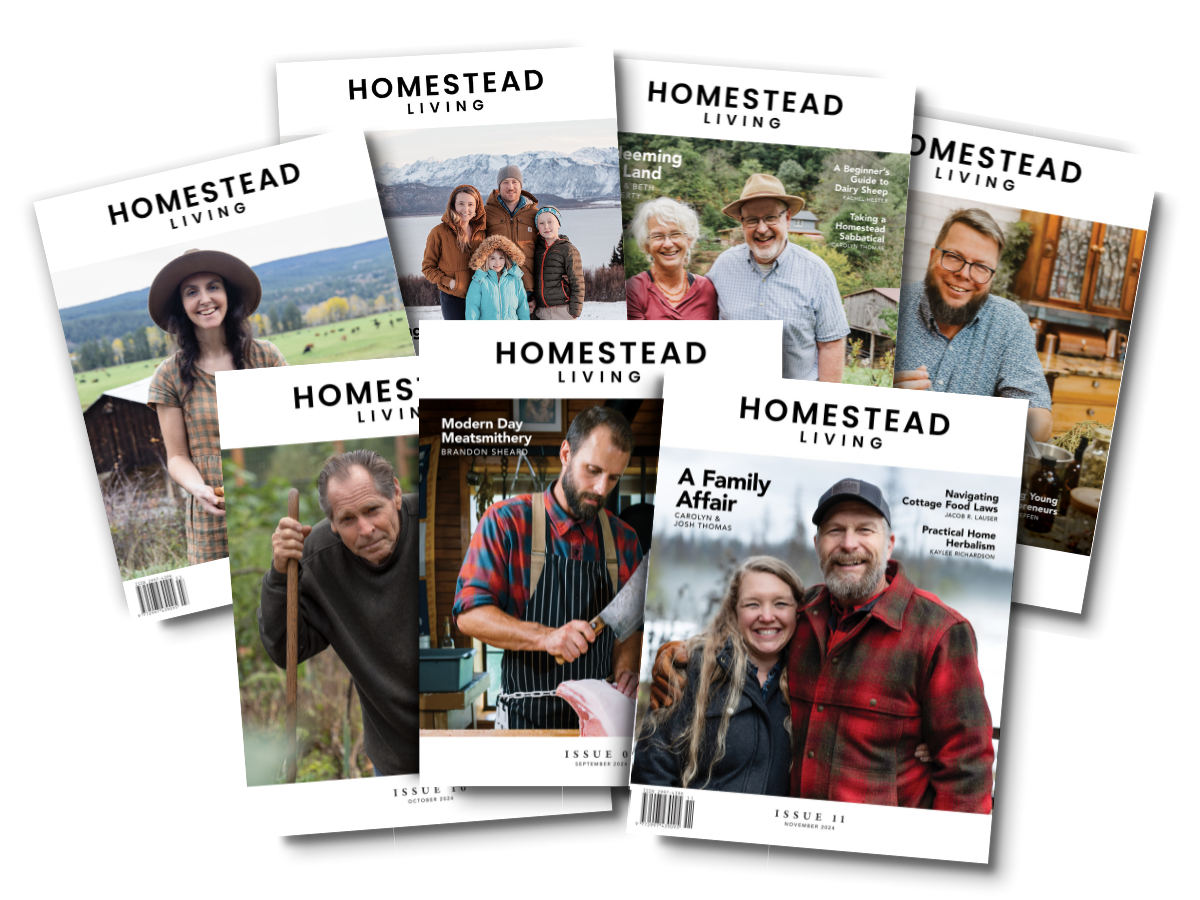
This Episode of The Coop is brought to you by Homestead Living Magazine
Homestead Living magazine sets the standard for inspiring wisdom-filled homesteading content: actionable tips for organic growing, food preservation, delicious recipes, and uplifting true stories that feed body and soul.
Leave a Reply