
Garlic scapes are arguably the whackiest looking vegetable out there and, in my humble opinion, one of the most overlooked flavors of the season. They aren’t commonly found at a grocery store, although frequent shoppers at farmers markets may have come across them, or someone may be lucky enough to find them on the menu at a farm-to-table restaurant. If you are new to growing garlic, it is highly likely that scapes are something new to you as well. I experienced garlic scapes for the first time as a novice grower when my very first crop of garlic started growing the strangest curly spikes. It was then that I discovered what exactly a scape was and just how delicious they can be. Fast forward eight years, and now garlic scape season is undeniably my favorite part of the growing cycle, and I’d like to share with you all of the wonderful ways to enjoy them.
To fully understand a garlic scape, one must first know about the garlic it grows from. Garlic is said to be one of the oldest cultivated crops in the world—the ancient roots have been found amongst many different cultures but are thought to have originated from a province located within central China. There are hundreds of different varieties of bulbs, all of which can be divided into two main categories: softneck and hardneck.
Softneck garlic has a pliable stem, is easy to braid, and is typically grown in warm zones. Softneck bulbs are comprised of multiple layered cloves and boast a lengthier storage time. In contrast, hardneck garlic varieties have a stiff and rigid stem, are suitable for cold climates, and are known for their intense flavor. Hardneck garlic is also the type of garlic that produces a garlic scape.
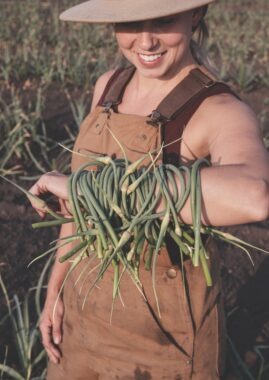
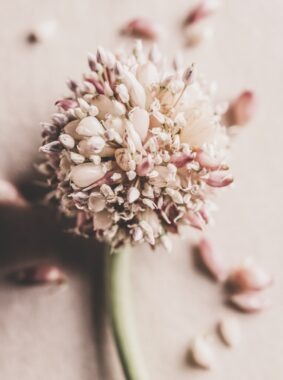
The scape is the flowering stalk of a hardneck garlic plant. As the plant matures, it sends up a spike out of the center of the stem. This spike grows and curls around itself, creating the iconic curly-cues. The garlic scape is entirely edible and at the tip of it is a noticeable lump, referred to as the umbel. Inside the umbel are tiny little bulbils, which can be thought of as small garlic seeds. If allowed to ripen, the umbel will open to show the bulbils, displaying a unique and beautiful garlic flower.
While the flower itself can be useful in propagating, the garlic scape is usually harvested so that the roots or bulb can utilize the plant’s energy. There is an option to allow the scapes to mature and grow heads of garlic from the bulbils, which is an efficient way to increase your crop size because there are sometimes hundreds of bulbils within each scape! However, the downside to that practice is that it often takes multiple seasons to produce a hearty bulb. More often than not, gardeners strive to grow healthy and sizable bulbs from planting cloves, making garlic scapes the ultimate bonus crop! There was a time not too long ago when scapes were simply thrown away or added to a compost pile. Thankfully, we now know better and have found ways to truly savor a summer delicacy.
What are Garlic Scapes?
Garlic scapes are the first crop of the summer garlic and are a prized fresh ingredient for gardeners and chefs alike. Their culinary uses are endless—from being used as a snappy salad topper, to adding a little extra zest in a fresh garden salsa, or even as a flavorful herb in a luxurious garlic butter, there are so many possibilities to help you become better acquainted with this unique vegetable.
The scapes have a snappy texture, similar to an asparagus spear, and exhibit a greener and slightly milder garlic taste. One of the best ways to prepare garlic scapes is to grill them over flames with a light drizzle of oil in a cast iron pan, making them an ideal side dish for a summer barbecue. My personal favorite part about cooking with garlic scapes is having a fresh garlic source at a time of year when it would otherwise be hard to find.
I come from a northern climate (Zone 2b) with a rather short growing season, often seeing 100 days or less between frost dates. Because of this, we find ourselves without fresh bulbs from the end of winter until the next crop is harvested in the late summer. Being able to substitute garlic scapes for fresh cloves has allowed my family and I to continue to eat seasonally from what is grown by my own hand.
The exact timing of scape season can vary greatly depending on your region. In my growing zone, we eagerly anticipate the first scapes near the end of June or beginning of July, however, many growers in warmer climates often harvest in May. Instead of worrying about the exact timing of when to pick them, let your plants tell you when the scapes are ready to be taken off.
Many gardeners prefer to harvest young scapes for their tender stalks and usually take them when they form one full curl with the umbel just crossing the stalk. If left too long, the scapes can become quite woody, and eventually will open to reveal the bulbil cluster. While the toughness of the stalks can make eating them a little less appealing, there are still a number of ways to utilize the overgrown scapes. Dehydrate them to then later be used as garlic scape powder, or set them aside to be added to flavorful broths. The garlic flowers can also be a whimsical addition to a bouquet of wildflowers!
Harvesting and Storing Garlic Scapes
When it comes time to harvest your scapes, there are a few different ways to do it. By far the easiest is the “snap” method. Using your thumb and index finger, simply snap the scape off at the junction of the stem and the top leaves. This technique allows you to move quickly down the rows. Alternatively, you can also snip the scapes with a pair of garden shears. And finally, there is the “pull” method. Slowly and gently pull the garlic scape upwards until it breaks off. Some growers find they gain an extra inch or so of tender stalk by pulling rather than snapping, but be careful—you don’t want to pull so hard that you accidentally disrupt the roots. Regardless of which harvest method you choose, it is generally recommended to pick garlic scapes in the cool morning hours to prevent them from wilting.
The season is plentiful but very quick, often only lasting two weeks, but once harvested, garlic scapes store amazingly well. A quick rinse with cold water does wonders in keeping them crisp. A great storage trick is to keep the scapes in a jar or glass of cool water (similar to flowers in a vase) placed in the fridge, changing the water every few days. Ultimately you want to ensure that the garlic scapes are kept cold and with enough humidity to keep from drying out. If need be, the umbel portion of the scape can be removed and utilized in a zesty pesto recipe. The lower portions of the scapes are easily stored in a lidded container with a damp piece of paper towel.
Frozen garlic scapes hold their flavor quite well and are great to have on hand when making hearty winter soups. To freeze, cut the scapes into very fine pieces and seal in a freezer bag. Alternatively, you can place the scapes in a food processor and pulse until finely minced. Form into one-inch cubes, or use an ice cube tray to shape and then freeze.
Each year, the short season to enjoy garlic scapes ends far too quickly. That being said, once the last garlic scape has been picked, we immediately shift our focus toward the summer’s end goal: bulb harvest. Generally speaking, the bulbs will be ready to harvest just four weeks after the scapes. As an experienced garlic grower and gardener, I firmly believe that there is a season for everything, and each one should be enjoyed to the fullest! The time for garlic scapes is filled with calm mornings spent picking in the garden, accompanied by delicious, fresh meals.
Recipe excerpted from The Garlic Companion by Kristin Graves, shared with permission from Storey Publishing // Photo by Michael Piazza
Fresh Garlic Scape Salsa

Garlic scapes add a fun garlicky twist to this garden classic, creating the perfect blend of fresh ingredients. The best part is that you can customize this salsa to your own preference—add more jalapeños for a spicier version, or skip the cilantro if you don’t care for it. If you are able, prepare this salsa ahead of time to let the flavors meld. Enjoy it with tortilla chips.
Beer-Battered Zucchini Blossoms with Garlic Scape Filling

Stuffed zucchini blossoms are a garden delicacy, especially when cooked with a scrumptious garlic and lavender cheese filling! They can be a bit delicate to work with, but the result is well worth the extra effort.





Leave a Reply