
Preparation is a notable trait in fashion. Fast fashion and slow fashion are terms used to describe the amount of preparation used to create the garments we wear. Understanding the difference is important for consumers because every article of clothing has environmental, social, and ethical consequences to consider. The slow fashion movement is catching on as people are learning the dire consequences of fast fashion.
Focusing on the wool industry, let’s look at creating a garment from the backs of sheep all the way to market so we can understand the intentionality, preparation, and craftsmanship involved in this slow fashion.
The Story of Wool
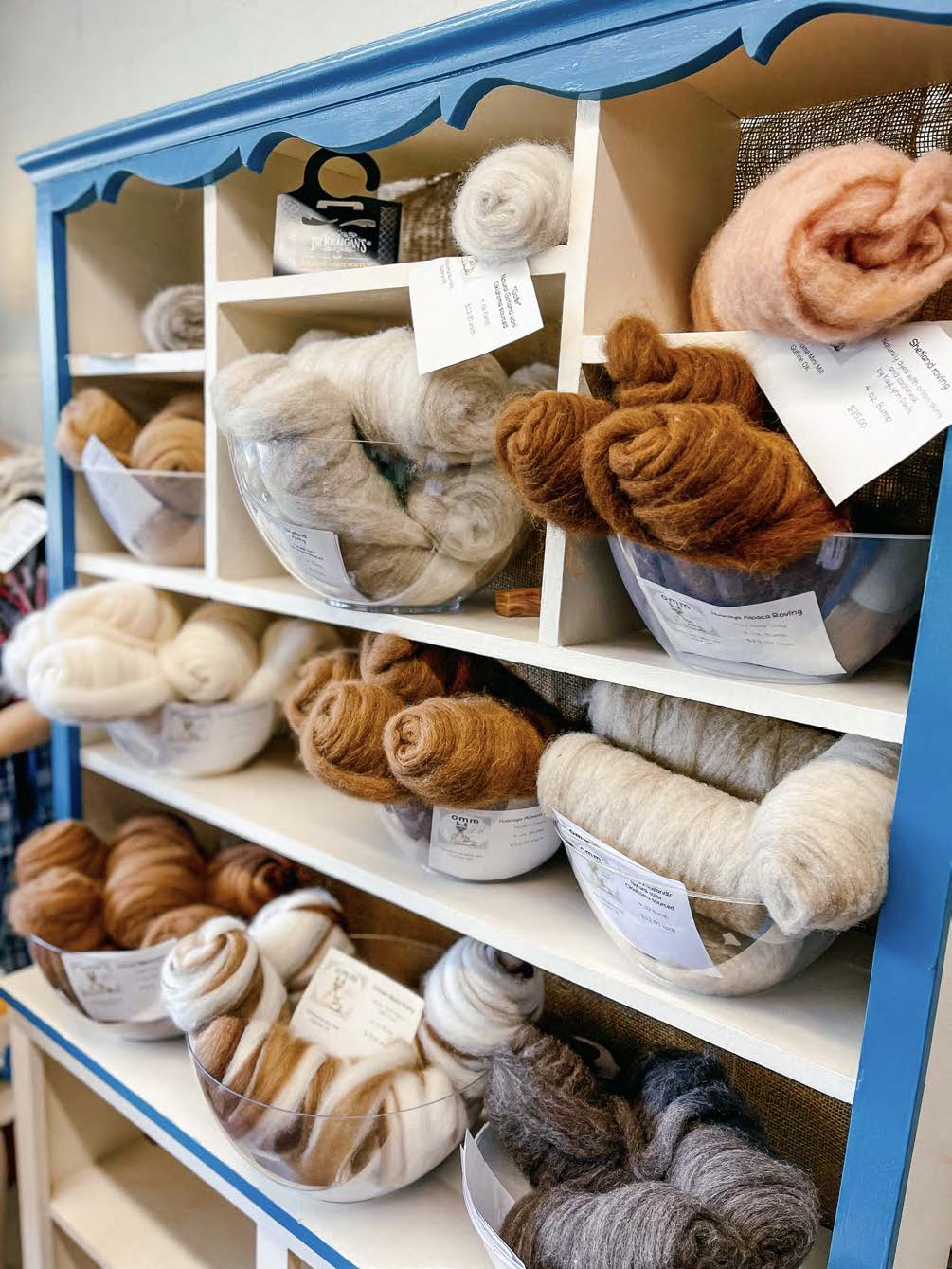
Wool begins with raising sheep on homesteads. Sheep are popular animals for homesteaders to raise because they are affordable, adaptable, and relatively easy to take care of. The quality of the sheep fleece varies from breed to breed. Many homesteaders raise “fiber sheep” when their goal is to create yarn, wool, felt, and roving, all of which are used to construct garments.
Farmers and ranchers work year around to keep sheep healthy and shear them once a year. In the spring, when the shearer comes, they will collect all the discarded fleece and “skirt” them, a process where they pick hay and debris out of each shorn fleece.
The next step is to take the fleece to a mill. We met with Ivan and Cheri French from Oklahoma Mini Mill to walk through the milling process.
The Process of Wool
When the mill receives skirted fleeces from sheep (or any other fiber animal), they begin their six-step process to produce roving.
- Tumbling — All skirted fleece goes into a giant tumbler that further shakes and removes debris and causes the fleece to be less dense.
- Washing Machine — The tumbled fleece moves to a 180-degree washer to deep clean the fleece and is then rinsed them another 2-3 times.
- Picker — The fleece is then pulled through the picker, separated into clumps, and blown into the picker room to be collected.
- Conditioning — The wool is now sprayed with an all-natural conditioner to enhance its quality.
- The Fiber Separator — Another huge machine is used to remove vegetative matter and guard hairs, making the fiber even cleaner for the final stage.
- The Roving Spinner — The roving machine pulls the fleece through to form it into roving.
Roving can then be hand spun to create yarn, put through a needlepoint machine to create needlepoint felt, or made into batten for pads or mats. In the case of clothing, roving becomes yarn and knitted into garments. Understanding the process of wool sheds light on the amount of care and attention the products receive ateach stage of the process. Also, there is no need for unnatural chemicals at any stage of this process.
A Less Curated Process — Fast Fashion
It is true that the wool process is both tedious and time-consuming, particularly compared to the vast majority of the clothing industry which moves at a rapid and ever-increasing pace. On the polar opposite side of the spectrum from slow, intentional fashion lies fast fashion. This is the industry that the vast majority of Americans support when purchasing clothing. Fast fashion is a term used to describe cheap and low quality clothing that is rapidly produced and cycled in and out of the market quickly to meet new trends. Let’s take a look at the impact these trends are causing.
Environmental Impact
Environmentally, the fashion industry is responsible for 8-10% of global emissions, according to the UN — a larger output than both the aviation and shipping industries combined. At the current rate of progression, the fast fashion industry will account for 50% of all global emissions by 2030. Currently synthetic materials (polyester, nylon, acrylic, elastane) require an estimated 342 million barrels of oil and 43 million tons of chemicals every year because they are made from heavily processed petrochemicals (fossil fuels), unlike the water, vinegar, and all-natural conditioner that wool requires. In addition to emissions production, the fashion industry is the 2nd largest consumer of water on a global scale.
Social Impact
Socially, the fashion industry does not subscribe to moderation. Overconsumption is the main culprit of the revolving closet door. The world’s consumers are buying more clothes and wearing them for less time than ever before, discarding garments as fast as trends shift. The Ellen Macarthur Foundation, a UNEP partner, has estimated that a truckload of abandoned textiles is dumped in a landfill or incinerated every second. According to the UN Alliance for Clothing, the average consumer today buys 60% more pieces of clothing than they did 15 years ago. Additionally, each item of clothing purchased today is kept for half as long as as 15 years ago. To continue feeding this insatiable appetite for new clothes, the industry must make sacrifices to keep up. It turns out that feeding the fashion monster is quite the addictive habit.
Ethical Impact
Ethically, there is also a price to pay to wear and support the fast fashion industry. In order to keep meeting the need for instant gratification, the cost of clothing has to stay very low. One of the main ways of doing this is to drive down the wages of garment workers in the supply chain. For years, brands have ‘chased the cheap needle’ around the world, seeking countries with the lowest labor standards so that garment workers can be easily exploited. If child labor, discrimination, and mistreatment of workers aren’t principles you support, you should consider if your purchases are tied to any of these practices.
Know Better, Do Better
Is the answer to fast fashion to only wear wool or hand-spun garments? No, that is not feasible for the entire world, and the industry would likely not keep up with the increased global need. Should you dump all clothing that wasn’t ethically sourced? No, that only adds to the landfills.
Here are some very practical steps you can take to do your part in this global crisis. Preparation through research is key to building an eco-friendly, socially conscious wardrobe.
- Research fashion brands. Look up manufacturers and read what they claim about their workforce and materials. Thankfully more and more manufacturers are joining the slow fashion movement. It’s becoming easier to find brands that follow slow fashion principles.
- Research the materials in garments. Make sure you know which synthetic materials to avoid in future purchases.
- Reduce your current amount of clothing. Create a capsule wardrobe. A capsule wardrobe is a small, versatile collection of clothes that can be put together in many different ways and includes everything you normally need to wear. Studies show we only wear about 20% of our clothes in our closets. Weeding out what you actually wear will inform your purchasing decisions in the future.
- Buy less. Buying a maximum of eight new staple items each year could reduce fashion emissions by 37% in the world’s major cities, according to research by Leeds University and Arup. Buying less can also help reorient your attitude to what you already own. You can learn to better appreciate what you have when you live within limits.
- Buy quality. We’ve probably all bought clothing that is inexpensive but doesn’t last a long time. When you find a quality company or craftsman, support their fine work, and plan to hold onto the items you have.
- Mend what you have. When you’re working outside, clothes are going to get worn and dirty. Learning some simple mending, stain removal, and sewing techniques will breathe new life into the quality garments you already own.
- Shop at thrift/second-hand stores. Give clothes already produced another life. Choose higher quality at a lower price, while saving the garments from the landfill.
- Speak up. Blog, talk, post, etc. to get more people concerned about fast fashion. Americans speak through their wallets, so making purchase decisions and encouraging others to do the same will speak to brands to make them increasingly aware of the slow fashion movement..
- Support local workers in the farming, milling, and spinning businesses. It takes time, effort, and research, but find some fiber artists in your area, such as Oklahoma Mini Mill or on Etsy. And then support them!
- Dig a little deeper. Replace other non-clothing products with wool and other organic products.
We live in a world that has bent increasingly towards comfort and convenience. These values inform much of how we live down to what we eat, what we wear, and how we spend our time. Most homesteaders don’t choose this lifestyle because it’s easy or comfortable. Most homesteaders are trying to make decisions based on what is good, healthy, and right. Ours is not the path of least resistance.
One of the great gifts of the homesteading movement is the awareness that it has raised about the food we eat and how it affects our lives and health. Using quality, natural, home-grown ingredients in our kitchens brings so many people into a deeper and healthier connection to their food and the land around them. It’s normal for those of us who want healthy, sustainable lives to consider what we put inside our bodies.
Many of the same principles apply to not only what we put in our bodies, but what we wear on our bodies. Let’s take a careful look at the garments we purchase and wear. Let’s learn about the companies we trust to clothe us. Let’s find out what materials they use and how they make these garments. Let’s ask questions based on what is good and healthy and sustainable. Then we can take steps, no matter how small, that will improve our lives and the world around us.

Leave a Reply