
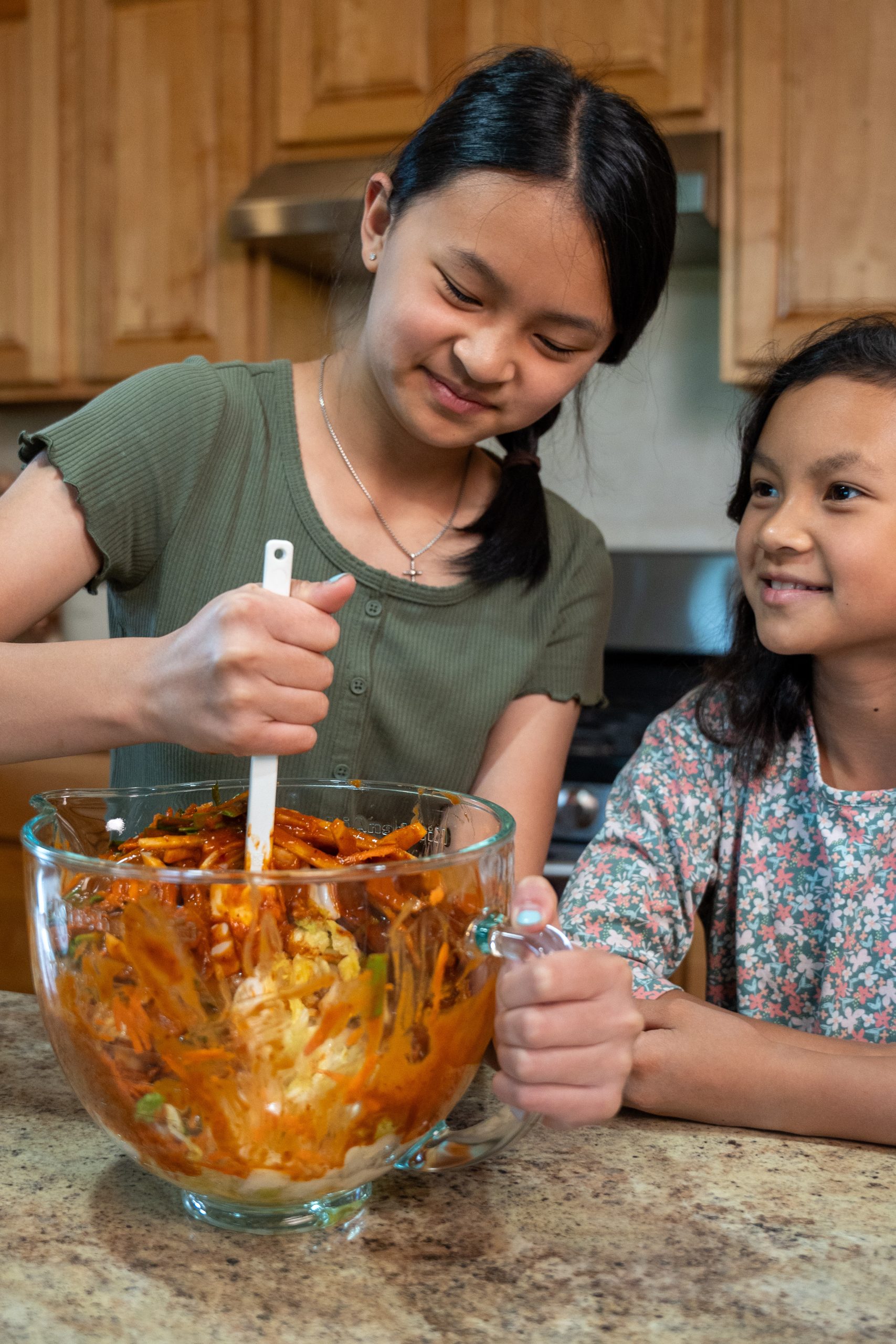
My childhood memories are filled with the distinct image of our kitchen counters lined with ceramic bowls of fermenting vegetables, each topped with a plate and weighed down with whatever was available. We didn’t have fancy glass jars or specialized fermentation weights—just simple yet effective methods passed down through the generations. I remember my mother boiling these black rocks that we had collected during beach trips—sanitizing them to use as weights to keep the vegetables submerged in brine.
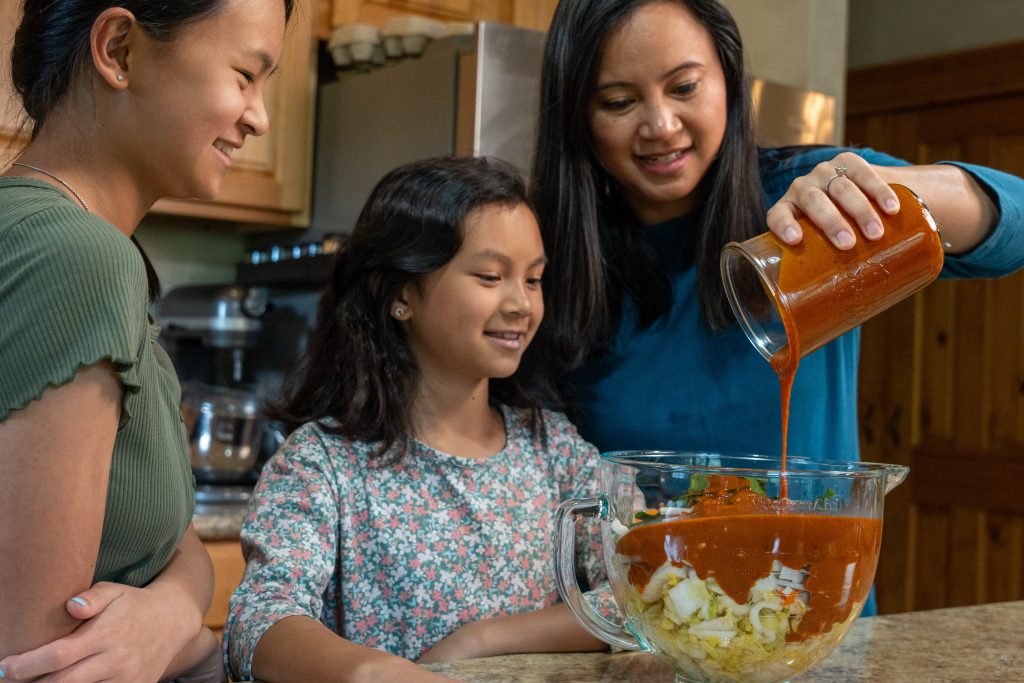
I grew up more traditionally minded than my cousins because of the unique time I had with my grandparents who helped care for me while my parents were each working two jobs to make ends meet as an immigrant family. My grandparents’ presence in my daily life gave me a deeper immersion in our cultural practices that I might not have had with my own parents. With my grandparents, they taught me hands-on with not just recipes, but traditions passed down—the importance of timing, the significance of certain ingredients, and the subtle signs that fermentation was proceeding correctly.
Growing up this way helped spur a passion in health and nutrition. I found myself fascinated by microbiology and ended up majoring in biological sciences—the intricate world of bacteria, fungi, and other microorganisms that shape our world in ways both seen and unseen. Little did I know that the science I was studying had deep connections to the fermentation practices I’d witnessed in my family’s kitchen and the microbiology in fermentation of Korean Natural Farming (KNF) that goes back to soil. What seemed like separate worlds were actually different expressions of the same fundamental principles about beneficial microorganisms and their role in creating healthy, living systems!
My path led me back home to Silicon Valley, where I built a career that consumed 80 hours of my week. Convenience became a necessity. I was the quintessential busy professional—having groceries delivered to my door, eating most meals at my desk in between meetings, and prioritizing efficiency over connection. I reached for store-bought kimchi instead of making my own, disconnecting from the hands-on traditions of my upbringing.
I drifted away from the traditional practices of my childhood. The wake-up call came in 2017 when Amazon acquired Whole Foods. Something about this merger of technology and food struck me deeply—my two worlds were merging (and not in the best way). Was I outsourcing not just grocery shopping but my entire relationship with nourishment? Had efficiency replaced the traditions that once gave meaning to my family’s gatherings? That moment made me stop in my tracks, and I began reconsidering everything about how I fed myself and my family.
Today, a quart of quality kimchi in specialty stores costs around $18—a price that reflects not just the ingredients but the labor-intensive process of traditional fermentation. Yet, for $5 you can buy a head of napa cabbage and make a few quarts of superior kimchi at home. Or you can take a $5 package of cabbage seeds and you can grow an entire cabbage patch to make large batches of kimchi with all your friends and family! For me, the deeper value lies in reconnecting with the process itself—the sensory experience, the creative variations, and the satisfaction of self-sufficiency that no store-bought product can provide.
An Ancient Cure for a Modern Crisis?
Our ancestors didn’t have refrigerators, preservatives, or year-round produce shipped from across the world. Instead, they developed simple yet sophisticated preservation techniques that not only extended the life of their food but also enhanced its nutritional profile. Today, as we face a gut health crisis of unprecedented proportions—with digestive disorders, autoimmune conditions, and even mental health challenges linked to gut dysbiosis—these ancient practices offer a path forward.
But what’s driving this crisis? The answers lie in the very systems I work with daily: deteriorating soil health that produces nutrient-depleted foods, and high-stress lifestyles that flood our bodies with cortisol.
During my Silicon Valley years, my gut health deteriorated alongside my relationship with food. Convenience meals—eaten hurriedly or late at night—left me bloated, fatigued, and disconnected. I remember the particularly busy days when I would scarf down a peanut butter and jelly sandwich between meetings. I felt unfulfilled and guilty after each hurried bite. I had access to the most “advanced” technology that could make my life more convenient, yet I felt increasingly unwell.
It’s a perfect storm: we’re consuming foods with diminished microbial diversity while our stress hormones actively work against the beneficial bacteria we still manage to ingest. This is why returning to practices like kimchi fermentation isn’t just about tradition—it’s about addressing the root causes of our modern health challenges.
The irony isn’t lost on me. After years of optimizing marketing campaigns to shave seconds off consumer decision-making, I am now embracing fermentation processes that require days, weeks, even months of patience. And in this slowness, I am healing—not just my gut, but my relationship with time itself.
Health Benefits of “Living Food”
While many know kimchi as “Korean sauerkraut,” this comparison barely scratches the surface of kimchi’s complexity and benefits. Both are fermented cabbage preparations, but the similarities end there.
Traditional kimchi isn’t just cabbage—it’s a sophisticated blend of vegetables, fruits, aromatics, and seasonings carefully combined to create the perfect environment for beneficial bacterial growth. The most common version features napa cabbage, radish, green onions, garlic, ginger, and Korean chili flakes (gochugaru), but regional variations incorporate everything from wild foraged greens to seafood.
This diversity of ingredients creates a uniquely complex microbial environment. While sauerkraut primarily hosts Lactobacillus plantarum, kimchi contains a much broader spectrum of beneficial bacteria—most notably Lactobacillus sakei. While not as dominant as L. plantarum, L. sakei is a significant player in kimchi fermentation and is thought to treat sinus infections.
This microbial diversity translates directly to benefits for your gut microbiome. Just as a polyculture farm with diverse crops and livestock shows greater resilience than a monoculture operation, a diverse gut microbiome better resists invaders and helps maintain balance. Each spoonful of kimchi delivers not just one or two bacterial species but an entire ecosystem of beneficial microbes to your digestive tract.
Kimchi Through the Seasons
One of kimchi’s most beautiful aspects is its seasonality. Growing up in the Bay Area, thinking about seasons barely registered in my food choices when we had access to seemingly fresh fruits and vegetables at all times of year thanks to the global, “just in time” shipping system.
When we established our farm in Tennessee, however, the seasonal cycles were undeniable. Unlike commercial ferments made with the same ingredients year-round, traditional fermentation practices embrace seasonal variation. Each season brings different vegetables, different ambient temperatures, and different microbial communities—creating distinct kimchi variations throughout the year.
Spring kimchi often features tender young greens, garlic scapes, or early radishes, fermented at moderate temperatures that favor a balanced, mild outcome.
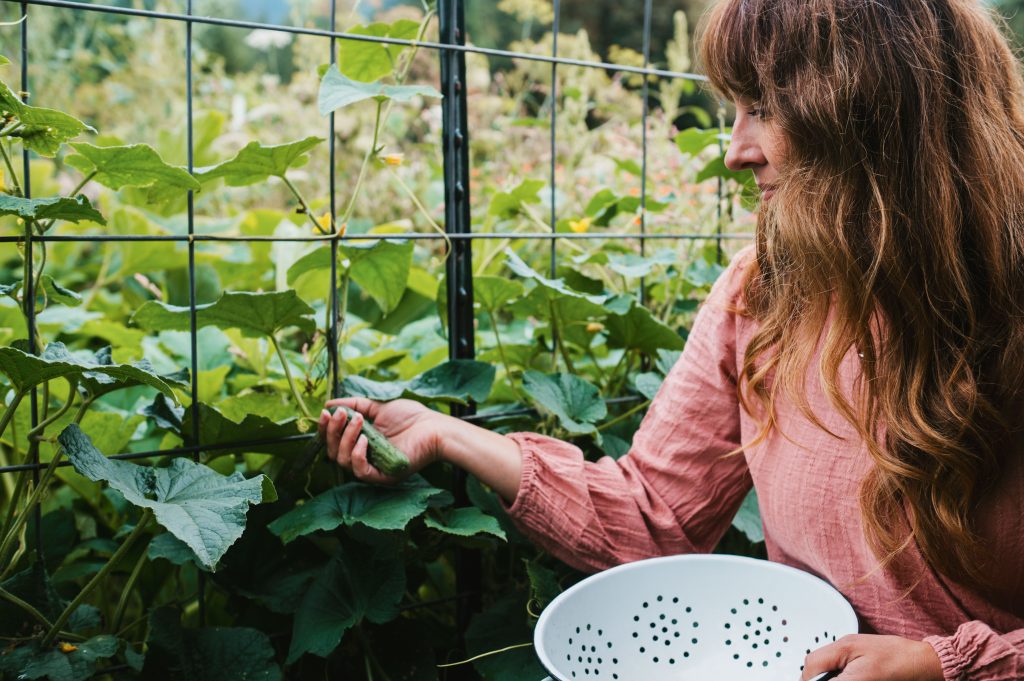
Summer kimchi incorporates cooling ingredients like cucumber, fermented for shorter periods in higher temperatures that accelerate the process.
Fall kimchi celebrates the harvest abundance with heartier vegetables like daikon radish and longer fermentation times as temperatures cool, preparing for winter storage.
Winter kimchi, the star of Kimjang season, features robust cabbages and root vegetables fermented slowly in cool conditions, developing deep, complex flavors over months.
In our home, we practice this seasonal approach, aligning our kimchi-making with the harvest cycles. This practice has fundamentally changed our relationship with food—it’s no longer about sustenance, but about participation in the natural rhythms and how to be creative with what we can forage.
Adding Kimchi to Your Daily Life
If you’re new to kimchi, don’t be intimidated by the ingredients or the process. Making kimchi at home is actually quite easy. The basic process follows simple principles that can be adapted to your needs and preferences. In my cookbook, The Nourishing Asian Kitchen, I have simplified our traditional recipes to make them more accessible.
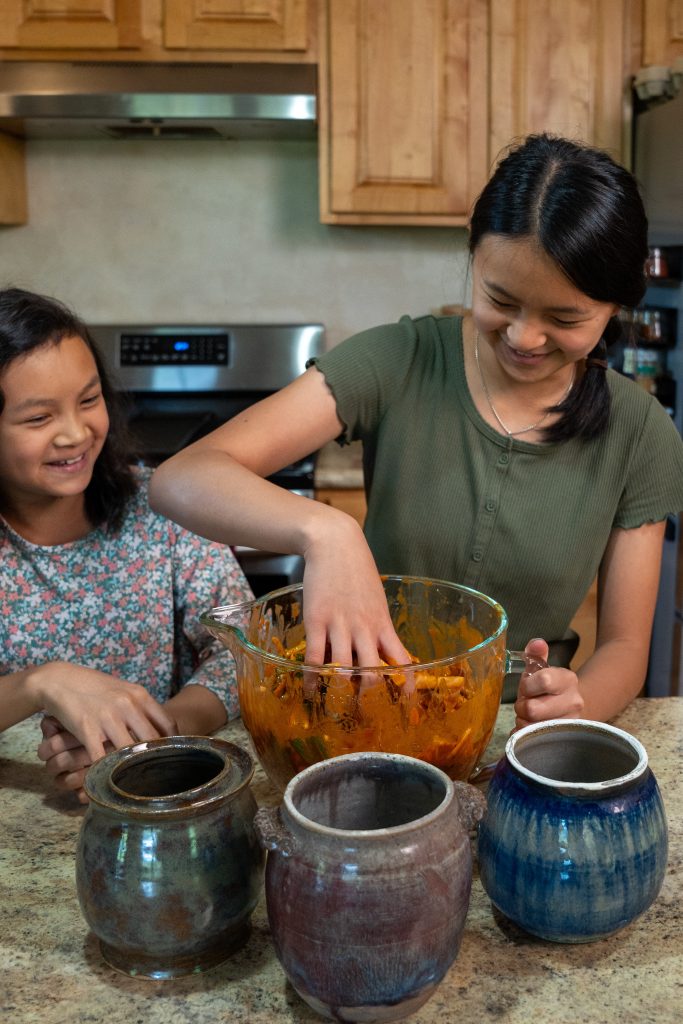
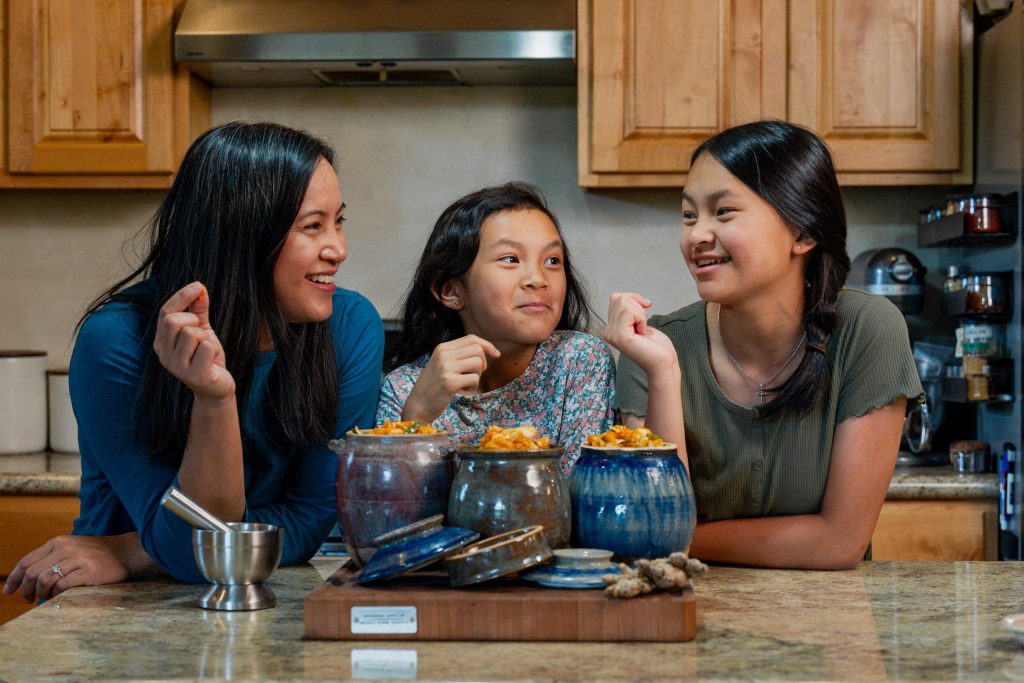
In our home, kimchi-making has become a cherished ritual that marks the changing seasons and brings our family together in the kitchen. My daughters and I now craft the pottery fermentation vessels while we also grow the vegetables and gather the ingredients. All of us contribute to an intentional practice of connecting with the land and with each other.
In our household, kimchi is a versatile ingredient that appears throughout the day:
- Served with scrambled eggs for a probiotic-rich breakfast
- Added to soups and stews for depth and complexity
- Incorporated into rice bowls for flavor and digestive support
- Transformed into kimchi butter to spread on sourdough bread
I have additional kimchi recipes in my Nourishing Kimchi e-Book to show you how to begin incorporating kimchi into your daily life. By approaching kimchi as a foundational ingredient rather than a specialty food, you’ll find countless opportunities to incorporate its benefits into your existing diet and lifestyle.
For those concerned about spiciness, remember that traditional kimchi encompasses many non-spicy varieties as well. White kimchi (baek-kimchi) offers all the probiotic benefits without the heat, making it accessible even to young children and those with sensitive palates.
Kimchi, Community, and How It’s All Connected
Perhaps most importantly, fermentation connects us—to our food, our environment, and each other. In Korea, the annual kimchi-making festival of Kimjang brings together extended families and communities to prepare winter kimchi stores collectively. This practice has been recognized by UNESCO as an Intangible Cultural Heritage of Humanity, acknowledging its significance beyond mere food preparation.
In our community, I bring together friends and neighbors and put together kimchi-making workshops and cooking classes that often evolve into something more profound—a space for sharing stories, building relationships, and transmitting knowledge across generations.
This unique social aspect of fermentation may actually be its most significant benefit. In an age of increasing isolation, practices that rebuild community around food represent powerful medicine for both individual and collective wellbeing.
As we face mounting health challenges linked to our industrialized food system, returning to ancestral practices like kimchi fermentation offers a path forward that honors both tradition and science. The microbial diversity, phytochemical complexity, and seasonal connection that exists in traditional kimchi provide benefits that even the most advanced supplements in stores cannot replicate.
By embracing these practices, we’re not merely adopting trendy food—we’re reclaiming our microbial heritage and reestablishing relationships with the living world that have sustained us through time.
Whether you’re making kimchi for the first time or making your hundredth batch, each step into the world of fermentation represents a return to the wisdom our ancestors understood intuitively: our health is inextricably linked to the foods we consume and the communities with which we share them.
Recipe
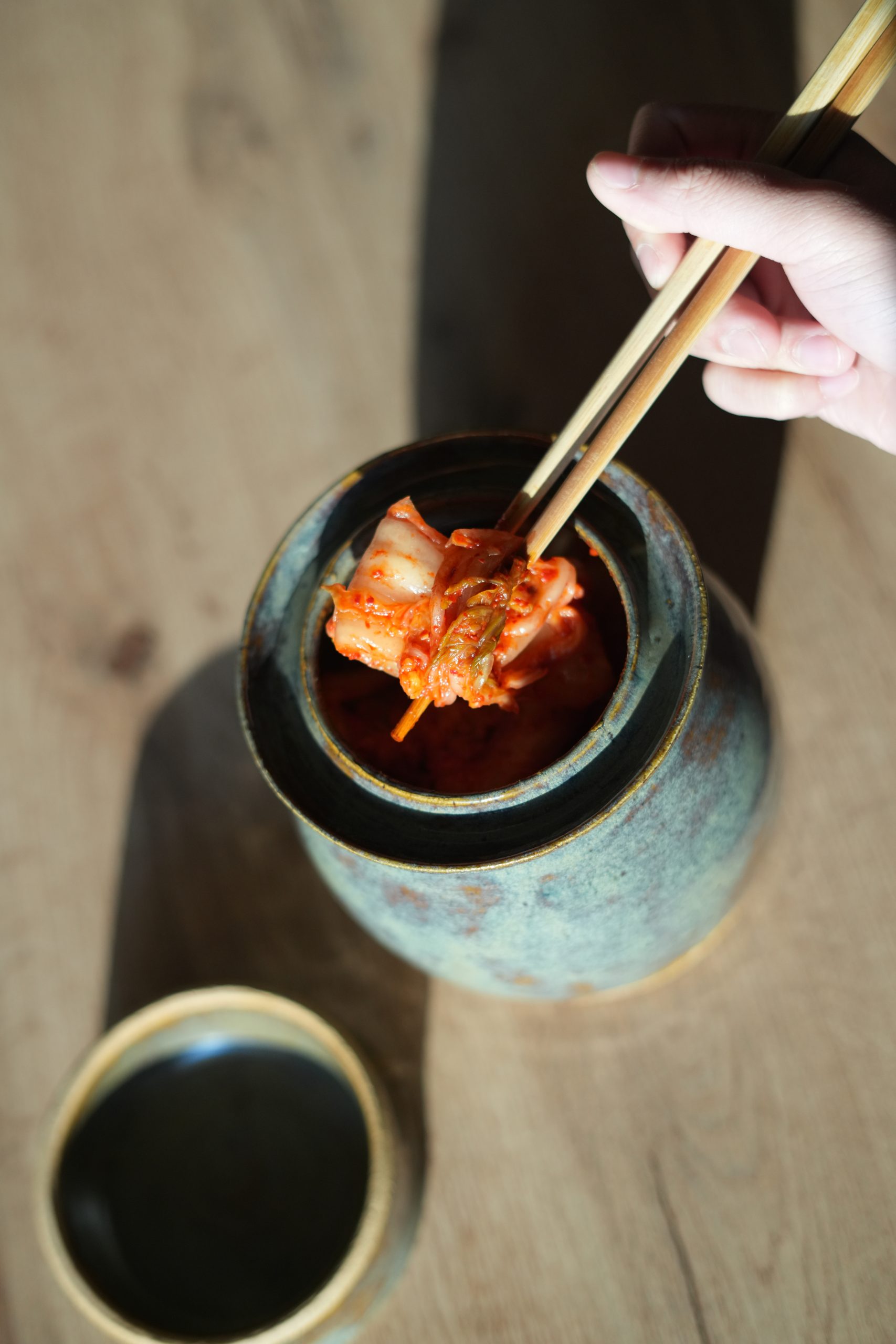
Traditional Napa Cabbage Kimchi (Baechu Kimchi)
Growing up, this dish was always on our table, but with a little twist for each of us. My mother would make two batches—one with a touch of chili for the adults, and a milder one for the children. When napa cabbage wasn’t in season, she would reach for savoy or tender green cabbage from the garden, proof that tradition isn’t about the exact ingredients, but the love and care behind them.
For the best flavor, I recommend sourcing Korean gochugaru (red pepper flakes) from Frontier Co-op, or plant your own fresh gochugaru peppers. This recipe yields about 1 quart, perfect for packing into a clean glass jar. It will keep in the refrigerator for up to 2 months, though we rarely make it past the first week before the jar is empty!
Ingredients
- 1 large napa cabbage approx. 4 pounds
- 1/2 cup coarse sea salt
- 1/4 cup gochugaru
- Korean red pepper flakes
- 1/4 cup fish sauce
- 1/4 cup minced garlic
- 2 tablespoons grated ginger
- 1/4 cup sugar
- 1/2 cup chopped green onions
- 1/4 cup julienned carrots
Instructions
- Core the cabbage and cut it into quarters lengthwise, then cut crosswise into 2-inch pieces.
- In a large bowl, mix the cabbage with the salt and let it sit for 2 hours, turning it occasionally. After 2 hours have passed, rinse the cabbage thoroughly and drain well.
- In a separate bowl, mix gochugaru, fish sauce, garlic, ginger, sugar, green onions, and carrots to create a paste.
- Thoroughly mix the paste with the drained cabbage, ensuring even coating. It’s easiest to use your hands to do this, but you may want to wear disposable gloves.
- Pack the mixture tightly into a clean jar, pressing down to remove air pockets. Leave about 1 inch of headspace at the top of the jar.
- Seal the jar and let it ferment at room temperature for 1-5 days, depending on desired sourness. Then transfer to the refrigerator, where it will keep for up to 2 months.




Leave a Reply