
“Mom, do you want an herb sandwich?” asks my six-year-old. “Sure, what’s on the menu today?” “Catnip, garlic tops, and tulsi flowers.”
I pop the concoction in my mouth and chew. “Not bad!”
I confess, I introduced my children to the names of plants and herbs before they learned to read. I was motivated by how much my own world expanded as I learned the names of trees, plants, mushrooms, and moss. Without names, the outside world was just a greenish sort of wallpaper. But when you know the names of plants, nature becomes a riot of life. It’s sort of like being introduced to people at a party: you can figure out where you belong and start some conversations. Without introductions, it is hard to know how you connect with the whole.
But teaching kids about plants and herbs is about more than that. It’s about helping our children to develop a holistic picture of the world and understand their place in it. My husband’s farmer-hero Sepp Holzer says it well:
“Children who grow up with nature learn everything they need for life. They become good teachers, good economists, good administrators, good politicians, because they know how nature works. When they have not seen how nature works, they cannot make laws or regulations. That is theory, not practice. It is not harmony.”
When kids get to know plants, their connection with the natural world is strengthened, and that connection is just as vital for a future librarian as it is for a future director of agricultural policy. For kids, this important work is learned through play, fun, exploration, and a willingness to follow their curiosity wherever it leads.
Teaching kids about the medicinal benefits of herbs is also empowering! I love it when my daughter reaches for plantain leaves for little hurts, or when my son notices his throat is a little scratchy and asks for echinacea tincture. (Plus, I save a lot on bandaids and over the counter cold medicine!)
If you’ve got little ones and you’d like to start introducing them to the incredible world of edible and medicinal herbs, here are a few ideas to help you get started. Try not to become fixated on the steps. Instead, follow the path of curiosity and discovery. Engaging the world of herbs with children is a slow, steady, meandering process. Enjoy the journey!
KID-FRIENDLY HERBS
Some of the best herbs to introduce kids to are “kitchen” herbs, meaning they have a long history of use in the culinary world. Here are some of our favorite kid-friendly herbs, followed by some recipes and activities you can make and do with your little ones.
Fennel
This is a wonderful tummy-soothing herb with tasty, naturally sweet seeds. My kids love harvesting and eating fennel fronds and seeds straight from the garden. I am partial to bronze fennel because it is a perennial, but be aware it is a host plant to swallowtail butterflies, so plant enough to share with the caterpillars!
Lavender and Chamomile
Both of these are fantastic calming herbs. They make a great bedtime tea, especially when mixed with lemon balm. Use only a bit of lavender, as it can overpower the other flavors. Besides their use in tea, I love using these herbs to make “sleep pillows” (instructions follow).
Mint
Mint is fun, flavorful, and easy to grow. Due to its popularity and easy genetic crossing, there are many unique flavor varieties. My kids love chocolate peppermint. Some other fun varieties are orange mint and spearmint. Mints make a wonderful “anytime” tea.
Hibiscus and Rosehips
Both hibiscus and rosehips are packed with vitamin C—always great for the body, especially when fighting a cold. Hibiscus and rosehip tea is tart and tangy, so add a good dollop of raw honey* for the kiddos. It has a jewel-red color, yielding extra kid appeal.
*Caution: Honey is a fantastic nutritious sweetener for kids, but it is not for use in infants under a year old.
Plantain
Plantain is a ubiquitous yard herb (aka. “weed”) for soothing scrapes, burns, bites, and stings. It makes an excellent “herbal band-aid.” Show your kids how they can stick plantain leaves to their skin, or just crush (or chew) them up and put them on wounds for quick relief.
Lemon Balm
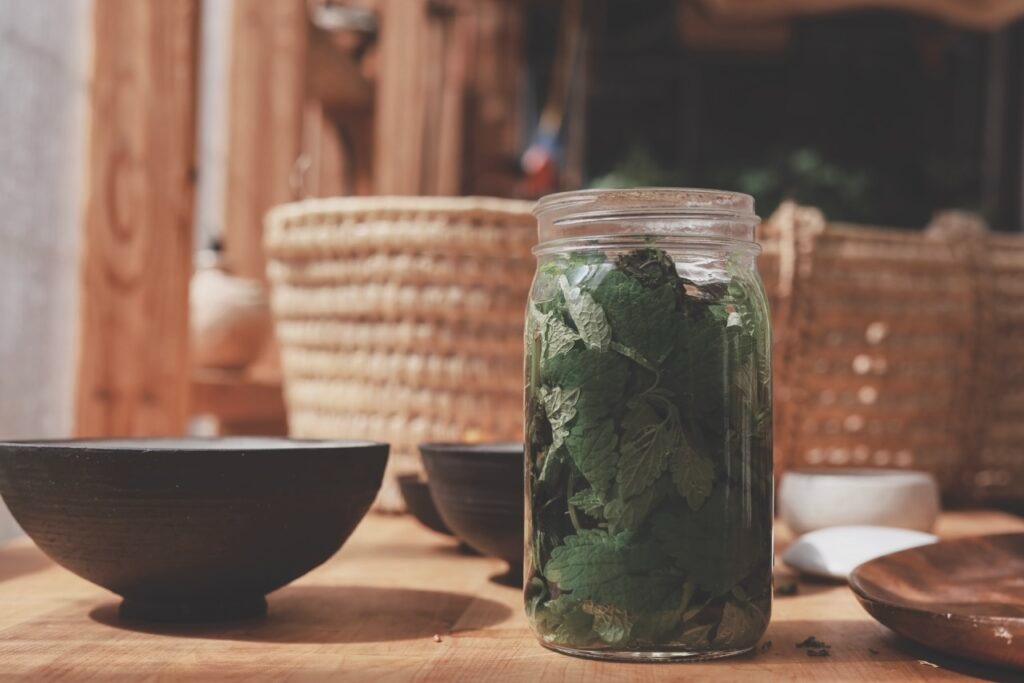
Lemon balm makes a perfect tea for children, helping to ease anxiety and improve focus and concentration. It is also flavorful and refreshing, and quite easy to grow, so I always recommend having it around!
Garlic
If you only teach your kids about one herbal remedy, make it garlic. Renowned for boosting immune function, garlic has a long history of herbal and culinary use.
Marshmallow Root
A demulcent and emollient herb, marshmallow moistens and hydrates mucus membranes with its polysaccharide-rich mucilage. I’m especially fond of marshmallow root during the dryness of winter or when I (or my kids) have a scratchy throat.
LEARN ABOUT PLANT FAMILIES
Once you’ve introduced your kids to a few individual herbs, you can begin to explore entire plant families together. Like resemblances that carry across human families, plants also come from families and share similar characteristics with other family members.
The first plant family I taught my children about was Lamiaceae (aka. the mint family). The mint family is home to so many of our beloved kitchen herbs, including mint, lemon balm, basil, rosemary, sage, lavender, oregano, peppermint, and thyme.
Some other great initial plant families to learn about are the Rose family, the Pea family, and the Aster family. Thomas Elpel wrote an excellent book called Botany in a Day, which I recommend to every grower, eater, and plant enthusiast.
Recipes (Click Here)
Activities
Five Senses Tea Time
There are many different ways to do this tea time. The important part is to engage all five senses in the process. Choose herbs that the kids are interested in. My top choices are lemon balm, hibiscus, anise hyssop, and chamomile.
To make a 1-quart pot of tea:
- Measure 2 tablespoons of dried herbs into the strainer cup of your teapot, or into a preheated Mason jar.
- Bring water to a boil and then remove from heat. Pour hot water into your teapot or preheated Mason jar and cover.
- Steep for 10-15 minutes.
- Strain and pour into cups, adding cool water to achieve child-safe drinking temperature.
Once the tea is ready to drink, ask these questions:
Look at the tea in the cup. What is the color like? What does the tea smell like? What does it taste like? How does your body feel when you drink this tea?
If possible, have some of the dried herbs you’re using and their fresh counterparts available on a plate for your kids to explore. Allow them to touch them, crush them in their fingers and smell them, and examine them closely.
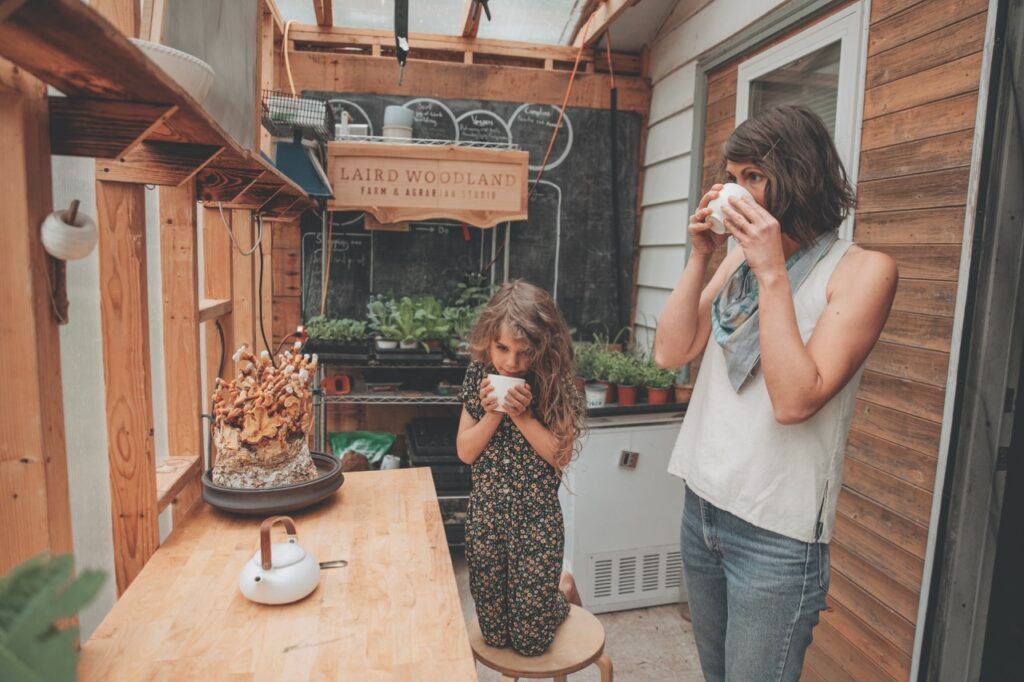
Most of all, enjoy the tea-drinking process, and remind your children that each cup of tea holds many medicinal benefits, as well as the energy from the sun and the nutrients from the soil where the herbs were grown!
Host a Tea Blending Party
Herbs are worth celebrating, so why not have a tea blending party! Better yet, have your children invite their friends over for a tea blending party. This is an easy way to get your kids excited about herbs, and even spread the love for herbs beyond your own family!
Here are a few tips to make your tea blending party a success:
- Have a few different bowls of dried herbs, each with their own scoop.
- Give each child a bowl to make their own tea blend.
- Let them have fun blending tea while emphasizing that herbs are precious and we want to be mindful of how we use and engage with them.
- After they have made their blends, put them in small jelly jars and decorate labels. This could be as simple as a strip of paper that you tape to the jar, or you can order blank labels for the kids to draw on.
- If you are doing this with a group, send them home with a few “fill-your-own tea bags” and brewing directions.
Make a Sleep Pillow/Bathtime Tea Bag
Calming herbs like lavender and chamomile make great fillings for sleep pillows and bathtime tea bags. This is a fun project to make with your kids and helps to teach them about the medicinal properties of the herbs they’re using.
Supplies
6×8-inch piece of fabric (I prefer unbleached organic cotton muslin)
Needle and thread (or use a sewing machine)
Dried herbs of your choice
Directions
- Fold the fabric in half and sew the sides of the pillow together, leaving the top open. Stop your stitching 1/2” from the long end of the material. Flip it inside out, so the seams are inside.
- Fill with your herbs of choice (lavender, chamomile, yarrow, and hops are some great options). Once you’ve added the herbs, tuck the final edge inside the pillow and stitch it shut.
- Put the bag next to your pillow and let the fragrance lull you to sleep, or add it to a bath like a tea bag. For a strong herbal bath, bring a pot of water to boil and add the tea bag. Cover and steep for 15-20 minutes, then add the tea bag and brew to the bathtub.
Photos by Meagan Young of M. Young Creative and others


Leave a Reply