
I often start my homesteading talks with a caveat…
Some time ago we learned of a family who moved to the area to build their dream homestead. It was a custom build on a beautiful 20-acre parcel. The house was a classic, yellow-and-white-trimmed, three-story farmhouse with wraparound porch and a detached garage. A row of sugar maples lined the quarter-mile drive on either side. Beside it, open pasture for horses and gardens. The second story kitchen window overlooked a spring-fed pond in the backyard, set against a woodlot of white oak, birch, and maple—a frequent haunt of deer and other local wildlife. It truly was an idyllic homestead, the kind you might see featured in a magazine like this one. It took them several years to build it and most, if not all, of their life savings. After finishing, the couple divorced, and put it on the market.
I share this story as a precautionary tale to would-be homesteaders: Don’t get so caught up in the dream that you forget the purpose. It’s not about the homestead; it’s about your family. More on point, it’s about what a homestead enables: building meaningful, lasting bonds with those who matter most.
You can gain all the skills in the world—grow your own organic vegetables, raise your own livestock, live sustainably and self-sufficiently. You might build a wildly successful farm-to-market operation. But if you lose your family in the process, none of it will be worth it.
Unfortunately, this is the track our society has been on for a very long time. We have more wealth than we know what to do with—more than any generation that has ever come before us. And yet, we find ourselves more disconnected and isolated than any previous generation. We lack the depth of connection in our families and our communities that once defined the common human experience.
My goal here is to make the case that the unprecedented gain in material possessions over the last two centuries has come at a steep price. And most of us know it. We traded a family-centered and community-centered economy for an industrial economy. In the process, we have traded a meaningful, purposeful way of life for a big empty house.
The good news is that the story doesn’t have to end there. Just as there is a small but determined remnant who are turning away from mainstream culture and its amusements—relocating to the country, digging in the dirt, rediscovering lost skills—there are those who are going further still, taking it upon themselves to rebuild the very foundations of civilization, one family at a time.
But first, a brief history lesson.
The Industrial Revolution’s Impact On Families
When men first started leaving their farms to work in the coal mines, it is said that their entire families moved with them.
At the time, families were so used to working together, they could not imagine life apart. A family existed to support each other. It was unthinkable that a job might separate a father from his wife and children.
As I wrote in my book, The Family Economy, “For most of history, the family economy was the unifying force in human culture—the cement of civilization. Until very recently, this societal arrangement was natural, enduring, and unquestioned.”
So when the coalminers moved, their whole families up and moved with them, setting up camp next to the mouth of the cave that daily swallowed father.
In time, the sons entered the mines too. “Trapper boys,” as they were known. Instead of long days on the farm, minding chores alongside their brothers and sisters, moms, and dads, trapper boys were tasked with opening a mule cart door to let carts pass through, twelve hours a day, six days a week, 500 feet underground. Alone.
Women, especially daughters, began leaving the farm too, taking factory jobs to support the booming textile industry. Magazines of the day aided the industrial cause by denigrating domestic duties and promoting financial incentives for daughters to leave home. “The labor of the mills is considered much more honorable than the labor of domestic life,” wrote one editorial in 1846. “In the mills a girl will earn more money, exclusive of her board, than can the ablest man on a farm.” (Note the preoccupation with money and position over people and relationships.)
As I summarize in The Family Economy, “The Industrial Revolution demanded, above all, efficiency. And nothing is more inefficient than human relationships. So, after thousands of years of historical practice, families stopped working together. They left self-sustaining farms for jobs in the city. They exchanged generational lands for rented tenements. They traded time together for paychecks apart. And the unbroken cycle of father and son, of mother and daughter, of family and home was put asunder.”
A House Divided Cannot Stand
The history lesson I just shared is necessary if we are to understand where we got off track and how to find our way back to a sustainable culture. If we continue to ignorantly apply industrial solutions to our present problems, we will continue getting the same results—or worse.
As historian Allan C. Carlson wrote in The Natural Family, “The triumph of industrialism brought a ‘great disruption’ or a ‘great transformation’ in human affairs, the creation of wealth accelerated under the regime of industry. Yet this real gain rested on tearing productivity away from the hearth, on a disruption of the natural ecology of family life. The primal bond of home and work appeared to dissolve into air. Family-made goods and tasks became commodities, things to be bought and sold. Centralized factories, offices, and warehouses took over the tasks of the family workshop, garden, kitchen, and storeroom. Husbands, wives, and even children were enticed out of homes and organized in factories according to the principle of efficiency.”
For the first time in American history, the homestead ceased to be the primary means of sustenance, and people began looking to centrally-situated factories to supply their basic needs. Over the span of about fifty years—roughly 1790-1840—millions of families left their farms to work in factories. As a result, shared productive labor, once the driving force of family unity, ceased to be a relevant influence by the end of the nineteenth century.
An industrial economy is predicated on two things: standardization and specialization. The more specialized one’s work becomes, the more efficiently he can carry it out (and, as we are beginning to see, eventually, he will be replaced by a machine that carries it out without him.) But the consequence of specialization is isolation. Like our example above, there isn’t too much familial cooperation at the bottom of a mineshaft. There is even less in our day.
How does a bank teller bring her child to work with her?
How does a computer programmer involve his children?
They don’t.
There is no place for children in the modern economy. This is the untold story of the breakdown of the family. When you take away a son or daughter’s ability to work, when you strip them from their parents and brothers and sisters, from their community of aunts and uncles and cousins, you destroy the mentorship process that prepared young people for life for thousands of years.
“The traditional way of raising sons,” writes Robert Bly, “which lasted for thousands and thousands of years, amounted to fathers and sons living in close—murderously close—proximity, while the father taught the son a trade: perhaps farming or carpentry or blacksmithing or tailoring. As I’ve suggested elsewhere, the love unit most damaged by the Industrial Revolution has been the father-son bond.”
How do we recover from this centuries-long slide into relational and cultural extinction?
Homesteading is part of the solution… It represents an attempt to reclaim some measure of self-determination and control over our lives—a shift back to a traditional way of life that was not so fragmented; not so dependent on corporations and industry. But homesteading alone is not the answer. We must go further.
“The crisis of our time will not be remedied by electing the right politicians, attaining enough education, stockpiling enough food, or amassing enough wealth,” I wrote in The Family Economy. “Our vast prosperity came at the expense of relational integrity. And the only way to recover relational wealth in our families and communities is to return to the age-old pattern of working together.”
Stronger Together
The ancient proverb says, “Where there is no vision, the people perish.” This proverb never meant that people will suddenly keel over if they don’t have an agreed-upon vision. Of course they go on living. But without vision they will no longer share a common purpose, no longer be heading in the same direction. In other words, they cease to be “a people.”
The same is true for families. Without a shared vision, the family perishes. Our spouses, our children may go on with their lives in whatever direction life takes them. But without a unifying purpose we cease to be “a people.”
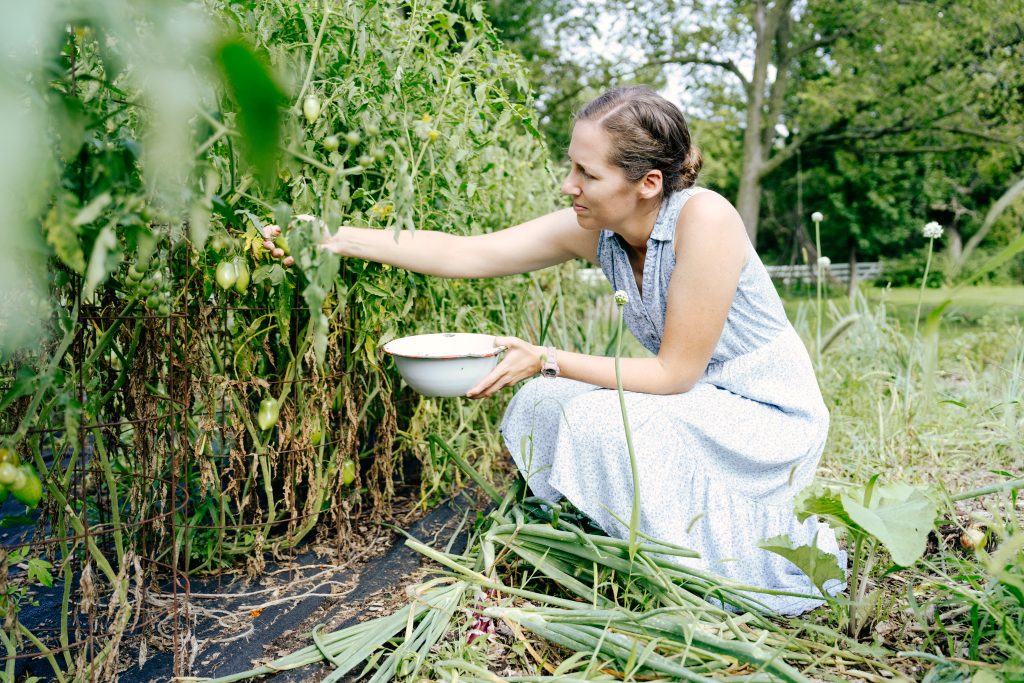
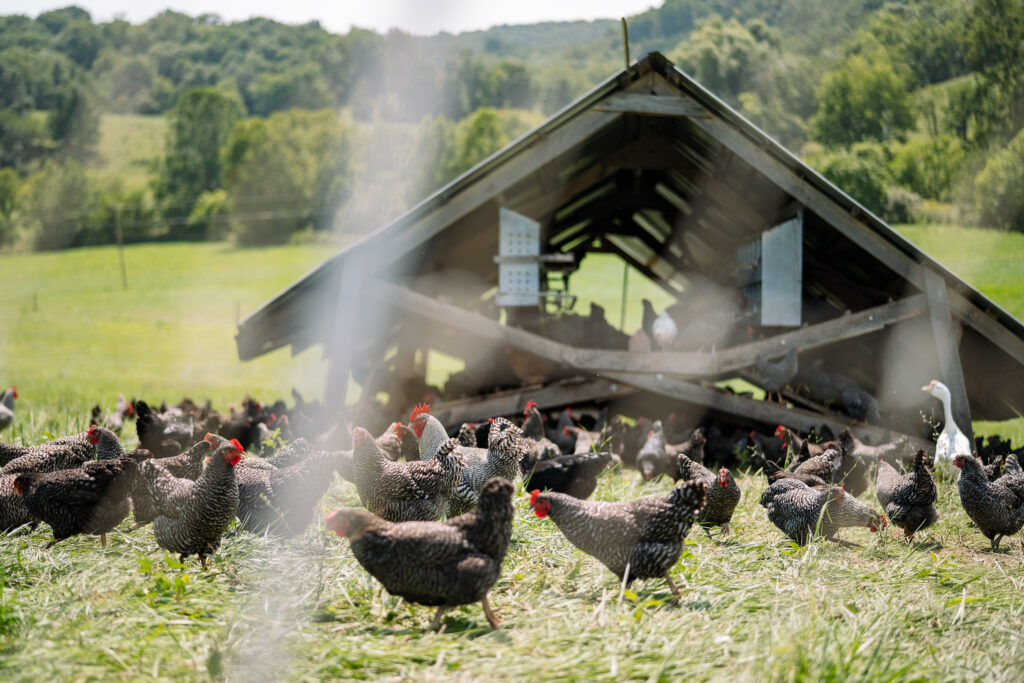
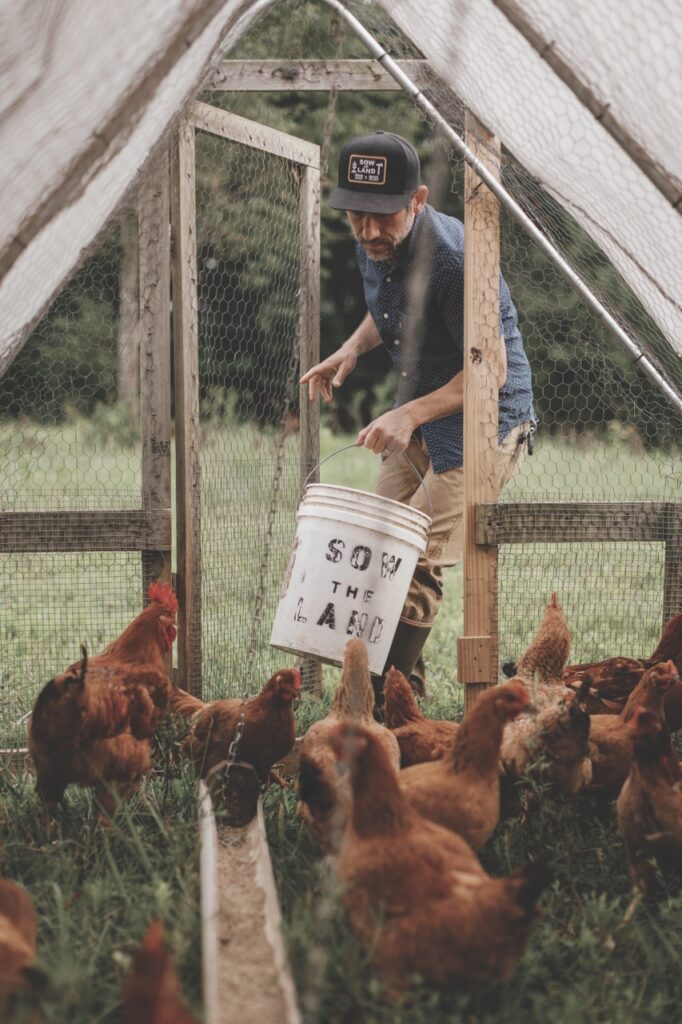
In my former profession as a software engineer, there was no meaningful way to involve my wife and children in the practical aspects of my job. But on the farm, everything we did was done together. Whether we were weeding the garden, collecting eggs, butchering chickens, or rotating sheep, the nature of the work almost always required many hands. It didn’t matter if those hands were little or big; they were always welcome. You might say a farm loves company.
As we learned to work together, first on our farm, then writing books, hosting events, and starting a family ministry, my wife and I found purpose like never before. We were no longer individuals pursuing separate careers. We had a vision for our family; we were going somewhere together.
This fits with the historic understanding of marriage as not merely a romantic union but also a functional one. “The traditional vows seize love by the scruff of the neck and set it down in real life, in the real world,” writes Wendell Berry, married for 68 years and counting. “Marriage in the traditional sense is also an economic connection, making a household.”
We found the same principle playing out with our children. Children were no longer an impediment to work, they were integral to it, because a family economy is built around the unique giftings of each member. As I’ve said elsewhere, the difference between a family business and a family economy is that a family business is about the business. A family economy is about the family.
There are many more advantages I could point to, such as restoring household function, creating resiliency for hard times, and, critically, sustaining generational faith. I highlight marriage because it is the inception of the family and the institution most under attack in our day. All of the bickering about men’s roles and women’s roles fall by the wayside when you belong to a shared family vision. We gladly serve each other because there is joy in the work. No one gets left behind, tuned out, overlooked, or pawned off. Either we all succeed together or nobody succeeds. This is the essence of the family economy.
What Does Your Family Add Up To?
Whereas the factory system would conform us to exacting standards, reducing our worth to a paycheck, a family economy is adaptive and infinitely creative because no two families are the same. And the rewards cannot begin to be quantified in debased fiat currency. Every family economy is unique and will look markedly different from the next. Some families might be better suited to farming in the country. Others might have skills—carpentry, mechanical, or artistic—that can operate well within city limits. What works for one family will not necessarily be the right fit for yours. But this is what makes the process so interesting. Variety, not uniformity, is the hallmark of a family-centered economy.
One of the exercises we take families through is called the Family Gifts Inventory. It is essentially a brainstorming session to discover the unique giftings of each member of your family and how you might work together. Get out a notebook and write “Dad” at the top of a sheet of paper. Then, go around and name his talents, interests, dreams, and ambitions. Education and work experience is also worth noting. Then flip the page and repeat the process with Mom. What are her passions and dreams and interests and talents? Continue with your oldest child on down until you have listed the unique qualities of each member of your family.
Now, “do the math”: What does your family “add up to?” Considering the qualities of your whole clan, how might you combine efforts into a new family enterprise?
For example, in our family we enjoyed hosting people on our farm and sharing what we were learning about life in the country. My wife was a former camp counselor, and I enjoyed writing and teaching. Together we began hosting events and publishing a family newsletter, aptly named, The Grovestead. Over the course of a few years, our events swelled in popularity and all that writing led to a book: Durable Trades: Family-Centered Economies That Have Stood the Test of Time. Its publication opened many new doors for our family that we could have never foreseen.
The point is, look for modes of work that unite your family members, rather than divide them. Do not seek profitability right away. If you prioritize time together, profits will follow. Remember that we didn’t get into our current predicament overnight. It may take years to work your way out. That’s okay. You are building a generational legacy. The investment you make today rebuilding your family will pay dividends for a lifetime—and beyond. Relationships are eternal. But the initial deposits must be made today. Ultimately, vision comes from God. So gather and pray together tonight, asking God to unite your family and bring vision to your clan.
Then take the first step.




Leave a Reply