
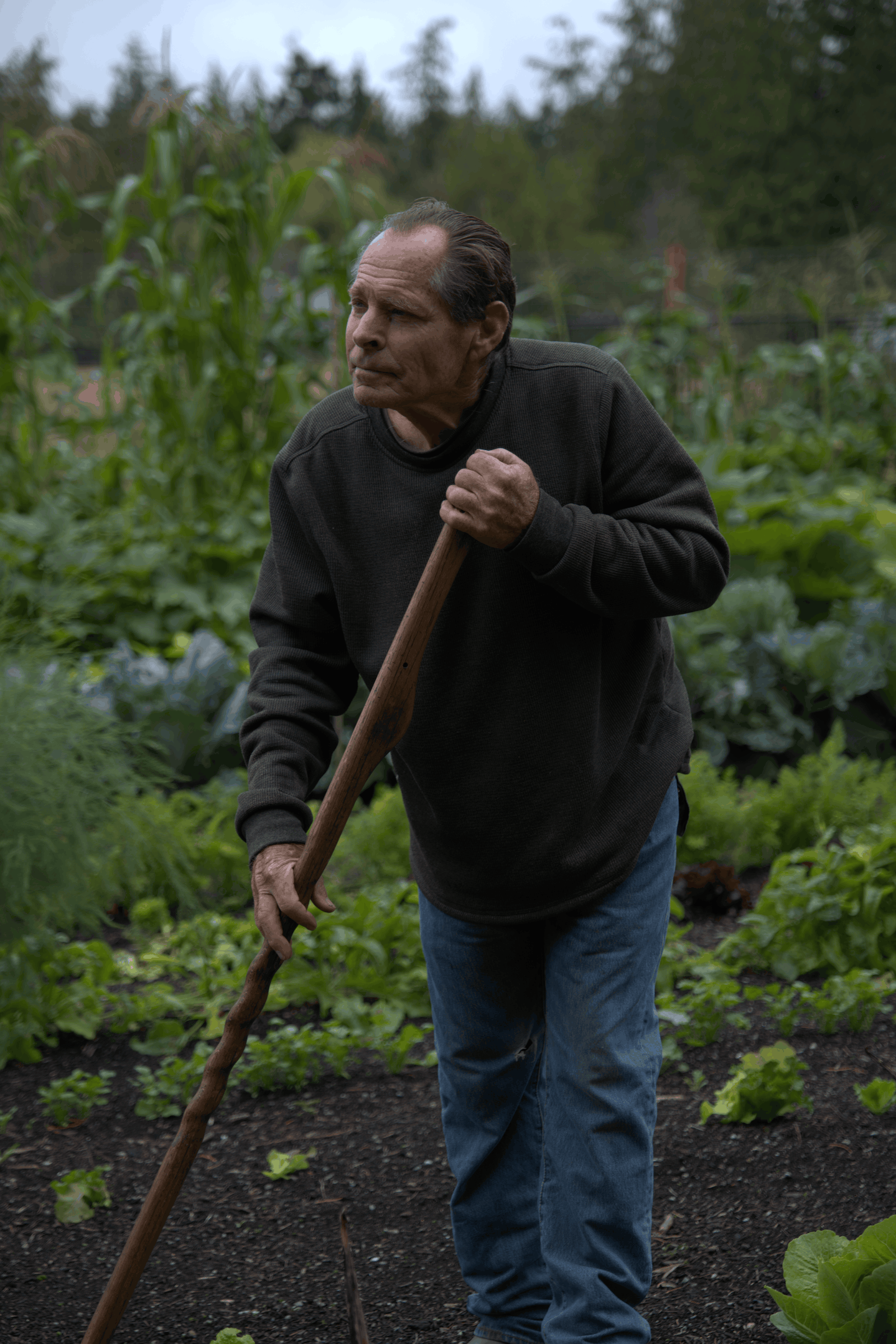
Paul Gautschi might not exactly be a household name, but most homesteaders and organic gardeners are familiar with his gardening method, which involves layering wood chips and organic matter to feed the soil instead of tilling. Featured in the 2011 documentary Back to Eden, Paul revolutionized the way we think about cultivating the land. The documentary gained him widespread recognition, leading countless enthusiasts to visit his property over the years to witness his thriving garden firsthand. A deeply spiritual man, Paul often recounts how divine guidance led him to develop his no-till gardening technique, resulting in healthier plants, fewer weeds, and superior-tasting produce. His no-till approach has transformed not only his own garden, but gardens across the world.
While he no longer hosts tours on his property due to some physical challenges he faces—caused by his exposure to Agent Orange while serving in Vietnam—Paul’s profound impact on sustainable agriculture remains undiminished; he remains steadfast and resolute in his faith and in his devotion to gardening the way God intended.
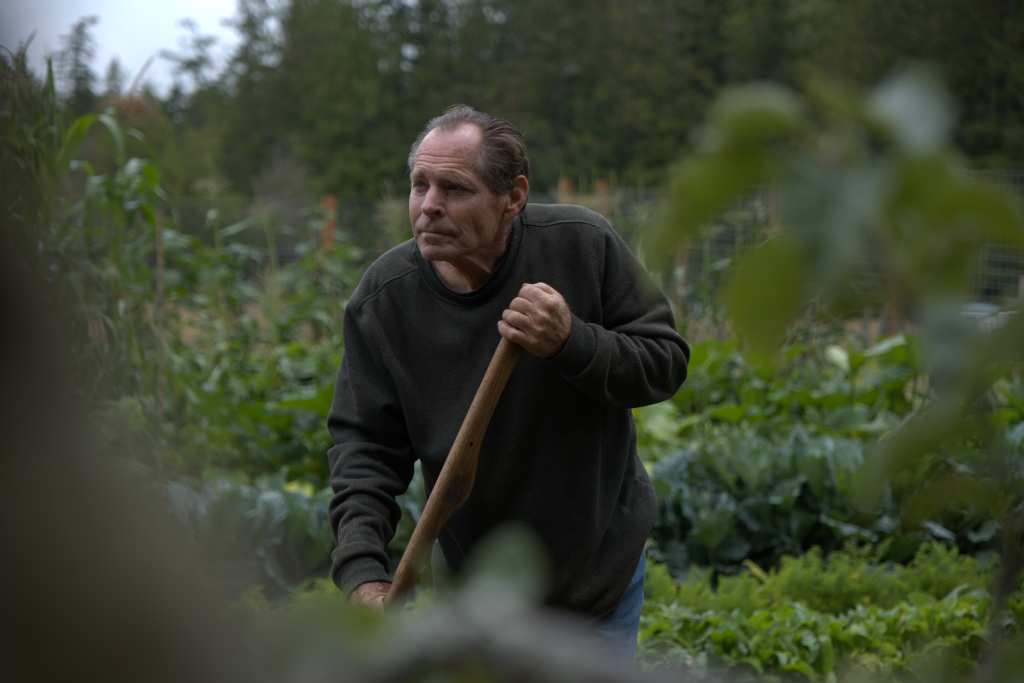
Our very own Melissa K. Norris had the opportunity to visit Paul and his 1/2-acre garden at his property on the Olympic Peninsula in Washington, where he has lived and gardened for more than four decades. This is also the place where the Back to Eden gardening method was born.
The Orchard Experiment
Paul grew up gardening with his parents in the Los Angeles area, and was raised on the notion that in order to grow a successful garden, fertilizers and organic matter had to be tilled into the soil. “I remember as a five-year-old kid, my dad, on Saturday morning, waking us up and saying ‘Well, we’ve got to head off to the horse stables and get some horse manure today…’ We came home and spread it out in the garden and spaded it in, and as kids we wore shovels out spading in heavy clay ground,” Paul explained at the beginning of the Back to Eden documentary, adding that he decided to move to Washington State when he had his own family, as Los Angeles had become too crowded and smoggy for his liking.
“When I first came here, I had a real challenge,” Paul told Melissa. “We drilled a well to 213 feet and only got half a gallon [of water] a minute. I said, ‘God, how can I grow food without water?’ He said, ‘Come out to the woods and I’ll show you.’ I tell people that lousy well is the greatest gift I ever got because it opened me up to how nature works. It’s August and all of my grass is totally brown; the roads are dusty. But I look at the woods and out there under that ground cover, it’s damp,” said Paul. “If you look at the forest, it is the most amazing example of support and balance in nature. Everything grows great, no one waters, no one fertilizes, and it’s all green. It blows my mind how we don’t get it, because it’s so simple. Just put cover down and it works,” he explained.
An arborist by trade, Paul first set out to establish an orchard on his property and took note of what he had seen working in nature. He covered the ground around his fruit trees with a thick layer of wood mulch, mimicking the natural ground cover around the trees in the forest, and his orchard began to thrive. “Everything does really well in the wood chips because if you look at the forest, how green it is, that’s all maintained by needles, leaves, and twigs; wood chips. I mean this is such a simple principle. This orchard has not been watered—ever—for 35 years,” he explained. But despite his success in the orchard, Paul was slower to adopt the same principle in his garden, and continued to labor, season after season, to keep the ground fertile and the weeds at bay.
A Revelation in the Garden
“As I was doing this orchard, experiencing these incredible results, because I was a creature of habit and because our nature is to do things as we were taught and not to inquire from God, I said, ‘Okay God, thanks for the help, but I can handle this on my own. And so for probably 17 years I was out here diligently rototilling, hauling in organic material… I’m doing this stuff and I’m feeling like I’m on this treadmill, running in place and going nowhere, feeling like how am I going to keep up with this? Every spring the ground is totally muddy and wet. When I till it, it turns to weeds in five to seven days—solid green with weeds. I planted things three feet apart so I could do the weeding with a tiller, and it was just labor-intensive. One day I got out in my orchard; I got on my knees and started moving these wood chips, and I’m down to my elbow in this beautiful black compost. I got up and started screaming. I was so angry. I said, ‘There’s something wrong with this picture. I have been killing myself to get this in my garden. I don’t have it. I didn’t do anything here!’ And I hear inside, ‘Well, it works in your garden the same way. You didn’t ask.’ I was so angry I threw that tiller away and I started covering my garden with wood chips,” Paul said in the documentary.
The results were astounding. Not only did Paul’s garden begin to grow more lush and green, but the weeds began to subside, and he practically eliminated the need for additional fertilizer and irrigation. Over time, he discovered his crops were also less susceptible to pests and diseases, and tasted far superior to anything he’d ever eaten before. The many visitors he’s welcomed into his garden over the years have confirmed these claims.
“I get so blown away when people come here and taste my food because they’re shocked. I’ve had people say, ‘I can’t stand beets.’ I say, ‘Do me a favor. Bite into this beet and spit it out and tell me what you don’t like about beets,’ and they say ‘This isn’t a beet, this is some kind of fruit.’ No, this is a beet. This is how beets are supposed to taste. The creator made food to taste good, and he gave us taste buds for a reason: to evaluate food. If food doesn’t taste good, you don’t eat it,” Paul told Melissa. “We started using salad dressing in 1948 when they started using chemical fertilizer because the vegetables didn’t taste good. And so now they’re masking the flavor of the funky vegetables with salad dressing because the vegetables don’t taste good. It totally disguises and covers the lousy taste of the vegetables, but vegetables shouldn’t be lousy tasting. They really should taste good. Mine taste good. I don’t use salad dressing,” he said.
The real beauty is that this method can work for anyone anywhere, in any climate, and with any type of soil. Paul himself has heard from countless gardeners from all over the world who have successfully implemented the Back to Eden method on their own land with great success. Those who have tried using wood chips and have initially failed usually attribute this to the fact that they’ve used dead wood—sawdust or bark mulch. What you want, Paul says, is the greenery.
“Wood chips are chipped branches: needles, leaves, and twigs. Those are critical parts. Sawdust is not a growing medium. You look at sawdust piles and there are no weeds growing in them. There’s no life force in that. You see piles of wood chips [with the greenery mixed in], and things are growing,” he said.
The Cost of Conventional Practices
Paul attributes his success to following the example set in nature. In the documentary, he explained that in nature, the soil is always covered: “Nowhere in nature that man has not been do you ever see exposed dirt. That only happens when man comes and takes the cover off. Everywhere in nature where man has not been, it’s either covered with needles and leaves or grasses, but the ground is covered. And the reason is because the ground is a living organism, and as all living organisms—such as ourselves, we have skin to protect us, animals have fur, fish have scales, birds have feathers—and the soil is a living organism. God has designed it and made it so it’s always covered with something. When you take the cover off, it becomes vulnerable and it gets lost.”
This is apparent on a global scale. According to the Food and Agriculture Organization of the United Nations, 33% of the world’s topsoil has been lost in the past 40 years alone, and up to 90% could be degraded and unsuitable for agriculture by 2050. In America, nowhere is topsoil erosion more apparent than in the midwest, where nearly 60 billion metric tons of topsoil have eroded over the last 160 years. This is largely due to destructive farming practices such as tilling, along with the continued application of synthetic fertilizers, herbicides, and pesticides.
“The whole idea of tilling is so counterproductive. Food grown in tilled soil has 60% less nutrients than food growing in non-tilled soil. And here in the soil you have all these little microbes and microorganisms. And when you till ‘em, you kill ‘em all. You totally kill ‘em all. The most damaging thing we can do to soil is to till it,” explained Paul.
“We came to the Midwest 250 years ago and there was eight to 12 feet of topsoil. Today, there aren’t eight inches. It’s all blown and washed away because of tilling. You think we’d get it; this doesn’t work, stop it. But they keep doing it,” said Paul, adding that it takes, on average, around 100 to 250 years to build just one inch of topsoil. “If you look at nature, nothing’s ever buried. It’s all just put on top of the ground. Soil that’s been tilled has been damaged, so it’s going to take a while to recover.”
Not only has tilling destroyed much of the world’s topsoil, which is crucial for growing food, it has also made the work of growing that food more difficult than it needs to be. Sure, we can get quick results with tilling and synthetic sprays, but nothing comes without a cost, and the bill for this cut-corner approach is coming due.
“Everything that can be shaken is [currently] being shaken. We’re seeing it, and it’s going to become essential. It’s not going to be optional. We’re going to have to grow our own food because it won’t be in the store, and the stuff in the store is poisonous. Our food is not safe to eat nowadays. I mean, it’s really, really corrupted,” said Paul. He then countered this with a message of hope: “I think that as far as scripture goes, I love Jesus’ invitation and how he labeled it. He says, ‘Come to me all you who labor.’ I believe the reason we labor is because we separated from God in the garden. Then he tells us how to get back. He says, ‘Take my yoke upon you and come learn of me. Follow me around. Watch what I do. My yoke is easy. My burden is light.’ It’s such a good principle. He didn’t make it hard for us. We’ve made it hard for us,” he said.
“In Genesis, you see, when Adam was in the garden under the influence of God, he never tilled. As soon as he left the garden, the devil influenced him to till the soil because he was trying to destroy our food. He was intentional. It was not an accident. He had something. And the thing that amazes me is Adam knew better, but the power of influence is really powerful. He came under influence and he disregarded his knowledge and his understanding, and he just bought this stupid lie and passed it on to us,” he said. In essence, this is what Paul’s approach to gardening is all about, and why it is aptly named the Back to Eden method.
Following Nature’s Lead
Along with massively reducing the need for fertilizer and irrigation, Paul said he has not found it necessary to rotate his crops either, despite the fact that proper crop rotation is a tenet of modern organic gardening. “People always tell you to rotate. It’s ridiculous. I mean, why bother? If you look at nature, the Creator doesn’t crop rotate. Everything falls on the ground where it is year after year, never moved. So crop rotation is not something the Creator does. I think it’s insane. If I have a nice place, things are growing, why move? I just don’t get where this anxiety has come from.”
Paul also forgoes hilling his potatoes, explaining that the wood mulch pushes up along with the potatoes as they grow, keeping them covered. “As a potato grows, the dirt falls off because it’s not connected. It’s all the same size material, and it just separates where this is all connected. And so as potatoes grow, the wood chips just lift. They don’t move aside. They stay right there and they just lift.”
In addition, he grows acid-loving crops alongside crops that prefer more alkaline soil, stating that since wood chips measure at an average of 7.0 on the pH scale, they are suitable for both crop types. “I’m growing blueberries right next to lavender, which have the opposite pH requirements, and they’re both thriving because at the center, everybody’s happy,” he said.
His approach to pruning appears equally unconventional at first. In his interview with Melissa, he explained that he prunes his fruit trees open, meaning he removes the central branch in the middle of the tree, along with the water shoots that spring up. Between aggressive pruning and adding wood mulch, he gets so much fruit set that the branches of his trees are naturally bent downward. It leaves one feeling like they’ve stepped into a fairy tale.
Paul’s method of avoiding tilling and using wood chips in the garden, coupled with his expertise in intensive tree pruning for larger yields, has made it possible for him to grow vast amounts of food in a relatively small area. His garden and his orchard combined span just half an acre and produce more than he and his wife, Carol, can eat. “It’s amazing how much you can grow in a small space when you have good soil,” he said. “It’s all about good soil. That’s the bottom line. You have to have good ground.”
Where to Source Wood Chips
While it’s helpful to have your own source of green wood (and a chipper), Paul says that the next best place to look for wood chips is a local tree service that is in the business of trimming trees or cutting them down. Often these businesses are looking for places to offload their wood chips, so not only can you get them for cheap or free, but you’ll be doing them a service by taking it off their hands. You can also use leaf mulch, or even rocks, which are high in minerals.
“What I love about this, it’s all free,” said Paul. “All these wood chips are created in nature and are free and renewable. What an incredible thought. Everything that they’re teaching you, you’ve got to buy something [like fertilizer]. It’s not renewable, it’s just this enslavement that we stupidly buy into. Why live with that when it’s all free—unlimited.”
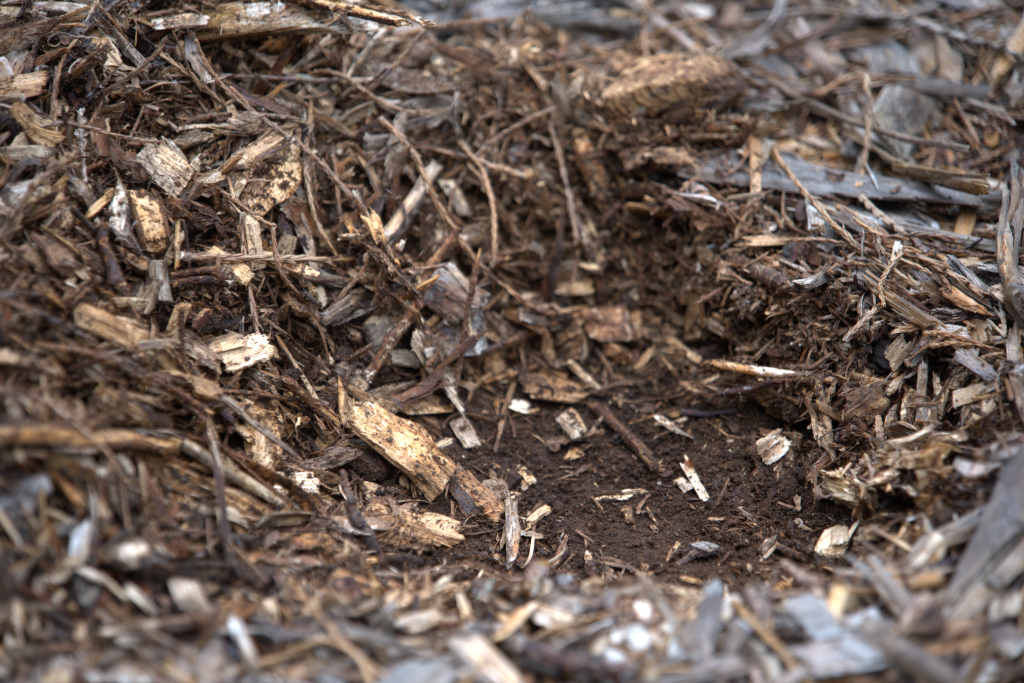
As for how thick of a layer to add, the thicker the better. Paul has put down up to 16 inches in the past, and says that the longer you follow this method, the less you’ll have to add. “The beauty of covering [your soil] is that it just keeps getting better. This is the incredible nature of this material. I’m building topsoil on a regular basis—continuously building topsoil. It’s so fun. I’m gaining ground. I’m creating ground,” he said, adding, “because my soil is so good, [the wood chips] are breaking down very slowly, so I don’t have to add much. In the Bible it says, it’s good for man to bear the yoke in his youth (Lamentations 3:27). If you do the work up front when you’re young, as you get older, it carries you. You don’t have to work so hard. You’ve got a really good foundation.”
While Paul’s approach to gardening might seem unconventional when compared with modern practices, it’s grounded in a deep respect for nature’s own design. His Back to Eden method offers a sustainable alternative to traditional practices that have contributed to the degradation of our topsoil and the nutritional decline of our food. By emulating the forest’s natural ecosystem, he has demonstrated that it’s possible to cultivate a thriving garden that not only produces an abundance of healthy, delicious food, but also enriches the soil with each passing season. His methods highlight the simplicity of working with nature rather than against it—a philosophy that he hopes will inspire more people to reconsider their gardening practices and align them more closely with the natural world.
“This is all stuff that you get from being connected on the ground—observing, tasting, watching,” said Paul. “You’re not going to get this out of a book. That’s why God put us in the garden.”

Leave a Reply