

Imagine your car’s fuel tank is on Empty. You see a gas station up ahead and pull in. You put the credit card in the reader and the digital display reads “Begin pumping.” You grab the nozzle, compress the handle, and a bunch of black, clumpy, junk pours out.
Would you think, “No problem, that’s what my car’s fuel filters are for, and if something breaks, I have a good mechanic; I’m sure he can fix it. Besides, I’ve already started and it’s too inconvenient to go to another station”? Not a single person reading this would have those kinds of thoughts regarding the purity of the fuel for their car. And yet, when it comes to our body’s fuel, these are the notions that so many people seem to accept: Our body has filters, we have a doctor, and it’s just too inconvenient to really care about good food. But just like we wouldn’t stand for junk fuel in our vehicles, we shouldn’t accept subpar fuel when it comes to our bodies.
What we eat affects our overall health more than just about anything else, which means the kind of nutrition, toxicity, and influence surrounding our food matters a lot. To be sure, nature is forgiving and we can abuse ourselves and the ecology quite a bit before the consequences kick in. We all know someone who smokes cigarettes and lives seemingly hale and hearty to 90 years old. But that’s the exception, not the rule.
Furthermore, the way we produce our food affects the health of our environment, our communities, and our responsibility to be good stewards of the land and resources God gave us. This is not a dismissive “whatever” situation. This is, perhaps, one of the most important issues we face in modern times. Here’s why…
Why Food and Farming Matter
- Health
Both human health and the health of the animals and plants under our care are all related and wrapped up in an interconnected web, and so it matters not just what we eat, but how it was raised.
The Bionutrient Food Association is leading the way in developing a simple instrument to measure nutrition. The prototype has already been used on carrots and broccoli with astounding results. Measuring many sample carrots, the scientists found that to get the same nutrition from the most poorly grown carrot as you would get from the most optimally grown carrot, you would need to eat 150 carrots. In other words, the best carrot contained 150 times more nutrients than the poorest carrot. As the saying goes, “you are what you eat,” and so you can’t be any healthier than the health of the food that you eat. Further, your plants and animals can’t be healthier than the diet, habitat, and hygiene in their production protocols.
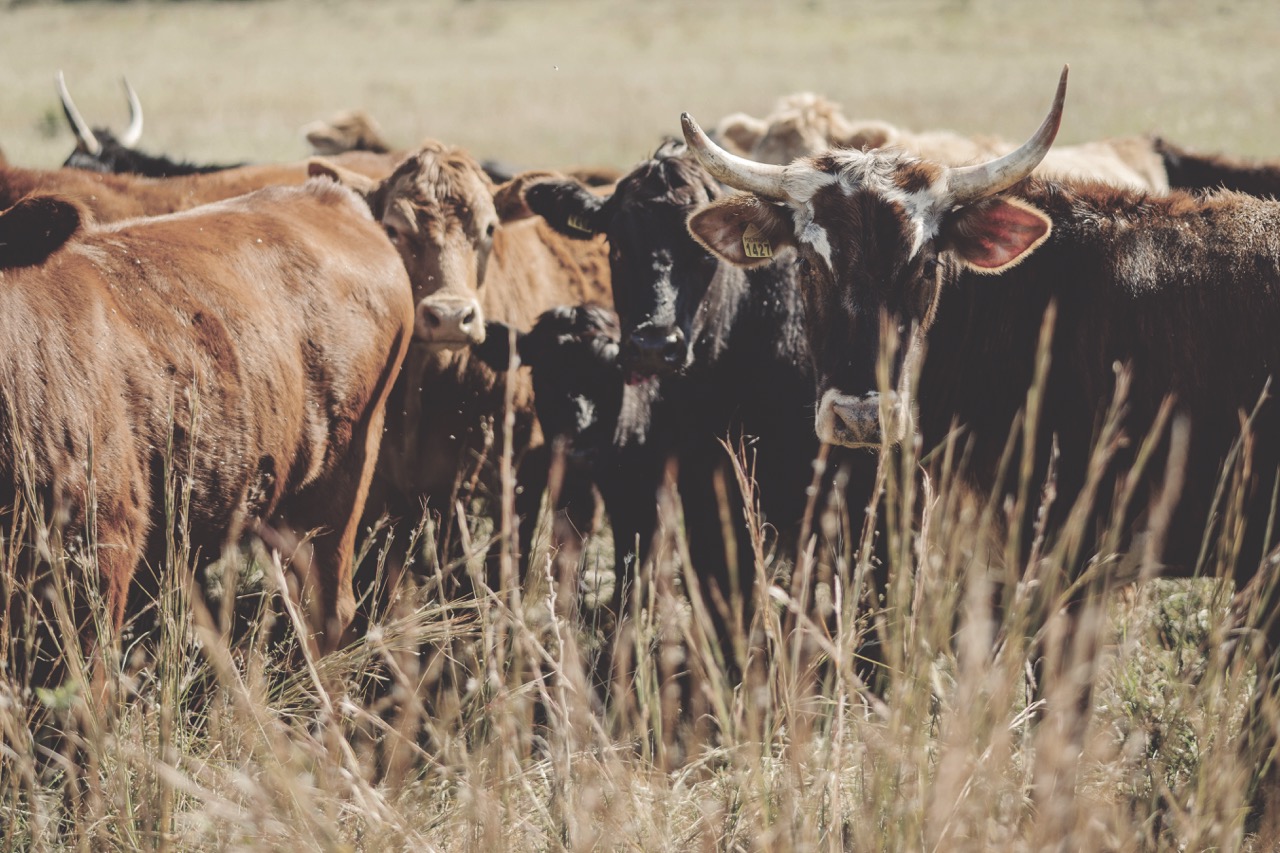
One of the most interesting things we’ve found on our farm with our pastured livestock over the years is how much faster the meat cooks than industrial counterparts. The most plausible explanation—so far at least—is that stress-free animals don’t tighten up their tissues with adrenaline. Is it a stretch to think that animals constantly under stress due to social, dietary, or immunological dysfunction would transmit those maladies to humans who eat them? This is why I’m a huge proponent of honoring the pigness of the pig: A culture that doesn’t ask how to respect the pigness of the pig will not be inclined to consider how to respect the Tomness of Tom, or the Maryness of Mary.
A production system addicted to pharmaceuticals and chemicals creates a human health climate addicted to the same. Sir Albert Howard—godfather of modern scientific composting—wrote in his iconic An Agricultural Testament in 1943 that “artificial fertilizer” (that’s what he called chemical fertilizer) grew artificial plants that fed artificial animals, which in turn made artificial people who could only be kept alive with artificials. Did he foresee the pharmaceutical industry or what?
Chemically-grown vegetables are vastly different in terms of nutrition, taste, and texture than vegetables grown in compost. Grass finished beef averages around 300 percent more riboflavin than grain-finished beef. That’s important because, among other things, riboflavin calms you down. Ever wonder why so many folks these days are short-tempered and yelling at each other? Perhaps grain-finished beef is at least partially to blame.
Those of us older than 50 can remember when the phrase “food allergy” did not exist. When we disrespect food, it fights back by taking a toll on our bodies. The U.S. leads the world in chronic non-infectious morbidity; that’s not something to cheer about. The reason? We invented McDonald’s, monosodium glutamate, high fructose corn syrup, and squeezable cheese. If food won’t rot, it won’t digest. Authentic cheese should get fuzzy with mold if you leave it on the table for a day or two. In a week, it should sprout legs and walk away. Velveeta sits there for a year. Not what you want in your microbiome.
- Ecology
For the most part, the civilizational and agricultural record is a pattern of soil erosion, landscape dehydration, and eventual scarcity. Ecological destruction did not develop with the invention of the plow, DDT, and glyphosate, but these things have certainly increased the capacity to wreak havoc on our environment faster than at any time in human history.
Cheap energy plus antibiotics enabled Concentrated Animal Feeding Operations (CAFOs) to replace pastured and more decentralized livestock systems. Historically, you could only confine a certain number of animals in one place because transporting feedstock and manure to and from one place by draft power (horse, mule, ox) was too laborious and expensive. But with petroleum and mechanization, the symbiotic integration of animals, plants, and fertility could be segregated. Centralization and segregation at such a scale turns this perceived blessing into a curse however, as mountains of waste overwhelm the local ecology’s ability to metabolize it.
The ancients practically worshiped manure for its ability to enhance soil. As recently as the 1940s, farm boys (and perhaps some girls) routinely forked up manure dropped in the barnyard overnight and wheelbarrowed it into the barn. As part of their chores, they would add straw to the manure to tie down nutrients, reducing vaporization. Today, manure lagoons routinely lead to fish fatalities and neighbors’ asthma.
Indeed, a dead zone the size of Rhode Island now plagues the Gulf of Mexico, eliminating countless tons of seafood and, subsequently, the jobs connected to harvesting it. Infertile frogs and three-legged salamanders were just the beginning; now we have superbugs and superweeds. No matter what concoction humans invent, nature always adapts with some survivors. Those survivors become nastier and nastier in each generation. Is this the world we want our grandchildren to inherit?
- Community
Most of us claim to want healthy communities. But few things destroy communities as fast as mono-crops, CAFOs, and centralized processing facilities. Vibrant rural neighborhoods turn into political nightmares when industrial corporate outfits come to town; they bring chemicals, odors, and often a workforce from outside the area.
What does it say about social impact when a business doesn’t or won’t hire neighbors? The foundation of a healthy community is being neighborly and thinking about the best interests of people who live nearby. Stinking up the neighborhood is not being friendly. Flooding the area with outsiders, regardless of whether they are Americans or not, overwhelms a community’s culture. In Rockingham County, Virginia, which adjoins the county where I live, roughly one third of public school square footage is devoted to English as a second language instruction.
That county is the heart of the mid-Atlantic poultry industry, hosting most of the world’s biggest industrial poultry players. Having lived in Venezuela in my early childhood, nobody is less anti-immigration than I am, but for the taxpayers to shoulder the assimilation cost of thousands and thousands of non-American workers in a community is neither fair nor healthy. It creates resentment and overburdensome social responsibilities. Society picks up the tab for this cost, which becomes a direct subsidy to industrial, cheap food processing.
- Philosophical Consistency
Does God care? I suggest that a God who numbers the hairs of our head and knows when a sparrow falls certainly knows and cares about how we raise cows and how we feed ourselves. The question is simple: does what lands on my plate jive with the values I espouse? Indeed, does my menu line up with the pew?
From ourselves to all of God’s creation around us, our stewardship responsibility as caretakers is to massage it into a decent Return on Investment (ROI) for the Creator. Is erosion a positive ROI for divinity? How about compromised immune systems? How about superweeds and superbugs? How about nutrient deficient carrots and dead zones in the ocean? If you or I owned creation and our caretakers returned it like we’re returning it to God, I propose we’d be unhappy with the caretaker.
The sun faithfully showers the planet with energy to grow plants, which decompose and feed soil microbes which in turn feed other plants, which go on to feed animals in a wonderfully regenerative cycle. That’s the way it’s supposed to work. Perhaps the most humbling thing to consider these days is to realize that 500 years ago North America produced more food and more nutritious food than it does today, even with all the inventions of modern agriculture. It wasn’t all eaten by humans; much of it fed 2 million wolves and 200 million beavers. But the vegetative and animal production surpassed what we have today.
Chemicals don’t make soil; compost makes soil. Microbes want carbon, not 10-10-10 petroleum-made chemicals. Nature moves toward diversity, not monocultures. Terrestrial plants are meant to grow in complex soil, not hydroponic or aeroponic cheating systems. Animals are meant to move in the fresh air and sunshine, not be confined in cubicles breathing fecal particulate air and never seeing the sun’s rays. If creation is an object lesson of spiritual truth, then our farming and food systems should create more abundance, more forgiveness, more regeneration.
Yes, what we eat, how we farm, how we interact with the world God gave us does matter. That doesn’t mean we form an earth-cult, or that you can’t enjoy a Wal-Mart cake at your niece’s birthday party. But it does mean that “as much as lies within us,” live intentionally, and bring every thought and action into captivity and consistency with a plan bigger than us. We can all get behind that kind of mission and responsibility, and we would all be better off for it.



Leave a Reply