
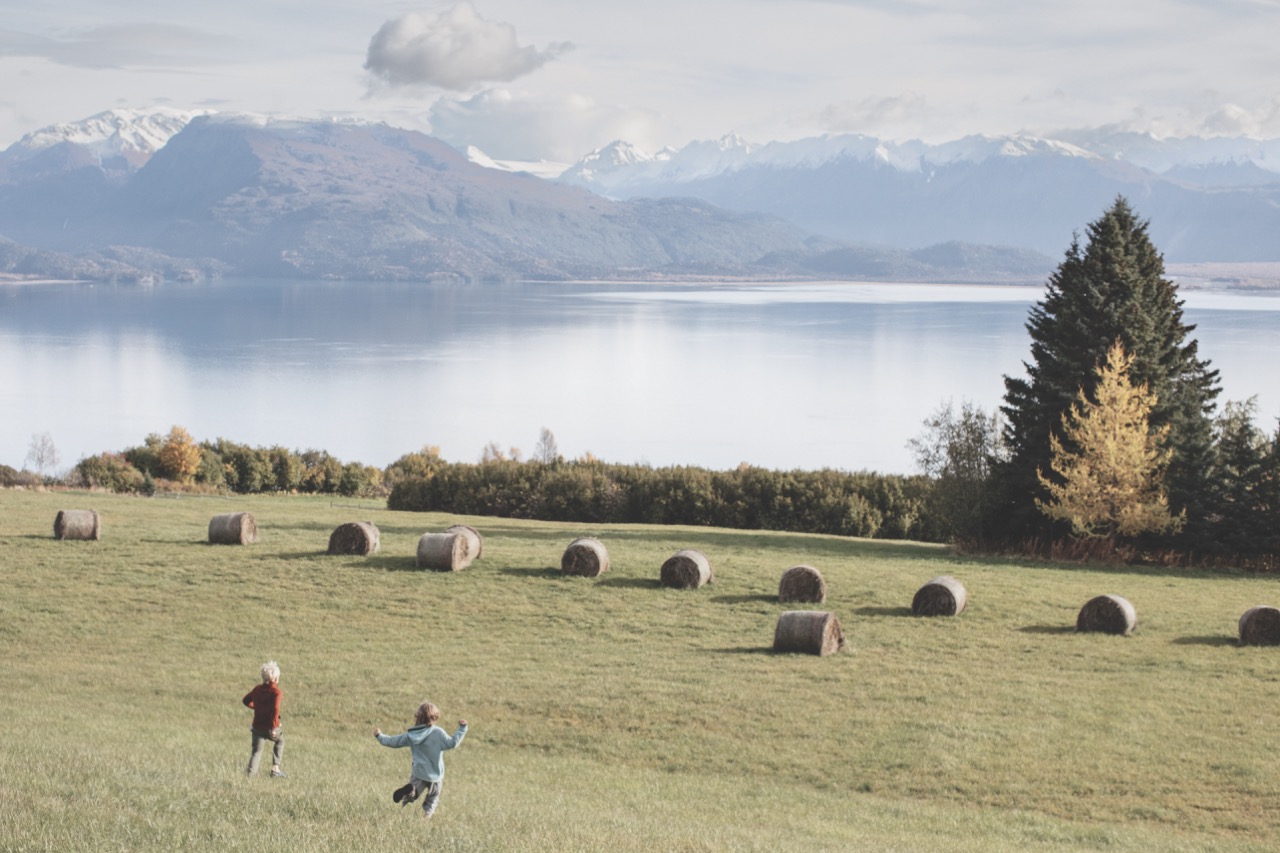
With its unforgiving climate and vast, untamed wilderness, Alaska truly is the last frontier. For those bold enough to homestead here, it’s far more than just a hobby; it’s a demanding way of life that requires a level of grit, fortitude, and resilience few can imagine. The year revolves around the brief but intense summer, when every essential task, from planting crops to gathering firewood, must be done with winter in mind. Winters are long, dark, and isolating. As the snow piles up and temperatures plunge, access to resources becomes limited, and self-sufficiency becomes a necessity. This relentless cycle of preparation and endurance defines life here, shaping individuals who are as rugged as the land they call home.
To some, this may sound grueling and unappealing, especially for those who cherish modern conveniences above all else. And yet, there’s something thrilling about racing against the clock and pushing through the short summer months to secure provisions for a long, cold winter; something that speaks to our primal instincts to hunt, gather, grow, preserve, and provide for ourselves with our own two hands. The challenge of doing so in a harsh climate and extreme conditions only adds to the allure. Perhaps this is why reality shows about homesteading in Alaska saw such popularity a decade ago.
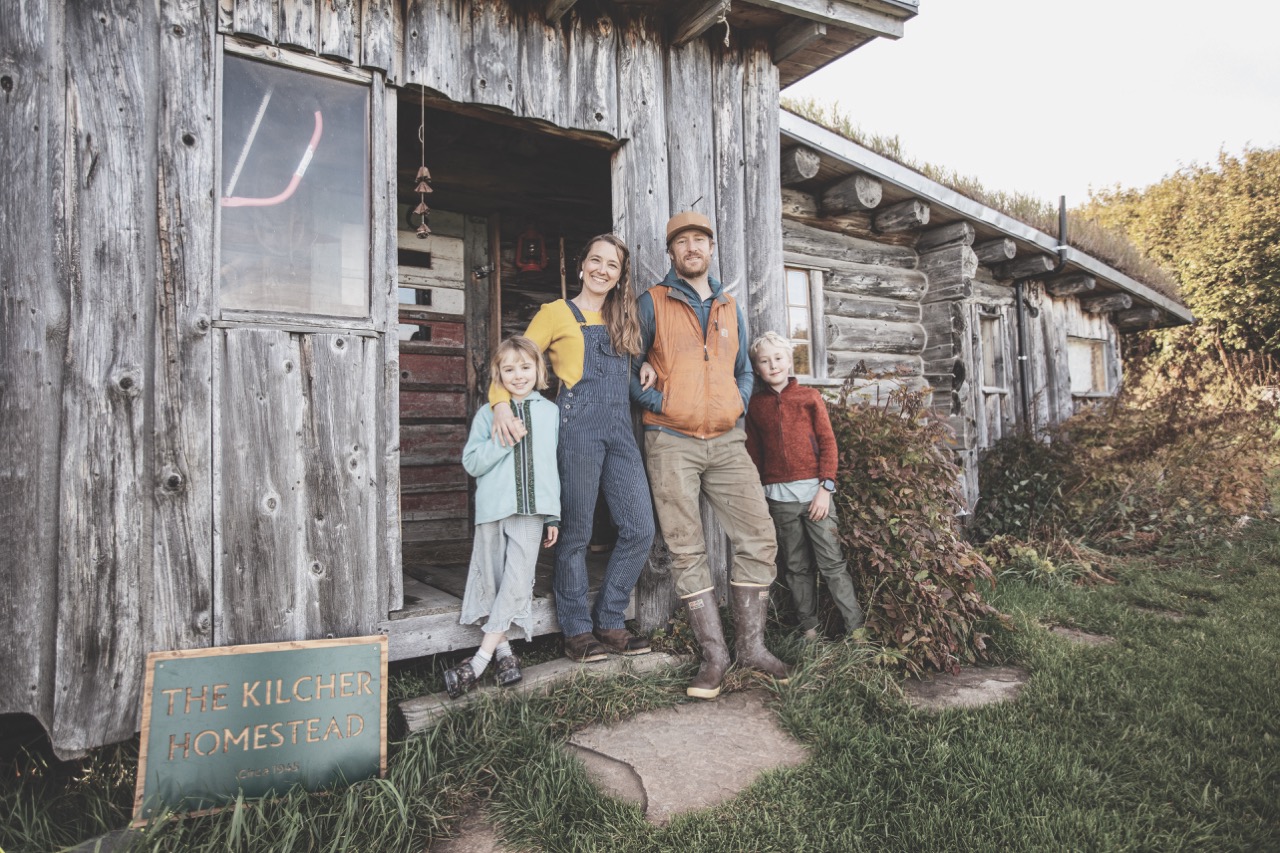
That’s how most of us were first introduced to Eivin and Eve Kilcher. The couple rose to fame alongside their family on the popular Discovery Channel show Alaska: The Last Frontier. While this was one of many shows at the time about homesteading and subsistence living in Alaska (and beyond), the Kilchers’ warmth, authenticity, and strong focus on family set them apart, allowing viewers to connect on a deeper level.
The show was certainly a big influence on my husband and me when we were still living in a city condo, dreaming of moving out of the city and starting our own homestead. Fast forward 10 years, and it felt like a full circle moment when I had the opportunity to sit down with Eivin and Eve to discuss what it’s really like to homestead in Alaska, the unique history behind their family property, and the realities of living life on reality TV.
The History of the Kilcher Homestead
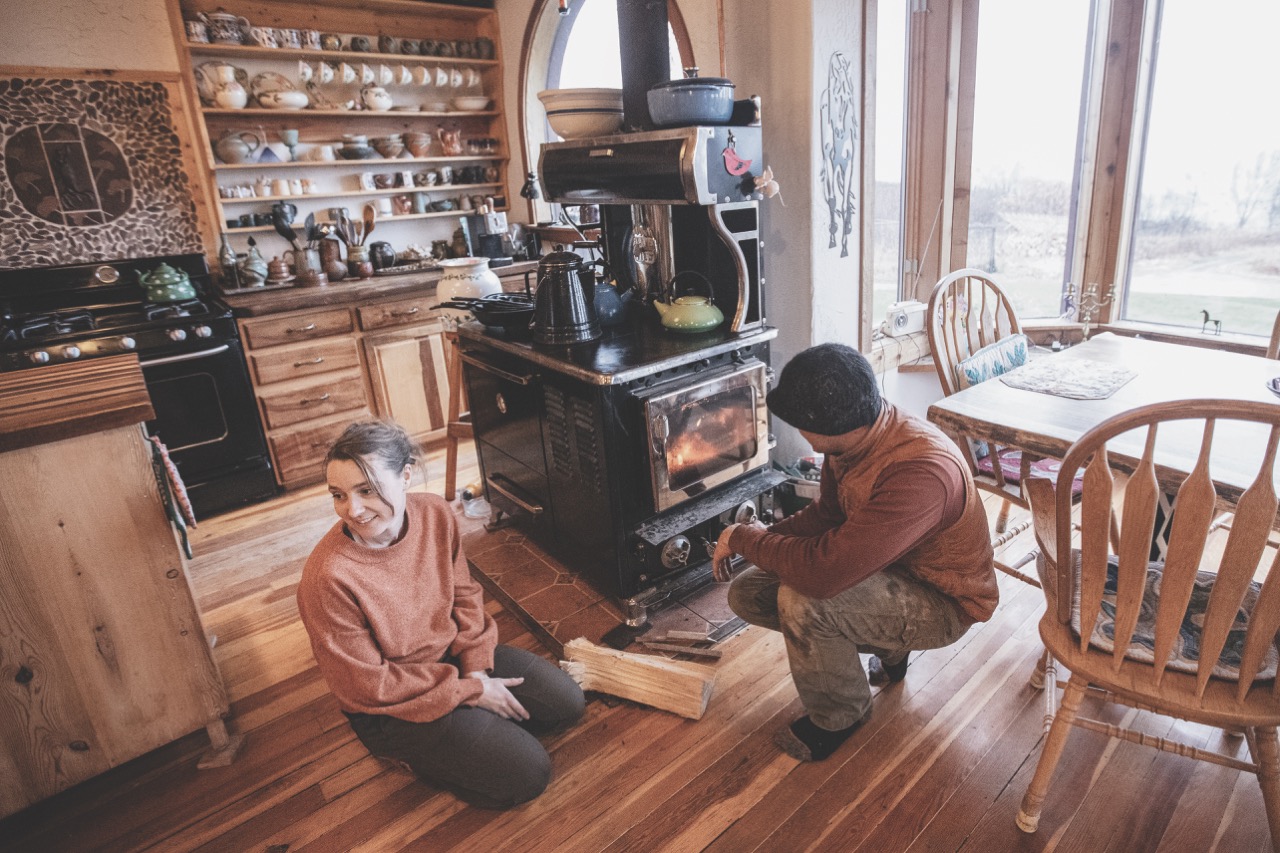
“My grandfather came here in 1936,” said Eivin. “Europe has always been very developed, and he wanted to homestead.” Eivin’s grandfather, Yule Kilcher, left Switzerland for the United States in the 1930s. According to Eivin, Yule had originally set his sights on the west coast of Canada, but he met someone as he was hitchhiking across the U.S. who told him about a place in Alaska where “the coal was just laying all over the beach.”
“Coming from Europe, especially during that time period, coal meant success. Coal was how everyone heated their homes and how trains were powered. That was energy. And so, to think that you’re going to a place where energy is literally just lying on the beach was very, very appealing to him,” said Eivin.
Eivin’s grandmother came over a few years later. Her dowry helped purchase the original homestead from a fox farmer, and Yule expanded out from there.
“Back then the term homesteading meant you just started using the land; you proved that you were using it; you fenced it and then you could apply for the use of that land through the Homestead Act, and it could be granted to you. That’s how he got our family property,” said Eivin.
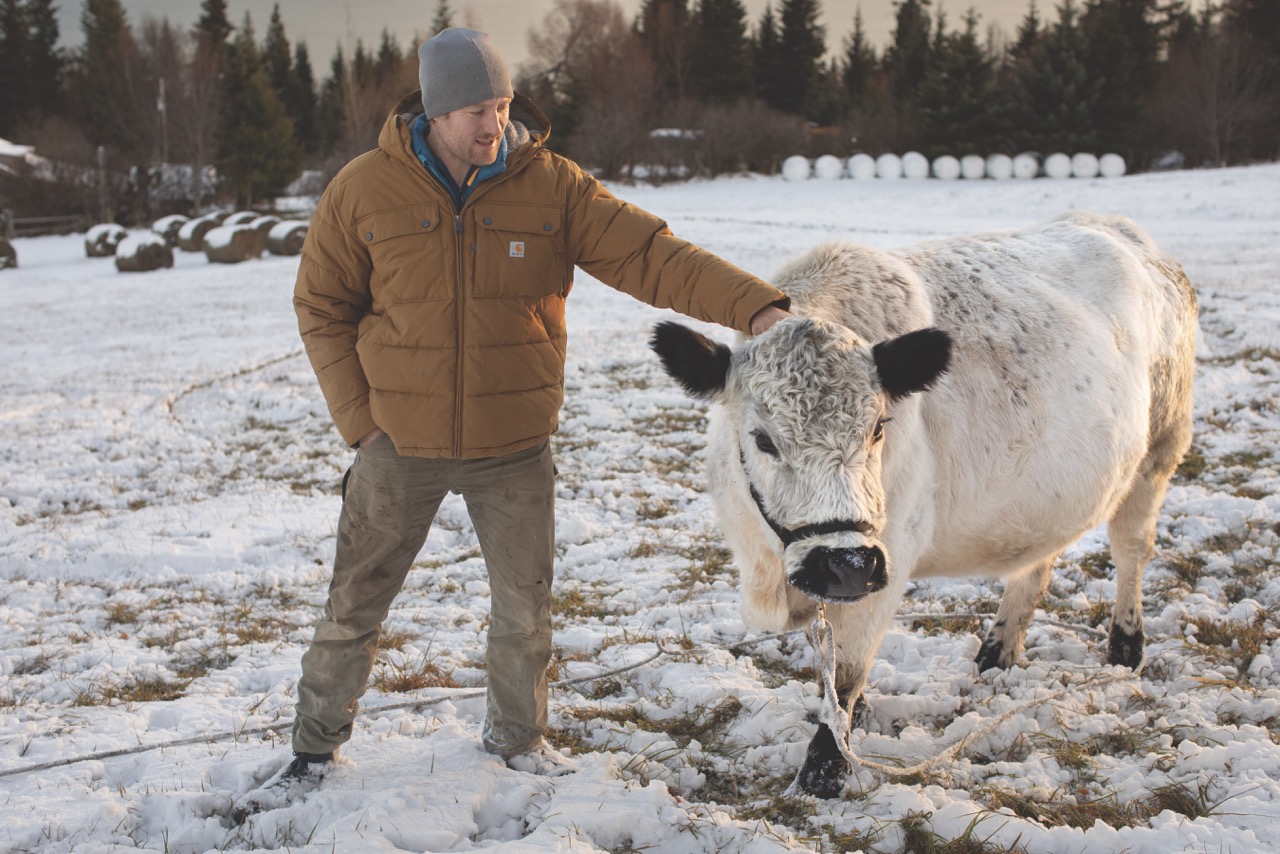
The Kilcher homestead now sits on 620 acres overlooking stunning Kachemak Bay in Homer, Alaska. Eivin and Eve share the land with family, including their two children, Sparrow and Findlay, Eivin’s dad, Otto, and multiple other family members including aunts, uncles, and cousins. Here they raise their own meat and vegetables, hunt, and fish to fill their freezers for winter.
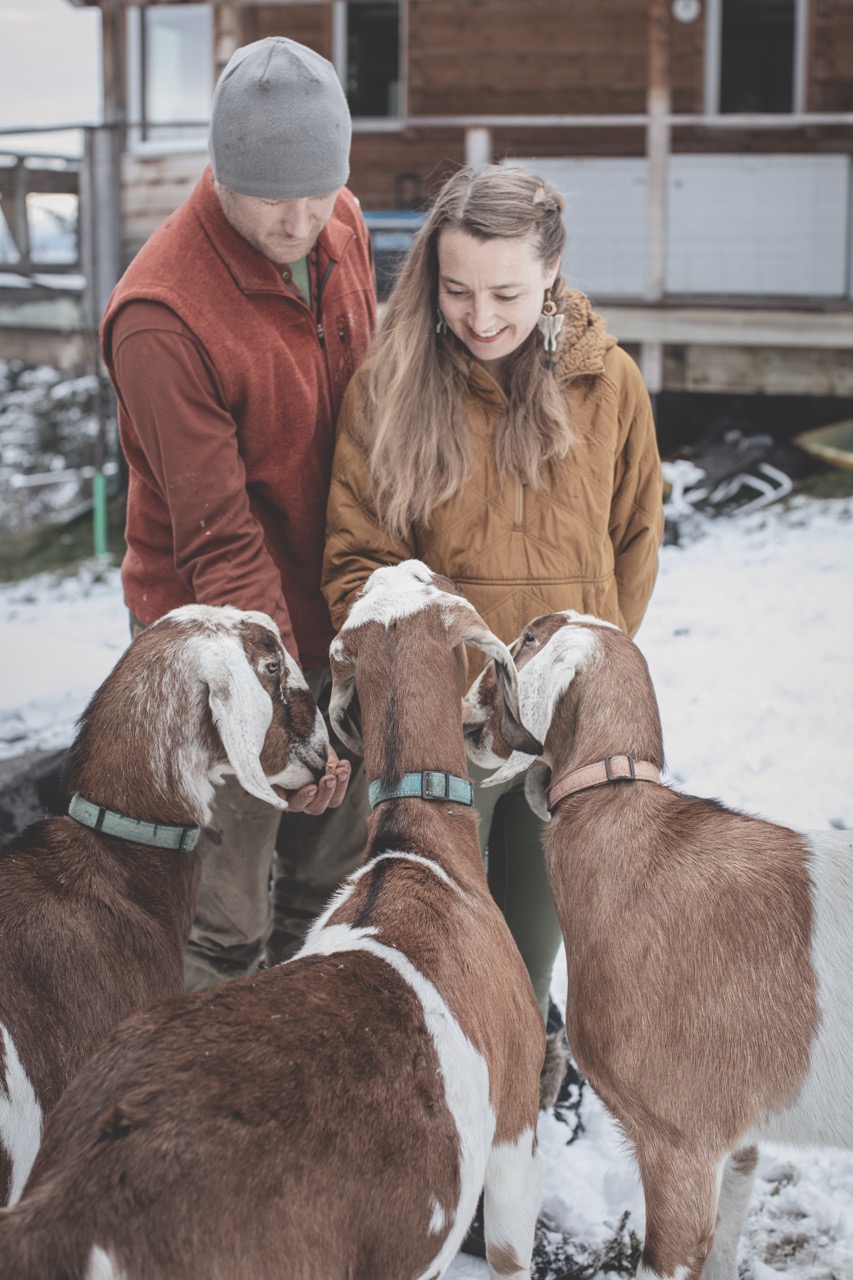
“My grandfather was pretty insightful in trying to come up with a way to preserve that 620 acres so that we wouldn’t lose it to rising property taxes, inheritance taxes, disputes within the family of who wants to keep it, who wants to sell it, etc. It was very important to him to keep it whole, so he put it all in a number of trusts,” said Eivin. “Various other people and family members have bought lots that surround the homestead. My dad bought a lot in the late ’80s that is bordering it. That’s where my house is, on a 40-acre piece that’s right up against the Kilcher homestead. Eve’s stepmother also owns a lot that borders it.”
Eve’s family moved to Alaska during the back-to-the-land movement of the 1970s. Her mother was a whale biologist in Glacier Bay, and her father and stepmother bought a parcel adjoining the Kilcher homestead, which is how she and Eivin first met when they were young.
“My mom always had a garden, and my dad and Olga did meat rabbits, meat chickens, and big gardens. I always had ducks and horses. We had a root cellar. They were homesteading, but to me, that’s just how we lived—hunting, fishing, foraging… My family wasn’t unique. Everyone had a garden, or if they didn’t have a garden they were commercial fishing. That is the mindset you have to have to live in remote parts of Alaska. You have to be resourceful; you have to know how to use only what you have and ‘MacGyver’ your way through. You just don’t have access to everything all the time. I mean it’s way better out here now, but not in the bush,” she explained.
A Family Legacy
While Alaskan homesteaders are rugged individualists by nature, they also rely on the knowledge and support of those around them, as well as the sacrifices of previous generations. The Kilchers’ family legacy and lifestyle exemplifies this balance. Even as they’ve carved out self-sufficient lives on the land Yule Kilcher first claimed, they acknowledge they couldn’t have done it alone.
“I think there’s a romanticism with battling the climate and just really trying to forge your own way… It looks romantic, but we were also handed this lifestyle on a silver platter in a lot of ways,” Eivin reflected. “I don’t mean financially—there have always been struggles. But my grandfather came here in the 1930s and worked hard, as did my grandmother, my aunts, and my uncles. They built hay meadows, barns, cabins, and secured land at prices we could afford. Not having to buy prime real estate in Homer, Alaska, that was huge. We’re incredibly fortunate to have enough family land to live the way we do, with room for goats, horses, and my dad’s cattle. Having grown up learning all of these beneficial skills also gave us a leg up.”
Over time, a community has also formed around the Kilcher homestead—a network of neighbors and family who live nearby and share both resources and a common understanding of what it takes to survive and thrive here. “In many ways, we’ve built a community here, which is exactly what my grandfather envisioned,” said Eivin. “He wanted to create a place that fostered this mindset—a community of people who wanted to live this way.”
For the Kilchers and many other Alaskan homesteaders, community isn’t a mere convenience; it’s a lifeline. With the land’s demands often exceeding what any one person or family can manage alone, they’ve created a web of support, kinship, and interdependence that’s as essential to survival as any tool or skill. Yet people here remain independent, and they don’t always see eye-to-eye.
“Honestly there’s a lot of politicking involved with a large piece of property like that,” said Eivin. “I mean, running a giant homestead with a lot of different people involved in it is very complicated. There’s a lot of different opinions and a constant need to mitigate that. Not everyone is on the same page.”
“I feel like we have a great community of fiercely independent, incredibly helpful, very capable, compassionate, generous humans,” said Eve. “We love helping our neighbors. But the reality is we’re human and we want to do things the way we want to do things. Alaskans are very fiercely independent—to a fault sometimes.”
The Foray Into Reality TV
The Kilchers caught the attention of television producers back in 2011 when someone from Discovery Channel reached out to Eivin on Facebook about filming a reality TV show. They were looking to produce a show about people living a subsistence lifestyle in Alaska, and specifically wanted to film in Homer due to its breathtaking scenery and community of homesteaders.
“I told her, ‘I don’t really know if I’m what you’re looking for. You should talk to my dad; you should talk to my cousin Atz Lee and my uncle Atz because they’re musicians and they’re always on stage and they love being in the spotlight.’ She said, ‘They’d really like to talk to all of you guys.’ The original producer and the directors of photography came up and fell in love with the family, the message, the story, and each one of our different perspectives. That’s more or less how it started, and then we started filming Alaska: The Last Frontier,” said Eivin.
While reality TV has a reputation for being anything but real, the Kilchers’ authenticity quickly won over audiences. Still, the couple admitted they often had to push back to maintain their integrity as producers occasionally urged them to say or do things that didn’t feel genuine. Fortunately, Eivin’s cousin, singer Jewel, connected them with her lawyer, who ensured their contracts prevented them from being misrepresented—producers couldn’t force scripted lines or take their words out of context. For the most part, Eivin said they respected these boundaries and worked with the family to capture their honest, everyday reality.
“It was a bit of back and forth between us and the producers talking about what we were doing. They’d be like, ‘What do you guys need to do? I’d say, ‘I want to build a chicken house. I want to build a barn. I want to build fun things for my kid to play with. I want to go hunting, I want to go fishing. Eve wants to grow the garden, and she wants to grow hundreds of pounds of potatoes.’ None of it was a stretch, we were just filming it,” said Eivin.
“The hard part though, is that the narrator then says things like, ‘It’s essential that they catch this salmon for their survival for the winter.’ Well, it’s not. We could drive to Homer and buy salmon from Safeway. It would cost us a ton of money and I would need to work hard and figure out how I’m going to pay for that salmon, but none of it is essential for our survival. And that was always one of the hard pills to swallow—what Discovery had the narrator say for this injected drama that they felt like they needed,” he explained.
Adapting to Life On and Off Camera
Another hard pill to swallow was learning to adapt to the presence of a film crew on the homestead. “Growing up on the homestead, if you’re around and someone’s working, you’re helping them,” said Eivin, “My dad very much trained me to do that. If he’s working on a tractor, I’m there helping him work on the tractor. If there are hay bales being thrown, I’m there and I’m throwing hay bales… It was a definite mind adjustment for me when there were these camera guys standing around all the time that were useless. I’d be trying to lift something heavy and I’d be like, ‘Hey, can you help me get this?’ And they’d be like, ‘No, we want to see how you’d do that if we weren’t here. That’s what everybody wants to see. How are you going to move that big heavy thing by yourself?’”
Despite the film crew being unable to help with homesteading tasks, and the fact that filming made everything take longer than it would have were the cameras not rolling, the bright side was that the show gave the Kilchers the ability to earn an income doing what they love, and allowed them to focus all of their attention on the homestead. Since the show ended in 2022, Eivin has gone back to driving heavy equipment to make ends meet.
“I own a construction company, and I do landscaping, excavations, foundations, septic systems, power line installs, etc. It pays really well, but I’m not able to focus on the homesteading aspect of life, which I miss.
I miss doing property improvements here. I miss doing the things that help support Eve in her homesteading. That’s one reason why I’m trying to dive more into the YouTube world. It was nice to get a break from Discovery and filming, but now I’m finding that I really miss being more creative,” said Eivin.
“When the show stopped and Eivin had to start working again, so much more of our homestead fell on my shoulders. That transition has been rough at times,” said Eve. “I feel like the first year Discovery ended was hard on a lot of different levels. I didn’t always love making TV. It wasn’t actually something I ever would’ve wanted, asked for, or chosen, but in the end, I learned to enjoy it, and it provided the means for this lifestyle. That is what I wanted my whole life, and what I wanted for our children.”
With their Discovery Channel series behind them, the couple is now focused on building a sustainable future for their family. They hope to grow their YouTube channel,
@kilcher_homestead, into a reliable source of income so that one day they can both return to homesteading full-time. Until then, they continue to balance outside work with the demands of life on the homestead.
The Reality of Homesteading in Alaska
“Homesteading, no matter what, means you’re going to work harder than you ever would at a normal nine-to-five job. Homesteading isn’t nine-to-five. It’s waking up at 2:00 a.m. to a bear eating your goat, then staying up all night trying to track down that bear so it doesn’t come back and eat the other goat. Then you go to work all day and come home to work more, get maybe a few hours of sleep, and do it all again!” Eve said with a somewhat ironic laugh.
“For some perspective here, my grandparents were doing the exact same thing. My grandfather was going to Anchorage a lot. He was working construction; he served as a senator for a while; he worked in commercial fishing. He was out trying to bring in an income, so this is not new. You can’t homestead without earning an income. That was always a thing,” said Eivin.
Unsurprisingly, the success of Alaska: The Last Frontier was followed by a wave of people who wanted to follow in the Kilcher family’s footsteps and start a homestead in Alaska. While the realtors loved the business it brought them, most newcomers didn’t last more than a few years.
“My recommendation is don’t come homestead in Alaska. Most people are not cut out for this. It’s not easy. Everything is going to be so much harder and harsher than somewhere down in the lower 48. If you’ve never spent time living in Alaska, I wouldn’t start a homestead here. I would start a homestead, well, wherever you are! Just start small. Have the little backyard garden. Figure out what you like to do. Go in with zero expectations and take things one step at a time. Try something—or even a few things—and see what works,” said Eve, offering some wise words of wisdom.
When asked what keeps her going through all of the ups, downs, blood, sweat, and tears that come with this lifestyle, she paused, then replied, “I just have such a strong ethos and idea about what is healthy and what I want to give my children. It is so deep in my core, and so important that it’s really hard for me to let go of any homesteading elements because it’s just… I know how toxic that chicken I buy at the store is, and so I would almost break my back to not have to feed that chicken to my children. Is that even sane? I’m not really sure.”
I think many of us can relate, and it’s precisely this relatability that made the Kilchers’ journey so captivating to viewers. In a time when it feels like celebrities are increasingly out of touch with everyday people, Eivin, Eve, and the entire Kilcher family represent realness and authenticity. Sitting down with the couple, it’s clear that fame hasn’t changed them. They’re just regular folks like the rest of us, working hard to make ends meet, fill their freezers, and provide a good life and healthy food for their family, just as their parents and grandparents did before them. They’re not only preserving a way of life but also carrying forward the legacy that was entrusted to them—one that continues to inspire people all over the world seeking a simpler, more meaningful life.
Keeping Up with the Kilchers
Whether you’re a longtime fan of the show or this is your first introduction to the Kilcher clan, you can still stream all episodes of Alaska: The Last Frontier on Discovery Plus, or keep up with Eivin, Eve, and the rest of the family on YouTube at youtube.com/@kilcher_homestead.
Leave a Reply