
If you’ve spent any time in homesteading circles at all, you’ll have learned pretty quickly how to make your family’s version of elderberry syrup. With more and more of us stepping away from the typical plugged-in mainstream lifestyle, it makes sense to grow your own elderberries and make your own syrup.
That being said, the logic often goes that, as homesteaders, we learn to manage common first-aid issues at home. This leaves room in the budget to head to the doctor to maintain more chronic issues. But is this really the best long-term plan for homestead self-sufficiency?
For me, the root of wanting to homestead has always been about a kind of self-sufficiency that I believe is only earned with sustainable and resilient systems. We began our homestead with bees and quickly found out that any system that you have to rebuild every year will be a draw on time, money, and emotional resources. Starting out with conventional methods here in zone 5, Ohio, guaranteed we were replacing our bees every spring due to die-off. Once we changed our practices to the natural ones I shared in my book Sweet Remedies, we came out of winter with healthy, live bees that started gathering honey immediately without any further investment.
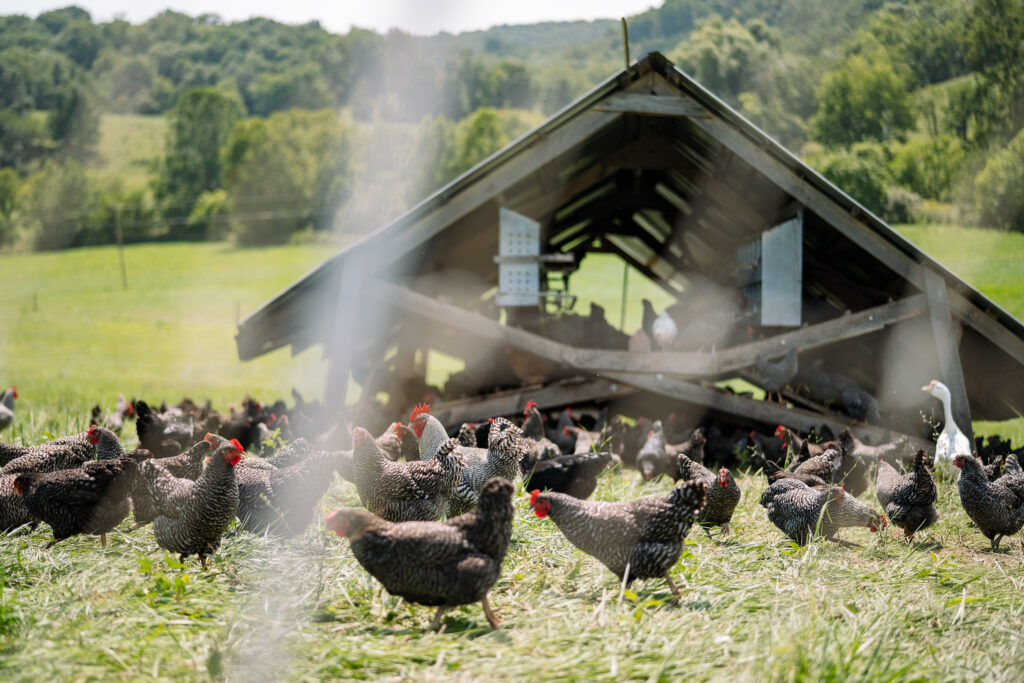
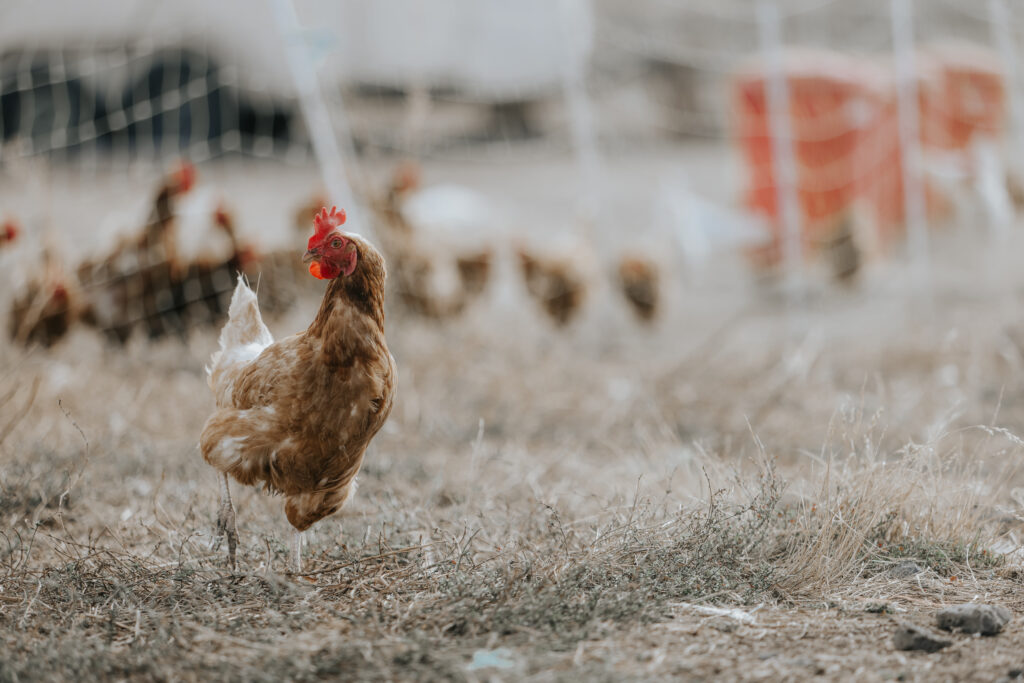
Raising chickens provides another way to learn this lesson. The peak of chicken self-sufficiency, in my opinion, is raising multi-purpose chickens that provide eggs and are also a great source of meat. If the breed you choose has the tendency to go broody and raise their replacements, you have a self-sustaining source of food on your homestead.
If you are diligent about investing in the sustainability of all the animal and crop systems on your farm, but neglect to invest in the sustainability of the health of the people, you aren’t truly self-sufficient.
If you rely on over-the-counter medicines to get out of bed and get the work done, you’re reliant on pharma.
If you depend on the supply chain to keep your life-saving medication coming to the local drugstore, or your front door delivery, you are vulnerable to the supply chain running uninterrupted, or being blackmailed by those who control your access to medication.
If you are addicted to the chemicals in man-made substances or imitation foods, your God-given health design is altered, your production capabilities on your farm are compromised, your ability to remain truly present with your family is deadened, and you are… dependent.
True freedom requires sustainable health. The inputs of sustainable health are real food, a healthy lifestyle, and occasional balanced, natural remedies that shore up weaknesses.
What Can You Do to Become More Health Independent?
I’m not suggesting that you need to fire your doctor and stop filling your prescriptions to be a true homesteader. It is magical thinking that fresh air, sunshine, and the hard work of growing your own real food suddenly cures you. The diseases of deficiency that we have either been handed by our most recent ancestors or we ourselves have created through mainstream living are more entrenched than that. There is a balance here that must be determined by each individual. It is a balance that requires the application of our thought, time, and effort if we are to truly gain our freedom and not just merely have a farm or live off-grid with one foot still firmly planted in the mainstream world.
When we moved to our farm, one of the first things we did was test the soil. It’s a fact—your entire success as a homesteader lives and dies by your soil. In university, I was taught the conventional mindset that we see played out in modern farming. Depending on the soil test results, had we gone with this thinking, we would have added commercial fertilizers to bring in the fertility needed for healthy plants. Instant results can be had the conventional way, but this path guarantees a farm that is not sustainable.
In conventional farming, you know the soil is deficient, yet the solution is designed to ignore the problem and instead bring in outside inputs that require labor, time, and money year after year. It requires a perspective of seeing the soil as merely a dead container in which to grow. Because chemical fertilizers focus on a few macronutrients and result in imbalanced, compromised food for you and your animals, further inputs of pesticides, herbicides, and fungicides are needed as well! As the soil at the bottom of the system grows weaker and weaker, it requires more of this artificial work-around to be funded and grows ever closer to collapse.
We decided on our homestead that it was better to do the work to fix the soil and be patient as it healed. Applying rock powders that were needed to break down and release trace nutrients, incorporating manure and well-turned compost, folding in cover crops… all of these things took time and work. But, as we have moved along the years in this process, we are producing food for both ourselves and our animals that truly forms a solid foundation of nutrient density and supports health and healing. We don’t need outside inputs of fertilizer, herbicides, pesticides, or fungicides. Our soil supports health as designed and therefore the things we grow in it are not weakened enough to fall prey to predators and disease. When plants show signs of weakness, it is easy to correct minor nutrition and stress issues before disease and heavy pest problems set in.
Many of us started our homesteads as a reaction to a personal or family diagnosis. My first book told the story of my own infertility, how I overcame it, and went on to give birth to our two children on our farm. The problem is that so many of us move to the country with the idea that we are going to stop any further health issues or that we will live as well as we can with the diagnosis we are given. As we share our sodas with fellow homesteaders, I talk to a lot of our community that are still wearing their “diabetes” badges given to them by conventional medicine. I try to tell people as often as I can: That’s NOT your identity! Your diagnosis is merely a place you are passing through at the moment if only you choose to fix your underlying issues.
The people on your homestead are just like the soil. In fact, we ARE the soil in many ways. Our bodies are designed to heal in just the same way as the soil is. Choosing to simply manage a diagnosis rather than work toward curing the underlying issues that led to that diagnosis is the same as leaving the imbalances you saw in your soil test unaddressed and buying in chemical fertilizer, pesticides, herbicides, and fungicides instead. The alternative will take time, patience and hard work… but the proof is on thousands of homesteads across the country that the soil, and our bodies, can heal.
A Holistic and Sustainable Approach to Healing and Health
Elderberry is a great acute treatment of a passing cold and we need to know these simple first-aid type remedies. The elephant in the room is that many haven’t addressed the underlying issues in their chronic diagnoses while attempting to live the homestead life of self-sufficiency. Just as problematic is merely switching from conventional methods to natural ones to maintain disease. The latter is like using natural bug repellants in your garden instead of fixing the underlying soil imbalances!
If you are realizing that you have left this part of your homestead unaddressed, here are some steps you can take:
Understand your diagnosis or those of your family
For example, if I have been told I have diabetes, I need to understand that my digestion is compromised, my pancreas might be weakened, and my adrenal glands (and endocrine system) are likely under stress.
Talk to your doctor
If your doctor is not ready to have conversations about how to truly heal from your diagnosis, find a new one. Whoever is on your medical/healthcare team must be put on notice that your goal is to work toward sustainable health. This might involve a plan to reduce or eliminate prescriptions.
Form a backup plan
Especially if you currently require life-saving medications, it’s important to have a backup plan. What would you do if your blood thinning medication was unavailable due to supply chain issues? Know what foods and herbs you can grow or source—and how to use them—in the event that you can’t get what you need. The kind of fear you experience when you can’t get what you need to keep yourself or a family member alive can be a powerful means of control.
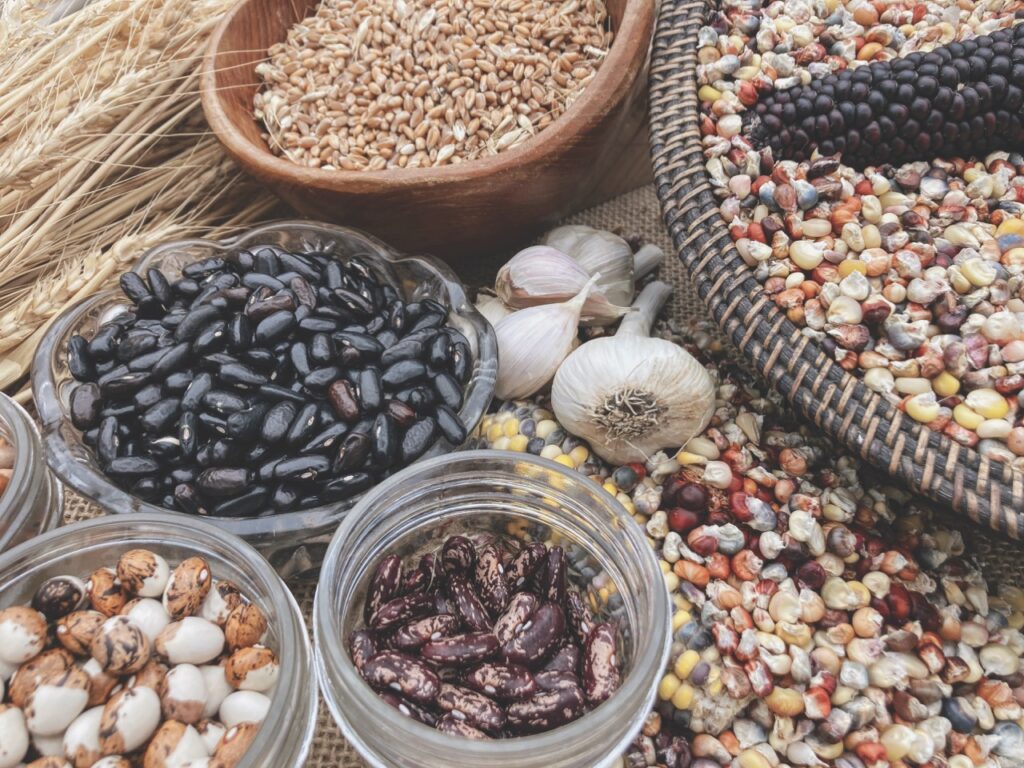
Eat real food
If you are addicted to any foods that are man-made, synthetic, or what I call “imitation creation” kick them to the curb. One of the fastest ways to level up your health and shore up weaknesses is to eat only real food. The same goes for other addictive substances. The sooner you can wean yourself off,
the better.
Feed your weaknesses
This is your opportunity as a homesteader to make your next garden plan specific to the health needs of your family. Grow food and herbs to strengthen body systems as well as specific diagnoses. You might grow bitter melon to support your blood sugar, and provide a bitter component to meals that supports your digestion. Or you might grow any of a variety of adaptogens that can support your body’s reaction to stress.
Be patient
Remember that chronic imbalance issues aren’t
created overnight, and therefore can’t be fixed
overnight.
There is no room for shame or guilt here. If you decide to try to close this self-sufficiency gap, you are going to need to take small steps and celebrate them every day. You might live in a holding pattern that isn’t your imagined best-case scenario as you work to improve your health, and that’s ok! Every step you take today is one step closer to sustainability and the full ability to take charge of both your health and your homestead.
Editor’s Note: It is always recommended that you speak with your doctor or primary healthcare provider before incorporating any natural medicine or embarking on any new treatment plan. We also understand and acknowledge that not all chronic conditions are preventable or manageable with diet and lifestyle alone. This information is for education and entertainment purposes only, and to offer insight into how certain conditions might be managed or healed using holistic, sustainable approaches.
Leave a Reply