
What if the plants themselves interacted with one another, attracting beneficial insects, deterring pests, sharing nutrients from the soil, and fixing their own nitrogen as they grow?
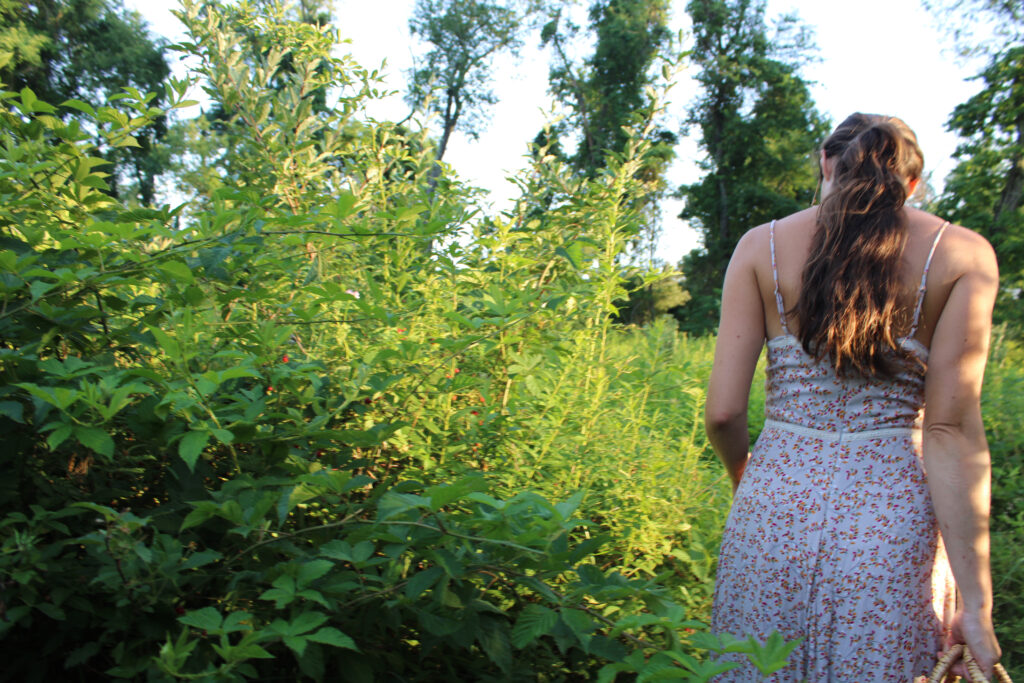
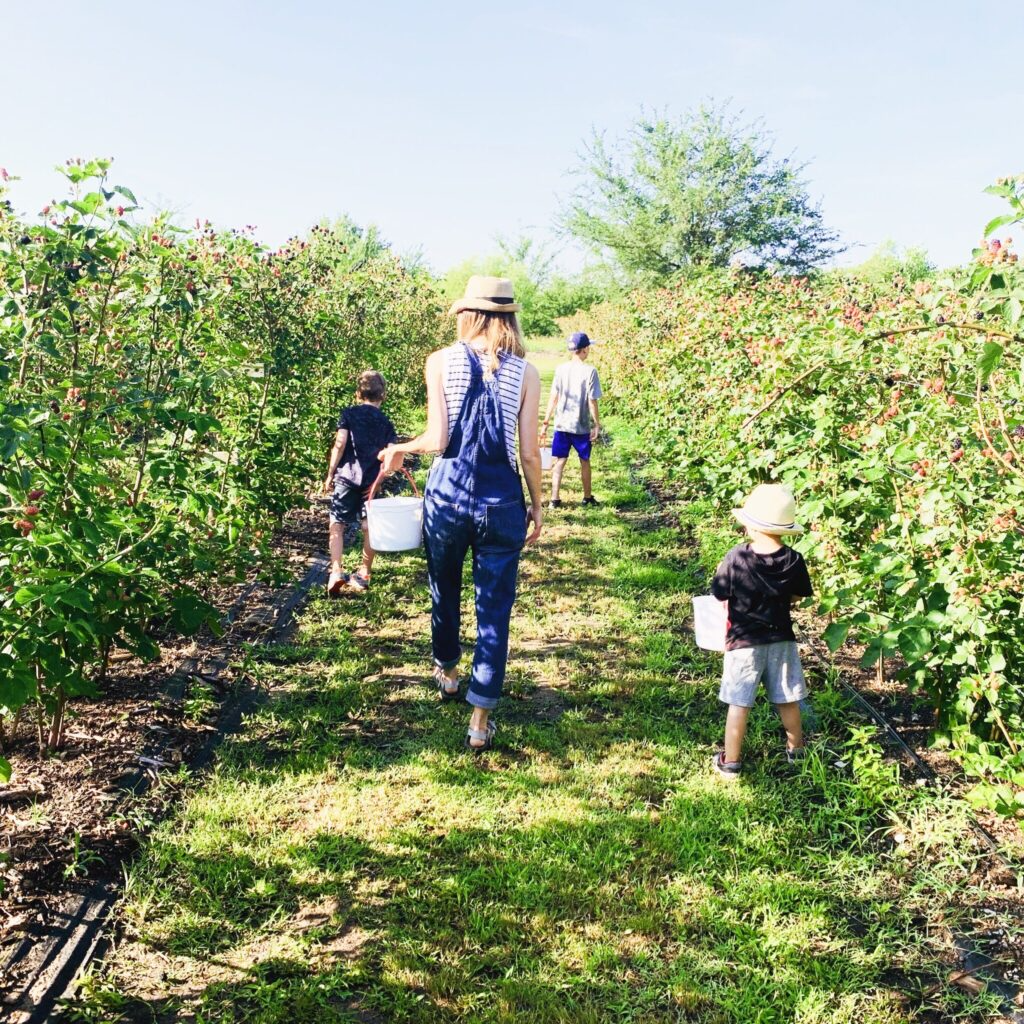
Large swaths of Axe & Root Homestead are covered with blackberries, wine berries, and black cap raspberries. These plantings are encouraged to grow through cedar, walnut, and Russian olive plantings throughout the homestead.
This can happen.
This is the magic of a food forest garden.
If such a garden is possible, why are they so hard to find? First, food forest gardening is not a new concept. Indigenous peoples from around the world have been growing crops this way for centuries. One of the oldest sustainable food forests located in Morocco dates back to roughly 2000 years ago. In today’s modern American society, this growing method has been cast aside for swaths of monocultures, heavy farm machinery, and high yields from annual crops.
Fast-growing container, raised bed, and in-ground style gardens have become the norm for the hobby gardener. Simply put, perennial gardens take months to establish, if not years. Patience is the number one deterrent to folks planting forest gardens.
The second “flaw” of forest gardening is an understanding of which crops to actually plant. Apples and pears are not well-suited to every growing climate, while perennial onions planted alongside beans can stunt both crops. A truly prolific garden requires research and an understanding of the local growing zone, tree species pollination requirements, and polyculture (also known as companion planting).
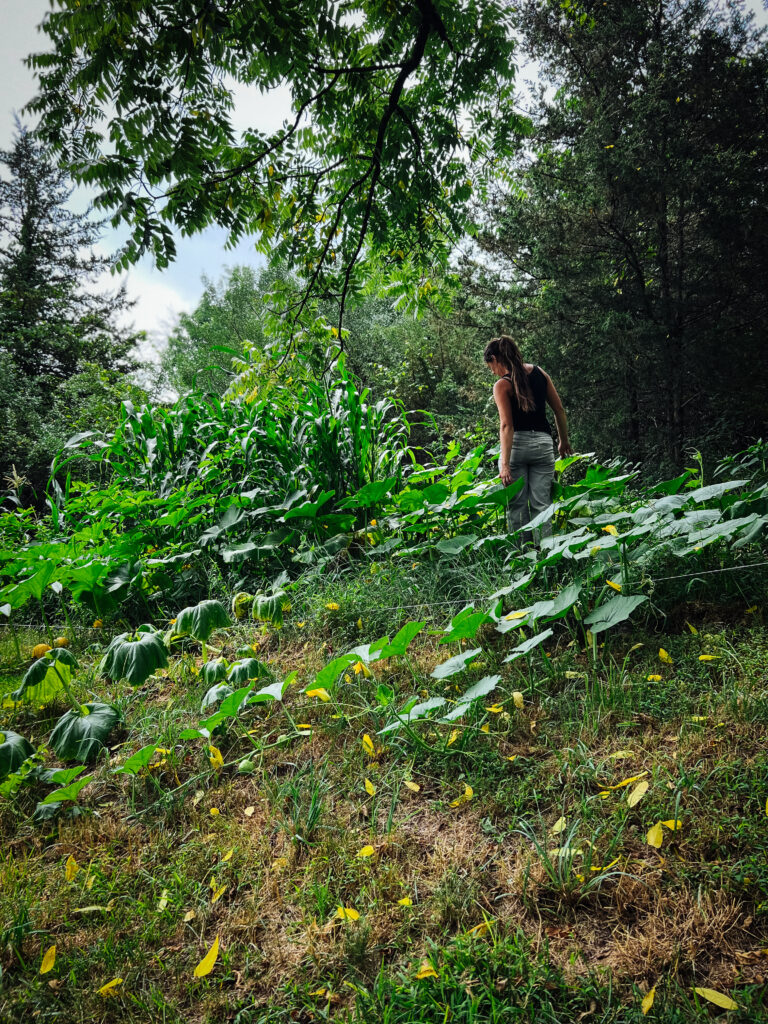
Popcorn, varying gourds and green beans grow along forest trails, surrounded by walnut and cedar trees. After three months with little-to-no rainfall in central New Jersey, the crops are just beginning to wilt. This garden has no alternative irrigation.
Food Forest Garden Layers
In a permaculture food forest system, the garden is constructed by installing different layers, just as there are in the forests found in nature. From top to bottom, there are over-story, mid-story, under-story, groundcover, and vining plants. All of these layers can be edible or provide some sort of function to the home whether they be dye plants for fiber, animal forage, medicinal herbs, or cutting flowers. Imagine multiplying your growing space simply by thinking of growing gardens upwards in layers, rather than thinking of garden real estate in horizontal terms.
The tallest canopy is created by over-story trees. Such members of this family in a permaculture forest garden could include oak, chestnut, maple, or walnut. These trees provide a yield with their edible nuts (acorns from oaks, chestnuts or walnuts) or tap-able sap (from maples). Their canopies provide shade and, if planted near structures, cooling power and shelter for animals from the sun’s rays. Pruned or chopped wood can provide heat for fires or for woodworking projects, the branching systems give shelter to small wildlife and insects, and their roots help to break compacted soils. Black Locust and Moringa trees actually fix nitrogen into the soil as they grow. But equally important is the contribution over-story trees provide to the atmosphere. By the time a silver maple tree is 25 years old, it will have sequestered roughly 400 pounds of carbon dioxide while oak trees can absorb about 92 pounds of carbon per year.
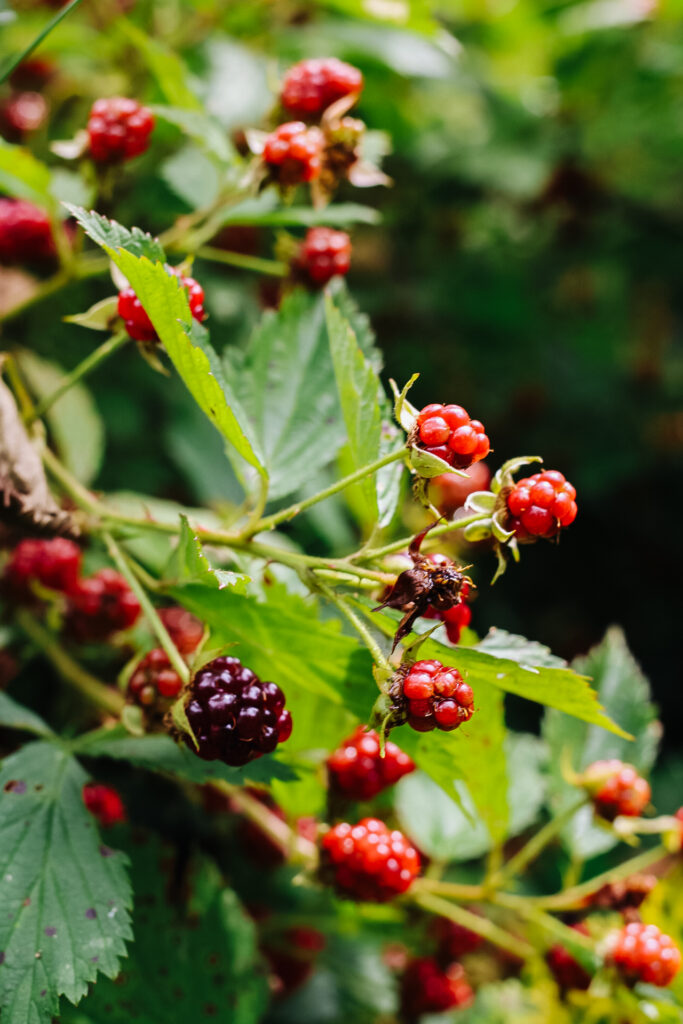
Blackberries thrive in full sunlight and make an excellent under-story planting on the outskirts of larger tree crops.
The mid-story layer is typically comprised of standard and semi-dwarf-sized fruit and nut trees within a permaculture food forest garden. The tree itself performs many of the same functions as that of the over-story layer but with a harvestable fruit yield each year. For example, let’s assume an apple tree is well-pruned, pollinated, and generally well-cared for. It has experienced minimal pressure from pests and diseases and has suffered no detrimental damage from wind or other naturally occurring elements. This apple tree has the potential to yield eight to 10 bushels of apples per season (variety dependent). Dwarf and semi-dwarf varieties will yield one to two bushels per year, roughly. Fruit size varies based on the variety of the apple tree, but on average, one bushel of apples contains 126 pieces of fruit. That’s the potential to reach 1,260 apples per season. Continuing with this example, it’s worth noting that apple trees take eight to ten years to reach their full production potential. Buying and planting the largest and oldest apple tree you can afford helps to speed up this establishment process.
Beneath the over- and mid-story layers resides the under-story. This real estate is largely dappled shade located directly beneath the fruit or nut tree, and the towering over-story tree. For sun-loving lower-growing shrubs and plants, cane berries such as blueberries and blackberries can be installed on the outer drip line of the mature tree. Partially-shade tolerant plantings such as autumn or Russian olive, kale, currents, gooseberry, and elderberry, for example, can be situated closer to the trunk.
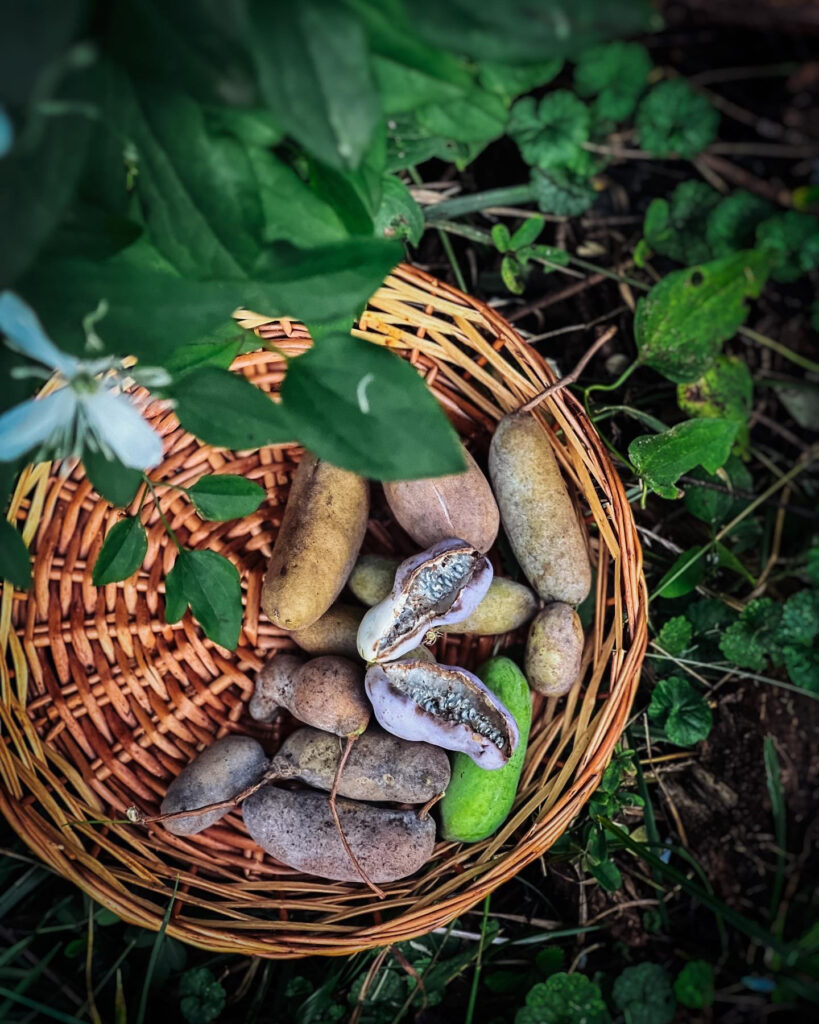
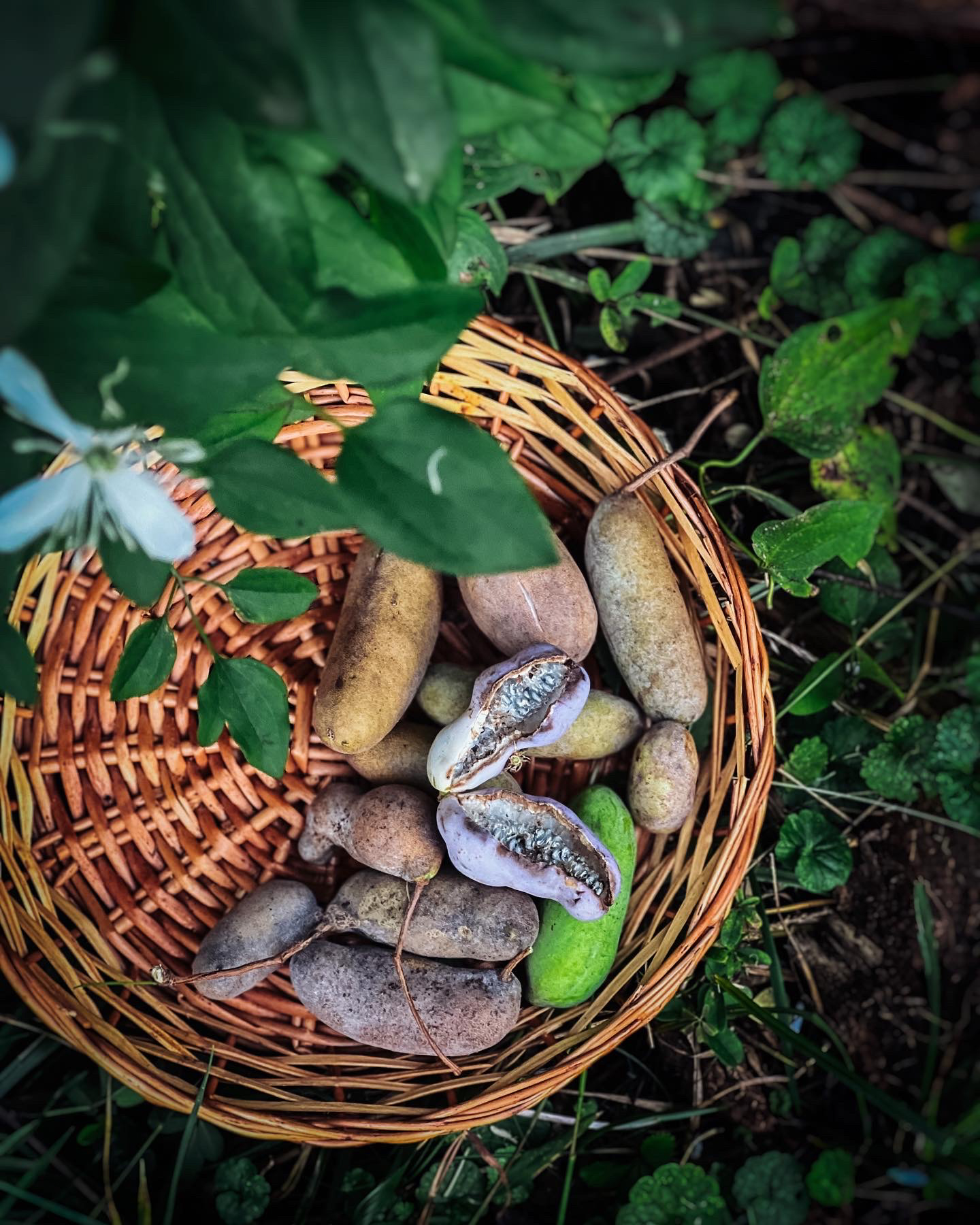
A perennial vining fruit common in Japan. Akebia (also known as chocolate vine) bears edible fruit in autumn.
Culinary and medicinal herbs, daffodils, mint, nasturtium, chicory, comfrey, and other perennial flowers have a long list of benefits. They can be interplanted to attract beneficial insects, repel pests and even deter some forms of disease. These herbs pull nutrients upward from deep within the soil for other plants to feed from, balance nitrogen levels, act as natural mulchers, and even suppress weeds. These are ground-covering plants that fill spaces between taller flora on the food forest floor. In locations with adequate moisture, oak logs inoculated with mushroom spawn are also a fruitful option.
And finally, vining crops such as beans, peas, akebia vine, hardy kiwi, and grapes can be planted alongside tree trunks. The trees provide a natural trellising system and fruits, depending on variety and type, can be harvested simultaneously with apples or other mid-story crops.
Where to Begin
If a food forest garden seems to be a good fit for your home or growing site, the best place to begin is by familiarizing yourself with the land around you — paying close attention to the microclimate, weather patterns, water flow, and soil type. This research will help to ensure appropriate trees, shrubs, and plantings are selected. Apple, pear, and other fruiting trees, for example, require a certain number of chill hours (a chill hour is an hour of time that the tree experiences at temperatures below 45 degrees Fahrenheit) in order to blossom and set fruit. Understanding if water will pool or drain is essential to avoiding root rot in moisture-sensitive plantings. Familiarize yourself with your physical growing site and amend the soil as needed based on the results of a soil test.
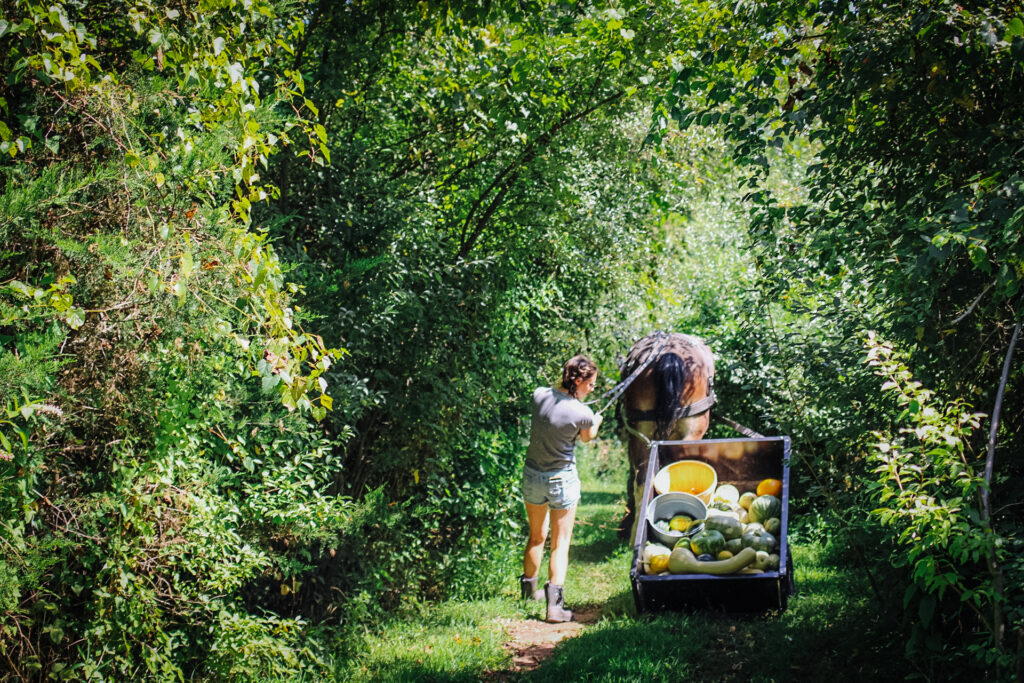
Bringing home the first of many gourd harvests from one portion of the food forest, pulled by horsepower.
Next, I recommend researching perennial crop varieties and appropriate companions. While choosing typical orchard and nut trees may come easily, under-story members such as those of the ribes family (currents and gooseberries) are considered illegal in some states. Russian or autumn olive are wonderful nitrogen-fixing shrubs but are considered invasive. The siberian pea shrub could be an alternative for some, as the goumi could be for others. Your climate may be warm enough for pigeon peas or cool enough to support sea berries and beech plum. There are many wonderful tasting fruits and vegetables which are perennials that we do not see in grocery stores, or even at farmers’ markets.
After plantings are selected, it’s time to lay out the site. I start with the largest plant, my over-story tree. Measure the mature canopy size and account for space accordingly. Next, I space my mid- and under-story trees and shrubs. The canopies always slightly overlap at mature size but will seem quite far apart as young saplings. Ground cover choices are installed next. Full-sun crops can be planted and sustained until the tree and shrub canopies above spread and create shade. Partial-sun-loving crops are always my favorite choice as they seem adaptable to a growing space with ample sun in the food forest’s early days, but also with filtered light later on. Vines are my last crop to plant as they tend to grow quickly and require support. I often wait to plant these until the tree is mature, unless an alternative trellis system will be used.
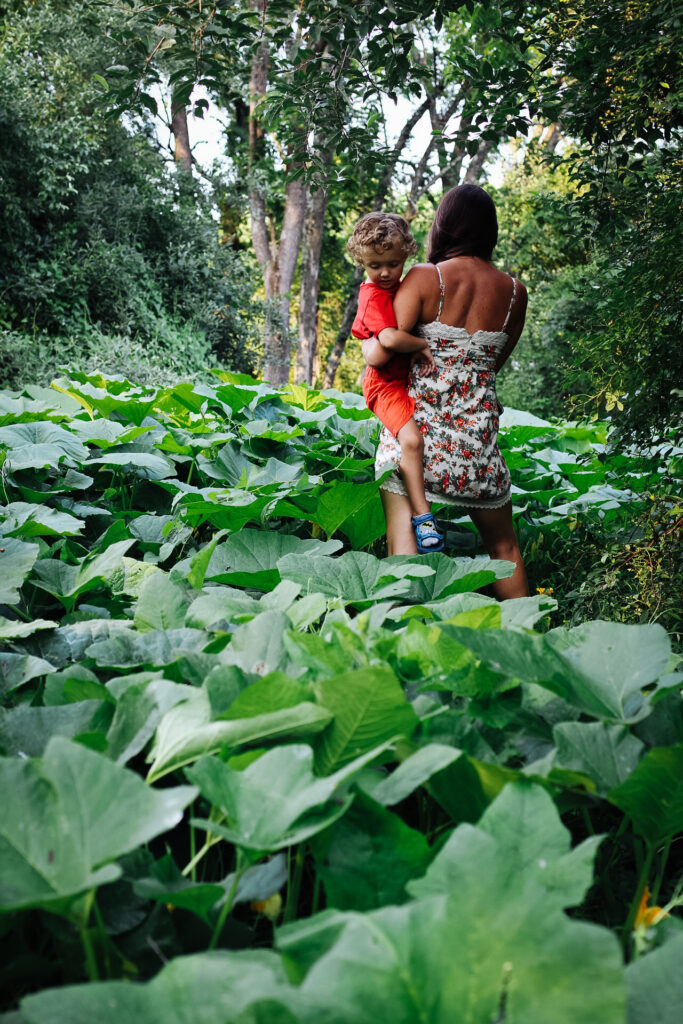
Walnuts produce a compound called juglone which is toxic to many plants. Pumpkins and raspberries seem
to tolerate black walnut soil and thrive under their canopies. Sometimes the gourds even climb the trees!
Additional Benefits
We tend to think of crop yields as the main offering from our gardens. And with so much effort, care, and funding invested, we should absolutely reap a decent harvest for our work. But the food forest offers more to the farm or homestead than simply produce. It invites beneficial wildlife. Never before have I experienced more praying mantis in my growing spaces until I started forest gardening. These permanent plantings create a residence for helpful insects and a healthy mantis population is like inviting an army of pest control professionals to stay! Swallows and owls have begun living on my homestead which greatly decreases our fly, mosquito, and rodent populations. Our livestock guardian dogs deter deer from eating our plantings, as does the abundance of garlic, onion, and chives interplanted within the forest systems.
We experience a different level of sustainability, knowing new plantings will not need to be reinstalled each year, nor will the labor and costs associated with them. Our harvest quantities are increasing, our soil is improving, and we are sequestering more carbon. Good things certainly come to those who are willing to put in the work… and wait.



Leave a Reply