
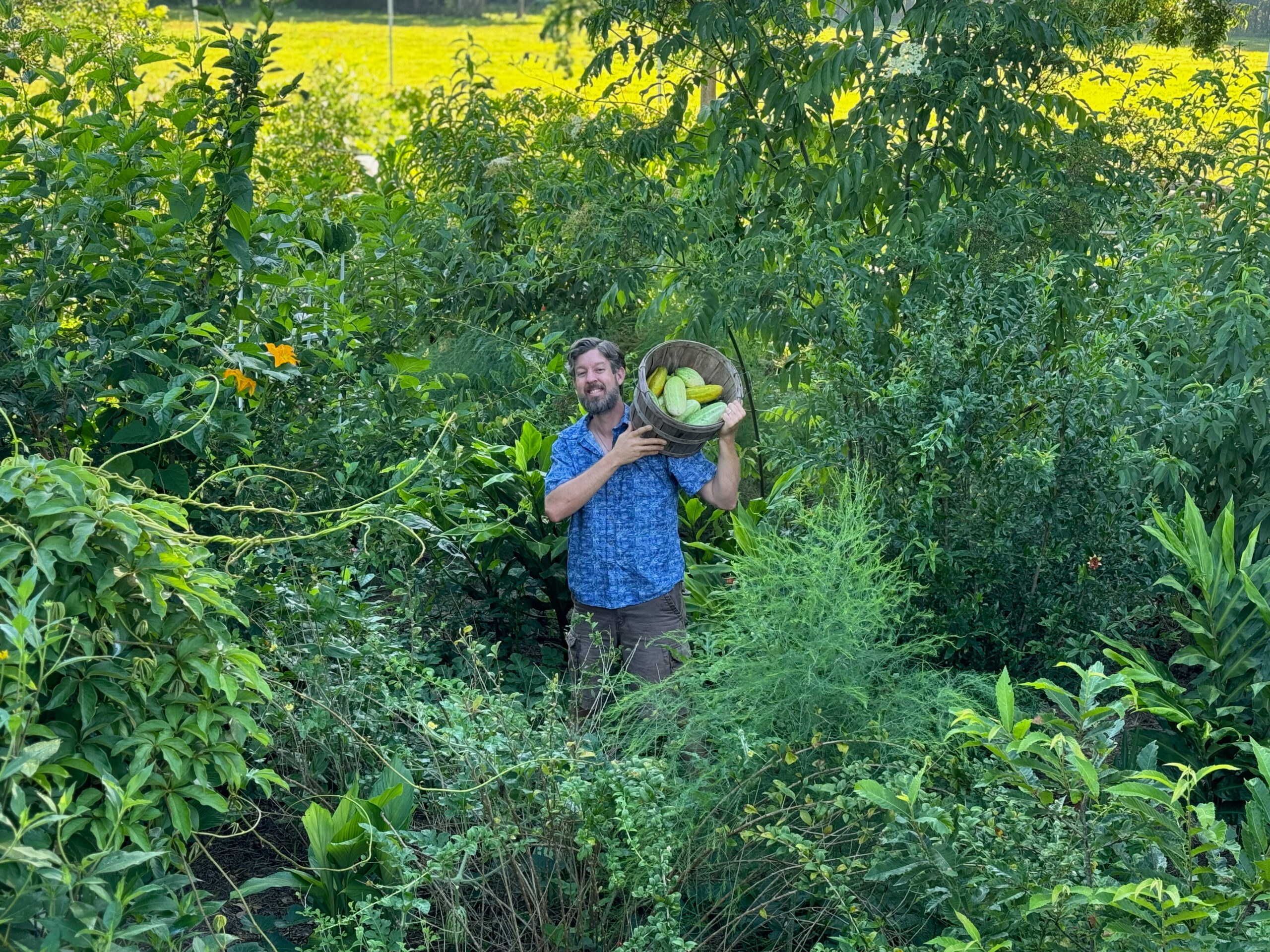
When we were kids, we loved the woods. The rich smell of fungi, catching beetles under logs, blackberry picking at the edges of oaks, light streaming down in dappled patterns through the whispering leaves above—it was enchanting.
Then, somehow, we grew up, and many of us forgot the magic of the forest. As adults, we began to see trees as “messy,” dropping sticks and leaves on our otherwise tidy lawns. Instead of catching insects and climbing branches, we started mowing grass, trimming hedges into squares, and doing everything we could to eliminate dandelions.
But now, some gardeners are waking up. They’re replacing their lawns with living ecosystems filled with edible trees, fruiting shrubs, vines, herbs, and other perennials that keep producing year after year. These are known as forest gardens or food forests.
A Long Line of Food Forests
Seventeen years ago, I discovered Geoff Lawton’s film Establishing a Food Forest the Permaculture Way. I was hooked! Before, I had planted a few lonely little fruit trees here and there in the lawn. Now I wanted to recreate the Garden of Eden in my backyard.
That time came in 2011 when we bought a foreclosure house a little north of Ocala, Florida. Even before we finished moving in, we planted trees. Over the next couple of years, we planted hundreds of plants on less than half an acre. Plums, peaches, pecans, mulberries, chestnuts, thornless blackberries, cassava, yams, figs, pomegranates, persimmons, gingers, Goumi berries, citrus, and so much more.
Some of the plants were new to us, like Japanese raisin tree, Chickasaw plum, Simpson stopper, multiple species of native Florida pawpaw, cherry of the Rio Grande, Orinoco plantain, Mysore raspberry, Florida soapberry, kaffir lime, and American groundnut. Whatever we thought might grow, we planted! Suffice it to say that our nursery budget was a little out of control.
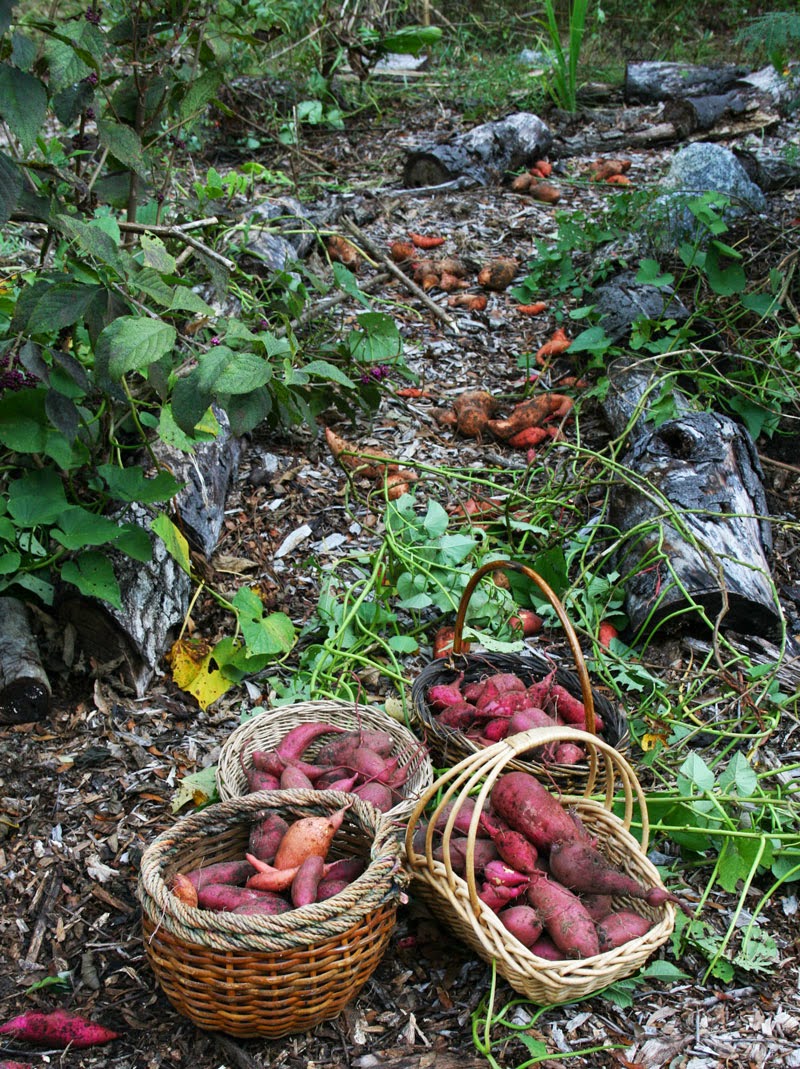
We justified our expenditures with the knowledge that we would soon get to harvest organic food from our yard, and we were right. Baskets of sweet potatoes, buckets of mulberries, lots of fresh kumquats—it was exciting!
Every year we harvested more food. When we sold that house and moved to the tropics, I was really sad to see the food forest go, but the new owner kept most of it in place. We visited in 2019 and were excited to see hundreds of pounds of fruit on the trees and yams everywhere, growing all by themselves. The figs and mulberries were huge, and the loquat tree had produced abundantly.
Unlike a regular annual garden, a food forest doesn’t need regular weeding, feeding, digging, or replanting. It just keeps going. Once trees and shrubs get established, they grow and produce for decades.
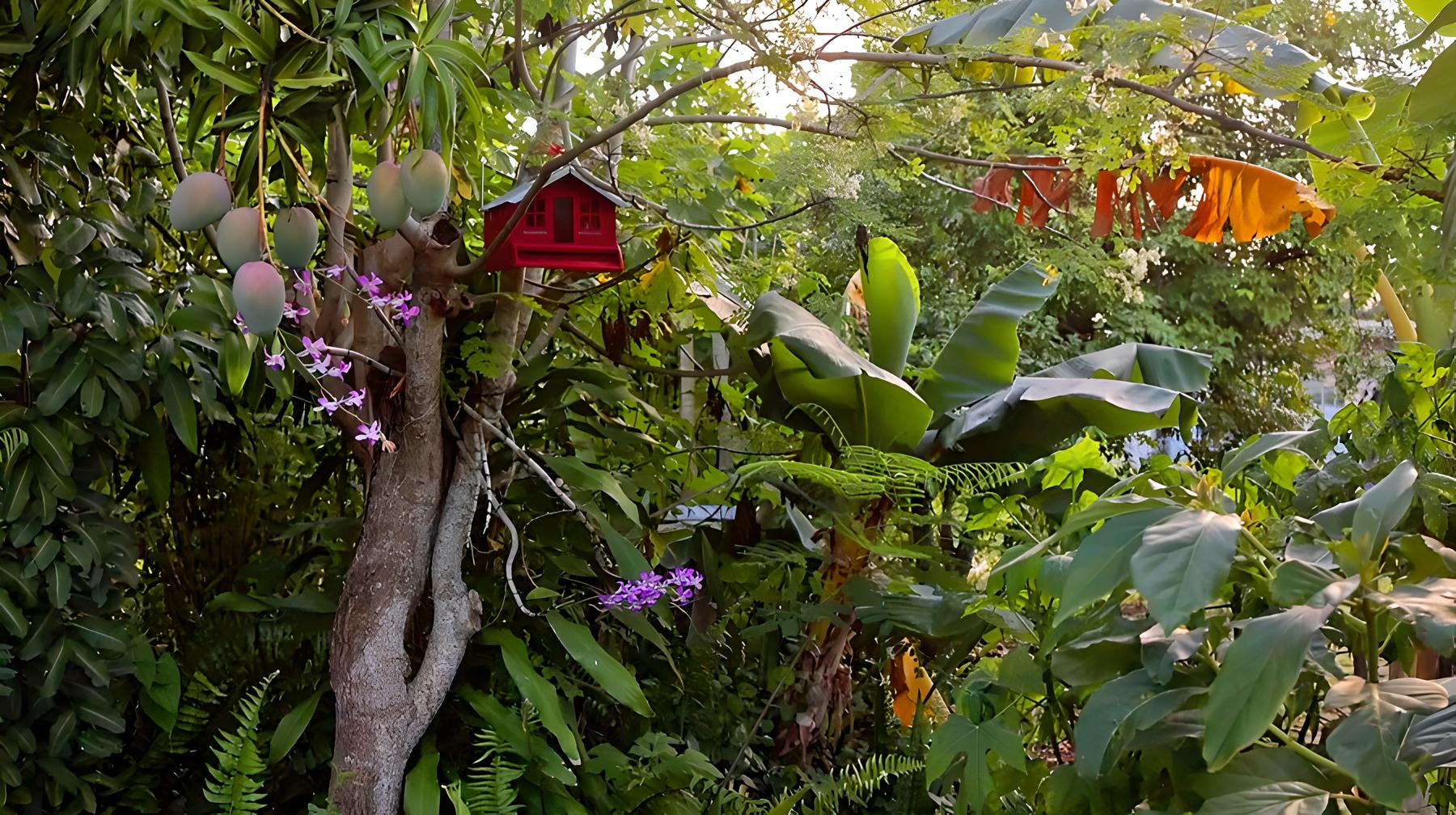
Shortly after starting that first food forest, we started another one in my parents’ small backyard in South Florida. We planted mangoes, starfruit, avocados, mulberries, chocolate pudding fruit, Surinam cherries, Jamaican cherry, Malabar chestnut, acerola cherry, key limequat, moringa, and a lot more. Thirteen years later that food forest produces buckets of fruit. Mom has blessed many people with boxes of mangoes and starfruit, not to mention all of the grandchildren who get to pick the cherries and mulberries when they come to visit.
We planted yet another food forest in the tropics in 2019, and when we moved back to the states, we planted an even bigger food forest system on our new property in Lower Alabama. That was in 2022 and 2023. Now, just a few years later, we’re harvesting our first plums, plus sugarcane, blackberries, blueberries, Goumi berries, Japanese persimmons, pumpkins, jelly melons, and more—and it’s just getting started.
This time we didn’t spend that much at nurseries. Maybe a couple dozen trees and shrubs came from nurseries, but many others we started ourselves from seeds and cuttings. There are many dozens of plants out there we didn’t pay anything for!
If you want to plant a food forest, it doesn’t need to cost much. Just skip the nursery middleman.
Starting Trees From Seed
This spring we harvested peaches and nectarines from four seedling trees. They all produced within three years of germination. You’ve probably heard that it takes forever to get fruit from seedlings, and if you do get fruit, it will be small and worthless, but this isn’t necessarily true.
Some trees do take a long time to fruit from seed, like pears, grapefruit, apples, and pecans. And apples in particular may give you small, tart, or even unpalatable fruit. But not always! All the great varieties of apples in the store once originated as seedlings. Yet, even small and tart fruit trees can have their uses.
Did you know that sweet apple varieties are not the best for hard apple cider? Or pies and jellies? Many of the old apple orchards in North America were grown for cider, and they often were filled with seedling trees. Just because you don’t get dessert apples, it doesn’t mean you have “bad” apples. They just aren’t what you’re used to. They can be used for preserving, dehydrating, vinegar, cider, or even just to fatten a pig.
And guess what? If you don’t like the fruit, you can easily graft that tree and turn it into an entirely different variety. A strong seedling root stock provides grafted scions with an abundance of growth in the first year, and often gives you fruit in just a couple of years.
The same is true for pears. An invasive (and inedible) Bradford pear seeded itself at one end of my gardens a few years ago, so I let it grow. When it reached about seven feet tall, I cut it down to one foot above the ground and grafted Kieffer pear scionwood—a classic American canning pear—onto it. Now, just four months later, that scionwood has grown six feet! I’d barely believe it if I hadn’t seen it myself. The regrowth is terrifyingly fast. We fully expect to have pears within two years—thanks to a nasty, bitter-fruited invasive tree that showed up in a bird dropping.
If you start seedlings (or if they start themselves), take advantage of their strong root systems and overgraft them with something you love. You can turn a crabapple into a Honeycrisp in just a few minutes with a piece of dormant wood, a utility knife, and some electrical tape.
The world of stone fruit is much more forgiving than apples and pears. Seedling peaches fruit quickly and usually produce quite good fruit. We’ve started dozens of them, and all but one have given us very good harvests. The same can be done with cultivated and wild varieties of plums, nectarines, cherries, pluots, and apricots.
To grow your own, harvest the ripe fruit, eat it, then crack open the pits to remove the kernels. Place the kernels in a plastic bag with slightly moist potting soil or peat moss, and store them in the fridge. In two to four months, they’ll begin to sprout roots. At that point, plant them in pots and let them grow.
We have mild winters here and inconsistent chilling, but in colder climates, you can just plant the pits directly in the ground or in pots and let them chill through the winter. By spring, you’ll have plenty of sprouts.
Apples and pears germinate similarly. Put the seeds in baggies in the fridge and chill them, and they’ll usually grow roots in a couple of months.
Citrus are different. The seeds need to be harvested fresh from the fruit and planted right away in soil and put in a warm place. In a few weeks, they’ll sprout. Small citrus fruits, like kumquats, calamondins, key limes, and lemons usually fruit within three to five years. Larger citrus, like pomelos, oranges, and grapefruit can take six to 10 years to fruit. All the seedling citrus I have tasted have been good, with the exception of some sour oranges that were better for marmalade than for fresh eating.
Loquats also germinate easily. Just start with freshly harvested pits and plant them right away. Avocados, mangoes, dates, and starfruit are the same; plant them fresh, right in the soil.
Starting From Cuttings
Cuttings are another way to grow a food forest on the cheap. We’ve had luck with figs and some mulberry varieties. Blueberries were much harder, but we’ve had luck dividing off below-ground shoots with some roots before they wake up in spring, and transplanting them. Raspberry clumps can be divided similarly.
Start blackberries by burying the growing tips of canes right into the ground. In a few months, they root and put up new shoots. We let them go dormant in winter without moving them, then cut off the original vine and transplant the new baby plant in the spring.
Many fruit trees aren’t that easy to grow from cuttings, like apples, peaches, and pears. Others simply refuse to root at all, like persimmons and pawpaws. For these, we start seedlings, then graft desired varieties onto them later. Or just see what the seedlings do.
On Starting a Food Forest (The Easy Way)
Our food forest projects weren’t perfectly planned or spaced. We didn’t spend time or money drawing up plans or hiring a designer. Instead, we planted one tree, walked a few paces, and planted another. Then another, and another. We planted shrubs around those, forming what I like to call “food forest islands.”
We mulched when we could, using weeds and grass when we couldn’t get wood chips. When you’re working with free homegrown trees and shrubs, getting everything perfect isn’t that important. It’s not like you spent a thousand dollars at Bob’s Nursery and Garden Supply.
Just plant a big, sprawling, beautiful mess of a forest. Later, you can always chop down what you don’t like and feed it back to the earth. Remember, squirrels and birds plant most of our forests. If they can do it, so can you. I’ve never seen a squirrel with graph paper or a smartphone, and yet the woods are beautiful.
Don’t think you need lots of land, a landscape architect degree, or even money to plant a food forest. You can recreate the magical woodland of your childhood in your backyard—and get years and years of fruits, nuts, and berries. Why not say goodbye to mowing and make your backyard your very own Eden.


Leave a Reply