
Summer heat can be hard on all of us, including our animals. The critical factors for comfort in heat are hydration, shade, vegetation, and adaptation. Let’s look at each of these.
Hydration
Contrary to popular thinking, water does not have to be cool to be palatable and beneficial. I’ve been to Australia many times during their hot summers, and those dear folks don’t know what ice cubes are. On blistering hot days above 100 degrees Fahrenheit, your hosts will serve hot tea several times a day. Not iced tea. Not ice water. The coolest thing you can get is tepid water—room temperature and often lukewarm. But nobody dies and all seem to function fine.
Many studies over the years have proven that animals seem to have no aversion to warm water on a hot day. Not hot water, but warm. The key to water is not temperature, but taste and acceptability. What makes animals reluctant to drink is overall water quality. Off odors, turbidity, and general funkiness are as off-putting to animals as they are to us humans. Fortunately, animals are far more forgiving than people when it comes to pond water or other sources where some impurities exist. But they definitely don’t like water containing manure, urine, or loads of impurities.
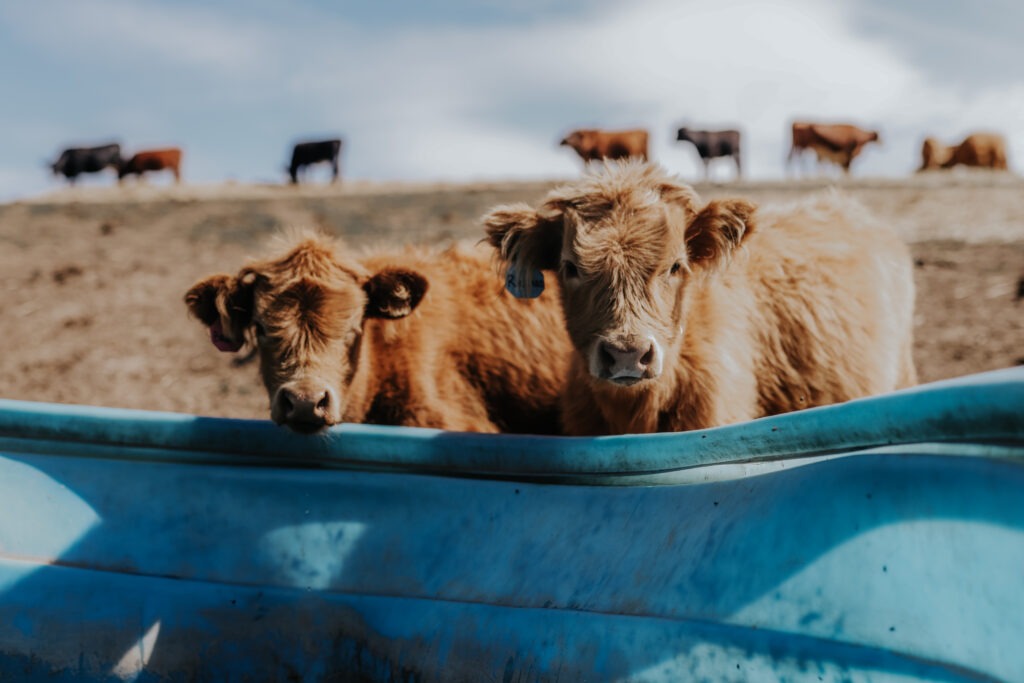
If you’re pulling water from a pond, the best water is from 16 inches under the surface and above. Animals never drink from the very bottom of a pond or creek. They drink from the surface, where the sun bathes the water with cleansing ultraviolet radiation. In addition to potability, the water needs to be abundant and accessible. Placing water too close to an electric fence or not giving enough linear trough space can make animals reluctant to drink. That might not be a big issue on cold days, but it can become a big issue on hot days. Watch your animals and see if some are having to wait to get to the trough. If they’re lined up, add additional trough space.
On winter days, you can let them be without water a couple hours a day. Perhaps the trough freezes before you get there to break it—not a big problem. But on a hot day, even a half hour without water when an animal comes to drink is stressful. Animals don’t know where the water comes from or what your routine is. When they’re thirsty, they come to drink. They don’t have calendars and day-planners to adjust their cravings or tank up if a shortage is imminent. No, if an animal wants to drink, it needs to drink. Now.
Taste is important; temperature isn’t. Access is important; volume isn’t as long as the trough always has water. That means you need enough flow to satisfy the consumption rate. Sometimes a bigger trough is the easiest way to make sure the herd or flock has enough on a hot day.
Shade
The University of Kentucky did studies many years ago analyzing heat stress on stocker calves. They found that on average, calves with no shade on a hot day gained 0.4 of a pound less than those with access to shade. If liveweight value is $2 a pound, 0.4 of a pound is equal to 80 cents a day per calf. That’s nothing to sneeze at.
I’m not aware of similar studies with egg layers or sheep, but I’m confident they would be similar. Broiler chickens, pigs—no animal likes to be out in the blazing sun. Part of shade is air flow; shade stimulates air flow. Cooler shade creates air movement as warmer and cooler air collide; that’s why a shed is far superior to a barn. Walls stop air flow.
A chick brooder, for example, needs to be buttoned down tight for cool weather. But in the heat of summer, it needs cross-ventilation and especially roof peak ventilation to let rising hot air escape. If the chicks bunch up around the outsides of the brooder, you know it’s too hot. They’re trying to escape; you want them evenly spread out on the floor.
Most farmers think about trees when considering shade. But I don’t like trees for shade. If you’re running livestock on pasture, where do you want the manure and urine? Not under a tree. You want it out on the grass where it can do some good. If the animals shade up under a tree, not only do they deprive the pasture of needed nutrients, they overload the tree base with nutrients that can’t be used. And if the same shade area is used more than a day or two, it quickly becomes de-vegetated and an incubator for pathogens and parasites.
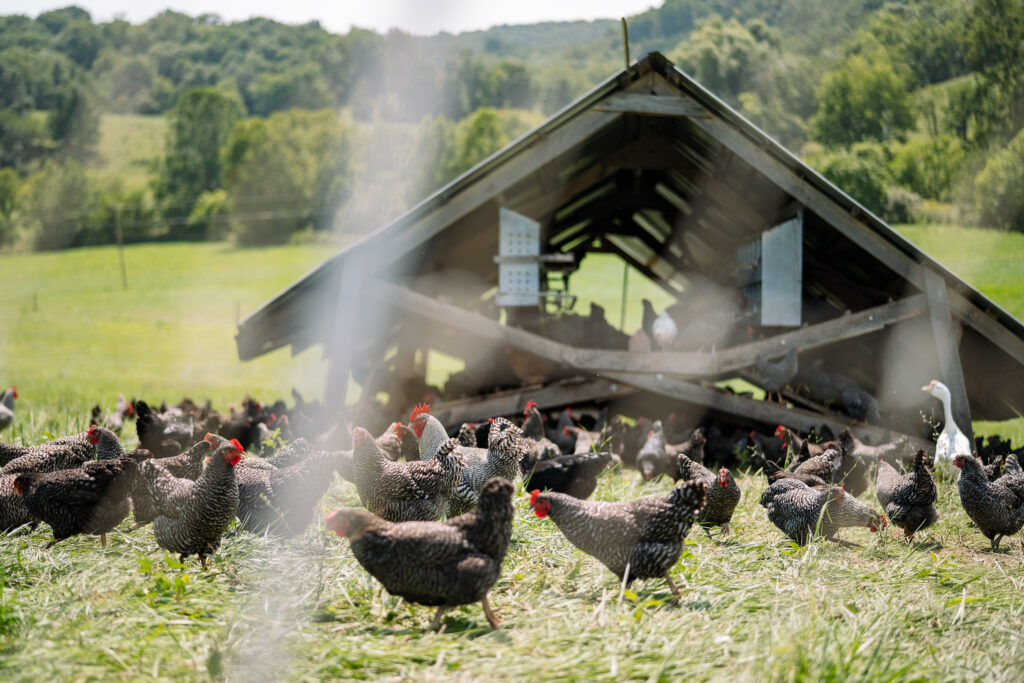
I’m a huge believer in portable shade mobiles, for all types of livestock. My book Polyface Designs has numerous blueprints for mobile shelters, but the beauty of mobile shade is that we can incentivize the animals to put their manure exactly where we want it. We can park a shade mobile on a rock pile or an encroaching bunch of brambles. Everything except chickens is quite happy with permeable nursery shade cloth. Chickens are too, until it rains. They’re the only animal that loathes getting wet. Even turkeys are perfectly happy to get wet. Goats don’t like it, but who cares? Ha!
The beauty of permeable nursery shade cloth is that it’s both lightweight and wind forgiving. It comes in various levels of opaqueness, from 90 percent down to about 40 percent. We usually use 80 percent, but even in heavy winds (100 mph) it just flutters a bit as the air goes through it. You never have to worry about a shade mobile flipping over in a high wind if you use shade cloth.
Animals pack in under shade; you’d be surprised how little square footage is necessary. For cows, 12 square feet per cow is adequate. Sheep need 4 square feet each. Hogs need about the same. Turkeys need one square foot each. The point is that unless you’re operating with large commercial-scaled groups, you can make mobile shade structures light enough to move by hand. I like to put 360-degree swivel wheels on two corners and non-swivels on the other two corners. That way I can spin the shelter in a circle.
Our most universal shade mobile is a v-truss on a mobile home axle. A 3-inch pipe tongue extends far enough to pull the 16 x 32 foot shade cloth roof with a 4-wheeler. We’ve used these for turkeys, cows, sheep, pigs, and even chickens in a pinch (I said they don’t like rain, but they won’t die if they get wet on a hot day). These mobile shelters have been foundational in not only creating comfort, but also guaranteeing soil fertility exactly where we want it.
Vegetation
Vegetation is like mulch in a garden. Ever turn back a few inches of mulch in a garden bed and feel how cool and moist the soil is underneath? That’s exactly the way soil feels under a thick covering of vegetation. Moving your animals routinely (daily is best) onto well recovered pasture means that when they lie down to rest, they’re enjoying the equivalent of an air conditioner on their belly. The thicker and higher the vegetation, the cooler the ground will be. Short grazed or short mowed forage doesn’t protect the soil from the sun’s withering rays, and bare soil (like concrete) absorbs heat on a sunny day.
Both length and thickness are equal parts of the coolness equation. Sparse forage, even if it’s long, leaves too much bare earth between plants. Height comes from rest but thickness comes from short duration impaction. By mobbing the herd or flock tightly for a day at a time, the hoof and claw action rips dead and dry blades, exposing tiller buds to light that increases blade density. Both over-rest and over-grazing reduce tillers per square foot. Managing the sweet spot in rest and impaction (exercise) yields the best ground cover.
Adaptation
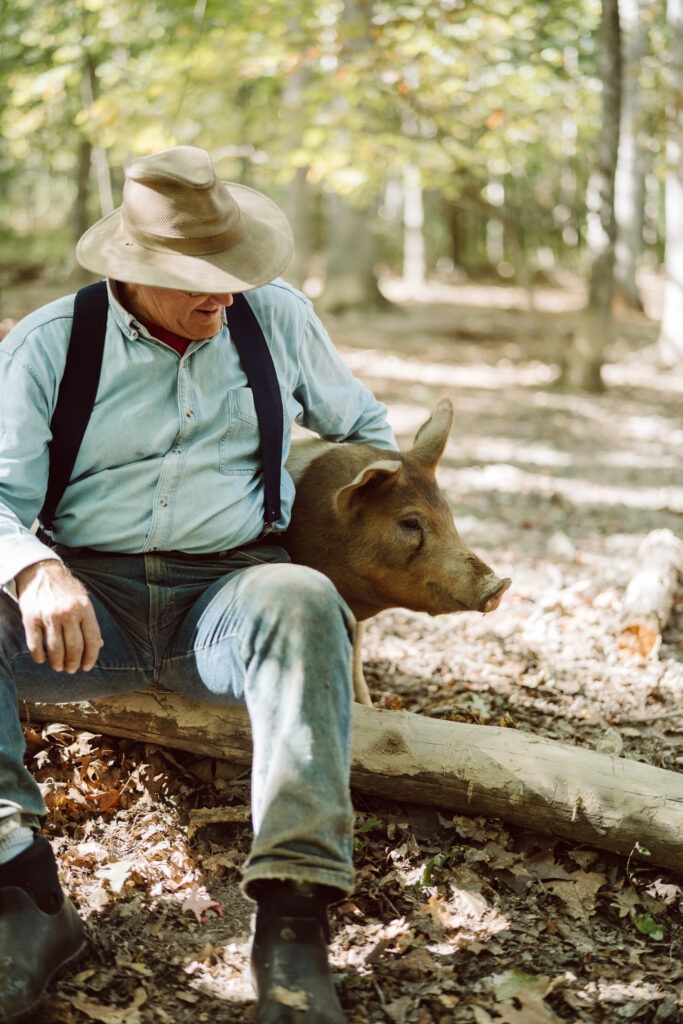
Genetic acclimation for your climate is also essential. Nobody should try to raise Scottish Highlanders south of Minnesota. A laser thermometer on the hide of a black animal on a hot day often shows a temperature of 140 degrees; a non-black animal at the same time will show a hide temperature 40 degrees less. That’s a huge heat differential to dissipate.
Color and genetics matter. Choose animals for functionality, not for cutesy social media posts. When purchasing animals, favor those with a history of adaptability to your area—few things are less helpful than genetics from a thousand miles away. Good stock from a neighbor who’s been in the business a long time will help ensure comfort on those uncomfortable days.
In any group of animals, on any extreme weather day, you will see some that seem completely nonplussed and others that look uncomfortable. Cull those that exhibit signs of stress and favor those that fit your situation. Over time, you’ll enjoy animals that seem to roll with whatever nature throws their way. Both of you will enjoy life better.
In the end, weather happens. You can’t change it, but you can prepare for it. Heat comes every summer; with these principles in mind, you can look forward to it rather than dread it. Your animals will be content too.


Leave a Reply