




For nearly forty years Suzanne Tabert has been teaching people to look out their back door instead of reaching for a bottle.
As a little girl in suburban Chicago she was already under the fir trees harvesting violets and baking tiny potatoes in a pit she dug herself. That same thread never broke.
Today she runs Cedar Mountain Herb School in North Idaho, writes books, and shows everyday families how the plants growing right where they live can gently support their bodies and spirits through every season.
The idea is refreshingly straightforward: your backyard, your woods, and your garden already hold exactly what you need … if you know how to see them and use them.
Nettles and dandelions for spring energy and cleansing. Hawthorn flowers when life feels in-between. Tulsi and motherwort when the to-do list feels bigger than you are. Roots and preserved herbs when the days grow short and you need deep nourishment.
The conversation feels like sitting on the porch with a wise friend who actually lives what she teaches. And right now, more and more families are quietly stepping outside, picking a few leaves, and noticing how much better they feel.
If you want simple, seasonal ways to support your family’s wellness without complicated protocols, this episode of The Coop is for you!
IIn this episode, Anna Sakawsy and Suzanne Tabert discussed:
- What bio-regional herbalism really means and why local plants work best for your body
- Gentle spring cleansing with chickweed, nettles, and dandelions (plus easy recipes!)
- Fresh herbs for allergies, inflammation, and natural energy
- Hawthorn for navigating change, grief, and those “what now?” moments in life
- Tulsi, motherwort, and other nervines to ease summer overwhelm
- Fall foraging for immune support and how to make “farm dust” herbal salt
- Winter nourishment with oats, bone broth, and preserved herbs
- How the seasons of the year mirror the seasons of our lives
- Safe foraging basics, proper plant identification, and building your own home apothecary
About Suzanne Tabert
Suzanne Tabert is a bio-regional herbalist, author, and educator with nearly four decades of experience. She is the founder and director of herbal education at Cedar Mountain Herb School in North Idaho, a member of the American Herbalists Guild and American Herb Association, and a partner in education with United Plant Savers. She also serves as practicum supervisor and adjunct faculty at Bastyr University.
The show notes …
00:00 – Introduction
03:35 – Suzanne’s Journey to Herbalism
06:39 – Understanding Bioregional Herbalism
11:04 – Using Herbs for Gentle Spring Cleansing
19:52 – Spring Food Focus
21:43 – The Power of Nettle
27:57 – Herbs for Summer Support
36:47 – Fall’s Immunity Boosting Herbs
42:28 – Nourishing Winter Herbs
46:55 – Aligning Herbs with Your Emotional Seasons
50:42 – Safety Tips & Herb Sources
Suzanne Tabert:
Finding different ways to incorporate the herbs throughout all of the seasons as the seasons change will enable us to have a robust immune system, be able to fight off what’s coming our way, and be more resilient to stresses, day-to-day stresses, and then the big ones that happen as well. One of the mottos at my school is get the medicine of the people in ways they’ll enjoy taking so that healing can occur. And I have never met a person who doesn’t like a good chickweed burrito.
Anna Sakawsky:
Friends, nothing says homestead life like a backyard flock that fills your egg basket every morning, and maybe even your freezer too. That’s why I’m so happy to share today’s sponsor, Murray McMurray Hatchery. They’ve been helping homesteaders raise healthy backyard poultry for over a hundred years. They also carry more than a hundred breeds of chickens, ducks, geese, turkeys, and quail, including some beautiful rare and heritage breeds. Their chicks are handpacked with care, backed by a live arrival guarantee, and they’ve got all the supplies you need to get started raising backyard poultry at home in their one-stop shop. Whether you’re adding a few new layers or starting your very first block, you can head to mcmurrayhatchery.com to order your chicks today. Tell them the coop sent you and start building the flock you’ve been dreaming about. Again, that’s mcmurrayhatchery.com. Well, hello everyone and welcome to episode number 16 of The Coop.
I’m your host, Anna Sakawsky, editor-in-chief of Homestead Living Magazine, the magazine for Homesteaders Buy Homesteaders. And today I am joined by another one of our contributors to talk all about how herbs and simple lifestyle shifts can support our wellness through each season of the year and through the different seasons of our lives as well. So Suzanne Tabert is a bioregional herbalist, author, and educator with nearly four decades of experience teaching the art and science of plant medicine. She is the founder and director of herbal education at the Cedar Mountain Herb School, a proud member of the American Herbalist Guild and the American Herb Association, a partner in education with United Plant Savers, and she serves as a practicum supervisor and adjunct faculty member at Best Deer University. Drawing from a lifetime of personal and academic study of plants and their habitats, Suzanne has dedicated her life to teaching herbal medicine and to sharing her love and knowledge of plants with the world, a passion she plans to pursue for the rest of her life.
So I am so honored to have Suzanne here with me today as we explore how to work with the plants growing around us, especially as we head into spring to gently refresh the body, calm the nervous system and strengthen immunity and align ourselves more closely with nature’s rhythms. So Suzanne, welcome to the show.
Suzanne Tabert:
Thank you so much for having me. I am absolutely thrilled and I appreciate the opportunity.
Anna Sakawsky:
Well, so nice to have you here. I think you’ve been a contributor for a couple years at least now with the magazine and have written some really great articles, obviously related to herbalism, but a lot of them really do tie in this idea of using different herbs through different seasons and whatever we’re going through in that particular season. And you just recently wrote an article on spring cleansing with herbs to match with this season. That’s kind of what gave me the idea for this episode and to kind of expand on that and move through the different seasons of the year, but also look at how those mirror some of the different seasons in life and some of the herbal practices and lifestyle protocols that we can maybe be implementing to support ourselves at different times. So before we dive in though, I would love to just hear a little bit more about your background, your journey into herbalism and what being a bioregional herbalist actually means.
Suzanne Tabert:
Alrighty. So I’ve been playing with my plants my entire life. So I remember when I was a little girl, I grew up in a suburb of Chicago, actually born in Pittsburgh and then moved when I was small with my parents and siblings to Chicago. And I was always the one who was underneath the fur trees and picking little wild violets and putting them in vases that were my great-grandmas that she had given me. My dad gave me a plot in his garden. It was probably like three feet by three feet. And one year I grew potatoes because that’s what I chose that year. Fast forward till I was like 19 and living in Seattle area and in an urban area of Seattle. And I’d be the one looking at the weeds and the empty lots and I’d be scraping oak bark to make a tea for my face when I was breaking out.
So it’s something that I’ve always done. And I turned my passion, my love for plants into a business. And by the way, when I was growing up, I had 29 plants in my bedroom. And when you opened up the door, it was like this wall of oxygen that would come out. And it was so dreamy. That was my apartment. I wanted to live there. I didn’t want to live in the regular rest of the house. I just wanted to live with all my plants and they’d be on my nightstand on my dresser hanging in macrame that I made by myself. And if you look at my bedroom now, I have about 20 something plants hanging from macrame that I’ve created myself on my nightstand, on my dresser. So it’s never changed. This is a thread, loving the plants and being with the plants, working with them, loving them, literally my entire life.
And I had an aunt who passed away about 20 years ago and she was just a week shy of her 100th birthday. And she took me by the hand and she started teaching me the medicinal parts of the plant. So she took my passion just for plants in general and said, “You know what? You can use these for medicine.” And this is what my mom, which is my great-grandma, how she kept us healthy. So it’s very strong. Herbalism is strong in my blood and it’s strong in my heart too. And I started teaching my first herb class. I was in my late 20s, so that was 40 years ago. I work with the plants that live around me and I live in North Idaho. And North Idaho, the bioregional really encompasses the coast as well. So the Pacific Northwest, Inland West, we’re technically still Pacific Northwest.
So the plants that grow here, that are adapted here, that thrive here, when we use them, we adapt to the area. We’re healed by the area and we thrive in the area in which we live. So I don’t buy plants from Bolivia or what have you because my body really doesn’t know what to do with those. And I’m a wildcrafter. So if I’m taking my students out, I need to know the plants that live in my bio region. So that in a nutshell, to me, is what bioregional herbalism is.
Anna Sakawsky:
That’s really interesting. So I mean, because there are some herbs, I guess, that maybe we think of as being more exotic or from elsewhere. Do you incorporate anything that doesn’t grow in your region, in your wellness protocol?
Suzanne Tabert:
I don’t. I don’t need to. Everything I need is here, right? I think that God put me here for a reason, put where these plants are that I can use, I can teach about, and I could lead other my apprentices and my day students into understanding their place in this world, in this particular corner of the world. So I don’t buy plants from elsewhere ever.
Anna Sakawsky:
Now, I would presume there are certain herbs and plants that grow in many different regions. Can people who maybe don’t live in the Pacific Northwest still apply some of what we’re going to talk about?
Suzanne Tabert:
Absolutely. Dandelions grow everywhere. Dandelion’s one of my favorite plants. Nettles grow just about anywhere that they can find a moist area to grow in. Chickweed grows in the gardens. It’s a so- called weed, but to me it’s medicine and it grows there. So I’m writing a book right … Well, I just finished writing a book called The Foragers Apothecary, and they wanted me to write about all wild plants. 50 actually ends up being close to a hundred plants that I wrote about for all the regions. So yes, hickory doesn’t grow here. And it’s really nice for me to know about hickory because I found that fascinating with how the bark is so shaggy and it kind of looks like bacon. But at the same time, the medicine in the hickory is the same as the medicine in the oak, right? And there’s some in other plants as well that grow here.
So I find that many of the plants that we’re going to talk about today, they either grow in all the regions where people will be listening from, or there will be a plant that can be applied equally medicinally and nutritionally as well.
Anna Sakawsky:
Okay, perfect. Okay. Well, good to know. Well, let’s get into it because I’m really excited to dive into this conversation. Obviously, we’re so disconnected from nature and from the seasons in our modern life. Even homesteaders, I find even those of us who actually feel like we live pretty in tune with the seasons in the land, a lot of us still work indoors a lot of the day on computers and keep kind of the same pace all year long. And so yeah, I’m just really excited to get into this conversation about how we can use different herbs and lifestyle protocols throughout different seasons of the year. So I feel like the fitting place to start is spring because A, we’re heading into spring right now. B, as I said, you just wrote an article on spring cleansing with herbs for the latest issue of homestead living.
And C, just because spring seems like even though the nature of seasons is cyclical, spring turns to summer turns to fall, turns to winter, turns to spring again, we still kind of look at spring as the natural starting point because it is the season of kind of birth and renewal and all that sort of thing. So why is spring, in your mind, traditionally associated with cleansing and renewal? And is there an actual physiological basis or need for cleansing our bodies?
Suzanne Tabert:
So a spring cleanse essentially helps us to get ready for the heavy work that’s ahead. The tilling, the planting, the birthing of maybe somebody has a sheep or goats and anybody who has that and has been at birthing, it could be a lot of work. And so we need to prepare our bodies. And the grandparents, the great grandparents, the ancestors before that, they always moved with the seasons because they didn’t have the computers to sit in front of and some of them didn’t have running water, some of them didn’t have electricity. So they moved with how the light was and the light is getting longer and the days are getting longer and we need to prepare ourselves for that. Right.
Anna Sakawsky:
Okay. I mean, that makes sense certainly from an ancestral context, I guess. Does that still stand in the modern world? If we have adapted and changed and we say keep a certain pace all year long, do we still need those naturally? Say for somebody who’s not homesteading too, maybe we’re not planting and tilling the land and birthing animals. We’re just sitting at the computer just like we do it every month of the year. Do we still need that cleansing or can we just kind of carry on the same all year long?
Suzanne Tabert:
Well, carry on. Oh gosh, that’s what modern people do. We just carry on. And then our body has a lot of inflammation because we’re sitting, we’re just settled. And when we’re not moving, our lymphatic system isn’t moving very well. Our cardiac system, we have a heart and that heart is a pump and it goes like this and it moves the blood and the fluid through all the whole cardiac pathways, but our lymphatic system does not have that. So how do we get our lymph moving through movement? And it’s very … I’m a science geek too. So our lymphatic pathways and our cardiac pathways, they are right next to each other and these membranes are permeable. So lymphatic fluid can go into the blood, what’s in the blood, maybe pathogens, viruses, what have you, funguses can go into the lymphatic pathways so that our immune system can deal with that.
And if we’re just always sitting, if we’re … What’s the word for that? If it’s
Anna Sakawsky:
Stagnant.
Suzanne Tabert:
Stagnant. Yeah. If we’re stagnant, there’s no movement. So we need to have that movement and we can do that with certain herbs like cleavers. Cleavers used fresh will naturally help to move our lymphatic system, that fluid to …
Because our immune system can kill viruses and other pathogens all day long, but it also needs to excrete it out. Otherwise, we just get like, “Do you remember Charlie in the chocolate factory, Varuka salt, and she just got bigger and bigger and became a big old blueberry?” I always picture that if we can’t excrete out what our immune system is attacking and all the metabolites of our hormones breaking down and whatnot, we’re going to be like big old Varuka salts. And so we need that excretory action happening. And then we have plants that is going to help with that too. So move the lymphatic system and move the waste through our expiratory organs.
Anna Sakawsky:
Is this the only time of year we should be doing something like a cleanse or are there other seasons where that might be appropriate as well?
Suzanne Tabert:
I would say spring is your best time. I don’t recommend cleansing regularly, unless a person is in a state of eating a lot of highly processed foods and eating a lot of foods like wheat and dairy that’s causing inflammation and we need to move that out or we’ve just been sick and we feel better now and we’re doing our herbs to build up our body. We also need to make sure we keep excreting. And that way, I would say dandelion root infusions or decoctions, it really helps. And well, let’s talk about our liver for a minute. Our liver does over 500 different functions all the time. And during the day it’s digesting, it’s creating bile to center gallbladder, which then goes mixes with the enzymes from the pancreas and goes into our small intestines so that we can break down and process fats. And it’s a kind of a recycling center.
Everything, the blood goes through to be filtered and that needs to be cleaned out too. So if somebody is feeling … I’m just going to stand up for a second. Our liver … Oh, can’t get to my liver, huh? Our liver is right about here, right? Kind of where the middle of our ribcage is. And if we are having pains there, if we are having issues, then a liver cleanse might be a good thing to do. However, doing cleanses all the time will actually debilitate our system and weaken our entire body system over time. So strategic cleanses during the year as needed, and definitely in spring to, like I said, just get you ready for the season.
Anna Sakawsky:
Yeah, that makes sense. And just for listeners too, I mean, obviously our bodies are cleansing all the time, right? We have systems like our lymphatic system and our digestive system and all that in place so that we can be taking the good, the nutrients, all the things that we need, using those in our body, and then getting rid of all the waste and toxic things that accumulate. So it’s not that we’re not constantly cleansing, but we’re talking about doing a deeper, like an herbal cleanse or incorporating certain lifestyle changes. Maybe it’s like fasting, that sort of thing, to do a bit of a deeper cleanse. Now, you dive into this again, just to mention, you go into a lot of detail on spring cleansing in your article for homestead living. So we won’t get too granular with that. If you are subscribed, be sure to check that article out.
That should have arrived in mailboxes already. And if you’re not subscribed yet, then make sure that you get subscribed. But beyond cleansing, what are some other ways that we can support the body in spring, whether energetically, emotionally, physically?
Suzanne Tabert:
Eat whole foods.
Our body is, I hate calling it a machine. I don’t think of it as a machine, but it has many parts that need nutrients to work. And when we’re eating highly processed foods like potato chips, like everything in the freezer aisle, that’s not just like a bag of frozen veggies, cereals in a box, that sort of thing. If it’s not a whole grain, then it’s highly processed and the food gets digested very quickly and it doesn’t have a lot of nutrients. It has a lot of flavor enhancers. It could have a lot of sugar, a lot of salt, that sort of thing. So take a look at the labels of the foods you’re eating, try to stay as whole as possible.
Anna Sakawsky:
That’s a good tip for all times of year, right? As much as we can be cutting out processed foods and eating whole foods, the better. And I think that a lot of our audience, nobody’s perfect. And I certainly have a sweet tooth and I get into certain things at certain times and my husband loves his chips and we’re all human and we all do that from time to time. But I do think that for the most part, we’re probably a little bit more conscious of that sort of thing and eating a healthy whole foods diet. But I wonder how that mimics what we’re talking about in terms of like seasonal herbs and seasonal, different ways that we can support ourselves and our health through different times of year and the plants that are available. Would you also say that there are certain foods that are naturally growing at this time of year that we should be looking to support things like cleansing and energizing our body in the springtime?
Suzanne Tabert:
Yeah. So go outside your house and look to see what’s coming up right now. I have a 4,000 square foot herb garden that has all kinds of things outside of the fence because I can’t stay within boundaries. And I’m constantly looking, what’s coming up now? Are there little green things coming up? And already chickweed is coming up. We too have been enjoying a very mild winter in North Idaho. And so I’m already eating my chickweed and chickweed, I love chickweed. It’s a really benign taste. One of my favorite ways to eat chickweed besides chopping it and putting it in a salad, and people can say, “Ugh, I can only eat so much salads.” Everybody loves a good burrito, right? So you get your tortilla, it could be gluten-free, it could be whatever you want and put in some beans. Now, beans are high in fiber that’s going to feed your lower gut and then cheese or no cheese if you want, but cut up some of that chickwheat and put it on the tortilla and then put on some salsa.
Maybe you have some salsa that you canned or your favorite salsa from the farmer’s market or grocery store and then you just roll that up and you eat that. It’s so satisfying. And so one of the mottos at my school is get the medicine of the people in ways they’ll enjoy taking so that healing can occur. And I have never met a person who doesn’t like a good chikweed burrito. And in the spring, one of my favorite things to make is pesto. And I make pesto with fresh dandelion tops, I mean, fresh nettle tops. So I just hit the first third and I know that you can find nettles right now where you’re living on Vancouver Island because I have a friend who lives in Concrete Washington and she sent me a picture of some nettles coming up, which is always the cause for celebration.
Yay. And so you just pick that top piece and you can use gloves if you want, I don’t. And then you put that in a food processor. I use a bit of nutritional yeast, fresh garlic, and then a good olive oil, and then I whirl that up until it’s really smooth. And what you’re getting from fresh nettles that you don’t get from dried is an anti-inflammatory effect. And inflammation can really happen anytime for any reason, whether it’s the food you’re eating, the stress that’s you’re enduring right now, anxiety, whatever it is. And the body really responds to the chlorogenic acid and the other compounds that are in the nettles to bring down that inflammation. So if you have a neck that goes out all the time because of inflammation or your fingers feel like sausages in the morning, nettle pesto is your friend. And you can put them into tiny little containers and put them in your freezer because the freezing is not going to destroy that antihistamine effect.
So take it out as you need it. And you know what comes in the spring, pollen, right?
Anna Sakawsky:
And pollen- It can be good or bad.
Suzanne Tabert:
Yeah. Yay. Yay. But the nettles help to take away that allergic reaction that somebody might be dying because of pollen, the nose that’s itching or maybe bleeding the watery, itchy eyes, whatever it is, nettle just works like a champ to take that away. And then I love dandelions. I love dandelions any time of the year, but especially in the spring and people say, “Oh, like you said, dandelion greens are so, they’re so bitter.” But you know how my great grandma used her dandelion greens? She sent my dad out together and she would put them in a big sauce pan where she had just made bacon. So she had all this bacon grease. She chopped up her dandelions and put it in there and just sauteed that up with the little onions and that was a little side dish. And the acidity of the fat, the acidity of the bacon, the meat itself
Will help to unlock the calcium and the iron that’s within the dandelions and help our bodies utilize it. And if we have enough iron, then we have a lot of energy. And so if somebody’s feeling, “I’m sluggish, I don’t know what’s going on. ” It could be that they’re low in iron and a test for the hematocrit can tell them. There could be many reasons why they’re feeling sluggish, but if it’s because they are low iron, then the nutrients, the iron that’s in dandelions and nettles that can be harvested this time of year would just be a boon to that person.
Anna Sakawsky:
Awesome. Okay, that’s a great tip. I do actually know where a nettle patch grows close to me. It’s actually at my kids’ old school, at their preschool, because I used to teach there as well, and there was a nettle patch there. And I’m so thankful that the school community kind of is minded towards keeping things natural and teaching the kids about this sort of thing. So they’ve actually kept the nettle patch. They have to mow it down so that it’s not too dangerous, but they’ll actually email me usually in the spring and be like, “The nettles are up if you would like to come harvest them.” So that’s where I usually get mine from. I’ve never actually had them fresh. I always dry them, but I have seen true miracles work from nettles. My daughter a couple summers ago, we were up at a family cabin and she got stung by a wasp and we didn’t have any type of antihistamine on us.
We drove all the way home. This poor girl had this swollen hand and then it was late and I said, “Okay, well, we can’t do anything until tomorrow. Drink some nettle tea because I knew there was natural antihistamines in it and then we’ll take care of it in the morning.” And she woke up in the morning, it was completely gone. So it really worked and that’s something that my husband does take regularly for seasonal allergies and that sort of thing. I’m always like, “Cake, get on it. You got to drink your nettle tea.” But it’s a really good tip. Nettles are a great early spring plant for sure. Now- They’ll be stronger if they’re fresh. Stronger if they’re fresh.
Suzanne Tabert:
Okay.histamine. So fresh infused vinegar, fresh infused tincture, alcohol
Anna Sakawsky:
Tincture,
Suzanne Tabert:
Or that pesto.
Anna Sakawsky:
This episode is brought to you by Azure Standard. Family owned since the 1970s, Azure Standard is on a mission to make real food more accessible by delivering it straight to your doorstep or to a convenient local drop point near you. Everything they offer is completely organic, non- GMO, and free from junk additives you don’t want in your home or in your body. With more than 13,000 carefully vetted products, Azure standard makes it easy to stock up on what really matters from bulk grains, nuts, and healthy oils to fruits and vegetables, frozen meats, pantry staples, and even clean household goods. And the best part is you skip the grocery store markup. You can order exactly what your family actually needs, save big on high quality food and pick it up alongside neighbors who care about the same things you do, health, sustainability, and supporting ethical producers.
You head to azurestandard.com right now to get started. Again, that’s azurestandard.com. I do want to talk about some of the other seasons as well and some different herbs that can support us throughout the rest of the year. So if spring is about renewal and awakening, how does that shift as we move into summer and what sort of herbs support the body in this kind of hotter, busier season?
Suzanne Tabert:
So in late spring, we have Hawthorne flowers that start popping out. When the stamen are pink, they’re not pollinated and we can use that to create cordials or tinctures or infused vinegars. And that helps us, that Hawthorne itself will help us when we’re in the lemonal zone. And that lemonal zone is that place where what was, isn’t anymore and what is to be hasn’t happened yet. And this space can be confusing. It can be filled with anxiety. It can be grief. I’ve lost my job. I’ve lost a relationship. I lost a parent. Things are changing. I’ve moved and I don’t know what comes next. Well, what Hawthorne does is says, “I got you, honey. I’m going to walk with you. I’m not going to make what’s happened go away, that what happened has happened and what is to come isn’t here yet, but I’m going to support you.
I’m going to take the edge off. I’m going to kind of give you that nice big warm hug that you need right now that you may not be getting and just help you move through this liminal season in a way that is full of grace so that we can see the blessings that are always around us anyways. And if we’re so stressed out, we may not see them.” And I believe, I call Hawthorne hope and faith that everything is going to eventually be okay. And the thing is we take it consistently. We walk with it consistently. We let it hold our hand consistently. That’s one of my favorite plants. And so we’re using those unpollinated flowers and the leaves as well. Now, if we didn’t Get to those unpollinated flowers or the flower buds, in the summer we can use the leaves themselves. I’ll make a flour and leaf tincture, a leaf tincture, and then in the late summer when the Hawthorne berries are ripe, then I mash them, put them in a jar, and then I use the tincture that I’ve strained from the leaves and the berries or just the leaves and the flowers, I mean.
And I pour that over the berries. And so I get this double strength tincture of all those medicinal parts of the Hawthorne. And that Hawthorne can really help me move season to season. And then if I’m feeling really overwhelmed, I cannot cope at all. I use Tulsi, also known as holy basil. And I have a huge grain hopper. It’s probably, I don’t know, three, four feet by four feet. And it’s huge. And I grow my tulsi in there and I can do several. I can cut it back about four or five times a year and it just keeps coming back. And I use that as a tea and I use that as a tincture as well. Because what tulsi does is it takes away that overwhelming feeling. And we can be overwhelmed by life. We can be overwhelmed by all the work that needs to be done, whether it’s inside our house, in our garden, in our yard, in our flower beds, at work, whatever it is.
Sometimes we just can’t even. You get that feels like I can’t even. I know you can’t even. I’m going to take that feeling away so you can even, but let’s just take a rest and regroup while I’m working on you, okay? So it helps to just take away that feeling and- Make
Anna Sakawsky:
It down a notch. Yeah. Which is great in the summer months too, because that is usually the time of year when that I can’t even feeling really creeps up. I mean, obviously it can happen at any time and work and all these different things, but if you’re homesetting too and your garden, it looks like a jungle and you’re like, “I got to harvest this and I got to weed that and I got to can this. And I also have to balance work and all the things.” And you’re like, “I just can’t.” It can get so overwhelming. So anything to get
Suzanne Tabert:
Down
Anna Sakawsky:
A notch.
Suzanne Tabert:
Yep. That’s where Tulsa comes in. And let me tell you, you go into my garden, I have 11 raised beds and I would say a good third of them are Nervines because for me, I’m a gal who’s constantly on the edge of having a panic attack or something. And so I have, what do I have in there? I have mugwort, I have mother wart, I have valerian. I have an entire four foot by 14 foot race bed dedicated to lavender. And then I have lavender outside as well along the fence line with roses. I have roses. I mean, it just goes on and on all these nerve
Anna Sakawsky:
Ends. And nervines, for anybody who doesn’t know, what is the effect that they have on the body?
Suzanne Tabert:
There are different types of nervines. There’s adaptogens that help us to gain strength like Rishi mushrooms, like ashwagandha, which I grow as well, help us to gain strength so that we’re more resilient to what’s being coming our way. And then there are calming nervines like the mugwort that literally has monoterpenes, essential oils in it that are sedating and tranquilizing so that we can just go, take that deep breath that we really need. Because if we’re stressed out, we get shallow breathing. So mugwort really helps with that. And of course, the lavender, the mother ward, you look at the name of that plant itself. Its botanical name is Leonard’s Kardiaca. So it literally meet lion, hearted,
Right? Mother wart. Ward is an old English word, meaning plant. This is the plant of the mother. This is the plant that helps you when you feel like I am doing all the mothering and I’m not getting mothered at all, or I lost my mom. Or my mom was not the mom I wish I had. And there’s some grief in that. I just never got the mothering that I want. Mother wore it, what it does, it can nip a panic attack in the bud. It can take away your stress. It can cool a hot flash. It can calm you down. And it’s the herb that I find is a big cheerleader. It says, “You have a place in this world. You are worthy. You have purpose. Maybe you haven’t found it yet, but I know it’s in there somewhere.” And it’s just that hug, that motherly hug that we need.
So I have loads of mother wart and it’s a plant in the min family. When it drops a seed, wherever it drops a seed, it grows a plant. And it seeds are in this kind of like a little five finger bowl that’s real prickly at the end and it’s got four seeds in there. And I walk through, right? I have maybe a sweater on or my jeans and it attaches and it pokes me. And so I rub it off and I might be by my front door and it falls into a flower pot and there’s mother war growing or a deer sidles up
Anna Sakawsky:
Against
Suzanne Tabert:
It or a cat, whatever, and you get mother wart everywhere. So I always give away mother wart plants.
Anna Sakawsky:
Oh man, I wish I could grab one off you. We weren’t cross borders because I was growing mother war and I actually had to rip it out because it was going everywhere. But now I’ve got a specific garden bed that is more dedicated to those type of medicinal herbs before it was kind of just going a little bit wild. I had it too close to the house too, and it just got really big and unruly. And I didn’t really know what I was doing with it at the time. I had both mug wart and mother wart and wasn’t quite sure what the difference was when. So this is good to know. I will be growing mother wart again and I will be a little bit more careful about where it seeds itself.
Suzanne Tabert:
Oh my gosh.
Anna Sakawsky:
But I love these because again, and we’ll kind of touch on this in a sec about how different seasons maybe of our lives can mimic different seasons of the year. But again, if we’re kind of relating this to summer at this time where we can feel stressed, overwhelmed, like we need somebody to just hold us sometimes and be like, “It’s okay. We’ll get through this. ” And these are a lot of the plants that are in season and growing in summer. So again, it kind of comes down to like looking at what’s around us, using what is available in our area and at that time of year to support us through that season. Now, what about moving into fall because that kind of demands something different of us again, right? So how can we use herbs proactively maybe to fortify our immune systems, prepare for cold and flu season, and as well as moving indoors and kind of going more inward at this time of year?
Suzanne Tabert:
So I have a Maker’s Day within my apprenticeship program in September and a three day open to the public at the end of September as well. So we go into the garden, we go into the wild and we gather plants that are going to help us through the season to come. When we’re inside, we’re getting coughs and colds, we’re going to harvest wild cherry bark, we’re going to harvest pine because we’ll make a honey, an infused honey with pine needles or fur needles and some ginger that’s really warming and opening up. And then we’ll add some citrus, including the peels and make an infused honey that way. And you can take that as a cough syrup. And so we’re digging up my echinacea roots to make a tincture, to dry it. And we’re going in. My husband has a 5,000, it’s more than that now.
Yeah, it’s getting close to 10,000 square foot veggie garden and orchard. And so we go in there. The very last day of the apprenticeship program is let’s take all that we’ve learned and create a meal. So we’re harvesting out of his garden. We’re getting basil and basil is a bit calming. It’s a bit antiviral. We’re getting acorn squash and we’re stuffing it with herbs and like a good brown rice or quinoa. And we’re getting the oregano in thyme because thyme and oregano has spread throughout the summer. And I say to them, “We need to make a vinegar at a time oregano sage, and that’s going to help us an antiviral.” And we’re going to do an infused vinegar with that. And we also make what I call farm dust. So we’re taking herbs out of the garden, the thyme, the oregano, the margarum, the chives, some lavender.
If it’s still, we got a second bloom, all the some horseradish leaves as well, some levage that’s a nice diuretic to help flush. So we’ll put in the seeds and the leaves and we’ll take equal parts, herbs and salt and pulse it in a food processor until it’s really smooth and then add another part of salt. And I like to use the Pink Himalayan mineral salt because it’s full of minerals. And then I lay it out on a cookie sheet that has parchment or paper towel and let it sit overnight and then break it all up. And maybe I’ll pulse it in my coffee grinder to get it smooth again if it needs to. And then I’ll use that salt. I love layering throughout all of the seasons because if we say, “Oh, I got to drink another cup of tea. I’m not going to drink another cup of tea.
I don’t want to take tinctures, alcohol tinctures because I’m in recovery or it’s against my religion.” Finding different ways to incorporate the herbs throughout all of the seasons as the seasons change will enable us to have a robust immune system, be able to fight off what’s coming our way and be more resilient to stresses, day-to-day stresses, and then the big ones that happen as well.
Anna Sakawsky:
Yeah. No, I really like that idea of kind of layering on adding some fresh whatever that’s in season, maybe some that you’ve preserved, doing your teas, maybe making a salt out of it. So you’re putting that on as well, again, kind of comes back to … And this is what I hear actually a lot from it. And from any herbalist I speak to is they usually come back to this idea of get the herbs in the body any way you can. I think we get so … We like to put things in boxes. And when again, we think about medicine, we think about a particular type. Is it a syrup? Is it a tincture? Is it a cough drop or whatever we want to think of? How do I take this? And often when it comes to herbs, it’s like you take it whatever way you can get it in your body, right?
So there’s many different ways you can do this. And so for fall, again, we’re looking at things that are in season then, things like roots, right? Plants that have had time to fully mature and develop the root system. Burdock
Suzanne Tabert:
And dandelion, horse radish. We’ve harvested maybe our onions and garlic already and we have those. I have those in my pantry, a few still. And we’re using the roots because it’s going to help us ground and slow down and get … The roots hold the medicine and the nutrition for the plant to be able to burst forth in the spring. It gives them the energy, right? So if we’re taking in the roots, the beets, whatever it is, then we’re gaining strength within our body to just kind of settle in through the winter and then have enough adaptive ability and resilience to be able to get moving again in the spring.
Anna Sakawsky:
Right. Okay. Yeah, that makes so much sense. Okay. And then what about winter? Again, I think kind of fall almost bleeds into winter with some of the things that we’re eating and that sort of thing, the roots. But I always think of winter as that time of just kind of maybe low mood. It’s a time where we’re kind of resting, retreating, going really inward. We kind of need that deep nourishment before we lighten our load again in the spring and do all the cleansing and everything. So what kind of herbs can be really supportive at this time of year?
Suzanne Tabert:
Well, that’s where this all comes into play, right?
Right. I’ve dried my herbs over the spring, summer, fall, and I’ve got them in the jars and I utilize it. I don’t know if you can see right there. Those are my oats. So the oats are great nervine. It actually feeds, helps your nerve to be able to be strong enough for messenger transmission and resilience emotionally as well. So I really focus a lot on teas in the wintertime myself. And then maybe not so many salads, right? Because salads are bright and energetic. My greenhouse has all of my house … Well, like my big rosemary plant. It would die if I kept it outside in the Pacific Northwest, maybe not this winter, but my white sage is in there.
My eucalyptus is in there and they’re in huge, huge pots. So I don’t have room to grow my lettuce and my radishes and whatnot. So I can buy them and they come from a state far from me, which I’m not adapted to. And yes, I’m going to get nutrition and I’m going to get this wonderful taste, but I really do want to eat local again. So again, I’m making the stews, I’m making the soups. We grow … Well, we raise our own chickens and do our own butchering. So I have loads of chicken and bone broth.
Anna Sakawsky:
Yeah. I was going to say bone broth and you can add a lot of herbs to those type of things.
Suzanne Tabert:
Absolutely you can. And I use bone broth to cook beans. I use bone broth. I put a chicken bone broth in my chili that I made yesterday, and that adds that collagen that helps us to … Our connective tissue to be working really well helps our bones and all of that. So we think about what have we stored for the winter because we’re not growing it right now. And if you’re in a mild place and you do have herbs come up, that’s still herbs of that season for you, right? So you can use that. So I’ve had oregano this whole winter. Normally, we have three to five feet of snow and I don’t see my garden for, oh my Lord, months at a time. It just kills me. So I’m using my oregano because it’s available. So I say, use what’s available to you where you are locally.
Farmer’s markets are a great place to get things that you can’t grow yourself for whatever reason you don’t want to or you don’t have the space. And here where I live in Sandpoint, once a month, there’s an indoor market. And so the farmers are bringing in their carrots. They’re bringing in their beets and their potatoes and onions and garlic that they’ve stored. And so, again, local food really is
Anna Sakawsky:
Local
Suzanne Tabert:
Foods.
Anna Sakawsky:
Yeah, definitely the farmers. I was actually thinking about that when you were mentioning the nettle pesto. I was thinking, if I can’t get to making my own this year, I think that I’ve actually seen that at our local farmer’s market. So you can check there as well for certain things like that, certain type of preparations or foods that might be foraged that you’re not sure where to forage them, how to find them. We have somebody that brings mushrooms to market, that they’re able to forage in different seasons. And that’s something that I still haven’t learned enough about to be able to confidently go do that on my own. So yeah, another great untapped resource that obviously is really great for seasonal foods and herbs. Now, we’ve talked a lot about the seasons of the year, obviously, different herbs that can support us through those seasons.
What about the seasons of life though? So different emotional seasons that we might be in, stress, grief, rebuilding, transition, that sort of thing. Do some of these seasonal herbs that we’ve talked about align with certain emotions or life seasons as well?
Suzanne Tabert:
Right. So we can review that Tulsi helps us when we’re feeling so overwhelmed that we may be in shock or we may be just completely stuck. Hawthorne holds on to you while you’re moving through these hard times and takes the edge off so that you can think. Because when we’re so stressed out, our brain literally, our thought process shuts down and it’s hard to make decisions then. And so somebody just had surgery and the doctors are saying, “We got to make decisions.” And you’re like, “Ah.” Hawthorne will help you to say, “Okay, all right, now I can think. ” The adaptogenics, you mentioned the mushrooms like Rishi mushrooms, the lion’s mane, any of the ganaderma mushrooms and chaga helps to build, build, build, helps us to have more resilience so that these transition times or these hard times, we’re able to cope with it a lot better.
The adaptogenic herbs really help us to say, “We can do this. We’re strong. We can do this. It’s going to be okay. We may feel weak for a period, but emotionally we’re going to be just fine.”
Anna Sakawsky:
Well, and is that where, would you say, say telsea, for example, something that’s in season in the summer and can support us through that season, but it’s a good idea to maybe harvest and preserve some because we may need that sort of support at other times of year too. Maybe we’re in a season of life that doesn’t necessarily match the season of the year, but we need to prioritize that first, right?
Suzanne Tabert:
Exactly. So I have tulsi tincture on my kitchen counter and I’ve got dry tulsi leaves by my stove. And even just today, I threw some tulsi leaves in just to calm down because who knows what I’m going to say on these podcasts. I want to make sure I don’t say something weird or weirder. So this is a season, being on a podcast can be a little stressful, so I’m doing what I can. And is Tulsi growing now? No. Have I preserved it so that I can use it for this time? Absolutely, you betcha.
Anna Sakawsky:
Yeah, for sure. But it does seem like some of the energetics of the herbs seem to match the seasons that they grow in or that they’re in season at that time. A lot of the things that we see growing in the spring naturally help us to kind of cleanse and renew and reset our foundation. And then the things that tend to be in season in the summer are things that are more calming for the system when we’re in a season of chaos and stress and that sort of thing. And then again, the things that are in season in the fall or the things that more root us and ground us and bring us back to ourselves. And then again, in the winter, it’s more stuff that can kind of support our mood and get us through that kind of last of the dark season before spring renews itself again.
So I just think that that’s really interesting. And to be looking first to what’s growing in season around us, but also working on building our own little apothecary and preserving things so that we have it to use whenever we are in a time of need. So for somebody who is new to herbalism too, are there any important safety considerations or anything like that to be aware of before somebody dives into all this?
Suzanne Tabert:
Yeah. If you’re going to be doing foraging on your own, make sure that you’re 110% positive of the identification. Like I said at the beginning of the podcast, I just wrote a book, The Foragers Apothecary, and my editor just told me today it’s locked, so I can’t make any more changes and it’s going to go into production. And I think it’s going to be, don’t quote me, spring of 2027 when it’s out. And for every monograph that I do, I have at least one to three lookalikes. Some are toxic, some may be medicinal, but they could be easily misconstrued or misidentified. So we got to make sure if you’re not sure about the identification, don’t harvest. And here’s my plant, my plants of the Pacific Northwest coast, this thing has seen some movies. I mean, I don’t even have the whole thing anymore. It’s been around for a long time.
And so I would say get yourself a really good field guide. So a good field guide has pictures.
It sure it may have a few drawings, but the pictures are what’s ultimately the most important because an artist’s rendition of a plant, however accurate they want it to be, may not be accurate enough to make that positive ID. So take some classes, go out with reputable foragers and herbalists who know their craft really well. My website, cedarmountainherbs.com, I have so much information on it. It’s a huge website and it has articles that are free. I have a Material Medica subscription four times a month. You get more information about a plant. So every month you get a new plant and then at the end you get like this burst of 20 plants just because I couldn’t stop. I’ve got articles anywhere from how to make a tincture with alcohol or without alcohol to how to make it through menopause. I got a lot of experience with that.
It’s not on the website yet right as we’re talking, but I’m going to have a full day herb harvest in the Seattle area. I’m going to have a three-day herb camp in September here in Sandpoint, Idaho, my apprenticeship programs. If you’re not in this area, although I have a gal that moved from Hawaii just to take my apprenticeship program this year, and that’s happened to me so many times because I’ve been doing this for 157 years, but if you’re in your … Can you tell? But in your area, find out who has been doing this long enough. And social media can pretend a person can pretend that they’ve been doing it for a long time because they have pretty pictures, but word of mouth is key. Ask around who are the people, who are the foragers, who are the herbalists who have been at it for a long time and have the skills.
And those are the people that you move to and learn from.
Anna Sakawsky:
Yeah, that’s good advice too, especially coming back to the idea of that bioregionalism and finding somebody in your area and getting to know the actual plants in your area. Where are some places that people might be able to find some of these herbs? If they don’t maybe want to forage them, I mean, I’m thinking either seeds for herbs that they can grow so that they’re sure of what they’re actually growing and then can harvest from there. Or do you have a resource? Where’s your go- to for dried herbs and that sort of thing?
Suzanne Tabert:
Ooh, Mountain Rose Herbs is my favorite, all time favorite place to get dried herbs. What I like about them is their commitment to quality and their commitment to local. I’m a writer for their blog. So if you go on mountainroseerbs.com and then go on the blog and put in my name, Suzanne Tabert, you can find all of my blog posts that I wrote. What I like about them, they’re very generous. They’re generous to the community. They have a storefront, they have an online present presence. They put out the free herbalism project every year. And then for seeds, I like strictly medicinal seeds. You can get seeds and starts for them. Rico Czech is the guy who owns that. And gosh, he goes way, way back. So he knows his stuff really well. His prices are a little brosy, but the quality is just absolutely amazing.
And you know what you’re getting is the plant that you’re looking for, right? Yeah. Oh, and that leads me to say, make sure you know the botanical name of the plant, because there could be many different plants that are called self-heal, for instance. And if you want prunella vulgaris, make sure you’re looking up prunella vulgaris. And how do you find the botanical name? Ask Uncle Google. He’ll tell you.
Anna Sakawsky:
Well, that’s awesome. Well, thank you so much. I mean, if there’s any one takeaway that you would like to leave our listeners with today, just one principle about seasonal herbalism and wellness, what would you want that to be?
Suzanne Tabert:
Get out there every season and take in the vibe and the energy of that season. Open up your eyes to the bees, see who they’re pollinating, open up your eyes to that big green blur and start to learn the plants individually, and then open up your ears to the beauty of the seasons and the smell of the seasons, right? In North Idaho and the summer, the air smells like pine, that sweet smell of pine that I just so yearn to. And we can’t get that if we’re not outside. So go outside and play, my friends. You’re going to be benefited in so many ways.
Anna Sakawsky:
Well, there’s nothing like getting your hands in the dirt, actually learning about these plants up close, but also just getting out there. I mean, we didn’t really dive into other lifestyle habits and things like that to bring in other than obviously diet being a really important component, but just things like getting outdoors, getting fresh air, getting sunshine, literally touching the soil is healthy for you. There’s microbes in the soil and we’re grounding and we’re doing all these things. So just to say that herbs are just one component of this and of living a holistically healthy life. And of course, spring is a great time to get out there and start getting back into nature and getting more in tune with all the rhythms of the seasons and everything like that, because we’re not going to be stuck indoors pretty soon here.
Awesome. Well, Suzanne, thank you so much for being here for sharing your wisdom today and helping us think kind of more intentionally just about how we can work with the plants that are around us in each season, not just in spring, but throughout the entire year. For those of you listening, Suzanne again goes even deeper into using herbs to refresh and renew the body in her article on Spring Cleansing, which is in the latest issue of Homestead Living Magazine. If you are already a subscriber, you should have received the March, April 2026 issue already. So make sure to set some time aside to read through that. There’s a lot of great information in there. Suzanne’s article being one of them, we also have articles actually on some of the other things that we talked about today, like reducing inflammation in the body and just eating seasonally to support ourselves through the spring season and beyond.
And of course, if you are not yet subscribed, we would love to have you join our community. Each issue is packed with seasonal wisdom to support you both on the homestead as well as in your home and body so you can learn more and start your annual subscription at homesteadliving.com/subscribe. And as always, we will have all of the links that we mentioned on this episode, including links to Suzanne’s website and to all of her resources. You’ve got, I know, courses and eBooks and all sorts of things that can help people whether they’re beginning on their herbal journey or they’re kind of ready to take the next step. So we will include all of that in the show notes below. And finally, just a reminder that if you enjoy today’s conversation, be sure to hit subscribe, leave a review, maybe even share this episode with a friend.
It truly helps us to grow and to reach more people who are striving to live healthier, more sustainable lives, which is at the heart of everything we do here at Homestead Living. So again, thank you so much, Suzanne, for being here. And until next- Thanks
Suzanne Tabert:
So much. Appreciate It.
Anna Sakawsky:
Thank you. And until next time, keep learning, keep growing. We’ll see you all next time on The Coop.
Resources/Links
- Download Episode Audio File
- Visit cedarmountainherbs.com
- Follow Suzanne on Instagram
- Follow Suzanne on Facebook
- Subscribe to Homestead Living Magazine
Brought to you by

Azure Standard
Family-owned since the ‘70s, Azure delivers real food to your doorstep or a local drop point.
Completely organic, non-GMO, no junk additives …

Murray McMurray
Trusted since 1917, this Iowa family operation hatches premium poultry for homesteaders and enthusiasts, delivering healthy, hand-packed birds and all the supplies you need to start your flock right …
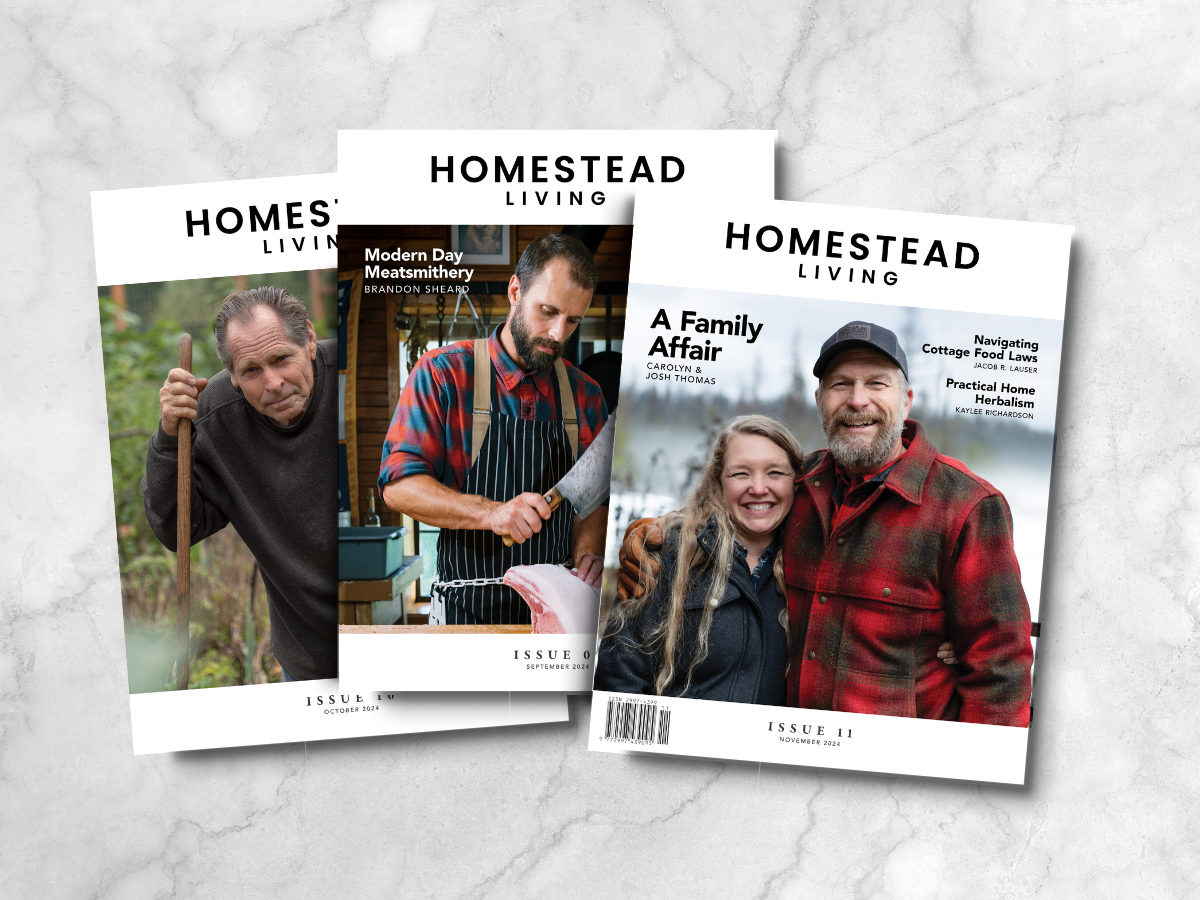
This Episode of The Coop is brought to you by Homestead Living magazine.
More than just a publication, Homestead Living is your go-to homesteading mentor, filled with advice, wisdom, and inspiration for homesteaders by homesteaders.
Leave a Reply