



In a time when grocery prices keep climbing and the world feels increasingly uncertain, many families are asking a simple question: how can we stretch what we have further while building something that lasts?
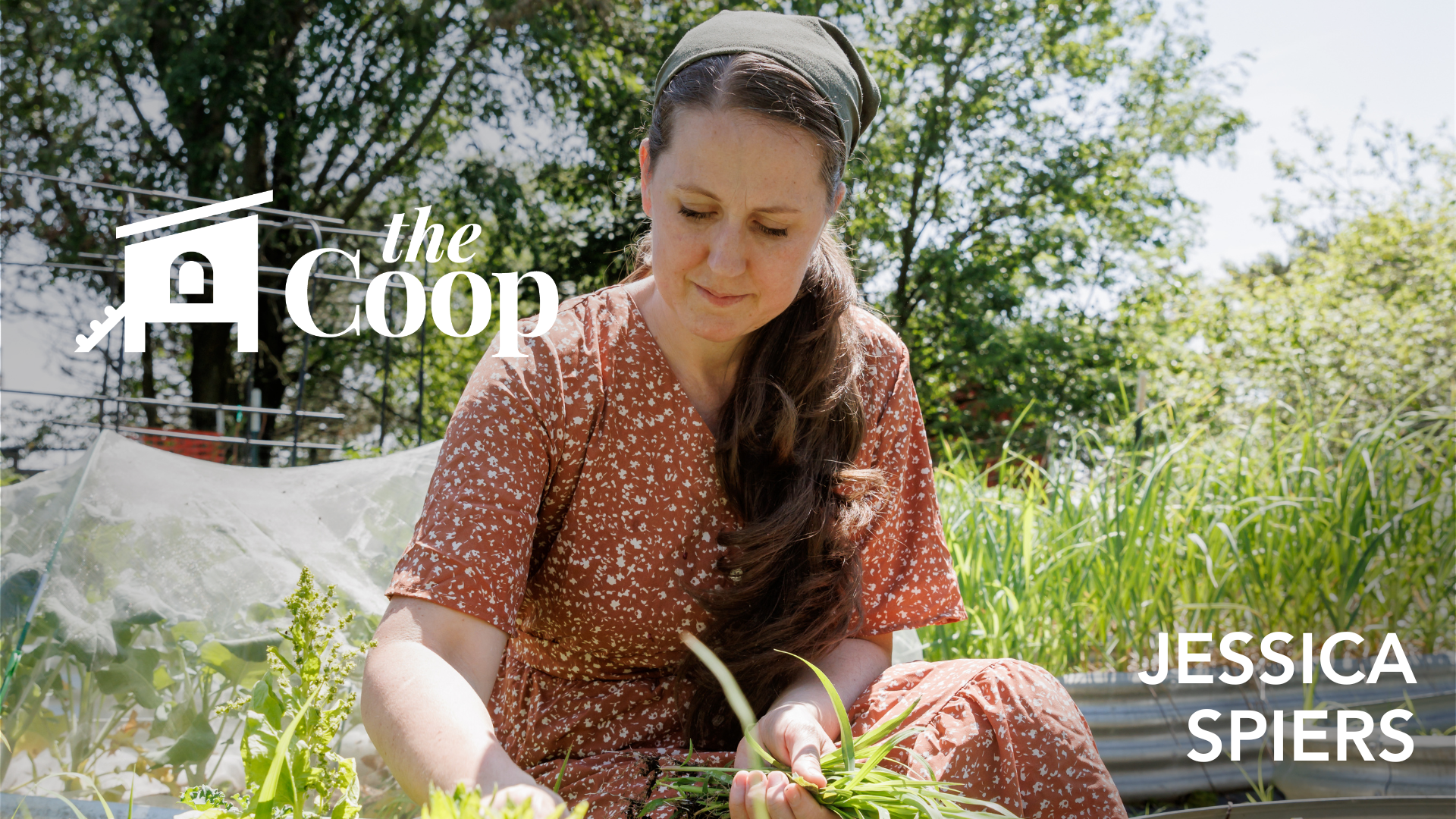
In Episode #21 of The Coop, Anna sits down with Jessica Spiers (homesteading and homeschooling mother of nine) for a deeply practical conversation about how modern homesteading is stepping in to fill the gap left by traditional home economics.
Jessica shares how the old principles of home economics (planning, production, prevention, price comparison, and resourcefulness) are more relevant today than ever.
She explains how these timeless ideas naturally overlap with homesteading, helping families save money, reduce waste, involve their children in meaningful work, and become better stewards of their resources.
Whether you have acreage or none at all, Jessica’s wisdom shows that homesteading doesn’t have to be expensive or overwhelming.
It’s about making intentional choices with what you already have, teaching kids real skills through everyday tasks, and shifting from a mindset of pure consumption to thoughtful production.
In this episode, Anna and Jessica discuss:
- Why homesteading doesn’t need to be an expensive hobby
- The five core principles of home economics and how they apply today
- Practical ways to involve children in real household work that builds character
- How to prioritize projects based on your family’s time, budget, and season of life
- The long-term mindset of stewardship and production over convenience and consumption
If you’re looking for encouragement to live more intentionally, stretch your resources wisely, and raise capable children in an uncertain world, this conversation is for you.
The show notes …
00:00:00 – Introduction
00:04:27 – Meet Jessica Spiers & Her Ohio Homestead
00:08:10 – The “Why” Behind Homesteading
00:11:12 – Does Homesteading Actually Save Money?
00:20:12 – The Decline & Return of Home Economics
00:25:29 – Principles #1 & #2: Planning and Production
00:33:45 – Principle #3: Prevention & Food Waste
00:40:08 – Principle #4: Price Comparison
00:45:15 – Principle #5: Resourcefulness & A Written Budget
00:55:36 – The Most Important Skill for Kids to Learn Today
01:01:43 – Practical Ways for Busy Families to Teach Home Ec
01:04:02 – Raising Good Stewards & Final Takeaways
Jessica Spiers:
And if anything, what I hope that my children get from this experience of growing up on the homestead and doing all this work and having a hand in their food is that they will be better stewards wherever God places them in life. And I say this all the time, I even have a preservation challenge centered around where every bit counts. Every bit of your effort matters. And for every task that you could try to do yourself and produce yourself instead of consuming what someone else made, that helps your budget a little bit and is one step better in stewarding the earth a little better.
Anna Sakawsky:
This episode is brought to you by Azure Standard. Family owned since the 1970s, Azure Standard is on a mission to make real food more accessible by delivering it straight to your doorstep or to a convenient local drop point near you. Everything they offer is completely organic, non- GMO, and free from junk additives you don’t want in your home or in your body. With more than 13,000 carefully vetted products, Azure Standard makes it easy to stock up on what really matters from bulk grains, nuts, and healthy oils to fruits and vegetables, frozen meats, pantry staples, and even clean household goods. And the best part is you skip the grocery store markup. You can order exactly what your family actually needs, save big on high quality food and pick it up alongside neighbors who care about the same things you do. Health, sustainability, and supporting ethical producers.
You can head to azurestandard.com right now to get started. Again, that’s azurestandard.com. Well, hello everyone and welcome to episode number 21 of The Coop. I’m your host, Anna Sokowski, editor-in-chief of Homestead Living Magazine. And today we are diving into a topic that feels especially relevant right now as the world gets more expensive and feels more fragile and uncertain every day. As food and gas prices continue to rise, household budgets are stretched thin, supply chains feel shaky and more people are starting to question whether the modern lifestyle of convenience and constant consumption is truly sustainable. We’re also seeing a resurgence of interest in homesetting and in traditional household skills like gardening, food preservation, cooking from scratch, and all of the practical skills that previous generations once considered completely normal. And that’s because learning these skills helps build resilience so that you have something stable to hold onto when the world itself feels a litle bit unstable, but also having the skills and resourcefulness to take care of yourself and your family in good times and bad is literally like having money in the bank because not only is it a hedge against uncertainty, but knowing how to grow, cook, preserve, build, craft and repair things yourself can save you tons of money as well, especially as many of the things that have been affordable in the past for so long are now costing more and more every day.
So today we are talking all about the economics of homesteading and how combining modern homesteading with the principles of traditional home economics can help families stretch their budgets and build greater stability. So joining me for this conversation is Jessica Spears of Three Rivers Homestead. Jessica is a homesteading and homeschooling mother of nine who lives with her family in Northwest Ohio. She’s also a contributor to Homestead Living Magazine and through her YouTube channel and online platform, she teaches others how to grow, preserve and prepare food frugally while cultivating a home-centered life rooted in faith, family, and stewardship. She recently wrote an article for the latest issue of homestead living called The Return of Home Economics: Why Homesteading is the New Home Ec, where she explores how modern home setting is helping families reclaim practical household skills that previous generations actually once learned through home economics classes in school.
So today, Jessica and I are talking about what homesteading really is at its core, not just the aesthetic version that we often see online nowadays, but the practical side of using what you have, stewarding your resources wisely, living more intentionally and teaching the next generation the skills that are going to help them to become capable and resilient adults. We’re also talking about whether homesteading actually saves money, how to approach it without turning it into an expensive hobby and why the principles of old-fashioned home economics may be more relevant today than ever before. So with that, I welcome Jessica Spears to the show.
Jessica Spiers:
Hi, thank you for having me.
Anna Sakawsky:
Well, thanks for being here. I really enjoyed your latest article. I actually reached out to you because I saw that you had been talking about this more and more on your Instagram. You mainly kind of share content through your Instagram stories and through your YouTube channel and you had started sharing some stuff on Instagram and then you did a bit of a series on YouTube where you walked people through the kind of five core principles of home economics, which you covered in your article, which we’re going to be going through today. But I just thought, A, it’s really relevant obviously right now more than ever, but these are all things that I think anybody can do. You don’t need tons of land. You don’t really even need any land. You don’t even need to be homesteading to apply these things. So I find that they’re very practical and just very attainable for most people.
And so I wanted to obviously have you share some of that in an Article for Homestead Living, but I wanted to dive a little bit deeper into this idea of the kind of overlap between home setting and home ec today. So before we really dive in, I would love to just start by having you share a little bit more about your family and homestead. So where you live, the age range of your children, because obviously with nine children, you’re going to have quite an age range, what you grow and raise and what day-to-day life looks like for you and your family.
Jessica Spiers:
Okay. Well, I live in Northwest Ohio and my husband Adam and I have nine children. As you mentioned, they range in age from our youngest. It’s just a little over one year old and our oldest is 18. He just graduated high school last week. So we have everything in between there. They keep us very busy. I obviously homeschool them, as you mentioned. And then on our homestead, it actually began for many reasons, which I’ll get into later, but a large part of the homestead is complimenting our homeschool work and teaching the children these skills that you mentioned that are part of a home economics education, but also then the great thing is we get food from it. And so on our homestead we have a garden, we have fruit trees, we had chickens end up, chicken both for eggs and for meat and we raised our own beef.
And right now that’s what we’re doing. I can’t think of much else. We did bees for a while, but I had a bad encounter with the bees and so I kind of passed that on to a family member who’s doing that now for us for our honey. But that’s what we’re doing here. I’m passionate about homesteading and primarily as you mentioned about home economics and law school that used to just be something that everybody did. I think nowadays people think of homesteading as something special that only people with a lot of land can do, but throughout history these skills and these principles that we’re going to talk about today were something that every family did just to have a healthy home economy and finances and to be able to produce healthy food for their family. So it’s something you can do anywhere and our journey in homesteading started long before we moved to this particular property 10 years ago.
I started applying these principles to my life when we were living in the suburbs with hardly end land and just working on the skills of doing more from scratch ourselves, cooking, canning, growing a little garden in whatever space that we had and we just continue every year to try to expand those skills. So that’s what I’m passionate about. I’m so excited to talk about this today because this is my favorite thing to talk about
Home setting as it relates to home economics.
Anna Sakawsky:
Awesome. Well, okay. So you kind of mentioned that we’ll get back to what got you into homesteading the first place. So I don’t think you grew up doing this, did you? You’re one of the many of us that kind of came to this a bit later in life. So what was your original, I guess, what drew you to homesteading originally and has your why changed over the years and what would you say is the bigger purpose behind this lifestyle choice for you and your family today?
Jessica Spiers:
Absolutely. I did not grow up doing this. I had the very typical Midwestern suburban upbringing in a neighborhood kind of setting and all of that. And as I got older, I had an interest. I’ve always been kind of outdoorsy and loved nature. So there was like an interest in gardening and animal husbandry. But then when I had my oldest child, he has anaphylactic food allergies and so feeding him became quite a challenge and actually quite expensive because most store bought foods just weren’t necessarily processed store bought foods weren’t an option for him. And so purchasing those whole food ingredients in the store, I quickly realized that the better decision would be to try to produce as much of that ourselves. On top of that, I’ve had my own health concerns. I have Crohn’s disease, which I’ve been able to manage without pharmaceutical medication for the last, what would it be now, 14 years or so.
And so it started out primarily for those health and financial reasons. And then as my oldest child and the other children came along and we got to school age, I realized that growing this food would be a great compliment to their education, not just in terms of the science. I mean, when you’re growing food, you’re experiencing science every day. The world is sort of your classroom, but also in character building in the work and the chores that come along with having a productive homestead and then the basic life skills, the home economics skills that we’re going to talk about today that will help them have a healthy home economy as they grow up. So that’s sort of how we got here. I am a Christian and stewardship is an important part of my faith. And so I think homesteading and home economics tie into that idea of being a good steward of the resources that we’ve been given, our finances of the land that we’ve been blessed to live on of the children that we’ve been blessed with and preparing them as best as we can for the world.
So yeah, there’s so many reasons like the longer I’ve been doing this, the more I realize like I could go on and on about why
I love.
Anna Sakawsky:
Absolutely. It’s funny because I feel like there are kind of a handful of major reasons why I think most people come into this. Health is often a big one, but everybody kind of has their entry point. It might be different for everybody, but usually over the years, everybody ends up with all of the same, like you want to be a good steward, you want to live a self-sufficient, sustainable lifestyle, you want the health benefits. And one of the things that does draw people to homesteading is this idea that we can save money or at least be more food secure and that sort of thing, especially in the world we’re living in now where everything’s getting more expensive and supply chain disruptions and all that sort of thing. But on the topic of money, I think people have an idea that they’re going to start home setting and they want to live more simply and become more self-sufficient and save money, but sometimes that can unintentionally actually turn into just another consumer hobby where people feel like they need all the newest equipment, expensive setups, like perfect aesthetics and they end up sinking a ton of money into it and relying on just buying things in an effort to achieve their goals.
So I think that’s how we’re trained in our society is the solution is always, we’ll go buy something. So I think that it can get really expensive or I actually hear people who say they want to homestead, but it’s too expensive so they don’t even bother starting where meanwhile, I see that you really do seem to approach homesetting through a much more frugal and resourceful mindset that kind of old use it up, wear it out, make do or do without philosophy. So what would you say to people who feel like home setting is either too expensive to start or to those who may actually be spending more money than they’re saving in the pursuit of a simpler lifestyle?
Jessica Spiers:
Well, I would say that homesteading, it’s such a broad label. There are so many individual activities that could fall under that umbrella and for every person’s unique situation, not all of them are going to make great economic sense. You have to look at your time. Are you working a full-time job the amount of land that you have? We’re talking about homesteading in terms of raising something like protein sources. Are you going to be able to grow your own hay or are you going to have to outsource that? Anything that you’re doing, there are so many variables and it’s not going to be the same for everybody. And just because you can’t do a couple of things that fall under the homesteading umbrella doesn’t mean that you can’t homestead at all. There are other things that you can do that make sense and everybody has to look.
So for some people, maybe growing a garden is a great idea that makes a lot of sense, but raising protein forces just isn’t going to work in your situation. Or maybe for some people they can’t grow a garden, but they have really good options for purchasing produce in bulk from local farmers. And so purchasing it is preserving it and using home skills of food preservation, that makes the most sense for them. And so you don’t have to copy what everybody else is doing. And I think if we talk about some of these principles of home economics, like home economic, it’s a very deliberate intentional act of deciding what makes sense for your home and your family and there’s a lot of planning involved in it. But yeah, like you said, if you just go into it trying to copy what other people are doing without doing the research and the work behind the scenes before you get into it, you’re just going to end up with a very expensive hobby that makes zero financial sense.
And so yeah, you just need to be very intentional with the choices that you make and not try to copy what you see happening on social media because a lot of that just isn’t realistic for the average person.
Anna Sakawsky:
Absolutely. And I would kind of add to that, that you don’t necessarily need to do all of it, nor do you need to do all of it at once. I think that there’s often this pit that people fall into where it’s like when you start anything, it’s like when you start, I think of like starting a workout regime and you get really excited and so you go really hard and then it becomes unsustainable. So you stop doing it altogether rather than slowly building over time. And I mean to that point too, the reality is that there are certain aspects of homeselling that do require real investment either upfront or at the time of purchase. So things like fencing infrastructure, garden beds, investing in certain tools, maybe a good pressure canner, maybe a freeze dryer at some point, buying in bulk, maybe filling the freezer with a half a cow or buying in bulk when things are in season.
Those can be big expenditures at the time and that’s, I think, why it can feel really expensive to people, especially if they’re trying to do all those things in the first couple years thinking they need all of that. But in your experience, how does that stack up over time compared to the standard modern lifestyle of just going to the grocery store whenever you need something? How have you approached it over the years and how do you discern between something that’s a worthwhile investment versus just an expense?
Jessica Spiers:
Yeah. I mean, I agree with what you’re saying and I would say everything’s going to cost you something. It’s either going to cost money or it’s going to cost you a lot of effort and sweat and work to accomplish it. We started very slow on our homestead. We moved here, obviously infrastructure. There was some fencing, like you said, of things that we needed to invest in to get started, but we couldn’t afford to buy everything that we would need at first and that just meant that we had to do a lot more of the physical labor in the years leading up. And so knowing that we had small children to take care of and I’m busy homeschooling, there’s only so much time I would have to do that physical labor. And so we had to be very intentional about which activities that we would choose.
And we made a rule in the very beginning that we would only add one new project every year that when we moved to this home, so the first year we’ll invest in the gardens and we’ll get that going and then maybe the next year we’ll expand the chicken coop and put in a larger run for them and just do one thing at a time. But there were many years, like let’s say a tractor. A tractor is a huge experience home, but it’s also extremely helpful to have on the home dead. But we lived here for seven years, six years I think before we had the money available to do that. And so it just meant a lot of moving veil to pay by hand with three of us rolling that round veil across from one side of the property to the other. It just took us more time and a lot more energy, but you do it to get it done until you can save up to afford the equipment that you’re going to need.
And so you just kind of have to be selective in that way. And if you’re not willing to do the hard work and you don’t have the finances to purchase the equipment, then that’s not an activity that you should pursue and that’s how you can kind of weed out what is and isn’t part of your effort on the homestead.
Anna Sakawsky:
Right. And another layer to that, I guess, is how have you decided outside of just what can we afford and that sort of thing, but what to prioritize first maybe it’s, “Oh, I really need to invest in the canner or whatever this year.” But I feel like with homesteading because there’s so many different areas of it, it’s like, “Oh, but we also need the garden beds or we need this and we need the greenhouse.” That’s, I think, where it can get overwhelming for people too is like they’re just, “Yeah, okay, I know I can only do so much, but where do I even focus?” So how have you decided where to prioritize your time, energy, money over the years?
Jessica Spiers:
Okay. So starting out when we first moved here, like I said, I had small children and was actively pregnant on and off it seemed like every other year. And so a lot of determining which projects made the most sense was what I had the energy or the time to actually do with children in tow. And so that weeded out a whole lot of things. Even in terms of raising our own beef, when we first moved here, my oldest child was only seven or eight. My husband works off the homestead every day and dealing with, let’s say, a cow gets loose or having to move, like I said, that the big bales of hay across the property wouldn’t have been possible for me to do. And so that was off the table until I had older children that were capable of helping me with those types of things.
And so we prioritized the things that not only made the most financial sense, but made the most sense for me to be able to accomplish while also taking care of all of the other responsibilities that I had with just the family and things like that. And so for us, chickens, they were much easier. Kids could help with chicken chores. They’re pretty low investment. We cobbled together a coop out of just random junk those first couple years because of what we could do and fencing was hodgepodge, but we made it work and it was really fun. And then as time went on, we were able to get better fencing and another coop and you just prioritize it that way.
Anna Sakawsky:
Yeah. Okay. Well, let’s get into these principles of home economics. So you recently wrote an article, as I mentioned for Homestead Living, The Return of Home Economics, Y Home Setting is the new Home Act where you draw parallels between homesteading and the kind of more practical home economics skills that were taught to us in schools back in the day. So before we touch on the principles, what was the original purpose of HOMEC in schools and how did it evolve over time and why do you think that we maybe started to value these skills less and less?
Jessica Spiers:
Yeah, I think originally when Home X became a part of mainstream curriculum, I think it was probably in maybe the 1940s or so they started a campaign to really teach this and it makes sense. If you think about World War II era, victory gardens, all of this, we’ve got people really focusing on trying to produce as much food from the home as possible, preserve that food and have really healthy home economies. And in time, I just think the world changed a lot with a focus on less production happening in the home to now we live in a society where two parents often work outside of the home and we want to consume more than actually produce more out of the home. And so we saw, I mean, it’s a direct relation to as that happened over time, that home economics curriculum definitely changed from the focus being the home economy to being consumers.
And you can see it in the 1990s, the curriculum, even the name of it shifted from home economics to family and consumer sciences. And then I would say now in a lot of places, it’s just consumer sciences with the focus on learning these skills and making you employable out in the world, not necessarily learning those skills to use them in the home setting, if that makes sense.
So yeah, that’s kind of how I see where we got to where we are. And then my generation, I classify myself as an elder millennial. I grew up not having home economics even in the 90s. I do remember there being some consumer sciences classes, maybe some culinary arts or some child development, but I felt like the focus on all of that was maybe learning those skills to apply them and becoming a chef or becoming a daycare worker, not necessarily on learning them for my home. And so those of us who grew up with that gap in our education in the meantime also saw the economy becoming harsher and harsher and harder to raise our families with the price of food skyrocketing and then that gap in our knowledge of not knowing how to control that ourselves. And so I think that’s why we see the popularity in our generation in looking to homesteading and it’s sort of becoming this replacement for that education that we didn’t receive through either the school system or generationally from our grandmas and our mothers passing it down.
And now we have this great tool of the internet to kind of help us learn from others how to do those things. I think that’s kind of how we’ve gotten to where we are today.
Anna Sakawsky:
Yeah. It’s interesting. I remember I did, so I’m in Canada, I don’t know if they actually do still … My daughter’s still in elementary, so we’ll see what happens when she goes into high school. I don’t know if they still have home ec classes. So many of those extras have been cut due to funding and that sort of thing. I remember even when I took … It was home ec at the time, but I just remember I didn’t really take it seriously because it wasn’t an academic course. There wasn’t a lot of … And I don’t remember it ever actually being explained through any, because we had four or five different teachers depending on whether you’re doing cooking or sewing or woodworking or whatever it was. And I don’t actually remember any of them explaining why we were learning it. I didn’t realize … And now, of course, looking back and knowing what I do and especially living this lifestyle, I think that those are probably some of the most important classes that we could have been taught, but there was a disconnect.
We were just so focused on it’s your academic grades that matter and I just didn’t really see … And I think that’s maybe where a lot of people come from is they don’t really see the value in it. But as you say, I think more and more people are understanding the value of that as they’re realizing how applicable it is to the real world. And you said something about changing from the home sciences or whatever they call to consumer sciences, right? The home economy to consumer sciences and this whole emphasis on being consumers over the years. And it seems like that’s all we’ve been trained up to do and to be, is to either be consumers or to produce for other people’s consumption to keep the economy going. And it’s funny, when I think about what homesteading is at its core, for me, I always say that it’s a lifestyle of production rather than just simply consumption, right?
Whatever you can actually be producing at home, then you’re not having to consume that or purchase that or source that from elsewhere. And again, you can do this on any level, even like you say, even if you don’t can’t grow garden, you can cook a meal at home or you can learn how to preserve or whatever. So it’s just that mindset of being a litle bit more of a producer than just having to consume everything.
Jessica Spiers:
Oh, go ahead.
Anna Sakawsky:
Yeah, I was just going to say, so let’s start with the principles. So I think I have them in the right order, but there’s five kind of core principles that you talk about that kind of overlap between homesteading and home economics. And those are planning, production, prevention, price comparison, and resourcefulness. So let’s start with planning. So what does that mean in the context of homesteading? What does that look like in practice?
Jessica Spiers:
Okay. I like to think of each one of these principles, you could think of a reason why someone would homestead. Every reason you could think of to start homesteading could be labeled as one of these principles. And so when we think about planning, it’s a lot about preparation. There are a lot of people who choose to homestead. We might label them as preppers, but they’re just trying to be prepared for any habituality. It could be economic problems, political problems, just being prepared for whatever life might throw at you, having a litle bit of extra food in the pantry just in case someone gets sick and you can’t make it to the grocery store next week or whatever. And so I think that planning is a really important part of homesteading for that reason. This is how we could be most prepared. And in terms of our economy of the home and when we talked about earlier, like deciding which projects that we’re going to do on the homestead make sense, it’s that planning process that is going to help us make that decision.
And so running into these activities blind without doing any planning, that’s how it turns into what we were talking about before, just an expensive hobby. And so yeah, it’s just a really important principle of both home economics in terms of your finances, but also in terms of the homestead and determining which things make the most sense.
Anna Sakawsky:
Yeah. Well, I even think of, and again, whether you’re homesteading or not, I’m a planner in that I’m always planning ahead for the next season or the next year or whatever. So that means, for example, even something like, okay, Christmas ends. And then I’m thinking about next year already because I know that I can get things on sale now, put them away and then not be paying top dollar leading up trips or heading into the summer. I’m thinking about like, maybe I want to get my canning supplies now before they run out because there’s a rush on all that stuff at the store or while there’s this, again, a sale on. I’m kind of always thinking about the next season, trying to get things off season so that I can save a little bit of money, but also have them put away for when I need them.
And that’s something that again, you can apply whether you’re homesteading or not, right?
Jessica Spiers:
Yeah. I mean, homesteading is cyclical by nature, right? You’re going to have seasons of abundance and you’re going to have seasons where you’re not growing anything and so you have to plan ahead for that. And so now what’s on my mind is we’re in the season of abundance when it comes to eggs. This is the time of year where the chickens and the ducks are just laying a ton. And so I need to plan ahead now for the winter when they tend to take a break and don’t have as many and due to work now to prepare in advance for that. And so every activity that you do on the homestead, because it’s cyclical in nature is going to require some planning, looking out a couple months into the future or a year into the future and see where you’ll be at and then plan the activities for the growing season to make sure that you’re going to be covered in that time period.
Anna Sakawsky:
Absolutely. Okay. Let’s talk about, sorry, what’s next? I don’t know if you have a specific … Is it prevention or production? Okay, I have production. So let’s talk about production. What does that look like?
Jessica Spiers:
Yeah. I mean, when we talk about the reasons people get into homesteading, I think production is a big one. There is this drive to want to kind of do it ourselves, to produce it because we think we can create a better product or a safer product or a healthier product, a product that might be cheaper and that is kind of the core of what homesteading is. So you’re producing food, you’re producing an education for your children if you’re involving them in this process. And so it really is a poor tenant of what homesteading has become and it’s a poor tenant of a healthy home economy. Nine times out of 10, it’s going to cost less when you produce it yourself versus having to pay for the labor of somebody else to have to produce it for you.
Anna Sakawsky:
What do you say to people? Because I know that there are folks out there, I have some in my family that are like, “Why Why would I grow my own tomatoes and I can go to Walmart and get it for cheaper than it’s going to cost and I’m not going to have to do all the work and that sort of thing.
Jessica Spiers:
Well, yeah. I mean, that could be the case. I did another video series on that where sometimes it doesn’t make sense to grow it yourself from a financial perspective. And it could just be that you haven’t done the planning to really look or the price comparisons to look and see if maybe where you’re purchasing that plant start or if you’re not purchasing them or starting the seeds yourself, that might not make the most sense. And maybe tomatoes aren’t something that you grow. Maybe it makes more sense to go to a local farm and purchase tomatoes from someone else. But if it’s not tomatoes, maybe it’s something else that you grow and place of tomatoes. But just having a production mindset of producing something is I guarantee if it’s not tomatoes, there’s something else that’s more expensive for you to purchase in the grocery store than it is to grow it yourself and you just have to determine what those things are.
And it is about more than just cost. I mean, there are other reasons to homestead. The nutrients in your homegrown tomato or the flavor in your homegrown tomato might be different than what you could purchase in the store, especially off season or wherever. And so there are a lot of factors that go into it. Obviously, when you’re talking about a home economy, finances are going to be a huge portion of it, but it is always about that. Sometimes there’s a trade off to when it comes to flavor and health as well.
Anna Sakawsky:
Yeah, absolutely. I think it’s important to literally and figuratively compare apples to apples. So if you’re growing a beautiful homegrown organic tomato that tastes amazing and you’re comparing it to the conventionally grown tomato at Walmart that is flavorless and is stripped of nutrients and everything, then the comparison is not … Yeah, we’re not being super accurate with it. But if you were going to go purchase that organic tomato grown locally and everything else, then probably at that point producing it yourself is cheaper. So I think it’s a good point that just you need to make sure that you’re actually comparing things to like things, right?
Jessica Spiers:
Yeah. And I think a lot of people think growing a tomato has to be expensive because they’re used to seeing the plant starts that are available at Lowe’s or these big box stores where one tomato plant is costing them five or $6 and they’re like, “Well, that’s silly for the number of tomatoes I’m going to get off it. Why does it work all that time and effort?” But there are much better ways I would say to obtain a plant start like that. There might be a local farmer that sells plant starts or I know there are some online delivery places that I purchased plants starts from before for half of that price. Local greenhouses I can get a flat of tomatoes for $11 and it has like 48 plants in it or start it by yourself. And when you do the math, which I’ve done series before in videos detailing the map on these things, I very rarely find it where purchasing it is going to make better financial sense than doing it yourself.
You just have to look at all the options and not just go for the easiest one, which might be the tomato start that’s available at the Lowe’s store or something.
Anna Sakawsky:
Yeah, absolutely. Okay. Let’s talk about prevention. What does that mean? What are we preventing?
Jessica Spiers:
Well, the reasons for homesteading, once again, a lot of people myself, why did I get into it for the first reason was for health reasons. I’m preventing having to be on pharmaceutical drugs, control my Crohn’s disease. I wanted to be able to grow food. I knew what was in it. I knew it would be safe. It wouldn’t have those allergens for my son and things like that. So it’s preventing health outcomes. It’s preventing unnecessary spending. Homesteading is preventing a lot of maybe environmental issues that could come about from growing things conventionally versus maybe doing it in a more sustainable way on the homestead. There’s a lot of prevention involved there. It’s preventing having to go to the grocery store. For me, in the middle of winter in January, it’s cold here in Ohio, it’s icy, the roads, it’s cold in flu season and everybody’s coughing out in public and homesteading prevents me from having to load all my kids up and go to the grocery store because my pantry is stocked and I can stay home where it’s warm and cozy and eat from the work that we did over the summer.
Anna Sakawsky:
Right. And food waste, I know you mentioned you did a video I believe on prevention and you talked about in that video that households are actually responsible for 43% of all food waste and that the average family throws away between $1,500 and $2,000 worth of food each year. And I see that. And it’s so funny just because I’m a real stickler about not wasting food. It can’t go anywhere else, it goes to the chickens or the compost, but we use everything because we value it because we know what it takes. But again, I know people that are quite close to me that when I spend time with them and I just watch the things they throw away, I’m like, “We barely touch that or whatever.” And I just think that it’s hard to watch sometimes just knowing how much that costs and how much that would take to produce, right?
Jessica Spiers:
Oh man, just like we talked about stewardship and all of that, just the idea of throwing away food in plastic that’s going to go in a landfill when it could become compost or it could be an animal or something. Oh, and there’s something too about having a hand in growing your food, watching these animals that you raise and then you butcher and then you consume. It’s like just the act of homesteading alone prevents you from wasting that because it’s like, I have too much respect for this animal and this work that I did. And so we’re going to eat what’s on our plate so we’re going to use every bit of that animal that we possibly can because wasting it just feels so wrong. This is once again, something that everybody used to do. Everybody had some backyard chickens or everybody had a garden and they threw stuff in the compost bin because people didn’t have trash services way back in the day.
And so I think it’s just not just preventing financial waste or food waste, but it’s the right decision in terms of stewardship and the environment.
Anna Sakawsky:
Absolutely. And just having that connection to our food too and understanding more on a deeper level how food works, how long it actually lasts. For example, I know people that they just go by, it says it’s best before this date. And so I will toss it if it’s not … I had somebody I knew that was like, “Oh, this mustard says it expired like a week ago.” Well, mustard is like, it’s not something that’s going to easily go bad. And again, there’s a difference between say something that’s best before and something that’s got an expiry date on it and knowing how to actually discern that for yourself, but so much food I think gets wasted that way too. I bet a lot of it outside of just fresh produce that kind of wilts or goes bad and gets thrown away because people don’t know how to preserve it properly now is probably things that have some sort of a date on them because they’re mandated to have it and people that just don’t understand what that actually means.
So they just automatically toss it if it’s past its best before date. So just understanding some of those things, even if we’re not producing it ourselves, like just having a better understanding of how that works so that we can be more mindful of
Jessica Spiers:
Buying and
Anna Sakawsky:
Using-
Jessica Spiers:
Speaking of old home economics versus newer versions of it, they used to focus on food preservation and teaching food safety from that perspective like, okay, vinegar preserves things. Why would mustard go bad because vinegar preserves it and it’s all about acidity levels. I’ve even shown people online the difference between canning guides that were made in the 1940s, 1950s. I have copies of some of them where there was actual food safety education in them versus the ones that are made now that just don’t have that information in them. And so a lot of these family and consumer science classes as they shifted away from home economics and teaching people about the basics of food safety in a home setting shifted to more commercial food safety and focusing on expiration dates and Best Buy date and just trusting that. And if your food’s left out all of the commercial canning rules or commercial food safety rules and everybody just lost all that knowledge of traditional preservation methods and what need.
And I feel like that’s why canning is a lost art too, because people don’t understand how it works. They haven’t had that education. And I feel like a lot of the fear with canning and food preservation goes away once you understand botulism can’t grow in this environment as long as you do that. So yeah, it’s really stabbed because we just lost that knowledge over the years.
Anna Sakawsky:
Well, luckily it’s coming back. If the thought of raising chickens has ever intimidated you, consider this your sign to stop putting it off. Murray McMurray Hatchery has been helping first time chicken keepers succeed for over a hundred years. They offer the widest selection of day old chicks and poultry, super low minimum orders, sometimes as few as one bird and the best guarantees in the business, live arrival, 48 hour livability, and 90% sexing accuracy. Plus they’ve got everything you need to raise happy, healthy birds right from the start. Brooders, feed, incubators, the works. It’s never been easier or safer to start your own flock, so visit mcmurrayhatchery.com and tell them the coop sent you. Again, that’s mcmurrayhatchery.com. The next one is price comparison. We also kind of talked about that, about comparing apples to apples and that sort of thing, but what else kind of falls under price comparison or how do you approach that when you are actually comparing and trying to figure out where to invest your money?
Jessica Spiers:
Yeah. I mean, we talked about this in the beginning. Not every activity is going to make great sense. I did a video on this year. In past years, I grew most of my plant starks for my garden myself. I had more space in my house. I had this large grow light set up and I just thought for many years that growing it myself, starting on my seedlings myself would make the most financial sense. And then last year I sat down and really did the math on it and I calculated the cost of the soil and the cost of the electricity and all of it. And I realized that actually for a lot of just generic plants that aren’t a special heirloom variety or a really unique niche variety or whatever, it made much more sense for me to purchase plant starts from our local nursery.
And then for my sanity too, I didn’t have all these grill lights using up space in my house, but so that was just one example of where doing the math and comparing the prices will help you determine what is the best use of your time and energy and money. I mean, home economics, this is like the cornerstone of it, right? We want to make sure that the food that you’re purchasing from the grocery store or the feed for your animals or whatever you’re doing, you want to be getting the best deal and it’s no different in your homesteading projects. So sometimes it makes sense to grow it yourself, sometimes it doesn’t. I mean, beef prices keep going up and up and up every year and the cost of way to purchase our beef calves to raise our beef and it’s hadrupled over the last probably five years, the cost of the cal and we’re getting to the point where it probably won’t make financial sense for us to do it if it keeps increasing.
And so that’s something you have to evaluate every year to decide maybe our efforts would be better moving towards pork or expanding the amount of water you’re doing instead of purchasing your caps.
Anna Sakawsky:
Yeah. Well, and same as when you’re kind of deciding if it’s worth it to raise your own animals or whether it’s worth it to just purchase from a local farmer as well. So again, I think you’re right, it really comes down to actually doing the math is a really important part of it because even at the grocery store, for example, you need to understand how to do the math on certain things because there will be things that are priced a certain way. But again, first of all, I try to teach this to my daughter a lot when we’re shopping together. First of all, we look at the ingredients, because again, you want to be sure … For example, we purchased a … We were making dinner the other night and I wanted just something quick and easy. So we got one of those roasted chickens from the grocery store and then we went over to Costco and I realized that it was like $5 less for one of those chickens there.
But then I was like, I looked at the ingredients and there’s all sorts of additives and stuff in there and seed oils and everything in the Costco one that the other one didn’t have. I’m like, well, for that $5, it’s worth it for me to pay that extra $5 to avoid all those other things. But the other thing that we look at is the unit price, right? Because you might have something that’s a couple dollars less than something else, but it’s a smaller amount that you’re getting. And when you actually price out the cost per unit, it makes sense to spend the extra couple bucks, or sometimes it actually makes sense to buy the smaller amount. You’d imagine that buying in bulk, sometimes you save money. That’s not always the case. I remember one of the most valuable lessons my mom ever taught me was how to purchase random weight cheeses, that if you got random weight cheeses, but they’re all priced the same, you look for the one that’s the highest weight, that’s actually the most expensive based on the weight of it, but then they’re all priced at the same price and so you grab that.
So that’s another thing that I’m teaching my daughter right now. So just little tips and tricks like that, that again, if you haven’t been taught, you don’t know and that’s just wasted money every time you go to the store then, right?
Jessica Spiers:
Yeah. And it goes back to the question about the tomato that you said you get asked a lot from people. It isn’t just comparing, like you said, apples to apples. We all know if you’re growing a garden or you’re raising animals that they’re only as nutritious as the soil they grow in or the feed that they’re given. And so just doing a price comparison without looking into all the other factors, like you said, the ingredients in the food or the soil that it’s being grown in just doesn’t make sense because the same two tomatoes can look identical from the outside, but when you actually did a nutrient analysis of them, you’re getting more bang for your buck in terms of actual nutrients from typically the homegrown one.
Anna Sakawsky:
Okay. And then the last one is resourcefulness. So obviously homesteading is kind of known the resourcefulness and homesteading kind of go together, but again, what does this look like in practice? I’m sure it kind of crosses over into a lot of these other principles as well.
Jessica Spiers:
Yeah. We were talking about the reasons people homestead and one of the big reasons would be for environmental reasons, looking for a better way than conventional agriculture and something that honors the animal a little more, gives them better quality of life and healthier living. And so I would say for the people that choose to homestead for environmental reasons that resourcefulness is probably the topic that most relates to that. And it is everything about homesteading. It’s using everything. Like you said, it’s using your food scraps to create compost. It’s using the food scraps to feed another animal. When you get that cow back from the butcher after you butcher it yourself, it’s using all of the organ meat and turning the bones into another product. All of these principles relate to one another, but it’s like resourcefulness, part of it is having a production mindset as well.
So not wasting anything, seeing what you can produce from every little thing. And yeah, just probably one of the most important principles behind production would be being as resourceful as possible.
Anna Sakawsky:
Absolutely. I see that a lot too with like my husband does all the building projects and everything around here and like right now he’s breaking down pallets, which we actually haven’t done in quite some time, but with the cost of lumber rising, he’s like, it’s now worth it again. Again, he had to do the math on it. And before lumber was cheap enough where it was like for the time and effort it took to break them down and get all the nails out and make it wasn’t worth it, but now it is again. So now he’s breaking down the pallets and he’s found he built us some raised beds last year and he wanted to build them out of cedar because long term, even though cedar is more expensive, it’s rot resistant so you’re not going to have to replace it as soon. So again, it’s that idea of like long term value as well.
Sometimes the cheapest product isn’t actually the most affordable if you price it over the long run if you have to replace it. So he wanted cedar, but he found a guy with a mill up the road who had a bunch of off cuts. So they weren’t the standard size lumber that he could sell through the stores or whatever. So it was priced much cheaper and we were able to do that. We were able to mulch our entire front yard and we were putting our gardens in for free basically because we got a local arborist to drop it off. So those type of things too, I think it’s all resourcefulness. It’s like, how can I repurpose something, get something for cheaper, make use of something that would be wasted anyway and then what is the actual value of that long term? Again, I always like to think about, is it an investment?
Is it something that maybe it costs a bit more now, but over the long term it’s going to be a lot cheaper than buying the cheap thing. And I even think about that in terms of like clothes. Not that they have to be expensive or brand name and sometimes the cheaper things are the better quality, but it really does come down to quality. You can get it at the thrift store, but it’s about the quality is it going to last? How many wears are you actually going to get out of it? Because if you’re only going to wear it once, it’s 10 bucks off of some cheap website, but then it falls apart, then what’s the point? So again, over the long term, does it have a return on investment, right?
Jessica Spiers:
Yeah. And I think this is one of the areas where social media can kind of do people a disservice because we talked earlier about how your homestead doesn’t have to look like everyone else’s and you don’t have to be doing what everybody else does. And there can be this inclination to see how other people are doing it and want to replicate it. And that usually makes us have to go out and purchase items to replicate what other people are doing. But at the core resourcefulness, it would be like trying to use what you already have and make it look your own way out of whatever. Yeah, it’s funny because you see a lot of people that have been homesteading for a long time and maybe their homesteads don’t look really aesthetically pleasing. They have things kind of cobbled together in a way and because they’re being resourceful and making use of, “Oh, I have this wood sitting here that I didn’t have any other use for.
” So we’ll turn that into the coop instead of having the nice fancy coop that I see in all the magazines or whatever. And so yeah, I think it’s not just important to not compare yourself to others in terms of determining which activities to do, but also in terms of how you’re going to do them, make it look like your own and use what you have. I get a lot of criticism honestly online for how my food looks. Have you been with me and this relates to it, but I love if you follow me for any time. I’m like the self-proclaimed queen of just taking leftovers and turning it into a new meal because it’s just like, why would I waste this food? I’m going to be resourceful and reinvent this into something else. And it keeps my grocery costs down and it prevents the waste of that food because I’d rather eat it than feed it to the animals.
I worked really hard, but people criticize and say, “Oh, that doesn’t look great. It’s soup. Why are you having soup all the time?” Well, it’s a great way to repurpose leftovers and be resourceful. What do our ancestors do? They had this continuous pot of soap that you don’t have to keep your own stuff on. So anyways, that mindset of being resourceful, it’s going to save you money, it’s going to be better for the environment. It’s just really important to your home economy and to the homestead.
Anna Sakawsky:
Yeah, for sure. I think we have to get beyond that mindset of it doesn’t look pretty. It’s like vegetables from the store too. We’re so used to things just looking perfect that you pull a carrot under the ground and it’s kind of got dirt embedded in it and little creases and this and that into the average person they probably go, ew, right? But actually that’s the healthier carrot that’s grown in organic soil and all these different things. And I think we’ve just been so trained to have this mindset of it needs to look a certain way. But historically, like you say, that’s not how it was. We just made deal with what we had and that’s how we have survived for so long, right?
Jessica Spiers:
Yeah. That’s how grandma and grandpa didn’t have debt. Yeah. But it’s all
Anna Sakawsky:
Related
Jessica Spiers:
To the topic we were talking about, the shift in mindset towards a consumer attitude versus a production attitude. When you’re consuming things that are mass produced that they’re created to be visually appealing and perfect and fake, fake food, food size, all of that, but the real stuff, the authentic stuff, it’s going to be imperfect. It’s going to look different.
Anna Sakawsky:
Okay. So you just mentioned something. You mentioned debt, which is something that a lot of people carry in some way. Now first off, how important is it do you think to have a written budget versus just kind of having an idea or keeping it in your head or maybe you do a budget every once in a while, but you’re not always staying on top of it. And do you think there is a place for using credit for certain things?
Jessica Spiers:
Yeah. Well, I would say debt in general is probably bad, but I do think there is a place for that.
My husband handles a lot of the budgeting for our family, so I won’t get into specifics of that, but I would say there probably is a place for debt in some situations, but having a budget absolutely important. I’ll put it on a micro scale just in my kitchen, my kitchen budget. I am a stickler with spending. I spend the same amount every month and track it and I’m very intentional about that. And when you’re feeding 11 people, if I went to the grocery store and I just threw in whatever I wanted, it would get out of control very quickly. And so I’ve always been a stickler about that. I think it’s extremely important. And because I’m such a stickler with the food budget and things, it frees up our money in other areas to be able to expand the homestead, do more projects, which in turn cut those grocery bills and make that budget smaller so that then we have more money to turn around and invest in the homestead and it just all is feeding itself that way.
So yeah, just like you’re not going to run into a homestead project without doing any planning. I mean, it’s one of the principles of a good home economy. Budgeting is planning. You got to have rules for spending and what is and isn’t going to be allowed. It’ll snowball out of control.
Anna Sakawsky:
And it’s important to actually look at the finances. I know it’s something that a lot of us don’t like to do, right? Especially as things get more expensive, you’re like, “Oh my goodness.” But it’s important because otherwise it is very easy to overspend. It’s very easy to have an idea and think you’re spending one thing and then you look and we did this with gas with the last month, especially with gas prices rising. My husband’s been working about 45 minutes north of where we live and so the back and forth was costing us like hundreds of dollars more than we thought. Luckily he’s actually working up at his mom’s place. So now that we know now he’s been staying up there one night a week and just instead of doing the back and forth more time just to save a litle bit. But again, we had to actually add it all up and look at the numbers to be like, “Holy, did you realize?” Because I said, “How much did you think we spent?” And he gave me a number and I said, “It’s actually this much.” He’s like, “What?” I’m like, “Yeah.” So yeah, definitely.
And I think again, as things get more expensive, that’s going to be more important because we have this outdated idea of what things cost, but that’s not maybe the reality now. Okay. Let’s talk about kids for a minute because this is another big important point that you brought up in your article. You wrote that homesteading offers a good opportunity to teach these skills to our kids. So you said, when kids grow up participating in the work of the household, they gain skills that translate directly into adulthood. It isn’t just about or just practical abilities they learn, but character qualities as well. Things like problem solving, service, stewardship and contentment. The lessons homesteading teaches build confidence and competence. Children who know how to cook, repair, grow, and manage resources are less dependent on systems that may not always serve them well and are better prepared for a future in an unstable economy.
What specific skill or skills do you think are most important for kids to learn today?
Jessica Spiers:
Hard work absolutely kids-
Anna Sakawsky:
Really?
Jessica Spiers:
Yes, absolutely. I mean, it sounds so general, but you’d be amazed out there at kids who’ve never had to work hard or things beyond their own selfish needs,
Anna Sakawsky:
Right? Oh, sorry. Did you say hard work? Just the skill of hard work. I thought you said artwork for a moment. I’m like, “Oh, that’s an interesting one. Maybe that’s okay.”
Jessica Spiers:
Oh, I’m sorry.
Anna Sakawsky:
I got just a litle glitch and you cut out for a sec. So hard work. Yes. Okay. Absolutely. Yeah.
Jessica Spiers:
Hard work, like I said, not just serving your selfish needs. There are some kids out there that work really hard maybe academically or in cleaning their own room or their own space and that’s wonderful, right? Kids should be working hard for that, but that’s all self-serving. And the great thing about the homestead is by nature, kids are going to be out there not just helping themselves because they get to eat the food, but they’re helping the entire family unit. They’re helping the animals. They’re doing physically demanding labor, sometimes mentally demanding labor when it involves some kind of problem solving, but they’re doing it for a greater good for the entire family. And so that would be advice I would give to mothers of children when you’re divvying out chores or doing whatever, make sure that the chores your children are doing are not just something that serve them.
And the great thing about a homestead is ample opportunities. And even if you don’t live somewhere where you can raise beef or chickens or whatever, maybe you have an indoor cat or maybe just something that is taken care of and working hard for something other than themselves.
Anna Sakawsky:
Absolutely. Now, obviously there’s a lot of talk about AI now and kind of the future of what that’s going to look like, taking people’s jobs, just taking over tasks for us where maybe we won’t have to do certain things. And again, I think we’re seeing right now over the past few years why it’s important to not lose these skills completely, but there are some things, for example, over the years that have become kind of obsolete. So one thing that comes to mind is most people are not washing their clothes by hand anymore. We have washing machines now and so doing that, not that that’s a particularly hard skill to learn if we had to, but you just kind of don’t have to anymore. And unless the whole grid goes down, that’s probably something that most people aren’t really going to need to worry about. Even just something like cursive writing in schools, they do a little bit in our schools, but they don’t focus on it like they did when I was a kid because now it’s all about typing and texting and that sort of thing and you don’t really need that skill anymore.
And a lot of jobs have obviously gone by the wayside over the years because of just skills that are outdated. Do you think that any of these kind of home X skills, do you think they really are timeless or do you think that any of them might become obsolete in the modern world?
Jessica Spiers:
I don’t see anything that we really do with our hands becoming obsolete. AI’s not going to be able to take over gardening for us. I don’t think it’s not going to be able to take over cooking and taking care of our animals for us. So I think those things are always going to be a tether to the real world and to what it means to be human and to experience the world, which is another reason I think homesteading has become so popular. There is sort of a desire deep in us in an ever increasingly technological world to find what is human and real in life. And so people want to get their hands in dirt and need the dough and all of that. AI won’t take over that, but the planning portion that we talked about, some of the other preparation work, I think AI could be a tool that could be used to make that easier for us.
And so some of that price comparison that we talk about or some of the budgeting and comparing costs of different activities AI could be a tool that could be used for good in that way, but I don’t ever see it actually replacing the work that is required to be a good home economist because we mentioned earlier, something’s either going to cost you money or it’s going to cost you your labor and one of the principles of being someone who is productive and isn’t a consumer, just by nature production requires work and effort and AI isn’t going to be able to take or that physical work that we have to do to have a healthy economy.
Anna Sakawsky:
Well, and just thinking economically too, right now it’s been introduced to us and it’s kind of open access to everybody, right? And I think that’s how they draw you in where you become kind of reliant on this, but that could change where they go, okay, now you got to pay. There’s design to paywall if you want access to this tool or whatever. And so at that point then again, you’re either paying for that or you need to do it yourself. And if you become reliant on that like anything nowadays and you lose that skill or it gets rusty, then you kind of have to relearn how to do that for yourself or be at the mercy of this system and whatever you have to pay to play, right?
Jessica Spiers:
Yeah. I think us with preparation, prepare for all eventual outcomes, it could be AI could be this scary tool that makes the world worse. It could end up if they solve some of the issues that we’re seeing, it could be this tool that could help humanity in certain ways. So I don’t know, I guess with anything that is the nature of homesteading is to be kind of prepared for all eventualities. It’s that prevention. We’re going to keep wearing these skills. We’re going to teach these skills to our children so that they can prevent losing that through the use of AI. So even if AI starts taking over some of this stuff, they’re not going to be at its mercy because they’ve been trained for any potential outcome.
Anna Sakawsky:
Right. Yeah. Okay. So you obviously homeschooled your children, and you talked a bit about how part of that decision and the decision to bring it and tie in home setting was so that you could incorporate that kind of in their curriculum almost, right? Yeah. And teach them some of these skills through that. But a lot of people are not homeschooling, maybe they’re stretched thin already, maybe both parents are working outside the home and they’re like, “I just need to get food on the table and get the kids to bed and get our bills paid. I don’t have time.” What are some simple, practical ways that families can begin involving their children in these everyday household tasks and teaching these skills naturally without feeling like it has to be part of some official homeschool curriculum or be another thing on the to- do list?
Jessica Spiers:
Yeah. I would say I have sympathy for the average parent who they’re working, two parents are working the kids are in school and kids are in activities and it’s really hard to feed people from scratch and enjoy that process when everybody’s running around. But I guess I would say that finding space in the week, even if it’s one meal a week on the weekend that you just prioritize being the big family dinner that you bring everybody together, you involve the kids in that process, have them help learn how to do some things and kids, they want to learn so much. They don’t differentiate between play and learning when it comes to these life skills and things. And so it kills multiple birds with one stone. You bring the kids in the kitchen, you’re teaching them life skills. They’re also getting time with mom and dad that they need after a busy week of everybody running around in different directions.
And it could be this calming focal anchor in your week that could bring everybody together and everybody’s learning and producing an amazing meal. And so yeah, it’s tough. The way the world is set up, this consumer mindset, we’re all on the go. I mean, I even feel it as my kids have gotten older and they’ve gotten busy outside of the home and I’m running them to and pro, it does strip a little bit of the joy out of cooking when you’re having to rush really quick to get it on the table to get people to where they go. But just find those anchors in the week where you can come together and let it be a contrapt. Let it be an escape from the busyness of the week and be a special time.
Anna Sakawsky:
What do you hope that your children carry with them from this lifestyle that you’ve lived and kind of everything you’ve taught them into adulthood? I know some of them are young adults now themselves and even if they choose not to homestead and follow in those footsteps, what do you hope that they take away and remember?
Jessica Spiers:
Yeah. If I’m honest, I doubt that very many of my kids will live similarly to how I’m living. I don’t foresee all of them having land and having beef cows and all of that, but the skills or I guess the character qualities that have been developed to hard work can be transferred anywhere. And I told you at the beginning of this stewardship, it’s driven by my faith. It’s such a core part of what I believe and it drives a lot of what I do and a lot of my decision making. And if anything, what I hope that my children get from this experience of growing up on the homestead and doing all this work and having a hand in their food is that they will be better stewards wherever God places them in life. If they’re living in a city or if they’re on a huge ranch somewhere, I just want them to steward their resources well.
I want them to steward their time well, their finances and the earth. And I feel like homesteading is a way for them to learn those things and it’s transferrable to anything.
Anna Sakawsky:
Yeah, for sure. Lots of transferable skills. If there’s one thing that you hope people listening or who read your article take away from it, what would that be?
Jessica Spiers:
It would be that you don’t have to be writing it all. We talked about that in the beginning of this, that if your heart is towards stewardship and you’re feeling this call to want to investigate homesteading more or you’re already in it, just remember that it isn’t about having to do it all. None of us are going to be growing at all ourselves or doing everything from scratch. It’s great in theory to be 100% self-sufficient, but it’s not possible, right? We live in communities, we live in a society that has expectations and rules and things that we have to do. And so we’re all just trying to do our best. And I say this all the time, I even have a preservation challenge centered around that every bit counts, every bit of your effort matters. And for every task that you could try to do yourself and produce yourself instead of consuming what someone else made that helps your budget a little bit and is one step better in stewarding the earth a little better and will teach your kids one more skill or is one more opportunity for them to learn hard work.
And so just because you can’t do it all doesn’t mean you’re like, “Oh, it’s not worth doing.” I mean, it could just be baking your bread and that’s it. And that’s that time during the week that you make one loaf of bread on the weekends together with the kids and it feels great to produce this. I’m showing my kids that they can produce it themselves and not have to depend on other people for it. And that’s great. It’s one thing and it all adds up and then next week focus on another thing. Yeah.
Anna Sakawsky:
Awesome. Well, Jessica, thank you so much for joining me today and for sharing your wisdom with us. We’ll be sure to link to your Instagram and to your YouTube channel and everything in the show notes below. Again, I saw you just recently started posting some videos on this topic too where you walk people through these different principles and how to apply them. So for anybody who wants to learn more, you can check that out. Jessica, you’re online at Three Rivers Homestead everywhere, right? So if anybody’s searching, I know I’ve been following you for a number of years now and I’m always inspired by what you’re doing and just teaching through your YouTube channel and through your Instagram stories. So whether it’s your pantry challenge or the Every Bit Counts Challenge or just your musings on life in the world and how to be good stewards of our family and our resources.
I always come away feeling like the way that you approach homesetting and the things that you share are both meaningful and achievable to the average person. So thank you for that and for always keeping it real and authentic.
Jessica Spiers:
Well, thank
Anna Sakawsky:
You. And I think your food looks great, by the way. I’d come for dinner any day at your place.
Jessica Spiers:
Thank you. Thank you for the kind words and for the opportunity to be here. This was fun. I love to talk about this. I love to encourage people in this, so thank you.
Anna Sakawsky:
Awesome. Well, for those of you listening, if you enjoyed this conversation, be sure to check out Jessica’s article, The Return of Home Economics: Why Homesteading is the New Home Act in the latest issue of Homestead Living Magazine. If you’re already a subscriber, your issue should have arrived already. And if not, we would love to invite you to subscribe so you never miss an issue. You can learn more at homesteadliving.com/subscribe. And also, if you haven’t done so yet, please hit the subscribe button and leave a review. It really does help us grow so we can reach more people who could benefit from these types of conversations. And on that note, if you do know someone who could benefit from this episode, please share it with them because I know that there are so many people right now who are looking for ways to stretch their money and I think this conversation is a great place to start.
So Jessica, thanks again for being here. Thank you. And to everyone listening, until next time, keep learning, growing and building what matters and we will see you all back here next time on The Coop.
Resources/Links
- Youtube Thee Rivers Homestead
- Instagram Three Rivers Homestead
- Download Episode Audio File
- Subscribe to Homestead Living Magazine
Brought to you by

This Episode of The Coop is brought to you by Azure Standard
Family-owned since the ‘70s, Azure delivers real food to your doorstep or a local drop point.
Completely organic, non-GMO, no junk additives …

This Episode of The Coop is brought to you by Murray McMurray
Trusted since 1917, this Iowa family operation hatches premium poultry for homesteaders and enthusiasts, delivering healthy, hand-packed birds and all the supplies you need to start your flock right …
Leave a Reply