
Perhaps the most common ecological weak link on farms and homesteads is pasture management. My mentor Allan Nation, founder of The Stockman Grass Farmer, said that if someone could have flown a drone over North America prior to the Europeans’ arrival, the pictures would indicate fences all over the Great Plains.
Of course, we know fences did not exist then, and neither did fire departments. When prairie forages became too old due to over-rest, the lignified (rigid and woody) carbon burned easily. Native American-lit fires and naturally-lit fires (from lightning strikes) burned in these carbon-accumulated areas, but not in straight lines. An area would burn until it got to a place without enough accumulated carbon to sustain the fire. The fire worked around these edges as precisely as if someone were steering it.
Bison liked the freshened grass; they disliked the old, tough, lignified grass. As a result, these massive herds followed the burn lines to eat the more tender forage. From the air, their grazing patterns would make you believe fences controlled the herds. These patterns created a precise mosaic on the landscape, a tapestry of old grass, freshly burned grass, and new grass. The bison followed the fresh grass.
The native prairies, like all grasslands around the world, existed symbiotically with herbivores and the predators that bunched and moved them and the fire that freshened things up from time to time. Often, it took a couple of years or more before enough lignified, cardboard-type biomass accumulated to support a fire. Bison would move through an area only occasionally, which is why the Native Americans who depended on them lived a nomadic existence.
The fire/grazing/rest cycle ensured energy equilibrium in the forages and therefore maintained growth and fertility. Forages, which include all the succulent, edible grasses, clovers, forbes, and herbs, store energy in their plant crowns. This carbohydrate bank account, if you will, supplies the energy to send out new shoots when the top of the plant is pruned. Whether that pruning is by an animal, fire, or a mower, the initial shoots that grow out of the crown pull energy from plant reserves.
As they elongate, the shoots (solar panels) begin to function and start sending carbohydrates back into the plant crown. Over time, the forage leaves replace the energy lost in the initial regrowth phase. At this point, the plant is at energy equilibrium. If the new blades are sheared before that energy is replaced, then the plant enters an energy deficit. The longer a plant stays in an energy deficit, the weaker it becomes. If it stays long enough in that state, it can die.
In natural systems, predators, flies, fires, human hunting, and the natural search for fresh forage propel herds to new ground, vacating old grazed-over land. Allan Nation said that these large native herds move like giant waves. The animals near the front will fill up and lie down. The animals behind them then become the front ones until they get full and lay down. Finally, the rear ones become the front ones. By that time, the original front ones will be hungry again and join the mob in a never-ending rotating wave of eating and resting.
The French grazing guru Andre Voisin documented the rest cycle in what is still the bible of grazing management: Grass Productivity. What he observed and popularized that was truly new was the need for rest. Domestic livestock tend to stay in one place due to fencing. But wild herds, he observed, move constantly. They don’t stay in the same field.
Interestingly, Voisin’s book title captured the objective of the rest requirement by using the word “productivity.” In other words, plants that are not allowed recovery time to achieve energy equilibrium are not nearly as productive as plants that rested long enough between prunings to maintain their carbohydrate stores.
A good way to think of forage productivity is rest and exercise. We all know exercise is good. But, if we exercise all the time without resting, we tear our bodies down. In fact, Army Delta Force members and Navy Seals rotate out of those elite forces in just a couple of years. To maintain the body in that condition takes too much energy and eventually wears the body down. Replacements constantly rotate into these extremely demanding units because remaining too long destroys the body.
The same is true with grass. Pruning is like exercise. A forage plant never pruned gets old, turns brown, and lignifies (turns to cardboard). At that point, it doesn’t take in solar energy. It doesn’t grow anymore. In fact, it oxidizes, or, in direct opposition to our Navy Seal metaphor, it becomes a couch potato.
Just like too much exercise can be detrimental, too much rest can be detrimental too. We all enjoy rest, but if all we did was lie around, our muscles would soon atrophy. Brown forage is like atrophied muscles. It’s worthless, which is why when an area in nature accumulates too much of it, a fire comes in to restart the growth process. A plant in full senescence doesn’t contribute anything to the ecosystem; it takes up space that ideally would be occupied by something green and growing, something actively converting solar energy into biomass.
This is why herbivores exist around the earth. They are not here because they’re cute; they’re here to prune vegetation, freshen it, and keep the plants from becoming senescent. If the animals can’t keep up with the forage, then eventually fire will help catch up.
Probably no one has ever or will ever do more research and practical application in this arena than Allan Savory, founder of holistic management, a systems thinking approach to managing resources. He is quick to recognize Voisin’s rest component as the key to his platform.
On his own ranch in Zimbabwe, Savory illustrated that the problem of desertification and land degradation was not because too many herbivores existed. It was because they were not managed in a nature-mimicking protocol to make sure plants were pruned dramatically but then left alone to recuperate.
My iteration on this theme is moving, mobbing, and mowing. That’s what the animals do when they occupy a pasture. But between cycles is the necessary rest period. That rest period can be a couple of years in a brittle environment like Nevada, or it can be as short as 30 spring days in Alabama or Tennessee.
Forage does not grow consistently throughout the year. In some places, forage growth stops not because of dryness, but because of cold. In our area of Virginia, for example, grass stops growing by Thanksgiving and then starts again in late February or early March. That means a plant pruned Nov. 15 will have to rest until at least Mar. 15 before being re-pruned.
Interestingly, while the East Coast can grow more forage per acre than a brittle area like Nevada, the silver lining for Nevada is that humidity does not desiccate the plant when it matures.
In high-humidity areas, mature forages deteriorate rapidly since their nutrients are literally sucked out by the moisture in the air. But in arid areas, those plants can remain upright and highly palatable, like raisins, for up to two years. In Virginia, if we don’t harvest mature forage within about 100 days, all the nutrition leaves. We can’t make raisins.
Voisin, who called his approach “rational grazing” because you’re rationing out the forage just like you’d ration out hay, warned aggressively about “the law of the second bite.” What he meant by that was that the key is to never let an animal graze regrowth until the plant reaches energy equilibrium. In other words, the art of grazing is the science of regulating when the pruner and the plant meet.
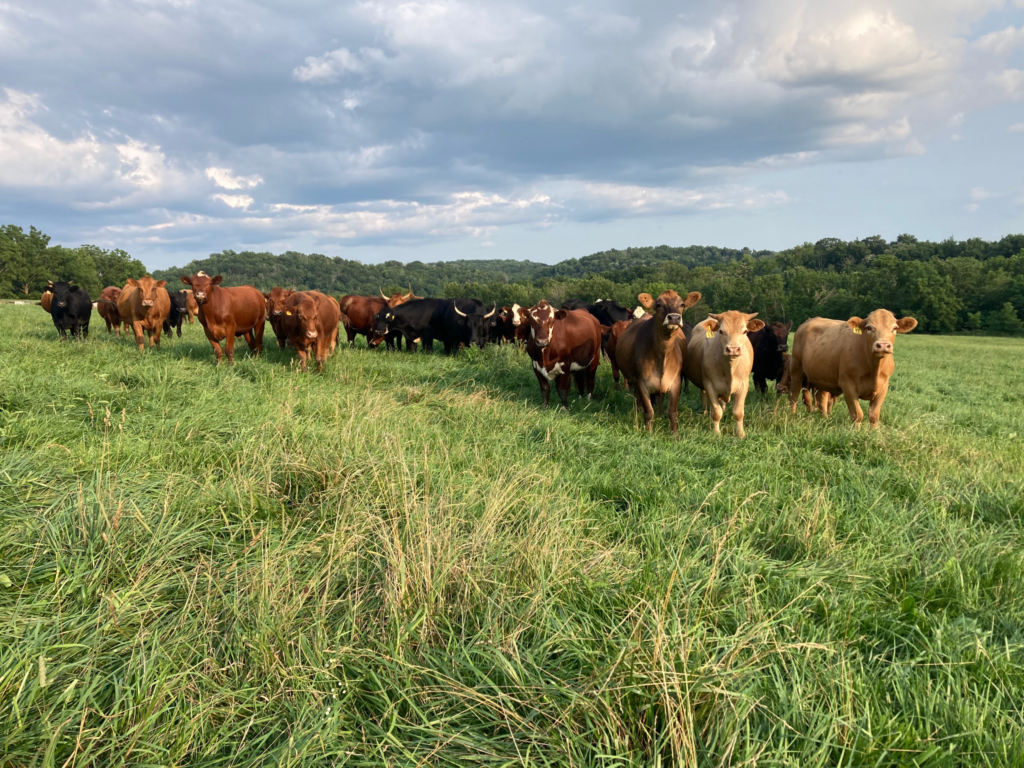
On our farm, we move the cows daily in order to simulate the kind of mobbing wild herds demonstrate and to make sure no plant is pruned twice in one graze cycle. We prune and then exclude.
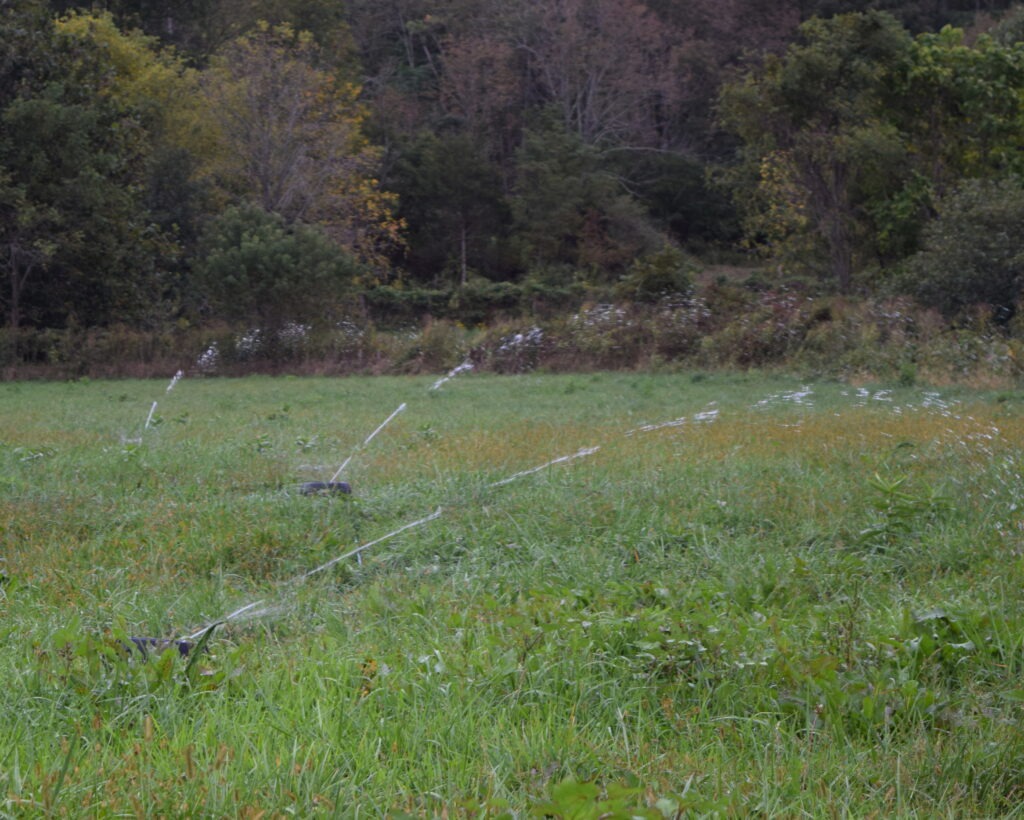
How do we do that? With the magic of an electric fence.
High-tech fencing is the tool that becomes the steering wheel, accelerator, and brake on the four-legged mower; we can steer a herd of 1,000 or 2,000 across a ranch or homestead with the same precision as a zero-turn mower on a golf course. Goodness, what a wonderful time to be alive! Our grandparents would have given their eyeteeth to have had this kind of technology.
Here’s the bottom line: in a properly managed grazing program, most of the land is at rest. It’s not being impacted, pruned, stomped, mobbed, or exercised. Most of it is recuperating from being grazed or is waiting to be grazed. Silence and emptiness dominate the landscape. Just like we function better when we have adequate rest, the forage plants do too.
Each day, we meter out only enough forage to feed the herd for one day. That area is called a paddock. Tomorrow, we will give them another paddock. This technique gives the forage time to fully express its genetic potential before being pruned again.
The result, on our farm, is productivity three times the average for our area. No seed planting. No chemical fertilizer. Animals, rest, exercise. That’s it. It’s nature’s template and produces abundance unimaginable by conventional set-stocking where the animals have a field for long periods of time.
One final thought. With rest, many plants bloom. Suddenly, you have a continuous feed source for pollinators while your forage is waiting to be grazed. The dense, lush vegetation shades the soil, keeping it moist for earthworms. When you increase pollinators and earthworms, abundance is on the way.
Rest is built into the natural structure and cycle of life. Paying attention to these cycles is the key to unlock many benefits for yourself and your homestead.

Leave a Reply