
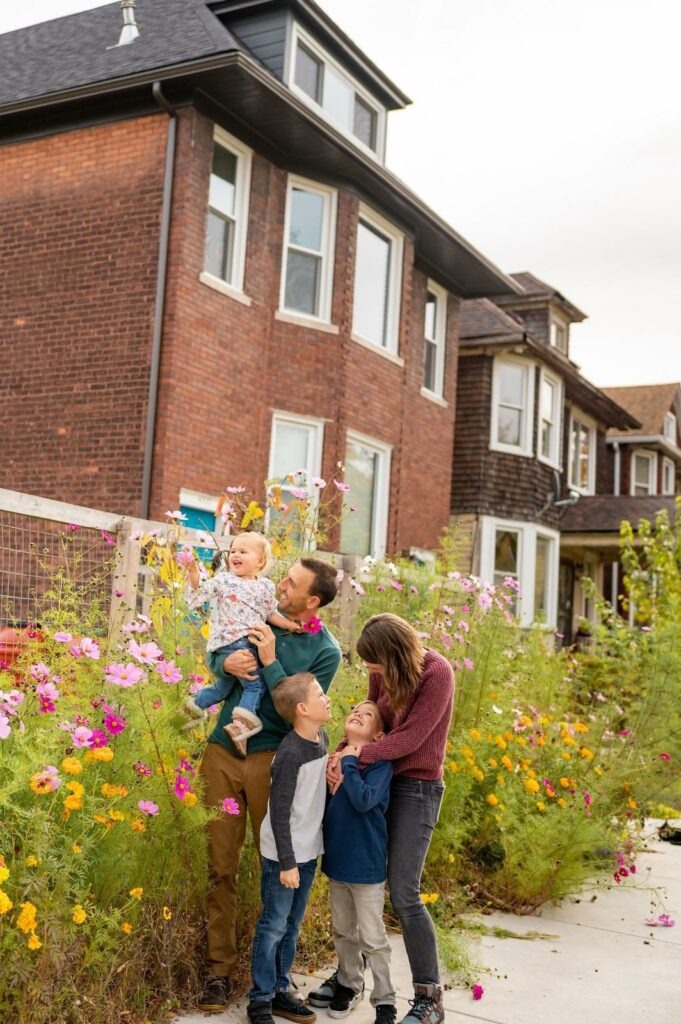
There is SO much you can do with a LOT of land! The junior farmers in our family, ages 7 and almost 9 years old, have sketched many maps and drawings of their dream 200-acre farm — complete with every animal imaginable, machinery of all sizes, ATVs for every member of the family and no less than twenty kids a piece. (The maps also include a yurt for my husband and I to live in during the winter, as well as a treehouse for our summer dwelling, so that we’ll be close by to help wrangle our 40 grandchildren. And the younger of our sons has informed me that I will be allowed to sell whichever vegetables I want at the market. Can you imagine a more marvelous retirement?)
Meanwhile, in present real life, our family recently upgraded from one diseased apple tree, ten laying hens, a compost tumbler, and two 3×4 raised beds in a 400 square-foot backyard with quadruplex apartments towering on either side of us. Two years ago we moved across town to the other side of Detroit, Michigan – where vacant lots of formerly demolished homes are plentiful, affordable, and begging for a fresh purpose.
We now proudly own 6 city lots next to our new home, which totals roughly a half acre. That might not sound like much, but it feels like the wild frontier compared to our previous yard.
There are tremendous challenges to revitalizing land that has been mistreated and neglected for so many years. But we are constantly in awe and wonder at the tenacious way green things want to grow! A portion of our land is covered by a tiny forest that was once an illegal dump site. A team of volunteers kindly helped us pull out rotting mattress after mattress, couches, toilets, and more trash than you can imagine. Despite the rubbish, a sea of the most fragrant honeysuckle flourished, along with wild mulberry trees, maple trees, crabapples, chicken of the woods mushrooms, and more green things than I will ever be able to identify.
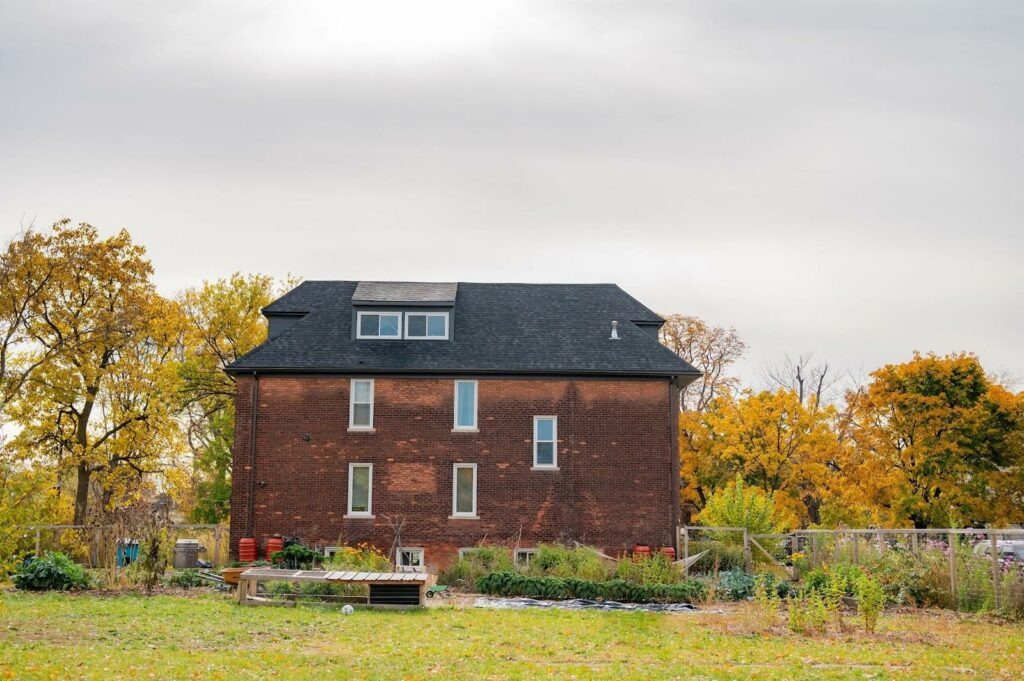
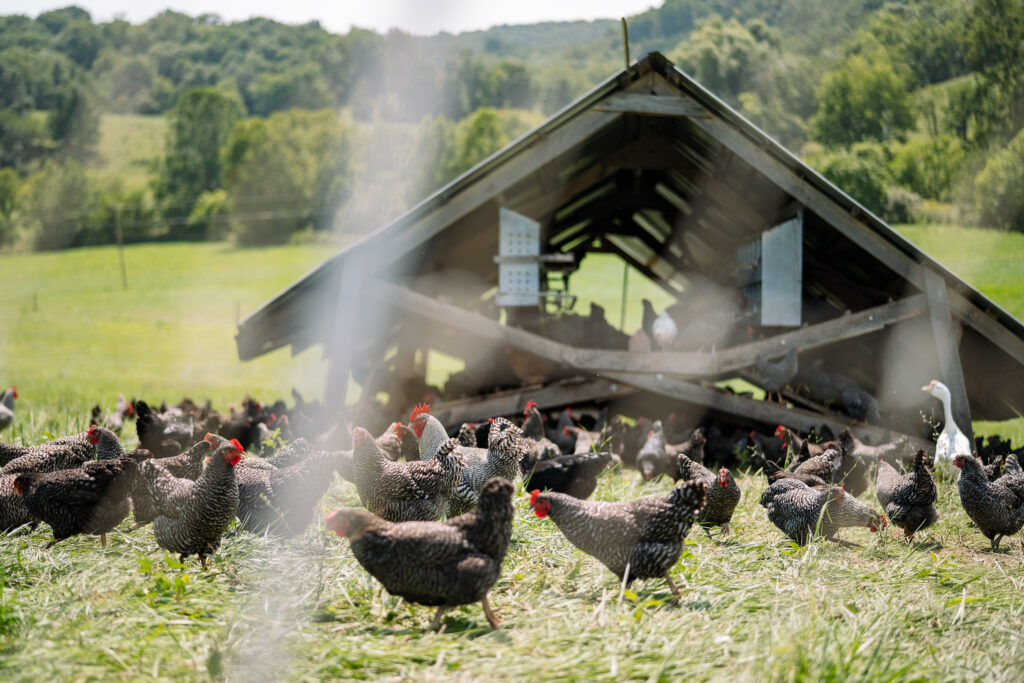
Now the tiny forest is also home to a chicken coop, a beehive, a kid’s swing, a hammock, a fort that nature made from vines and fallen branches, and a giant tree-sized log perfect for pirates walking the plank or crossing a canyon of hot lava. (Let me not forget to mention, dear homesteaders and wannabes, the forest is also home to our maggot bucket. If that thought just ruined your vision of our lovely little haven, I assure you – the chickens find it positively magical.)
We are now on the brink of our third growing season and we’ve managed to plant four fruit trees, four elderberry bushes, hardy kiwi, currants, haskaps, blackberries, raspberries, grapevines, and aronia berries. We’ve got raised beds and ground beds, flower beds, and a tipi trellis made from huge sticks we found lying in the tiny forest. We totally failed at growing brussel sprouts and popcorn, but we had the thickest bed of lettuce I’ve ever seen grow all on its own this past spring after we let it go to seed the first year. Our winter squash dreams flopped, but our pantry was fairly full of canned tomatoes, tomatillo salsa, pickled jalapenos, and all kinds of dried herbs. We managed to fill our freezer with 65 broiler chickens that we raised in 3 separate batches over the course of the spring, summer, and fall and butchered (all by ourselves!)
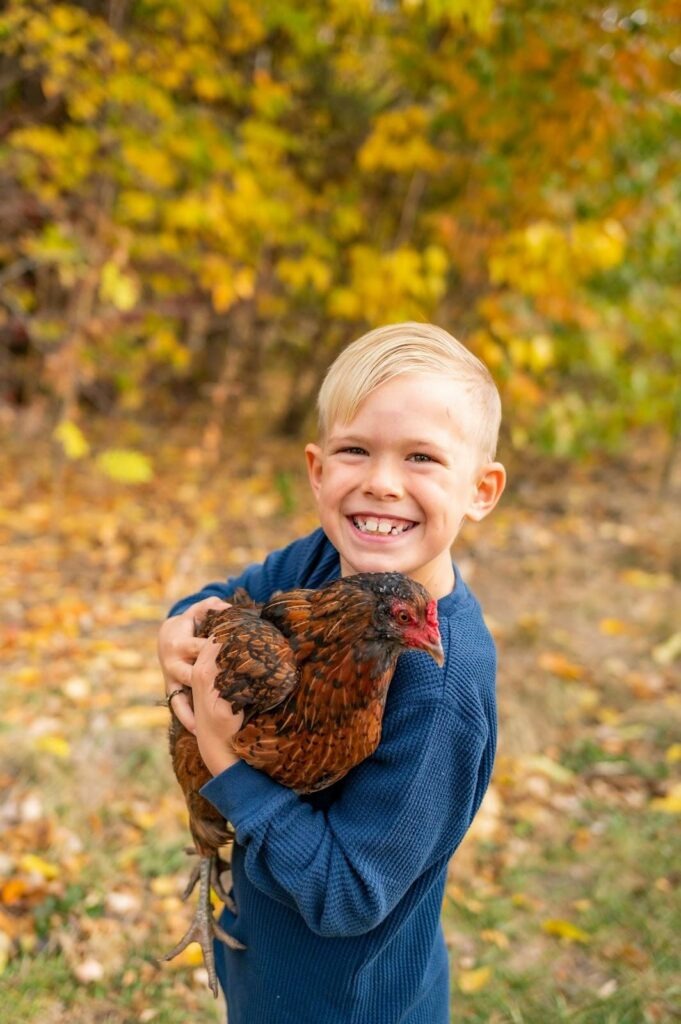
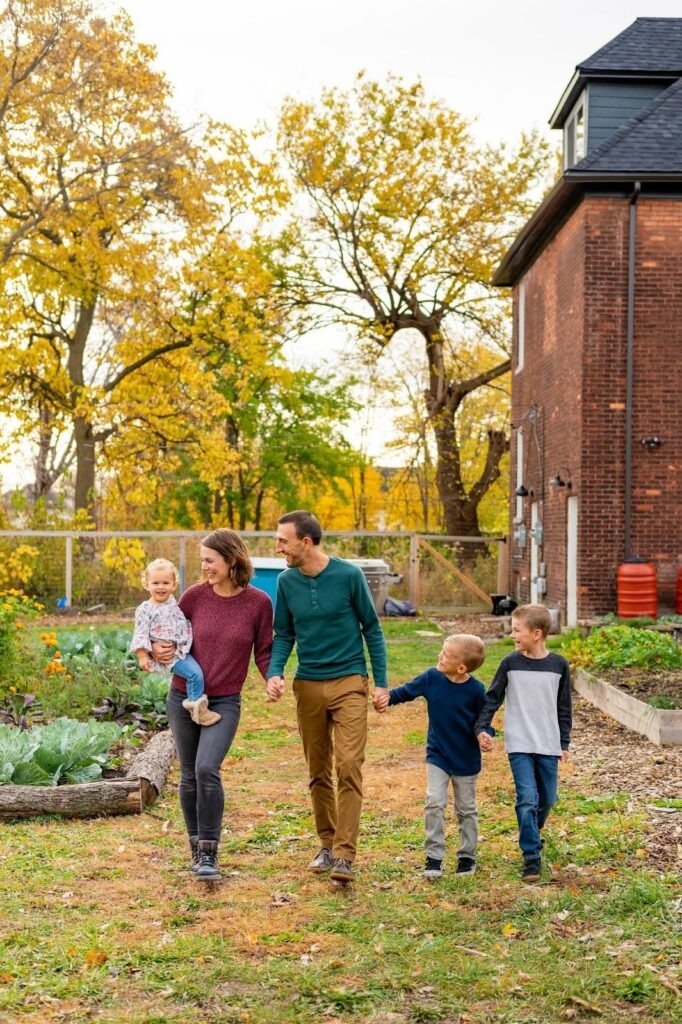
We live only 8 minutes from downtown, but these days we always have some outdoor project to work on together. There’s always something new to learn and experiment, and always something living to be fascinated by. It’s still rather unusual to see a farm in the middle of the city, so we regularly have total strangers stop by out of sheer curiosity and we wind up giving impromptu biology lessons every time someone can’t figure out how we get eggs without a rooster.
We regularly cook dinner around our firepit, the old-fashioned way, and love it when neighbors wander over to join us. We find ourselves nourished by far more than the colorful array of whole food making its way to our mouths. The fresh air, the dirt under our fingernails, the beauty of wildflowers, and the comical sight of our toddler chasing chickens across a miniature field renews our spirits and puts us back in wonder of our Creator.
We named our little slice of heaven in the hood Wonder Farm.
And while we honor the dreams of a giant farm in the pristine countryside somewhere, somehow, someday, if life presently finds you in a small-ish urban setting, here are some things we’ve come to appreciate about city farming.
Perk #1: ACCESS TO FREE ORGANIC MATTER:
Every homestead needs copious amounts of organic matter and preferably of the free variety! One of our very first strategies for sheet mulching and wintering our raised beds was to collect leaves raked and bagged and left at the curb by fellow urban citizens. In certain neighborhoods, some folks even mulch the leaves before bagging them. Let me tell you, finding a bag of already mulched leaves feels kind of like finding buried treasure. Nothing is wasted. We rip open the brown paper bags and use the paper as part of the biodegradable barrier. (You may want to spy on people first to see if they use pesticides on their lawns, as cut grass often gets mixed up in the raked leaves. I personally steer clear of the yards with perfect-looking grass. There’s a decent chance they used something unnatural to get it looking that way.)
My husband Myles started setting up buckets with lids in each kitchen at the co-working space where he offices, as well as at a coffee shop a block away. Although we do not personally drink coffee, we have a year-round steady supply of grounds to add to our compost pile. This summer we hope to expand our compost collection rhythms to include food waste from nearby restaurants and a farm-to-table butcher shop in order to ramp up our compost production and reduce the grain intake for our hens.
ChipDrop is positively the best idea modern gardeners ever had! We are rebuilding our soil, generating more compost, and mulching garden paths with woodchips happily delivered for free by local arborists who need a place to dump. Beyond chips, ChipDrop will also help you get free logs, which have a variety of beneficial uses on an urban farm. We use free logs to construct raised garden bed areas, create hugel kultur mounds, add additional seating around our firepit and kids’ play area, and of course, as firewood for bonfires. Pro tip – if you’ve signed up for a drop and you’ve been waiting a while, pay $20 through the website to cover the arborist’s cost to use the site. It’s totally worth it for a faster whole dump truck full of chips. (Calling a local arborist directly also works sometimes.)
Perk #2: THE OPPORTUNITY TO BECOME FINANCIALLY SELF-SUSTAINABLE:
Every homesteader is also looking for ways to offset the cost of farming! In Detroit, we are fortunate to have an incredible Garden Resource Program called Keep Growing Detroit which buys seed in bulk and cultivate transplants, allowing hundreds of family gardens, community, school, and market gardens to receive seeds and transplants at a reduced cost. We also have the opportunity to participate in a market cooperative run through Keep Growing Detroit that allows small urban farmers to contribute their goods to sell at a collective vendor stall at Eastern Market while personally retaining all of the profits.
Last growing season we weren’t quite ready for a market commitment, so instead each Monday morning, I sent an email to all the members of the co-working office space where my husband works with a list of all the veggies, flowers, herbs, and eggs we had available for purchase for the week. Interested members would text or email their order on Tuesday and send me their payment through CashApp or Venmo. Then on Wednesday morning, Myles would deliver their bags of produce to the office fridge and fresh flower orders to their desks. Additionally, I regularly sent texts to a group of neighbors and church friends. Neighbors would stop by and I made deliveries to our Sunday worship gathering. With no extra gas spent, very little extra time, and no vendor stall fees, we were able to earn a decent amount of money to help off-set some of the costs of equipment and supplies for our farm.
Perk #3: EXTRA ROOM FOR CREATIVE THINKING
Smaller green spaces crowded by the sprawl of buildings provide the opportunity to think about sustainability outside the box! Nearby farmer friends carefully dismantled a decaying house on the lot behind their home, leaving the basement fully intact. They built a slanted greenhouse roof over the remaining basement, complete with a rainwater catchment system and a thousand-gallon tank that provides irrigation to all the plants growing inside. It’s by far the sweetest setup we’ve ever seen!
Perk #4: FREE HELP & ENCOURAGEMENT
Humans remain the most exquisite part of this planet we call home, and community will forever be an essential part of creating a sustainable life. In our neighborhood here in Detroit, we have a lot of elderly neighbors whose grandparents had farms “back in the day,” and they lean over our fence with smiles, stories, suggestions, and even snacks for the kids and chickens. One of our neighbors regularly lends a hand with our backyard slaughter operations and is positively thrilled when we send him home with fresh chicken livers and gizzards. We have friends who like the idea of gardening, but for one reason or other don’t have their own (yet) and will come help out just to learn alongside us or be fed a farm-fresh dinner. I’ll never forget the early spring day our teenage godson stopped by to drop off something while we were constructing our first set of raised beds. He wound up spending the whole afternoon just helping us build stuff. He kept ignoring calls from his friends to come hang out and told me later he was tired of being cooped up and the fresh air was just what he needed.
May this simple list leave you feeling inspired to seize the moment and the space you are in, with all of its particularities and challenges. There is beauty and blessing to be found in every corner of the earth – even the crowded ones!





Leave a Reply