
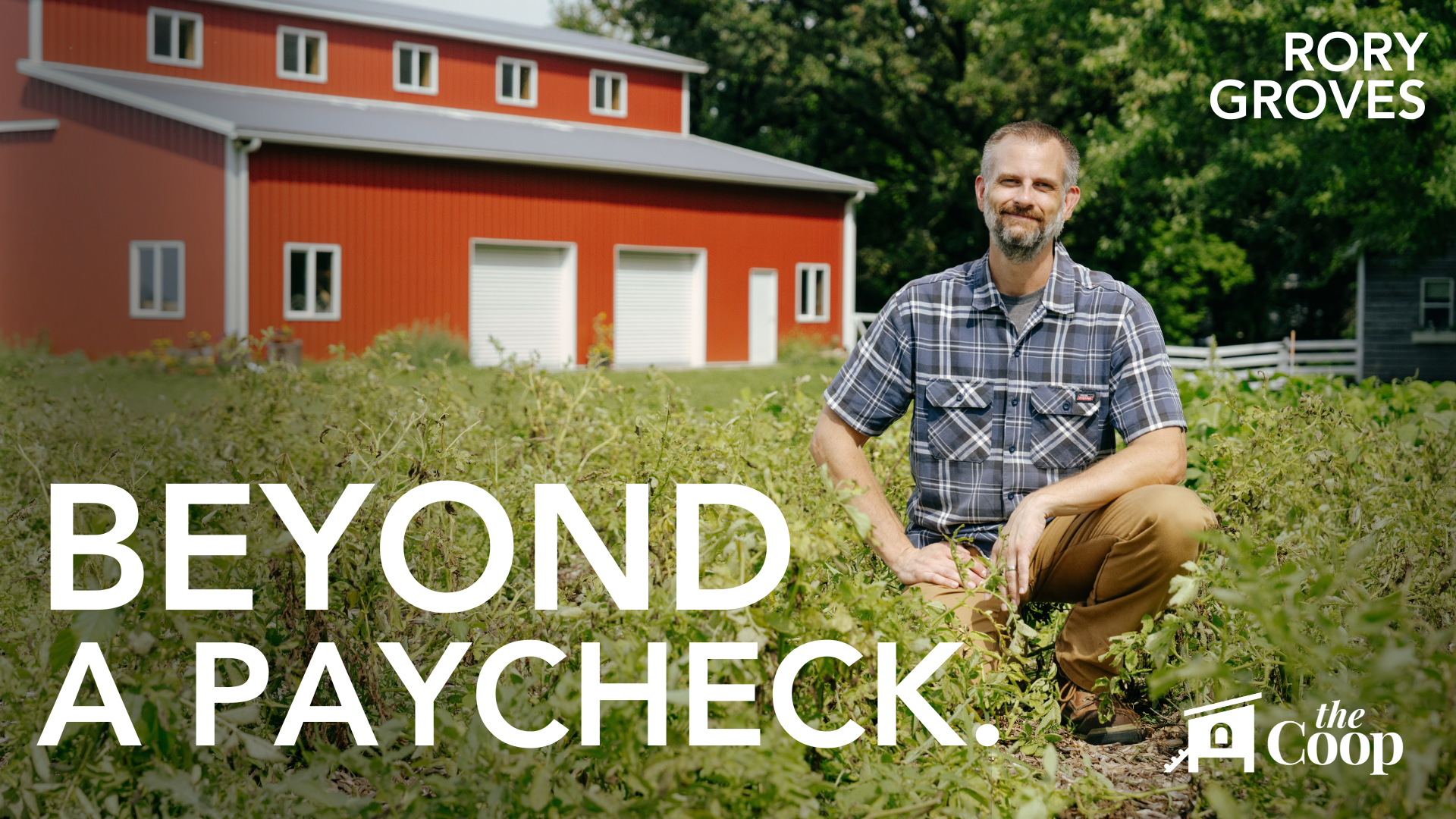



Rory Groves has spent fourteen years on a southern Minnesota homestead building a practice of resilience. He’s made his mark asking questions like “How do you build a life that still stands if the job, the market, or the news goes sideways?”
He and his wife, Becca, homeschool their six children and run Gather & Grow, a homestead and ministry devoted to the family economy. He is the author of Durable Trades, The Family Economy, and First Gleam of Dawn.
In Episode #31 of The Coop, Homestead Living Editor-in-Chief Anna Sakawsky talks with Rory about what resilience actually looks like at the kitchen table: building income that’s hard to knock over, the kind of work a family can do together, how to build community (if you are currently working on your own), and the faith that keeps the whole thing aimed at something sturdy and lasting.
In this episode, Anna and Rory discuss:
- What a resilient life and family look like in today’s world
- Why Rory’s move to homesteading was about living a more human life, not building a bunker
- How long it actually takes to leave a conventional job and replace your income
- The “family economy,” and what it looks like in practice
- Why several streams of income are harder to knock over
- The most durable trades that have stood the test of time
- The threats we’re currently facing, and what we can do about them
- What to do if your spouse or kids are not on board
- Why finding and building community is an important part of a resilient life—especially if you’re single
- The role faith plays in building a life and family that can sail above the floodwaters
If the headlines have you a little anxious and short on ideas for your next steps, this conversation will definitely help you start building your own style of resilience.
Listen or watch the full episode right here:
The show notes …
0:00 – Introduction
5:52 – From Tech Executive to Off-Grid Homesteader
10:37 – Making a Transition
22:01 – Durable Trades
29:26 – Building a Resilient “Family Economy”
40:50 – Will AI Destroy the Job Market?
48:26 – The Coming “Polycrisis” & Sovereign Debt Bubble
1:04:32 – Escapism, Noah’s Ark, and “God Will Save Me”
1:05:33 – Advice for Singles and Childless Couples
1:12:18 – Where Does Faith Fit into Homesteading?
Rory Groves:
We’ve always had an undercurrent of wanting to be more self-sufficient, and it’s nothing against that. It’s just that the way of life was so much more fulfilling and meaningful than having a consumerist life where you earn your money doing one specialized thing and then you use it at the store to buy the other things just to make the things ourselves, to grow all of the elements that produced a meal on the table. I mean, that’s just an extraordinary experience and it’s very communal. It involves the family. Yeah, I could keep going and going here, but there are so many ways where I just felt like it connected me with something that I was supposed to be all along, which is a human.
Anna Sakawsky:
This episode is brought to you by Azure Standard. Family owned since the 1970s, Azure Standard is on a mission to make real food more accessible by delivering it straight to your doorstep or to a convenient local drop point near you. Everything they offer is completely organic, non – GMO, and free from junk additives you don’t want in your home or in your body. With more than 13,000 carefully vetted products, Azure Standard makes it easy to stock up on what really matters, from bulk grains, nuts, and healthy oils, to fruits and vegetables, frozen meats, pantry staples, and even clean household goods. And the best part is you skip the grocery store markup. You can order exactly what your family actually needs, save big on high quality food, and pick it up alongside neighbors who care about the same things you do, health, sustainability, and supporting ethical producers.
You can head to azurestandard.com right now to get started. Again, that’s azurestandard.com. Hey everyone, and welcome to episode number 31 of The Coop. I’m your host, Anna Sakowski, editor in chief of Homestead Living Magazine and fellow human just trying to live a little more sustainably and become a little more self-reliant in this crazy, crazy world. And I know that’s a bit of a different intro than you might be used to if you’ve been listening for a while, but it’s very fitting for this episode because today we are talking all about building a resilient family and life to withstand the times, meaning there are a lot of wild things going on in the world right now and a lot of potential threats looming out there that many of us are feeling called to prepare for. And while I never want this podcast or the magazine to be about doom and gloom or click baity headlines or topics just to capture your attention, I also think it’s important to be upfront and honest about the very real challenges that we are facing as a society right now.
But I think it’s extra important that we don’t stop there. I think we need to address the problem first, yes, but more importantly, I think we need to be talking about solutions. And that is exactly what today’s guest has dedicated his life to. So Rory Groves is a homesteader in Southern Minnesota and author of two soon to be three books, including Durable Trades: Family Centered Economies That Have Stood the Test of Time, The Family Economy: Discovering the Family As It Was Designed to Work, and his latest book, First Gleam of Dawn: A Homesteaders Devotional, which is available now for a pre-order from Homestead Living. Rory and his wife, Becca, also homeschool their six children, and together they run Gather and Grow, a nonprofit ministry devoted to rebuilding the family economy, which we are going to be talking about a lot more in this episode. In addition to that, they host workshops on their farm or they teach people practical skills to build resilience and self-reliance at home and connect like-minded families.
He’s also a contributor to Homestead Living Magazine and has written several articles on how to build a family economy, how to survive the coming jobs apocalypse triggered by AI that we’ve all been hearing about, and his latest articles on the importance of strengthening family bonds and relationships to withstand what he describes as the polycrisis facing humanity right now. So Rory is joining us today to dive a little deeper into all of the above and to offer practical advice for building a more resilient family and home life that can offer real security and stability even against the backdrop of what can often feel like a very unstable world. So this is a topic that I think can benefit everyone right now, whether or not you have kids or a family at home. So I hope you enjoy the conversation and take something out of it that you can apply to your own life right now.
And if you do, I’d love for you to let us know. So leave a comment down below, share your thoughts on this very timely conversation. All right, let’s get into it. All right. Well, welcome Rory Groves to The Coop.
Rory Groves:
Glad to be here. Thanks for having me.
Anna Sakawsky:
I’m so excited you could join me today. I have been really looking forward to this conversation because I think it’s just so timely given everything that’s going on in the world right now and how unstable things feel. I think people are really looking for some sort of stability, security, something to hold onto in these tumultuous times. So I am really excited to talk all about building a more resilient family and home life and some really practical things that we can be doing right now to build that stability into our own lives, even when the world outside our doors feels a little bit or a lot bit unstable. But before we get into all that, I would love for you to just give the 50,000 foot view of your situation. You and your wife are homeschooling your six kids, you’re an author, you run a nonprofit ministry and you host workshops on your property in rural Minnesota.
You’re busy with a whole bunch of things, but it wasn’t always this way. You came from a background as a technology engineer and software consultant, which feels like it couldn’t be further from what life looks like for you today. So what has that journey looked like for you? What initially made you decide to leave that behind and start homesteading and what has that actually looked like for you?
Rory Groves:
Yeah. Well, it’s been a long time at this point. This is our 14th year out here on the homestead. So it’s been a way since that initial jump where we moved out of the city and began to attempt a little bit of self-sufficiency in the country, but it was a long time coming. I think I first got interested in more kind of prepper and survival and self-sufficiency kinds of things during the 08 recession, if you recall when that got a lot of uncertainty back then, the markets were collapsing and I kind of was recognizing. So I had been a software engineer for my whole career and I was just trying to recognizing way back then, this has been in 2008, 2009, how ill equipped I was to actually do things like grow food and fix things and live without all of the modern conveniences. And it really got me kind of on a trail of thinking that it might be a good idea to become a little bit more well versed in things that my grandparents would have taken for granted.
Anyone who grew up in America prior to, well, I mean really the 20th century would have all had basic skills for subsistence and self-sufficiency. It was just a way of life. And so I think that was kind of a little bit of an inspiration to begin digging into this. And as I began to pursue more skills related to growing food and living on the land, the thing that I consistently kept finding was every step I made in that direction was incredibly fulfilling and life giving. And this was before we even had children. I mean, I was just planting in little raised bed gardens in the city and I loved it. And it was such a contrast from what I was used to just being on screens all the time for my professional work, but that’s just what it was. And so eventually that led to us moving out to the country and it’s honestly just one of those things that we never looked back.
It was so good for our family. My oldest who was Iber, he was one and a half when we moved out and my daughter, our second child was just born. Actually she was nine days old when we signed the papers and moved out here. So we’ve raised our whole family out in the country and it has been such a wonderful experience for us. Largely for those reasons that I mentioned, it wasn’t so much about prepping or survival. We’ve always had an undercurrent of wanting to be more self-sufficient and it’s nothing against that. It’s just that the way of life was so much more fulfilling and meaningful than having a consumerist life where you earn your money doing one specialized thing and then you use it at the store to buy the other things just to make the things ourselves, to grow all of the elements that produced a meal on the table.
I mean, that’s just an extraordinary experience and it’s very communal, it involves the family. I could keep going and going here, but there are so many ways where I just felt like it connected me with something that I was supposed to be all along, which is a human.
Anna Sakawsky:
Yeah. I feel like that’s a very familiar feeling these days, even for me. I love what I do and I get to work in an industry that I love and talk to people like you. And I homestead myself on a small property. And even so, it’s so fulfilling to be growing our own food and interacting with the land and the seasons and all that. But even so, I can still feel sometimes like, oh, I spend a lot of my time on the computer and there is something fundamentally in my body, down in my bones, like yearning to go out to the garden. And when I go out there, I feel human, you’re right. I don’t know that there’s a better word for it, alive maybe, but it just feels like this is where we’re meant to be. And I think we’re so disconnected from all of this right now.
And so as you said, you were working in tech, which is the very opposite of what you’re doing now. Homesteading was giving you an outlet to balance that out. When did you finally decide to leave that completely and how did you actually make that work? Because I think that’s a question a lot of people have is it’s like, I would love to leave my job behind and start homesteading full time, but obviously that’s not reality for a lot of people, certainly not overnight. So how did you actually make that transition?
Rory Groves:
Great question and a very important one too, because our focus on the family economy is really, it’s an attempt to try to address that very issue is how do we reconnect with modes of work that are life giving, that are reinforcing of family bonds that are more integrated in with creation and things like that. So I would just say that first of all, it takes a long time to find a way to leave the traditional or conventional job market and make a living on the homestead. And we didn’t get into our predicament, let’s call it that, overnight and we won’t get out of it overnight. But it’s over a period of years for us, experimentation of a lot of different business ideas, a lot of different just like activities and aptitudes and learning and education and all of the kinds of things. I mean, we didn’t start gather and grow, which was really kind of the pivot for us in terms of vocation until we had already been on the farm for about eight years.
And over that whole time we were experimenting. We were trying different things. And I would say, so it starts out with just that. It starts out with beginning to find ways that your family can work together from the farm. And just for the time being, setting aside the questions of salary and income replacement and all of that, that’s fine that that’s the goal. That was my goal too. But you have to start out somewhere that is practical and you have to take baby steps and you have to really, you have to learn what suits your family. Not everyone is cut out to be a conventional farmer. Not everyone is cut out to be a dairy farm or an agrotourist kind of a thing. We ended up finding our way into education, which really suited us well. And largely because we just enjoyed the information and learning so much ourselves, we wanted to share it.
So it was a very genuine kind of a congruent with our experience of homesteading was to share it with others. But even then we did that for a number of years, never really making a profit, nothing that we could replace an income with until we found this complimentary ministry focus, which for us, it was the missing element to the education is we wanted to tie our faith into this. And once we found that connection, then a lot of doors started opening up for us. The book was published, Durable Trades, and that opened opportunities for us to teach and to do more writing and one thing led to another. And then I was able to, it was about four years ago now, I was able to completely shut down my software business and go full-time into the ministry, which is what we’ve been doing ever since.
Anna Sakawsky:
Right. Okay. So you’ve got the ministry and then the onsite workshops. Is that the education part? Is that heavily focused on practical homesteading stuff or what are you teaching?
Rory Groves:
Well, we’ve done a mix of things. We’ve done homesteading workshops before. We’ve done individual skills like maple sugarine and honey beekeeping and butchering chickens. We’ve done a lot of those kinds of things and we still love to do that. What we ended up finding worked really well for us was doing a larger event that’s more kind of like a county fair, but just on our own farm. So it’s got a lot of those elements of petting zoos and music and vendors and all the vendors that come to our annual fair are family economies. So a lot of times you can go to craft fairs and you can see some really amazing stuff and meet some amazing people, but oftentimes those are just individuals kind of selling their products that they’ve made. So the goal with our fair is to showcase whole families working together. And so when you walk around and you buy, let’s say, I don’t know, cookies, gluten-free baked goods, you’re going to meet the Ottersted family who does all this together.
Or if you’re going to buy some books that were published by a family that started their own publishing house and you can meet the artist who’s the daughter and the wife who is the author and the husband who’s doing all the management behind the scenes. So it’s a really unique kind of a festival. So we do that once a year and that draws a big crowd. And then at the end of the year, we do a family discipleship conference, which we just say it’s our annual conference on the family economy. And this is one where people come for a weekend retreat. We bring in speakers. We kind of deep dive on these family economy topics and then just do life together. And so between that, and then we do a couple other workshops and different things throughout the year. It varies year by year. But across that, and then also in the publishing area, we publish a couple of books now.
We do a quarterly newsletter. We travel and teach. All of that combined makes up for us having this be our full-time livelihood.
Anna Sakawsky:
Right. So rather than one income stream from a single job, you’ve got multiple.
Rory Groves:
Exactly. And that’s a key factor in all of this is part of the experimentation of moving away from a single focus job is you’re going to create multiple streams of income. You really need to, and it’s actually, it’s a lot more, I guess I’d say dependable or resilient to not have all of your eggs in one basket, so to speak. So yes, while a big paycheck from a single employer is certainly easier than if you can cobble together five or six income streams, you have a little bit more redundancy and resiliency if one of those income streams should run into trouble. But you have to face a reality. I don’t draw the same salary that I used to. We live very frugally, as simply as possible. We grow as much of our own food as we can to help offset some of those expenses. And it’s just, we don’t drive new vehicles.
We do the best that we can, but I would say that you have to look at your total compensation package as something of does time together with your family, does being present to disciple your young children and to be in mission with your spouse, are those things that are valuable to you and are you willing to take a pay cut to do those things? And for us, the answer is resoundingly yes. I mean, this is the one life that we’ve got. I want to spend it with my family. I want to have generational faith passed on. All of these things that really matter to Becca and I, I consider part of the compensation from doing things in a home-based, smaller scale way.
Anna Sakawsky:
Yeah. We’re in a situation where I’m lucky enough to be home full-time working with Homestead Living, and we’ve also created multiple income streams. We have a rental and I still earn a little bit from my blog. And then my husband, he can do just about anything. He has a background in mechanics and is a skilled builder and craftsman and used to run his own handyman business and still does some work on the side here and there, but he has actually been a full-time dad since I took this job and he came home to take care of our son. So our kids are both a bit older now and our youngest just started preschool. But for now anyways, my husband is still home. He’s actually outside right now building garden beds or working on some project. We’ve always got lots on the go. But I’ve been asked sometimes, especially because I’m the primary income earner right now, if there’s any frustration with that, shouldn’t he go get another job?
But honestly, you talk about the total package being kind of all part of this family economy and all that. I look at it like if he were working full-time and we were paying somebody to do everything around here, we would probably be paying more. He’d be taking hours away from home to work just to afford to pay for all those things. And then we’d be paying taxes on top of that. And at the end of the day, it might be a wash in the end anyway. So I’d rather have that time together where he’s busy building our life here instead of giving our time to somebody else just so we can pay somebody else to do those things for us. We could go like, well, we’re not technically making as much as we could if he was working full-time as well. But when you consider all the other things that we’re doing, whether we’re providing for ourselves so we don’t need that additional income to pay for those services or we’re growing our food, so our food costs are lower.
And in general, we live pretty frugally as well. If we didn’t live life the way that we do, I don’t think we could make it work, but making some of those sacrifices makes it a lot more possible. But just like you, it’s been a number of years for us to get to this point. We didn’t get here overnight. It’s been a lot of hours put in for free building things until they finally produce an income. But it can happen if you take things one step at a time.
Rory Groves:
One thing I’d add on to that is that your experimentation time in the first say couple of years of trying different things together with your family, that’s also a huge investment into what you’re going to be doing later. It’s possible that you end up never coming back and utilizing that skillset or those contacts that you make, but sometimes you might. I mean, we spent almost 10 years hosting various gatherings on our farm for no cost, just to get people together. We would host things with our church or with our local community or homeschool co-ops. We still do stuff like that all the time if people just want a day on the farm and we just like to do it. It just really fit us. And so when the time came where we actually wanted to do this as part of a vocation, we had already built a lot of goodwill in the community and it just was a natural extension just to do this at full time.
So that was not wasted time, even though we weren’t getting paid. We were really making an investment into the future. And so that’s why try things out, not based on how profitable they are, at least initially, just don’t worry about those things. Try to focus on the things that really fit you well as a family and that you enjoy doing, that you’re passionate about. And then a lot of those details of whether there’s a business model involved, those will become evident. And it does take time, but they will become evident in time if this is something that’s just going to be, maybe it’s just going to be a fun thing that you do to bless others, but maybe it actually could potentially replace a full-time job in another career.
Anna Sakawsky:
Absolutely. And I think an important part of the conversation too is building that arc before you need it, right? Rather than going,
Rory Groves:
Okay,
Anna Sakawsky:
That’s it. Now I’m going to go build a business. You’re building that on the side slowly until you have something viable and then you have that freedom.
Rory Groves:
Very much. Yep. That’s very much the way to do it. I mean, as far as I’m concerned, that’s how we did it and that’s how I’ve seen most other families do it.
Anna Sakawsky:
Absolutely. Okay. So I want to talk about the first two books you’ve written. You have a third we’re going to talk about at the end, but the two that are most well known are Durable Trades: Family Centered Economies That Stood the Test of Time. And then the second one was The Family Economy: Discovering the Family As It Was Designed to Work. So for anybody who might not be familiar with these titles, can you give a brief summary of each and why you wrote them?
Rory Groves:
Well, the first book, Durable Trades, kind of was our entry into this whole topic of the family economy. And it started out as just a personal pet project of me looking, like we’ve been talking about, me looking for alternate careers, knowing that I was kind of nearing the end of my life cycle as a computer programmer and I was either going to have to retool and start over with a new software business or go a totally different direction. And by that point in time, I was very interested in doing something that was home based, doing something with my family and something that wasn’t going to go obsolete all the time, which is hence the name durable trades. So I began researching the most stable and family-centered vocations in history. That’s essentially what that book is about. And I came up with a list of 61 trades in total that date back to before the industrial revolution.
So in other words, we’re talking about when America was just starting out as a country, 1790 is the cutoff point. And then which of those professions are still viable today? So I wrote about that. And basically the premise of it is that if it were to survive the last 230 years of American history, it’s probably going to be one of the most reliable professions going forward, at least for a time. I’m not making predictions about which professions will be there forever. Nobody can make that, but I am looking backwards and saying what has survived inflation in the past, war, civil unrest, revolution, pandemics. There’s a history there and we can just look at that to see what has sustained people in the past. And so I came up with those different trades and I did kind of like a deep dive. I interviewed people who worked in those trades.
I kind of wrote a summary of what it might be like to engage in that. So it’s a resource in that way for families if they’re interested in some ideas. And very much what we ended up doing was as a result of writing that book. I mean, author or publisher is part of a historical family-based trade, but so is farmer and shepherds and innkeepers, builders. You can imagine a lot of the traditional skill sets have survived a lot the worst of people that history can throw at it. And so this is a good resource in that way. And it really struck a chord with a lot of other people out there, I believe, that were also looking for things like I was. And so I was very delighted to find out that there were other crazies out there that would be willing to walk away from high tech jobs and dig in the dirt and find something more meaningful, but there certainly were and it’s continued to be a really strong resource for people.
So that was Durable Trades. And then The Family Economy is a very short book. I mean, it’s about 80 pages and all, and it’s a succinct summary of what this idea is about the family economy, what it is, how we as a people got away from that idea because we did, because it used to be a family economy that was the normal way of life for most of human history. It’s just very recently that we’ve modernized into corporations and individualized careers. And so how did we get away from that? And then how do we come back to it? Basically, how do we recover the advantages of the family economy in a modern day, which is so… It’s tough. It’s enough uphill battle to try to have a family vocation in this day and age. But anyway, that’s the gist of those two books, and I hope that makes sense.
Anna Sakawsky:
For sure. Well, okay. So I want to talk more about this idea of the family economy in just a moment here and how we can get back to something like this in modern life. But I just wanted to mention, my window is right here, so I can see most of what’s going on. We only have a quarter acre, so I can usually see most of what’s going on at any given time, but I can see my husband out there and he’s just taking off because it’s garbage day. And he does the garbage for the whole neighborhood because our waste pickup became so expensive, it was going up exponentially and we just decided we couldn’t afford it anymore. So having the time being home and the skillset that he does, he bought an old trailer for less than it would’ve cost us for a quarterly pickup.
And then he rebuilt that trailer and now he takes our stuff and all the neighbor’s stuff to the dump and they pay him just to cover the bill. It’s cheaper for everybody too. Everybody’s saving money. They pay him a nominal fee just to cover the dump fee. And then we basically dump our waste for free as well and save ourselves a few hundred bucks every quarter. I just think it’s funny because it’s just a reminder of another way to save money because he couldn’t do that if he was working a full-time job. I heard this from someone once about homesteading specifically. I think it was Justin Rhodes actually. He talked about homesteading being like a wheel with many spokes. So there’s gardening and livestock and there’s whatever you’re doing in the kitchen and there’s maybe homeschooling for some families and altogether they support this homesetting lifestyle.
And if one spoke gives out, you still have other things to fall back on. And I think the same analogy can be made for the family economy. So if you just have one job, one income stream, for example, and you’re just busy working that one job and that’s all you have to rely on, then that’s just one spoke. And if that spoke gives out, the whole wheel gives out. But if you have many spokes, many income streams and just things that you’re doing that either contribute to the family economy or save money or provide for your family in one way or another, then if one thing fails, if one spoke fails, the wheel will still keep turning. You still have others to fall back on. Anyway, I just though I’d throw that in because I felt like it was really relevant to this conversation.
Rory Groves:
That’s great. I love that. I think you might be the first custom garbage provider that I’ve met so far. I applaud your efforts there. That’s wonderful.
Anna Sakawsky:
Well, it is just one more thing, right? Like you say, it’s maybe not an income producing thing, but it’s covering the costs. So it’s reducing expenses at least. And again, Joel Salatin talks about this too, about how can you actually earn less, which is so counter-cultural, but he talks about the fact that the less you earn, the less you are paying in taxes, which is an added expense. So there’s actually extra savings built in when you can just produce something directly for yourself or for your family or do something that you don’t have to kind of transact in that way.
Rory Groves:
But it’s reducing at least.
Anna Sakawsky:
Okay. So let’s talk a little bit more about the books specifically. So let’s start with the family economy. What does that actually mean in practice? Because I think our minds can easily go to like, okay, a family business, right? But I know it’s more than that. So can you explain exactly what the family economy means and what it entails?
Rory Groves:
So what I would say is you’re very close because the family economy is a larger concept. It includes business, but it’s not just business. And one of the things I like to Say to distinguish a family economy from a family business is that a family business, oftentimes it’s centered around the business. In other words, we have this profitable business or we have this opportunity as a business, and so we’re going to use our family as a way to leverage relationships in order to benefit the business. Maybe you can work a business with children and different things like that, but really the goal is the profitability of that business and the health of that business. Whereas a family economy is about the relationships of the family come first and the business is meant to fit the family. So a family business is about the business, a family economy is about the family.
That’s how I would say that in a nutshell. In a family economy, what you’re looking for are modes of work that fit naturally and reinforce the family bonds. And it’s not just business, as I mentioned, it’s all the aspects that used to belong to the household, which have since been delegated out to other institutions, corporations, government, all these kinds of different specialized vocations. We’re trying to bring these things back into the home, such as education, growing our own food, maybe taking care of the sick and the elderly as much as we can. All of these functions that were historically part of the household would’ve been considered part of the family economy. So I don’t want to keep going too deep if you didn’t ask, but does that make sense a little bit about the difference between the two?
Anna Sakawsky:
Yeah, I think it’s kind of like what we were just talking about with the garbage pickup. It’s not necessarily income specifically and not everybody’s working in the family business, but each member of the family is contributing to the common goal of creating a stable family, whether that’s producing something themselves, bringing in some income or helping with things, saving some money in some area. So if you think about it, I mean, what do we think of as the larger economy, right? It’s not just a single business or even just business in general. It’s all of the different aspects of economics kind of feeding the whole.
Rory Groves:
So a good way to think of economy is activity. It’s all the activity that the family does. And the family economy… So the actual word economy comes from the Greek word that is oikos, oikonomia. So oikos nomia is where we get our English word economy from. And that word oikos means house. So nomia means law or order. And so all economy ever meant to begin with was household management, or you could say the order of the household. How is this household configured to provide for the members of that household? So provision comes into play, but as you can see, there’s a lot of other needs besides just material benefit. In the family economy, I have a chapter called Work, Worship, Wisdom. And I say these are the three pillars of the family economy. So there has to be a component, an economic component of working together.
There also should be an economic component of worship because there has to be a meaning and an underlying value system that’s guiding that family. You can have a very successful family business that’s just not going to last if you don’t have shared values. And so for me, our Christian faith in my family is why we do everything. Our family revolves around that. So that is very much a part of our family economy is having worship time together at home. And then there’s wisdom, which is like the educational dimension of the family economy. And how are you as a family going to learn together?
In our case, we homeschool our six children. I am a huge advocate and supporter of homeschooling, but the idea is whether you choose to do homeschooling or private schooling or public schooling, you as parents are responsible for the education of your children and the ultimate outcomes for what they’re supposed to learn and how you’re going to prepare them for life. So part of the family economy means that you are taking primary responsibility for the education of your children. Regardless of who is actually doing the teaching, you’re taking the responsibility and you’re just not checking out on that. You’re saying there is a plan, there is a program, there is a destination to where this education is going. We’re not just looking for babysitters. There’s a very important set of values and set of skills that we want our children to know by the time they reach adulthood.
So that’s one way of kind of carving out. You certainly do a lot. You can add a lot to that. You can add recreation and I mentioned elder care and you might have other aspects where you want to bring in elements of the family economy that are unique to your family, different kinds of entertainment, some families playing music together, all of these things. But I would argue that at its core, the most essential is you need to have a mode of work that you work together, some form of family worship and then some form of wisdom, family learning.
Anna Sakawsky:
Right. Okay. Love that. So what about durable trades? I know these kind of go hand in hand with the idea of the family economy, but when you wrote your book, you looked at, I think it was 68 or 70 trades you came up with?
Rory Groves:
Yeah, 61 is what I actually landed on. 61 durable trades, yes.
Anna Sakawsky:
Right. Okay. 61 trades, stable jobs throughout history, and you compared them to the more specialized job market that we’ve created today. So talk to me about this. What are some of the durable trades or durable jobs that you discovered that have stood the test of time and what makes them durable versus many of the jobs today that people are aspiring towards and what makes today’s job market so unstable in comparison?
Rory Groves:
So what I did is I did a rank, a scoring system when I looked at these trades because I didn’t want to just find trades that were survived the 230 years of history. I wanted to find the trades that were the most family centered and the most stable. So I ranked them top to bottom. So around the top I have, so I’m just literally looking at the table of contents. Number one is shepherd and that’d be any farmer that’s working with livestock and animals. Number two is farmer and that’d be like a crop farmer. And then number three is midwife. Number four is gardener. That could be extended to someone who’s involved in landscaping kinds of businesses. Number five is woodworker. So that’s kind of more like a finish carpenter and someone who’s doing fine furniture. Number six, carpenter, so a builder there. Number seven, painter, eight cook, nine, brewer, 10 innkeeper.
And if I keep going, you won’t have to buy the book, so I’m going to stop there.
So what I did is I kind of took the old timey names for these professions and I translated them, what do they look like today? So obviously farming, let’s just take that one, the number two most durable trade in history. And by the way, the reason that’s number two and not number one, I mean it’s a little fungible, right? Farmers oftentimes are keeping animals, but not always anymore. We know a lot of farmers that have gotten rid of all their animals and are just doing corn and soybeans. And so in many ways, farming is still around, but it sure has changed a lot. And so it kind of got a knock down in terms of stability in the sense that it looks so different. Animals also look very different than they used to. We have feed lots now today. However, there’s still a very strong connection with a lot of the way that people shepherd animals the same way they did five, 6,000 years ago.
And in that case, that one is why that had the highest stability. But I was just going to say in the sense of farming, it looks different. There’s a lot of different ways people do it. Some people might do organic garden markets and sell right into CSAs or sell into farmer’s markets. Other people are doing conventional agriculture with the huge harvesters and cultivators and planters and they’re selling into cooperatives and at whatever the going rate for grain is today. And so very different ways. And in the book, what I try to do is I try to treat all aspects of that and talk about some of the challenges that you’re going to face, also the opportunities if this was a consideration for a career for you. And then I give it a ranking. So I think that’s kind of what you’re getting at. There’s a five point score based on number one is historical stability.
Number two is resilience, which is how well does this trade do during times of recession? How quickly do they bounce back from recession? How resistant are they to automation? Which is actually a really interesting thing to look at. What are some of the barriers to entry? That’s another one to look at. How much education does it require, for example, to enter this? Do you have to have a four-year college degree or is it something that you can get into without any formal education? And then I have family centeredness, of course, is one of the biggest scores. And even family centeredness is broken down into things like can young children be involved or is it just adults like two brothers doing a building company? Or can elderly be involved? Can men and women be involved? Some trades lend themselves more to one sex than the other, and can it be home-based?
Are there tangible assets to pass on? So these are all questions I asked about all these trades and I came up with this five point scoring mechanism and income, potential income is just one of those five. So that’s where a real big difference with this book and other books out there is that it’s looking… Yeah, it considers income, but it’s only making up one fifth of the total score. It’s looking at a lot of different potential qualities and examining that as part of the decision process for if this might be a fit for you or your family.
Anna Sakawsky:
Well, what’s interesting is you actually wrote this in 2020 prior to everything the world went through since then. It was kind of prior to 2020. I think it was released in 2020. Obviously it feels like the instability has accelerated since then, but also things like AI have entered the public domain, right? I mean, it was probably going on behind the scenes for a while, but it has really changed the landscape a lot since then. And because these trades that you’ve looked at have been durable throughout history, and yet it feels like AI is threatening a lot of the industries that we though were solid. Maybe some make sense, but out of the trades that you looked at, do you think AI changes the landscape at all? Especially if we consider robotics, if we’re thinking of trades that were traditionally hands-on, could combining AI with robotics together be a threat to some of these durable trades and even just how unaffordable it is to take on some of these vocations like farming right now, does that flip the script a little bit with the durable trades or how do you see things today given the current climate?
Rory Groves:
So the short question is that I did anticipate for that, and one of the things that is proving out on that is that the manual labor type jobs are actually proving to be more resilient with AI than the white collar jobs. I’ve been writing since this book and I’ve been writing continually through our newsletter and I’ve been giving talks on it and that it’s projected that AI will displace up to 800 million jobs worldwide by 2030. I don’t know where we’re at on that, but that’s when the book was written. So we were already looking at this and it was mostly the white collar jobs that were most at risk. And so the durable trades, these ones, one way to look at it is that all the trades that have been automated, the manual trades that have been automated or that can be automated, have been automated.
The low hanging fruit is already done. The stuff that’s remaining like custom exterior painter, technically those might be automated at some point. Maybe drones will be able to do all of our painting at some point. I don’t see why they can’t technically do that, but it gets to the point where the return on investment is lower and lower and lower than just stamping out a bunch of mass production on a factory line. That’s the automation of the 20th century. Where AI is going to have a bigger impact is on these professional skills like what I used to do, computer programmer. I mean, it’s over. It’s like that industry died overnight. Now, people are still employed in that, but it’s going to be going through a substantial upheaval, already has been going through substantial upheaval, and it’s not going to look anything like when the dust settles like it does even today, especially not five years ago.
But Software Programmer wasn’t ever on the list. So it’s not like one of those things that directly impacts the book. But I don’t know where we’re going to end up. And that’s kind of the whole point of it is I was taking a mark in time of what had been durable for 230 years and I wasn’t projecting forward a prediction that it will remain this way forever, but so far they’ve been holding up pretty well. We’ll have to just see. I mean, it’d be very interesting another five years from now to see where things are at and to see where some professions like lawyer, which is a durable trade, it’s not the highest ranking one, but it’s like ranked number 20, that’s a profession that’s going to be severely gutted by AI, but we’re probably still going to have lawyers, just not as many of them.
And then there’s other things, statesmen, political types of professions and some of the teaching professions. I could see where some of these things, but these are all lower ranking durable trades in the book in terms of they have not, for these very reasons, that was already taken into account in their placement.
Anna Sakawsky:
Well, and I mean, you hear the other side of this argument too, which is that we’ve been through this before with the industrial revolution and yes, maybe there are some durable jobs that withstand the transition, but there’s also new jobs, right? The proponents of AI will say that it’s just going to change the job landscape. It doesn’t mean there will be no jobs, it just means that the jobs will be different. So why not just go with the flow and just see what new jobs emerge and go after those? Do you think there’s more stability in going after these durable trades still, or is it an equally viable option to just grab whatever’s out there? And if that changes, then just change jobs and do the next thing. I
Rory Groves:
Think every human being should know how to grow their own food. Let’s just start there. Know how to do the basic essential human skills so that you have that as a fallback. The truth is we just don’t know. The past performance is no guarantee of what’s going to happen with the future. I, as a technologist for my entire life, I have a more sober opinion of AI, and I think that the upheaval will be more traumatic than I think some of the optimists are projecting. And what I mean by that is I think we’ll see the level of upheaval that the industrial revolution brought through, it’ll come through AI, except it’ll happen what happened took a generation or two with industrialism and think it’ll happen within about five to 10 years with AI. So we’re talking a massive societal transformation as it pertains to, can you just go along with just the benefits of the new jobs that are going to be created?
I don’t really know. I’ve never seen any actual outcome other than people looking at examples of past technologies. I have not seen examples of it creating more jobs. I’ve seen it creating less jobs. And both anecdotally and statistically, I’ve seen a sharp decline, especially in the technology sector. The thing that you have to look at is that 10% of our economy is in the information sector, so 10% and 70% is in the service sector. We have roughly 20% in manufacturing and 2% in primary activities such as agriculture and mining and forestry and things like that. So as that job stratus affects more of the mental kind of work, the white collar and the service sector economy, that’s exactly where AI is poised to do most of its automation or kind of adaptation to those kind of skill sets. So if you’re in an information sector type of job, I would say you’re much more at a threat than if you’re a logger.
And that’s just the way things are now. Will there be a 10,000% increase in information sector jobs? I doubt it. I don’t think so. I think there might be a drawdown of probably 50, 60% of those. Will there be opportunities for really sharp people to continue working in that sector? Yes, absolutely. If you’re a smart and flexible and adaptive type of worker, you will always find someone that can use your help. That’s not it. But what I really encourage families to do is to sidestep the issue altogether because it’s not a very gratifying life anyway to be completely cut off from your family and working in an isolated profession interacting with keyboards all day. I would say go ahead and start that family economy now. You’ve never had a better reason to do so. And if it’s a side hustle, then it could just stay small.
But if you need it as a fallback, as I’ve heard from many people who have written into us saying, “My husband lost his job and he never saw it coming.” If you begin in that direction, then you’re in a better position if something should come your way that’ll be disruptive.
Anna Sakawsky:
Yeah. So on that topic, you actually just recently wrote an article for Homestead Living called Building Your Family Arc. And in it, you compare the family to building an arc essentially that’s made to withstand the coming storm. And I mean, we talked about jobs, but it’s not just jobs. As you mentioned, we’re in this time of what we’re kind of calling a polycrisis, and it feels like the perfect storm is brewing with all sorts of existential threats right now. Some days I’m like, “Man, I wish it was just AI,” but it’s a whole bunch of things. So I’ll give a little spoiler from the article. You write, “You don’t have to look too hard to see the storm clouds gathering these days, whether it’s wars and rumors of wars, mounting job losses, searing inflation, the looming debt crisis, or the countryside being paid with data centers to make more profits for big tech.
It seems that just about any direction you look, there are serious challenges on the horizon. Some have labeled it the polycrisis. I would simply call it modernity. All the bad ideas of the industrial age are coming home to roost.” What do you think is the biggest threat right now? Is there one single threat or one single biggest threat or is it really just all of these things combined?
Rory Groves:
Yeah. I mean, this is going to be a phenomenal perfect storm. I mean, I’m going to just say you couldn’t write it to be more compelling a storyline than what we have before us right now. This thing, it just frankly is, this is the end of an empire kind of thing. Now, there might be some magic bullet that comes through and a lot of people probably thought Rome was going to fall sooner than it did, but we have all of the elements. In fact, I go into that actually, Sir John Glubb, who has researched 3,000 years of historical empires, and there’s a lot of traits that happen towards the end of empires. And one of those things is insurmountable debt. I mean, they just spend themselves into oblivion. And so we’re looking at right now, I would say with $40 trillion of debt, if I had to pick one, I would say that sovereign debt crisis is the number one existential crisis facing us as a people.
And what the upshot of that is, if nobody will fund America’s profligacy anymore, it means that we’re just getting started on the inflation front. It means that our money is devalued. And though we have plenty of money, there’s nothing our money can buy as Rudyard Kipling wrote in his poem, The Gods of the Copy Book Headings. So that would be the number one, that our money essentially becomes worthless because we’ve spent so much debt into debt. And right now, that’s where even more so where a business makes a lot of sense to own your own business, you control the prices. At least you can pass along costs even if you can’t control the costs. But even better than owning a business is having tangible things, having land, having a garden, raising your own animals. I mean, these are things that if you’re controlling your inputs or you’re even better, if you’re growing your own inputs, then you essentially opt out of the hyperinflationary scenario.
So yeah, for that reason, I’m a huge proponent of tangible assets and skills, which they can’t take tangible skills, I should say.
Anna Sakawsky:
Yeah, I 100% agree. I was actually just thinking that when I was out harvesting tomatoes recently, I was like, “Well, I mean, the good thing is these don’t cost me any more this year. There’s no inflation in the garden. And then I save seeds from them that I can replant next year, so they’re not going to cost me any more next year either. And we make our own compost, so I’m not going to have to pay for fertilizer inputs.” And so all of this, it’s this sort of hedge against inflation. And then like you say, it’s about the skills too that no one can take away from you. We can continue to grow food or provide for ourselves in whatever way using our own acquired skills that are already ours. We don’t have to pay someone else or pay a subscription fee, which seems like it’s ever more common nowadays or whatever.
So yeah, again, it goes back to this idea that it’s not just about what you can earn, it’s about what you don’t have to necessarily buy or bring in to survive and thrive. And I mean, we eat really well too. It’s not like we’re surviving off the proverbial rice and beans. And I mean, I also look at it like I’m up in Canada and we’re going through it too. I don’t know, can’t say if it’s better or worse than America or more or less the same, same but different kind of thing. But up here, food banks are running out of food because food bank usage has gone up because not as many people can afford food, but also not as many people can donate to the food bank. Or in some cases, people who used to donate are also now relying on the food bank.
So there’s a bigger draw on the system than there are people who are putting into it. And I mean, I think it’s really good to have those supports, obviously for times of need, but for us, we like to say, how can we at least be contributing, even if we’re not able to contribute to the system, for example, at least how can we not be a draw on it? How can we contribute by providing for ourselves so that we are not taking from a system that’s already strained? And I think that’s where the hope really is in all of this because this can all sound very doom and gloom and that’s certainly not how I want it to come across, but we need to be realistic about what’s going on and where we’re at. And I think it’s important that we don’t stick our heads in the sand, but I think it’s really important that we don’t stay stuck in that doom scenario where it feels hopeless, feels like there’s nothing we can do because there are things we can be doing to insulate ourselves from the events that are unfolding in the larger world right now and kind of contribute to the whole, just at the very least by taking care of ourselves and our families.
So let’s talk about that. You talk about in your latest article, which will be coming out in the November, December issue of homestead living, about how you can build a resilient family that is like an arc and how you can build things to be watertight and able to float above the flood waters. So can you share some practical ways that we can build more safety, security and resilience into our lives so that we’re less susceptible to whatever storms are happening out in the world?
Rory Groves:
Yeah, great question. There’s a big hopefulness in all of this when we’re talking about growing our food and the potential danger on the horizon. It’s not the kind of aspect of escapism. I think some people, I’ve been accused of that before. Are you an escapist or are you retreating from the challenges of modern life by moving to a homestead? And for me, it’s never been about that. It’s always been about living a fuller life. And what I’ve actually found is that when you are integrated with your family and you’re doing meaningful work and you’re connected with the land, there’s something that feels right about that just in your own self, but there’s also something that people see that’s a different kind of testimony that can be felt. And we hear it all the time when people come and maybe come to our events, they feel a different spirit here.
And I think a lot of that has to do with this fact that we’re very open about our faith, but that we’re driven by our faith to be integrated as a people, as a family, to be community facing, and then also to be stewarding the land. I mean, that was our original calling in Eden was to tend and keep it is what God told Adam and Eve. And so when you have this kind of fully integrated whole existence where your life is not compartmentalized in all these different directions, it’s its own kind of testimony. And I think we could not do what we’re doing if we didn’t have that faith aspect undergirding everything else. For us, that’s what makes it meaningful. We both receive, I think, encouragement, inspiration from all of this, but then we’re also able to give it and to try to encourage and inspire others.
But all of it, so what I would say is in terms of floating above the floodwaters, and I do a better job, I can’t remember to paraphrase here right now, but the idea of floating above the floodwaters is that we don’t even really need to reverse these tides. It’s just we build an arc that floats above it. We can try to love people. We can try to be generous with our neighbors. We can try to invite and include people to be part of things that we’re doing as we’re just living, doing the best we can as a family, but we won’t need to hide it. We’re just above it. We’re not trying to change everything else out there. We just want to connect with those families who are already going this direction and encourage them. So that would be fundamental. You cannot do this. It’s not just about the knowledge.
It’s not just about the skills or the animals or the assets or things like that. There has to be an essential element of your faith that’s undergirding all of it, the purpose that you share as a family. And so that’s the biggest part to me that if you have that in place, then the rest of it is actually just kind of hang on for the ride. It might be a little bumpy, but you’re going to get to where you need to go. And things after the turmoil, things are going to right themselves in such a way that it’s going to reward those families who took the efforts to do the hard labor now, to prepare now for an uncertain future. And while you’re doing all those things, you’re living a more fulfilled and meaningful life anyway. So it’s not even like if the flood waters don’t come for another generation, that doesn’t even matter.
You’re still embracing a more human way to live and a more integrated way of live. And to me, that’s what just makes it very worthwhile to take any steps in this direction that we can.
Anna Sakawsky:
Yeah, I 100% agree. I mean, you look back at history and we go through these cycles, right? And I mean, you can say there’s a lot nowadays that’s fundamentally different. As you said, we’re in this polycrisis kind of perfect storm and maybe some things are unprecedented, but you see these cycles rise and fall, wars that come and go, and humanity seems to come out of it on the other side one way or another. But there are those people who say, whether it’s whistleblowers saying that AI is going to kill us all or that we’re on this verge of a nuclear war or that maybe it’s that we’re living in the end times, that eventually that’s going to be it. Maybe we’re not going to come out on the other side of it. So what’s the point of preparing, again, if we’re not going to come out of it?
Or there’s people who say, “I trust that God will provide, so I don’t need to prepare because I trust he will take care of me.” So what would you say to those people?
Rory Groves:
Well, let me take the one thing. If it’s in the end times and it’s all going to be burnt up anyway, the thing is that we don’t know which generation is going to be the last generation. A friend of mine calls this the crisis of the dimming lamp. And there’s a passage in the New Testament about the 10 virgins who they have to have enough oil in their lamp for when the bridegroom comes back. And anyways, not to get into the theology of anything right now, but the point is, if we don’t continue in generational discipleship, there will be no oil left when the bridegroom comes. And so if our focus is not on long-term preparation, how do we subsist through difficult times? We cannot say that we’re the only generation in history to face difficult times. This has obviously happened for thousands of years.
Empires go through these cycles. It doesn’t necessarily mean we know when the final generation will be. And so we shouldn’t be shortchanging ourselves to prepare for our families and for our children and our grandchildren and all of those who will come after us as though it might be another thousand years or it might not. We don’t know. But I’m going to invest as if there is a longer term play out of this and I’m going to invest everything I’ve got in discipling my children. And that means discipleship means not just what the church wants to teach, that means what I as a father have learned in my lifetime, the lessons of my life and my wife’s life and what kind of future I predict that they might need to live through and what kind of skills they’ll need to have for that future. I’ve been doing that ever since we’ve been here, teaching my children to farm.
So these are all aspects of continuing on the traditions that we have received, not throwing up your hands in despair, certainly, not sticking your head in the sand, but just facing the facts with this sober minded judgment and then taking steps towards that. You can’t do everything, you can’t stop everything, but you can be responsive to what’s right in front of you. And especially if your heart is turned toward your children, you are going to make the right decisions. Does that make sense? So then the second part of your question, oh, what if you just say, “Well, I’m going to be fine no matter what.” I mean, maybe, but only if that’s what you felt God speak to you. I mean, if you’re just assuming that because it hasn’t happened before, that’s a very dangerous position to put yourself in. So I think that there’s a matter of personal responsibility that comes into play just as you’re providing for your family, you need an income to put food on the table.
You need to provide for your family in the way of potential future famine or a hyperinflationary scenario or a global, I mean a sovereign debt crisis.
If you just step back from the modern American lifestyle, provision 150 years ago involves storing up food for the winter. It wasn’t an obscure profile of American preppers who did that. That was just normal life. It was bringing in the harvest, storing up for winter. We don’t know how long this winter is going to be. We have to do these normal steps in order to just provide for the future of our family, just so we make it to planting season next year. So this is not unusual in any aspect. It’s only unusual in this last couple of hours of human history where we buy everything on credit, we manufacture things in distant parts of the globe and have these long supply chains where a boat can get stuck in the strait of Hormuz and then all of a sudden you don’t have products on the shelf anymore.
We’re in this incredibly intricate, it’s ingenious, the global trait supply trade, but it’s still intricate and fragile. And so it’s not unusual for humans to prevent against that by storing up, learning essential skills, collaborating with your neighbors, building community. Don’t be an island, but do all of these things that would be sustainable living as if the world were going to go on indefinitely and you’ll find yourself enjoying a richer life now.
Anna Sakawsky:
Well, and again, I think it kind of reminds me of the story of Noah’s ark for sure. I’m sure Noah didn’t know what would happen or if the flood waters were going to recede, but he built the ark anyway. He didn’t wait for God to build it. That was God’s provision for him, telling him to build the ark. And I think that’s where you hear the argument of God will save me. There’s another story of a man who’s drowning out at sea and a fisherman comes by and says, “Get in, get in the boat.” And he goes, “No, no, no. Thanks. God will take care of me.” And then another boat comes and no thanks, God will take care of me. And then a third boat comes and same thing, right? And in the end, the man ends up drowning. So he gets to heaven and says, “God, why didn’t you save me?” And God says, “I sent you three boats.” So even biblically, we still have free will and we still need to take responsibility for our own lives.
And I’m curious though, because not everybody’s family situation looks the same. We talked a lot about the emphasis on family, but there are childless couples for one reason or another. Maybe they can’t have children or have chosen not to. There are single folks who aren’t married. There are widows and there are all sorts of different types of family mixes. So what would you say to them? How do they take some of these principles that you’re talking about and apply them to their own lives? If you’re a mom like me, then you probably know what it’s like to spend way too much time worrying about what’s in the everyday cleaners and body products we bring into our homes and use on and around our families. In fact, a few years ago, I completely overhauled our cleaning products and started making my own vinegar cleaner, baking soda, toilet scrub, and homemade laundry detergent.
And while those have honestly worked pretty good, I don’t always have time to make my own cleaners. And if I’m being honest, I don’t always want every surface of my home to smell like vinegar. And that is why I love Rustic Strength. Rustic Strength offers a full line of non-toxic laundry, home and body care products, all made in small batches by a family-owned company in Missouri. Their formulas are safe and effective for real, for real, and free from the junk you don’t want in your home, on your body or near your kids. Clothes come out clean without overpowering scents. Surfaces shine without the lingering scent of vinegar or toxic chemicals, and you can sleep soundly knowing that you don’t have to worry about what’s in your cleaners and skincare products. So if you’ve been thinking about making the switch to cleaner, non-toxic home and body products, then consider this your sign.
Head over to rusticstrength.com today and see why so many moms have already made the switch. Again, that’s rusticstrength.com. Tell them the coop sent you.
Rory Groves:
Well, okay. So if you’re in a situation where you are not in a family model with children that you’re raising, or if you’re unmarried, the thing is you’re going to need to get around people that are like-minded. And by that I mean you need to have some kind of family, whether that family is your church family or whether it’s your neighbor or whether it’s your community, but you can’t do it alone. The safest thing to do is to find other people who share your values and that you can begin building something together. And so absolutely that would be my encouragement to that. There might be, based on what your interests already are, let’s say you’re into beekeeping, of course, you’re probably already part of a beekeeping co-op and maybe there’s sustainable agriculture groups in your area like there are in ours. Well, I mean, these homesteading events, I mean, if you have any inkling in any direction, I’m going out to one in a couple of weeks, Homesteaders of America, but I’ve been to Rory Feakes Homesteading Festival in Tennessee, that’s an amazing one, Homesteading Conference in Waco, Modern Homesteading Conference, I believe it’s called in Idaho.
And you come out to our fair in Memorial Day weekend here at the Grovested, go to some of those festivals, you are going to find a huge treasure trove of like-minded families and like-minded individuals that want to do community with you. It’s amazing. They’ve been really amazing places to meet other people. Some of them are further away, but you’re likely to find people in your own backyard, even if you have to travel a little ways to find them. So I would encourage looking for those kind of interest groups where you can connect with people. Also, what comes to mind is some of these traditional skills schools up in Minnesota. In Grand Marais, we have one called North House Folks School and you can go take classes in traditional craft. There’s Tillers International in Michigan. I’ve never been there, but I’ve heard about it. There’s the Ploughshare Institute.
They have school in Waco, and I believe also there might be one up in Idaho too. I’m not quite sure on that one, but you can learn woodworking classes and gardening skills and all kinds of that good stuff. So you can find people in this movement easier than you have ever been able to at this point in time. And I would encourage starting there to build your community, your homesteading community. And then the rest of it, just if we’re thinking like family, we’re thinking about supporting each other anyway, that’s the whole point of what a family economy is all about. You’re looking for ways to work together and just continue to expand that circle so that there’s more and more families together working together.
Anna Sakawsky:
What about people who are like, “Okay, I’m on board, Rory. I want to do all this, but my spouse is not on board or my kids are not on board. How do I convince them to be in this with me?”
Rory Groves:
Sure. Well, one thing you could do is go see if you could schedule a vacation as a family to go to one of these conferences and just once you get to know the community and the other people that are into it, that can be an inspiration for people. I would say if there’s not unity in the family about doing something like homesteading, then you need to just back up a little bit. Don’t go into it if your family’s not up for it. I mean, that’s not going to produce a healthy outcome. I would say you need to back up a little bit and focus on why is your family not unified and what can you be doing to try to find a vision together as a family? And that would start with prayer and that would start with the conversation and dreaming and visioning together, but that’s essential.
You don’t want to jump into homesteading where just one spouse is trying to pull the whole family into it. It’s just not going to work out. You have enough challenges as it is when everyone’s on board with it. So you definitely don’t want to do things that are going to make it harder. If that means you need to wait a little bit before starting, so be it. If that means you scale back, maybe you just get the backyard chickens for now and just get a little bit of exposure, maybe you just take a class or just learn one skill or maybe just do a little bit of farmer’s market things without actually taking the leap in buying a big property and then finding out that your family’s not into it, that would be way better. So that’s what I would say. If the family’s not unified, then don’t try to force it.
Wait until you can get on the same page together and then move forward together.
Anna Sakawsky:
Yeah, that’s great advice. You mentioned taking time to pray on it. And obviously we’ve talked a lot about faith in this conversation, but again, families look different. There are people of all different faiths or people who don’t prescribe to a particular faith or who aren’t religious at all. So if somebody is listening right now and thinking, “Yeah, I’m on board with this lifestyle and I’m on board with all this, but I can’t necessarily get on board with the faith part,” what would you say to them?
Rory Groves:
Well, I’m speaking from my perspective and I’m a Christian and I believe in the Bible and I believe I know God and I feel God. And so I’m naturally, I’m just going to use that kind of language. My goal is not to alienate anybody or leave anyone out from that. We are all here in creation and God is the one who put it here and God is the one who charged us to tend and keep it. And so I think all of us, regardless of where we’re at on that journey with God, we can recognize that there is something magnificent about this created order, which we have been put inside of. And I would say, I don’t know that it necessarily precludes someone from preparing for difficult times or learning to homestead or trying to move forward with some kind of vision like that. I would just say for me, it would be meaningless without God.
Without having the Lord at the center of this and actually experiencing God through what he has created, it wouldn’t have the appeal to me that it does. That’s the point that makes it all come together for me is it’s a way for me. God reveals himself through creation. And so the degree that I engage with creation is the degree that I can connect with the Lord. And so for me, it’s a very meaningful part of it, but that’s my experience. And I think other people maybe would have a different experience. I think it would still be God that they’re experiencing, but it wouldn’t preclude them from pursuing some of these traditional skills or things like that.
Anna Sakawsky:
Well, and on the topic of faith, you have another book coming out, which you are publishing with Homestead Living. It’s actually a devotional called First Gleam of Dawn: A Homesteader’s Devotional: 365 Powerful Daily Reflections for Anchoring Your Faith, Deepening Your Work, and Finding God in the Daily Life of Your Homestead. So can you give some insights into who you wrote this for and what people can expect from it?
Rory Groves:
So this is a Christian devotional geared for the homesteading audience who, like myself, like I was just saying, find a lot of meaning and purpose in what they’re doing as it relates to seeing God work in all the different aspects of creation. So one of the hallmarks of scripture is that it’s written to an agrarian people. All of the Bible was of an agrarian type of a context. And a lot of the examples that Jesus uses of the kingdom of heaven is like the smallest of all seeds that the sheep know the shepherd’s voice and separating the sheep and the goats at the end of the age. He uses constantly, I am the vine, you are the branches. There’s just constant agricultural themes all throughout scripture. And homesteaders know this. Christians know this who are already engaged in this and there’s a lot of meaning in that.
And so part of the heart behind this project was to make a short reflection every day. So I wrote it as daily entries, 365 entries, commenting on some aspect of nature and how that connects back with scripture or back to a walk in a spiritual life, in a devotional life as you’re learning more of God. So I mean, there’s a lot of them, but to give an example, I like to use, let’s see, I could use one that I mentioned Ruth Ann Zimmerman. You know Ruth Ann? So I actually referenced her in one of the devotionals. I’ll share with that one. So she was talking about strawberry runners and I was really inspired by that one. She says that a strawberry plant, it can plant these subsequent daughter plants through the runners, multiple every season, not just year over year, but you can have up to three or four in a single season that will plant and establish themselves.
But that mother plant is still nurturing those daughter plantings long after they’re established. And if you cut the runner from the mother plant, the daughter plantings will all suffer. And she uses this as an example of generational faithfulness and how important it is for parents and grandparents, great grandparents either, even to continue nourishing the roots of what they have planted, even if they’ve left the home and they’re beginning their life together. So that’s one example where I borrowed from a friend of ours to show that element in nature, to connect it with this generational faith and how we all have a purpose in passing on that faith even after our children have grown and left.
Other examples, boy, I don’t know. I haven’t been on the spot like this before since I’ve written it, so I’d probably get a couple more registered. But the first gleam of dawn, that comes from Proverbs chapter four that says, “The path of the righteous is like the first gleam of dawn, rising ever higher till the full light of day.” In that element where I’m commenting, that’s the first entry in the book, I’m just commenting on we can’t live under yesterday’s light. Every day has new light for us to walk in. And as we make our way towards that light, we’re going to continue to get our path more illuminated. We’re going to continue to have more clarity in what God has called us to. But if we hold back and we try to stay under yesterday’s light, it’s like the sun is setting and you’re going to begin to lose some of the clarity in that.
So it’s imperative that each day God gives us new light to walk into and we want to keep walking forward for that day and he gives us enough light for each day.
Anna Sakawsky:
Well, I am really looking forward to getting my copy. That comes out in early 2027, I believe. And for anybody listening, you can pre-order it now at homesteadliving.com or check the link in the show notes below. I just have to say, I think it’s really cool that you mentioned Ruth Ann Zimmerman. She’s been a contributor with us before and I’ve had her on the show, but it’s funny because just a few episodes back we had Anne Briggs on, a.k.a. Anne of All Trades. She was on the podcast and she also mentioned Ruth Ann and something that Ruth Anne told her that stuck with her. So we were talking about productivity on the homestead, getting things done and how to decide what to prioritize when everything seems equally important. And she brought up a conversation she had had with Ruth Ann where she asked her, “How do you do all that you do and decide what to prioritize?” And Ruth Ann said to her, “Well, it’s easy.
I just think about what’s temporary and what’s eternal. And what’s eternal is the relationships I’m building and the discipleship of her children.” And the whole time that we’ve been talking, I’ve kind of had that in the back of my mind.
Rory Groves:
Yeah, that’s it. And that’s the heart behind the book is it’s just to encourage homesteaders who are already trying to live this life that’s arduous. It’s intentionally difficult, but because we believe that there’s a better way than what the culture wants us to default to. And so as one that’s very sympathetic with that, who’s someone who’s walking through that, I’m just trying to share the connections that I see in scripture that reinforce that walk of that personal responsibility, that connection with the land, the focus on our children, all of the themes that we’ve been talking about here today as a daily encouragement, just to keep in front of everyone why we’re doing what we’re doing. And hopefully that can be inspirational to some folks.
Anna Sakawsky:
Perfect. Well, I know we could use a little bit more inspiration and encouragement in our daily lives right now, so I certainly appreciate it. And for anyone who wants to learn more about you, your ministry, your books, or get on your mailing list, which is your mailing list actually an actual physical newsletter that you send out that shows up in the mailbox?
Rory Groves:
In the mail, shows up in the mailbox. It’s that kind of mailing list. Yeah.
Anna Sakawsky:
Right. Do you do a digital version?
Rory Groves:
Well, we collect emails and we’ll send out if there’s occasionally we’ll send out announcements for things via email, but our newsletter, so our family newsletter that we send out quarterly comes in the mail, yes.
Anna Sakawsky:
Oh man. I guess you can’t ship to Canada, hey?
Rory Groves:
We do.
Anna Sakawsky:
Do you?
Rory Groves:
We have Canadians reading it.
Anna Sakawsky:
Oh, well, that’s awesome because I genuinely really love your writing. I always take something from it and find it super inspirational and encouraging and back to the idea of kind of doom and gloom. I love how realistic you are about everything that’s going on, but that you also offer solutions. I think a lot of other people fall short with that. You see a lot of clickbait headlines and a lot of whether it’s YouTube videos or blog posts or whatever where they’re addressing the problem, but they don’t offer those solutions and you kind of end up leaving just feeling unfulfilled. You feel like, “All right, that’s it. There’s no good news. What now?” But you present the issue and then you show how we can actually work through it. So for people who want to find more of your work and get on your newsletter and all that, where can they find you?
Rory Groves:
Probably the easiest place would be gatherandgrow.us. That’s our main website, gatherandgrow, all spelled out. Us. And you can find the newsletter there. We have books there. Oh, we also published an old book, brought it back into circulation, a book called Henry and the Great Society. I’d love to plug that. And it’s a fictional story about a generational family farm that succumbs to modernity, and it’s a very, very though-provoking story. So we opened a publishing house specifically to publish that book, and I hope that can get more circulated too, because that’s got another very good why we do what we do kind of a storyline in it. So I encourage that.
Anna Sakawsky:
Yeah. I heard you actually on Josh and Carolyn’s podcast talking about that. So I mean, there are so many avenues that we could go down and we’ll definitely have to have you back at some point. And I’m also very excited for some of the other work that you’re doing with Homestead Living. So whether it’s the devotional coming out or like I said, you’ve got a great article coming up in our November, December issue. We also have our annual collector’s edition issue that comes out at the end of the year, so that’ll be coming out soon. You also have an article that’s featured in that. And this year’s theme is actually all about resilience. So we’ll be covering a lot of topics that are very relevant to today’s conversation in that issue too. So again, you can go to homesteadliving.com to check out all of the above and we’ll have links in the show notes for everything we mentioned today, including Rory’s books and his upcoming devotional.
Rory, thank you again for being here with me. It was definitely a fascinating conversation. So many nuggets of wisdom and encouragement. I really appreciate you taking the time and I have so much respect for the work that you’re doing, especially helping others who are looking for guidance in these interesting times.
Rory Groves:
Well, thank you, Anna. It’s been a pleasure to be on the show. I appreciate it very much.
Anna Sakawsky:
Well, thanks for listening, friends. As always, if you enjoyed this episode, please consider leaving a review, forward it onto someone you think could benefit from this conversation, and be sure to subscribe wherever you’re watching or listening so you never miss an episode. And if there’s a topic you’d like to see covered or a guest you’d love us to have on an upcoming episode, please do let us know. Our mission is to serve you with practical information and encouragement on your journey to a healthier, more sustainable life. So if you have any thoughts on how we can help with that, I would love to hear them. Thanks again for tuning in today. Keep growing what matters, and I’ll see you back here next time on The Coup. Before we wrap up today, I just want to thank you, our listeners, for being a part of this community.
If you’ve been listening for a while and haven’t yet joined us as a subscriber, this is your sign to start your subscription to Homestead Living Magazine. A Homestead Living subscription includes six beautifully printed issues each year, and they’re designed to be kept, dog eared, bookmarked, pulled off your shelf, and referred back to you again and again. Every issue is filled with practical skills, seasonal guidance, and trusted voices who’ve put in the hours and learned the hard way so that you don’t have to. Right now, a full year, all six issues is just $49, and it is one of the best ways to support the work that we do here while building a home library that you’ll return to again and again. As the editor, I may be a little bit biased, but if you value thoughtful, authentic, grounded guidance from people who don’t just talk the homesteading talk, but actually walk the homesteading walk, then this magazine was made for you.
So you can start your subscription now by heading to homesteadliving.com/subscribe or click the link in the show notes.
Resources/Links
Brought to you by
This Episode of The Coop is brought to you by Azure Standard
Our friends at Azure Standard have been quietly setting the standard for clean, wholesome food since the 1970s. Real food. Honest prices. No junk. Just good choices made easier for families who care about what they eat.
Learn more: https://www.azurestandard.com
This Episode of The Coop is brought to you by Rustic Strength
Family-owned in the Ozarks, Rustic Strength creates powerfully clean laundry, home, and body care products using high-purity, toxin-free ingredients …
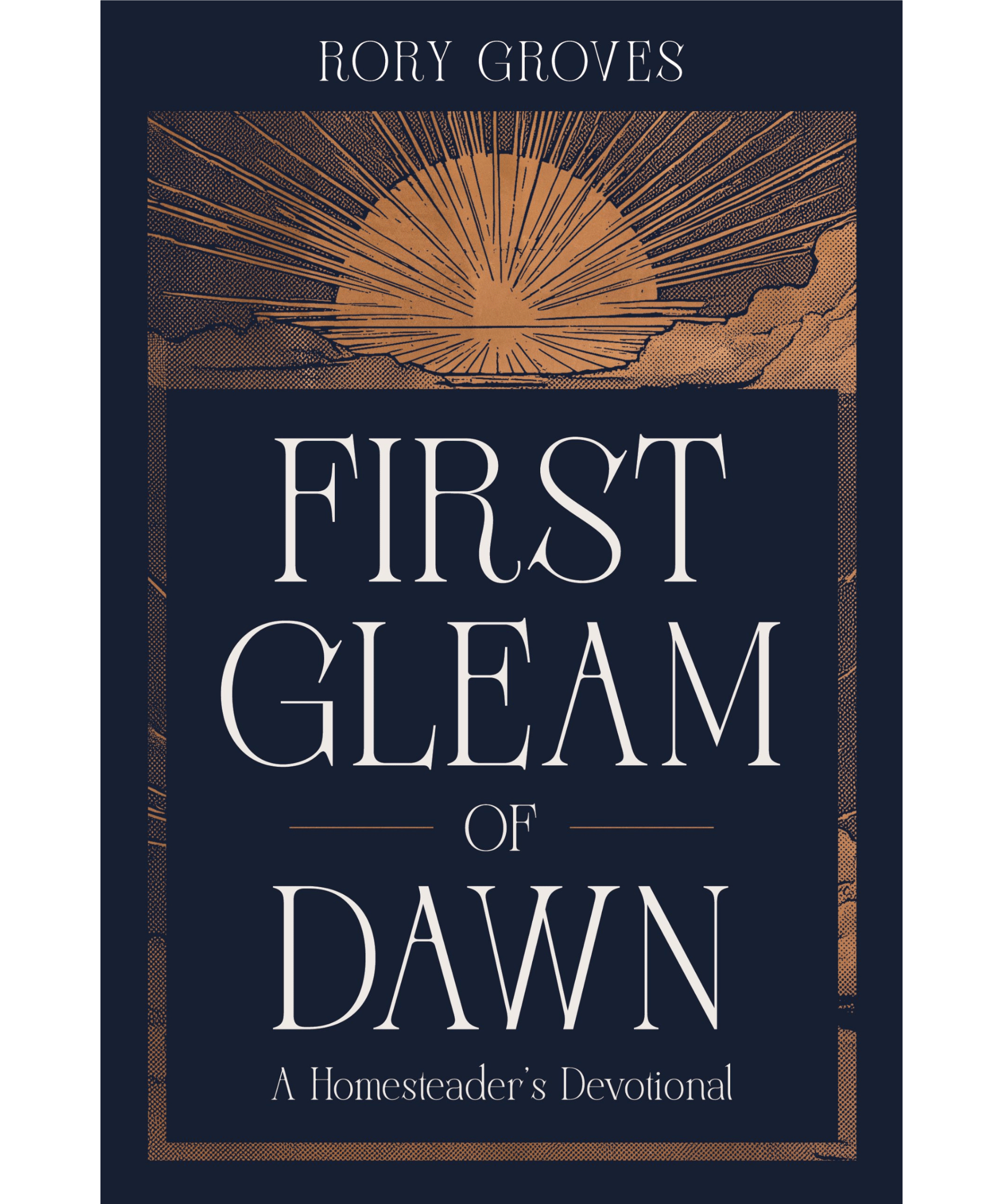
This Episode of The Coop is brought to you by First Gleam of Dawn
Finally … a daily devotional written by a homesteader, for fellow homesteaders. Whether you’re just starting with a few raised beds or years deep into livestock and acreage, this hardcover is a steady companion for the year ahead. Pre-order now and it ships in early 2027.
Learn more: https://homesteadliving.com/product/first-gleam-of-dawn-a-homesteaders-devotional/
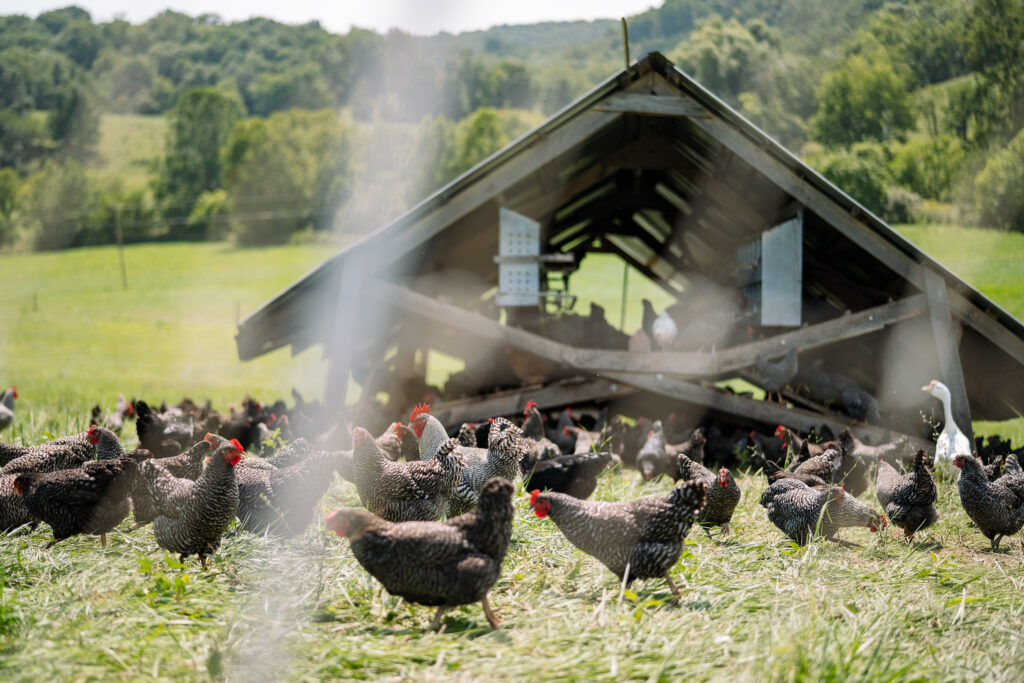
Leave a Reply