




In Episode #29 of The Coop, Anna sits down with Anne Briggs (Anne of All Trades … homesteader, woodworker, teacher, and Homestead Living contributor) for an honest conversation about getting things done when your brain, your time, and the farm all pull in different directions.
Anne didn’t grow up on a farm. She grew up “farm adjacent,” lived abroad as a missionary kid, and picked up her first four chickens on the way home from her honeymoon … then dug up a suburban Seattle backyard after her husband had already said no.
That first garden failed. But the next season, it worked! Fifteen years later, she and her family are in Tennessee with a raw dairy, a large garden, multiple kinds of livestock, and a beautiful baby boy.
Anne opens up about the struggles she’s faced too: severe dyslexia, not really learning to read until she was 22, ADHD, time-blindness, and years of being called lazy despite working harder than others to achieve the same outcomes. When reading finally clicked, learning became Anne’s superpower … especially when she turned around and taught what she was practicing, first in a garage, then on camera.
In this episode, Anna and Anne discuss:
- How Anne went from a suburban Seattle backyard to a working homestead in Tennessee
- Why being called a “Jack of all trades” is a compliment
- How learning disabilities shaped the way she learns, teaches, and has built a life
- Why tracking time and data makes hard decisions easier
- Frameworks for removing friction, implementing systems, and knowing what to prioritize
- Building margin before adding anything new
- What a “successful” life looks like in retrospect, and how to measure any task against what’s truly important in life
The point of productivity, they agree, is not about checking everything off your list. It’s about creating margin for the things that truly matter: family, friends, good food on the table, and building a life you’ll look back on with pride.
Listen or watch the full episode right here:
The show notes …
00:00:00 – Intro
00:05:32 – How Anne Got Started Farming
00:10:02 – Dyslexia, Learning to Read, and Finding Superpowers
00:14:53 – The True Meaning of a “Jack of All Trades”
00:17:45 – Embracing Who You Are
00:25:11 – The Cow That Changed Everything
00:36:23 – The FIT Framework
00:37:31 – Why You Need to Collect Data on Yourself
00:44:33 – Building Realistic Margins Into Your Life
00:50:24 – Project Planning & The Sticky Note Strategy
00:59:39 – The “In the Way, On the Way” Rule
01:07:38 – The STOP Framework
01:11:43 – What Productivity is Really For
01:16:46 – Anne’s Upcoming Book: Habits and Hope
Anne Briggs:
I think that a lot of us are seeing from the outside what seems to work so well for so many other people. And then we look at our own lives and the evidence of who we are as people, and it often is evidence. It’s easy to think that that is evidence that we’re somehow flawed or that we’re somehow broken in some way. The reality is that the best thing we can do for ourselves is get to know ourselves really, really well and then work with what we’ve got.
Anna Sakawsky:
This episode is brought to you by Azure Standard. Family owned since the 1970s, Azure Standard is on a mission to make real food more accessible by delivering it straight to your doorstep or to a convenient local drop point near you. Everything they offer is completely organic, non – GMO, and free from junk additives you don’t want in your home or in your body. With more than 13,000 carefully vetted products, Azure Standard makes it easy to stock up on what really matters, from bulk grains, nuts, and healthy oils to fruits and vegetables, frozen meats, pantry staples, and even clean household goods. And the best part is you skip the grocery store markup. You can order exactly what your family actually needs, save big on high quality food and pick it up alongside neighbors who care about the same things you do, health, sustainability, and supporting ethical producers.
You can head to azurestandard.com right now to get started. Again, that’s azurestandard.com. Well, hello everyone and welcome to episode number 29 of The Coop. I’m your host, Anna Sikoski, editor in chief of Homestead Living Magazine. And I am really excited about today’s guest and topic because both of them are actually dear to my heart. So today I’ve got Anne Briggs joining me on the show. You may know her online as Anne of All Trades. She’s also a contributor to Homestead Living magazine and has also run a cohort with Homestead Living in the past on building good productive habits on the homestead and just in life in general while also acknowledging the fact that we live in the real world and we all have unique challenges and things that we’re dealing with. And we’re not just robots with an endless capacity to work and just get things done.
So Anne has also been very open about her struggles with learning disabilities and mental health issues and how she has built the life that she lives today as a homesteader and a mother and a wife and a business owner and a multi-passionate entrepreneur from the ground up having come basically from nothing with zero experience with any of this. And I think that that is why her story is so relatable to people. And so her approach to homesteading and to productivity in general resonates with so many people because she’s just very authentic and real about it. There’s no facade. I’ve been in the same room with her while she’s been speaking at events and at conferences. And usually by the end, there’s not a dry eye in the house. People are crying, she’s crying, other people are crying just because she is one of those people who is just very uniquely human.
Not all uniquely human, but that just is very open about sharing her humanness with others. And I think that that just really resonates with people with that. Anne, welcome to the show.
Anne Briggs:
Oh my gosh. I don’t know if I’ll be able to live up to that intro, but thank you for all of the very kind and
Anna Sakawsky:
Very generous
Anne Briggs:
Things you said.
Anna Sakawsky:
I’m sure you will. And I just hope that we’re not both in tears by the end because I’m serious when I said that. I feel like every talk that I’ve been to of yours or every time I sat in on something like whether you’re up getting emotional about something or I look at other people in the audience and they’re kind of wiping tears and it’s in a good way. But it is, it’s just something about that we’re so used to I think seeing, especially people online only show the highlight reel. We see everybody’s best selves and that’s amazing, but we can get in the comparison trap really easily too. We can look at others and be like, “Why is it so easy for them? Or why can’t I do this?” Or somebody else might be sharing all these productivity hacks, for example, and they’re just like, “Well, you just do this.” And you’re like, “Well, that doesn’t work for me.
What’s wrong with me?” And I think just the way that you share your story and your authenticity and your realness with other people just reassures people that there’s nothing wrong with you, that we are all uniquely made and we just have to find the strategies that work for us.
Anne Briggs:
Well, my goal is always to make people cry because we like to dehydrate and then rehydrate.
Anna Sakawsky:
Absolutely.
Anne Briggs:
Actually, hilariously, hydration is actually one of my biggest productivity tips because especially with people that have a little bit of chaos going on in their mind, it tends to go hand in hand with constantly being dehydrated. And when I found out as an adult that I had basically been chronically dehydrated and turned my brain into a raisin and actually started staying well hydrated, genuinely my life changed. I didn’t grow up drinking water. I didn’t know that was really a thing, but now I drink a whole lot of it and always with electrolytes. And that honestly has genuinely changed my life. I think so much about brain function and things happens when you’re actually well hydrated. So there you go.You didn’t even ask me for any tips yet, but there’s my first one.
Anna Sakawsky:
That’s a great tip to start with. I would love if you could just kind of zoom out, give us the 50,000 foot view. You’re known online as an of all trades because you don’t just homestead, you raise animals in the garden and do all that, but you also do a lot of woodworking, you carve spoons, you make furniture, you build all manner of things. You run businesses, as I said, you’ve got a lot of different things going on. So first off, why and at what point in your life did you actually learn to do all these things and decide to follow this path? And then where did you get this moniker of annobal trades?
Anne Briggs:
Oh, I love both of those questions. Well, first of all, I spent most of my young life living abroad. My parents were missionaries and then I went to university and grad school in Asia and I had always wanted to have pets. And so I said, “If I ever live in America, I want to have a farm.” When we were in the States, our home base was in Montana, and so there was lots of farms around us. And I say that I grew up farm adjacent, but I had never had a dog or a cat until I was 22 years old. And on the way home from our honeymoon, right after my husband and I got married, I. Wait, sorry, I was 24.
I was like, “Hey, we have to make a quick stop.” And I picked up four chickens and I was like, “If you’re going to trap me living in America, we’re starting a farm.” And we lived in the suburbs and I had never had access to a yard that I could grow a garden in before. It wasn’t a very big yard. We lived in Seattle, but I was like, “Well, I would love to try planting a garden.” And we also were dead broke, so a lot of our food at the time was coming from the food bank. So that was another thing. But I picked up these four chickens and I was like, “We’re going all in. I’m digging up the backyard next time Adam’s at work because he’d already told me no.” And I was like, “We’re just going to do this.” And I didn’t know what I was doing at all.
The first garden I ever planted, I had heard something about compost. I had, like I said, farm adjacent. And so I called around and I found this local horse farmer who was giving away free manure. So I went and took little plastic bins and filled up the bins with manure and brought them back and put them into a garden bed and planted a bunch of stuff in it. And not surprisingly, that didn’t work super well the first season, but the following season, it worked great. About 14 years ago, 15 years ago, I say that I picked up my first tool and planted my first seed. We had a garage for the first time. I was like, “I want to learn how to do stuff, use tools.” My grandpa was a woodworker, but he died before I was actually able to learn anything about it. And so yeah, that was before YouTube University was a real thing.
And we lived right around the corner from a library. And so I started checking out every book that our library system had on gardening and woodworking. And just in all of my spare time, I was reading and doing, and that’s how I got started. So a lot of mistakes, still 15 years later, making lots of mistakes, but that first little backyard garden and illegal chickens turned into, then we got a three acre homestead and then we moved to Tennessee seven years ago. And now we live in Tennessee. And so I have a raw dairy business with my friend Tyler. We sell our raw dairy locally through a farm store. I have anywhere between 15 and 22 cows at any given moment and goats also for dairy. We’ll talk about that in a second because actually this is one funny time management thing that is just very unique and why would you go to all the trouble, but we’ll talk about that.
We also have two donkeys, a pig, a very large garden. And I mean, I had a baby last year and he’s amazing. And that leads us to here we are now sitting here together.
Anna Sakawsky:
Wow. Well, yeah, there’s a lot to unpack there and we’re going to get to a bunch of that. Before we dive into all that though, as I mentioned in the intro, you also have been very open about struggling with some learning disabilities, ADHD, mental health challenges throughout your life. So can you share a little bit about those experiences and how they’ve affected you throughout your life and especially on this homesteading journey and having to learn all these things, how has that shown up for you?
Anne Briggs:
Yeah. So I am severely dyslexic. I didn’t actually really learn how to read until I was 22. And then there’s a much longer story there that I won’t go on too many rabbit trails today, but basically I spent most of my young life feeling like I was stupid and that just kind of was constantly being reiterated because my siblings are all very intelligent. They did great in school, that was no problem for them. And as far as I can remember, things that seemed so easy to everyone else around me were always insanely complicated. And I’d been called lazy or unmotivated or whatever my whole life, unfocused. People told me I’d never be good at anything and that obviously had some effect on me. But when I learned how to read and comprehend what I was reading, the entire world opened up for me because I finally learned how to learn and it turns out that learning is actually a superpower for me when it is in the right context.
And so that actually made me very passionate about then turning around to teach those things, which as it happens, one of the best ways to learn anything and to really solidify what you’re learning is to turn around and teach it. And so along the way, I had told you about the beginnings of my woodworking stuff. I was working in my garage and things, but I ended up actually getting a full ride scholarship to a woodworking school that I couldn’t actually afford to attend. And so I mean, even though I was going to get my tuition paid for, I couldn’t afford the living expenses, I couldn’t afford to buy the gas to go. And that felt at the time like the biggest miss ever because I am a hands-on learner. I learn the best when I can see it and do it and copy it. And fast forward a couple years, I had been reading so much and practicing so much and I ended up meeting a couple mentors who really helped me along the way with those skills, but I ended up getting hired to run a woodworking school.
Turning around and teaching everything helped me to really solidify all these things. And then it was also around that same time that I realized that this little thing called YouTube existed and I really was not trying to become famous. I know that apparently that’s a dream of many children these days to become a YouTuber. However, a funny thing about this is that I actually don’t really want to be looked at or I don’t want anyone to know who I am or anything else. I’m a major introvert and this surprises a lot of people because of the way that I present myself. But hey, when it’s just me and my camera, I can be myself. All that to say though, that filming myself as I was learning these new skills both helped me to solidify the knowledge. It also helped me to, as I was watching the footage back and editing it and then also teaching classes in real time and things like that, I was constantly getting all these things that I was learning reflected back to me.
And the gaps in what I didn’t know were constantly being made very clear and apparent because someone would ask a question and I didn’t know the answer and I’m not a prideful person or at least I try not to be. So I had no problem saying, “Hey, I don’t know. I basically just started doing all this myself, so let’s find out together.” And I think because I had struggled so much with learning disabilities and things that I think that has made me a fairly good teacher. And as long as I can corral all of the squirrels in my brain to actually communicate effectively, that is actually true. And sometimes I can’t and that’s okay, but that’s what the editing button is for, unless it’s in real life like right now.
Anna Sakawsky:
We have editing too, so don’t worry at all.
Anne Briggs:
Oh crazy. You did ask though how I got the moniker Anne of all trades.
Anna Sakawsky:
Yeah, that’s right. Yeah.
Anne Briggs:
All of this came to a head when I was starting social media and I was thinking about, okay, what should I call myself? And I was a big fan of Anne of Green Gables, Anne with an E, that’s me. And I always longed for a bosom buddy like Anne would talk about. And I now have some as an adult, which is really wonderful. But all that to say, I thought about calling myself Anne of Green Tables because I thought that was funny. I was building woodwork. But the thing is you would never want to build a table out of green wood. And I didn’t think that very many people would get that joke. And ultimately I had, as I’d said, been called lazy and told that I was never going to get good at anything and all these things and been called a jack of all trades and master of none so many times.
But as I was on that very steep learning journey of all of the things all at once, I came across the full quote, which was a jack of all trades is a master of none, but oftentimes better than a master of one. And there’s a book called Range that I really love that talks about the value of having a range of different skill sets and how so many influential people throughout human history were not specialists. And some people are brilliant specialists and I want an electrician who’s a brilliant electrician wiring my house. I want a specialist when it comes to electricity and setting up my septic system. Things that we don’t want to fail, we want a specialist there. However, I myself know that I don’t have the attention span to be a specialist, but there’s also value in the many, many different skills.
Anna Sakawsky:
Yeah. Yeah. 100% agree. Well, and just to the point of and of all trades, as homesteaders especially, we do find ourselves in the position of needing to kind of be ands of all trades, annas of all trades, jacks of all trades, because that’s just what the home setting life entails. There’s a lot of moving parts with it that doesn’t necessarily mean we need to be doing all the things. And again, this is where we need to be careful not to get into this comparison trap that’s just because somebody else is doing A, B, C, and D, that we need to be doing all of those things as well and doing them the same. But to your point too about not taking on all of them at once, it doesn’t mean that you can’t do all of them or some version of them, but getting some things, I always say similarly, get at least comfortable with one thing.
You don’t need to master it necessarily, but get to the point where I always think back to when I was learning to can and make jam and I was like, okay, hold on, check the book. Hold on, check the book. It must take me two hours to get a batch of jam in the canner. Now I can do that much more easily because I know what I’m doing. I’m more comfortable with it.
Anne Briggs:
I think that a lot of us are seeing from the outside what seems to work so well for so many other people. And then we look at our own lives and the evidence of who we are as people. And it often is evidence, it’s easy to think that that is evidence that we’re somehow flawed or that we’re somehow broken in some way. And I think probably the best thing that I’ve ever done is realize that I am who I am. And as much as I would love to just grow up one day, change, fix what’s broken.
I’m 37 years old. I am who I am. And not saying that you can’t grow and you can’t change, but embracing who I am and instead of just continuing to hit my head against the same walls over and over and over again, and then living in a constant state of shame and overwhelm, that’s like I said, I think I said at one point already the phrase, that’s a ticket to health. The reality is that the best thing we can do for ourselves is get to know ourselves really, really well and then work with what we’ve got and build systems for who we are. Just to put a period on the story about how I became animal trades. But I just wanted to show people a living example of if you do a lot of things, those skills will lend to each other. And this online thing that I was about to embark upon, which I had absolutely zero idea where it was going to carry me, this is before YouTube even paid people money to be on it by the way.
But I just was like, I want to share the things that have made me feel not stupid and have made me feel like I can do things with other people because I also, bringing this full circle to the mental health thing, I had spent so much of my life thinking that I was kind of useless and that I was basically a burden to the people around me rather than being useful and having a sense of purpose and belonging. And I think that those are things that are basic human needs no matter who you are. I wanted to be here on this planet to have the purpose of helping people realize how powerful and how strong and how capable they truly were despite what challenges they may have faced in the past. And a big piece of that for me was learning how to embrace who I am and make who I am actually work.
Because in case you haven’t noticed, and if you’ve seen anything that I do online, you know that I have zero chill and I am very good at getting in way over my head and everything.
I have to find the balance between absolute chaos because that is where mental breakdowns and things happen. I can speak very, very confidently about that. And being busy enough and having enough outside prompts in my life to actually keep the juggling that needs to happening. And who I am is capable and smart and all of these things, but also who I am unchecked, nearly destroyed my marriage, nearly led me down a very, very dangerous path regarding mental health. And one of the hardest things that I ultimately wrestled with was how I had spent so many years of my life at that point teaching people how to do something that I felt like was going to cause me to lose everything, lose everything I cared about my community and my marriage, myself. And that’s homesteading because if you jump in and you’re not building the systems that you need to build as you go, the systems that will actually support you as whoever you are, as the person that you actually are, you’re in for a real not fun time.
Anna Sakawsky:
Yeah. And is that what caused a lot of the problems was just taking on too much and getting overwhelmed? Totally. And
Anne Briggs:
Just when you do take on too much and it’s in a constant state of chaos and overwhelm, you don’t operate at your best. And also that’s when lots of things. I think a lot of people talk about how on farms there’s a rule of three that there’s going to be three bad things will happen all at once. And I actually do think that that’s true, but not just because of bad luck or anything. It’s literally just that bad things generally tend to happen as a result, on the farm at least, as a result of accrued inattention, if you will. And so as it happens, if you have a sick calf or something like that and you had a whole bunch of other stuff that you also needed to immediately attend to, but then you spend three days in the field with this sick calf, then those other things that were immediate needs also get ignored during that time and then they become even more immediate needs.
And then it’s just like those kinds of things just tend to compound, at least for me. So one of the big things that has saved us, I mean saved us, has saved me and saved my marriage and other things like that is learning how to build systems that serve who I actually am, learning how to say no, learning how to have more boundaries in life, learning how to let other people do some of the things because I don’t actually have to be an of all trades in every single regard. In fact, I get to be a way better teacher and wife and mother and friend and all of the other things that are truly important and farmer when I am focusing on the things that I’m good at and letting other people focus on the things that they’re good at, which has involved a lot of things.
Like for example, scheduling this podcast, I stopped checking email or using email a couple years ago and it totally changed my life. I mean, it’s meant that I probably miss out on lots of business opportunities and things like that, but you know what? If I don’t know about it, then I don’t have to feel sad that I missed it. And as it turns out, I’ve been busier and more successful from the outside looking in at least by metrics other people seem to care about since I did that than I ever was when I was spending 30 hours a week managing my inbox.
Anna Sakawsky:
Well, I could see that too, because then especially with somebody who is multi-passionate and does have a brain that kind of goes all over the place, you do, you want to chase every rabbit down every hole, right? There’s an opportunity and you feel like you want to jump on it. And I want to talk about now some strategies that you’ve learned to try to overcome some of these things. And I actually want to start at the beginning, and you mentioned this about having dairy animals and a very unlikely strategy that you had to get yourself motivated to get up and get moving in the morning. So tell me about what that was.
Anne Briggs:
Yeah. So much like you, I have always struggled with the. Prioritization is really, really difficult for people like us. And it’s a wild thing. My sister is the most type A person that you could possibly meet. She’s just like a list maker and she just can just cross off everything on her lists. I have driven her nuts my entire life. I’ve also looked at her and just been like, “I don’t understand how you can do that.” And I held myself to that standard and then constantly failed for so much of my life. But when I realized that, oh, this is actually something that there’s an explanation. There’s a word for. In the Bible, it talks about if you can name something, then you have power over it. And I love that phrase because whether anyone here is religious or not, it doesn’t matter. I genuinely believe that there is power when you have a name for something.
And anyway, learning that this is a thing, that there’s a name for the thing that I struggled with, that there’s a reason that I have had this struggle, it was so empowering because it’s like, okay, well, A, I’m not alone. B, someone else has figured out how to master these things and therefore there’s hope for me to figure it out too. One of my favorite people, Ruth Ann Zimmerman, I asked her how she prioritizes her time because we went to talk about motherhood and gardening and homesteading and how she juggles everything that she does because what she does is absolutely insane and amazing, and I wanted to learn from her. And hilariously, I was somewhat dissatisfied with her answer, but in the moment, but the more that I’ve thought about it, the more that I like it. But she said, “Well, prioritization is easy because if you just think about it, which thing is temporal and which thing is eternal?” In the grand scheme of things, people, relationships matter the most, and so they need to be prioritized first.
However, if you just literally don’t even remember that people exist, if they’re not right in front of you, like I do, then you have to find ways to make them exist, like putting a picture of my mom right there on my desk so that I can remember to call her and that I remember she exists. And it’s not that I don’t love her, it’s just that when she’s not right here, just like anything else, when I can’t see it, it doesn’t exist. But with that, I learned very early on. I mean, I had said that I’d always dreamed of having a farm because I always wanted to have animals, and that actually ties to something that’s really sad and pathetic in retrospect, but I had no friends growing up. I really, really struggled with social interactions and things, and I was pretty horribly bullied. And I mean, also, I was a real pest, so I probably deserved it a lot of the time.
But that said, I had always really loved animals and I always wanted animals because I just felt a deep connection with them, but it was truly, it was just longing for belonging more than anything. I realized really early on that one of the things that is very motivating to me is relationships with animals, and it’s tied to a lot of things. I think that stewardship is really important. I believe that if we are taking a life under our care, that we have an obligation to steward it well, because with animals, everything that they have is reliant on us and we need to steward that responsibility well. And in that, there’s a really fine line for me about using shame as a motivator, which is not a good one, but I realized very quickly that a dairy animal would be the thing that I needed to get everything else that I needed in order for my days, because a dairy animal It’s to be milked at the same time every single day.
And you build a really close relationship with that animal. And I knew that because I know about what happens if you don’t milk a dairy animal, it gets mastitis and that can turn into a very serious infection. It’s uncomfortable for the animal and the animal can and will ultimately die. And so I was like, if I need to get my butt in my office chair by 9:00 AM every morning, and I struggle with all of these other things that just basically infinitely press my day, as someone who’s self-employed, who doesn’t actually have anything that’s forcing me to sit in my chair by 9:00 AM, I needed to get a dairy animal. So I got a dairy cow and boy, howdy. Oh, we’re not going to cry in this episode. So I’m just going to tell you this unemotionally. I don’t know if I can, but we’ll try, that every day I used lubricant for her teeth so that they don’t get dry while you’re milking.
And the first time that I took that last swipe of lubricant out of the can and I looked down in the can and that was visual evidence. It was the first time in my entire life that I’d done something enough times in a row, enough days in a row that I had finished up a tin of basically anything. And that was a very, very life changing moment because already so many positives had happened in my life as a result of having a definite start time to my day, rain shine, feeling good, not feeling good, getting down to milk the cow. It got me outside. There’s so many things that are attached to what mental health gurus will tell you or motivation gurus or whatever else that were just so easily tied to having a dairy animal for me that while I actually would be the first one to tell anyone who’s struggling with a chaotic life, the last thing that you need is a dairy animal, do as I say and not as I do.
Because for me, I had tried every other thing that existed to have a consistent schedule and that was the thing. To tell you that my cow helped me unlock superpowers in self-employment and just life enjoyment is the biggest understatement ever.
I will forever be grateful because basically through that experience of getting my very first dairy cow, I learned so much about myself and about all the different levers that I could pull motivation wise or it’s not really even motivation because the thing is I am probably the hardest working person I’ve ever met and it’s not ever been a lack of motivation. It’s literally that for most of my life, everything that I tried to do took me 10,000 times longer and more effort than anyone else around me. I was always like, “But I’m still not done and I’m exhausted and I don’t understand why.” And it was because of what I’ve now learned the name for, which is invisible cognitive costs. Actually, I don’t even know if that’s really an official name. It’s just what I call it. It’s the hidden things that people like us see, the obstacles or the friction that are in our way between starting and accomplishing something or the actual friction that we create along the way.
And so that was a very long and roundabout way to tell you that getting a dairy cow was the best thing ever.
Anna Sakawsky:
I think that’s just a really unique story, obviously, because most people’s productivity journey does not begin with milking a cow in the morning. What might that thing be for me? What is the one thing that if I did this, all the other dominoes kind of fall into place, right?
Anne Briggs:
Oh, sorry, go ahead.
Anna Sakawsky:
Oh, I was just going to say, you also mentioned this idea of, I can’t remember the terminology that you used about the –
Anne Briggs:
Oh, invisible cognitive costs.
Anna Sakawsky:
Right. And just the kind of hidden, that friction. And I totally understand that because you also have talked, I know in videos that I’ve watched of yours before about setting your environment and I’m somebody who is very affected by my environment, but also not a naturally organized person. So it takes a lot of intention, but it does, it creates. I might not even be aware of it, but the clutter in the corner, whatever it is, noise, I’m the same. I think you have noise canceling headphones. I do the same. 100% of the time. I have to be in my little zone. And I think that in general, one of the biggest enemies to productivity in any case is friction of some sort. It might be different for everybody, but so what are some of the ways that you have removed friction in your own life and in your homestead to keep things moving and just flowing more easily?
Anne Briggs:
I’m so glad that you asked.
Anna Sakawsky:
If you’re a mom like me, then you probably know what it’s like to spend way too much time worrying about what’s in the everyday cleaners and body products we bring into our homes and use on and around our families. In fact, a few years ago, I completely overhauled our cleaning products and started making my own vinegar cleaner, baking soda, toilet scrub, and homemade laundry detergent. While those have honestly worked pretty good, I don’t always have time to make my own cleaners. And if I’m being honest, I don’t always want every surface of my home to smell like vinegar. That is why I love Rustic Strength. Rustic Strength offers a full line of non-toxic laundry, home and body care products, all made in small batches by a family-owned company in Missouri. Their formulas are safe and effective, for real, for real, and free from the junk you don’t want in your home, on your body or near your kids.
Clothes come out clean without overpowering scents. Surfaces shine without the lingering scent of vinegar or toxic chemicals, and you can sleep soundly knowing that you don’t have to worry about what’s in your cleaners and skincare products. So if you’ve been thinking about making the switch to cleaner, non-toxic home and body products, then consider this your sign. Head over to rusticstrength.com today and see why so many moms have already made the switch. Again, that’s rusticstrength.com. Tell them the coop sent you.
Anne Briggs:
As someone who struggles with learning disabilities, I like to always find something that makes a topic sticky so that I remember it. I really love. Oh my gosh, now I just forgot. Alliterations and acronyms and things. So I have two things that I think that I want. Pick the one that’s sticky to you, gentle reader here. But I talk about finding your fit, which is what’s the friction that you’re facing? What infrastructure or what system do I need to make this happen automatically? And then T is for triage. If I only finished one thing or if I only did one thing, what would move this, whatever it is, this project or my life in general forward? If I only did one thing today and I only had one thing to show for my day to day, how could I take that? What’s the thing that would take me into tomorrow with the least amount of regret or the least whatever that would make me feel like I was moving things forward?
And so identifying friction is actually, though I am a self-described chaos monster, I learned to love data and systems and collecting that data and using it to my advantage. The though of a database for someone like me is a joke. Well, it used to be several years ago. However, my friend Josh helped me build this database that I then intentionally chose to use to collect data about all kinds of things throughout my life that has genuinely changed my life. And now I can’t even imagine not taking my time on Fridays to update my database so that I then can utilize all the data that I collected that week. And so though it is very counterintuitive for a lot of us or it’s very even counter who we are to start collecting data, it is probably the most helpful tool ever because you mentioned that you chronically underestimate how long things are going to take you.
So because I also struggle with the same things and I was always optimistically over committing, but then letting people down. And the thing is just like you, my word is the most important thing to me. Keeping my word and not letting people down that I care about is you want to devastate me, tell me that I let you down and I will do anything to try to fix it. But all that said, I realized that if I was going to not just continually let people down and hurt people that I cared about by not willful stuff, but just accidental fallout from the chaos that I tend to generate, I needed to start collecting data.
I started by putting a three by five note cards in my pocket with a pen and I carried that with me twenty four seven. Why did I not take the notes on my phone you might ask? Oh, that’s because my phone is way too distracting for me and I’ve learned self-control and that’s actually probably one of the things that I love most about homesteading is that my favorite phrase I’ve come up with about this is I’ve made my life harder on purpose, with purpose. It’s a lot harder for me to get lost in my phone now because I genuinely don’t care about as much stuff on it, but it can be very distracting. So I didn’t want to keep notes on my phone. And also if I just wore the same kind of pants, this actually gets real deep here, but I basically picked a specific outfit that I was going to wear every single day and I bought five of that outfit so that it would constantly be in rotation.
And the reason being that it had the pocket that would fit the cards and the pen and a couple other things that I carry every single day and so that every time I would reach for them, they would be there. So making sure that I had that. And then also I had a place that I was putting the note cards all week long and then on Friday mornings I was going to go through and look at those cards. So that started with, I carried around a physical timer and I started timing everything that I did and I would write that down. So then I couldn’t just be like, “Oh, I think it’ll take about this time.” It’s like, “No, I’ve done this a hundred times and the average of those hundred times is this.” And that also actually being aware of how long things took me helped to give me other data that was important because as someone who grew up really poor and also has struggled financially as an adult as well, it helped me to actually be able to spend money on things.
If I had been spending 15 minutes filling a bucket every single day and then carrying that bucket for another seven minutes and this was happening twice a day and this happened throughout a year, then all of a sudden, if I were to think about things in that term, either I could emotionally give myself permission to take an afternoon and put in a plumbing line to that place. Or if I couldn’t do that myself or I had other work obligations or whatever, I could actually then emotionally give myself permission to hire someone to put in that pipe so that I then wasn’t wasting my time doing repeatable tasks, which again, this is all pointing towards friction is that every time that not only was I keeping track of the time that things took, I also started obsessively paying attention to how does this task make me feel or what went wrong or what went right?
And all of those things helped me to identify friction points, not in a now I’m going to pay attention to everything that’s bad in my life so that I can then focus on that and then just think about how crappy life is, but actually so that I can think about where’s the friction in my life, what are the most common pain points, especially around the homestead that I could then address and fix? And so as I’m looking at these cards and reviewing them, I then can also be like, “Oh, you know what?
I can actually feel hope about these things that make me really uncomfortable or really annoying because now I can constantly be thinking about a way to fix them.” And then that helped me to streamline my chores. It helped me to realize which things were not worth continuing to do on the homestead. It has helped me with my own, like I said, prioritization has always been really hard for me. The more that I’ve though about things that are eternal or temporal, it helps me to prioritize, but also we still have to have jobs and things. So though it doesn’t feel super eternal to be sorting out digital files for this marketing consulting client I’m doing, it is in fact something that I do need to do so that I can then keep a roof over our heads and feed my son and all those things that are also important and those are eternal things.
Anna Sakawsky:
Well, and knowing then where you’re maybe wasting time on things that are more temporal and maybe aren’t worth the time, then it’s like looking at your finances, right? Yes. If you don’t look, you can’t fix any problems, you don’t know where your money’s going, right? You have to actually be able to take an honest look at things and then go, “Okay, where is my limited time that I get on this earth best spent?” Right?
Anne Briggs:
And ultimately that’s what’s helped me the most is finding the friction points, identifying them, then focusing on building infrastructure that addresses those things. And then in all of that, it turns out that I ended up being able to build margins into my life, which then allows things to go wrong and not actually feel as frictiony as they used to because it used to be that if everything didn’t go 100% right, then the friction that that caused in other areas because of the fallout, like I said, that sick calf and you’re supposed to be working on this plumbing project, but because you weren’t doing the sick calf, then your pipes exploded and that caused an even bigger problem that then cascaded. Those kinds of things are not completely eliminated because things are going to happen, but with margins, we’re able to eliminate so much more of the additional friction that we’re causing without even realizing it.
And actually on that note, my son just woke up. I have to go get him. Is that okay? Go do
Anna Sakawsky:
It. Hello.
Anne Briggs:
He just woke up.
Anna Sakawsky:
Well, and I was going to say too, that’s speaking of friction. What does your margin look like in a day? How much margin are you building in? Is it a few hours that you’re. How do you approach that?
Anne Briggs:
I mean, I’ll be a thousand percent honest and say that this is still a struggle because the funny thing is, I think I mentioned at the beginning that one of my bigger struggles in life is that just like time is a vacuum, just like space is a vacuum, you will ultimately fill up whatever you have. And so the more margins that I’ve created, it’s helped me to fill my time. Then I’m like, “Oh, well, I’ve got this two hour window. Now I can do this other thing.” However, Mr. Muffin, however, I think that if you’re going to have dairy animals and you’re going to have children, you need at least two hours of margin in a day, and that’s being generous. You should probably have more because what if the cow escapes and your kid is sick or your kid doesn’t take a nap or whatever else?
I mean, this is a classic thing.
He’s having a really hard time taking naps right now, and so his nap that should be two hours long in the middle of the day is maybe 40 minutes. And so then that means that the two hours that I would normally have to be full on focus time turns into 40 minutes. But you know what? I’ve never encountered something better than a child at helping me to get laser focused about what my priorities actually are in multiple ways. And so again, not the solution for everyone having more kids, but as someone who’s always struggled with prioritization, because running a business and being self-employed and not having regular childcare and working with my spouse and both of us working from home and having a dairy farm, did I mention that part already? And everything else and a community that relies on us, there’s oftentimes like 30 minutes in a day that I have to accomplish a huge list of tasks.
And like I said, I’d always struggle with prioritization, but because I’ve become so aware that that might be the reality, that is in fact the reality very often, then I can be like, “All right, if I only get this 30 minutes today, what am I going to spend my time doing?” The thing that’s helped me the most probably is already knowing before that window appears what I’m going to do. And that, again, comes down to data, tracking stuff and knowing what’s important. Again, tracking stuff also helps for those of us who things are invisible if we can’t see them, they don’t exist. I have a visual planner that is basically a whole bunch of sticky notes on a board. It’s project management. It actually comes from working in the tech industry, but it’s a project management tool that you decide at the beginning of the week what your priorities are and you identify each individual task, this is how we get started.
And again, I think for people like us, motivation is not usually the issue. If we’re struggling with motivation, it’s usually almost always, actually in my experience, not a lack of motivation problem, an actual lack of motivation problem. It’s a lack of clarity problem. I don’t actually know beyond a shadow of doubt what the first step should be or I don’t know how long it’s going to take, so then I’m worried to start because I don’t want to not finish yet another thing or I don’t know if this is a good thing to spend my time or my energy on or my money. And with all those things, with homesteading, we don’t know. We really don’t know how everything’s going to go. There’s risk in that, but also I think a lot of people who just jump in all at once and try to learn everything on the fly, the thing that’ll happen very quickly is that they get so overwhelmed that they aren’t able to have any clarity anymore about what’s important or what needs to happen.
Anna Sakawsky:
So what does planning look like for you and how do you actually plan out your projects and break them down in a way that you can then feel confident taking action on them?
Anne Briggs:
So what I do first is I kind of try to look at a 50,000 foot view of what I think that the project will entail. I do what’s called a brain dump, which is I just write everything down that I can think of, like what supplies do we need, what tools do we need? Let’s say it’s planning the garden for the year. Again, it’s very helpful for me now because I have so much data that I’ve collected. I’ve been timing myself doing things for almost 15 years on and off now. It’s a lot easier for me to address my very optimistic thinking with reality a little bit. I have a decent idea of how long things are going to take, but if you’re at the beginning stages of all of this, overestimate, double, if not triple, how long you think anything’s going to take and then kind of start there and then break it down into steps.
If you’ve never done it before, you’re not going to immediately know what those steps are, but at the very least, you need to know what the very first step is. I mean very, very actionable first step, not get started.
That’s not it. It’s like if your first step, let’s say you just have a lawn and you want to turn it into a garden, your first step is, I mean, depending on how you’re going to go about it, but if you were following my advice, I would go gather up some cardboard so that you can lay that cardboard down on the grass and find a source for wood chips or mulch of some sort. I would break it down into actionable steps and each step should be its own little vehicle. You should not have anything that’s general like –
Anna Sakawsky:
Cover lawn.
Anne Briggs:
Yeah, cover lawn. It’s like, no, cover 12 feet of the lawn or whatever else. And then try to assign yourself the amount of time that you think that that’s going to take and then actually set a timer. You can use the timer on your phone if it’s not distracting, but I have a legitimate kitchen timer that I carry around with me. And there’s actually many benefits to that beyond just tracking my own time. That also as someone who’s self-employed, who every farming endeavor, farming for us happens in the margins between parenthood and working full-time and being self-employed. So there’s not a ton of time for it. And so in that, I also know how much my time is worth. Everything that I do out there is a sacrifice of either time with my child or time working. And so in that, it’s like if something doesn’t actually bring me a ton of joy, so I’m noticing as I’m doing it that there’s tons of friction involved in it, then that becomes a very quick, easy decision to make to stop doing it or to change the way that we do it or shrink it or whatever else.
And in that, again, it goes back to project planning. Even just after having alpacas for forever, I realized that I didn’t need to have alpacas anymore, didn’t want to have alpacas anymore. So then it became not just this vague, I want to get rid of the alpacas. It’s like, no, I need to start calling people to make sure. So then I made a list of people and there’s a very funny story in there that we don’t have time for right now, but ultimately just deciding that the alpacas needed to go away wasn’t enough because I made that decision and then it still took nine months for them to actually leave the farm. And that was mostly because of a lack of intentionality about identifying specific steps and then taking those steps to actually get that done. I think that as homesteaders especially, A, a lot of the things that we might be doing, it would feel like we’re quitting if we stop doing them.
But something that’s been really helpful for me is knowing that there’s sometimes seasons for everything. Right now, I love having pigs. Actually, raising pigs is one of my favorite things ever for so many reasons, but because I had data to look at, it was one of the things that had a lot of friction points in it, and there was a bunch of infrastructure that we needed to put in to make streamlining our pig process easier for us. As soon as I found out I was pregnant with Alexander, it was like, okay, pigs are off the table for a while. We got rid of the pigs and it felt awful because I trained these pigs. I’d invested all this and there’s this sunk cost bias in me that doesn’t want to get rid of animals that I love and also animals that are perfectly fine in all of these things.
But ultimately, all I had to do was look at the data and then previously a decision that would have been emotional then became a very. It’s very easy for me to look at the facts and say, “Okay, you know what? We can’t do that for this season.” It’s really good in fact that I had in fact had the forward thinking to build a lot more margins into my farming life prior to the arrival of my son because I ended up nearly dying and I was basically immobile for almost four months. And my husband, who again, is not a farmer by choice, but very willing to help in the outsets, ended up having to take care of the farm in my absence. And if I hadn’t built the infrastructure, not infrastructure for a good day, but infrastructure for the absolute worst day that actually would support him being able to do that and being able to do so joyfully, again, because I spent years removing friction every time I found it, then we would have been in a really, really different situation.
I know that none of that actually sounds like planning, except that it all really is very tied to being able to make a plan and actually work the steps of that plan. It’s really helpful for me to look at my life in weeks like I do on my board. And so just picking all of these, what are the things that are going to move things forward the most is from a financial standpoint, from a joy and happiness standpoint, from whatever else you want to identify as your metrics that you want to choose to help you pick which things are worth spending our very limited time on. And then putting those onto my little board and then identifying the first step of each one of them and then putting the estimated amount of time that I think it’s going to take on there so that if it’s that I need to make a phone call, it’s not that I say, “Call this person.” It’s literally that I have written on my sticky note, “Call Joyce at this business and the phone number there so that in that five minute window or whatever, I can pick up that sticky note, dial the number and accomplish the thing in one.
Any information that I need for that phone call would also be written on there. So it’s not like I have to go looking for all of this stuff at the very last minute or just sacrifice the fact that I didn’t use that time well. And in that, it’s that constant feeling that we’re never getting things done and we’re never crossing things off the list and we’re always getting further and further behind. And this running tally of tasks that we have in our heads that just. Our heads are not a good storage place for information, even if we’re type A personalities. Type A people make lists for a reason, but our brain remembering system is not good enough. We need to take what’s in our brain, put it onto something that we can trust that we know that we’re going to revisit this later, and then that will actually allow our brain to make space for the things that we want to actually focus fully on and get done because the more things that we actually cross off our virtual or whatever lists, the more practice we get at actually accomplishing things.
And for people like us who’ve had a lifetime of disappointment in that regard, it builds our confidence muscle that we can actually do hard things, that we can actually accomplish things. And we have to get the reps in and to do that, we have to set ourselves up for success. And so bringing all of this full circle, I talked about the importance of knowing yourself, knowing who you are, for me, stewardship is really important for me, but I also have the luxury now of being able to afford to replace some things when they break. And in that, I was able to look at my friction lists when it came to gardening stuff, and it was like the number of times I just got absolutely TO’d because I couldn’t find this tool or that tool that I was looking for in the moment that I needed to actually use it.
And then I wasted the time that I had to do the thing looking. That thing. I just went out, I started going to estate sales and I bought multiples of every tool. And now I have this rule of in the way, on the way.
I litter the things that I need to do the jobs that I need to do along my path so that the next right thing is right in front of me. And also chaos is not good for anyone. Cleanliness is very important. If you are constantly having mail accrue in a place and it gets a bigger and bigger pile, that’s not you being a failure as a person. You need a system for the collection of the mail. You need a place for it to go. And for people like me, it can’t just go in a drawer because I will never see it again. And then I have been summoned for jury duty and I missed it and then we’re in real trouble. Those kinds of things are the things that we need to be honest with ourselves about who we are and then build the systems that support those things.
So for me, vegetables coming in from the garden is a real, real thing. So I have identified this being an issue because them being on the counter doesn’t work for me, especially because I now have a counter cruiser. Visually it doesn’t work for me, but also then things go to waste because it’s like this looking at all that mess stresses me out. And so the project that I am working on actively right now is building a storage system in the pantry where things that need to come inside have a place that they go the minute that they come inside. I’m building built-ins for my husband’s office for very similar reasons. And yeah, if you have a problem, you have a project. And in that, you just need to figure out what’s the first step.
And if it has to be this big ordeal to fix the problem, that’s also not good. I love iteration. So it’s like if you think that it would be helpful to have a spot to put the mail, start with having a box, just literally use an old Amazon box or something and put it in that place and be like, I’m always going to put the mail right here and then do it for a week. And if you can consistently do it, then it’s like, okay, well then now I, or a month or whatever it is, I can then now either spend money to fix the problem for real or spend time to fix that problem for real or whatever else.
Anna Sakawsky:
So much of that is spoke to me and is so applicable to where we are at right now. We moved our compost bin this year because similarly to tracking data, we had our compost bin in a really great spot as far as it was right in the main garden, but we weren’t using it as much as we wanted to because we had a major bindweed issue that was growing through that compost bin. And no matter what we did, we were always battling the bind weed. And so we decided that let’s go put it in the back where the chickens are because then chickens will manage it and they’ll scratch in it and poop in it and eat the bugs. And it’s been going wonderfully. We have beautiful compost, but now it’s in the back. And my husband is always on me because I go out and I do a little weeding here and a little weeding there and I don’t have a compost bin put in so I leave the piles there.
He’s like, stop leaving piles of weeds everywhere. I’m like, but I won’t.” And he’s like, “Just take it to the back.” I’m like, “But I won’t. And I’m not saying that to be contrary. I’m just telling you I’m not that person. I’m not going to walk every little pile of weeds I have back there.” So now I’m just grabbing buckets out and there’s a bucket here and there’s a bucket there. And I’m like, I just need to have these things in the spot where I know I’m going to be.
Anne Briggs:
100%. I have the buckets for the exact same reason because yeah, it’s in the way on the way. That’s the way you got to do it. I think I had mentioned earlier that I had two things that I wanted to say that would make this sticky and then I never said the second thing, but the thing that I said before was fit is like what’s the friction that’s F, what’s making this thing harder than it needs to be? And then I is infrastructure. What system could we make to make this happen automatically? And T triage is if I could only finish one thing in this slot of time, what would be the most important thing? So even when it comes to gardening, I often have this because I love. The garden for me is an outlet in a lot of ways. And when I’m not 100% sure about exactly what my next step is, if I haven’t made my plan and I’m not working a plan, I’ll go in there and I’ll dink around.
And frankly, I also don’t think we’re robots. I think that we all need to do things that are enjoyable. I will tell you right now that if you found me because of gardening, bless your heart, I’m so glad you’re here. But also gardening to me is a means to an end. And I have a lot of things I would enjoy doing a whole lot more than gardening. And knowing that to be the case, I’m really careful about how I manage my time in the garden. And in that, hilariously because I love order and cleanliness. Again, this doesn’t probably track with anyone who’s seen me online, but because a lot of people call what I do chaos gardening, but it is really funny. I actually left my own devices. I would be in there making the garden orderly instead of actually growing food. And so again, that’s where I have to always, if I’m going to walk into the garden, I need to know what I’m doing before I even walk in there.
Otherwise, I’ll just spend a whole bunch of time tidying instead of actually growing the food for our family because what’s actually important, the end goal that we’ve identified that we want is food on our table.
I have to have a plan before I go in there, otherwise I’ll spend time that I truly would rather spend doing other things, doing something that doesn’t matter. And I think that it’s so easy with homesteading. I think a lot of us actually thrive in a homestead setting because if we do struggle with prioritization, what happens naturally is that the farmer is always going to pull us in different directions. And what’s most urgent will kind of make itself apparent because a lot of the things on our homestead talk to us, the dogs are barking or the donkeys are braying or whatever else.
Anna Sakawsky:
Yeah. Or the plants are having struggling or whatever.
Anne Briggs:
Problem with that. And I think the biggest danger for those of us who operate or think the way that we do is that we could actually end up spending a life casing fires and putting out fires that don’t actually matter to us. I can’t stress enough how figuring out how important data is to my ability to make good decisions and then actually starting to track everything in my life. It’s helped get us out of debt, tracking our finances. It makes it so easy to make financial decisions. It makes it so easy to justify. If this is something that I know truly just is joyful, it’s also really important because we’re not just trying to have hard lives just so that we can prove how good we are at suffering, although sometimes it feels like that’s what we’re doing. But this actually is also something so enjoyable to do and it becomes much more enjoyable.
The more friction that we remove, the less cognitive
Anna Sakawsky:
Clouds
Anne Briggs:
That we are living in at all times. So the other acronym that I came up with is called stop. S is for simplify.
So can I make this simple? Can I make this easy or do I need to eliminate this altogether? T is for triage. Does this actually matter today? Is there something that matters more than this today? And then O is outsource. Is this a job that you can outsource to another person, to a machine, to future you, to a system that eliminates this thing having to actually continually be done? Then we deal with torrential downpours here all the time. I used to spend so much time fixing downspouts and things so that the water actually had a place to go. I was looking at the way that I was spending the hours of my time and it then became blatantly obvious as I tracked my time that putting in some French drains was a no brainer. And because we had also work booked out to cover that cost, though I could myself do it, it did not make sense to actually do it myself.
It made sense to hire someone else to do it. And then that job got done and then literal hours of my week were suddenly freed up. And instead of just immediately filling those hours again, which is my general temptation, my goal for the last two years is basically nothing new gets added until we. Oh, sorry, buddy. Nothing new gets added until we have more margins. Until we actually find ourselves with a moment where it’s like, I could literally choose what gives me the most joy right now and not feel guilty about doing it. And I have the freedom to actually do that. Until that’s happening on a regular basis, we don’t add anything else. We’re only eliminating.
Anna Sakawsky:
No, that’s a really good approach. Okay. So that’s what’s the P?
Anne Briggs:
Thank you for helping
Anna Sakawsky:
Me. I’m like, we can’t
Anne Briggs:
Leave another one. The P is permanently solve. So if there’s things that are happening over and over again, it needs a permanent fix or it needs to permanently go away.
Anna Sakawsky:
Okay. So I just have to say, I love the whole acronym thing because I can’t remember. You’ll be talking just as an example and I’m like, “Oh, I got to touch on that.” And 30 seconds I’d be like, “I can’t remember what I want to say because that’s on my brain because I’ve though about 30 different things since then.” No,
Anne Briggs:
It really helps. And because again, I have the memory of a fruit fly and I need those kinds of things always too because otherwise I’ll constantly be second guessing myself and being like, “Oh wait, was it that or was it this or was it this or was it that? Or what was the correct version? Or am I remembering all those things?”
Anna Sakawsky:
I was just going to say there are so many. I mean, I could talk to you all day and there’s so many rabbit holes we could go down and we could get into more depth about all these different strategies, but you have obviously important things to go tend to there, things that are more important than talking about productivity. And we can do this again. We’ll have to have you back. I would love
Anne Briggs:
To come back.
Anna Sakawsky:
But I do want to kind of wrap it up by just kind of bringing it full circle. And you mentioned the garden, for example, being a means to an end. Productivity at the end of the day, we give a lot of credence to it. We hear about it so much. There’s books written about it. It’s such a huge part, especially of North American culture, I would say. How productive are we when I think another conversation should be had is half the time we’re actually just being busy rather than productive. But again, that’s another rabbit trail, but ultimately productivity is a means to an end as well. It is not the end itself, right? So what matters most is building a life that brings you joy and that you can look back on with a sense of pride and fulfillment. So I always think of it like when I’m old and gray and sitting in my rocker on the front porch, am I going to look back and wish that I did this or didn’t do this or spent my time the way I did?
So when you picture yourself old and gray in a rocking chair on your front porch, reflecting back on your life, what would a successful productive life look like to you where you go, “I’m glad I did it that way.”
Anne Briggs:
I love that question and I’m going to answer it in a short a way, but also the most an way possible and tell you that this is actually one of my favorite productivity tools is actually reverse engineering, putting yourself in that, what’s the end? Let’s imagine that the project’s done and then we’ll put ourselves in that situation and then as we imagine ourselves in that situation, we can then actually reverse engineer it. So it’s like if you’re building a house, building a house is an enormous, enormous project. Trust me, it’s been going on for a real long time. If I were to look at that, it’s so overwhelming that where do I even start or how do I pick it up where it’s been left off for three and a half years of paused building projects? The only way that I can continue to move forward in a project that’s that big and that overwhelming is to look at the end and then to picture myself in it and then to reverse engineer my way there.
So it’s like as I’m imagining myself in my finished house, how am I using it? How am I walking through it? What does it feel like in there? Then it’s actually easy to think about as I’m cooking, I’ve cooked since I was eight, what do I want to turn around and have automatically right there? When I automatically reach for this drawer, what do I want to be in it? Those kinds of things. And that’s, like I said, a very an way of answering your question, but at the end of my life, the things that matter to me are that I showed up and that I did it. It matters to me that I was a good steward of the many gifts that God gave me. And one of those things is time. And as someone who struggles with time management as much as I have, I want to be in my rocking chair saying that I spent my time doing things that truly matter to me.
And at the end of the day, what matters more than anything, the one thing that’s eternal, not temporal is my relationships with people. Did I steward those well? And the farm for me, it was a dream as a kid that, like I said, I maybe could have just gotten a dog and we would have gotten to avoid all of this. But also, the more that I’ve gotten into it, the more the dream has grown. And at the end of my life, I want to have used the farm to be the tool that it is, which is to feed my family and my community. But that sometimes, especially in this season, means that we buy jam and chips from Costco and that we don’t do everything totally ourselves and that we outsource things to our neighbors. But again, if I’m old and gray and I’m sitting on my porch, I’m hoping that my family’s there with me, that we still have a family.
And so living in a way that focuses on stewarding that well is very important. I hope that we have neighbors and friends on our porch hanging out with us. And in that, we need to have margins in our life because relationships and people are messy and they take time and we can’t spend our whole lives putting out fires and still be a good steward of the relationships that are important to us.
And in a dream world, we eat good food that we grow ourselves and we live to those old ages, but also stress is like, wow, good news. This is a living example of what stress does to the body. It doesn’t matter how well we homestead, if we are killing ourselves trying to do it and stressed out the entire time, we literally might as well just be eating at McDonald’s every day
Anna Sakawsky:
Because
Anne Briggs:
Stress is far more unhealthy in the long run than we could fix by growing a better garden. So give yourself a break. Yeah,
Anna Sakawsky:
Totally. Well, and again, it comes back to what are we building it all for if we’re not enjoying it? Yeah. Thank you so much for sharing. Again, not that I’m surprised at all, but for sharing so openly and just some of your struggles and experiences and strategies that you’ve used to overcome some of these things and that you’re still using and that have helped you to build the life that you have built today.
Anne Briggs:
Well, thanks for having me and I can’t wait till we have a chance to talk again. I
Anna Sakawsky:
Know a while back you had talked about and you had shared that on your YouTube channel that you were thinking about or at the beginning stages of writing a book on time management and productivity. Time management,
Anne Briggs:
Yes.
Anna Sakawsky:
Are you still planning on doing that or where does that project stand?
Anne Briggs:
Yeah. So it’s called Habits and Hope and hilariously, it’s actually almost done. And I love that it’s taken me so long to write a book about time management. But what’s funny about it is I actually finished what I thought was done right before I had a baby. And I’d started writing it after struggling with infertility for 12 years and not thinking we were ever going to be able to add kids to the fold, at least through natural conception or whatever. But as funnily as I was. And then I found out that I was pregnant as I was writing the book and I was like, “You know what? I kind of feel like it’ll be those productivity bros that work out all the time and talk about if you wanted to, you would and all these other things that then write productivity books if I were to write a book about time management before I was a mom.” And so I wanted to leave a few chapters to be written after I’d become a mom.
Well, first of all, to make sure that everything that I had talked about in the book was still true if I was a mom, after I was a mom. And actually it’s given me. Being a mom has made me realize how much. If I had had kids 10 years ago before I knew this stuff or knew myself well enough and knew how to build better systems, I can imagine that I would not have been a very good mom. And I say that very honestly, so I’m so thankful that I had those things which has made me ultimately. The tools that I’ve developed and that I wrote about in the book, now that I’m a mom, it feels more important to share it than ever with a few caveats and just checking my tone a few times when it comes to those things because now I also am like, “Oh yeah, I haven’t slept in a year.” That also affects my ability to be super productive even when those windows appear.
But yeah, no, it’s still happening. It will happen maybe as soon as Alexander starts sleeping and taking naps, then we can finish those last few chapters, but I am really excited about
Anna Sakawsky:
It. Awesome. Well, when it makes this big debut, I will definitely be one of the first in line to get a copy. And I hope that all our readers will too. We’ll definitely. I think, is that happening through Homestead Living? Yes. Yeah. So we’ll obviously definitely be sharing with that. Very excited about that. And in the meantime, you can find Anne online at Anne of Alltrades. We’ll also include links in the show notes as usual. And to all of you listening, I hope you enjoyed this conversation. If you did, I’d love it if you would give it a thumbs up. If you’re watching on YouTube, make sure you’re subscribed wherever you’re listening, leave a comment or review and consider sharing it with a friend who might benefit from it too. So until next time, thanks for being with us here and we’ll see you all back here next time on The Coop.
Resources/Links
- Anne’s Website
- Anne’s YouTube
- Anne’s Instagram
- Download Episode Audio File
- Subscribe to Homestead Living Magazine
Brought to you by

This Episode of The Coop is brought to you by Azure Standard
Our friends at Azure Standard have been quietly setting the standard for clean, wholesome food since the 1970s. Real food. Honest prices. No junk. Just good choices made easier for families who care about what they eat.
Learn more: https://www.azurestandard.com
This Episode of The Coop is brought to you by Rustic Strength
Family-owned in the Ozarks, Rustic Strength creates powerfully clean laundry, home, and body care products using high-purity, toxin-free ingredients …
This Episode of The Coop is brought to you by Homestead Living Magazine
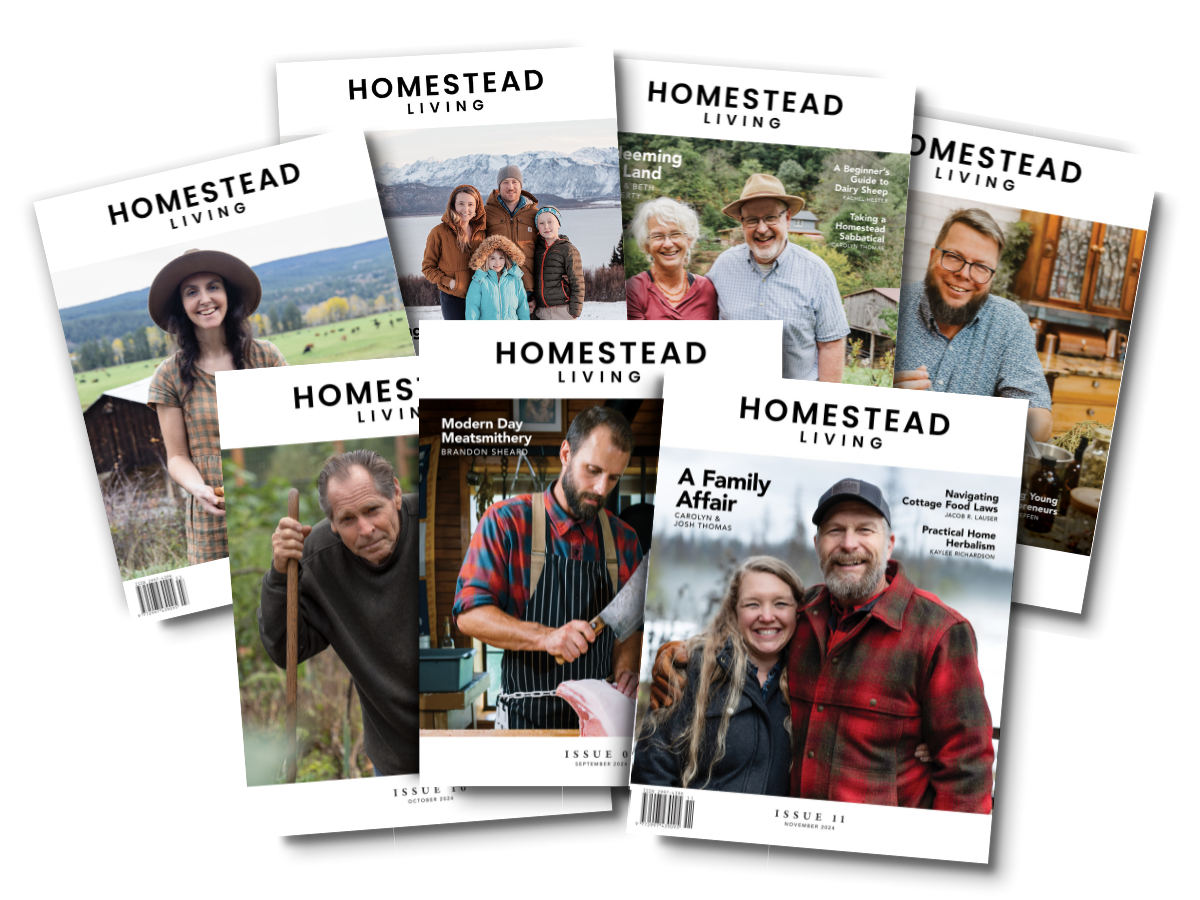
Homestead Living magazine sets the standard for inspiring wisdom-filled homesteading content: actionable tips for organic growing, food preservation, delicious recipes, and uplifting true stories that feed body and soul.
Leave a Reply