
We now use a caldron and washboard combination filled with instantly accessible hot water called a washing machine. We’ve compacted the drying line into a different heated machine to help us overcome the occasionally rainy, chilly, or cloudy days. This, of course, is our modern clothes dryer. The items we use to launder clothes at home are largely the same. Maybe an iron for pressing the husband’s shirts or your daughter’s Sunday dress with an ironing board that sometimes serves as a temporary holding space for various bits and bobs. You have one form of soap to clean the clothes and a select few ingredients for stain removal. Perhaps you keep other specialized ointments, salves, bars, or sprays used for additional laundry needs which are fabric-specific.
In my own journey as a natural-minded homemaker, I have looked intently to the past to understand how to live a more simple life. I’ve chosen to live in a way that allows me to pair down to what I truly need in my laundry room (as well as other places in my home). I am always looking to use natural methods and I steer clear of modern colorants, clever marketing tactics, and bright packaging. I ask myself questions like, “How would my great-grandmother have removed this stain? What did homemakers do before spot treatment spray? Can I get my clothes clean without using laundry soap from the store?”
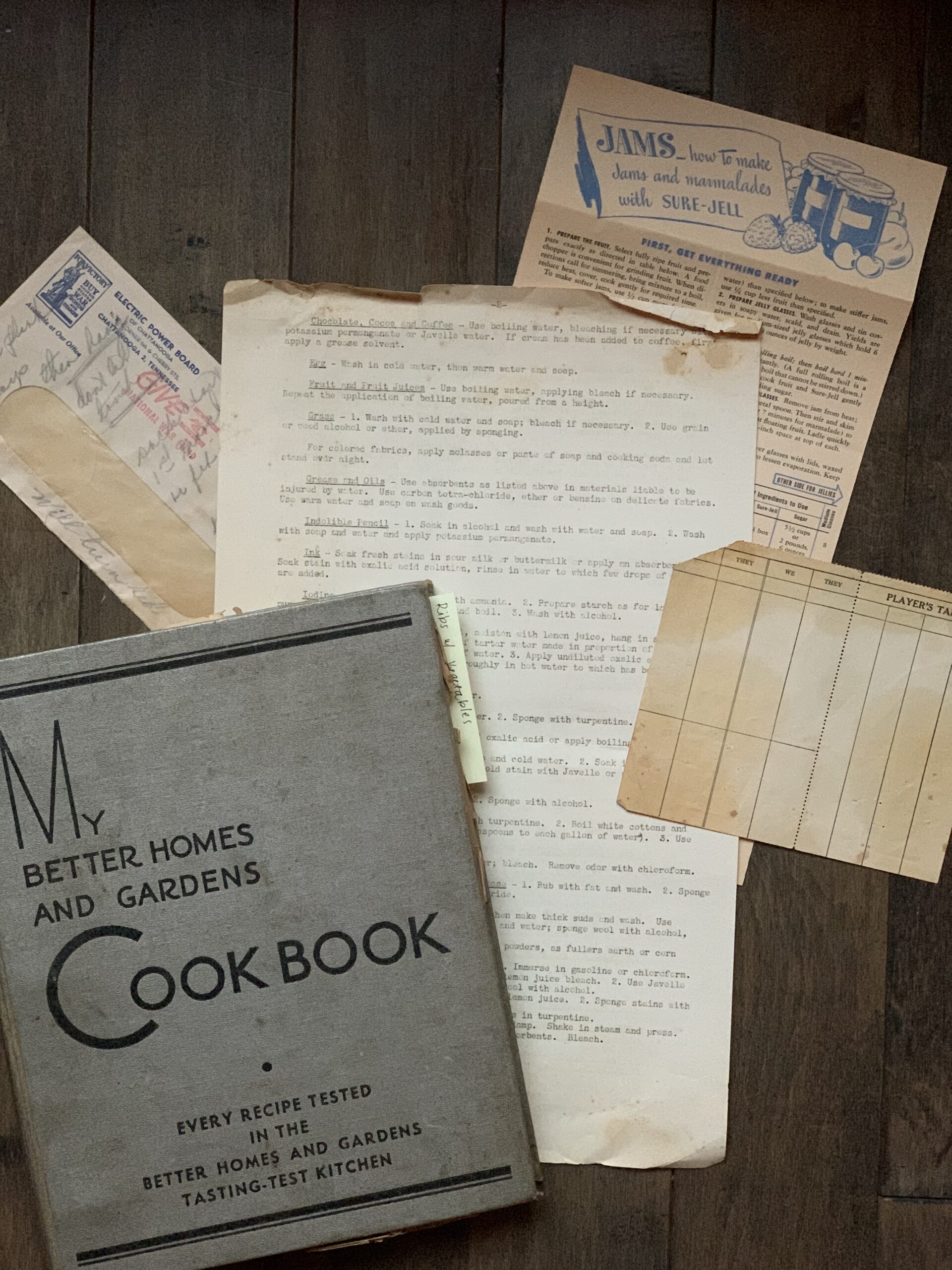
The answers to some of these questions were found in a loosely bound binder from a used book store’s FREE bin. The book was a Better Homes and Gardens cookbook binder that would have been prefilled with a few select recipes and space for expansion. It was printed in 1937, and I got weak in the knees with excitement when I saw what was inside.
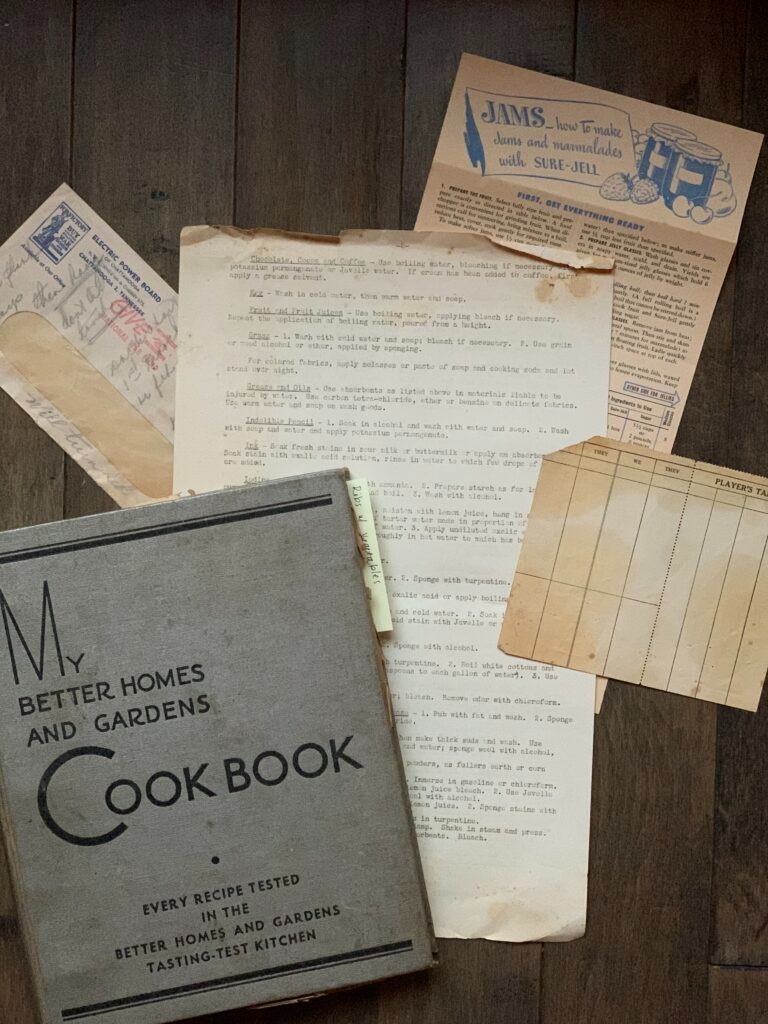
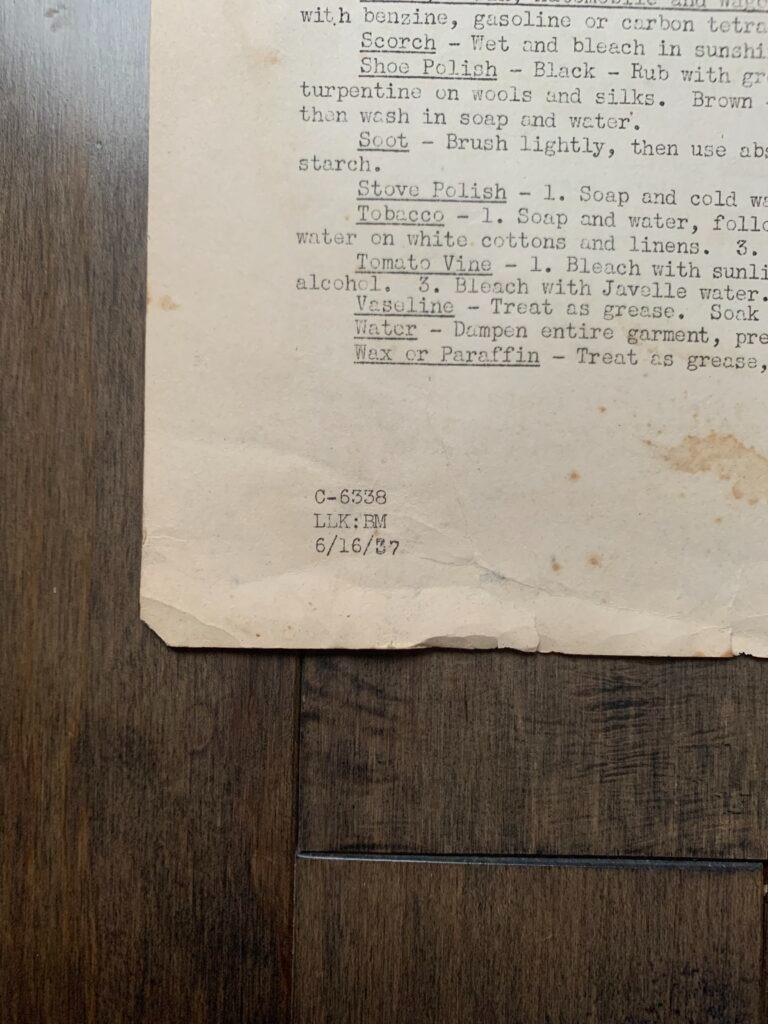
The homemaker of this binder had carefully selected coupon clippings, magazine recipes, scribbled notes, and envelopes, — this was someone’s entire homemaking career, just waiting for me to pick it up and appreciate it. My favorite item was a bulletin from the U.S. Department of Agriculture titled “Stain Removal” dated June 16th, 1937. The bulletin is typed on tea-stained legal-sized paper. It is obviously well-loved. I imagine it was referenced quite frequently.
It begins like this, “Remove all stains before washing, for most stains are set in the wash. Stains make a garment look old, unsightly, and untidy. Treat
stains promptly. Consider what made the stain and the kind of material stained. The principle of removing stains is similar to that for removing all sorts of dirt, finding some substance that will remove the stain mechanically or will absorb or dissolve it.”
I love how this typed bulletin paints a picture for the homemaker. It encourages critical thinking and provides a realistic approach to tackling stains. It goes on to describe a treatment for nearly every stain one may encounter. From Ink to kerosene and motor oil, there is a simple treatment for removing that particular stain.
Here are a few of my favorites:
Egg — Wash in cold water, then warm water and soap.
Fruit and Fruit Juices — Use boiling water, applying bleach if necessary. Repeat application of boiling water, poured from a height.
Grass — 1. Wash with cold water and soap, bleach if necessary. 2. Use grain or wood alcohol or ether, applied by sponging.
Chocolate, Cocoa, or Coffee — Use boiling water, bleaching if necessary with potassium permanganate or Javelle water. If cream has been added to coffee, first apply a grease solvent.
Ink — Soak fresh stains in sour milk or buttermilk and reapply an absorbent. Soak stain with oxalic acid solution, rinse in water to which a few drops of ammonia are added.
Mud — 1. Allow to dry and brush. 2. Sponge with alcohol
Pitch, Rosin, Automobile or Wagon Grease — 1. Rub with fat and wash. 2. Sponge with benzine, gasoline, or carbon tetra-chloride.
Scorch — Wet and bleach in sunshine.
Stove Polish — 1. Soap and warm water. 2. Immerse in gasoline or chloroform.
Wax or Paraffin — Treat as grease, using an absorbent or bleach.
Here are a few of my favorite natural laundry stain helpers:
Blood — Rinse with cold water immediately if fresh. If set in, use hydrogen peroxide then wash normally. This works great on butchering days on the homestead or when you get a splash of meat juice while preparing food in the kitchen.
For Whitest Whites without bleach — Utilize a bluing agent like the Victorians. Synthetic aquamarine became available to the masses during the victorian era and became a common tool in the laundry maids’ tool belt. Aquamarine creates an optical illusion when gently dying white fabric. It makes it appear whiter than it is. This is why many modern-day soaps contain “optic brighteners” that are blue. There is a brand called Mrs. Stewarts’ bluing liquid. I believe it can be purchased online and sometimes at the local hardware store. Hydrogen peroxide powder is another great alternative.
From Whites, protein stains, or linen/cotton tablecloths — After washing, but while clothing is still wet, hang the clothes to dry in direct sunlight. The UV radiation breaks down proteins and will fade stains. This is a great method for cloth diapers. It works best with cotton but I have also had success with bamboo diaper liners.
Wax stains — If you drip wax on a table cloth or natural fiber like cotton, cover the area with a piece of paper and iron on low heat. The wax will gently melt into the paper. Keep moving the paper to absorb all of the wax as it warms.
I hope you enjoyed this brief peek into the past. It gives me hope that a simple and natural approach is as effective today as it was in 1937. Don’t be afraid to look to the past for ways to do any task in today’s modern life.

Leave a Reply