
Plagued with digestive issues like bloating, cramps and constipation, according to the CDC, 41.9% of Americans are overweight, diabetic and pre-diabetic. Many others struggle with fatigue and low mood and yet it’s widely accepted that these fast-rising numbers are now a normal part of everyday life.
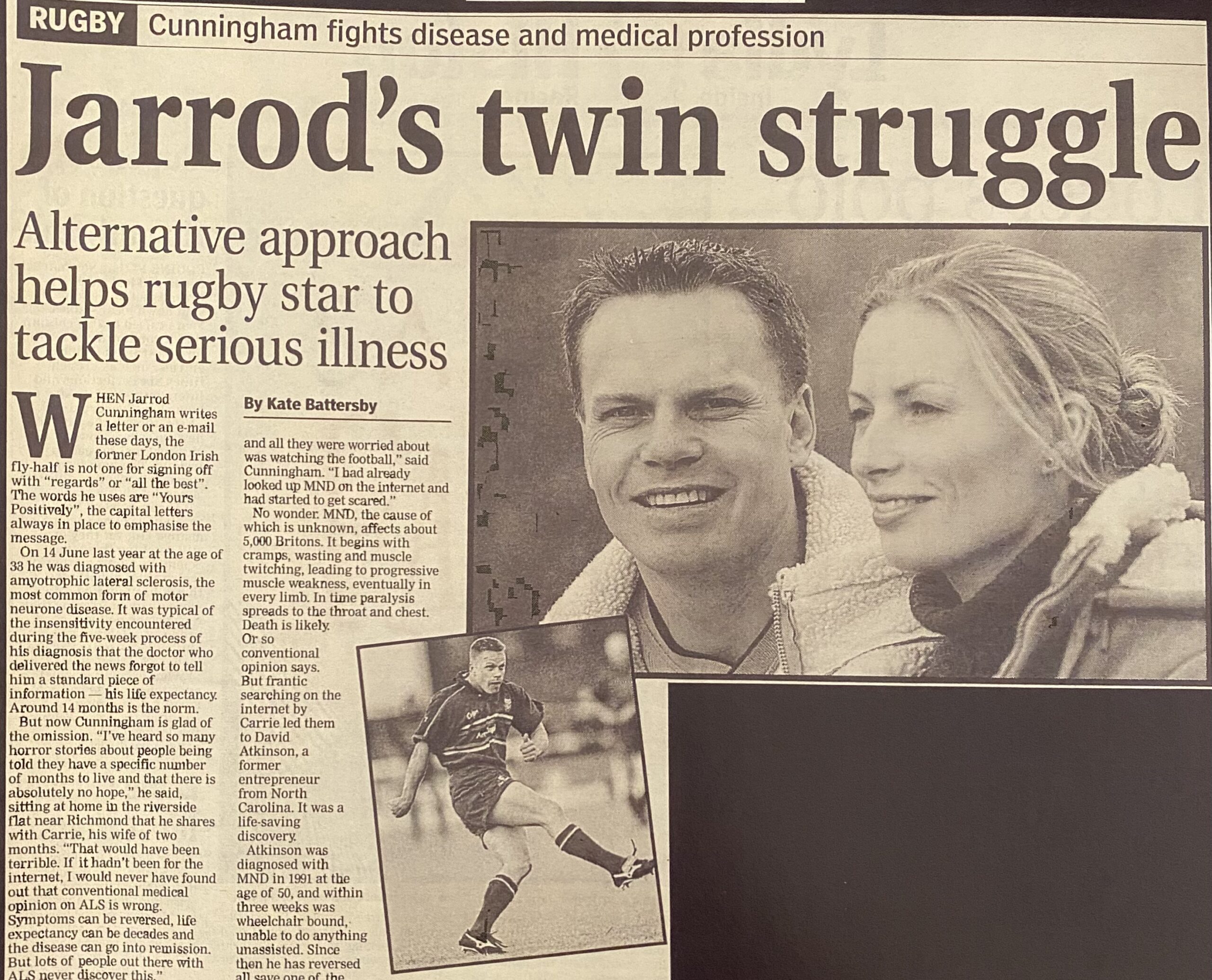
In 2002, not long after graduating from medical school with an honors degree in Physiology, I moved to London where I met and married a professional athlete. He was at the peak of his athletic career and should have been the very image of ideal health. What no one could have predicted rocked the face of the sports pages when at age 33, just 8 months into our marriage, he was diagnosed with Lou Gherigs disease and given just 18 months to live.
Unfortunately, modern medicine had little to offer us in the way of treatment or hope. So I did what most scientists do when they are faced with a problem — I started scouring the medical journals for an answer.
Because of my husband’s public profile, his story was all over the press. This led to us being contacted by a number of holistic health practitioners. For someone not familiar with the field, I listened cautiously at first, always wanting to qualify what I was learning with a scientific explanation. The common denominator and the one big “go-to” that all these alternative practitioners kept repeating was that the most significant change we could make to support my husband’s health was to start “eating clean.” At the time, I did not have a clear understanding of what that meant.
Up until that point, as a consumer, I had the same trust and expectations that most other consumers have when they walk into a grocery store. Which is to say, whatever I take off the shelf and put in my basket has been tested and guaranteed safe for my use and consumption. I can say today, based on the knowledge I’ve gained from published scientific research, that is simply not the case.
During my quest for help, I came across a professor from Illinois who had written a book called Food Additives: A Shopper’s Guide To What’s Safe & What’s Not. This book listed over 300 additives and preservatives that the author had independently tested for their safety. As I glanced through the book, she had cautioned most commonly used additives as either toxic or poisonous to human health and so it seemed sensible to me that in order to cut these out of our diet. There were just going to be certain foods we must learn to live without. Our prerogative was to try and get my husband on a diet of food free from chemicals so his body could begin the work of trying to heal itself from the inside out.
This is where my homesteading journey began. Although my husband died 5 years later, the neurologists had initially given him just 18 months to live. The medical world considered him an anomaly for having held on so long. For my husband, perhaps there had already been too much damage done to his body when we made the change to cleaner living.
However, since that time I have continued on that journey and learned to grow food and cook from scratch. I’ve maintained a position that most chronic disease is made better or worse by lifestyle choice, particularly by what we eat. I absolutely believe that people can reclaim their health through diet, learning where food comes from, and how it’s processed. No matter your condition, you can make changes and have control over what you are consuming.
If this is somewhere close to where you are at in your journey, trying to eat clean, and learning to grow your own then please know that I completely understand the challenge. The transition to eating a diet based solely on whole foods when you’ve been raised on ‘done for you’ foods can be totally overwhelming. But it’s also true that “Rome was not built in a day” and often the biggest, most lasting changes are made by taking small steps toward the goal.
What is Added results in Subtraction.
What is in my food?
I want to share with you some of the holes that I discovered in my own diet and thinking. By addressing these issues, I was able to build a ‘whole’ diet to provide my life what I actually needed!
On the first website I ever built I listed out every food additive, preservative, emulsifier, and acidifier and then categorized them according to why they are used in food, be it to make a product look better, last longer, taste better, improve its color, consistency, shelf life, etc. If you’ve glanced at the side of most store-bought foods, you see all sorts of additives on the label. You probably don’t know what half of them are, and may not be able to pronounce their names. I’d be willing to bet if I offered these substances to you as a white powder on a spoon that you would not take it without asking a lot of questions. Yet we eat multiple spoonfuls of these products every day.
Learning to identify toxic chemicals in food is a minefield. Especially when you start to realize that labeling isn’t quite as transparent as you might think it should be. Eventually, my grocery store visits were taking hours and causing a lot of frustration as I tried to read and decipher labels. Becoming aware of additives in food is the first hole to mend in your diet. When these chemicals are added to your food, your food subtracts from your health rather than adds to it. The benefit of the food you are eating is negated by the effect of the chemicals it contains.
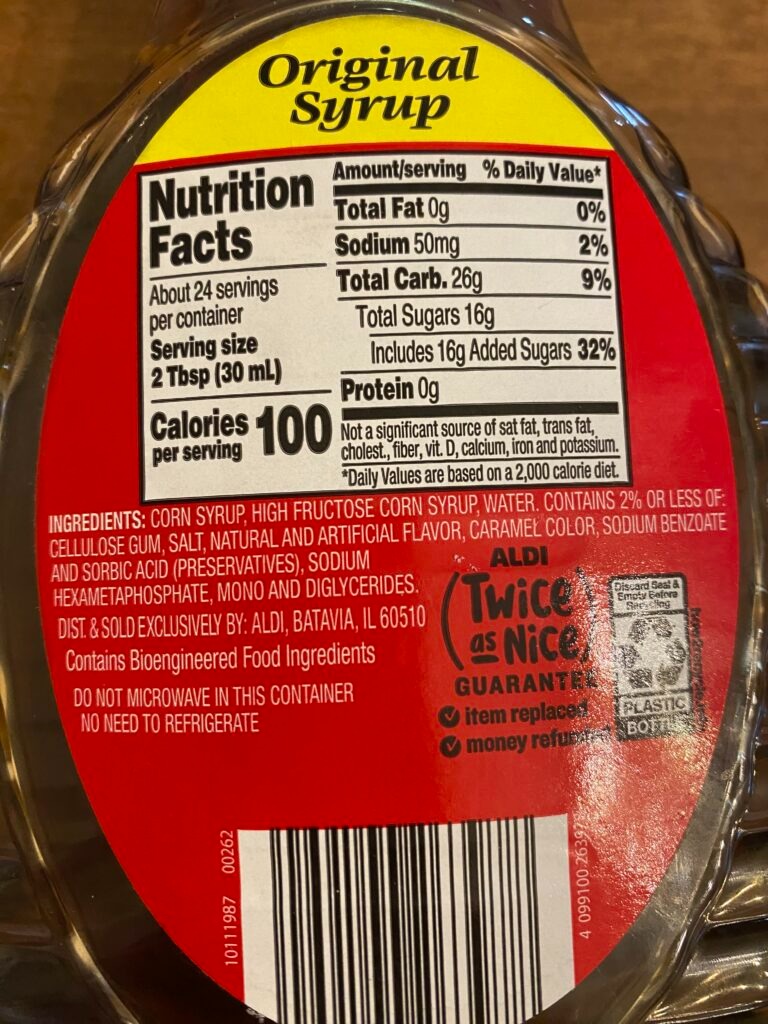
My top 10 toxic food additives to avoid:
- Monosodium Glutamate (MSG)
- Artificial Sweeteners
- Partially Hydrogenated Oils (Trans Fats)
- Sodium Nitrite
- Potassium Bromate
- BHA and BHT
- Food Dyes
- Aspartame
- High Fructose Corn Syrup
- Carrageenan
Label reading is not only confusing but also time-consuming. It didn’t take long for me to become tired and frustrated with trying to read labels, so I decided the only way to move forward was to learn to cook using whole foods only. If it came in a package or a can, it was not coming home with me!
The Whole Story
Most of us know that a critical part of a healthy diet includes a combination of whole fruits and vegetables, regardless of how they are grown. As much as I’d like to tell you I had solved all my problems by simply sticking to the fruit and vegetable sections at the grocery store, I was just starting to peel off the layers of the proverbial onion!
In the early 2000s, when the word “organic” hit the labels on our produce, I think most people (myself included) thought it was another trend or fad. But even with an additional 20 years of studies and research to better inform us, many people still remain unaware that “more than 70 percent of non-organic fresh produce sold in the U.S. will test positive for potentially harmful pesticides” — even after being washed and peeled! Yes, you read that correctly! (source EWG.org)
One of the most obvious health benefits of growing your own food is the complete control you have over what goes into the food you cook and prepare. When I’m making batches of tomato sauce, I know what goes into it. When you grow your own food, you are also in control of what kind of pesticide, if any, you use. But growing all of your own food can be challenging, and for many of us, there will always be some produce we need to source from the store. This is another significant hole in our diets that needs to be fixed — reducing exposure to whole food chemicals.
Guacamole ingredients: Cilantro, scallions, and cherry tomatoes are homegrown, and limes and avocado store bought.
The Environmental Working Group (EWG) is an organization committed to educating the public about fruits and vegetables with the highest and lowest pesticide residues so consumers can make the best decisions for their families. They publish annual lists based on test data from the Department of Agriculture and Food and Drug Administration to help consumers make informed decisions.
The below lists are taken from EWG’s 2022 Shopper’s Guide to Pesticides.
The Dirty Dozen (foods containing the highest amounts of pesticides)
- Strawberries
- Spinach
- Kale, collard and mustard greens
- Nectarines
- Apples
- Grapes
- Bell and hot peppers
- Cherries
- Peaches
- Pears
- Celery
- Tomatoes
The Clean Fifteen (the top 15 conventional fruits and veg with the least amount of pesticide residue)
- Avocados
- Sweet corn
- Pineapple
- Onions
- Papaya
- Sweet peas (frozen)
- Asparagus
- Honeydew melon
- Kiwi
- Cabbage
- Mushrooms
- Cantaloupe
- Mangoes
- Watermelon
- Sweet Potato
Improved nutrition
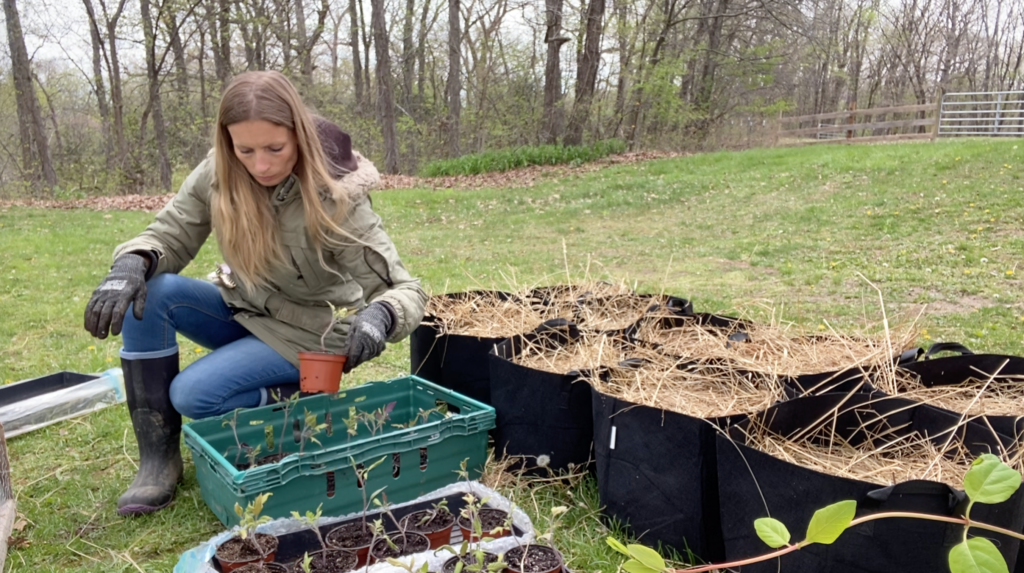
As I continued down the rabbit hole of reclaiming health through diet, I was removing a lot of harmful substances but knew I needed to be adding even more healthy foods to my diet. It was obvious that I needed to start a garden. Aside from the benefits of fresh air and exercise and also saving money on grocery spend and reducing environmental impact, by growing your own food, you can control what you eat, ensure your food is of the highest quality, and add more nutrients to your diet. This is all possible because you control the conditions in which your food grows!
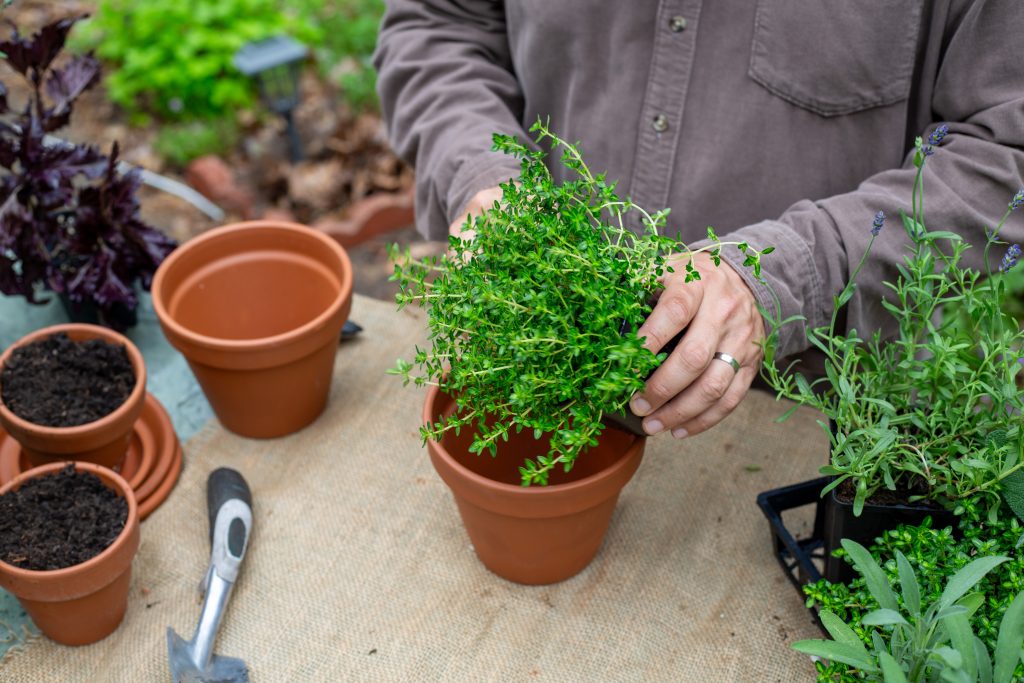
When I started my gardening journey I did not have a backyard and so I started by growing herbs in containers on a balcony measuring 3ft by 4ft in central London. You can do so much on a budget in a small space!
My top 10 impact foods that can be grown in a grow bag
- Strawberries – superfood
- Cherry Tomatoes
- Sprouting Broccoli – superfood
- Any herbs of choice
- Carrots
- Ginger – superfood
- Potatoes
- Spinach – superfood
- Garlic/onion
- Sweet peppers – superfood
To supplement, I also found a farmers market where I could buy seasonal vegetables that I could not grow myself.
You may live in a zone where you can grow heat-loving plants year-round, or you may live where the season is short and the use of artificial light and heat is needed to maximize your yields, but either way, there is so much that each of us can do to improve our nutrition!
With a bit of smart planning, there are a lot of small crops that make a huge impact to our health. And you can get started wherever you live, learning to use these foods regularly in your cooking. Start simple, and start small. Before you know it, you’ll learn to harvest and preserve some ot the best and healthiest food you’ve ever eaten. Start your journey to reclaiming your health by making your diet whole!


Leave a Reply