
Posted on in honor of the death of Wendell Berry….
Lessons Learned About Life and Farming From Wendell Berry
When I consider the farm-ward path that my family has taken over the years, I must acknowledge we are deeply indebted to the agrarian poet and author Wendell Berry, a farmer with generational roots in Kentucky. He is also a writer who chose to leave the city and come home to write from and of that place. I first became familiar with Wendell Berry through his unique essays and ideas; they cut against the grain of the culture that I lived and breathed, and yet, some sort of resonance kept me coming back. It felt like an invitation to stoop down and look at some wonder unavailable from my current vantage. So I kept shifting my body, trying to see what he was seeing.
It was his poetry that ultimately brought sight. Not just the words but also the rituals he engaged in to create them. Mr. Berry has a habit of writing poems from the place of sabbath, the day of rest. In his introduction to This Day: Collected and New Sabbath Poems, Berry says:
“For anybody conscious of the history of the collision between the living world and the purposes of mechanistic humans, and of the marks and scars almost everywhere of that collision, heartbreak comes easy and rest comes hard. All rest partakes, consciously or not of the sabbath.”
Rest, pause. This concept feels so countercultural and subversive. And yet so much of Wendell Berry’s life and work finds expression from this posture.
If much of his work comes from a place of rest and sabbath, the rest hangs on an idea that he lays out so beautifully in his 2012 Jefferson Lecture “It All Turns on Affection.”
“Imagination thrives on contact, on tangible connection. For people to have a responsible relationship to the world they must imagine their places in it. To have a place, to live and belong in a place, to live from a place without destroying it, we must imagine it. By imagination we see it illuminated by its own unique character and by our love for it.”
He holds that the only way to live rightly in the world is from a specific place that we love and grow in relationship with.
Finding Our Place
It is precisely this idea that got our family into the current troublesome mess we are in. Perhaps it is unfair to blame him entirely, because it was disregarding his advice that got us into this situation. His advice, it turns out, is very good. Very sound, indeed, and I have learned that it is good advice by the great personal pain of ignoring it. A pain as great as child-rearing or marriage or any other worthwhile yet difficult undertaking.
His advice is this: “Don’t become a farmer.” But all the while he has the gall to make it sound like the only reasonable way to live.
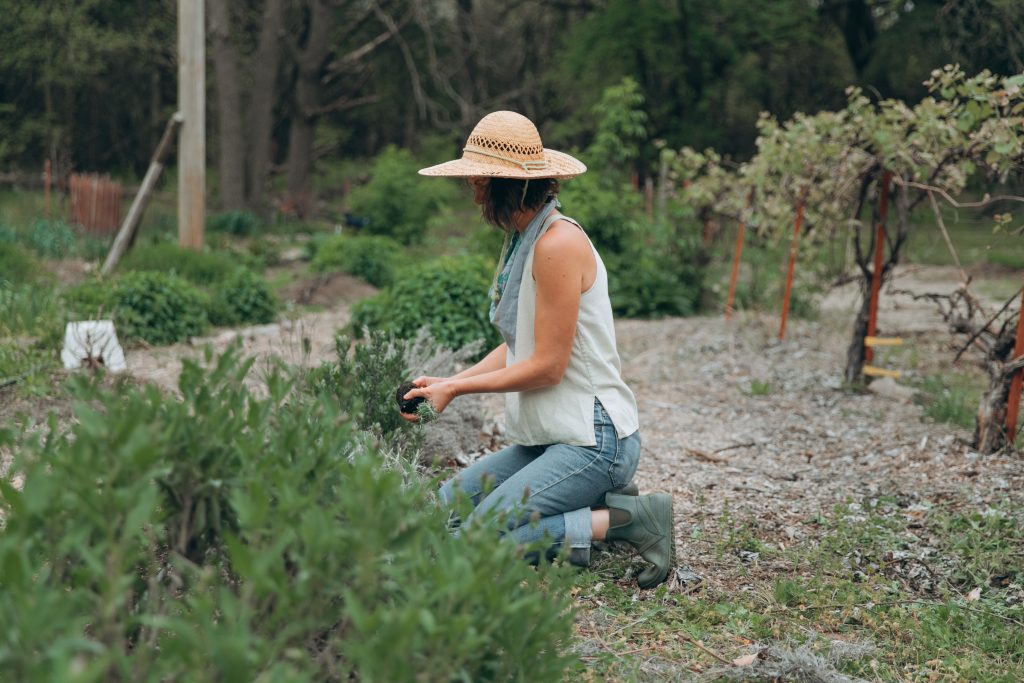
And so, with nudges and yearning resembling two people falling heedlessly in love, my husband and I disregarded Berry’s sage advice, and now, here we are, fumbling farmers, in love with a particular place, broken in pieces by that same place, wondering how you can love a place and still want to leave it, never to return.
But really, the mess is more than just our late-life choice to shift to the vocation of farming, touching something more foundational to the human experience. I think Mr. Berry says it best:
“It is hard to have hope. It is harder as you grow old,”
And he is right. It is because of Wendell Berry I have learned the fine art of living without hope.
Mourning What Once Was, And What Could Have Been
Spoiler: I do believe in hope. But I think we try to move too quickly through the places of our pain and much of what people call hope is actually toxic positivity and self-medication. I get it. Sometimes, I just want to feel normal, to feel better. But, as someone who loves a place, and because of the love for that place, loves other people’s places, I believe that the right response to the destruction of people and places is mourning. And so I cry. I cry a lot.
I cry as I drive to my children’s school because the landscape bears all the violent marks of industrial oil, energy, and agriculture, the skeletal remains of a 100-year-old tree row recently wrenched up to plant even more of the same crop, acre after acre of land devoted to the repetitive production of cotton where cotton should not grow, the ground regarded as a lifeless substrate.
I cry over washes and gullies and creeks thick, red, and swollen with the surrounding fields’ fertility, carrying nutrients in a load too great for the waters to bear. I mourn as I consider the oxygen stolen from the water as these misplaced nutrients are transformed into algae blooms, suffocating the life below. Dead zones.
Even now on our 120 acres, I hear the heavy machinery of industrial energy creeping ever closer, squeezing us with every conceivable metal monstrosity, kissing our trees with the crackling buzz of high power lines.
The only possible response to these things is tears.
Why is it necessary that we mourn fully and deeply? Grief is such a painful process; why can we not just bypass it and move into something better? I do not believe that mourning is self-flagellation. I am convinced that mourning is a defiant act of hope with enough fire burning inside to dare say that our current reality and the present arrangements of things are off base and not as they should be. Mourning serves to unmoor us from the present reality and dare to reimagine what could be possible. Not by simply rearranging the parts of our current reality into new configurations of the same old tired thing, but by imagining the world afresh.
And this is what I see in the work of Wendell Berry: a lockstep of mourning, grieving, frustration, fear, listening to his place and finding wisdom in its plants and creatures. Moving towards new possibilities. In his poem on hope, he says, “Speak to your fellow humans as your place has taught you to speak, as it has spoken to you.”
Lessons Learned from the Land
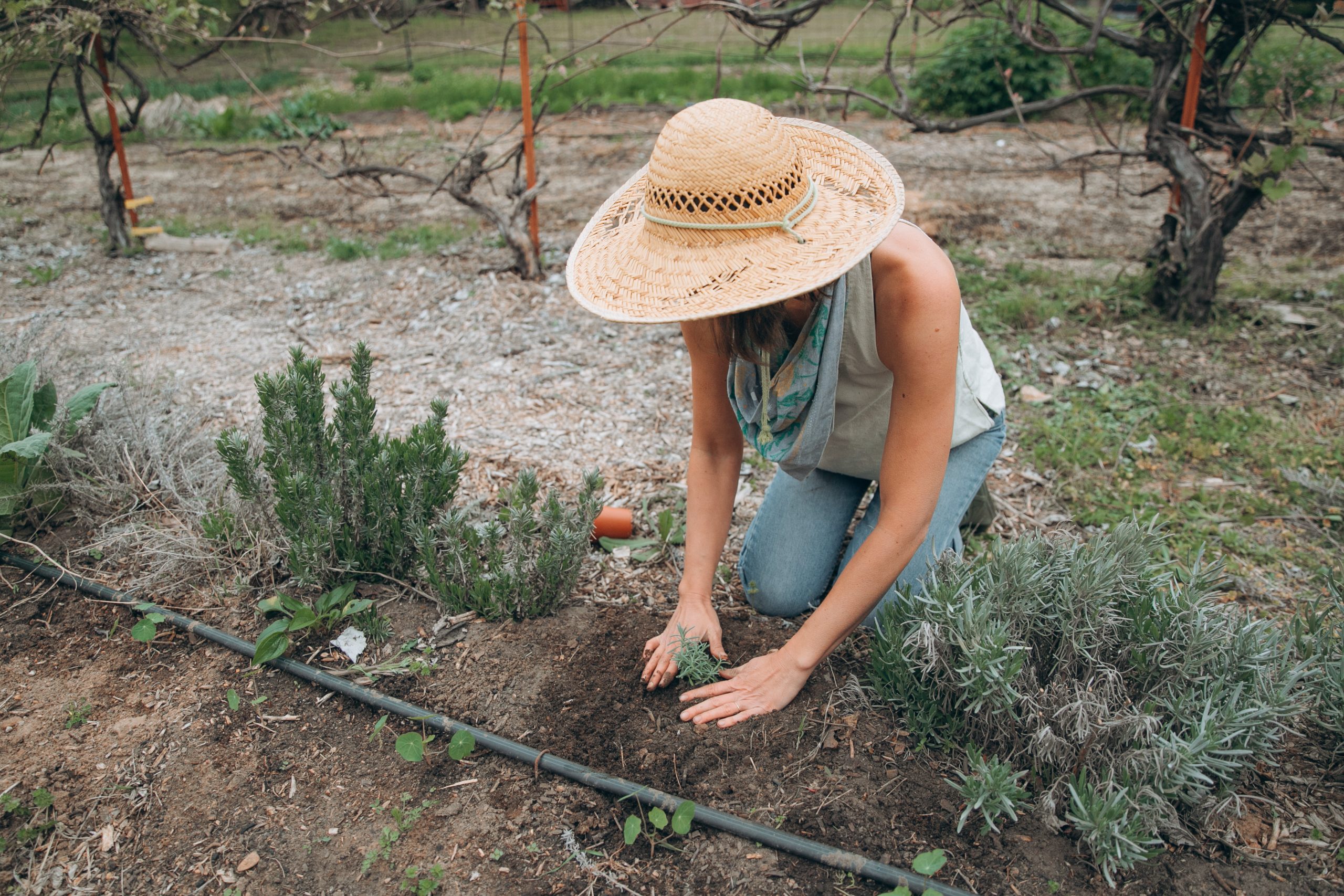
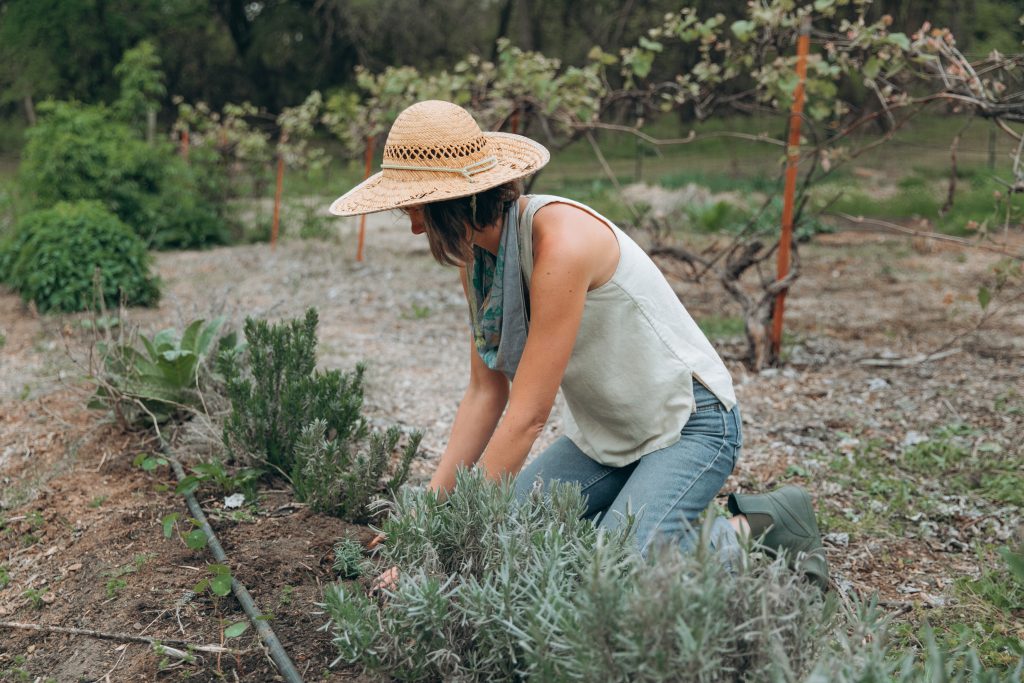
Here in my place, I have learned a new dialect and been transformed. Not just my thinking but my intuition, my sight, and the way I touch, listen and taste. I am attentive to things and places that I was not before. I have gained wisdom in my body. My fingers know the feel of good soil and that which is depleted. My eyes can travel a field, its varying greens and topography, and intuit how the water would run in a major rain event. I can taste my place. I know which trees have the best mulberries and where to find mushrooms. I nibble gumweed, curly dock, and rabbit tobacco.
I have developed friendships with wetlands, creeks, streams, and rivers. I have a new respect for their lives, learning how much they have changed and how much they have suffered and lost in these days of extractive terraforming and industrial agriculture. With great pains, my place has taught me that water is sacred, to treat it as sacred, and to attend to its well-being.
My place has taught me to care for edges and margins above all other places. I love to create even more edges, caging off clumps of violets, hawthorns, mulberry, and oak to keep them from the lawn mower and brush hog. I have a particular fondness in caring for depleted places and slowly nudging them towards health.
This place has taught me about boundaries and their keepers: thorn, brier, burr, thistle, and poison ivy. Cross me, and you will know it. Because of them, I have befriended my own thorns, pain, and anger.
I have learned that we live in a unique mutualism with this land; that the relationship is not of farmer and farmed, but rather, there is asking and receiving, gratitude and gift.
This place has taught me that ecological diversity is one of the most hopeful and resilient things in the world and that monocultures are inherently unstable, untenable, and destructive. I have seen it and felt it in my bones. My place has also sent me out with new eyes, new ways to see the peoples, places, and communities around me.
I have been here for six years, which is not very long. I have only lived here in a record drought. I do not know what this place is like in plenty. The popular notion is that you change your body’s cells entirely over seven years; this is not completely true. For instance, my skin and gut will be entirely remade by next month, and it can take a greater part of a decade for your heart and bones to make the transition. But by now, I am more of this place than I am not. I am remade, a different kind of human.
Now I am learning to speak and act as my place has taught me, and it speaks the language of making, creating and the fecundity of renewal.
It’s funny. At this moment, I am three years into a Wendell Berry fast of sorts (which I am breaking to write this article). The reason for the fast is that I wanted to hear more voices, other voices, different kinds of voices sharing their experience with land. Like with most types of fasts, the deprivation has been rich. I have spent time with women and men of all backgrounds and places and listened to their unique stories of land, place, and bodies. Berry was my gateway to this city of voices. And they are all doing something similar to Wendell, casting out strands of stories, art, poetry, dance, meals, and recipes into a dark world. They are re-weaving hope, superimposing it over the broken land and bodies.
A Message of Hope For the Future
How do we imagine moving forward? I think that is a question each one of us has to answer for ourselves, in community. For some of us, it may be writing fiction or stories that chart new paths. For others, our work may be sharing our affection for the world around us with our children, carving out space for wonder. Imagining forward is active, even when it does not know what to do. It bakes cakes, makes applesauce, and sketches dragon-wing begonias. It plants milkweed, cultivates gardens, and lets a mulberry sapling live in the field, making your in-laws mow around it. For some of us, it is in poetry and painting, the shaping of clay and wood. Prayer and songs of all shapes and sorts find new paths forward, as do wild acts of hospitality.
I am convinced that the only path forward for the well-being of land and humans is through coming to the end of our hope; teetering there, being remade and from the place of that reformation, reimagining with our land and bodies, the world afresh.
“Found your hope, then, on the ground under your feet.
Your hope of Heaven, let it rest on the ground
underfoot. Be it lighted by the light that falls
freely upon it after the darkness of the nights
and the darkness of our ignorance and madness.
Let it be lighted also by the light that is within you,
which is the light of imagination. By it you see
the likeness of people in other places to yourself
in your place. It lights invariably the need for care
toward other people, other creatures, in other places
as you would ask them for care toward your place and you.”
— Wendell Berry, “A Poem on Hope.”
New to the work of Wendell Berry? Here are some of my top reading recommendations:

Leave a Reply