
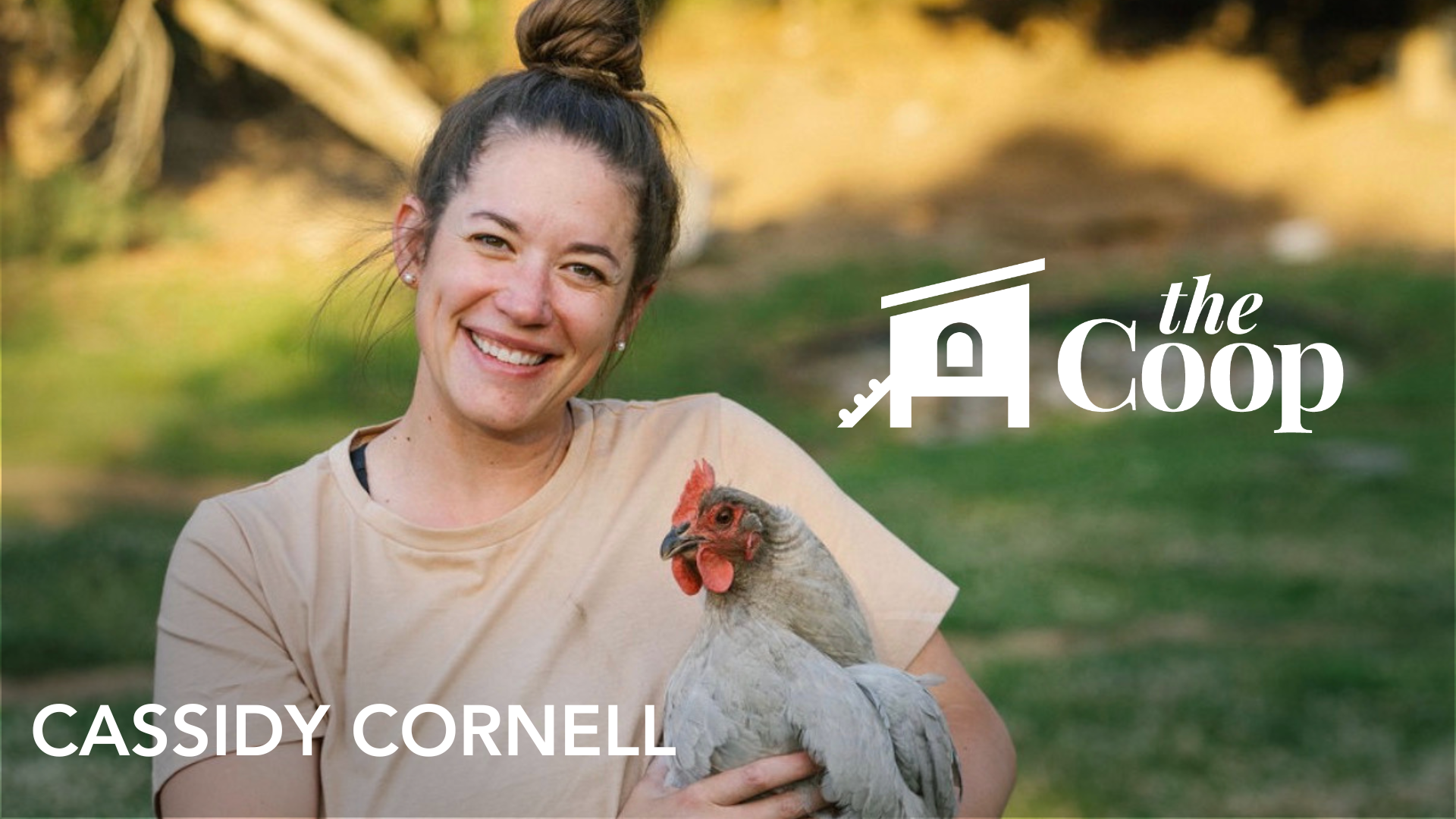



In Episode #26 of The Coop, Anna sits down with Cassidy Cornell (suburban homesteader, backyard farmer, author of The One Acre Homestead, and McMurray Hatchery team member) for a practical, encouraging conversation about raising food (and livestock) on a smaller scale.
Cassidy shares her journey into homesteading and how she’s been able to raise chickens, meat birds, ducks, quail, rabbits, and goats on a modest property. She offers clear, experience-based advice on choosing the right animals, managing limited space, and avoiding the biggest mistakes new small-space homesteaders often make.
Anna and Cassidy dig into breed recommendations for high egg production versus efficient meat birds, the unique needs of ducks and quail, whether rabbits and goats make sense in tighter spaces, and how to design systems that maximize food production without overwhelming your time or property. They also talk about the importance of community sufficiency (sourcing what you can’t raise yourself from local producers) and the value of being realistic about your current season of life.
Whether you’re working with a quarter-acre suburban lot, dealing with zoning restrictions, or simply want to get more from the land you already have, this episode delivers practical ideas and genuine encouragement. You don’t need a large farm to start producing real food.
Listen or watch the full episode right here:
The show notes …
0:00 – Introduction
6:42 – How Cassidy Got Started Homesteading
15:31 – Livestock Suited for an Acre or Less
24:50 – Tips for Raising Meat Birds on Less Space
33:29 – Proper Space Requirements for Ducks
39:51 – Pros and Cons of Quail
47:07 – Will Meat Rabbits Save You Space?
50:34 – Goats vs. Cows
1:08:41 – Buying Meat Locally & Community Sufficiency
Anna Sakawsky:
The biggest questions that we get most frequently is how can I do this in a smaller space? How can I do this in a suburban or an urban space? That sort of thing.
Cassidy Cornell:
Showing our kids that real food comes from real animals and real gardens and real people.
Anna Sakawsky:
Sell me on goats. Why do you love them? Why is it something that you’ve chosen to add?
Cassidy Cornell:
If you’re getting a bird because you want it to be dual purpose, you’re sacrificing in both of those purposes to have the option of both.
Anna Sakawsky:
If you’re a mom like me, then you probably know what it’s like to spend way too much time worrying about what’s in the everyday cleaners and body products we bring into our homes and use on and around our families. In fact, a few years ago, I completely overhauled our cleaning products and started making my own vinegar cleaner, baking soda, toilet scrub, and homemade laundry detergent. And while those have honestly worked pretty good, I don’t always have time to make my own cleaners. And if I’m being honest, I don’t always want every surface of my home to smell like vinegar. And that is why I love Rustic Strength. Rustic Strength offers a full line of non-toxic laundry, home and body care products all made in small baptism by a family-owned company in Missouri. Their formulas are safe and effective for real, for real, and free from the junk you don’t want in your home, on your body, or near your kids.
Clothes come out clean without overpowering scents. Surfaces shine without the lingering scent of vinegar or toxic chemicals, and you can sleep soundly knowing that you don’t have to worry about what’s in your cleaners and skincare products. So if you’ve been thinking about making the switch to cleaner, non-toxic home and body products, then consider this your sign. Head over to rusticstrength.com today and see why so many moms have already made the switch. Again, that’s rusticstrength.com. Tell them the coop sent you. Well, hello everyone, and welcome to episode number 26 of The Coop. I am your host, Anna Sikoski, editor-in-chief of Homestead Living Magazine. And I am super excited for today’s conversation because it’s a topic that is actually near and dear to my heart and one that I think will resonate with so many of you listening because today we’re going to be talking about homesteading in a smaller space.
So homesteading on an acre or less. And specifically, we’re going to be talking a lot about raising livestock in a small space, but we’ll touch on gardening and other aspects of homesteading too. So I love this topic because I homestead on less than an acre myself. I’ve shared our story before, but my family and I live on a quarter acre suburban lot. We’re zoned rural residential. So I always say it’s kind of like suburban in the back or in the front and rural in the back. We kind of back onto a green space, to a forest. And so we’re zoned rurally, which means we can do more than some folks that are maybe zoned residential in the city or are in the dreaded HOA, but we’re going to touch on some of those topics today as well. But we’ve managed to do quite a bit here on a quarter acre.
We’ve converted our entire front yard into gardens. We keep backyard laying hens and we’ve been really intentional about designing our property to maximize production, food production or production in some way or another, whether it’s income generating production or whatnot, but really, really intentional about utilizing kind of every square inch of our property. There’s very little lawn left and almost no wasted space. So I know firsthand what’s possible and that you don’t need a large piece of land to live this lifestyle. But I’m definitely interested in learning more about raising livestock in a small space. I have a few ideas of what might be possible on our property, but I am excited to get some more practical advice from today’s guest about how to make the most of the space we have. So obviously the more land you have, the more animals you can keep, the more diversity you can have and the more food you can produce.
But one of the most common questions we receive at Homestead Living is how to start homesteading on a smaller scale because the reality is that most people don’t have five for 10 or 20 or 100 acres. They’re starting where they are often on a suburban lot in a small backyard or maybe even under the restrictions of an HOA. So if you fall into that category and you’re looking for practical ways to grow and raise more of your own food right where you are, then today’s conversation is definitely for you. But if you do have more land, I encourage you to stick around anyway, because the principles that we’ll be talking about today are completely scalable. Good design, efficient use of space, thoughtful livestock management. That kind of stuff applies wherever you’re at, wherever you’re working with a quarter acre or 40 acres, you’ll just be able to do more, but this is still going to be applicable to you.
So my guest today is Cassidy Cornell, a suburban homesteader, backyard farmer and author of The One Acre Homestead and creator of The Halftime Homestead Online. And she’s also a member of the team at McMurray Hatchery. So she’s kind of somewhat of a poultry expert, which makes her a fantastic resource for anyone interested in raising chickens, ducks, turkeys, quail, or other small livestock. So in today’s conversation, we’re going to be talking about choosing the right livestock for your property, avoiding some of the biggest mistakes that new homesteaders make, making the most of limited space, and why you don’t need a large farm to produce a surprising amount of your own food. So Cassidy is going to share a lot of practical encouraging advice. I think you’re going to walk away with plenty of ideas that you can apply no matter the size of your homestead. So with that, welcome Cassidy Cornell to the show.
Cassidy Cornell:
Hi, thank you so much.
Anna Sakawsky:
Yeah, thanks for being here. It was such a pleasure. So for anybody listening, I actually got the chance to meet Cassidy a couple weeks ago at the Modern Home Setting Conference where we had you for an author signing. We were selling copies of your book and you were speaking on kind of backyard homesetting there. I really actually wanted to sit in on your talk. We were so busy at our booth, I didn’t get a chance to actually sit in on any of the talks while we were there. But I know that this is kind of. I got to present a couple years back on small space homesetting, but I definitely come from a bit more of the gardening background. We’re doing a lot more in the garden, a little less with the livestock, whereas you’re a little bit opposite. You’re doing much more with livestock, a little bit in the garden.
So we’ll kind of go deep on the livestock here today, but as I mentioned in the intro, we’ll touch on some of the gardening aspects as well. But this is definitely going to be livestock heavy. So just to start, I would love if you could just give the 50,000 foot view of who you are, what you do, what your homesteading journey has looked like, and where you’re at now, how much space you have, what all you’re raising, that sort of thing.
Cassidy Cornell:
Okay. So I would say my husband and I always joke and say, for a lot of people have a commentary like this, homesteading really started for us during COVID. And that was because I was 36 weeks pregnant, so nearing the end of my pregnancy with our daughter who was diagnosed with a very rare lung deformity. And so we had a situation where I wasn’t even supposed to leave the house because she was so high risk during my pregnancy. And that was when things kind of started running out at grocery stores. And we were living in a very small, like 700 square foot house on the west side of the state. And there was a moment where we looked at each other and we were like, “We have no safety net here. We have no food storage built up.” And we were very fortunate to be in a position where we could do grocery orders and if things were missing, it wasn’t a big deal.
We still had food to eat, but that was kind of the first time where we thought, “Oh, maybe we should think a little bit more about this.” So I would say that’s kind of what planted the seed in our heads about just even thinking about raising and growing some of our own food. So when our daughter was born, very healthy, had a beautiful end to our pregnancy, a wonderful birth, we moved across the state to the east side of the state to be closer to my parents and my siblings. And it sounds so funny to say, but I was nursing our daughter and I was looking at Instagram and I came across an account of a gal, her name’s Eliza. I think she’s Eliza Jane on Instagram and she’s Sunstone Orchard and Rabbit Tree on Facebook. And at that time, she and her family were homesteading on like 0.23 acres, I think it was.
And they were producing all of their own meat and milk and eggs and gardening. And that was the first moment for me where I thought, “Well, this is a woman who is a busy mom and she has little kids, but she’s making it work and maybe I could do it too.” It just was so inspiring to me to see that. So we moved into our first house here in Spokane and we were on a third of an acre and we got quail right away. I had been keeping quail off and on for many years at that point. So I was just ready to have them again after our move. And then I – So you
Anna Sakawsky:
Were keeping quail before you got into the homesteading thing anyway? Experience.
Cassidy Cornell:
Yeah. Yeah. So when we lived in Bellingham, I kept quail because I had an aunt and uncle who lived locally and they kept quail and I just loved it. And I thought it was so cool. So they gifted me my first group of laying hens. So we moved here and I got back into keeping quail. I convinced my husband to let me get our first batch of chicks. I had seen many years before the biggest little farm. And I was like, “Someday I’m going to get chickens because of this movie.” And we moved into the house and I was like, “This is the time. It’s my turn to get chickens.” So we got our first chickens as my housewarming gift. My mom planted a beautiful garden for me. There were a couple of garden beds and she filled them with starts as a surprise. And my mom is a fantastic gardener.
So that was my first experience with having a real garden of my own. And I loved it. It was such a beautiful and romantic time for me because I had just quit my job as a teacher. I was a middle school teacher for like six or seven years. So I was able to quit my job when our daughter was born. And we were going out to the backyard. I had a baby on my chest and a toddler at my side and we were watering the garden and picking tomatoes and gathering eggs from our chickens. And I was just so in love with the process of being more involved with our food. And then at the same time, I didn’t know it when we moved here, but Spokane is such. It sounds silly to say I didn’t know this, but Spokane is such an agriculturally rich area.
So it opened the door for us to really start to get to know farmers who were raising food that we were purchasing. So we found a local ranch, Ramstead Ranch, started buying all of our meat from them that we were able to. We were buying Katie Millhorn’s milk, raw milk locally. We were driving all the way over to Idaho to buy that from the grocery store. And so we really started kind of immersing ourselves in going to farmer’s markets and having people that we were buying our food from who knew our names and asked about our kids. And it was just such a really cool experience that I thought I would love to be able to do this on a little bit bigger scale. And so we made the jump to an acre property from our third of an acre about two years after living there because I wanted a dairy animal.
And in my area, you have to have a certain lot size to be able to keep large livestock. And I really, really wanted a cow. And we found a property that was an acre. It was fully fenced. It had a barn, but I just knew that a cow wasn’t going to be in the cards for us here due to space. So that was how we got into dairy goats. And then we’ve just kind of expanded a little bit every year and refined our systems a little bit every year. So the first year we moved in, it was August. We got ducks for the first time as a housewarming gift from my bosses at McMurray, which was so fun. We brought our laying flock and our quail over here. We got our first dairy goats. And then the following spring was when we had our first goats in milk because they kidded.
And I went really like 10 toes in on meat birds that year. So we did a round of cornish cross, a round of Murray’s midget white turkeys, and a round of jumbo pekins to just try all of the different types of meat birds that we could raise. And so that’s where we are now. We’re on the same acre.
Anna Sakawsky:
Wow. And so what all are you currently raising and how many animals do you have?
Cassidy Cornell:
Yeah. So we have a laying flock, a pretty sizable laying flock. It’s probably about 20 chickens, I would say. I have a small hutch of quail. We have a couple of rabbits in our garden. They eat all of our weeds and castoffs and things like that that we pull out. I have a couple of geese. I’ve always had ducks. This is the first year that I’ve kind of really stepped back from ducks because I love the geese so much. So right now we only have one duck, one lone masculvey. And then we have some dairy goats and one turkey.
Anna Sakawsky:
Wow. Okay. So quite a bit. And again, on an acre, you’re able to do a little bit more. We’re on a quarter acre, so we probably wouldn’t be able to do that much, but we’ve got, I’m trying to think of how many we’ve got right now. Not too many. I think we have six hens and we happen to have a rooster, which is actually interesting to me. We’re not technically allowed to have a rooster here. You have to have at least an acre to have a rooster just because of the space. When you’re on a quarter acre or less than an acre, you’re usually closer to your neighbors. And because roosters crow, that can bother the neighbors. We had some chicks though last spring now, and we ended up actually with two roosters out of that. One of them actually was aggressive, so he had to go in the end.
But the other one has been pretty good. And all of our neighbors are actually like, “No, don’t. We actually really love. We live out this way because we love the sounds of farm animals and that sort of thing.” So I’m always kind of checking in with them like, “Is this still okay?” But they all love it. And we give them eggs from time to time and that sort of thing. So we’ve kind of decided to keep them around for flock protection and other things like that. So we’re actually adding four more laying hens next month just to keep up with our egg production, which I would like to touch on in a minute. But we’re also thinking about adding some meat birds because we have an old rabbit touch. We used to have rabbits that they were just pets. We didn’t raise them for meat, but that’s been vacant ever since.
And we almost tore it down and I said, “Well, I think just leave that because we might be able to do some meat birds in there.” So I’m interested in picking your brain on that in a minute and what we can raise there. Beyond that, I don’t know how much more we could do on a quarter acre, but that being said, that’s why I’d love to talk a little bit more about. So if somebody is just getting started on an acre or less, say even less, say they’re working with our size space kind of thing, or they’re more limited in what they can do, and they’ve never raised livestock before, what would you recommend starting with? You started with quail because you had some experience with that. Would you recommend that? The standard is always laying hands. Is that what you would say? So
Cassidy Cornell:
I think it kind of depends. One of the biggest things that I try to talk about is defining your goals. So if someone’s goal is to minimize how many eggs they need to buy from the grocery store and they’re on a property that doesn’t allow chickens, then I’m like, “You should get quail 100%.” But if they’re on a property that allows them to have chickens, I think that chickens are everybody’s number one starting place for a reason. They’re such an easy way to kind of dip your toes into that cycle of becoming more intimate with where your food comes from. And I always call it a relationship of reciprocity to take care of an animal that has the important job of feeding your children. So taking care of them because they’re taking care of your family. I love that aspect. And I think that chickens are the perfect way to start that because they’re so fun, they’re so easy, they’re so personable.
And then you get fresh eggs within six months or less.
Anna Sakawsky:
Yeah. And yeah, so true about the reciprocity too. I always think about this cycle because chickens will eat most of the scraps out of your kitchen as well and they’ll eat meat and all those types of things. So when I have picky eater children sometimes that don’t eat all of their food, and especially if it’s things like protein sources that can be expensive and all that stuff, I don’t want to waste that. But I feel at least good knowing that I can feed that to the chickens, that’s going to help them to be healthy, produce healthier eggs, then that’s going to go back to feeding my family. So I at least feel like there’s no waste in that system as well. So that’s just another aspect of it that’s worth considering too is just kind of having this closed loop system set up as well where things that would be waste otherwise are going to feed your family in another way, in a roundabout way.
Okay. So with laying hens, I’m interested because obviously if you’re working in a smaller space and you’re looking to actually maximize your food production, there are certain breeds that you might want to consider over others. And it can be really tempting to choose the cute breeds, the ones that look like they’re little fluffy plumes on their head and different color eggs. And we kind of fell into that this year. We had always just kind of raised standard breed. I don’t even know what they were like, the Rhode Island red type. I don’t even know if that’s what they were, but just kind of your standard laying hens. And they produced really well, but I wanted to get some different color eggs, get some blue egg layers and some olive eggers and that sort of thing. So we diversified our flock this year and that’s been fun.
But also I’ve noticed, we did that last year and by now we’re on year two and I’m noticing less production. The production is going down much more significantly in year two. I haven’t even seen a green egg come out in over a week. So I don’t know if one’s on hiatus or what’s going on. But if somebody is actually looking to maximize their food production out of it, get the most eggs, what breeds would you actually recommend?
Cassidy Cornell:
Yeah. So this is another thing I really, really enjoy talking about because I think that dual purpose breeds across the board in any type of livestock are kind of all the rage right now. But I am very much of the mindset that they’re great and if it works for you on your farm, you should do that. But if you’re getting a bird because you want it to be dual purpose, you’re sacrificing in both of those purposes to have the option of both. And dual
Anna Sakawsky:
Purposes for my listening means like meat and eggs or meat and dairy.
Cassidy Cornell:
So yes, meat and eggs for chickens or meat and dairy for goats or any other type of hoofstock like that. And I also, coming from the background of working for McMurray Hatchery, we do a lot of work with heritage breeds, rare breeds that are endangered that we’ve helped increase their numbers. And we work really closely with the livestock conservancy. So when I say this, it’s not because I’m anti-heritage breed chicken whatsoever. I have a very mixed flock. But in an effort to focus on not buying eggs from the grocery store, I really always prioritize having production layers in my flock. So some great examples are like red stars, black stars, amber stars. Those are the three that we carry at McMurray Hatchery. We also have Pearl White Leghorns and Whiting True Greens. Those are some of my favorites for high production, but of all of them, the Red Star is far and away my favorite breed of chicken.
That
Anna Sakawsky:
Might be what we had. It was a red breed of chicken and they were really high producers.
Cassidy Cornell:
Yeah. And so production breeds are hybrids. They’re cross and a very intentional cross of two different breeds. And they are bred to produce the most amount of eggs within their first two years of life. So I think for red stars, just off the top of my head, I want to say that’s probably close to 300 eggs a year, which is
Anna Sakawsky:
Incredible. Almost daily. Almost a day a day. Yeah,
Cassidy Cornell:
Almost daily. But the thing is, is that once you hit that two-year mark, they’re going to decrease.
So the flip side of that to me is not only choosing your breeds wisely, but also choosing how to cycle your layers wisely. So that’s something that is a big part of my flock management is cycling my layers. So I do a small batch of chicks every spring, usually in May. And I raise them and they start laying in the fall when most of my flock is getting ready to take their annual break. So they kind of carry us through the winter. And even if it’s a small amount, if it’s six Red Star hens, that’s almost six eggs a day. Four to six eggs a day throughout the winter, that’s doable. We eat them all, but we’re happy to have them and it keeps us from having to buy eggs at the grocery store. And then the second group of chicks that I lay, I usually start them in June, July or August, just kind of later on in the season.
And they start laying in very early winter, so January, February. So that’s kind of the point where it’s starting to get sunny, but the main flock hasn’t kicked it into gear yet. And then we get a boost in the egg basket that really carries us through until the main flock starts laying again. And so part of that cycling, because I’m bringing two new groups of hens in every year, I always cycle my hens out once they hit that two year mark.
Anna Sakawsky:
Yeah. That’s really smart. We’re starting to do that now because the first time we raised chickens, we kind of waited a couple years until one got picked off and one got thick. And now we’re down to three or whatever. I’m like, now we’re not getting much and now we need to bring in more. And then we had to wait until they were old enough to start producing. And then same thing now this year, we’re noticing a little bit lower egg production and we’re in the summer. And so then going into the fall, I’m like, what are we going to do? So that’s why we’re actually adding some in August. And I was actually surprised the first time we got a flock because I can’t remember exactly when we got them, but they did kind of start laying, I think in the late fall and they were actually producing quite a bit through the winter.
I think there’s just a misconception sometimes that chickens don’t naturally lay in the winter, they lay in the spring and summer. And so I was very pleasantly surprised that we were getting a basket full of eggs a day in the winter. So the idea of flock cycling and getting a new flock or adding to your flock at various times in the year, kind of like succession planting in the garden, right? Yeah, exactly. Think about the spring and summer garden, but if you plant it and you plant throughout the season and right now you can be planting and growing a fall garden and some of that can over winter and take you through the winter all the way to next spring. So it’s the same idea with chickens. Adding them at different points in the year, then you’re going to hopefully have eggs throughout the entire year, which is cool.
Cassidy Cornell:
Yeah. I love that comparison. Yeah. And I do think that some people don’t necessarily realize, I mean, obviously it depends on your climate and how much sunshine you’re getting during those winter months. But you can also put a light bulb in your coop if it’s something that’s not working out for you in terms of weather. But we’re lucky to live in an area that’s pretty sunny even in the winter.
Anna Sakawsky:
Yeah, for sure. So you mentioned you don’t love dual purpose birds because you’re sacrificing a little bit on each. I think that maybe come as a surprise to some people on a small space because we always think of how can you get more out of one thing? How can you get more out of one thing? But your idea is like, yeah, okay, you might be able to get meat and eggs, but first of all, you’re not getting those things at the same time. You’re getting eggs. And then if you’re getting meat, then you’re not getting eggs anymore. And probably less meaty birds and maybe less egg production. So if we’re sticking with high production egg layers and then doing meat birds, what breeds are we looking at for meat birds? What would you recommend?
Cassidy Cornell:
I love a cornish cross. And I know that that can also be a controversial thing for people. People have a lot of misconceptions about cornish cross, about that they’re genetically modified, they’re franken chickens, they don’t act like chickens. And in my experience, if you raise them like normal chickens and you give them the space and the opportunity to behave like a chicken, they do. Are they going to forage as well as a leg horn or something like that? Probably not, but they’ll get up and they’ll go check things out and they’ll forage around in grass if you provide them the kind of space and opportunity to do so. So I have only raised cornish cross. I haven’t made the jump to any other type of meat bird just because we like them so much. They’re very easy. For
Anna Sakawsky:
Anybody who might not know, because cornish cross is kind of the standard for meat birds. For homesteaders and farmers, they’re kind of the industry standard I believe for meat birds.
Cassidy Cornell:
Yeah. So if you’re
Anna Sakawsky:
Getting a meat – What is a cornish cross specific for anybody who might not be aware?
Cassidy Cornell:
So if you go to a grocery store and you buy a chicken, a whole chicken or parted chicken, the chances of it being cornish cross unless labeled otherwise are extremely high. So cornish cross is a breed of chicken that was developed here in the United States to produce the most amount of meat in the smallest timeframe possible. And so for most folks, they do around eight weeks. I usually carry mine a little bit longer, sometimes to 10 or 11 weeks for a couple of reasons. Number one is in addition to being selectively bred over many generations to get this desired result within cornish cross, part of that is that they were bred to thrive on corn and soy. And we have some dietary sensitivities in my family. And so I try really hard to avoid corn and soy for my birds. This year was actually the first time that I gave our meat birds soy, but I didn’t give them any corn.
But because I do a different style of feeding, they don’t get as big as fast, which I’m totally fine with. And also because mine do free range with our flock, they’re moving a lot more. And so they’re burning more calories and not necessarily getting as ginormous as what you might see at the grocery store. Which again, for me, I’m happy to make that trade off. So even looking at it from that standpoint, like a 10 week turnaround, that just means that my time and my space are only being intensified and used for those meat birds for a very short window of time during my busiest time of year and then I’m done.
So that’s why I really like them. There are definitely other options for people who don’t like Cornish Cross. Murray’s Big Red Broiler, that’s a Freedom Ranger. We also have ginger broilers. And then you can get into dual purpose breeds, but the thing with a dual purpose breed is that you’re going to go way, way past that 10 week mark. Like you’re looking at like 16 to 20 weeks for some of those certain breeds, which could we do that? For sure. But I just like that the process is relatively quick and easy. They’ve been an easy bird for us to care for. And I’d find that we have very few health issues with our birds because of how we raise them.
Anna Sakawsky:
Right. Yeah, because they’re quite meaty. I was actually surprised because of having raised only laying hens now. And then we went to an exhibition and they had the corners crossed there. I’m like, they are big. They’re big and meaty. So yeah, getting that breast meat and everything. And then you mentioned the 10 week turnaround and then maybe having some health issues. So that’s something that I would maybe say to anybody who’s never raised meat birds before. And I haven’t personally, but I know that I’ve heard that really you kind of need to butcher them at that point because they get too big to actually even support themselves.
Cassidy Cornell:
If you carry them for too long, definitely. They were not bred for longevity. They’re not here for a long time. But you can totally mitigate some of those health issues by how you feed what you feed and the amount of space that you give them and the opportunities you allow them to move their bodies. Because if we sat at a desk all day and didn’t move our bodies and just ate Snickers bars all the time, we wouldn’t be doing so good either. So I kind of try to carry that same principle over to our meat birds as well.
Anna Sakawsky:
Yeah, for sure. So how much space do meat birds need? First of all, do they need to be housed separately from laying hens? Do they have different requirements? And how much space do they actually need? How many square feet per bird kind of thing?
Cassidy Cornell:
So for meat birds, they don’t roost at night. Like your layers do. And I wouldn’t want to house them with my layers because they do eat a lot, so they do poop a lot. So they would be mucking up my laying coop in a way that would bother me in my brain. So mine actually, they just sleep in a welded wire dog kennel, like a big, it’s called a retriever kennel. I got it from Tractor Supply. I think it’s an eight by 10. And they are only in it at night to sleep. So we put them in there, they sleep together in there at night, and then they’re out in my pasture all day. So my pasture is probably for all intents and purposes, half an acre to maybe three quarters of an acre maximum because the rest of our property is like our backyard and our garden and we have some other spaces as well.
But at my house, everybody is out in the pasture during the daytime. So that’s goats, geese, chickens, and meat birds when we have them.
Anna Sakawsky:
Right. So they all have their own shelters, but they’re all free ranging out there together in the day. That makes sense.
Cassidy Cornell:
Yeah. So I can’t really speak to the space requirements for what it would be like if you had them in a movable chicken tractor, just because I’ve never done it that way.
Anna Sakawsky:
Well, so I’m just saying a large dog crate basically is what you’re talking about or that kind of size. Yeah.
Cassidy Cornell:
So it’s a walk-in dog kennel. I can stand. It has a roof on it and then it’s very sturdy and predator proof. And then I took plastic hardware cloth almost, the little quarter inch hardware cloth and I zip tied it all around the base so that nothing could put its little, no raccoons could get their sneaky little hands in there. And it’s been great. We’ve had no losses in that setup at night.
Anna Sakawsky:
Oh, that’s cool. And then how many do you have in there?
Cassidy Cornell:
So usually I’ve kind of like gone back and forth through what I like. And at this year. So my first year I did 35 for my first batch and that was too much for me. They were fine and it was fine for them, but just for me mentally, that was a lot of birds at one time. I found that my favorite is usually around 20 at a time, 20 to 25. So I usually order like 25 birds and then you generally lose a
Anna Sakawsky:
Couple. You can all fit in that space. They’re
Cassidy Cornell:
Just sleeping in there at night and then they’re out and about wherever they choose to be during the daytime. Yeah. That’s
Anna Sakawsky:
Good to know because that sounds like it’s probably about the size of the rabbit hutch that we have. And I’m like, “Oh, how many comfortably fit in here?” So that they’re healthy, but so that we’re maximizing our production as well, right?
Cassidy Cornell:
Yeah.
Anna Sakawsky:
If the thought of raising chickens has ever intimidated you, consider this your sign to stop putting it off. Murray McMurray Hatchery has been helping first time chicken keepers succeed for over a hundred years. They offer the widest selection of day old chicks and poultry, super low minimum orders, sometimes as few as one bird, and the best guarantees in the business, live arrival, 48 hour livability, and 90% sexing accuracy. Plus they’ve got everything you need to raise happy, healthy birds right from the start. Brooders, feed incubators, the works. It’s never been easier or safer to start your own flock, so visit mcmurrayhatchery.com and tell them the coop sent you. Again, that’s mcmurrayhatchery.com. What about ducks? Because you raised ducks as well. Ducks is something I’ve always been interested in, but I know they also have their own requirements and can maybe be messy with making mud puddles and that sort of thing.
So how much space do they need and what sort of setup do ducks need that differs from other bakeries?
Cassidy Cornell:
So I think a common misconception that people have is that it’s cruel or inhumane to keep waterfowl of any type if you don’t have a pond. Really, they just need a bucket of water big enough and deep enough for them to dunk their heads into because that’s how they clean their nostrils and their beak and their face after eating. So I always kind of recommend for waterfowl in a smaller space. I think they’re great and I always recommend that people give it a try because I love having waterfowl. There are so many benefits to them that kind of round out the whole poultry experience. You have chickens for some stuff and waterfowl for other things. So I just always recommend starting with less. It’s really easy to be like, “Oh, I have 15 chickens. I have 20 chickens.” I’m like, “Do not do 15 or 20 ducks.
That’s going to be super gross.” I think at one point I got up to like 10 ducks and that was too many ducks for sure. So my favorite number for our setup is usually around like four to five ducks at a time. I started out with mallard derived breeds. So I had Welsh charlequins, silver apple yards, cayugas, buffs, just kind of a mixed flock. And then I ended up transitioning over to Muscovies. One of my best friends here breeds Muskoves and I had been complaining about the duck noise because the mallard derived breeds are loud. They’re noisy, which is fun. We always enjoyed their sounds. And my little kids, they were much younger when we had a lot of those breeds, they were like, “Oh, the ducks are outside laughing. They’re very fun. They’re very joyful creatures.” But they were loud. And I’m like you where my neighbors are great.
I’m allowed to do a lot here, but I also try to be very mindful of the people around me. And I often check in like, “Do you hear my geese squawking? Is this okay?” And overwhelmingly everyone is like, “We love the sounds of your farm. It feels so special to hear and see your animals during the day.” But the ducks to me at that point just kind of felt too loud. So my friend who breeds Muscovies was like, “Hey, they’re quacklists. Muscovies don’t make any sounds.” And so I decided to give them a try and I love them. Muscovies are super smart. They can fly. So you do have to be mindful, especially if you’re bringing an adult bird into your home for the first time, you have to be mindful to clip their wings so they can’t fly away until they get kind of imprinted on your space.
But they are such a cool breed. They’re very hardy, very easy to keep. And they are amazing for pest control. I’ve seen them eat mice, just gobble them up. They’re really great for slugs and snails, which for me is an important part of management because we do have a lot of deer in our area. And so I always kind of, in the back of my head, I’m worried about meningeal worm for my goats. And that’s passed on through, I think it’s either slugs or snails, one of the two. And so I run ducks out in my pasture so that they eat those up and in my head it mitigates the risk and that’s my excuse for having ducks.
Anna Sakawsky:
Awesome. And so if you’ve got an acre and you said you think about four or five ducks, are they worth doing on less space than that, do you think? Would you have to scale that in?
Cassidy Cornell:
So if it was a situation where somebody had. Okay. So thinking back to my third of an acre that I was on before, I could have totally had like 10 chickens and three ducks and that would’ve been completely fine. Another one of the reasons that I love ducks, like I was talking about with pest control, they’re super helpful with that in the garden, but also their eggs are different than chicken eggs. So obviously they’re much larger, but they have a higher yolk to white ratio. So a higher fat content than a traditional chicken egg. So they’re really, really good for baking. And I am a huge, huge foodie, big home cook, big baker. And so I always really wanted to try duck eggs because I had heard for many years that they were far superior for baking. And the rumors are true. They are.
Anna Sakawsky:
And do you raise dual purpose ducks then or are there certain breeds that you raise for meat and certain ones that you raise for eggs? Or do you just do eggs or?
Cassidy Cornell:
So the jumbo pekin is like the cornish cross of the meat duck world that you definitely can have dual purpose ducks. But at this point for ducks, I just do Muscovies. And like I said, right now I only have one. I have a second. She’s hiding. She thinks she’s going to hetch some babies out there somewhere. I can’t really find her right now. Because we have the geese now, I usually limit it to two or three ducks because the goose eggs provide the same sort of –
Anna Sakawsky:
And the muscoves are good for eggs for egg.
Cassidy Cornell:
Muscovies are wonderful for eggs. And I would say that muscovies are a breed that I would consider a dual purpose breed that does not sacrifice a lot simply because they are such good moms. They are such prolific
Broodies. They will raise a clutch of eggs for you. And then you can just, they forage so well. And I mean, even just in our small pasture, they forage really well. I always have food out for them, but they really enjoy seeing what they can find. And so it’s very, very easy to just let your hens raise a batch of ducklings for you. And then when they get to be more mature, it’s super easy to pick out the females and sell those or add them to your own flock to kind of replenish your layers. And then to just raise the boys for meat.
Anna Sakawsky:
Okay. Let’s talk about quail. So you’ve obviously been raising quail for a long time. I have heard from small space homesteaders specifically that quail is a really good option because they don’t require as much space as chickens or ducks or other poultry because they’re much smaller. But because they’re much smaller, obviously you’re getting smaller eggs, you’re getting smaller amounts of meat. So are they worth it? How much are you actually getting from quail? How many would you need to make it worth it? If you’re hoping to get enough eggs to feed a family of four for a day or each day kind of thing, how many quail are we actually talking about?
Cassidy Cornell:
So my favorite breed of quail across the board to recommend to people in that situation is a jumbo koturnix. So they’re a type of koturnix quail that has been selectively bred to grow to have the largest body size, but they also produce eggs that are. If you look at a jumbo koturnix quail egg next to just a traditional koturnix quail egg, the size is there. So I would say probably three jumbo eggs, three or four jumbo eggs is one chicken egg. So just kind of doing that math. So for every one egg, one chicken egg that you want, whether it’s like for an omelet or for baking, you’re going to want to have four quail. And koturnics quail are actually super prolific layers. And so for their first year to two years of life, you’re going to get almost an egg a day. And then they’ll have that same drop off just like you see with chickens.
But the cool thing about them is that they’re hitting maturity and start laying eggs at eight weeks old, which is super fast for eggs. And also on the flip side, they reach butcher size around that same time too. So you’re looking at meat and/or eggs within eight weeks, which is a super fast turnaround. And so I think that quail are a really good option for people who are super limited on space. If you’re thinking like an urban backyard or a really restrictive HOA, chances are your HOA hasn’t thought about putting quail into the fine print. And so they are a great option for people in those kinds of scenarios. They’re also a really good way to kind of dip your toes into seeing if you like livestock management in the first place. And obviously every type of livestock that. Keeping chickens is very different than keeping quail.
They have different needs and different requirements, but it still gives you the opportunity, like we were talking about earlier, to participate in that cycle of caring for a creature that is feeding your family. And they’re very easy to butcher. You can butcher them at home, at your kitchen table and have your little kids help you. And it’s a very seamless process. So I actually, I grew up hunting with my dad. So I’ve been helping my dad process quail since I was a very young girl. And now it’s just something that we do when we raise meat quail. We just process them ourselves. And it’s very –
Anna Sakawsky:
Different than processing chickens then, like the method?
Cassidy Cornell:
They’re much smaller obviously. And the way that we do it, so we’re not scalding and pucking them. We don’t do whole birds like you would see maybe at a fancy restaurant. We filet the birds off and then you can cut the thigh and have a little leg. And then if someone was like, “Well, what about everything else? I don’t want to be wasteful.” You can just completely de-skin them and have the rest of the carcass and roast those and make stock, for example. Or if you have dogs, we have an LGD and two healers, that’s a perfect little mouthful to also then supplement their own feeding schedule as well.
Anna Sakawsky:
Do they taste like chicken or do they have a different, like a gamier taste?
Cassidy Cornell:
I would say that quail are a lot more delicate flavor-wise than chicken and they take on the flavor of whatever you marinade them in very easily and quickly.
Anna Sakawsky:
I imagine them being more dark meat. Is that just in my head? I don’t
Cassidy Cornell:
Know. Well, I mean, the breasts are, I would say, a pretty typical white meat, maybe a little bit darker and gamier. So one of our favorite ways to eat them is we fully the breasts off and then we marinate them and wrap them in bacon and grill them. So it’s like a little popper. And if you ate one and didn’t know it was quail, you would probably just think it was like a little chicken tenderloin nugget wrapped in bacon.
Anna Sakawsky:
Sounds delicious actually. So with quail, what do they need then that’s different from chickens? What kind of housing?
Cassidy Cornell:
Quail are very much less domesticated than chickens are. So they don’t have the ability to be like, “Okay, this is our home and this is our person.” And they can be friendly. If you raise them by hand, they know you and they’ll come and say hi to you and stuff. But if you put them in a situation where you’re like, “Oh, I’m going to let my quail free range,” then you’re not going to have quail anymore. So
Anna Sakawsky:
They have
Cassidy Cornell:
To be in an enclosed touch. I have kept quail in all different types of setups over the years. And my favorite is raised touch on hardware cloth. So they’re suspended above the air. I find that it’s a lot more clean. It’s a lot easier to take care of them. And then I also like to have just like a traditional rabbit hutch where one part of it is smaller, but has a wood floor and is enclosed if they want to hide. And I just put bedding in there and then cleaning it out is super simple.
Anna Sakawsky:
Yeah. Okay. And you mentioned even in an HOA, because maybe they haven’t thought of a quail and put them in the fine print, but do they make much noise or much mess or are they pretty – No,
Cassidy Cornell:
They’re pretty simple. So if I picture myself, if I was on a quarter, a third of an acre in an HOA, I would probably just have a setup of hutches, quail hutches along my fence in one area. Pretty simple to scoop under them. I would say that probably takes five minutes depending on how many hutches you have to clean under, but that’s why it’s so easy to have that wire floor because the food waste falls through. The other cool thing though is if you do have chickens and you have your quail in where your chickens are, they’ll go through and they’ll scratch all that up and they’ll eat the grain that gets dropped and kind of help with the management, so to speak. The females don’t make any sounds at all beyond maybe a little peep peep every now and then. But the males do call at dusk and dawn and it sounds like a wild bird.
And I think it’s a really beautiful sound. I think it’s way heavier than a rooster.
Anna Sakawsky:
Yeah, for sure. Cool. Okay. So other types of small livestock? I know you do goats, so I do want to talk about that. But before we do, do you have any experience raising meat rabbits? What do you
Cassidy Cornell:
Do with that? So I would say that for somebody who’s never done it, I know an awful lot.
So I mentioned earlier, my aunt and uncle had quail and that was how I got into quail. And they also raised meat rabbits. So I was super close with them and that was just a process that I was always interested in. And I loved helping out when I would house sit for them. I lived with them for a while as well in college when I was finishing student teaching. And so when we got here into this property, there came a point where I was like, okay, we’re going to get our own rex rabbits and we’re going to do meat rabbits because it is a wonderful supplement to feed or complete feed if you’re doing raw feeding for dogs. And so I thought that that would be a really great thing to do for our dogs. But I’ve had pet rabbits my entire life since I was a little girl.
And my daughter just fell in love with those rabbits. And I was like, I don’t think that this is going to go the way that I want it to go, which is okay. So we sold all of our Rexes to a family who does 4-H and we have hollen lops now and they’re just pets. But that being said, if someone was in a scenario where it was prohibitive for them to run cornish cross, if they were like, “It doesn’t really make sense for me to do cornish cross where I’m at,” meat rabbits are incredibly prolific. You get a great amount of meat for a very little footprint in terms of the space that you need. And I think rabbits are also really cool because like I said, we keep ours in our garden. They’re not loose in our garden. They’re hutches in our garden. And they get everything we pull, all of the weeds we pull, extras of produce.
If lettuce has bolted, it goes to the rabbits. And I think that that is such a great compliment to any type of garden because then also we were talking earlier about kind of closing that loop with chickens because then you also get their manure, which is technically, it’s not hot, it’s cold composts. It’s a cold manure. So you don’t have to technically compost it before using it. I wouldn’t put it directly on lettuce or something that I was pulling and eating. But for things like tomatoes and squash and stuff like that, putting it around or even in a hole when you’re planting it, they give back to your garden really well in that way. And if you raise them for meat, you get even more out of them.
Anna Sakawsky:
Yeah. And if you breed them too, then they’re really prolific, as we all know, and have, I think, a pretty quick turnaround time too, right?
Cassidy Cornell:
The turnaround time, I want to say probably 10 to 12 weeks. Like I said, I’ve never really done it, but they wean at eight weeks.
Anna Sakawsky:
And again, really quiet, probably something that you get away with an HOA or somewhere where you need to keep your animals a little bit more on the down low rate.
Cassidy Cornell:
And the same thing as like I was talking about with the quail, when you have them in the wire bottom touches, all of their waste falls through and it’s a very seamless cleaning process. So it doesn’t take a lot of time. And your neighbors probably wouldn’t notice if you were up on it.
Anna Sakawsky:
Yeah. Okay. So let’s talk about goats because it’s scaling up a little bit. You probably need a little bit more land to do goats. I’ve definitely heard some mixed things about goats. I feel like people either love them or hate them. People are like, “Goats are the best.” And then you have somebody like a Joel Salaton who comes in and he’s like, “Just don’t, just don’t. They’re not worth it.” So first off, sell me on goats. Why do you love them? Why is it something that you’ve chosen to add? And then we’ll talk about their requirements.
Cassidy Cornell:
So like I said, when I first was like, “Okay, I’m going to get a dairy animal.” I wanted a cow so bad. And I always tell the story of how I pictured myself in my linen dress milking my jersey with her beautiful brown eyes and how I would dip the cream for my coffee. And that just quickly was not going to be a reality for me because we’re only on an acre. Half of that is pasture. The pasture is supplemental for the goats. They do browse in certain areas and I do overseed it and stuff like that, but I don’t count our pasture as a big part of their feed source. And so I knew that if I did that with a cow, the amount of hay I would have to bring in for her and also for a companion because the herd animals can’t be alone, was going to be astronomical.
Not to mention the amount of cows poop a lot. And it’s a very different consistency. And I knew that our small pasture was just going to get overrun if I tried to do that. Even if I looked into things like a Dexter or a mini jersey, it just felt very prohibitive to
Anna Sakawsky:
Me. And there’s not much rotational grazing or anything happening at that point because there’s nowhere to actually move them to. There’s just a spray.
Cassidy Cornell:
I could. If I wanted to be super into it and get into the brass tacks, I could do rotational grazing on our property. But I don’t because our pasture is not the main feed source for my animals and that’s okay. And that’s just our reality and how I run my farm. But I knew that a cow was just going to be too much stress on my pasture, on my barn, on me. At that point in time, I didn’t even have a spigot in my pasture. I was hauling water from my house, from the spigot that’s up on my house all the way to my pasture. So it just wasn’t going to happen. And again, my best friend who convinced me to get Muscogees, she has goats here. And she said, “Just try it. Just try the goats. You’ll probably really like them. I love them.” And she had had goats and cows.
So I got the goats and was instantly hooked for a lot of reasons. So I’ve grown up, I grew up riding horses, so I’ve always been around large livestock. But I come from a very big safety standpoint with large livestock where it’s like if my kids are around an animal, the animal needs to be completely trustworthy. And even the best, nicest, kindest cow, they’re still very large. They’re really, really big. And my pasture is my kid’s backyard. So it’s like our backyard and then they just hop a fence and they’re right there in the pasture. We share a fence line in our backyard with our pasture. And so I really love, first and foremost, their size. I mean, obviously my kids have to be mindful. If the goats are messing around, don’t go over there. If you’re feeding them, have a grownup with you. But by and large, they go out there and they just hang out with the goats.
And it’s a very safe size, especially for my kids’ age. And also I can do pretty much everything by myself. I do have a relationship with a vet. I am established with a vet here in town that does see small livestock. And so if I need things like prescription antibiotics, that’s who I go to. But I can trim their hooves on my own. I can pick a goat up and put her in the back of my minivan and take her to get bread somewhere. So I need very little help and intervention when it comes to actually handling them and for my kids to be able to handle them safely as well. We love their personalities. I am very picky and hardcore about the animals that I keep. I always say number one rule is everybody gets along. Number two rule is everybody is nice to the children.
I’ve never had a goat that was mean towards people. That just has never been my experience. And I would say since starting with goats, I’ve kept quite a few.
But they are just so sweet, so personable. They have a really strong will to milk. When they know it’s their turn to be on the milk stand, they are up there. And most of them don’t even need to lock their heads in. The amount of milk that we get from them is very manageable. So I started with Nigerian dwarfs and I kind of fell into that idea that you hear a lot where it’s like small property, small goat, but I’m not a small person. I’m very tall. I have really big hands. And so Nigerian dwarfs were actually really difficult for me to handle. I had to bend over to lead them around. And their teets and their udders are very small, so it’s hard for me to milk them. And so then I kind of started dipping into mini Nubians, which are a cross between standard Nubians and Nigerian dwarfs.
And they’re a really nice goat, but I got my first Nubian and quickly fell in love with having a standard sized dairy goat. And I had always been like, “Oh, I can’t get a standard because of the kids.” And she ended up being just the sweetest, nicest thing. I think my daughter was three or four when we got our first Nubian and she could go out there and lead her around and she could go and milk her and brush her while she was on the stand with no problems. So we love their personalities and how gentle and sweet they are. But unfortunately their milk has ruined me. So I don’t really like cow milk anymore.
Anna Sakawsky:
Really? Interesting. Because I know that’s one of the things that maybe is a misconception. I’ve certainly thought that before. Yeah, it’s an option for dairy, but goat milk, I don’t know, doesn’t sound. But then you hear from people for a reason and they’re like, no, it’s really good. So what’s the flavor profile like? I would
Cassidy Cornell:
Say that it’s just, it tastes sweeter and cleaner than cow milk. If I drink cow’s milk, I can taste that it is from a cow, if that makes sense. Whereas with our goats, it’s almost sometimes we just put a splash of vanilla in it. We call it vanilla milk and it tastes like ice cream. Wow.
Anna Sakawsky:
Which is very sweet. I think of it tasting, again, gamey or grassy or something like that. Yeah.
Cassidy Cornell:
So goat milk is a lot more sensitive on a molecular level than other types of dairy. So a couple of things that I’m very mindful of is number one, what I feed my goats. So like I was saying earlier, my pasture isn’t their number one feed source. They eat alfalfa because it gives their milk a very sweet, clean flavor. So that’s all I feed is alfalfa and they get alfalfa pellets as well in addition to grain. And then also being really mindful of their minerals. They have to have access to minerals. And I kind of have a system now where different types of the year, I use different brands of minerals for certain reasons. And I’m always really mindful of dumping their minerals out and refreshing them every single day because they don’t like it when they get. If it’s humid out, they get kind of cakey almost and they don’t really like that texture.
So making sure they have fresh minerals and fresh water, but then also having really sanitary milking practices and making sure that I chill my milk really fast. It’s called rapid chilling. So I got a cooler from my parents for my birthday this year and I fill it with ice water. And then as soon as I’m done with the jar, I just dunk it in there and then it goes into the freezer. And the colder you get it, the faster you get it to a really cold temperature, the better it’s going to taste because it prohibits the reproduction of bacteria that could potentially give it an off taste. So
Anna Sakawsky:
You’re not pasteurizing or anything like that. You’re just doing this cold dunk basically with the way.
Cassidy Cornell:
We drink it all raw. I do feel that pasteurized goat’s milk is gross. It’s not like pasteurized cow’s milk. I think you can taste it. I can taste it when it’s pasteurized. I think when you’re heating goat milk, because it is so delicate to that higher level to me, I don’t care for how it tastes. But that being said, a lot of goat products that you get in the store, I don’t care for how those taste either. So we put our deposit down on our first girls and my husband was so sweet and he went to the store in Idaho and picked up some of Katie’s milk when she was still running her dairy. And he was like, “Look, I got some goat milk for us to try too.” And we tried it. And I was like, “Oh no, we have Made a huge mistake and I don’t know what to do.
So I texted my friend and was kind of panicking and she said, “Well, goat milk from the grocery store does not taste like goat milk at home in any capacity.” And it’s so true. So we obviously love our goats for many reasons, but number one is that their milk is so good and we love it so much.
Anna Sakawsky:
Do you make any cheeses or products out of that? What kind of things do
Cassidy Cornell:
You make? Yes. So first and foremost, we drink a ton of milk all the time, but also I make a lot of ice cream. I’m super into ice cream. I always joke around that ice cream is the reason I got into homesteading because first I made it from scratch with stuff from the grocery store and then I tried it with eggs from our own chickens. And then I was like, “Okay, we got to do it with our own milk now.” And I did it and it’s just phenomenal. So I’m really big into ice cream. I also make a lot of pudding. We love pudding, especially in the summertime. Smoothies and popsicles. I love to make goat cheese. Classic cheve is one of my favorites. Feta, goat feta is really, really good. Do you do yogurt with goat
Anna Sakawsky:
Milk?
Cassidy Cornell:
You can do yogurt with goat milk. In my experience, the texture is a little bit different. And so I haven’t perfected my goat milk yogurt yet. I know that there are a lot of gals on the internet who have recipes that they swear by. Honestly, we just drink it so fast and make so much ice cream. We don’t often have a lot left over for that. Yeah.
Anna Sakawsky:
So what would you say would be kind of like the minimum size lot that you would want or the minimum size of space for a goat or for goats?
Cassidy Cornell:
I think back to our third of an acre property. And if you have a small property, but you set it up in a way that is conducive for keeping livestock, I think you can go as big or as small, like you were talking about earlier, scaling. I could have had goats on that property if we had set it up for that. So for example, we have our barn and there’s one stall in that barn that has a pen adjacent to it. And I would say that the pen is probably like, I don’t know, 50 by 50 feet maybe.
If I had to and I had no other option, I could keep two goats in there. It’s just kind of like what your goals are and what you want in terms of the type of life that you’re offering to your livestock, if that makes sense. But for me, if I’m looking at a situation where it’s like, okay, I can buy milk from the grocery store. And maybe it’s somebody who feels really strongly about drinking raw milk and they don’t have access to good, safe raw milk in their area. And they’re saying, okay, I can’t get that at the grocery store. So my only option would be to have goats, but they have to be in a smaller space. Do it in a smaller space. Keep them in a pen and feed them like a dry lot.
Anna Sakawsky:
Are they –
Cassidy Cornell:
No, you should always have two. You should always have at least two because they are a herd animal. And so when people ask me like, “Hey, I want to get into goats. What do you think the best thing to do is?” I always say that regardless of even if you have a bunch of people in your family for your first season, I think the best thing you can do is to get two, maybe three Nubian does who are stand trained who are used to being on a milk stand and being milked, who you know are good moms who have kidded before and have raised babies before, if that’s something that you want your does to do, because the other option is pulling them, but then you have to bottle feed the babies. And to also make sure that they are more mature does that have been around.
I always ask like, have they been around little kids? What do they think of children? But coming from experience, starting your milking journey with a goat, or I would assume any type of animal, a cow or a sheep that already knows what she’s doing on the milk stand is way, way easier than trying to train an animal to get comfortable being milked while you’re also learning that process.
Anna Sakawsky:
Right. Now when it comes to. Oh, sorry. I was going to say when it comes to sourcing goats, because obviously poultry, right? There’s lots of good options. McMurray’s an excellent resource for all your poultry needs. But for goats, I know people have kind of not specific requirements, but just really specific advice about say sourcing a dairy cow and where you should go to get that and where you shouldn’t go. What advice do you have on if somebody wants to get goats, where should they look?
Cassidy Cornell:
So I think a lot of that really depends on your area. Like I said, my area is pretty rich in agriculture and we have a lot of resources and therefore a lot of really great goat breeders in our area. So the first thing I would do if I was completely new to the. I mean, this is what I did, this is how I got into goats. I just Googled and found goat breeders in my area and then researched their websites and reached out to them and had conversations with them and then picked the first breeder that I worked with based on that. And she has become a lifelong friend and a fantastic mentor. But if I’m a goat breeder and I don’t have a website talking about my goat breeding, cow people might not like this. I don’t know. But our Facebook groups in my area, we have Facebook groups for livestock and they’re a great resource.
And that’s how I sell most of my livestock. Yeah. I think the most important thing isn’t necessarily where you find someone, but talking to them and understanding their practices, what they value in their herd, does that align with what you are also going to value in your own herd moving forward? Are the animals healthy? Are they well cared for? That kind of thing.
Anna Sakawsky:
Right. Well, and again, I think back to with the cow thing, I know Robin Jackson of Cheese from Scratch, she’s talked a lot about don’t buy your cows at auction. You want to actually get to know. So I would imagine that’s kind of similar with most livestock.
Cassidy Cornell:
I would agree with that, especially from a dairy standpoint because then you’re not going to get any information on their background as a milker.
Anna Sakawsky:
Yeah. Perfect. Okay. I think we’ve covered mostly the. I mean, there’s turkeys and there’s geese and there’s other things like that, but I think we’ve covered most of the livestock that, unless there’s anything else that you’re like, oh, this is an interesting thing that you consider. But anything outside of that, pigs, cows, that sort of thing, we’re probably looking at having a little bit more space. Those are probably not really something you’re –
Cassidy Cornell:
I think looking on my property, I could do a smaller pig breed, like a Koonykuni, for example, I’m sure. But I just have no desire. And I think that that’s okay for people to know is that you don’t have to raise every single animal. It’s okay to have animals where you’re like, “That wasn’t fun for me. I did it once.” Or, “I have been around pigs and I have no interest in trying to raise them myself.” And there’s nothing wrong with sourcing those kinds of things from your community instead of raising or growing them yourself.
Anna Sakawsky:
Yeah. And I think that that’s true at any size space, right? Just because you can doesn’t mean you should or you have to or somebody else loves goats or quail or whatever, that it’s going to be the right thing for you. And I totally agree. I mean, obviously being on a quarter acre, we are limited. We can do certain things. We had, like I say, even rabbits before, but they were more for pets too. And I could raise them for meat. I don’t really have a desire to because they’re not an animal that I really want to have to deal with processing. And we’re not big rabbit meat eaters anyway. So just because we can doesn’t really make sense. But again, meat birds is another thing and that is something that’s an option for us here. And then for us, we are sourcing most of our meat then locally, which I know is something that you’ve spoken about before.
And you kind of mentioned earlier on is kind of this idea of community sufficiency and going to your community to fill in some of the gaps. So I would imagine, what does that look like for you on your homestead? What kind of things are you sourcing locally that you’re not raising yourself or growing yourself?
Cassidy Cornell:
Yeah. So we cover all of our needs really for eggs, 100%. For milk most of the year, there are more downtimes during the year where we do have to get raw milk from the grocery store when our doughs are dry. And then as far as chicken goes, we don’t eat a ton of chicken to begin with. If we have chicken as a family, it’s usually like a whole roast chicken for dinner. So I would say we cover that 75 to 100% of our needs during the year, depending on how many we raise. So everything else in terms of meat, I do source locally. I work for a local ranch here very part-time. I run their social media. And so we get most of our meat from them. So beef, any specialty cuts of chicken that we want, I usually get there. And then pork. But there are also other farms that are local to the area that we get meat from as well.
And then for produce, a lot of our produce during the summertime, we just source from local people. There’s a lady 15 minutes away who just sells strawberries out of our front yard that I get strawberries from this time of year. And we have the farmer’s market, so we try to get a lot of our produce from there when we can during this season, but not everything is. I think that’s one thing I always try to really impress on people is you’re not going to raise everything yourself and you’re probably not going to source absolutely everything locally either. And that’s okay. So you just kind of have to pick what your goals are and what’s most important to you. And for us, the protein is the most important to source locally from people that we know and trust if we’re not raising it ourselves. So that’s really what we focus on big time.
Yeah.
Anna Sakawsky:
So just quickly, I know you have mentioned before that you are more the livestock expert, that you don’t consider yourself an expert in gardening, but you do still grow garden. You are still using some of your fruits and vegetables, that sort of thing at home. So what do you focus your efforts on growing in your garden and how much space have you dedicated to growing produce and that sort of thing?
Cassidy Cornell:
So our garden when we moved in, it’s quite large. Larger than I needed it to be when I first started out, for sure. We have since I tried to do in-ground gardening that first year, it did not go well for me. I’m more of a raised bed kind of person. So we have one raised bed that I just do flowers in. And then we have two, three, four. We have four other larg-ish raised beds. And then I also do a lot of whiskey barrels too, just because we already had them. Our garden, I always say is for fun and for fresh eating. My kids love going out and being in the garden. They love to water. They love to peek around and see what’s ready.
So we do a lot of herbs for fresh eating this time of year and into the fall. We grow peas because they’re my daughter’s favorite. We have a big raspberry patch. We always do some tomatoes, zucchini, just really basic stuff, but on a smaller scale, just for fun, just for fresh eating. I’m not preserving anything that comes out of the garden. It’s just a fun annual treat for us this time of year. And then also in the fall, we have grapes in our garden, a really, really big area for grapes. And then we have some fruit trees on our property as well. And the plums are probably our other favorite thing that we grow.
Anna Sakawsky:
Awesome. And then sourcing a lot of the. If you’re buying more in bulk or things that you’re not producing, you’re sourcing.
Cassidy Cornell:
Yeah. Yeah. So in our area, there’s a lot of orchards. And I’m from Yakima, which is about three hours away. And that’s apple, cherry, peach, central, well orchard. So anytime I go home, we’re going right to the orchards and loading up.
Anna Sakawsky:
Yeah. Awesome. No, I really like that. And just this idea again that you don’t have to be producing everything yourself or you don’t have to be producing it in the quantities that you can only be preserving what’s coming from your property. I know I’ve got caught up in that cycle before. And it’s like if I’m growing something, I feel like I shouldn’t be sourcing it from elsewhere. It’s a really weird mindset to get into, but then I’m like, oh, I don’t have enough to preserve, but I feel guilty almost like going somewhere else. I feel like I should be scaling that. But this year, our approach did change. It’s funny because I said, we’re not doing the garden this year. And anybody who comes by would be like, “This is you not doing the garden?” But it is much more scaled back. I chose specific crops so that it’s just fresh eating.
We didn’t do any paste tomatoes this year. We just are doing fresh slicers. I just know we’re in a busy season. I still want to have that homegrown produce, but I don’t want to have the pressure of having all this food that has to be preserved now. I will still do some preserving, but I’ll just do it as I’m able to. I’m trying not to put the pressure on myself this year of I have to preserve all this stuff. And especially if I’ve grown it and then it’s going to waste because you can’t eat it all fresh. So it’s one of those things, whether we’re talking about livestock or produce or whatever it is, just because you can doesn’t mean you have to. And even if you have the space, doesn’t mean you need to fill it. I think it’s just important to just be realistic about where you’re at the season of life you’re in.
I was even watching a YouTube video the other day and I can’t remember what the channel was, but she was talking about how food prices are rising and I feel like I should be growing all this food. And I have all this extra space that’s just covered in weeds. And she’s like, “And I just don’t have it in me this year. And is anybody else feeling that way?” And a lot of people in the comments were like, “I’m there too.” And there’s just something to be said about preserving your own sanity and mental health as well and not going overboard with anything that is beyond what you can handle in this season. Exactly.
Cassidy Cornell:
And I think also the way that I come at it is we’re from a. I loved what you said earlier when you’re like, it’s suburban in the front and they’re rural in the back at your house because I feel very similarly. Everybody in our neighborhood has at least an acre, if not more. And we back up to a forest that’s part of a really big green belt. So we come at it from a pretty suburban mindset where it’s like this is something that we love to do and we feel really passionate about for a variety of reasons. Showing our kids that real food comes from real animals and real gardens and real people. And also like we’ve talked about being intimate with that cycle of taking care of the animals that take care of them. But also our kids are busy. They’re in school part of the year.
When school is in there, they’re busy with school and they have friends and our whole family trains jujitsu and our family has late cabins like 45 minutes away. And so we are not the type of people who are extremely tied down to our homestead all the time. We have to have it at a scale where we can hand it over to a farm sitter and leave and have it be manageable for them. And also have it be manageable for me because I run the farm most of any. My husband and my kids help, but I’m the one who does most of the work. It has to be manageable for me while also doing all of the other things that I’m responsible for in terms of being a wife and a mom and somebody who works part-time from home. And I think the concept of scaling what you do is so important because I think that’s why so many people get super burnt out is that it’s like you get obsessed with this idea of doing more and taking everything on just because you can, because you have the space.
But just because you have the space doesn’t mean you have the time or the mental bandwidth and that’s okay. And so I think that having enough milk to drink and make some ice cream, even if you still have to buy cheese and other stuff at the store, that’s fine. Or if you only raise like 15 cornish cross a year, great, that’s 15 birds that you didn’t have to buy from Costco or wherever you get your meat from. And it’s okay to have it not be. It doesn’t have to be an all or nothing mentality. And you can still do fun things and travel and have a life outside of your homestead if you want to, as long as you keep it on a small manageable scale.
Anna Sakawsky:
Amen to that. That’s where we’re at as well. We’re busy and we have extracurriculars and we like to go camping from time to time. There’s other things too. And so there’s always a trade off as well. And one of the things that I always think about is I don’t ever want my kids to feel turned off by this lifestyle because they’re like, “We were never able to do anything else because we always had to be taking care of the garden and the chickens and all that stuff.” So I really try to balance that. And I’m like, “And maybe one day when our kids are gone, maybe we’ll want to scale up, maybe we’ll want to scale down at that point. I don’t know. But I know that for now we’ve had dreams of getting a larger property so that we can do more.” But I’m like, “Honestly, this is enough right now.
We’ve got our hands full as it is. And if we still want to have that balance, we don’t need anymore. This is fine.”
Cassidy Cornell:
We were just having that conversation literally yesterday because we’re always going back and forth like, “Is this our forever home or do we want to try and buy a different house on a larger property?” And really what it comes down to for us is that if we were moving, the larger property would be so we could rotationally graze the goats. And that’s not necessarily something that we have to do. We can do everything we want to do right here where we are. And it’s still like taking care of just an acre is still quite a bit of upkeep. So we have our hands full with what we’ve got and that’s fine. It doesn’t have to be five or 10 acres to get the job done. Yeah.
Anna Sakawsky:
Totally. All right, Cassidy, tell me about your book because you cover a lot of this stuff in your book, The One Acre Homestead. What else can people expect to learn? Or what’s the book about? Is it a guide? What’s the journey you’re taking people on here?
Cassidy Cornell:
So what I really focused on was kind of leading up into how we got here to where we are and why we’re doing what we do and what we raise and how and why. So a lot of working systems for small scale livestock, which I know it’s called the One Acre Homestead, but it can be scaled up. And then a little bit about gardening, just kind of what we touched on before. And there’s definitely a big aspect to the kitchen because for me, homesteading is always tied. Homesteading is about food at its core. And so talking about a working kitchen and then for every section, so for raising different types of poultry for eggs, raising meat, raising goats for dairy. I have recipes in there as well for each section on how I like to use those products that we raise and grow here.
Anna Sakawsky:
I love that. And that’s true. I mean, we didn’t really touch on the kitchen today because that’s a whole nother rabbit hole, but that is really where it all starts and ends. And that’s what I always tell people. Even if you’re in an apartment or you can’t be doing anything else, you can still be cooking, you can still be doing some preserving, you can still be baking, you can still be bringing in some local products and utilizing them in your kitchen. So that’s a great place to begin no matter where you live or how much space you have. Yeah. Awesome. Well, Cassidy, thank you so much for joining me today. Yeah, I really enjoyed this conversation. I know our listeners are going to come away hopefully feeling encouraged that they don’t need a huge piece of land to start producing more of their own food or to maybe consider adding different types of livestock, maybe things that they hadn’t considered before.
So for listeners, if you would like to learn more about Cassidy, be sure to pick up a copy of the One Acre Homestead, or you can follow along with what she’s doing online at the Halftime Homestead. As always, we’ll have links to all of these resources in the show notes. And if you enjoyed this episode, I’d love it if you would take a moment to subscribe to The Coop wherever you’re listening from. Leave a rating and review. It’s one of the best ways to help more people discover the show. And it really does help us and make a difference. We really appreciate it. So you can also visit homesteadliving.com for more articles, recipes, tutorials, and information about homesteading in any size space. And Cassidy, I know we have talked about this briefly. We just met at the conference, but I would love to have you as a contributor as well.
As I said, one of the biggest questions that we get most frequently is how can I do this in a smaller space? How can I do this in a suburban or an urban space, that sort of thing. So I’m hoping I’m planning a lot of content around that and some issues to come. So teasing that for our listeners as well, I’m hoping to actually. A lot of what’s in the magazine too is scalable. Some of it is more applicable for larger homesteads because we do have readers that are on larger acreage and that sort of thing. But so much of it is applicable to a smaller space, whether it’s livestock focused or gardening focused or lots of food focused stuff that again, you can start in the kitchen anywhere. But I am planning on hopefully doing a really dedicated issue coming up too to like small space and urban and suburban homesteading.
So I’d love to have you on for that.
Cassidy Cornell:
Yeah.
Anna Sakawsky:
Awesome. And listeners, same thing. If you’re not subscribed yet, then of course I invite you to subscribe to Homestead Living Magazine. So you can go to homesteadliving.com/subscribe. And each issue, as I said, is full of practical information and inspiring stories about people who are building more self-reliant, sustainable lives, whether they’re on a quarter acre or a hundred acres or somewhere in between. So homesteadliving.com/subscribe. Thanks again, Cassie for joining me. And we’ll talk to you again soon. Awesome. Thanks for listening everybody. We’ll see you back here next time on The Coop.
Resources/Links
- Cassidy’s Instagram
- The One Acre Homestead Book
- Download Episode Audio File
- Subscribe to Homestead Living Magazine
Brought to you by
This Episode of The Coop is brought to you by Rustic Strength
Family-owned in the Ozarks, Rustic Strength creates powerfully clean laundry, home, and body care products using high-purity, toxin-free ingredients …
This Episode of The Coop is brought to you by Murray McMurray
Trusted since 1917, this Iowa family operation hatches premium poultry for homesteaders and enthusiasts, delivering healthy, hand-packed birds and all the supplies you need to start your flock right …
This Episode of The Coop is brought to you by Homestead Living Magazine
Homestead Living magazine sets the standard for inspiring wisdom-filled homesteading content: actionable tips for organic growing, food preservation, delicious recipes, and uplifting true stories that feed body and soul.


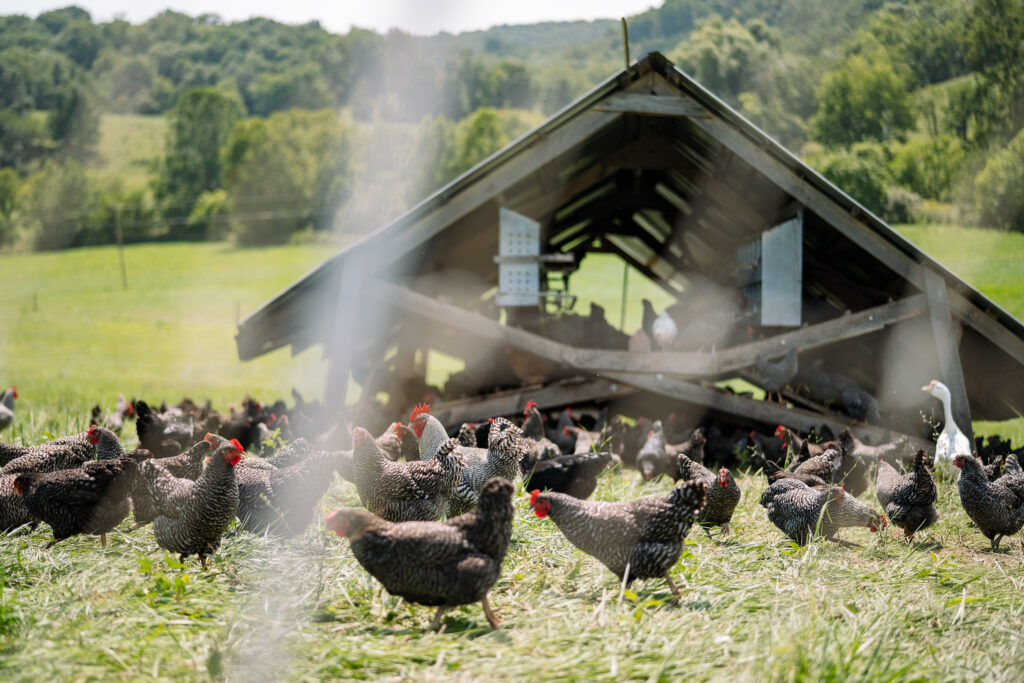
Leave a Reply