
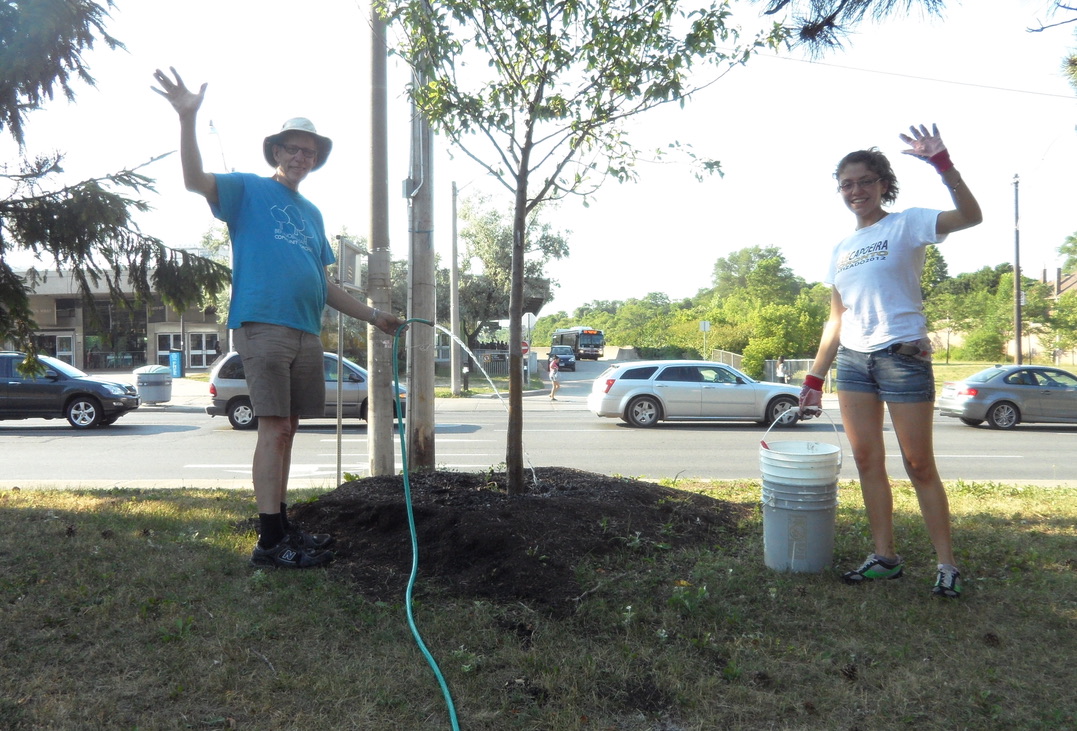
It’s fall, and as I rake under one of the fruit trees in our community orchard, I gather up fallen leaves and fruit that didn’t quite make it to a pie or a basket. Each plum or shriveled apple reminds me of the busy months behind us—pruning trees, spreading mulch, and protecting them from pests and diseases.
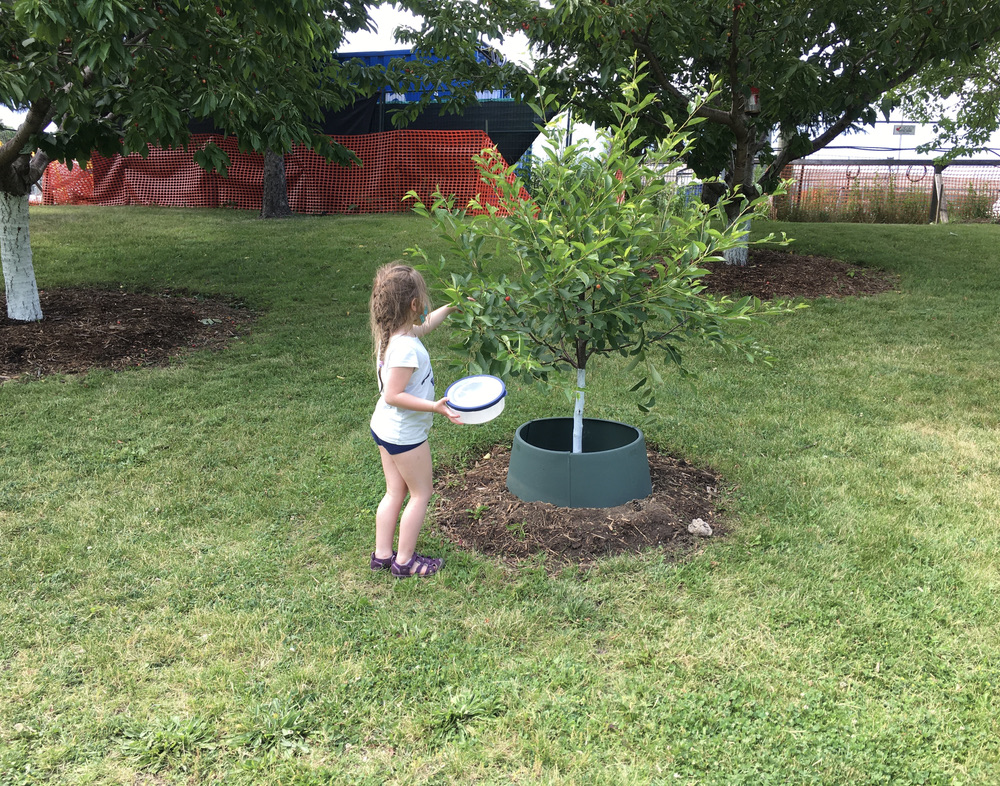
My mind drifts to our harvest days. I think of delighted children on their parents’ shoulders reaching for cherries, or volunteers wrestling with our awkward old pole harvesters to fill bowls with fruit grown just steps from home. I feel so much gratitude for these trees and the joy they bring to our park.
Thank you for feeding us. Thank you for bringing us together.
When you grow fruit trees, fall is when we slow down—but it’s not when we stop. There are still a few final tasks that help protect our trees through winter. It’s good to remember: next spring’s blossoms (and next summer’s fruit) begin with the care we take now to prepare our trees for winter and set them up for a wonderful growing season to come.
Do a Meticulous Fall Cleanup
These days, there is lots of talk about the benefits of being a messy gardener. And in many parts of the garden, that’s a good thing. Instead of clearing away fallen leaves, you can use them to mulch perennial beds and insulate the soil. Instead of deadheading coneflowers, you can leave them to feed the birds. And you can leave hollow stems standing to give native bees a place to spend the winter.
But fruit trees are different. In our orchard, we rake up every fallen fruit, leaf, and twig we can find. Each shriveled plum or spotted leaf can hide pests and diseases just waiting to bounce back in spring. Apple scab or rust can linger in old leaves. Pests—like codling moths and apple maggots—might overwinter in fallen fruit and come back with a vengeance next season.
We rake, gather, and remove every bit. In our community orchard, we bag it up and get it off-site, as adding fallen leaves and fruit to your compost has the potential to reintroduce problems in the future. This is one of the simplest, most effective ways to keep pests and diseases in check naturally.
Inspect Trees and Remove Fruit Mummies
A few years ago, while I was raking, I noticed shriveled, fuzzy fruit still clinging to our apricot trees. I figured it was normal so I left it there, thinking it was harmless.
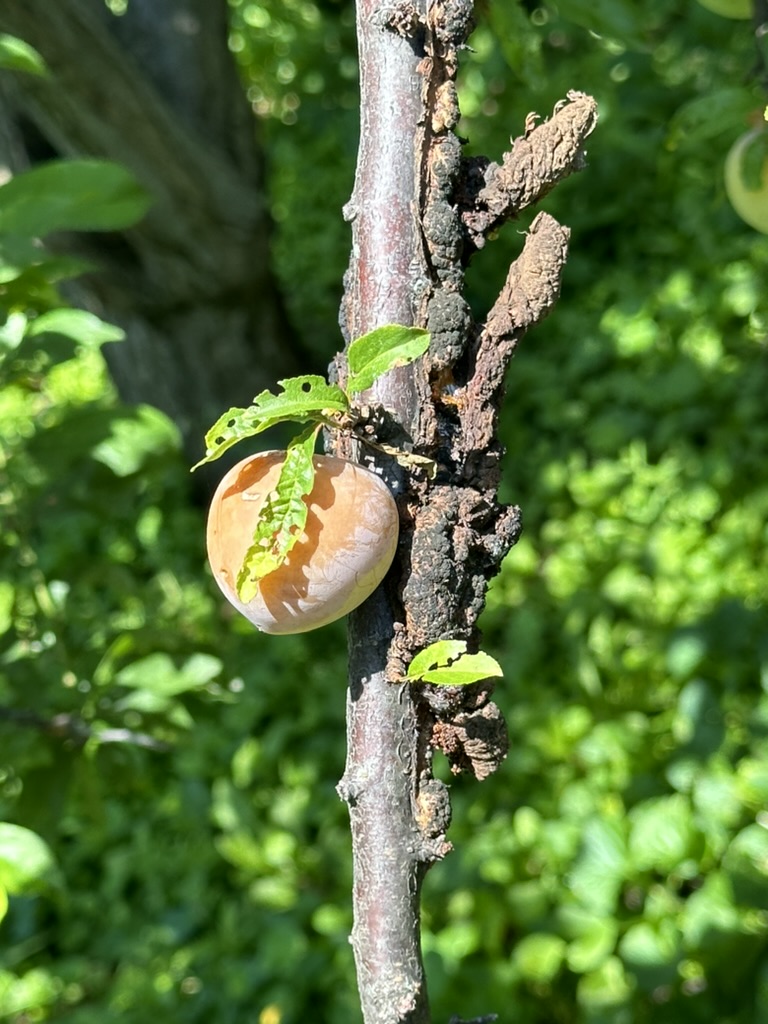
But the next season, those trees were hit hard by bacterial canker. I’d cleared the ground but missed what was still hanging on the branches. That’s when I learned my lesson: those little shriveled fruitlets (often called fruit mummies) can be tiny fungal spore factories ready to wake up in spring and spread disease.
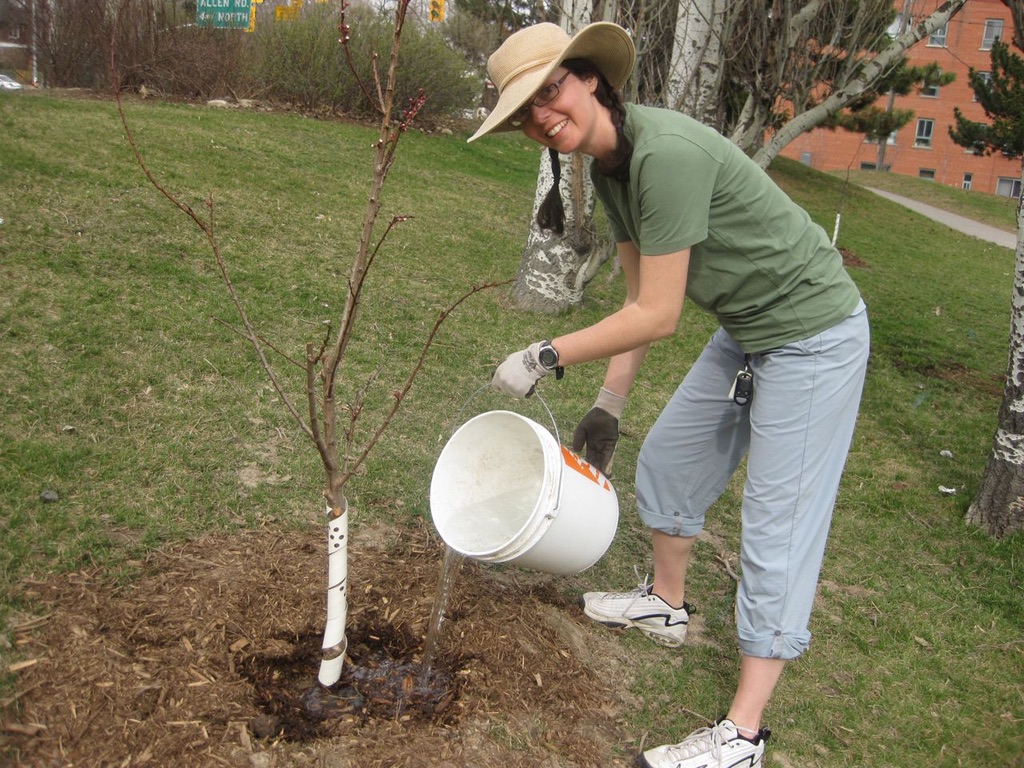
Now, each fall, I take a slow walk around every tree and check for fruit mummies. I pluck them off, bag them up, and toss them in the garbage—never the compost. A few minutes of careful inspection now can help you avoid bigger problems later on.
Protect Roots and Trunks
If you’ve carefully chosen and planted a fruit tree that is appropriate for your climate, its branches and trunk can handle winter just fine. There’s no need to wrap them in burlap. But the roots are more vulnerable. If they freeze during a harsh winter, they can die, killing your tree too.
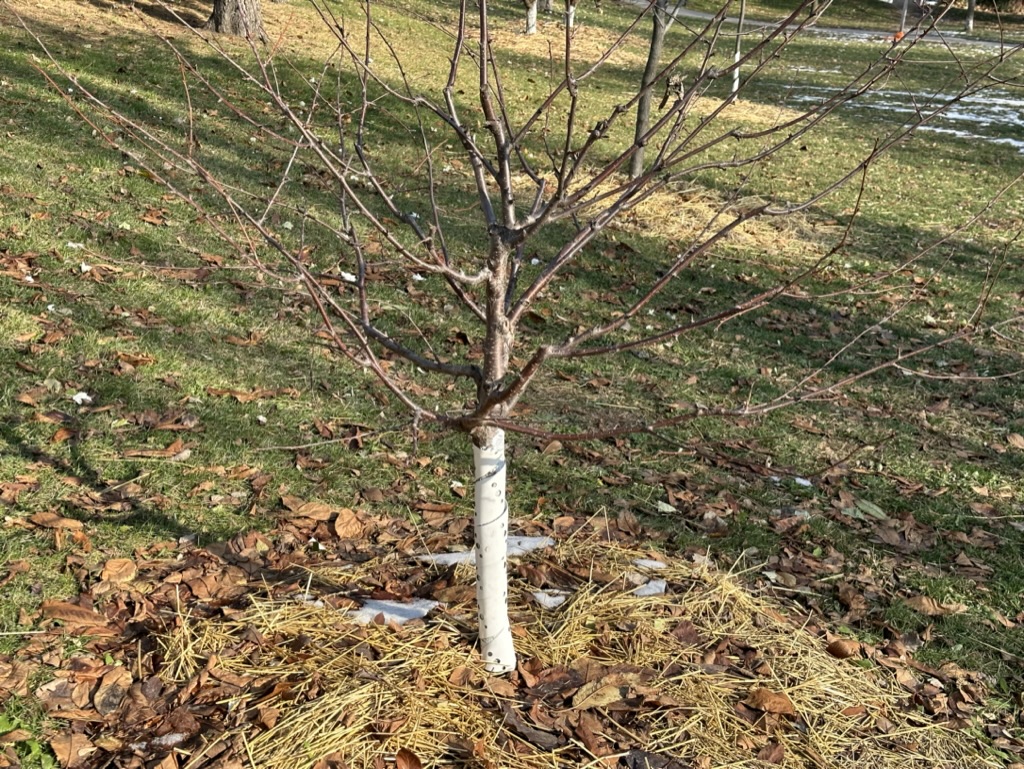
So every fall, we spread a two-inch layer of wood chips around the base of the tree. Ideally your mulch circle starts six inches away from the trunk—don’t let the mulch touch the trunk as it can rot the bark—and extends out to the edge of the canopy as that is where the younger and more delicate feeder roots are.
In the winter, rabbits and rodents often nibble on young tree bark and that can girdle and even kill the tree. To stop nibblers, we wrap young trunks with white plastic spiral guards. As a bonus, white spiral guards can help prevent sunscald. On sunny winter days, sunlight bouncing off snow can burn tender bark. A simple guard can make all the difference but remember to remove it in the early spring to prevent insect pests from hiding and breeding underneath
Continue Watering Until the First Frost
Many people think watering stops once the weather cools down. It’s easy to assume irrigation is only for hot, dry days, but that’s not true. A well-hydrated tree is far better prepared for winter.
Think of each cell in the tree like a tiny water balloon. When it’s full and plump, it’s more resistant to frost damage. If it’s dry and shriveled, the cold can burst it, which can lead to split bark or dead branch tips come spring.
Keep watering in the autumn. Water deeply but not constantly. It’s important to let the soil dry out a bit between good soaks and stop once the ground starts to freeze.
Avoid Pruning in the Fall
A good time to prune fruit trees is late winter while they’re still dormant but just before spring growth begins. This timing lets the tree wake up and quickly heal cuts (when it’s growing, it can produce new cells to seal wounds in just days).
Some growers also do summer pruning to help keep mature trees from getting too large. Summer pruning usually wraps up by midsummer. In our orchard we do a mix of the two techniques.
Fall, though, is the worst time to prune. By then, growth has slowed or stopped, so the tree can’t produce the cells needed to seal and protect fresh cuts. Those wounds stay open, making it easier for pests and diseases to get in. Fall cuts can also push out soft new shoots that don’t have time to harden off. The first frost hits, and those shoots die back, leaving openings that attract pests or give disease a way in.
In the fall, we may prune out a dead or diseased branch. But we prefer to protect our trees and not prune them at all at this time of year.
Fertilize With Caution
People often ask if they should feed their fruit trees in the fall. My answer is usually no—at least when it comes to conventional NPK fertilizers. You don’t want to give trees nitrogen at this time of year; it can wake them up just when they should be winding down for winter.
But here’s something interesting I’ve been learning about: basalt rock dust.
In a recent chat on my podcast Orchard People, I interviewed Lindsay Engers, a regenerative apple grower in the UK. And he shared how he sprinkles a handful of basalt rock dust around his trees each fall. Certain soil bacteria can break down this dust and release trace minerals that trees need—not the usual NPK, but other nutrients that support strong soil and tree health.
Lindsay has seen great results and one of the benefits was increased drought resistance. Fall is a good time to sprinkle the rock dust around the tree roots because those helpful bacteria are still active. Over time, adding rock dust each fall may help grow a bigger population of these soil helpers and slowly improve your orchard’s health from the ground up.
Plan Ahead: Research and Order New Trees
Fall is the perfect time to dream about adding new fruit trees to your yard or orchard. Spring might feel far off, but specialist nurseries start taking orders months in advance; and the best disease-resistant varieties often sell out fast.
If you’ve ever struggled with pests or diseases, choosing the right tree can save you so much heartache later on. Look for hardy, low-maintenance varieties that fit your climate and soil. Make sure you understand pollination needs too since some trees need a buddy nearby to cross-pollinate and set fruit.
Most specialist nurseries ship bare-root trees in early spring. If you’d like help figuring out what to plant, I cover how to choose easy-to-grow, resilient fruit trees in my book Grow Fruit Trees Fast. It’s a good place to start.
A Note for Warmer Climates
If you’re growing fruit trees in a warmer climate like parts of the southern U.S., the west coast, or subtropical areas, fall looks a bit different for you. You might wonder if you really need to fuss with all these tasks.
Some things stay the same no matter where you grow. For instance, keep your orchard floor clean. Rake up fallen fruit and leaves to stop pests and diseases from carrying over to next year. Inspect for fruit mummies and remove them too—they’re trouble in any climate.
But some things depend on how cold (or not) your winters get. If you never see freezing temperatures, you may not need to mulch as heavily for root protection. But mulch still helps hold moisture and suppress weeds, so it rarely hurts. Wrapping trunks to stop sunscald might not be needed in milder winters, but protecting young bark from hungry critters is always smart.
One interesting twist for warm climates: fruit trees need a certain amount of chilling each winter to set fruit properly. If your winters are getting warmer, or you grow trees that aren’t quite suited for your chill hours, they may try to keep growing instead of winding down.
If you’re in a warm area, focus on low-chill varieties when planting new trees. If your trees struggle to go dormant, check your variety’s chill requirements and talk to local growers about tricks that work in your region. Some growers remove leaves from their trees in the fall to encourage the tree to go dormant. But there’s not much science around that yet, so if you try it, go slow and watch what happens.
Rest, Reflect, and Look Ahead
I’ve heard the saying, “Happiness isn’t having what you want; it’s wanting what you have.” That feels true here. Each fall, I’m reminded to appreciate what we already have: strong trees, good soil, generous nature, and, in the case of our community orchard, a place where people come together to support each other and share the work and the harvest.
Fruit tree care never really ends. It just shifts with the seasons. We do our part, nature does the rest, and together we keep the circle going.
Here’s to a restful winter and an abundant spring. Take care of your trees now, and they’ll take care of you for years to come.
Fall Fruit Tree Care Checklist
Cleanup & Inspection
☐ Rake and remove all fallen leaves, fruit, and twigs.
☐ Bag and remove debris off-site (avoid adding fallen fruit or diseased leaves to compost).
☐ Remove any fruit mummies (shriveled or diseased fruit still on branches).
Root & Trunk Protection
☐ Apply a two-inch layer of mulch around the tree base.
☐ Wrap young trunks with white spiral guards to prevent sunscald and rodent damage.
Watering
☐ Water deeply until the first frost. Allow soil to dry slightly between waterings to avoid oversaturation.
Pruning
☐ Remove dead or diseased branches.
☐ Schedule major pruning for late winter.
Fertilizing & Soil Health
☐ Avoid nitrogen-heavy fertilizers in fall.
☐ Consider adding trace-mineral supplements like basalt rock dust to support soil health.
Planning & Ordering New Trees
☐ Research and select disease-resistant, climate-appropriate varieties.
☐ Check pollination needs for each variety.
☐ Order bare-root trees early to secure your preferred varieties.
Warm Climate Considerations
☐ Mulch for moisture retention and weed control in warmer climates.
☐ Choose low-chill varieties if winters are mild.
☐ Encourage dormancy in trees struggling to go dormant naturally.
Reflection & Preparation
☐ Plan for spring care and next year’s growth.
☐ Take time to appreciate your orchard’s harvest and enjoy the fruits of your labor!
Download printable copies of this checklist at homesteadliving.com




Leave a Reply